
This has been reproduced from The Thinking Muslim.
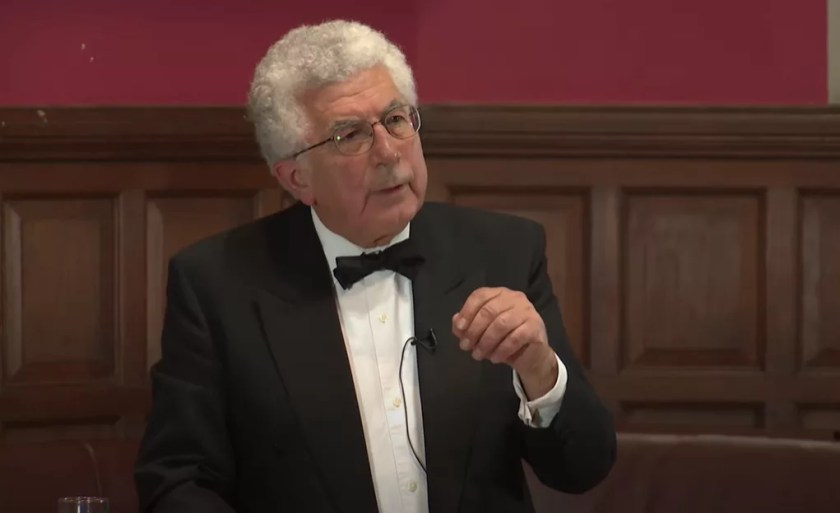
Professor Avi Shlaim is a Jewish, Israeli-British historian married to the great-granddaughter of David Lloyd George and a Professor at Oxford University. Despite these credentials, mainstream media would never platform him as he doesn’t fit with their narrative of trying to link legitimate academic critique of Israel with anti-semitism.
Today, we are confronting nothing short of a campaign of ethnic cleansing of the Palestinians of Gaza, not seen since the Nakba or Catastrophe of 1948. Yet many in the Western world are silent about the suffering. Much of what justifies Israel and its actions in the West is premised on history, and many European and American historians have been ready to present a compelling argument for Zionism and the case for Israel in the heart of the Middle East.
This historical justification, based on persecution and antisemitism, gives the story of Israel a potency that has for many years served to find acceptance in the West – of impunity to act without restraint – that is not offered to any other state. At the same time, the Palestinian story has been undermined by these same historians. They were a Bedouin community, readily able to vacate their land – it is said. Palestinians, according to leading Israeli politicians, are a mythical people.
Today, we are honoured to have Professor Avi Shlaim with us to untangle historical facts from fiction. Avi Shlaim is an eminent historian. He is an Emeritus Professor of International Relations at Oxford University and the author of The Iron Wall: Israel and the Arab World (2014) and Israel and Palestine: Reappraisals, Revisions, Refutations (2009). Professor Shlaim is a dual Israeli British citizen who lived in the country as a child. His family originated from Iraq and migrated to the newly founded state in 1950.
A team was dispatched from the US State Department in 1877 to assess the treatment of Jews in the Ottoman Caliphate. Their findings that Jews were very well treated and not persecuted are described in the news article below published on Wednesday 23rd August 1877 by the New York Times.
“The United States Minister says that justice to the Turk compels him to admit that the Israelites have been better treated by the Ottomans than by many of the Western powers and that the impression prevails that they are better treated in the Empire than the Christians.”
ISRAELITIES IN TURKEY.
STATISTICS RECEIVED FROM THE UNITED STATES MINISTER.
500,000 HEBREWS IN THE OTTOMAN EMPIRE.
THEY ARE BETTER TREATED THAN CHRISTIANS BY THE TURKS.
PROTECTION EXTENDED BY THE UNITED STATES OFFICIALS.
WASHINGTON, Aug, 22. A dispatch has been received at the Department of State from the United States Minister to Turkey giving interesting details concerning the number, status, and persecution of the Israelites in the Ottoman Empire. The total number of Israelites in the Empire is given at 500,000. Of this total, Roumania contains 250,000, Asiatic Turkey 80,000, European Turkey 75,000. Servia 2,000, &c. The United States Minister says that justice to the Turk compels him to admit that the Israelites have been better treated by the Ottomans than by many of the Western powers and that the impression prevails that they are better treated in the Empire than the Christians. They are recognized as independent religious community with the privileges of their own ecclesiastical rule, their chief Rabbi, Chacham Bashi, possessing, in consequence of his functions, great influence.
The Turkish Minister of Foreign Affairs protested to Mr. Maynard that where Turkish rule obtained the Israelites always enjoyed every privilege and immunity accorded by the laws to Ottoman subjects. The only maltreatment of Israelites which has been brought to the notice of the United States Legation at Constantinople during the official term of Mr. Maynard, was that of the Rabbi Sneersohn, an American citizen. On Nov. 28, 1874, the Rabbi was set upon by his co-religionists, certain Jews at Tiberias, robbed of a considerable amount, and most shamefully maltreated by being imprisoned, stoned, stripped naked, and ridden in that condition through the streets of Tiberias, barely escaping with his life. The United States Consul at Beyrout went to Tiberias and had the perpetrators arrested. Some claimed British protection, and escaped by flight. The friends of the others assembled, overpowered the authorities, and rescued them. The legation at Constantinople then took up the subject, and it was being satisfactorily pushed-as fast as possible under the circumstances-when the Rabbi, doubtless tired out and impoverished, left for France and in his absence nothing further could be done.
The position which the Israelites hold in the Empire, the complex systems and situations, and the heterogenity of the races by which they are surrounded, the state of civilization and the religious animosities which prevail, the little authority exercised by the Ottoman Government over the provinces even in ordinary times, (protesting that it should not be held responsible for abuses in the provinces,) render whole subject not only difficult of solution, but even difficult of explanation. Some of the Israelites claim to be under British protection, others have been under Russian protection. Many hold themselves us an independent people, owing no allegiance to any Government, and it is only when persecuted or outraged that they seek the protection of any or all human powers. While all Governments, the United States Government foremost of all, are most anxious to extend the necessary sympathy and protection, international questions and equities interfere with and prevent that full protection which they would receive were they fixed citizens of any Government.
The United States Minister at Constantinople has requested the consular officers of his Government, throughout the Ottoman Empire, to observe carefully the condition of the Israelites within their several jurisdictions, and to report to the legation at Constantinople without delay any instances of persecutions of that people which may occur.
 Islamic Civilization