
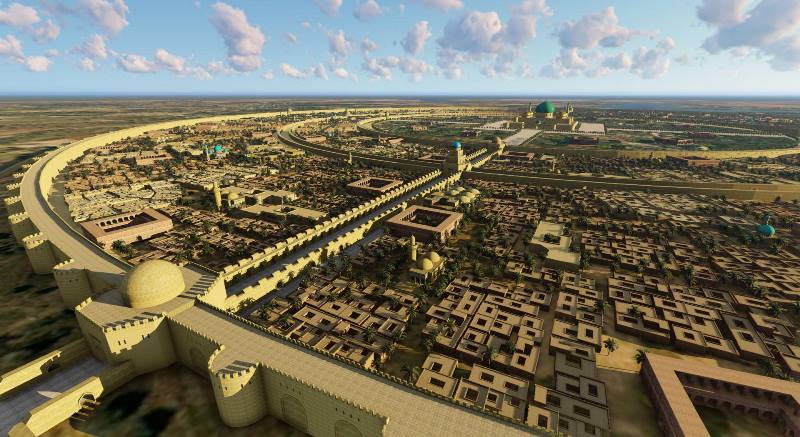
The early Abbasid Caliphate through the eyes of a non-Muslim
The Battle of Talas took place in 751CE between the Abbasid Caliphate and the Chinese Tang dynasty. In the aftermath of the battle a number of Chinese soldiers were taken as prisoners of war back to Iraq. Among these was one Tu Huan, who remained a prisoner until 762. He narrates a graphic account of life in the Islamic State. “The capital is called Kūfa [Ya-chü-lo]. The Arab king is called mumen [that is, Amīr al-Mu’minīn, Commander of the Faithful]. Both men and women are handsome and tall, their clothing is bright and clean, and their manners are elegant. When a woman goes out in public, she must cover her face irrespective of her lofty or lowly social position. They perform ritual prayers five times a day. They eat meat, fast and regard the butchering of animals as meritorious. They wear silver belts around the waist from which they suspend silver daggers. They prohibit the drinking of wine and forbid music. When people squabble among themselves, they do not come to blows. There is also …

