All posts filed under: Society

The Struggle for Authority and Legitimacy in Movements

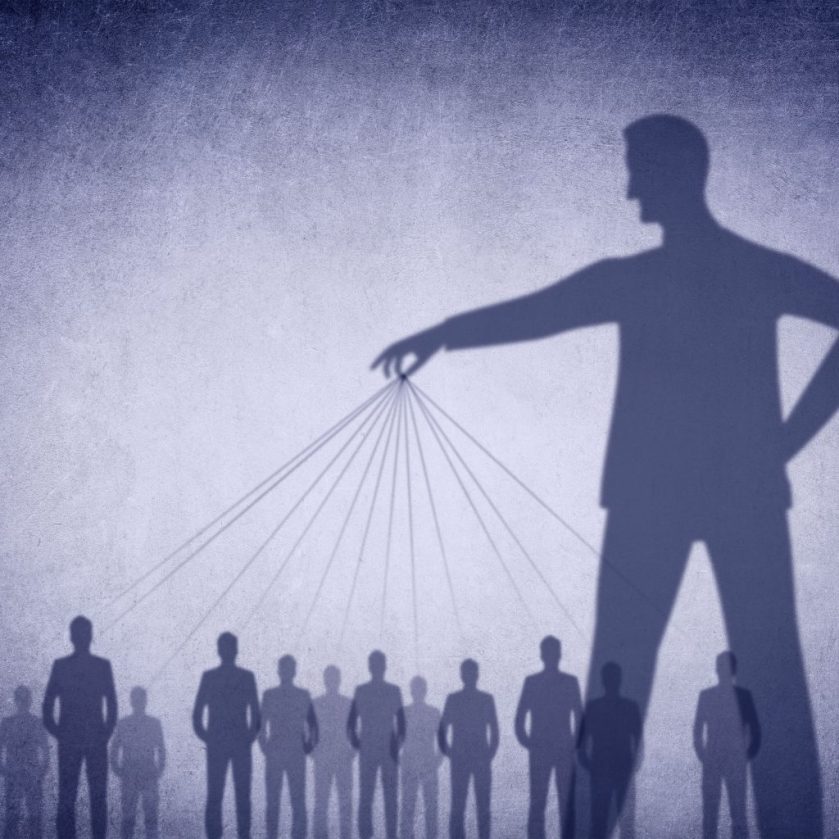
By Yasir Qadhi This is an extract from the lecture: Why Muslims Divide – The psychology of why the people closest to you are the hardest to tolerate A reality that transcends sectarianism is the competition for authority and legitimacy. This has been commented on and observed by many sociologists, including one of the most famous religious sociologists, Max Weber. If you know anything about the sociology of religion, you know Max Weber. Max Weber writes that the competition for religious authority is a struggle for legitimacy, i.e. to be legitimate you must have an affiliation to a person, or a movement or a group. Those movements or groups have markers of purity, status symbols. What makes them different? Whether the term is traditionalism and orthodoxy, whether it is the Salaf, whatever it might be, there is a mark of purity. There is a legitimacy that comes by attaching yourself to a group, an icon, a person. You are cleansed of any type of heresy by forming an attachment with this iconic figure that is revered …


Why Internal Conflicts Are More Vicious Than External Ones

By Yasir Qadhi This is an extract from the lecture: Why Muslims Divide – The psychology of why the people closest to you are the hardest to tolerate Cognitive dissonance amplification is most prominently championed by a very famous modern social psychologist of our times, Jonathan Haidt. He’s one of the most famous professors in this field of social psychology. Once again, he has written books and articles about this reality. He writes and I quote “the bitterest of conflicts are often amongst those who share the most similar beliefs.” This is a reality that we are all familiar with because who are you the most jealous of? Who do you find your problems are the most easy to amplify with? It’s your closest circle. You’re not jealous of Bill Gates, who has $50 billion, but if your cousin becomes a multi-millionaire, that’s where the jealousy will come. You’re not jealous of the most famous Hollywood actor, but if your friend becomes the life of the party, that’s where something happens. That’s the irony here. The …

How Social Identity Fuels Intergroup Discrimination

By Yasir Qadhi This is an extract from the lecture: Why Muslims Divide – The psychology of why the people closest to you are the hardest to tolerate Social Identity Theory was most famously promoted by a Polish intellectual by the name of Henry Tajfel. Henry Tajfel, [a Holocaust survivor] was a Polish prisoner of war, captured by the Nazis. He thought he would lose his life and then eventually he was freed. He went on to do phenomenal, groundbreaking research in groupthink, researching how people do this [holocaust] to other people. World War II produced some amazing psychiatrists, sociologists and anthropologists who studied the banality of evil and how people can undertake such acts. Lots of books have been written about this. Henry Tajfel is one of these people that has gone through this reality as a young man. After he got out of the Nazi concentration camp, he went to London and became a well-known sociologist. He developed a theory that he called the theory of social identity. His theory is very similar to …

Why Muslims divide: groups and cults

This is part of a series of articles on disunity and division within the Muslim community and ummah at large. This follows on from Dr. Yasir Qadhi’s lecture on ‘Why Muslims divide?’ Collective Action Human beings are not islands and no matter what activity they undertake, it will entail some form of collective action. Family, work and activism (daw’ah) are all collective actions. Even if an Islamic activist starts off with a solitary blog or podcast, in time, as it grows more and more popular, more resources and people will be required to keep it going. Some forms of activism may only require financial support by contributing through Patreon. Other types such as working within the community, education and mosques requires a more hands on grass roots approach. If we think ummatically, where we are one ummah made up of multiple groups all working within their specialist fields for the betterment of the deen then this is healthy and productive and will contribute to the revival of the Islamic civilization. This is also the sunnah …

Exaggerating Minor Differences to Maintain Group Identity

By Yasir Qadhi This is an extract from the lecture: Why Muslims Divide – The psychology of why the people closest to you are the hardest to tolerate The second psychological and anthropological observed reality is called the narcissism of small differences. This is a well observed and documented phenomenon across all strands of movements, whether they are religious, whether they are social, whether they are political, it doesn’t matter. This can be summarized with the following statement: “Groups that are very similar exaggerate smaller differences to maintain their boundaries and identity.” I repeat, you can put it this way, the closer the groups are, the bigger their petty differences are exaggerated. This is an observable phenomenon observed by, as I said, by anthropologists, by psychiatrists, by anybody who’s observed large groups of people in whatever field. This is a phenomenon that transcends religion. In fact, not to justify, I’m just saying this, even Sigmund Freud has an entire chapter about this reality and he writes, not that I love Sigmund Freud, obviously that’s not …

How Sacred Values Lead to Intolerance and Division

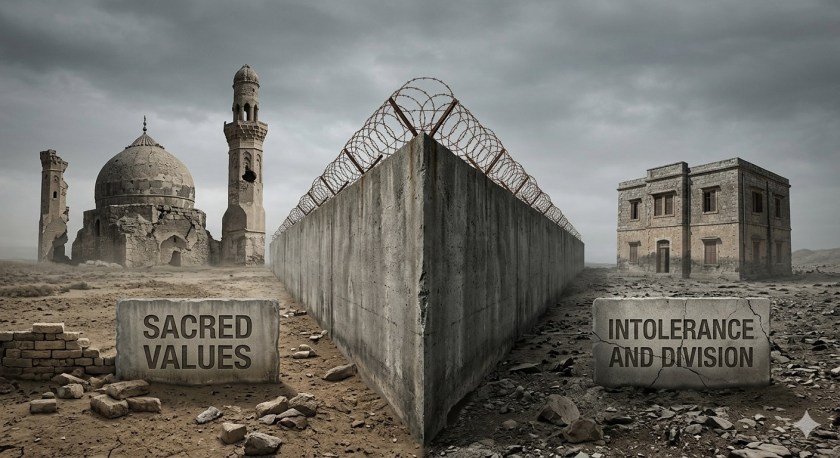
By Yasir Qadhi This is an extract from the lecture: Why Muslims Divide – The psychology of why the people closest to you are the hardest to tolerate The paradox of being introduced to sacred values. What do I mean by this? The irony of becoming more religious and more intolerant at the same time, makes complete sense when you understand the introduction of sacred values. So anecdotally, we are all aware that people by and large who are non-religious, lump all religious folks together and don’t really care about what version of religion you follow. Your grandmother, my grandmother, they don’t care how you label yourself. Is he a good person or not? Does he pray? Is he honest? That’s what they’re looking at. They really don’t care about abstract values. Your local Sheikh however, in all likelihood is very interested about what type of Muslim is he. What version of Islam does he follow? Why is there this disconnect even though both of them, your grandmother and your sheikh, are praying five times …

Why Muslims Divide: The psychology of why the people closest to you are the hardest to tolerate

This is a lecture given by Yasir Qadhi on 1st June 2026 which is available on Spotify and Apple Podcasts. In this lecture Dr. Yasir Qadhi, explores the paradox of why intra-faith conflict between different Islamic groups and sects is far more severe and violent than inter-faith conflict between Islam and other religions such as Christianity, something which I have personally witnessed myself. One week friends are sitting next to each other in an Islamic talk, joking and smiling, and then the next week they are enemies due to a minor disagreement. Their intense hate for each other is even more severe than against the enemies of Islam who are actually killing and slaughtering Muslims. These conflicts are not new and have existed since the time of the Rightly Guided Caliphate when the Khawarij broke away from Imam Ali with their slogan, “La hukma illa lillah” (There is no judgment/rule but for Allah). Ali responded to them with the famous phrase: كَلِمَةُ حَقٍّ أُرِيدَ بِهَا بَاطِلٌ “A word of truth by which falsehood is intended.” …

The Power of Public Opinion

This is an excerpt from Ayatollah Khomeini’s book Velayat-e Faqeeh (Governance of the Jurist). Enjoining the good and forbidding the evil has been made a duty primarily for the sake of accomplishing these high aims. We have restricted it, however, to a narrow category of affairs where harm is suffered chiefly by the individual who is guilty of a sin by deed or by omission. We have the idea firmly in our heads that the instances of evil we are called upon to combat (munkarāt) are only the things we encounter or hear about in everyday life. For example, if someone plays music while we are riding on the bus, or the owner of a coffee house does something wrong, or someone eats in the middle of the bazaar during Ramadān, we regard all these things as instances of evil we must denounce. Meanwhile, we remain totally oblivious to far greater evils. Those who are destroying the welfare of Islam and trampling on the rights of the weak – it is they whom we must …

Cartoons, insults, and martyrs to ‘free speech’

DR ABDUL-WAHID This article has been reproduced from Islam21c.com France is mourning its latest victim to so-called ‘free speech’ as a ‘martyr’. Of course, the family of the school teacher killed last week will be mourning their personal loss. But perhaps the protestors standing in ‘solidarity’ should be questioning whether this value is something that really deserves sanctifying.