All posts filed under: Judiciary

Apostasy in Islam is not a ḥudūd offence

This article is based on the writings of Professors’ Hashim Kamali and Muhammad Al-Massari. While the majority of the fuqaha (jurists) interpreted the hadith مَنْ بَدَّلَ دِينَهُ فَاقْتُلُوهُ “Whoever changes his religion (deen), then kill him,”[1] to mean there is a hadd (prescribed punishment) for apostasy, a number of prominent ulama across the centuries and down to our own times have taken the view that apostasy is not a ḥudūd offence.[2] Other hadith expand on the meaning of “changing his deen” and make it clear that the punishment of execution was for high treason and fighting the state, not just for the mere act of reverting from the religion. Islam is not a religion in the traditional sense but is a way of life which underpins all societal and political life. Since the time of the first Islamic State in Medina, Islam has been embodied and intertwined with government. Therefore, apostasy from the religion would generally mean breaking the ties of citizenship and siding with the enemy against the state i.e. high treason which in …


Devolution in an Islamic State: Judiciary

As the Islamic State of the Prophet ﷺ expanded, new officials of state were appointed to manage the ever-growing tasks especially in the new provinces. Once Yemen had joined the state under Bādhān ibn Sāsān, the Prophet ﷺ appointed separate judges to the province notably Ali ibn Abi Talib and Mua’th ibn Jabal. The judiciary was therefore a centralised institution in the time of the Prophet ﷺ, a situation which continued throughout the time of the Rightly Guided Caliphs and beyond although sometimes this was devolved to the governor if he was qualified. Al-Sallabi says, “Among these [governors] were some whom ‘Umar [ibn a-Khattab] kept as judges as well as appointing them as governors, as he did with Mu‘awiyah, and some from whom he took away the role of judge and limited them to their role as governor, as he did with al-Mugheerah and Abu Moosa al-Ash‘ari.”[1] This appointment of judges by the central government does not mean judicial independence was absent from the state. Sovereignty in an Islamic State is to the sharia, so …

Can women be judges in Islam?

There is no dispute among the classical scholars that it’s prohibited for a woman to hold a ruling position such as the Khaleefah or a waali (governor), although she can hold any other non-ruling governmental position, and be an active member of the Majlis al-Nuwaab (House of Representatives). This is based on the hadith narrated by Abi Bakra, that when the Messenger of Allah ﷺ was informed that the Persians had crowned the daughter of Chosroes as their ruler, he ﷺ said, لَنْ يُفْلِحَ قَوْمٌ وَلَّوْا أَمْرَهُمُ امْرَأَةً “People who appoint a woman over their affairs will never succeed.”[1] For further information on this topic see: However, the majority of scholars went a step further, and applied this hadith to judiciary by making analogy between ruling and judging, because the differences between them are subtle. Ibn al-Tin al-Safaqsi said: “Those who say that a woman cannot be appointed as a judge cite the hadith of Abu Bakra, and this is the opinion of the majority. Ibn Jarir al-Tabari disagreed, saying that it is permissible for her …

Q&A: Does Islam have a clergy like Christianity and Judaism?

Sheikh Abu Iyas Mahmoud bin Abdul Latif al-Uweida from Jordan answers this question. He says, There are no clerics in Islam like those found in Judaism and Christianity. Every Muslim is commanded to carry the call of Islam, spread it, guard it, and abide by its rules. The ulema (scholars) and fuquhaa (jurists) are only there to teach people about Islam. They have no religious powers like those of the Jewish and Christian clergy, such as accepting the repentance of penitents, granting forgiveness, baptizing followers, legislating, and so on.

Martyrs of Egypt: Islam forbids torture and rejects false confessions

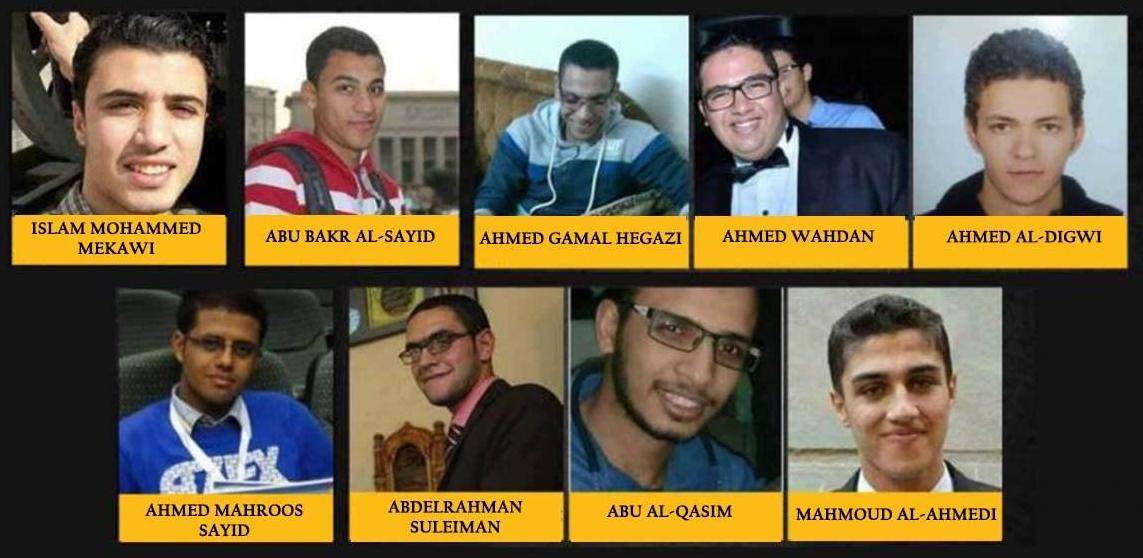
Egypt’s brutal dictator Sisi and his henchman in the judiciary, executed nine innocent believers on Wednesday who had committed no crime except believing in Allah. وَمَا نَقَمُوا مِنْهُمْ إِلاَّ أَن يُؤْمِنُوا بِاللَّهِ الْعَزِيزِ الْحَمِيدِ “The only reason they punished them was because they had iman in Allah, the Almighty, the All-Praiseworthy.” (Al-Buruj: 8) One of the martyrs Mahmoud al-Ahmadi said to the judge on the day he was given a death sentence: “I am your adversary in front of Allah on the Day of Resurrection, I and those with me are innocent and you know it!” The Judge responded: “But you confessed.” Al-Ahmadi replied: “Give me an electrocution tool and I’ll make you admit you killed Sadat! We were electrocuted with enough electricity to last Egypt for 20 years!” Islam forbids torture and rejects false confessions Egypt’s corrupt secular judiciary allows false confessions extracted by torture whereas Islam completely rejects this. The Prophet Muhammad ﷺ said: إِنَّ اللَّهَ يُعَذِّبُ الَّذِينَ يُعَذِّبُونَ النَّاسَ فِى الدُّنْيَا “Allah tortures those who torture the people in this life.” (Muslim …

Islamic Judicial Principles relevant to the Asia Bibi Case

The case of Asia Bibi, a Christian who was sentenced to death in Pakistan for alleged blasphemy against the Prophet Muhammad ﷺ, has thrown the spotlight on Islamic law (sharia) and its judiciary. Predictably the west has used the case to attack sharia as barbaric and label Islamic courts as kangaroo courts where no justice is served. The status of non-Muslims living under Islamic rule is also under fire where they are viewed as an oppressed minority subject to the tyranny of the Muslim majority.

The Caliphate’s Judiciary

The Caliphate’s judiciary is responsible for issuing judgments that are enforced by the state. It settles disputes between people, prevents whatever may harm the rights of the community and also settles disputes between people and any person who is part of the government whether this is the Caliph, his cabinet, civil servants or any other official.1 There is no separation between shari’a courts and civil courts as we find in some Muslim countries today. The basis of the judiciary is shari’a the same as all other institutions of the state. The non-Muslim citizens (dhimmi) will have their own courts for settling issues related to their religions such as marriage and divorce, but in societal matters they will use the courts of the state and be treated the same as Muslims with full access to equal justice. Contrary to anti-Islamic propaganda shari’a courts are not kangaroo courts. Judges are carefully chosen and have to fulfil more stringent conditions than judges in western judiciaries. Witnesses, both Muslim and non-Muslim, must be just for their evidence to be …