

- Case Study: The Army
- How did the later Caliphs gain a ruling personality?
- The Umayyads
- The Abbasids
- The Ottomans
- Notes
Abu Hurayra reported that the Messenger of Allah ﷺ said,
إِنَّمَا بُعِثْتُ لِأُتَمِّمَ صَالِحَ الأَخْلاقِ
“Indeed, I was sent to perfect good character.”[1]
Salih al-Akhlaq (good character) is mutlaq (unrestricted) and so encompasses all types of character which includes the ruling personality. This development and training (tarbiyah) of the sahaba began in Makkah at the House of Al-Arqam and continued throughout the Prophet’s ﷺ life in Madinah. Tarbiyah is a life-long process that never ends for the believer. It is clear when studying the seerah that the Prophet ﷺ had a development plan for the sahaba, and appointed specific people to positions of authority and responsibility so they would become leaders in the Islamic state after his ﷺ death.
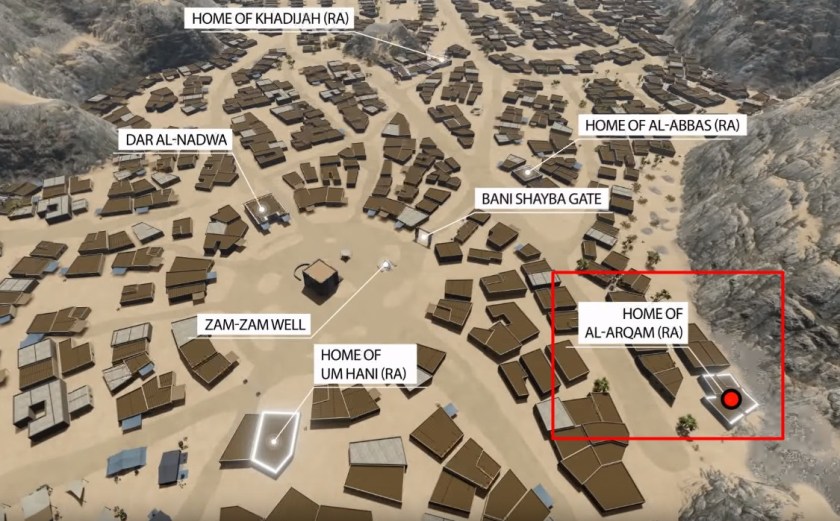
As-Sallabi says, “In less than one half of a century, the singularly superior men that the Prophet educated were blessed with many great victories as they carried the message of Tawheed (Islamic Monotheism) all over the world. In the early years of his Prophethood, the Messenger of Allah wisely chose and trained the key people that would be needed to lead the Muslim nation through its glorious first century of being. It is with that end in mind – the spread of Islam all over Arabia and to many parts of the world – that we can truly appreciate the early days of education and training in the house of Al-Arqam.”[2]
The clearest example of this tarbiyyah programme is Abu Dharr Al-Ghafari. As mentioned previously, Abu Dharr requested to be appointed to office but the Prophet ﷺ said إِنَّكَ ضَعِيف “you are a weak”. However, this situation changed and Abu Dharr overcame his weak ruling personality and according to Al-Waqidi[3] was appointed to a wiliyah (ruling) position by the Prophet ﷺ as his Caliph (deputy) in Madinah[4] while he ﷺ was away leading the expedition to Khaybar in 7 Hijri.[5]
Case Study: The Army
An extract from the book: History of the Islamic State’s Institutions
Another example is the army commanders of the Prophet ﷺ who lived after his death, who were pivotal in the conquest of the Persian and Roman Empires. The historians divided the military expeditions of the Prophet ﷺ in to two:
- Ghazwa – a battle led by the Prophet ﷺ
- Sariyyah – a battle led by a sahabi[6]
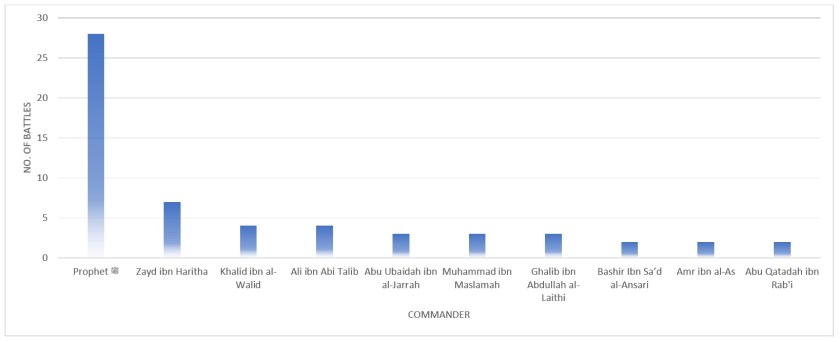
If we study the difference between the number of Ghazwas and Sariyyahs over the Madinah period, we find the Prophet ﷺ initially took a hands-on role leading most of the battles. Then after Al-Hudaibiyah in 6 Hijri the sahaba began to take the lead. This shows the confidence of the Prophet ﷺ in the sahaba’s abilities, and is a testament to the success of the Prophet’s ﷺ training programme.

How did the later Caliphs gain a ruling personality?
After the time of Mu’awiya, the Caliphate transferred into hereditary rule for the rest of its existence. The future Caliphs who were mostly the sons of the reigning Caliph would become known as the wali ul-ahd (heir apparent), and be trained from an early age to rule. The main training ground was for the sons to be appointed as governors of a province where they could hone their ruling skills in a specific location, before scaling up to the entire state on the death of their father. Other positions held by the wali ul-ahd were leading the army expeditions and being made the Ameer of Hajj.[7] [8]
The Umayyads
In the Umayyad period Yazid ibn Mu’awiya led the expedition to Constantinople in 49H[9] and was Amir of Hajj in 51H[10] before becoming the wali ul-ahd and then taking power on the death of his father.[11]
Abdul-Malik ibn Marwan was made governor of Palestine by his father Marwan ibn al-Hakam[12] before becoming the first[13] wali ul-ahd[14] and then the Caliph.
Abdul-Aziz ibn Marwan, the father of Umar bin Abdul-Aziz was the wali ul-ahd for his brother Abdul-Malik ibn Marwan. Abdul-Aziz remained as governor of Egypt for 20 years, but he passed away before his brother so never became the Caliph.
Umar bin Abdul-Aziz[15] was the governor of Khanasser (the city of Anasartha located in western Syria)[16] under Abdul-Malik and also his advisor.[17] Under Walid I, he was governor of Madinah 87-93H, and in 91H Ta’if was also added to his mandate.[18] Umar was also the wazir[19] for Sulayman ibn Abdul-Malik before becoming the wali ul-ahd[20] and then the Caliph after his death.
The Abbasids
In the Abbasid period this situation of the future Caliphs being prepared and trained for rule continued. On the annual Hajj in 802CE, the Abbasid Caliph Harun al-Rashid (r. 786– 809CE) drew up an agreement between his two sons – Al-Amīn and Al-Ma’mun – the successors to the Caliphate, to respect one another’s rights to the succession. Harun had suspected that tensions between his sons would lead to civil strife and fitna after his death,[21] so he drew up this public agreement as a preventative measure. He assigned Iraq and the western provinces (Syria) to his son al-Amīn, the heir apparent, and the eastern provinces (Khorasan) to the second in succession, his son al-Maʾmūn.[22]
Al-Maʾmūn was also made the deputy Caliph (na’ib or wazir al-tafweedh) which is the second most powerful position after the Caliph. Tabari narrates, “In this year (190H/806CE), al-Rashid led the summer expedition (against the Byzantines). He left behind his son Abdallah al-Maʾmūn as his deputy[23] at al-Raqqah[24] and entrusted affairs to him. He wrote letters to the (governors in the) farthermost parts of the empire ordering them to give al-Maʾmūn full obedience, and he handed his seal ring over to al-Maʾmūn so that he might benefit from its auspiciousness; this was his personal seal ring, on which was engraved the motto ‘Allah is my trusted patron, in His hands I have placed my security’.[25]
From the 10th to 13th century, the Abbasid Caliphs became mere figureheads with the sultans and other ameers holding delegated (tafweedh) executive power, which was nominally conferred on them by the Caliph. Even during this period, the Caliphs from a young age were still capable rulers, and some of them managed to regain some semblance of independence from the sultans and increased their powers. Eric Hanne says, “What is most telling about the preceding events[26] is the change of status for the Abbasid caliph in the minds of the Saljuqs. In the narratives we have for these events, al-Mustarshid [r. 1118-1134CE] is treated somewhat as an equal in relation to the Saljuqs. The caliph’s position in Baghdad at this point had become important enough that the Saljuqs had to keep his needs and opinions in mind in order to ensure stability in central Iraq.
No longer could the Saljuqs view the caliph as the theoretical leader of the Islamic community, going to him only for recognition of their own status. They had begun to realize and accept his value as both a political and a potential military ally. Along with this positive aspect, however, was the threat that the revitalized Caliphate offered to the Saljuqs.”[27]
Al-Mustarshid’s father was the Caliph Al-Mustazhir (r. 1094-1118CE). During Al-Mustazhir’s reign there was a rival state based in Egypt ruled by the Fatimid Ismaili (Batiniyah) dynasty (909–1171CE), which claimed itself to be a Caliphate in opposition to Baghdad. Although their claim to the Caliphate was illegitimate, since it is not permitted for there to be more than one Caliph,[28] the state was a powerful challenge to the Abbasid Caliphs, who as mentioned had become mere figureheads with limited powers.
The Fatimids claimed that Al-Mustazhir was not fit to be the Caliph, especially since he was only 16 years old when he assumed office.[29] In response, Al-Ghazali wrote a refutation of the Ismaili (Batiniyah) thought and rebutted their claims against the illegitimacy of the Caliph Al-Mustazhir. This book is commonly known as Al-Mustazhiri.
Regarding the condition of al-kifāyah being present within Al-Mustazhir, Imam Ghazali says in summary, “On the second quality: al-kifāyah. Al-Mustazhir’s reflection and governance is based on his astuteness and intelligence admired by all. He seeks enlightenment from consulting men of insight and experience and in choosing an able Wazir…This is the competence sought.”[30] He then uses the example of how Al-Mustazhir managed to complete his bay’ah while under the Seljuq occupation of Baghdad, which was awash with soldiers who had previously tried to depose his father Al-Muqatadi.[31]
The Ottomans
The Ottomans continued the tradition of appointing their sons to provinces so they could learn statecraft in preparation for their future role as Sultan. However, they differed with the Umayyads and Abbasids by not nominating a specific son as the wali ul-ahd. Instead, they adopted a ‘survival of the fittest’ approach, leaving the sons to literally fight it out after the reigning Sultan’s death, leaving the succession open to whichever of the Sultan’s sons could make it to Constantinople[32] first and claim the authority. The victorious son would then become the Sultan and execute his brothers to prevent any disunity occurring within the empire. This ‘survival of the fittest’ approach created very capable Sultans, but ultimately weakened the empire over time. Aside from being a flagrant breach of the sharia, this fight to the death among the sons, where surrender and reconciliation was not an option, led to bloody civil wars and the loss of tens of thousands of Muslim soldiers.
The Turco-Mongol Sultan Timur (r.1370-1405) exploited this succession arrangement and after defeating the Ottoman Sultan Bayezid in 1402, “Bayezid’s sons, Suleyman, Isa, Musa, and Mehmed, were all kept alive by Timur, who gave each a small fiefdom, knowing that they would have to fight amongst themselves before one could emerge as the successor to their father. Thus began a period of eleven years of war among Bayezid’s sons, which came to be known as the Interregnum or ‘‘Fetret’’ in Turkish.”[33]
Mehmed II (Al-Fatih) the most victorious of the Ottoman Sultans who opened Constantinople at the age of 21, was made governor of Amasya in Northern Turkey near the Black Sea at a young age in preparation for rule.[34]
Alan Mikhail in reference to Selim I who was the governor of Trabzon before becoming the first Ottoman Caliph (r.1517-1520) says, “To win the ottoman throne, Selim and his half-brothers had first to prove their mettle by governing a city in the east of the empire.”[35]
In 1595 Sultan Mehmed III went a step too far in the ‘survival of the fittest’ approach to succession and executed 19 of his brothers, which led to outcry among the people, ulema and other officials of the state. Imber says, “Since Mehmed III’s accession in 1595, fratricide was no longer the means of securing the throne.”[36] After his successor and son Ahmet I died a new system of Kafes (cage) was adopted, where instead of executing the Sultan’s brothers who were potential rivals to the throne, they were imprisoned under house arrest in the harem. This meant they had no ruling experience if at a later date they were called upon to succeed the Caliph upon his death or removal. After Ahmet’s death his brother Mustafa became Sultan, but due to his long imprisonment in the Kafe his mental health meant he was not capable of ruling and only ruled for a short time. Mustafa Agha a representative of the Inner Palace, said that Mustafa’s ‘defect in intelligence came from his long confinement . . . and he might come to his senses if he had contact with people for a while’.[37]
Notes
[1] Al-Adab Al-Mufrad, https://sunnah.com/urn/2302710
[2] Dr Ali Muhammad As-Sallaabee, ‘The Noble Life of the Prophet ﷺ,’ p.173
[3] Michael Cook, ‘Muḥammad’s Deputies in Medina,’ Princeton University, 2015, p.7, https://academiccommons.columbia.edu/doi/10.7916/jann-zz24/download
[4] The authority of the deputy leader is not just in the capital but over the whole state. This position was named Wazir Al-Tafweedh by Al-Mawardi and which referred to the Buyid Amirs and Seljuk Sultans of his time, who effectively ran the state with the Abbasid Khaleefah in Baghdad a mere figurehead.
[5] Ibn Hisham differs with Al-Waqidi and names Abu Dharr as the deputy for the expeditions of Dhaat al-Riqaa and Banu Al-Mustaliq in 5 Hijri, not Khaybar. Michael Cook, Op.cit., p.9
[6] J. M. B. Jones (1983). A. F. L. Beeston; et al. (eds.). The Mag̱ẖāzī Literature. Vol. Arabic Literature to the End of the Umayyad Period. Cambridge University Press. p.344.
[7] The Amir of Hajj is a wiliyah position not just administrative as al-Mawardi mentions.
[8] Andrew Marsham, ‘Rituals of Islamic Monarchy Accession and succession in the first Muslim empire,’ Edinburgh University Press, p.125
[9] al-Tabari, ‘The History of Al-Tabari’, translation of Ta’rikh al-rusul wa’l-muluk, State University of New York Press, Volume XVIII, p.94
[10] Ibid, p.164
[11] There is difference of opinion on Yazid’s legitimacy. Was Yazid a Legitimate Caliph?
[12] al-Baladhuri, Ansab al-Ashraf (Genealogies of the Nobles), https://shamela.ws/book/9773/2328
[13] https://islamciv.com/2021/12/19/baya-in-islamic-history-marwan-ibn-al-hakam/
[14] Marwan ibn al-Hakam introduced the method of appointing not just the next Khaleefah but the one after as well in succession. The ijtihad behind this delegating two successors is explained by Mawardi. He states: “It is permitted for the Khaleefah to designate succession to two persons or more and to lay down an order of succession amongst them by saying, ‘The Khaleefah after me is such and such a person, and if he dies then the Khaleefah after his death will be such and such, and if he dies then the Khaleefah after him will be such and such a person.’ Thus the Khilafah will be transferred to the three persons in the order he has designated. [al-Mawardi, Op.cit., p.23]
[15] https://islamciv.com/2021/02/20/umar-bin-abdul-aziz-reviver-of-the-rightly-guided-caliphate/
[16] Dr. Ali Muhammad As-Sallabi, ‘Umar bin Abd al-Aziz,’ Darussalam, p.76
[17] Ibid, p.75
[18] Ibid, p.77
[19] Ibid, p.92
[20] Umar bin Abdul-Aziz was unaware he was the wali ul-ahd until after Sulayman died.
[21] This fitna occurred, and both brothers fought a bitter civil war with Al-Ma’mun emerging victorious and killing Al-Amin.
[22] al-Tabari, Op.cit., Vol. XXX, p.180
[23] The verb used is اِسْتَخْلَفَ rather than a formal title of na’ib. This is the same verb used in the hadith about the Prophet ﷺ appointment of a deputy over the state when he was away on an expedition. This title and role became subsumed in to what Al-Mawardi termed a Wazir Al-Tafweedh. See Michael Cook, ‘Muḥammad’s Deputies in Medina,’
[24] The capital of the Khilafah from 796 to 809CE
[25] Ibid, p.261
[26] The two Saljuq brothers Mahmud and Mas’ud bin Muhammad who fought over control of the sultanate.
[27] Eric J. Hanne, ‘Putting the Caliph in His Place: Power, Authority, and the Late Abbasid Caliphate,’ 2007, Fairleigh Dickinson University Press, p.151
[28] إِذَا بُويِعَ لِخَلِيفَتَيْنِ فَاقْتُلُوا الآخَرَ مِنْهُمَا “When bay’ah has been taken for two Khaleefahs, kill the latter of them.” Sahih Muslim 1853, https://sunnah.com/muslim:1853 Killing a believer in origin is haram, so when it is ordered in a command then it becomes a decisive qareenah making the rule haram.
[29] This is a feature of hereditary rule and teenage khulufa’a would not occur in a future Khilafah which is based on meritocracy like the Rightly Guided Khilafah of the sahaba. https://islamciv.com/2013/08/31/conditions-of-the-caliph-will-there-will-be-teenage-caliphs-in-a-future-caliphate/
[30] Al-Ghazali, Fada’ih al-Batiniyya wa Fada’il al-Mustazhiriyya, translated by Richard J. McCarthy, Twayne Publishers, 1980, p.278 https://www.ghazali.org/works/bati.htm Arabic: https://shamela.ws/book/6554/187#p1
[31] The Seljuq Sultan Malik Shah I (r. 1072-1092CE) attempted to depose Al-Muqatadi and ordered him to vacate Baghdad, but this failed because 10 days later Malikshah died. His death came one month after his Wazir and defacto ruler of the Seljuqs Nizam ul-Mulk passed away. This created turmoil within the Seljuq Sultanate and allowed the Abbasid Caliph Al-Mustazhir to begin clawing back many of the executive powers lost to the Sultans, although they never regained complete independence and the bay’ah remained fasid (defective).
[32] Post 1453 when Constantinople was opened. Prior to this the capital was Edirne.
[33] Mehrdad Kia, ‘The Ottoman Empire,’ Greenwood publishing, p.28
[34] Franz Babinger, ‘Mehmed the Conqueror and His Time,’ Bollingen Series, 1992, p.14
[35] Alan Mikhail, ‘God’s Shadow,’ chapter 4, learning the family business, p.71
[36] Colin Imber, ‘The Ottoman Empire, 1300–1650 – The Structure of Power,’ 2002, Palgrave Macmillan, p.112
[37] Ibid, p.110
 Islamic Civilization