
- Surah Al-Qari’ah (The Striking Calamity)
- The Purpose of the Surah
- The Rhetorical Perceptions in the surah
This is a translation from Dr Fadel Saleh Al-Samarra’i’s لَمَسات بَيانِيَّة لِسُوَر القُرْآن الكَرِيم ‘Rhetorical Perceptions in the Surahs of the Holy Qur’an.’ Dr Fadel (b.1933) is a former Professor of Literature at the College of Arabic Language at the University of Sharjah. His full biography can be read here.
Surah Al-Qari’ah (The Striking Calamity)
ٱلْقَارِعَةُ ١
مَا ٱلْقَارِعَةُ ٢
وَمَآ أَدْرَىٰكَ مَا ٱلْقَارِعَةُ ٣
يَوْمَ يَكُونُ ٱلنَّاسُ كَٱلْفَرَاشِ ٱلْمَبْثُوثِ ٤
وَتَكُونُ ٱلْجِبَالُ كَٱلْعِهْنِ ٱلْمَنفُوشِ ٥
فَأَمَّا مَن ثَقُلَتْ مَوَٰزِينُهُۥ ٦
فَهُوَ فِى عِيشَةٍۢ رَّاضِيَةٍۢ ٧
وَأَمَّا مَنْ خَفَّتْ مَوَٰزِينُهُۥ ٨
فَأُمُّهُۥ هَاوِيَةٌۭ ٩
وَمَآ أَدْرَىٰكَ مَا هِيَهْ ١٠
نَارٌ حَامِيَةٌۢ ١١
The Striking Calamity! What is the Striking Calamity? And what will make you realize what the Striking Calamity is? ˹It is˺ the Day people will be like scattered moths, and the mountains will be like carded wool. So as for those whose scale is heavy ˹with good deeds˺, they will be in a life of bliss. And as for those whose scale is light, their home will be the abyss. And what will make you realize what that is? ˹It is˺ a scorching Fire.
The Purpose of the Surah
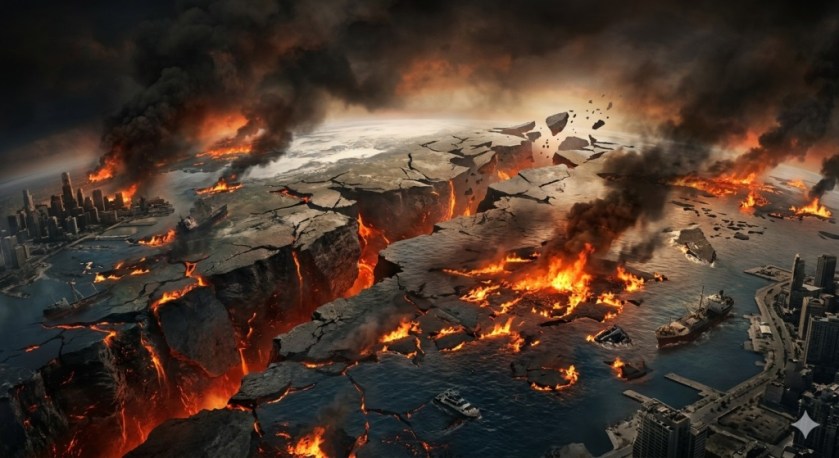
This Meccan surah, like the other surahs in this section, revolves around the horrors and tribulations of the Day of Resurrection and the momentous events that will unfold therein.
People will wander aimlessly, bewildered and terrified by the enormity of their predicament. “The Striking Calamity! What is the Striking Calamity? And what will make you realize what the Striking Calamity is? ˹It is˺ the Day people will be like scattered moths, and the mountains will be like carded wool.
It then clarifies the difference between the obedient believers and their reward: “So as for those whose scale is heavy ˹with good deeds˺, they will be in a life of bliss” and the disobedient, rebellious disbelievers: “And as for those whose scale is light, their home will be the abyss. And what will make you realize what that is? ˹It is˺ a scorching Fire.”
Allah Almighty calls Hell (النار) a mother (أم) because a mother is usually the refuge and sanctuary of her child. Hellfire (نار جهنم) in the Hereafter will shelter and embrace these disbelieving deniers, just as children seek refuge in their mothers. “The abyss” (هاوِيَة) is one of the names of Hell, so named because of its immense depth. The disbelievers will plunge into it, as has been said, for seventy autumns. May Allah protect us from it. The repetition of the word “Al-Qari’ah” (ٱلْقَارِعَةُ) in this surah is evidence of its severity.
The Rhetorical Perceptions in the surah
Why is there an additional word (المَنْفُوش) in Surah Al-Qari’ah but not in Surah Al-Ma’arij?
Allah Almighty said in Surah Al-Ma’arij: (وَتَكُونُ ٱلْجِبَالُ كَٱلْعِهْنِ ٩) “and the mountains will be like wool”, and He said in Surah Al-Qari’ah: (وَتَكُونُ ٱلْجِبَالُ كَٱلْعِهْنِ ٱلْمَنفُوشِ ٥) “and the mountains will be like carded wool.” What is the reason for the additional word: (المَنْفُوش) (fluffed up/carded)?
1- Since the word (القارِعَة) “the Striking Calamity” is mentioned at the beginning of the surah, and (القارِعَة) is derived from (القَرْعِ) which means the act of striking with a stick, it is fitting to mention (النَفَش) “the fluffing”, because one method of fluffing wool is by striking it with a (المِقْرَعَة) which is a type of whip. It is also fitting in another sense, as mountains are shattered with a (المقراع) – a large axe used to break stones – which is also derived from (القَرْعِ) – the act of striking – thus making the mention of (النَفَش) “fluffing” also appropriate.
Therefore, the word (القارِعَة) is the most fitting word for this expression.
The mention of (القارِعَة) is also fitting in conjunction with the mention of (الفراش المبثوث) “the scattered moths” in the verse: (يَوْمَ يَكُونُ ٱلنَّاسُ كَٱلْفَرَاشِ ٱلْمَبْثُوثِ) “˹It is˺ the Day people will be like scattered moths,” because when you strike the ground, the moths fly and scatter. It would not have been appropriate to mention only (الفراش) “moths,” just as it would not have been appropriate to mention only (العِهْن) “wool.”
2- The description of the Day of Judgment in Surah Al-Qari’ah is more terrifying and intense than that mentioned in Surah Al-Ma’arij. In Surah Al-Ma’arij, it says:
تعرج الملائكة والروح إليه في يوم كان مقداره خمسين ألف سنة * فاصبر صبراً جميلاً * إنهم يرونه بعيداً* ونراه قريباً
تَعْرُجُ ٱلْمَلَـٰٓئِكَةُ وَٱلرُّوحُ إِلَيْهِ فِى يَوْمٍۢ كَانَ مِقْدَارُهُۥ خَمْسِينَ أَلْفَ سَنَةٍۢ ٤
فَٱصْبِرْ صَبْرًۭا جَمِيلًا ٥
إِنَّهُمْ يَرَوْنَهُۥ بَعِيدًۭا ٦
وَنَرَىٰهُ قَرِيبًۭا ٧
˹through which˺ the angels and the ˹holy˺ spirit will ascend to Him on a Day fifty thousand years in length. So endure ˹this denial, O Prophet,˺ with beautiful patience. They truly see this ˹Day˺ as impossible, but We see it as inevitable.
There is no agreement on whether this Day refers to the Day of Judgment. If it does, then only the length of that Day and the ascension of the angels and the Spirit are mentioned.
In contrast, Surah Al-Qari’ah says: (القارعة * ما القارعة * وما أدراك ما القارعة) “The Striking Calamity! What is the Striking Calamity? And what will make you know what the Striking Calamity is?”
It is repeated, magnified, and awe-inspiring. This magnification and awe are fitting, as is the description of the mountains on that Day as being like carded wool. Being like carded wool is more terrifying and awe-inspiring than being like plain wool, as is self-evident.
3- In Surah Al-Ma’arij, it is stated that the punishment is inevitable (واقع) and that there is no repelling it: (سَأَلَ سَآئِلٌۢ بِعَذَابٍۢ وَاقِعٍۢ ١ لِّلْكَـٰفِرِينَ لَيْسَ لَهُۥ دَافِعٌۭ ٢) “A challenger has demanded a punishment bound to come, for the disbelievers—to be averted by none…”
Just as a weight falling on wool, without pushing it, does not fluff it up, unlike what is mentioned in Surah Al-Qari’ah. In that surah, the act of striking is mentioned and repeated, and striking does fluff the wool, especially if repeated. Therefore, it was fitting to mention fluffing in Surah Al-Qari’ah as well.
4- The detailed and expansive description of the Day of Judgment in Surah al-Qari’ah) is more fitting, unlike the concise description in Surah al-Ma’arij, which only states: (فِى يَوْمٍۢ كَانَ مِقْدَارُهُۥ خَمْسِينَ أَلْفَ سَنَةٍۢ ٤) “On a Day the measure of which is fifty thousand years.”
5- The verse endings (الفَواصِل) in the two surahs necessitate that each expression be in its proper place. In Surah Al-Qari’ah, Allah says: (يَوْمَ يَكُونُ ٱلنَّاسُ كَٱلْفَرَاشِ ٱلْمَبْثُوثِ ٤ وَتَكُونُ ٱلْجِبَالُ كَٱلْعِهْنِ ٱلْمَنفُوشِ ٥) “On the Day when mankind will be like scattered moths, and the mountains will be like carded wool.” The word (المنفوش) “carded” fits with the word (المبثوث) “scattered.”
In Surah Al-Ma’arij, He said: (يَوْمَ تَكُونُ ٱلسَّمَآءُ كَٱلْمُهْلِ ٨ وَتَكُونُ ٱلْجِبَالُ كَٱلْعِهْنِ ٩) “On that Day the sky will be like molten brass, and the mountains like ˹tufts of˺ wool.” The mention of wool is fitting in relation to molten metal.
6- The mention of carded wool is also fitting in light of the statement at the end of the chapter: (نَارٌ حَامِيَةٌۢ) “a blazing fire,” because a blazing fire is one that melts mountains, turning them into carded wool, due to its intense heat.
In contrast, the description of fire in Surah Al-Ma’arij is: (كَلَّآ ۖ إِنَّهَا لَظَىٰ ١٥ نَزَّاعَةًۭ لِّلشَّوَىٰ ١٦) “But no! There will certainly be a raging Flame, stripping away the skin.”
The skin (الشَوَى) here refers to human skin. The heat that would strip away human skin is less intense than that which melts mountains, turning them into carded wool.
Thus, the addition of (المنفوش) “carded” in Surah Al-Qari’ah is fitting in every respect, and Allah knows best.
7- Furthermore, the mention of the blazing fire (النار الحامية) is fitting for the Striking Calamity (القارِعَة), since the word (القَرَّاعة) – which is derived from the same root as (القارِعَة) – refers to the flint used to strike fire.
Thus, the mention of the Striking Calamity (القارِعَة), the fluffy wool (الصُوف المنفوش), and the blazing fire (النار الحامية) are all appropriate, making the end of the surah fitting for its beginning.
In this way, we see that the mention of (القارِعَة) complements the mention of the scattered wool (المبثوث) with the bed (الفراش), the fluffy wool (المنفوش) with the wool (الصُوف), and the blazing fire at the end of the surah, and Allah knows best.
Why did Allah not say, “And what will make you know what the abyss (الهاوية) is?”
In Surah Al-Qari’ah Allah says,
وَأَمَّا مَنْ خَفَّتْ مَوَازِينُهُ فَأُمُّهُ هَاوِيَةٌ وَمَا أَدْرَاكَ مَا هِيَهْ نَارٌ حَامِيَةٌ
“And as for those whose scale is light, their home will be the abyss (هَاوِيَةٌ). And what will make you realize what that is? ˹It is˺ a scorching Fire,” whereas in Surah Al-Humazah Allah says,
كَلَّا لَيُنْبَذَنَّ فِي الْحُطَمَةِ وَمَا أَدْرَاكَ مَا الْحُطَمَةُ نَارُ اللَّهِ الْمُوقَدَةُ الَّتِي تَطَّلِعُ عَلَى الْأَفْئِدَةِ إِنَّهَا عَلَيْهِمْ مُؤْصَدَةٌ فِي عَمَدٍ مُمَدَّدَةٍ
“Not at all! Such a person will certainly be tossed into the Crusher (الْحُطَمَةُ). And what will make you realize what the Crusher is? ˹It is˺ Allah’s kindled Fire, which rages over the hearts. It will be sealed over them, ˹tightly secured˺ with long braces.”
Why did Allah in Surah Al-Qari’ah not say, (وما أدراك ما الهاوية) “And what will make you know what the abyss is” similar to Surah Al-Humazah instead of using the pronoun (هِيَ) i.e. (وَمَا أَدْرَاكَ مَا هِيَهْ)?
We have a principle (قاعدة) among the linguists that an explicit noun (الاسم الظاهر) is stronger than a pronoun (الضمير). According to this linguistic principle, which description of the fire (النار) is more intense in the two surahs?
In Al-Qari’ah, it is described as (نَارٌ حَامِيَةٌ) “a blazing fire,” while in Al-Humazah, it is described as
(نَارُ اللَّهِ الْمُوقَدَةُ الَّتِي تَطَّلِعُ عَلَى الْأَفْئِدَةِ إِنَّهَا عَلَيْهِمْ مُؤْصَدَةٌ فِي عَمَدٍ مُمَدَّدَةٍ) “Allah’s kindled Fire, which rages over the hearts. It will be sealed over them, ˹tightly secured˺ with long braces.”
The fire in (الْحُطَمَةُ) “the crusher” is far more intense than (نَارٌ حَامِيَةٌ) “a blazing fire”. You might say (نَارٌ حَامِيَةٌ) “a blazing fire” even in this world, but you wouldn’t say (نَارُ اللَّهِ الْمُوقَدَةُ) “Allah’s kindled Fire.” Therefore, the explicit noun (الاسم الظاهر) is used with the intense fire (الْحُطَمَةُ), and this is the principle. Anyone familiar with the Arabic language who knows this principle would be told to place the pronoun and the explicit noun according to this rule; the pronoun would be with (الهاوية) “the abyss” and the explicit noun with (الْحُطَمَةُ) “the crusher”.
 Islamic Civilization