
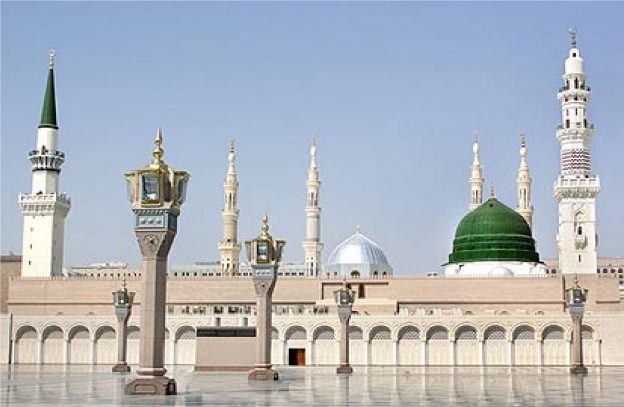

Insulting the Prophet Muhammad ﷺ is a red line that can never be crossed
Allah (Most High) says in the Holy Qur’an:
وَالَّذينَ يُؤذونَ رَسولَ اللَّهِ لَهُم عَذابٌ أَليمٌ
“As for those who insult the Messenger of Allah, they will have a painful punishment [in the hereafter]”1
The western secular liberal elites always cite freedom of speech as an excuse to insult and defame religion and prophets as we see them doing with Prophet Jesus son of Mary (peace be upon them both) and Prophet Muhammad ﷺ. Yet when it comes to insulting western politicians, ‘freedom of speech’ suddenly disappears and they prosecute and jail offenders.
France who has been spearheading these attacks against Islam and the Prophet Muhammad ﷺ in the name of free speech jailed 10 people in 2026 for claiming on X that the first lady was born male and characterizing her relationship with French President Emmanuel Macron as pedophilic.2
The hypocrisy is clear and it has nothing to do with preserving free speech but is an age old colonial attempt to destroy the Islamic civilisation. Charles-André Julien, a French historian wrote a very interesting article in 1940 for Foreign Affairs magazine where he said,
“The capture of Algiers in 1830 marked a significant departure in the expansionist policy of France, for North Africa was quite unlike older French colonial possessions in the Caribbean Sea and the Indian Ocean. The French soon discovered that North Africa — or the Maghreb, as the Arabs called it — did not produce tropical goods and that the native population could neither be destroyed to make way for European colonists nor enslaved to work for them. They also found that Islam provided the natives with a religious and a cultural ideal which they would stubbornly defend. France had not been fitted by experience to understand and govern an Islamic and essentially Oriental people. In the years that followed the fall of Algiers she therefore had to fumble her way. Gradually she acquired in Algeria the reservoir of experience which she was to utilize after 1881 in Tunisia and after 1912 in Morocco. But even today France possesses neither a colonial administration nor a body of doctrine sufficiently well developed to enable her to coördinate her Moslem policy effectively.”3
Despite this relentless campaign, the Muslim ummah remain firm that defaming prophets is a red line that cannot be crossed. All prophets including the last prophet Muhammad ﷺ are not to be treated like ordinary human beings and leaders. They are the ones who sacrificed so much to bring people out of the darkness and oppression of misguidance to the light of guidance and everlasting pleasure in paradise.
What is Blasphemy?
There is no ‘divine right of kings’ in Islam, so insulting a caliph or criticising their institutions and rule is not an attack on the sharia and Islam itself. If it was undertaken in order to forment rebellion against the state, then that is treason and will be dealt with under the treason laws not blasphemy.
Someone from another religion espousing the tenants of their religion is not considered blasphemy in a legal sense, because Islam permitted non-Muslims to remain on their religion and teach it to their communities. Even though a Christian saying “Jesus is the son of God” is considered an “outrageous claim” by Allah, they are permitted to believe this and teach this to their communities by an Islamic State.
Allah (Most High) says, “They say, “The Most Compassionate has offspring.” You have certainly made an outrageous claim, by which the heavens are about to burst, the earth to split apart, and the mountains to crumble to pieces in protest of attributing children to the Most Compassionate. It does not befit ˹the majesty of˺ the Most Compassionate to have children.”4
In fact, it is even permitted for a christian to worship in a mosque. In the time of the Prophet ﷺ, a delegation of Christians from Najran “arrived at The Prophet’s Mosque in Medina and were received by the Prophet ﷺ. It was time for their own prayer so they asked permission to pray. The Companions hesitated to allow them to pray in the mosque, but the Prophet granted them permission. The Christians then turned towards the east and prayed their own prayers inside The Prophet’s Mosque.”5
What is the Punishment for Blasphemy?
The majority position of the scholars throughout Islamic history is that open and public blasphemy is a capital offence if proven within a court of law. This can be seen in the Martyrs of Córdoba incident6 which took place between 850-859 CE in Islamic Spain. Ibn Tamiyyah (d.1328) says,
من سب نبيا من الأنبياء قتل باتفاق الفقهاء
“Whoever insults a prophet from the prophets, is to be killed, by the agreement of the jurists.”7
Ibn al-Mundhir (d.930CE) says,
وأجمعوا على أن من سب النبي صلى الله عليه وسلم أن له القتل
“They unanimously agreed (‘ijma) that whoever insults the Prophet ﷺ is to be put to death.”8
It should be noted however, that despite there being ‘ijma ‘ulema (consensus of the scholars)9 there is no hadd (fixed) punishment for blasphemy in the sharia. The punishment falls under ta’zir (discretionary) punishment which is up to the Qadi (judge) to impose. Ta’zir can include the death penalty, which is why the jurists assigned this punishment as a deterrent.
As regards the ‘hadith’ compiled by Al-Tabarani,
من سب الأنبياء قتل، ومن سب أصحابي جلد
“Whoever insults the prophets is to be executed, and whoever insults my Companions is to be flogged.”
This is a fabricated hadith (mawdu‘) according to Al-Albani.10
Abdurrahman Al Maliki, says, “Ta’zir is legislated upon everyone for whom the Law-Giver did not define a decreed punishment. As for that for which the Shar’ came with a punishment, its perpetrator is punished with the punishment decreed by the Lawgiver. So everything for which the Lawgiver did not decree a punishment is left to the ruler to decree a punishment for it, and the name Ta’zir has been designated for this punishment.”11
Ta’zir punishments, unlike hadd punishments, allow for forgiveness and lightening the punishment by the Qadi if the circumstances surrounding the case support this.
Abdurrahman Al Maliki, says, “As for the Ta’zir, decreeing its punishment is left to the Caliph or Qadi in his capacity as the Caliph’s representative. As for the Caliph, he can reduce the punishment or he may pardon, as it is not fard (obligatory) upon him to inflict the punishment.”12
There is a difference among the scholars in relation to punishment depending on whether the perpetrator is a Muslim or non-Muslim.
There is consensus among the scholars that any Muslim who knowingly insults any of the Prophets is an apostate, and they will be dealt with by the judiciary of an Islamic State under the punishment of ridda (apostasy). Forgiveness is an option here if the perpetrator repents and comes back to the fold of Islam.
Qadi Iyad (d.1149CE) from the Maliki school of thought says: “Know that all who curse Muhammad, may Allah bless him and grant him peace, or blame him or attribute imperfection to him in his person, his lineage, his deen or any of his qualities, or alludes to that or its like by any means whatsoever, whether in the form of a curse or contempt or belittling him or detracting from him or finding fault with him or maligning him, the judgement regarding such a person is the same as the judgement against anyone who curses him. He is killed as we shall make clear. This judgement extends to anything which amounts to a curse or disparagement. We have no hesitation concerning this matter, be it a clear statement or allusion.”13
Sheikh Munajjid says, “all the scholars are unanimously agreed that it is haram to revile or mock the Prophets, and that the one who commits this grievous sin has apostatized from the religion of Islam, just as the one who reviles our Prophet Muhammad ﷺ has apostatized from Islam. The Muslim does not differentiate between the Prophets and Messengers of Allah, as He, may He be glorified and exalted, says (interpretation of the meaning):
{Say, “We have believed in Allah and in what was revealed to us and what was revealed to Abraham, Ishmael, Isaac, Jacob, and the Descendants, and in what was given to Moses and Jesus and to the prophets from their Lord. We make no distinction between any of them, and we are Muslims [submitting] to Him”} [Al ‘Imran 3:84].”14
With regards to non-Muslims, the Hanafi school of thought does not impose the death penalty on them for blasphemy but they will face other Ta’zir punishments if public order necessitates it, because open insults against God and his prophets is a red-line as mentioned.15 Forgiveness is also an option under ta’zir depending on the reality of the case.
An Islamic State will protect the honour of all prophets
At a state level, an Islamic government will use diplomatic pressure to protect the honour of all prophets on the world stage. As an example the Ottoman Caliph Abdul-Hamid II prevented France from hosting Henri de Bornier’s Mahomet play in 1890 through diplomatic pressure.
Extra-judicial punishments are not permitted
It must be made clear that all punishments whether hadd (fixed) or ta’zir discretionary must be implemented by a legitimate Islamic State (Caliphate) through an officially appointed judge (qadi).
Muslim ibn Yasār said: Abū ‘Abdillāh, a man from the Sahābah, would say:
مسلم بن يسار قال: كان أبو عبد الله رجل من الصحابة يقول: الزكاة والحدود والفيء والجمعة إلى السلطان
‘Zakāt, Hudūd, Fay’ (spoils) and Jum‘ah are (consigned) to the Sultān.’16
Ibn Muflih al-Hanbali (rh) said in al-Furoo’ (6/53): ‘It is haraam for anyone to carry out a hadd punishment except the ruler or his deputy. This is something on which the fuqaha’ of Islam are unanimously agreed, as was stated in al-Mawsoo’ah al-Fiqhiyyah (5/280): The fuqaha’ are unanimously agreed that the one who should carry out hadd punishments is the ruler or his deputy, whether the punishment is transgressing one of the limits of Allaah, may He be exalted, such as zina, or a transgression against another person, such as slander.’
Al-Qurtubi said: ‘There is no dispute among the scholars that qisaas (retaliatory punishments) such as execution cannot be carried out except by those in authority who are obliged to carry out the qisaas and carry out hadd punishments etc, because Allaah has addressed the command regarding qisaas to all the Muslims, and it is not possible for all the Muslims to get together to carry out the qisaas, which is why they appointed a leader who may represent them in carrying out the qisaas and hadd punishments.’17
An important point to note when responding to such provocations and insults is that extra-judicial actions and violating citizen agreements are prohibited in Islam. We have a very stark example from the time of the Prophet ﷺ when one of the companions Salama ibn Akwa was faced with such a situation. Even though he was a warrior and military commander he did not respond violently to the insults against the Messenger ﷺ and simply moved away from the polytheists who were abusing the Messenger ﷺ. This is because he and the rest of the Muslims had just signed the treaty of Hudaibiyah with the Quraish in Makkah and so were under an ‘ahd (contract). This is similar to Muslims living in western and other countries. This does not mean there is no response, but the response is intellectual using all legal means available to address such situations.
Salama ibn Akwa narrates,
فَلَمَّا اصْطَلَحْنَا نَحْنُ وَأَهْلُ مَكَّةَ وَاخْتَلَطَ بَعْضُنَا بِبَعْضٍ أَتَيْتُ شَجَرَةً فَكَسَحْتُ شَوْكَهَا فَاضْطَجَعْتُ فِي أَصْلِهَا قَالَ – فَأَتَانِي أَرْبَعَةٌ مِنَ الْمُشْرِكِينَ مِنْ أَهْلِ مَكَّةَ فَجَعَلُوا يَقَعُونَ فِي رَسُولِ اللَّهِ صلى الله عليه وسلم فَأَبْغَضْتُهُمْ فَتَحَوَّلْتُ إِلَى شَجَرَةٍ أُخْرَى
“When we and the people of Mecca had concluded a peace treaty and the people of one side began to mix with those of the other, I came to a tree, swept away its thorns and lay down (for rest) at its base; (while I lay there), four of the polytheists from the Meccans came to me and began to talk ill of the Messenger of Allah ﷺ. I got enraged with them and moved to another tree.”18
How to respond to these attacks
After failing to defeat Islam and its noble values intellectually all the western secular-liberal elites have left are insults, lies and fabrications. These attacks will ultimately fail. They will strengthen the believers and they will generate greater interest in Islam among the non-Muslim populations in western countries who are embracing Islam in ever greater numbers.
يُرِيدُونَ لِيُطْفِئُوا نُورَ اللَّهِ بِأَفْوَاهِهِمْ وَاللَّهُ مُتِمُّ نُورِهِ وَلَوْ كَرِهَ الْكَافِرُونَ
“They desire to extinguish Allah’s Light with their mouths but Allah will perfect His Light, though the disbelievers hate it.”19
Samuel Huntington (d.2008) said, “The West won the world not by the superiority of its ideas or values or religion (to which few members of other civilizations converted) but rather by its superiority in applying organized violence. Westerners often forget this fact; non-Westerners never do.”20
The best way to honour the Prophet Muhammad ﷺ is to follow the justice of his sunnah in all aspects of life including politics, war and society, and showcasing his ﷺ life to open minded people who are willing to listen through all media available to us. This is in-line with the Quranic and Prophetic method of daw’ah.
Allah (Most High) says,
ٱدْعُ إِلَىٰ سَبِيلِ رَبِّكَ بِٱلْحِكْمَةِ وَٱلْمَوْعِظَةِ ٱلْحَسَنَةِ ۖ وَجَـٰدِلْهُم بِٱلَّتِى هِىَ أَحْسَنُ ۚ إِنَّ رَبَّكَ هُوَ أَعْلَمُ بِمَن ضَلَّ عَن سَبِيلِهِۦ ۖ وَهُوَ أَعْلَمُ بِٱلْمُهْتَدِينَ
Invite ˹all˺ to the Way of your Lord with wisdom and kind advice, and only debate with them in the best manner. Surely your Lord ˹alone˺ knows best who has strayed from His Way and who is ˹rightly˺ guided.21
Notes
- Holy Qur’an, Surah At-Tawba, verse 61 ↩︎
- The French president met his wife when he was about 16 years old and she was a 39-year-old drama teacher at his high school. ↩︎
- https://www.foreignaffairs.com/articles/france/1940-07-01/france-and-islam ↩︎
- Holy Qur’an, Surah Maryam, verses 88-92 ↩︎
- Yasir Qadhi, ‘The Sirah of the Prophet ﷺ,’ The Islamic Foundation, 2023, Chapter: The Verse of God’s Curse (Āyah al-Mubāhalah ↩︎
- https://youtu.be/0OkMVGXFuBY ↩︎
- Majmoo‘ al-Fataawa, https://shamela.ws/book/7289/4870 ↩︎
- https://shamela.ws/book/12445/139 ↩︎
- The early Hanafi scholars differed with regards applying this to non-Muslims ↩︎
- https://shamela.ws/book/12762/403 ↩︎
- Abdurrahman Al Maliki, Nidham Ul Uqoobaat, Dar Ul-Ummah, second edition 1990, p.150 ↩︎
- Abdurrahman Al Maliki, Nidham Ul Uqoobaat, Dar Ul-Ummah, second edition 1990, p.211 ↩︎
- Kitab al-Shifa bi-Ta‘rif Huquq al-Mustafa ↩︎
- https://islamqa.info/en/answers/159664/reviling-any-of-the-prophets-constitutes-disbelief-and-apostasy ↩︎
- https://muslimcentral.com/yasir-qadhi-blasphemy-laws-in-islam ↩︎
- Imām al-Tahāwī as mentioned in Fath al-Bārī of Hāfiz Ibn Hajar al-‘Asqalānī ↩︎
- Tafseer al-Qurtubi, 2/245, 246 ↩︎
- Sahih Muslim 1807a, https://sunnah.com/muslim:1807a ↩︎
- Holy Qur’an, Surah as-Saff, verse 8 ↩︎
- Samuel Huntington, ‘The Clash of Civilizations and the Remaking of World Order,’ p.51 ↩︎
- Holy Qur’an, Surah Al-Nahl, verse 125 ↩︎