When Umar ibn Al-Khattab was stabbed and his death was imminent, the Ahlul hali wal-aqd came and asked him to nominate a successor as Abu Bakr had done for him. Umar couldn’t come to a decision so he appointed a council of six candidates who were all from the 10 promised jannah to meet after his death and appoint a Khaleefah. Umar summoned Ali, Uthman, Sa’d, Abdul-Rahman ibn Awf, and al-Zubayr ibn Al-Awwam and said to them, “I have looked into the matter and consider you to be the chiefs and leaders of the people. This matter will remain among you alone.”[1]
Hereditary Rule started from the time of Mu’awiyah ibn Abi Sufyan (41H/661CE – 60H/680CE) when he was Khaleefah, so we will discuss some key events concerning his rule in order to fully understand why he embarked on this course of action.
This is an extract from the article Part 2: Bay’a in Islamic History – The Umayyad Khilafah
Disputes broke out many times throughout the Khilafah’s 1300-year history over who should govern the state. One thing remained constant however and that was the bay’a. No Khaleefah ever came to power without the bay’a, and this method of appointing the ruler continued until 1924.
During the civil war between Mu’awiya and Ali, Mu’awiya never claimed the Khilafah for himself or took the bay’a for himself. Rather he made his bay’a conditional on Ali handing over Uthman’s assassins which Ali was unable to fulfil at that time.
Abu Muslim Al-Khawlani and a group of people said to Mu’awiyah: “Do you disagree with Ali or are you like him?” So Mu’awiyah said: “No, By Allah! I know that Ali is better than me, and he has more right to the leadership than me. However, do you not know that Uthman was killed wrongfully!? I am his cousin (‘Uthman’s cousin), and I am asking for his blood, so go to Ali and tell him this. So let him give up the killers of Uthman and I will give up (the leadership).” So they went to Ali and told him and spoke to him about it, but he did not give them up to Mu’awiyah.[1]
As discussed previously Al-Abbas contracted the bay’a to Ali in Madinah, the capital of the Khilafah, and all the Muslims in Madinah consented to this. Mu’awiya was not involved in the contracting of the bay’a and his consent was not necessary for Ali to become the Khaleefah because the Ahlul hali wal-aqd i.e. senior sahaba were in Madinah.
Once the bay’a is contracted legitimately to a Khaleefah (bay’a al-in’iqaad), then the rest of the ummah is bound by this bay’a and have to fulfil its conditions. This entails obedience to the Khaleefah inwardly and outwardly as the Messenger of Allah ﷺ said, “Whosoever gave a bay’a to an Imam, giving him the clasp of his hand, and the fruit of his heart shall obey him as long as he can, and if another comes to dispute with him, you must strike the neck of that man.”[2] This is called the bay’a of obedience (bay’a at-taa’ah). If the ummah withhold their bay’a of obedience and rebel, then it’s the right of the Khaleefah to use force if necessary to quell the rebellion and reunite them with the state. This is what Ali did when he confronted Mu’awiya.
When the Byzantine Emperor heard about this dispute, he tried to take advantage of it and marched to Ash-Sham with a large number of troops. Mu’awiyah wrote to him, saying: “By Allah, if you do not give up and go back to your own country, Oh cursed one, I shall reconcile with my cousin against you, and I shall drive you from all of your land and leave you no room on earth, vast as it is.” At that point, the Byzantine Emperor got scared and refrained from fighting, and he sent a message asking for a truce.”[3]
This shows that Islam was always the central reference point in the Khilafah even though elements were misapplied from time to time through weak ijtihad by the Khaleefahs.
After the abdication of al-Hasan ibn Ali, Mu’awiyah was accepted as the legitimate Khaleefah by the Ahlul hali wal-aqd (political representatives of the ummah) residing in Madinah, Iraq and Ash-Sham, and by the majority of the Muslim masses. The capital of the Khilafah moved from Kufa to Damascus where Mu’awiyah and his tribe Banu Umayyah, and the Yamani tribal groups which gave him support were now based. Part of the Ahlul hali wal-aqd were therefore now based in Ash-Sham. Quraysh, the sahaba and tab’ieen were dispersed throughout the Khilafah but there was still a strong powerbase in Madinah and Mu’awiya would not have a legitimate bay’a without their consent.
In Ash-Sham, Mu’awiya was primarily dependent on Banu Kalb who were part of the Yamani tribes from Southern Arabia who had settled there before Islam. They were initially Christian Arabs and part of the Byzantine Empire, but started converting to Islam during the time of the Prophet ﷺ and throughout the Rightly Guided Khilafah. One of Mu’awiya’s wives was Maysun bint Bahdal al-Kalbiyah, the daughter of a leader of Banu Kalb and the mother of Yazid ibn Mu’awiya.
A number of Muslim Yamani tribes also settled in Ash-Sham during the time of Abu Bakr, when he wrote a letter to Yemen requesting they join the Islamic conquest of Ash-Sham.[4] Some of the prominent Yamani tribes were Kalb, Tanukh, Judham, Azd and Taghlib.[5]
Another tribal group was the Qaysi tribes from Northern Arabia who settled in Ash-Sham and Iraq during the Islamic conquests of the Rightly Guided Khaleefahs, and so were relative newcomers to the region. The Qaysi tribes consisted of Tamim, Ghatafan, Hawazin, Banu Amir, Thaqif, Banu Sulaym and Bahila to name but a few.[6]
These tribal groupings became a powerbase during the time of Mu’awiya and throughout the Umayyad period, and were effectively part of the Ahlul hali wal-aqd who supported the Umayyad Khaleefahs. This shift in the people of power and influence is important to understand when we come to discuss the bay’a to Yazid ibn Mu’awiya.
Qaysi and Yamani tribal groupings
As mentioned previously, al-Hasan’s motivation for resigning from the Khilafah was to restart the Islamic conquests which had halted after Uthman’s assassination, and to deal with the other territories who had taken advantage of the situation and rebelled in the East. Al-Hasan said, “I have been thinking of going to Madinah to settle there and yielding (the Khilafah) to Mu’awiya. The turmoil has gone on for too long, blood has been shed, ties of kinship have been severed, the roads have become unsafe, and the borders have been neglected.”[7]
Once Mu’awiya became Khaleefah the conquests resumed on three fronts:
1. Byzantine Empire
2. North Africa
3. Sijistan, Khorasan and Transoxiana in the East which had rebelled
Mu’awiya outlined his foreign policy when he said, “Tighten the stranglehold on the Byzantines so that you will be able to gain control over other nations.”[8]
Mu’awiya’s rule marks the end of the Rightly Guided Khilafah and the beginning of the Umayyad Khilafah based on hereditary rule. The Prophet ﷺ said, “The Khilafah in my Ummah will be for thirty years. Then there will be mulk (kingdom) after that.”[9]
Ibn Kathir says, “The first monarchy began with the rule of Mu‘awiyah, making him the first king (malik) in Islam and the best of them all.”[10]
The reason the ulema used the title Malik for the Umayyad and Abbasid Khaleefahs was because these Khaleefahs were not following completely in the footsteps of the Prophet Muhammad ﷺ when it came to ruling. Abu Bakr, the first Khaleefah was given this title because Khaleefah means successor, and Abu Bakr was a successor to the Prophet ﷺ in ruling. Mawardi says, “He is called the Khaleefah (successor) as he stands in for the Messenger of Allah at the head of his Ummah and so it is permitted for someone say, ‘Oh Khaleefah of the Messenger of Allah!’ or for someone to say, ‘Khaleefah’ on its own.”[11]
Umar ibn al-Khattab said, “By Allah, I do not know whether I am a Khaleefah or a king, for if I am a king then this is a tremendous matter.” Someone said, “Amir al-Mu’minin, there is a distinction between the two of them.” He said, “What is it?” He said, “A Khaleefah does not take except what is due and he does not use it except in the right way, and you, praise be to Allah, are like that. The king treats people unjustly, and takes from this one and gives to that one.” ‘Umar was silent.[12]
It should be noted that the Khaleefah was never sovereign like the Byzantine and Persian Emperors because sovereignty was always to the sharia.
In the year 56H/675CE, Mu’awiya made his son Yazid the wali al-ahd (heir apparent), instigating the start of hereditary rule within the Khilafah which would last until 1924.
Al-Hasan al-Baṣri said: Two men put disorder into people’s affair. First, ʿAmr ibn al-ʿAs when he advised Mu’awiya to raise the copies of the Qurʾan and they were lifted up. He said, “Where are the reciters (al-qurraʾ)?” Then the Khawarij asserted that judgement only belongs to Allah. This assertion of Allah’s judgement will continue until the Day of Rising.
Second, al-Mughira ibn Shuʿba, when he was Mu’awiya’s governor over Kufa and Mu’awiya wrote to him, “When you read my letter, come to me, dismissed from your office.” But he delayed and when he finally came to him, Mu’awiya asked, “What took you so long?” Al-Mughira replied, “An affair that I had to settle.” He said, “And what was that?” He said, “The bay’a for Yazid’s succession after you.” He said, “And did you complete it?” He replied, “Yes.” Then Mu’awiya said, “Return to your post.” When al-Mughira departed, his companions asked him how it went and he replied, “I have placed Mu’awiya’s foot in a stirrup of error, in which it will remain until the Day of Rising.”
Al-Hasan al-Basri added: Therefore, they have taken bay’a for their sons and were it not for that, it would have been a matter of consultation (shura) until the Day of Rising.[13]
After receiving al-Mughira ibn Shuʿba’s advice on appointing his son Yazid, Mu’awiya embarked on a campaign to bring this in to fruition.
The first attempts at taking bay’a for Yazid started prior to 50H because al-Mughira ibn Shuʿba died during the plague of Kufa in 50H. Mu’awiya’s initial attempts failed due to widespread opposition from the sahaba and the Ahlul hali wal-aqd of the regions.
When Ziyad ibn Abi Sufyan, Governor of Iraq and Khorasan died in 53H. Mu’awiya again attempted to bring up the issue. He sent 100,000 dirhams to Abdullah ibn Umar but Ibn Umar refused to be bribed and this attempt also failed.[14]
Then in the year 56H Mu’awiya finally managed to force the issue and made Yazid the wali al-ahd (heir apparent) by taking the bay’a from the Ahlul hali wal-aqd of the regions.
Ibn Kathir narrates the events of 56H. This was the year in which Mu’awiyah called on the people, including those within the outlying territories, to pledge allegiance to his son, Yazid, to be his heir to the Khilafah after him. Almost all the subjects offered their allegiance, with the exception of ‘Abdur-Rahman bin Abu Bakr, ‘Abdullah bin ‘Umar, al-Hussain bin ‘Ali, ‘Abdullah bin Az-Zubayr and Ibn ‘Abbas.
Because of this, Mu’awiyah passed through al-Madinah on his way back from Makkah upon completion of his ‘Umrah, where he summoned each one of the five aforementioned individuals and threatened, intimidated and imprisoned them. The speaker who addressed Mu’awiyah sharply, with the greatest firmness amongst them was ‘Abdur-Rahman bin Abu Bakr as-Siddiq, while ‘Abdullah bin ‘Umar bin al-Khattab was the most soft spoken amongst them. Mu’awiyah then delivered a sermon, having stood these five men below the pulpit in full view of the people, after which the people pledged allegiance to Yazid as they (five sahabi) stood in silence without displaying their disagreement or opposition for fear of being humiliated and threatened. This was done in the other regions of the country in order to facilitate the progress of pledging allegiance to Yazid.[15]
The five sahabi remained silent and did not rebel against Mu’awiya because they were acting on the hadith of the Messenger ﷺ, ‘There will be ameers, you recognise (something of what they do) and you reject (some). Whosoever recognised, he would be absolved (of sin) and whosoever rejected, he would be safe. But whosoever accepted and followed (what they do, he would not be safe).’ They (the Sahabah) asked ‘Shouldn’t we fight them?’ He ﷺ said: ‘No, as long as they pray.’[16]
Imam Nawawi explains the meaning of the, ‘Shouldn’t we fight them?’ He said; ‘No, as long as they pray’. In it is the meaning of what preceded this, that khurooj (rebellion) is not allowed against the Khulufaa’ due to their oppression or transgression as long as they don’t change anything from the principles of Islam.[17]
The five senior sahabi were part of the Ahlul hali wal-aqd and as such Mu’awiya had to get their consent for the bay’a after his death to be valid.
The Five Senior Sahabi of Madinah
al-Hussain bin Ali
Abdur-Rahman bin Abu Bakr
Abdullah ibn Umar
Abdullah ibn Az-Zubayr
Abdullah ibn ‘Abbas
When Mu’awiyah came to Madinah he sent for al-Hussain bin Ali saying, “Oh cousin, the people have been able to acknowledge Yazid except for five persons of the Quraysh whom you lead. Oh cousin, what is your purpose in disagreeing?” He replied, “Do I lead them?” Mu’awiyah replied that he did.[18]
It should be noted that bay’a is a contract between the Muslims and the Khaleefah. Bay’a cannot be given to a successor while the previous Khaleefah is still in office, as Mu’awiya did. Abdullah ibn az-Zubayr said to Mu’awiya, “Allegiance to both of you can never be combined.”[19] Making Yazid the crown prince was not a valid bay’a but simply a contract of nomination (wilayatul ‘ahd). After Mu’awiya’s death the Muslim representatives were free to dispose of this nomination and choose someone else if they so wished. This is similar to Abu Bakr’s nomination of Umar. The bay’a was only given to Umar ibn Al-Khattab after Abu Bakr had passed away.
Although Mu’awiya tried to justify his actions by what Abu Bakr did in nominating Umar, this is invalid because as discussed earlier Abu Bakr took shura from the ummah and chose someone based on meritocracy not familial ties. The people said to Abu Bakr, “O Khaleefah of the Messenger Allah, your opinion is our opinion (i.e., appoint your successor for us).” He said, “Then give me some time, so that I can see what is best in the view of Allah and what is best for His religion and His slaves.”[20]
Mu’awiya had initially tried to take bay’a for Yazid via his governor in Madinah Marwan ibn Al-Hakam. He wrote to Marwan to take the bay’a and Marwan addressed the people: “The Ameer of the Believers has decided to appoint his son, Yazid, as his successor over you, according to the sunna of Abu Bakr and ʿUmar.” Abd ar-Rahman ibn Abi Bakr stood up and said, “Rather, according to the sunna of Khusraw and Caesar! Abu Bakr and ʿUmar did not appoint their sons to it, nor anyone from their families.”[21]
Later when Mu’awiya came in person to Madinah to take the bay’a, Abu Bakr’s other son Muhammad ibn Abi Bakr said to him, “You want us to entrust you to Allah in the affair of your son, but, by Allah, we will not do that. By Allah, return this affair as a matter of shura among the Muslims or we will bring it against you all over again.”[22]
From these statements it is clear that the core issue on why the sahaba opposed Yazid was due to him taking the bay’a through hereditary rule rather than shura and meritocracy. If Mu’awiya had chosen based on merit then he would have chosen al-Hussain or Abdullah ibn az-Zubayr or another of the sahabi, as the sahaba are of a distinguished rank unmatched by anyone as Allah says, “The forerunners (sabiqun) – the first of the Muhajirun and the Ansar – and those who have followed them in doing good: Allah is pleased with them and they are pleased with Him.”[23]
As mentioned Mawardi says: “Imamate comes into being in two ways: the first of these is by the election of the Ahlul hali wal-aqd, and the second is by the delegation of the previous Imam.”[24] But he puts conditions on this delegation if he is appointing a close relative. He says, “If the Imam wants to entrust the Imamate to a successor he should strive toarrive at a clear decision as to who has the greatest claim to it and who bestfulfils its conditions. If, in his effort to decide, someone becomes clear to him,then this choice should be examined: if it is neither his son nor father, he may,on his own, make the bay’a to him and may delegate authorityto him without taking council with any of the electors. There is a differenceof opinion, however, as to whether or not there must be some sign ofacceptance on their part of the contracting and execution of his act of allegiance.
Some of the ‘ulama of the people of Basra maintain that the electors’ (Ahlul hali wal-aqd) acceptance of his transfer of allegiance must exist before it is binding on the Ummah as it is a right which belongs to the electors and the transfer of Imamate is not binding on the Ummah except with the acceptance of those amongst them involved in the election.
The valid position is that this transfer of allegiance stands and that their acceptance of it is not taken into consideration as the act of allegiance to ‘Umar, may Allah be pleased with him, was not dependent upon the acceptance of the companions and as the Imam has more right over the Imamate than them – his choice of another for the Imamate takes precedence and his word in the matter is executed.
If the successor is his son or father there are three differences of opinion as to whether he is permitted to carry out the transfer of Imamate alone.
The first of these is that it is not permitted until he has sought counsel of the electors and they consider that he is worthy of this post: if this does happen his act of allegiance to a successor is validated as this seeking of council is like an assessment of his integrity and has the same value as a testimony and the appointment conferred on him over the Ummah has the same value as a legal judgement.[25]
The capital of the Khilafah was now in Damascus and as such, some of the Ahlul hali wal-aqd from the Arab tribes were in Ash-Sham. Mu’awiya feared that the Arab tribes in Ash-Sham would not accept someone from outside Banu Umayyah to lead them. He said to Muhammad ibn Abi Bakr after he refused to give bay’a to Yazid, “Take it easy, man. Don’t go close to the Syrians. I fear that they will anticipate me regarding you (i.e. kill you) unless I announce in the evening that you have pledged allegiance. Afterwards do whatever seems proper to you.”
After failing to get support from the sahaba in Madinah, Mu’awiya ascended the minbar, praised Allah and said, “We found what people say is wrong. They claim that Ibn ʿUmar, Ibn az-Zubayr and Ibn Abi Bakr did not pledge allegiance to Yazid, but they did hear, obey and pledge allegiance to him.” But the Syrians said, “No, by Allah! We will not be satisfied until they pledge allegiance to him in public. If they don’t, we will cut off their heads!” Mu’awiya replied, “Glory be to Allah, how quick people are to harm Quraysh! I do not want to hear this kind of talk from anyone after today.”
Then he descended. The people said, “Ibn ʿUmar, Ibn Abi Bakr and Ibn az-Zubayr pledged allegiance,” whereas they said, “No, by Allah, we did not pledge allegiance.” But the people maintained that they did (pledge allegiance). Mu’awiya then departed and returned to Syria.[26]
Ibn Khaldoon says, “What prompted Mu‘awiyah to give precedence to his son Yazid and appoint him as Khaleefah, rather than anyone else, was the belief that this would serve the interests of the Muslims by uniting them and bringing them together behind one man, with the approval of the decision-makers at that time, who were from Banu Umayyah, because at that time Banu Umayyah would not accept anyone (as Khaleefah) except one of their own number. They were the strongest clan of Quraysh and the ones who had the greatest influence.
So Mu‘awiyah preferred Yazid, over others who may have been thought more qualified than him for that reason, and he overlooked others who were more virtuous in favour of one who was less virtuous, because he was keen to keep the Muslims united behind one leader, which is a matter of great importance in Islamic teachings. It is not possible to think of any other motive for Mu‘awiyah than that, because his good character and the fact that he was a Sahaabi would rule out any other motive.
The fact that some of the senior Sahaabah were present and kept quiet indicates that there was nothing suspicious in what Mu‘awiyah did, because such people would not be deterred from speaking out against something wrong, and Mu‘awiyah was not one of those who would be too arrogant to accept the word of truth. All of them were too noble to do that, and their good character would rule it out.”[27]
He also says, “Mu’awiyah issued instructions for Yazid to become Khaleefah for fear of the Muslims becoming divided.”[28]
One of the benefits cited for a monarchy is the clear line of succession for future rulers of the kingdom. Historically, this was seen as providing a stable system that prevents a power vacuum after the King dies. While Mu’awiya may have had good intentions in appointing Yazid and wanting to stabilise the Khilafah after his death, in actuality this deviation from shura and instituting hereditary rule had the opposite effect. Allah says, “Perhaps you dislike something which is good for you and like something which is bad for you. Allah knows and you do not know.”[29]
[3] Dr Ali Muhammad As-Sallaabee, ‘Ali ibn Abi Talib,’ International Islamic Publishing House, Vol.2, p.178
[4] Sallaabee, ‘The Biography of Abu Bakr As-Siddeeq’, Op.cit., p.628
[5] Hugh Kennedy, ‘The Prophet and the Age of the Caliphates: The Islamic Near East from the 6th to the 11th Century,’ 2nd Edition, Harlow: Pearson Education Ltd, p.92
[18] Abu Ja`far Muhammad b. Jarir al-Tabari, ‘The History of Al-Tabari’, translation of Ta’rikh al-rusul wa’l-muluk, State University of New York Press, Volume XVIII, p.186
[19] Jalal ad-Din as-Suyuti, ‘History of the Umayyad Caliphs,’ translated by T.S.Andersson, Ta Ha Publishers, p.24
[20] Sallaabee, ‘The Biography of Abu Bakr As-Siddeeq’, Op.cit., p.724
[21] Jalal ad-Din as-Suyuti, ‘History of the Umayyad Caliphs,’ translated by T.S.Andersson, Ta Ha Publishers, p.24
This is an extract from the article Part 2: Bay’a in Islamic History – The Umayyad Khilafah
There is ikhtilaaf (difference of opinion) among the ulema on Yazid’s legitimacy. Many scholars accept he was a legitimate Khaleefah such as Al-Dhahabi, but that he was sinful and blameworthy for the oppression and persecution he committed against the sahaba, and the murder of al-Hussain and his family. Others such as ibn al-Jawzi reject his legitimacy and call him a usurper, because he never had a legally convened bay’a that was given through free choice and consent by the majority of the Ahlul hali wal-aqd (political representatives of the ummah).
Al-Dhahabi says, “(Yazid) he was the commander of that army during the campaign against Constantinople, among which were people such as Abu Ayyoob al-Ansaari. Yazid was appointed by his father as his heir, so he took power after his father died in Rajab 60 AH at the age of thirty-three, but his reign lasted for less than four years.
Yazid is one of those whom we neither curse nor love. There are others like him among the Khaleefahs of the two states (Umayyad and Abbasid) and the governors of various regions, indeed there were some among them who were worse than him. But the issue in the case of Yazid is that he came to power forty-nine years after the death of the Prophet ﷺ, and it was still close to the time of the Prophet and some of the Sahaabah were still alive such as Ibn ‘Umar who was more entitled to the position than him or his father or his grandfather.
His reign began with the killing of the martyr al-Hussain and it ended with the battle of al-Harrah, so the people hated him and he was not blessed with a long life. There were many revolts against him after al-Hussain, such as the people of Madeenah who revolted for the sake of Allaah, and Ibn az-Zubayr.”[1]
It was mentioned in the Tafseer of Al-Alusi: “Ibn al-Jawzi (May Allah’s mercy be upon him) stated in his book: ‘As-Sirr ul-Masun’: “From the general beliefs that is prevalent amongst those attributed to the Sunnah is that they say: That Yazid was in the right and that Al-Hussain (ra) was wrong to rebel against him. Had they examined the Seerahs they would have become aware of how the bay’a was contracted to him and that the people were compelled with it! And that he did every ugly (or abominable) act. If we would have evaluated the Sihhah (correctness and validity) of the bay’a contract, then there appeared from it all that would oblige the annulment of the contract. Nobody inclines to that view except every ignorant person, blind in the Madhhab who believes that by adopting that opinion he is being harsh against the Rawaafid (i.e. Shi’ah).”[2]
The Ahlul hali wal-aqd resided in three areas at the time of Yazid. These centres of power were:
Ash-Sham with Damascus as the capital of the Khilafah and seat of central government.
Iraq – Kufa and Basra
Hijaz – Makkah and Madinah
The Ahlul hali wal-aqd in Damascus and Ash-Sham gave bay’a to Yazid, but this is not enough because free consent and choice is required from all the Muslims, and so the political representatives who resided in the Hijaz and Iraq also needed to give consent. Mawardi says, “Those living in the country of the Imam do not possess any advantages over those living in other countries: it is rather that someone resident in the country of the Imam contracts to elect the Imam by custom not by any legal imposition of the shari’a; moreover such residents will come to know of the death of the Imam before people from other countries and usually the person who is most fitting for the succession is to be found in the country of the Imam.”[3]
The strongest opinion on this issue is that of ibn Al-Jawzi which is that Yazid did not have a legally convened (sihah) bay’a. This is why the Muslims of Madinah, Makkah and Kufa all rebelled against Yazid’s authority, which is their right (haqq) in fighting an injustice mazlama. The evidence for fighting the usurper is clearly established from the sunnah and ijma as-Sahaba.
As for the sunnah. In the Musnad of Ahmad Bin Hanbal he recorded the Messenger of Allah ﷺ saying:
مَنْ قُتِلَ دُونَ مَظْلَمَتِهِ فَ هُوَ شَهِيدٌ
“Whoever is killed in defence of an injustice (Mazlamah) against him, he is Shaheed.”[4]
The ightisaab (usurpation) of the authority from the Ummah is a Mazlamah from amongst the Mazhaalim (acts of injustice), and it is the Ummah’s right to fight to regain what was usurped from them. Whoever is killed in that fighting is a Shaheed.
Ahmad Bin Hanbal also related in his Musnad that the Nabi ﷺ said:
“What an excellent death it is for the man to die in defence of his Haqq (right).”[5]
The Sultah (authority) is a Haqq for the Ummah and as such it is her right to fight until death to regain this right from the one who has taken it without right!
As for the ijma as-Sahaba. Umar ibn Al-Khattab in a public speech said, “I have been informed that a speaker amongst you says, ‘By Allah, if Umar should die, I will give the bay’a to such-and-such person.’
One should not deceive oneself by saying that the bay’a given to Abu Bakr was given and completed suddenly. No doubt, it was like that, but Allah protected (the people) from its evil, and there is none among you who has the qualities of Abu Bakr. Remember that whoever gives the bay’a to anybody among you without consulting the other Muslims, neither that person, nor the person to whom the bay’a was given, are to be supported, lest they both should be killed.”
‘Umar Ibn Al-Khattaab then continued his Khutbah and came to the story of the bay’a that was given to Abu Bakr and how it happened in a sudden manner: “That it happened suddenly without prior consultation, but Allah protected the Muslims from the evil of disagreement in the selection of Abu Bakr due to everyone’s admission of his favour and merit, his precedence and the fact that he had the most right to the Khilafah, and so they (thereafter) gave him the bay’a out of willing choice …”
Umar continued: “So, if any person gives the bay’a to somebody (to become a Khaleefah) without consulting the other Muslims, then the one he has selected should not be granted allegiance, lest both of them should be killed.”[6]
Dr Muhammad Khair Haikal comments on this speech of Umar. “This is the speech of ‘Umar Ibn Al-Khattaab delivered to a gathering of Fuqahaa’ from the Sahaabah immediately following the Hajj season in relation to the subject of the usurpation of the authority in addition to what was mentioned in Fat’h ul-Baari in terms of the explanation of Al-Khattaabi. The intended purpose of presenting this speech of ‘Umar’s (ra) and the explanation for it, is to show that ‘Umar Ibn ‘Al-Khattaab warned those who sought to attribute the authority to a particular person, being content to not present the matter to consultation amongst the individuals of the Ummah and its representatives. In addition, that the one who does that is exposing himself to being killed just as the one who wanted to attribute the authority to him would also be exposed to being killed.
The sahaabah listened to this speech and none spoke out against what was said. Consequently, it represented and Ijmaa’ (consensus) upon what was mentioned in terms of the obligation to take the opinion of the Muslims in respect to whom is chosen to be a Khalifah over them. Just as it represented an Ijmaa’ (consensus) over the matter to beware of those who want to usurp the affairs of the Muslims as ‘Umar expressed in his speech. And it also represents a consensus upon that being killed (i.e. the punishment of death) lies in wait for those usurpers, those who have gone outside from the method of shura to arrive to the position of the authority, and that it (i.e. death) applies equally to those who aspire and have ambition for the Khilafah and those who support them!”[7]
Although some of the sahaba such as Abdullah ibn Umar and Abdullah ibn Abbas gave bay’a to Yazid freely and with consent, the majority in Madinah did not give consent and they refused to submit to his authority. Ibn Umar and Ibn Abbas (May Allah be pleased with them) were following their own ijtihad on the issue, but this is their individual opinion. In sharia the individual opinion of a sahabi is not a sharia daleel. Only the collective agreement (ijma) on an issue is a daleel (evidence). In the case of fighting the usurper there is explicit evidence from the sunnah and ijma as-sahaba as mentioned above, and this is what the majority of the sahaba and tabi’een followed and Allah knows best.
After Mu’awiya died, Yazid was given the bay’a by the Ahlul hali wal-aqd of Ash-Sham but the Ahlul hali wal-aqd from among the senior sahaba and tabi’een were split. The collective consensus of the sahaba (ijma) is a sharia evidence for us, but the individual opinion and ijtihad of a sahabi is not. Someone is free to adopt or disagree with such an opinion as the scholars of the past have done. With regards to Yazid, each sahabi was following a valid ijtihad and as such there is no blame on them for what they did since they are the best generation.
The core issue on why the sahaba opposed Yazid was due to him corrupting the bay’a by transferring it from shura and meritocracy to hereditary rule. This was a vital issue for them and is why they sacrificed their lives. This can be seen from their numerous statements as discussed previously. If Mu’awiya had chosen based on merit then he would have chosen al-Hussain or Abdullah ibn az-Zubayr or another of the sahabi, as the sahaba are of a distinguished rank unmatched by anyone as Allah says, “The forerunners (sabiqun) – the first of the Muhajirun and the Ansar – and those who have followed them in doing good: Allah is pleased with them and they are pleased with Him.”[8]
Yazid is appointed ‘Khaleefah’ with a contracting bay’a from the tribes in Ash-Sham.[9]
Rajab 60H
Al-Walid ibn Utbah, the governor of Madinah tries to take the bay’a forcibly from Ibn Umar, Ibn Zubayr and al-Hussain.[10]
26 Rajab 60H
Ibn Zubayr and his brother Ja’far leave for Makkah at night. Al-Walid sends 30 or 80 horsemen after him but they fail to stop him.[11]
27 Rajab 60H
Al-Hussain and his family leave for Makkah at night. Al-Walid is distracted by his pursuit of ibn Zubayr allowing al-Hussain to escape.[12]
Sha’ban 60H
Ibn Abbas and Ibn Umar give bay’a to Yazid via the governor of Madinah Al-Walid.[13]
Ramadan 60H
Al-Walid ibn Utbah is removed from Madinah for failing to take the bay’a from ibn Zubayr and al-Hussain. His replacement is Amr bin Sa’id who arrives in Madinah during this month.[14]
Ramadan 60H
The people of Kufa send messengers to al-Hussain requesting he comes to them so they can give him bay’a and appoint him Khaleefah.[15]
Ramadan 60H
Al-Hussain dispatches his cousin Muslim ibn ‘Aqil ibn Abi Talib to investigate the Kufan’s offer.[16]
Shawwal 60H
Muslim ibn ‘Aqil arrives in Kufa and 12,000 pledge allegiance to al-Hussain. Ibn ‘Aqil writes to al-Hussain informing him of this so al-Hussain makes preparations to leave Makkah for Kufa.[17]
Shawwal 60H Dhul Qa’dah 60H
Al-Nu’man ibn Bashir does not oppose the plans of the Kufans. When Yazid ibn Mu’awiyah is informed of this replaces Al-Nu’man with Ubaydullah ibn Ziyad who at the time was the governor of Basra, so ibn Ziyad had Kufa under his authority as well.[18]
Dhul Qa’dah 60H
Yazid ibn Mu’awiyah sends messengers to Abdullah Ibn az-Zubayr in Makkah trying to force him to pledge his allegiance. Ibn az-Zubayr refuses.[19]
Dhul Qa’dah 60H
‘Amr ibn az-Zubayr is then sent by the governor of Madinah Amr bin Sa’id with an army of 2,000 to attack his brother in Makkah.[20]
Dhul Hijjah 60H
Ubaydullah ibn Ziyad arrives in Kufa heavily veiled so people don’t know who he is and assume he is al-Hussain. Every group he passes by says to him, “Greetings, son of the daughter of the Messenger of Allah.”[21]
Dhul Hijjah 60H
Ubaydullah ibn Ziyad starts working to thwart the plans of Muslim ibn ‘Aqil and is successful in this. He executes Muslim ibn ‘Aqil along with his main protector Hani ibn Urwah.[22]
8 Dhul Hijjah 60H
Al-Hussain, unaware of the events in Kufa, departs from Makkah with his family.[23]
Dhul Hijjah 60H
‘Amr ibn az-Zubayr fails to defeat his brother Abdullah ibn az-Zubayr, and Makkah remains outside of Yazid’s authority for the rest of his rule.[24]
10 Muharram 61H
Hussain and 72 of his followers are martyred at Karbala by the army of Ubaydullah ibn Ziyad.
61H
Ibn az-Zubayr starts making preparations to take the bay’a but isn’t formally contracted as Khaleefah until after Yazid dies.[25]
61H
The people of Madinah write to Ibn az-Zubayr saying that since al-Hussain has gone, there was no one who can dispute with him, as he is the next most suitable candidate for the post of Khaleefah.[26]
61H
Amr bin Said is removed and Al-Walid ibn Utbah is reappointed as governor.[27]
62H
Yazid removes Al-Walid ibn Utbah and appoints his cousin Uthman ibn Muhammad ibn Abi Sufyan as governor of Madinah.[28]
62H
A delegation from the Ahlul hali wal-aqd ofMadinah is invited by Yazid to Damascus headed by Abdullah ibn Hanzalah al-Ghasil al-Ansari.[29]
62H
When the delegation returns to Madinah, they publicly repudiate Yazid and make Abdullah ibn Hanzalah their leader.[30]
62H
Yazid dispatches al-Nu’man ibn Bashir al-Ansari to Madinah to try and persuade them to desist from their rebellion, but al-Nu’man’s efforts fail.[31]
63H
The governor of Madinah Uthman bin Muhammad is deposed by the people and replaced with Abdullah ibn Hanzalah. The people of Madinah lay siege to Banu Umayyah in the city.[32]
63H
Banu Umayyah write to Yazid about their predicament and Yazid dispatches an army of 12,000 to Madinah under the command of Muslim ibn Uqbah.[33]
Dhul Hijja 63H
The Battle of Harrah. Muslim ibn Uqbah’s army slaughter hundreds and some say thousands of Muslims in a three-day rampage on Madinah. Among those killed were many prominent sahaba and tabi’een.[34]
Muharram 64H
Muslim ibn Uqbah dies and his deputy Hussain ibn Numayr al-Sakuni takes over and proceeds to Makkah to lay siege to Abdullah ibn az-Zubayr.[35]
14 Rabi’ al‐Awwal, 64H
Yazid ibn Mu’awiya dies.
Rabi’ al-Thani, 64H
After being informed of Yazid’s death, Hussain ibn Numayr halts the siege on Makkah and offers to contract the bay’a to Ibn Zubayr if he comes to Damascus. Due to mistrust from Ibn Zubayr against his former enemy he refuses and stays in Makkah.[36] He starts taking the bay’a and becomes the Khaleefah.
Yazid’s only concern when he assumed power was to receive the bay’a from those influentials among the sahaba and tab’ieen who had refused to accept his father’s demand that bay’a be given to him. On entering office in the month of Rajab 60H he wrote a letter to his governor and cousin in Madinah al-Walid bin ‘Utbah bin Abi Sufyan, demanding he take the bay’a by force from the senior sahaba.
Yazid wrote:
“In the Name of Allah, the Merciful, the Compassionate
From Yazid, Amir ul-Mu’mineen, to Walid ibn Utbah…
Mu’awiyah was one of the servants of Allah, whom Allah had blessed, appointed to authority, and given power and ability. He lived for a measured time and died at an appointed time. May Allah have mercy on him, for he lived as a praiseworthy man and died as a pious, Allah-fearing man. Peace be with you.”
Accompanying this letter, he wrote to him on another parchment as small as a rat’s ear for secrecy:
“Seize Hussain, Abdullah ibn Umar, and Abdullah ibn az-Zubayr to give the bay’a. Act so fiercely that they have no chance to do anything before giving the bay’a. Peace be with you.”[37]
This letter clearly shows that the bay’a was to be taken by force from the Ahlul hali wal-aqd which would make their bay’a invalid (batil).
After receiving this letter, al-Walid ibn Utbah set out to take the bay’a forcibly from Abdullah ibn Umar, Abdullah ibn az-Zubayr and al-Hussain as ordered by Yazid.[38] He sent one of his mawali (servants) to Ibn az-Zubayr who abused him and shouted at him, “Son of Kahiliyyah![39]By Allah! You should come to the governor or he will kill you!”[40]
Abdullah ibn az-Zubayr managed to buy some extra time by sending his brother Ja’far to visit al-Walid and to tell him that he would give bay’a the next day. That night on 26th Rajab 60H, Abdullah ibn Zubayr and his brother Ja’far manged to flee Madinah and head for Makkah. When al-Walid found out he sent 30 or 80 horsemen after them but failed to stop them.[41] The next night on the 27th Rajab, while al-Walid was distracted by his pursuit of ibn az-Zubayr, al-Hussain and his family also managed to escape to Makkah.[42]
According to Al-Waqidi, Ibn az-Zubayr and al-Hussain left Madinah on the same night, and on the way met Abdullah ibn Abbas and Abdullah ibn Umar who were coming back from Makkah. The latter two asked them what the situation was like in Madinah. Ibn az-Zubayr and al-Hussain replied, “The death of Mu’awiya, and the demand for the bay’a to be made to Yazid.” Ibn Umar warned them to be pious toward Allah and not to divide the unity of the Muslims. He along with Ibn Abbas then proceeded to Madinah and stayed there for some days. Ibn Umar waited until the bay’a came from the provinces and then went to al-Walid and gave him his bay’a. Ibn Abbas then came and gave his bay’a.[43] Although ibn Umar and ibn Abbas did give bay’a of their own free will[44] the majority of the sahaba and tabi’een in Madinah did not give bay’a through free consent and choice. Ibn Umar and ibn Abbas (May Allah be pleased with them) were following their own ijtihad on the issue, which is their individual opinion and in sharia the individual opinion of a sahabi is not a sharia daleel as mentioned earlier.
Al-Hussain’s half-brother Muhammad ibn al-Hanafiyyah, made it clear that Yazid did not have a legitimate bay’a. Instead, he encouraged al-Hussain to go and seek the bay’a for himself. If Yazid was considered a legitimate Khaleefah by Muhammad ibn al-Hanafiyyah then he would not have encouraged this because the hadith is clear, where the Messenger of Allah ﷺ said, “When the bay’a has been taken for two Khaleefahs, kill the latter one.”[45]
Muhammad ibn al-Hanafiyyah said to al-Hussain before he departed Madinah, “My brother, you are the most lovable of people and the dearest to me. I could not give my stored advice to any creature more entitled to it than you. Keep away from Yazid ibn Mu’awiyah with your followers, and avoid the provinces as long as you can.
Then send your messengers to the people and summon them to you. If they give you the bay’a, I praise Allah for that. If the people agree upon someone other than you, Allah will neither make your religion nor your reason deficient on that account; He will not remove your manliness and outstanding merit either. Yet I am afraid that you will enter one of these provinces and you will come to a group of people. They will differ among themselves: one group will be with you and another against you. They will fight, and you will be a target for the first of their spears. Then the best of all this community in person, in father, and in mother would be the one whose blood was most wastefully squandered and whose family most humiliated.”
Al-Hussain asked him where he should go, and he answered, “Stay at Makkah. If that place is secure for you, it will serve its purpose. However, if it is unsuitable for you, you can resort to the deserts and the mountain peaks; You can move from place to place until you see what becomes of the affairs of the people and then you will know their views. You will be most correct in judgment and firmest in action as long as you can directly face matters. Affairs will never be more abstruse for you than when you turn your back on them.” Al-Hussain replied, “Brother, you have given good advice and shown your concern. I hope that your judgment is correct and appropriate.”[46]
In the month of Ramadan, Yazid removed Al-Walid ibn Utbah from the governorship of Madinah for failing to take the bay’a from ibn Zubayr and al-Hussain. He replaced him with Amr bin Sa’id who arrived in Madinah during this month or the next.[47]
Amr bin Sa’id appointed Abdullah ibn Zubayr’s brother ‘Amr ibn az-Zubayr as his Chief of Police in Madinah. ‘Amr ibn az-Zubayr then started hunting down those who were in favour of his brother and had them flogged. Among those who were lashed were members of his own family. He flogged his brother al-Mundhir ibn az-Zubayr and his nephews Muhammad ibn al-Mundhir and Khubayb ibn Abdullah ibn az-Zubayr. He also flogged Abd al-Rahman ibn al-Aswad, Uthman ibn Abdullah ibn Hakim and Muhammad ibn Ammar bin Yasir. He had them flogged from forty to fifty or sixty lashes.[48]
In Dhul Qa’dah, Yazid ibn Mu’awiyah started sending messengers to Abdullah ibn az-Zubayr in Makkah trying to force him to pledge his allegiance. Ibn az-Zubayr refused.[49] Amr bin Sa’id then dispatched ‘Amr ibn az-Zubayr with an army of 2,000 to attack his brother in Makkah and force his allegiance.[50] ‘Amr ibn az-Zubayr launched an attack on Makkah but he and his army were defeated, and Makkah remained outside of Yazid’s authority for the rest of his rule.[51]
In 61H, Yazid removed Amr ibn Sa’id for his failure to subdue Abdullah ibn az-Zubayr and his supporters. The following year Amr met Yazid in Damascus and when asked about his failure Amr replied, “Amir ul-Mu’mineen! One who was present would have seen what one who was absent could not have seen. The majority of the people of Makkah and Madinah were inclined toward ibn az-Zubayr, they favoured him and gave their consent to him. They summoned each other both in secret and publicly.”[52]
After al-Hussain was martyred on 10th Muharram 61H, ibn az-Zubayr became the most suitable candidate for the post of Khaleefah. He was a sahabi, with the support from the Ahlul hali wal-aqd in Madinah, and had a power base in Makkah from which he could establish himself. The people of Madinah wrote to him and said that since al-Hussain had been destroyed, there was no one who could dispute with him.[53] Ibn az-Zubayr’s companions said to him, “Make public your acceptance of the bay’a to you, for no one remains now that Hussain is dead who can dispute this affair with you.”[54]
Ibn az-Zubayr started making preparations and taking the bay’a secretly but wasn’t formally contracted as Khaleefah until after Yazid died, because he didn’t have the necessary support at that time to take authority.[55]
In Ramadan, the people of Kufa began sending messengers to al-Hussain requesting he comes to them and be appointed the Khaleefah. They said, “We have kept ourselves exclusively for you. We do not attend the Friday prayer with the governor (Al-Nu’man bin Bashir al-Ansari), so come to us.”[56]Al-Hussain then dispatched his cousin Muslim ibn ‘Aqil ibn Abi Talib to investigate the Kufan’s offer.[57]
Muslim ibn ‘Aqil arrived in Kufa in the month of Shawwal and 12,000 Kufans pledged the bay’a to al-Hussain. Ibn ‘Aqil then wrote back to al-Hussain informing him of this so al-Hussain started making preparations to leave Makkah for Kufa.[58]
Al-Nu’man ibn Bashir, the governor of Kufa did not oppose the plans of the Kufans so one of Yazid ibn Mu’awiyah’s supporters stood up before al-Nu’man and said to him, “You are either a weak man or you are acting like a weak man. The town has been corrupted!”
Al-Nu’man replied, “I would prefer to be a weak man in obedience to Allah than a strong man in disobedience of Allah. I would not tear off a cover that Allah has spread.”[59]
Yazid was informed of Al-Nu’man’s words and Yazid’s Wazir Sarjun ibn Mansur advised Yazid to appoint Ubaydullah ibn Ziyad in his place. He said, “The only man for al-Kufah is Ubaydullah ibn Ziyad. Give him authority over the city.” So Yazid replaced al-Nu’man with Ubaydullah ibn Ziyad who at the time was the governor of Basra, so ibn Ziyad had Kufa under his authority as well.[60]
In Dhul Hijjah, Ubaydullah ibn Ziyad arrived in Kufa heavily veiled so people didn’t recognise him and assumed he was al-Hussain. Every group he passed by said to him, “Greetings, son of the daughter of the Messenger of Allah.”[61]
Ubaydullah ibn Ziyad began immediately working to thwart the plans of Muslim ibn ‘Aqil. He started by sending his mawla (servant) as a spy with 3,000 dirhams to find out where ibn ‘Aqil was staying. He was successful in this and found that he was staying in the home of one of the Kufan nobles Hani ibn Urwah.[62]
Ibn Ziyad then imprisoned Hani bin Urwah and invited all the Kufan tribal chiefs to his palace. When Muslim ibn ‘Aqil found out about Hani’s imprisonment he gathered an army of 4,000 Kufans who marched to the gate of ibn Ziyad’s palace. The Kufan tribal chiefs in the palace then persuaded all their people to go home, and eventually Muslim ibn ‘Aqil was abandoned and left to wander the city. He did manage to find refuge in one house but one of the inhabitants informed Ubaydullah ibn Ziyad and Muslim ibn ‘Aqil was subsequently captured and executed along with Hani ibn Urwah.[63] This is what ibn Abbas feared when he said to al-Hussain before his departure to Iraq, “I fear for you ruin and elimination in this direction. If the people of Iraq want you, as they claim, then write to them, for them to expel their enemy and thereafter say that I am coming to you …”[64]
Dr Muhammad Khair Haikal comments on this. “So Ibn ‘Abbas (ra), who was one of the representatives of the Ummah and one of the prominent sahaabah, in this text, at that time, did not oppose Hussain in respect to the legal legitimacy of rebelling against the usurper of the Khilafah (Yazid Bin Mu’awiya) but rather opposed his reliance upon the people of Iraq, due to prior experience with them in the time of his father ‘Ali (ra) and his brother Hasan (ra), which indicated that they were a people whom could not be depended on for strength and support. Consequently, there was no faithfulness to their covenant and no security in their betrayal! Al-Hussain later remembered this advice of Ibn ‘Abbas and so on the night of Al-Karbalaa’ he said: “How capable Allah has made Ibn ‘Abbas regarding what he advised me with.”[65]
On the 8th Dhul Hijjah, al-Hussain and his followers departed Makkah for Kufa.[66] At Tha’labiyya (Northern Saudi Arabia today) al-Hussain found out about ibn ‘Aqil’s death and he considered turning back but the brothers of ibn ‘Aqil wanted revenge and persuaded al-Hussain to continue on to Iraq. He continued on and nearing Kufa he was met by the army of Ubaydullah ibn Ziyad who were 1,000 men strong led by Hurr ibn Yazid al-Tamimi (Hurr ibn Yazid later defected to the side of al-Hussain and was martyred alongside him).
Hurr refused to let him enter Kufa so al-Hussain and his followers made camp at Karbala in the beginning of Muharram 61H. After negotiations for his surrender failed, al-Hussain and 72 of his followers were martyred on the 10th Muharram (Ashura).
In 62H a delegation from the Ahlul hali wal-aqd ofMadinah were invited by Yazid to Damascus to stay with him. This delegation included Abdullah ibn Hanzalah al-Ghasil al-Ansari, who is the son of the famous sahabi who the angels performed ghusl upon after he was martyred at Uhud.[67]
When the delegation returned to Madinah they publicly cursed and repudiated Yazid and the rest of the people followed them this. They then appointed Abdullah ibn Hanzalah as their leader.[68]
After hearing of this Yazid dispatched the famous sahabi al-Nu’man ibn Bashir al-Ansari to Madinah to try and persuade them to desist from their rebellion. Yazid b. Mu’awiyah sent for al-Nu’man and said to him, “Go to the people of Madinah and your own people. Soothe them away from what they are intending to do. If they do not rise up in this matter, the people will not dare to oppose me. There are those of my clan who would not want to rise up in this discord (fitnah), for they fear destruction.” Al-Nu’man then departed and went to his people in Madinah. He summoned the people and ordered them to obey and to adhere to unity and he warned them against fitnah. He told them, “You have no power against the Syrians.” Abdullah ibn Muti’, another famous sahabi, said, “Al-Nu’man, what is making you split our unity and corrupt our affairs that Allah has set right?” Al-Nu’man answered, “By Allah! It is as if I can see that which you are calling for (i.e., civil war) taking place, with men mounting their horses and striking blows against the heads of the other party and their faces. The mill of death revolves between the two parties. It is as if I can see you flying on your mule and setting your face in the direction of Makkah, leaving these wretched people (meaning the Ansar) behind to be killed in their alleys, in the mosques, and at the doors of their houses.”[69]
In 63H the majority of the people of Madinah rose up against Yazid and refused to give him their bay’a. They removed the governor Uthman bin Muhammad bin Abi Sufyan, and laid siege to Banu Umayyah who were almost a thousand strong and holed up in the dwellings of Marwan bin al-Hakam. Marwan’s son Abdul-Malik ibn Marwan was also among them.[70] This is important to note for future events.
The people of Madinah appointed Abdullah ibn Muti’ over the Quraish, Abdullah ibn Hanzalah over the Ansar and Ma‘qil bin Sinan al-Ashja‘i over the Muhajireen.[71] Abdullah ibn Hanzalah was the overall leader and Corp commander.
Ali bin al-Hussain (Zain ul-‘Abideen), on the other hand, chose to dissociate himself from the conflict and likewise, Abdullah bin ‘Umar did not renounce Yazid nor did any other member of his family. Similarly, no one from the Banu ‘Abdul-Muttalib tribe renounced Yazid.[72]
It has been reported on the authority of Nafi, that Abdullah ibn Umar paid a visit to Abdullah ibn Muti’ in the days (when atrocities were perpetrated on the People of Madinah) at Harrah in the time of Yazid ibn Mu’awiya. Ibn Muti’ said: “Place a pillow for Abu ‘Abd al-Rahman (family name of ‘Abdullah b. ‘Umar).” But the latter said: “I have not come to sit with you. I have come to you to tell you a tradition I heard from the Messenger of Allah ﷺ. I heard him say: ‘One who withdraws his band from obedience will find no argument when he stands before Allah on the Day of Judgment, and one who dies without having a bay’a on his neck will die the death of Jahiliyyah.’”[73]
Nafi’ also narrated: “When the people abandoned the leadership of Yazid bin Mu’awiyah, Ibn Umar gathered his children and family together, “I heard the Prophet ﷺ saying, ‘A flag will be fixed for every betrayer on the Day of Resurrection,’ and we have given the bay’a to this person (Yazid) in accordance with the conditions enjoined by Allah and His Messenger and I do not know of anything more faithless than fighting a person who has been given the bay’a in accordance with the conditions enjoined by Allah and His Messenger, and if ever I learn that any person among you has agreed to dethrone Yazid, by giving the bay’a (to somebody else) then there will be separation between him and me.”[74]
This is the ijtihad and individual opinion of ibn Umar as discussed previously.
As mentioned, the majority of Muslims in Madinah were initially forced to give bay’a to Yazid by the governor Al-Walid ibn Utbah. The Messenger of Allah ﷺ said, “Allah had forgiven my Ummah for the mistake and forgetfulness and that which they were compelled to do.”[75]
Later some sahabi such as Abdullah ibn Umar and Abdullah ibn Abbas did give bay’a freely but many had not. It seems the people of Madinah were putting their hopes in al-Hussain becoming the Khaleefah, but after his death they were in shock and this then spurred them on as it did with Abdullah ibn az-Zubayr to make an organised rebellion against Yazid.
Banu Umayyah wrote to Yazid concerning the siege, abuse, hunger and thirst they were facing which deeply stirred Yazid. He then dispatched an army of 12,000 to Madinah under the command of the notorious Muslim bin ‘Uqbah al-Murri, who was a feeble, elderly man, to force them to give him bay’a.
Abdullah bin Ja‘far said to Yazid: “Do you reckon that if they return in obedience it will be accepted from them?” He said: “They will, as there is nothing keeping them from doing so.” Then Yazid said to Muslim bin ‘Uqbah: “If you arrive in al-Madinah and you are not forced out and they listen and obey you, then do not confront any one of them but instead proceed straight to the deviant Ibn az-Zubayr.”[76]Yazid also said to him, “Leave the people for three days. If they agree to your demands, so be it. Otherwise fight them and when you overcome them, give license to pillage the city for three days.”[77]
Ibn Kathir comments on this, “Yazid committed a grave mistake by authorising Muslim bin Uqbah to exercise his control over al- Madinah for three days. This was because during those three days, Muslim carried out the most unspeakable and indescribable atrocities to ever be witnessed by the Prophetic land of al-Madinah, whose severity is known by Allah alone.”[78]
In Dhul Hijja 63H, Muslim ibn ‘Uqbah arrived in Madinah and stationed his army at al-Harrah, east of Madinah where he called on the people for a period of three days, but it was to no avail as the people refused to comply with him. He then set out carrying out the “most unspeakable and indescribable atrocities” as Ibn Kathir mentioned.
Those remaining in the city were then forced to give bay’a to Yazid. Al-Mada’ini said: “Sa’eed bin al-Musayyib was brought to Muslim ibn ‘Uqbah who said to him: ‘Pledge your allegiance.’ So he said: ‘I pledge allegiance to the path of Abu Bakr and ‘Umar.’ So he was ordered to be executed by beheading and his order was just about to be carried out when a man testified to his insanity, on which grounds he was left alone.”[79]
Ibn Kathir says, “The number of eminent Companions and others who died in this year due to the al-Harrah incident is so extensive that it would take too long to name them all. However, to mention just a few prominent figures: Abdullah bin Hanzalah, the commander of al-Madinah at the time of the battle of of al-Harrah, Ma‘qil bin Sinan, ‘Ubaidullah bin Zaid bin ‘Asim (May Allah be pleased with them) and Masrooq bin aI-Ajda‘.”[80]
In the month of Muharram 64H, after the sacking of Madinah, Muslim ibn Uqbah made his way to Makkah but died on the way. His deputy Hussain ibn Numayr al-Sakuni took over command and laid siege to Makkah for 60 days. [81] Then on 14th Rabi’ al‐Awwal, 64H Yazid ibn Mu’awiya also died.
After Yazid’s death, Hussain ibn Numayr made contact with Ibn az-Zubayr and they met outside Makkah. Hussain to him, “If this man (Yazid) dies then you are the most deserving of this matter after him. Now then come! Travel with me to ash-Sham as, by Allah, neither of the two of you will differ on this.”[82]
Abdullah ibn az-Zubayr did not trust ibn Numayr and used rude language towards him which caused him to walk away in a huff.Ibn Numayr later remarked: “I summon him to the Khilafah and he speaks to me rudely?”[83]
Hussain ibn Numayr and his army then left Makkah and embarked towards ash-Sham. They were joined by Marwan bin al-Hakam and the rest of Banu Umayyah who had now left Madinah. Upon their arrival in Damascus they discovered that Mu’awiya ibn Yazid had already been appointed as the hereditary successor of his father Yazid by the Ahlul hali wal-aqd in the capital. [84]
Notes
[1] Shams ad-Dīn adh-Dhahabi, ‘Siyar A’laam al-Nubalaa,’ part 4, pp. 38
[9] Abu Ja`far Muhammad b. Jarir al-Tabari, ‘The History of Al-Tabari’, translation of Ta’rikh al-rusul wa’l-muluk, State University of New York Press, Volume XIX, pp.1
[39] This is disparaging reference to Ibn az-Zubayr. The mother of his grandfather Khuwaylid was Zuhrah bint ‘Umar bin Hanthar of the clan of Kahn of the tribe of Asad.
The Pandora papers are a leaked cache of 11.9m files from companies that specialise in creating offshore companies and trusts. Similar leaks occurred previously with the Panama papers in 2016 and the Paradise papers in 2017.
The bay’ah (البيعة) is a ruling contract which governs the relationship between Muslims and the Islamic state. For those Muslims living under the authority of the Khilafah the bay’ah is their citizenship contract with the state.
The word bay’ah in the Arabic language is derived from sale (البيع), but the sharia gave it a specific meaning which is the method of appointing a Khaleefah. This meaning is derived from the many ahadith such as the saying of the Messenger of Allah ﷺ:
“Prophets ruled over the children of Israel, whenever a Prophet died another Prophet succeeded him, but there will be no Prophet after me. There will soon be Khulafa’ and they will number many.” They asked: ‘What then do you order us?’ He said: “Fulfil the bay’ah to them, one after the other and give them their dues for Allah will verily account them about what he entrusted them with.”[1]
This sharia meaning is still in-line with the linguistic meaning of bay’ah because sale is a contract of offer and acceptance, and the bay’ah is also a contract of offer and acceptance where the Muslim ummah offers her authority to a man to rule them by the Qur’an and sunnah.
Unlike most Islamic contracts which are one-to-one such as buying, selling, and marriage, the bay’ah is one-to-millions i.e. between the Khaleefah and the Muslim ummah. This poses a challenge on how you get the free choice and consent of millions of people which is a condition in Islamic contracts.
Historically in the rightly guided Khilafah of the sahaba, the senior representatives of the people would contract the bay’ah to the Khaleefah. The rest of the Muslims would accept their opinion and rush to pledge their bay’ah to the newly appointed Khaleefah directly in the Prophet’s Mosque in Madinah, which was the capital of the state, or indirectly through the governors in the other provinces.[2] The classical scholars called this contracting group the Ahlul hali wal-aqd which literally means the ‘people of solution and contract’.
Ahmad ibn Hanbal says: “The imamah is not effective except with its conditions […], so if testimony was given to that by the Ahlul hali wal-aqd of the scholars of Islam and their trustworthy people, or the imam took that position for himself and then the Muslims were content with that, it is also effective.”[3]
Mawardi says: “Imamate comes into being in two ways: the first of these is by the election of the Ahlul hali wal-aqd, and the second is by the delegation of the previous Imam.”[4]
The sharia has not defined who the people’s representatives are. This falls under manat ul-hukm (reality the rule is applied to). In any state the representatives of the people will be close to the government and so are found in the capital. This is why the representatives in the Islamic State’s capital Madinah used to contract the bay’ah. In a tribal society these representatives will be senior members of the tribe or the tribal leader. The representatives will also need to be trusted individuals who are strong in the ideology of the state, which in the Khilafah is Islam. All of those contracting the bay’ah in the rightly guided Khilafah were senior sahaba and tribal leaders, and were in fact all eligible for the post of the Khaleefah themselves. The main consideration is that the consent and free choice of the Muslim masses is achieved through these representatives for the bay’ah contract to be valid and to prevent disputes and civil war.
Mawardi mentions: “There are three conditions regarding those eligible to make the choice:
That they be just and fulfil all the conditions implied in this quality
That they possess a knowledge by which they may comprehend who has a right to the Imamate and that they fulfil all the conditions implied by this knowledge
That they possess the insight and wisdom which will lead them to choose the person who is most fitting for the Imamate and who is the most upright and knowledgeable with respect to the management of the offices of administration.
Those living in the country of the Imam do not possess any advantages over those living in other countries: it is rather that someone resident in the country of the Imam contracts to elect the Imam by custom not by any legal imposition of the shari’a; moreover such residents will come to know of the death of the Imam before people from other countries and usually the person who is most fitting for the succession is to be found in the country of the Imam.”[5]
We will now look at the bay’ah of some of the previous Khaleefahs. This will showhow there was continuity of the bay’ah and its conditions throughout Islamic history from 1H/622CE to 1342H/1924CE, albeit misapplied because the bay’ah was confined to a ruling family instead of meritocracy.
Abu Hurairah said: “By the One Whom there is no god but him, if Abu Bakr had not been appointed as Khaleefah then Allah would not have been worshipped.”[6]
An elder statesman and right-hand man of the Prophet ﷺ who was trusted by all.
Period of the Khilafah
Rightly Guided Khilafah
Age
59
Tribe
Quraysh (Banu Taym)
Mandatory condition of Khaleefah: Strength of ideology
Ashratul-Mubashireen (10 promised Jannah) Narrated Muhammad bin Al-Hanafiya: I asked my father (`Ali bin Abi Talib), “Who are the best people after Allah’s Messenger ﷺ ?” He said, “Abu Bakr.” I asked, “Who then?” He said, “Then `Umar. “ I was afraid he would say Uthman, so I said, “Then you?” He said, “I am only an ordinary person. ” [8]
Mandatory condition of Khaleefah: Capability to rule [9]
Ruling experience gained during the Islamic State of the Prophet ﷺ: Wazir (Highest government post after Khaleefah)[10] Amir of Hajj[11] People of Shura[12] Army commander[13]
Saqifah (Portico of Banu Saidah), Medina, capital of the state
Candidates
Abu Bakr, Umar, Abu Ubaydah, Said ibn Ubadah
Style of choosing Khaleefah
Selection by senior sahaba who were natural representatives of their tribes and people
Previous leader term of office end
Prophet ﷺ died midday Monday
Bay’ah of Contract
Bay’ah contract was concluded Monday afternoon.
Bay’ah of Obedience
Bay’ah of obedience was completed Tuesday Dhuhr after which the Prophet’s ﷺ burial preparations commenced. Ibn Kathir mentions: “…that they only began preparing him ﷺ for burial after completion of the Bay’ah made to Abu Bakr (ra).”[14] Muslims of Medina gave Bay’ah directly to Abu Bakr in the Masjid whereas the provinces gave Bay’ah via their governor.
Time without a Khaleefah
24 hours. When Sa’eed ibn Zaid was asked, “When was Abu Bakr confirmed by the people?” He said, “The day on which the Messenger of Allah died; they disliked for even a part of a day to pass by without them being united as a group (with a leader to rule over them).”[15]
When the Sahabah knew for certain that the Messenger of Allah ﷺ had died, the Ansar gathered in the saqeefah (portico or courtyard)of Banu Saa’idah and the Muhajireen gathered elsewhere with Abu Bakr. Both groups had the same purpose which was to choose the next Khaleefah from among themselves. Before they arrived at a decision however the Muhajireen remembered their brothers from the Ansar, and they said to one another, “Let us go to our brothers from the Ansar, for they have the right to help us arrive at a decision regarding this matter.”[16]
Umar ibn Al-Khattab said: “Remember that whoever gives the bay’ah to anybody among you without consulting the other Muslims, neither that person, nor the person to whom the pledge of allegiance was given, are to be supported, lest they both should be killed. And no doubt after the death of the Prophet ﷺ we were informed that the Ansar disagreed with us and gathered in the saqeefah of Banu Saa’idah. `Ali and Zubair and whoever was with them, opposed us, while the Muhajireen gathered with Abu Bakr.”[17]
Although Ali ibn Abi Talib and Zubair al-Awwam didn’t participate in contracting Abu Bakr as Khaleefah they both gave the Bay’ah of Obedience and never voiced any opposition to the action of the Muhajireen and Ansar in delaying the burial of the Prophet ﷺ in favour of choosing the next Khaleefah.
Ali and al-Zubayr said: “The only thing that disappointed us was that we were not consulted, but we believe that Abu Bakr is the most qualified of the people for it (Khilafah) after the Messenger of Allah ﷺ.”[18]
Umar continues: I said to Abu Bakr, ‘Let’s go to these Ansari brothers of ours.’ So we set out seeking them, and when we approached them, two pious men of theirs met us and informed us of the final decision of the Ansar, and said, ‘O group of Muhajireen! Where are you going?’ We replied, ‘We are going to these Ansari brothers of ours.’ They said to us, ‘You shouldn’t go near them. Carry out whatever we have already decided.’ I said, ‘By Allah, we will go to them.’
So we proceeded until we reached them at the saqeefah of Banu Saa’idah. Behold! There was a man sitting amongst them and wrapped in something. I asked, ‘Who is that man?’ They said, ‘He is Sa`d bin ‘Ubada.’ I asked, ‘What is wrong with him?’ They said, ‘He is sick.’
After we sat for a while, the Ansar’s speaker said, ‘None has the right to be worshipped but Allah,’ and praising Allah as He deserved, he added, ‘To proceed, we are Allah’s Ansar (helpers) and the majority of the Muslim army, while you, the emigrants, are a small group and some people among you came with the intention of preventing us from practicing this matter (of Khilafah) and depriving us of it.’
When the speaker had finished, I intended to speak as I had prepared a speech which I liked and which I wanted to deliver in the presence of Abu Bakr, and I used to avoid provoking him. So, when I wanted to speak, Abu Bakr said, ‘Wait a while.’ I disliked to make him angry. So Abu Bakr himself gave a speech, and he was wiser and more patient than I. By Allah, he never missed a sentence that I liked in my own prepared speech, but he said the like of it or better than it spontaneously.
After a pause he said, ‘O Ansar! You deserve all (the qualities that you have attributed to yourselves, but this question (of Khilafah) is only for the Quraish as they are the best of the Arabs as regards descent and home, and I am pleased to suggest that you choose either of these two men, so take the oath of allegiance to either of them as you wish. And then Abu Bakr held my hand and Abu Ubada bin `Abdullah’s hand who was sitting amongst us. I hated nothing of what he had said except that proposal, for by Allah, I would rather have my neck chopped off as expiator for a sin than become the ruler of a nation, one of whose members is Abu Bakr, unless at the time of my death my own-self suggests something I don’t feel at present.’
And then one of the Ansar said, ‘I am the pillar on which the camel with a skin disease (eczema) rubs itself to satisfy the itching (i.e., I am a noble), and I am as a high class palm tree! O Quraish. There should be one ruler from us and one from you.’
Then there was a hue and cry among the gathering and their voices rose so that I was afraid there might be great disagreement, so I said, ‘O Abu Bakr! Hold your hand out.’ He held his hand out and I pledged allegiance to him, and then all the emigrants gave the Pledge of allegiance and so did the Ansar afterwards. And so we became victorious over Sa`d bin Ubada (whom Al-Ansar wanted to make a ruler). One of the Ansar said, ‘You have killed Sa`d bin Ubada.’ I replied, ‘Allah has killed Sa’d bin Ubada.’
`Umar added, “By Allah, apart from the great tragedy that had happened to us (i.e. the death of the Prophet), there was no greater problem than the allegiance pledged to Abu Bakr because we were afraid that if we left the people, they might give the Pledge of allegiance after us to one of their men, in which case we would have given them our consent for something against our real wish, or would have opposed them and caused great trouble. So if any person gives the pledge of allegiance to somebody (to become a Khaleefah) without consulting the other Muslims, then the one he has selected should not be granted allegiance, lest both of them should be killed.”[19]
Abu Bakr’s bay’ah on Monday afternoon was the Bay’ah of Contract given by a small group from the Ahlul hali wal-aqd who represented the views of the wider Muslim Ummah. When Sa’eed ibn Zaid was asked, “When was Abu Bakr confirmed by the people?” he said, “The day on which the Messenger of Allah ﷺ died; they disliked for even a part of a day to pass by without them being united as a group (with a leader to rule over them).”[20]
The Muslims of Madinah fell in to two main categories. The Muhajireen who emigrated from Makkah with the Prophet Muhammad ﷺ, and the Ansar who consisted of two tribes called Al-Aws and Al-Khazraj. The Ahlul hali wal-aqd who contracted the bay’ah to Abu Bakr consisted of tribal leaders, wazirs and those strongest in the ideology of Islam.
The next day on the Tuesday, the Muslims of Madinah gathered in the Masjid and Abu Bakr’s appointment was announced. They then came one by one giving him the Bay’ah of Obedience by shaking his hand. Messengers were dispatched to the various provinces, and the Muslims living there gave bay’ah via their governors.[22]
Anas bin Malik Narrated: That he heard Umar’s second speech he delivered when he sat on the minbar (pulpit) on the day following the death of the Prophet ﷺ. Umar recited the Tashahhud while Abu Bakr was silent. Umar said, “I wish that Allah’s Messenger ﷺ had outlived all of us, i.e., had been the last (to die). But if Muhammad is dead, Allah nevertheless has kept the light amongst you from which you can receive the same guidance as Allah guided Muhammad with that. And Abu Bakr is the companion of Allah’s Messenger ﷺ He is the second of the two in the cave. He is the most entitled person among the Muslims to manage your affairs. Therefore get up and swear allegiance to him.” Some people had already taken the bay’ah to him in the saqeefah of Banu Saa’idah but the bay’ah taken by the public was taken at the minbar. I heard Umar saying to Abu Bakr on that day. “Please ascend the minbar,” and kept on urging him till he ascended the minbar whereupon, all the people swore allegiance to him.[23]
The inhabitants of Medina pledged their allegiance to Abu Bakr directly in the Masjid and placed their hands on his hand. Meanwhile the inhabitants of Makkah and At-Taaif made their pledges to Abu Bakr’s governors (wulah).[24]
The election of the first Khaleefah in Islam – Abu Bakr As-Siddiq clearly illustrates the two parts of the bay’ah. Abdul-Qadeem Zalloom says, “Thus the first bay’ah of the saqeefah was the Bay’ah of Contract, while the Bay’ah of the Masjid, on the next day, was that of obedience.”[25]
This bay’ah by the Muslim masses on the Tuesday would have taken some time to complete. Once it was finished then the burial preparations and funeral prayer for the Prophet ﷺ were organised. Ibn Ishaq (d.768CE) says, “When Abu Bakr had received the bay’ah, the people began preparing on the Tuesday for the burial of the Messenger of Allah.”[26]
Sa‘d al-Taftazani (d.1390CE) mentions ijma as an evidence (daleel) for appointing an Imam. “He explains in his commentary that this means the consensus of the sahaba (إِجْمَاع الصَّحَابَة). He states: ﷺ وَهُوَ الْعُمْدَة، حَتَّى قدموه على دفن النَّبِي‘This is the preeminent issue. They even prioritized it over the need to inter the Prophet ﷺ.’”[27]
Al-Haythami (d.1405CE) said the same, “It is known that the Sahabah consented (‘ijma) that selecting the Imam after the end of the era of Prophethood was an obligation (Wajib). Indeed they made it more important than the other obligations whilst they were busy with it over the burial of the Prophet.”[28]
Abu Bakr’s bay’ah shows us the principle of political representation and the electoral college in action. In modern times we can transpose the saqeefa to an elected Majlis Al-Nuwaab (House of Representatives) who will elect the new Khaleefah on behalf of the people. This is one option available to the ummah depending on the situation within the state at the time.
Another option is for a general election to be held where the entire ummah who are citizens of the state can directly participate through voting. This is similar to what occurred during the bay’ah to Uthman bin Affan where an election by the inhabitants of the Islamic State’s capital in Madinah directly participated in the bay’ah contract by voicing their preference for the main candidates Ali ibn Abi Talib and Uthman bin Affan.
An elder statesman and right-hand man of the Prophet ﷺ. The shayateen used to run away from Umar, and he was the strong door holding back the fitna from the people.
Period of the Khilafah
Rightly Guided Khilafah
Age
48
Tribe
Quraysh (Banu ‘Adiy)
Mandatory condition of Khaleefah: Strength of ideology
Ashratul-Mubashireen (10 promised Jannah). Umar was nicknamed al-Farooq (the criterion) because he showed Islam openly in Makkah and through him Allah distinguished (farraqa) between disbelief and faith.[31]
Mandatory condition of Khaleefah: Capability to rule
Ruling experience gained during Islamic State of the Prophet ﷺ: Wazir (Highest government post after Khaleefah)[32] Amir of Sadaqa[33] People of Shura[34] Army commander[35]
Ruling experience gained during the Khilafah of Abu Bakr: Wazir[36] Head of Judiciary[37] People of Shura[38]
The sahaba requested the previous Khaleefah Abu Bakr to make the decision for them on who his successor should be. Abu Bakr took shura from the senior sahaba and recommended Umar ibn al-Khattab. However, it was still the ummah’s choice whether to give Bay’ah to Umar after Abu Bakr passed away.
Bay’ah of Contract & Obedience
The Bay’ah contract was conducted at the same time as the Bay’ah of obedience in Masjid an-Nabawi by the inhabitants of Medina.
He consulted Abdul-Rahman ibn Awf and Uthman bin Affan[41] who were from the 10 promised Jannah, and other prominent sahaba before announcing his recommendation that Umar ibn Al-Khattab should be the next Khaleefah.
Abu Bakr summoned Uthman to him in private and said to him, “Write, ‘In the name of Allah, the Merciful, the Most Merciful. This is the ahd which Abu Bakr bin Abi Quhafah has enjoined on the Muslims. Now then…’” At this point, he fainted, losing consciousness. Uthman wrote, ‘Now then, I have appointed Umar bin al-Khattab as my successor over you. I have not neglected the best among you.’ Then Abu Bakr awoke and said, “Read it to me.” When he read it to him, Abu Bakr said, “Allahu Akbar” and then went on, “I see that you were afraid that the people would quarrel if I died suddenly in my coma.” Uthman said, “Yes.” Abu Bakr said, “May Allah reward you kindly for the sake of Islam and its people!” Abu Bakr confirmed the text from this place.[41.5]
The wider ummah accepted this decision and after the death of Abu Bakr, the inhabitants of the capital in Madinah gave the Bay’ah of Contract and the Bay’ah of Obedience to Umar in the Prophet’s ﷺ Mosque as was customary at the time.
This method of the Imam nominating his successor continued throughout the Khilafah’s 1300 history. Unfortunately, those Khaleefahs who came after the Rightly Guided Khaleefahs starting with Mu’awiya, on the whole turned the nomination from one based on shura and meritocracy, to nominating family members. This was prophesised by the Messenger of Allah ﷺ who said,
“The Khilafah will be for thirty years. Then it will become mulk (monarchy).”[42]
Ibn Kathir says,“The first monarchy began with the rule of Mu‘awiyah, making him the first king (malik) in Islam and the best of them all.”[43]
The ummah’s political representatives – Ahlul hali wal-aqd consented to this, and the ‘ulema accepted this status quo, even going as far as permitting this method of contracting the bay’ah by giving the Khaleefah authority to designate his successor and the successor after that.
Al-Mawardi says: “Imamate comes into being in two ways: the first of these is by the election of the Ahlul hali wal-aqd, and the second is by the delegation of the previous Imam.”[31]
Al-Hasan al-Baṣri said: “Two men put disorder into people’s affair. First, ʿAmr ibn al-ʿAs when he advised Mu’awiya to raise the copies of the Qurʾan and they were lifted up. He said, “Where are the reciters (al-qurraʾ)?” Then the Khawarij asserted that judgement only belongs to Allah. This assertion of Allah’s judgement will continue until the Day of Rising.
Second, al-Mughira ibn Shuʿba, when he was Mu’awiya’s governor over Kufa and Mu’awiya wrote to him, “When you read my letter, come to me, dismissed from your office.” But he delayed and when he finally came to him, Mu’awiya asked, “What took you so long?” Al-Mughira replied, “An affair that I had to settle.” He said, “And what was that?” He said, “The bay’a for Yazid’s succession after you.” He said, “And did you complete it?” He replied, “Yes.” Then Mu’awiya said, “Return to your post.” When al-Mughira departed, his companions asked him how it went and he replied, “I have placed Mu’awiya’s foot in a stirrup of error, in which it will remain until the Day of Rising.”
Al-Hasan al-Basri added: Therefore, they have taken bay’ah for their sons and were it not for that, it would have been a matter of consultation (shura) until the Day of Rising.”[44]
Although Mu’awiya tried to justify his actions by what Abu Bakr did in nominating Umar, this is invalid because as discussed earlier Abu Bakr took shura from the ummah and chose someone based on meritocracy not familial ties. The people said to Abu Bakr, “O Khaleefah of the Messenger Allah, your opinion is our opinion (i.e., appoint your successor for us).” He said, “Then give me some time, so that I can see what is best in the view of Allah and what is best for His religion and His slaves.”[45]
Mu’awiya had initially tried to take bay’ah for Yazid via his governor in Madinah Marwan ibn Al-Hakam. He wrote to Marwan to take the bay’ah and Marwan addressed the people: “The Ameer of the Believers has decided to appoint his son, Yazid, as his successor over you, according to the sunnah of Abu Bakr and ʿUmar.” Abd ar-Rahman ibn Abi Bakr stood up and said, “Rather, according to the sunnah of Khusraw and Caesar! Abu Bakr and ʿUmar did not appoint their sons to it, nor anyone from their families.”[46]
Later when Mu’awiya came in person to Madinah to take the bay’ah, Abu Bakr’s other son Muhammad ibn Abi Bakr said to him, “You want us to entrust you to Allah in the affair of your son, but, by Allah, we will not do that. By Allah, return this affair as a matter of shura among the Muslims or we will bring it against you all over again.”[47]
It should be noted that bay’ah is a contract between the Muslims and the Khaleefah. Bay’ah cannot be given to a successor while the previous Khaleefah is still in office, as Mu’awiya did. Abdullah ibn Al-Zubayr said to Mu’awiya, “Allegiance to both of you can never be combined.”[48] Making Yazid the crown prince was not a valid bay’ah but simply a contract of nomination (wilayatul ‘ahd). After Mu’awiya’s death the Muslim representatives were free to dispose of this nomination and choose someone else if they so wished. This is similar to Abu Bakr’s nomination of Umar. The bay’ah was only given to Umar ibn Al-Khattab after Abu Bakr had passed away.
Ibn Taymiyyah elaborates on this point. “Similarly, ‘Umar became the Imam when they gave him the bay’ah and obeyed him. Had it been destined that they would not have implemented the ‘Ahd (delegation) of Abu Bakr in respect to ‘Umar, then he would not have become the Imam, whether that was permissible or not.
That is because the allowed and prohibited relate to the actions whilst the ruling and authority represent an expression of the occurring power or capability. Had it been destined that Abu Bakr gave the bay’ah to ‘Umar alongside a group whilst the remainder of the Sahabah refrained from giving him the bay’ah, then he would not have become an Imam by that. He only became an Imam by the bay’ah (pledge) of the majority of the people and for that reason the holding back of Sa’d (i.e. Sa’d ibn ‘Ubaadah from the Ansar) did not harm that because it does not impair or diminish what is intended in terms of the Wilaayah (authority, ruling and leadership).
As for ‘Umar having rushed to give him the bay’ah then there must be a precedent in respect to every bay’ah. As for his delegation (or nomination) to ‘Umar then that was completed through the Muslims giving the bay’ah to him after the death of Abu Bakr after which he became an Imam.”[49]
The Messenger of Allah ﷺ said to Uthman three times: “Oh ‘Uthman, Allah will give you a garment to wear (i.e. the Khilafah), so if the hypocrites want you to shed it, do not shed it until you meet me.”[50]
An elder statesman, natural leader and close to the Messenger ﷺ. The Messenger of Allah ﷺ entered upon his daughter when she was washing the head of Uthman and he said: “O my daughter, take good care of Abu Abdullah, for he is the closest of my companions to me in attitude.”[51]
Period of the Khilafah
Rightly Guided Khilafah
Age
65
Tribe
Quraysh (Banu Umayyah)
Mandatory condition of Khaleefah: Strength of ideology
Ashratul-Mubashireen (10 promised Jannah) It was narrated that ‘Abdur-Rahman ibn Samurah said: Uthman came to the Prophet ﷺ with one thousand dinars in his garment, when the Prophet was equipping the army of Tabook, and the Prophet ﷺ started turning the coins over with his hand and saying, “Nothing could harm Uthman, no matter what he does after this.”[52]
Mandatory condition of Khaleefah: Capability to rule
Ruling experience gained during Islamic State of the Prophet ﷺ: Deputy Leader in Medina[53] Foreign envoy to Qureysh[54] Military experience at Uhud, Tabuk and other battles[55]
Ruling experience gained during the Khilafah of Abu Bakr: Executive Assistant[56] Shura[57]
Ruling experience gained during the Khilafah of Umar: Wazir[58] Shura[59] Teacher in Medina[60]
Ali ibn Talib Uthman ibn Affan Sa’d ibn Abi Waqqas Abdur Rahman ibn Awf Az-Zubayr ibn Al-Awwam Talha ibn Ubaydullah
Style of choosing Khaleefah
Candidates shortlisted by an electoral council and then the inhabitants of the capital elect the ruler.
Provisional Leader
Suhaib Ar-Rumi
Bay’ah of Contract & Obedience
The Bay’ah contract was conducted at the same time as the Bay’ah of obedience in Masjid an-Nabawi by the inhabitants of Medina.
Time without a Khaleefah
3 days
After Umar ibn Al-Khattab was stabbed and his death was imminent, the Ahlul hali wal-aqd (senior sahaba) came and asked him to nominate a successor as Abu Bakr had done for him. Umar couldn’t come to a decision so he appointed a council of six candidates who were all from the 10 promised jannah to meet after his death and appoint a Khaleefah.
Umar summoned Ali ibn Abi Talib, Uthman bin Affan, Sa’d ibn Abi Waqqas, Abdul-Rahman ibn Awf, and al-Zubayr ibn Al-Awwam. Umar said to them, “I have looked into the matter and consider you to be the chiefs and leaders of the people. This matter will remain among you alone.”[62]
By appointing an electoral council of six[63], Umar restricted the potential candidates for the post of Khaleefah to these six alone. Shaykh Khudari Bak (d.1927) refers to this way as specific shura of a group chosen by the previous imam.
Umar’s authority to nominate these candidates was not from himself, but from the ummah’s political representatives – the Ahlul hali wal-aqd since they were the source of authority and not the Khaleefah. In modern times it will be the Majlis members who will select the candidates not the Khaleefah.
Rashid Rida says, “The majority of the sahaba affirmed ‘Umar’s action. Thus, it was the object of consensus (‘ijma) and was settled. The principle underlying pledging allegiance is that it follows consultation (shura) with the majority of the Muslims and the choice of the Ahlul hali wal-aqd. The bay’ah of others is not to be taken into consideration except when it follows theirs. ‘Umar’s action, may God be pleased with him, contradicted this definitive principle.[64] Thus, it was a precipitate move that resulted from exceptional circumstances. It does not reflect a principle of the shari‘ah which should also be implemented in other cases.”[65]
Someone suggested to Umar that he appoint his son Abdullah ibn Umar who was one of the prominent scholars of Madinah who used to give fatawa (legal decisions) for people, and an expert on governmental affairs. Umar responded harshly to this suggestion, “Allah curse you! You were not saying this for Allah’s sake!”[66]
Umar was known as the door against fitnah (tribulations)[67] and wanted to prevent the concept of hereditary rule appearing in the state. Although, due to Ibn Umar’s skills he said to the council, “Abdullah ibn Umar will be there as an adviser, but he shall have nothing to do with the matter [of the actual appointment].”[68]
The electoral council were also part of the Ahlul hali wal-aqd, and although their contracting of the bay’ah to Uthman would be sufficient, Abdul-Rahman ibn Awf withdrew his candidacy and went around the capital Madinah seeking shura from the different clans of Quraysh and the Ansar, on who they wanted as the next Khaleefah. He found their opinions were in favour of Ali and Uthman, but that the people also wanted a continuation of Abu Bakr and Umar’s actions in ruling rather than any stark changes.
There is no explicit evidence (daleel) from the Qur’an or sunnah which places a time limit on when the bay’ah contract has to be concluded. The bay’ah to Abu Bakr was concluded on the same day the Messenger of Allah ﷺ passed away[70], and the bay’ah to Umar was also contracted on the same day Abu Bakr died. It was Umar ibn Al-Khattab who specified the three days and nights, time limit for concluding the bay’ah contract. He said, “When I die, consult for three days, and let Suhaib lead the Muslims in prayer. Do not let the fourth day come without having an Ameer upon you.”[71]
In another narration he said to Suhaib, “Lead the people in prayer three days, and let ‘Ali, ‘Uthman, Az-Zubayr, Sa’d, ‘Abdul Rahman ibn Awf, and Talha, if he came back (from his travel) and bring in ‘Abdullah ibn ‘Umar, without allowing him any personal interest in the matter, and stand at their heads (i.e. supervise them). If five agreed and accepted one man, while one man rejected, then hit his head with the sword (kill him). If four consented and agreed on one man, and two disagreed, then kill the dissenters with the sword. If three agreed on one man and three disagreed then let ‘Abdullah bin ‘Umar arbitrate. The group that ‘Abdullah ibn ‘Umar judged for, let them select one from them. If they did not accept the judgement of ‘Abdullah ibn ‘Umar, then be (all of you) with the group in which is ‘Abdul Rahman ibn Awf, and kill the rest if they declined to accept what the people agreed upon.”[72]
The fact that Umar is ordering the killing of Muslims if the three-day time limit was passed, and none of the sahaba objected to this, makes it an ijma as-sahaba and a shara daleel for us. The sanctity of Muslim blood is well-established from numerous ayaat and hadith. So if the sahaba consented to killing a Muslim, and not any Muslim at that, but one of the ten promised Jannah (ashratul-mubashireen) then this is known in usul al-fiqh as a decisive qareenah (indication) which indicates an obligation.
Dr Muhammad As-Sallaabi disagrees with this ijtihad and objects to the narration of Umar based on its isnad (chain of narration) and matn (text). He says, “This is a report which has no sound isnad. It is one of the weird stories quoted by Abu Mukhnaf, and is contrary to the saheeh texts and what is known of the conduct of the Sahabah. Abu Mukhnaf narrated that Umar said to Suhaib,‘…If five agreed and accepted one man, while one man rejected, then hit his head with the sword (kill him). If four consented and agreed on one man…’[73]But this is a false report. How could ‘Umar have said such a thing, when he knew that they were among the elite of the Companions of the Messenger of Allah ﷺ and he was the one who had chosen them for this task because he knew of their virtue and high status?”[74]
Firstly, if we examine the full isnad of this narration we find it is as follows:
“Umar Bin Shibhat told us, he said: Ali Bin Muhammad told us from Wakee’, from Al-A’mash, from Ibrahim and Muhammad Bin Abdullah Al-Ansary, from Ibn Arooba from Qatadah from Shahr Bin Hawshab AND Abu Mukhnaf, from Yusuf Bin Yazeed, from Abbas Bin Sahl and Mubarak Bin Fadhala, from Ubaid Allah Bin Umar and Yunus Bin Abi Ishaq, from Amr Bin Maysoon Al Awdi that Umar Bin Al Khattab when he was stabbed…”[75]
This shows that Abu Mukhnaf was not the only one who narrated from Qatada, but also Shahr bin Hawshab also narrated from him, and he is considered trustworthy. Therefore, the text is not weak in its isnad.
In terms of the matn (text) then this shows the difference between a muhadith (scholar who collects and verifies narrations) and a mujtihad (scholar who derives rules from the sharia through ijtihad). Deriving law is a cold subject where emotion and personal biases cannot enter. Sheikh Ata Bin Khalil Abu Al-Rashtah says, “The Sharia rules are taken from their evidences and are not taken by desire and assumption.”[76]
As mentioned, if the sahaba collectively consented on the permissibility of an action, which on the surface seems to be forbidden by other evidences such as killing a believer or delaying the burial of a believer, then this becomes an ijma and is a sharia daleel. Umar’s command to kill someone from the ashratul-mubashireen indicates the strong obligation of completing the bay’ah within three days.
There is also a hikmah (wisdom) here in the text on why it must be concluded within three days, and that is prolonging the time limit on the bay’ah contract will lead to fitna and instability within the state.
Having said this, if circumstances arose where the contract could not be concluded within three days, such as an attack on the Majlis and electoral council, then the time limit can be extended and this is the decision of the Qadi Mazalim. The Interim Leader will simply continue running the state during this period along with the governors of the provinces.
Interim Leader
The Messenger of Allah ﷺ said, “It would be forbidden for three people who are in an open country, not to appoint one from among them as Ameer.”[77]
There should never be a situation where the Muslim Ummah is leaderless as she is today, because this will lead to severe fitna, disunity and deaths of millions. The Messenger of Allah ﷺ prophesised this, when he ﷺ said that despite our huge numbers, “The nations will soon summon one another to attack you as people do when eating invite others to share their dish.”[78]
When the Khaleefah dies, or resigns, or is incapacitated there needs to be a deputy to takeover the state. This deputy during the three-day election process is known as the Interim Leader and is appointed by the previous Khaleefah as Umar did with Suhaib or is one of the wazirs in the case the Interim Leader was not appointed, or was standing as a candidate for the post of Khaleefah.
The evidence that Suhaib was the Interim Leader is taken from the command of Umar to Suhaib, “Lead the people in prayer three days…If five agreed and accepted one man, while one man rejected, then hit his head with the sword (kill him)…”
The word salah in the Islamic Arabic texts can have a majaz mursal (hypallage)[79] meaning based on the principle, where the part is mentioned but the whole is intended, i.e. salah is an indication of ruling not simply praying. This is a well-known principle in balagha (rhetoric) which can be found in the Qur’an such as the ayah on who is eligible for zakat. Allah (Most High) says,
“The Sadaqāt are meant only for the poor, the needy, those who administer them, those whose hearts need winning over, to free necks (slaves) and help those in debt, for Allah’s cause, and for travellers in need. This is ordained by Allah; Allah is all knowing and wise.” (Tawba, 9:60)
Sararuk Chowdhury explains this verse, “Here, the word رِّقَابِ‘neck’ refers to the entire person. The neck is a defining semantic feature of emancipating a slave – whether a believer or non-believer – and so is used here metaphorically in place of the entire person.”[80]
Moreover, only a ruler has the power of implementing punishments so this indicates that Suhaib was not simply leading the pray as an Imam in the masjid, but was the Imam of the state.
We will see further examples of the Interim Leader as we trace the bay’ah through Islamic history. When Sulayman ibn Abdul-Malik was Khaleefah he was advised by the righteous scholar Raja’ bin Haywah al-Kundi, to nominate his nephew Umar bin Abdul-Aziz as the next Khaleefah over his own son and brother. Sulayman did this, and knowing that Banu Umayyah would not be happy he nominated his brother Yazeed ibn Abdul-Malik as the Khaleefah after Umar.
Raja’ bin Haywah, who was the Interim Leader overseeing the transition process to the next Khaleefah, sealed Umar bin Abdul-Azeez’s nomination in an envelope so no one could read it. He then asked the influentials from Banu Umayyah who were the Ahlul hali wal-aqd to take bay’ah over the sealed document.
After Sulayman’s death, the sealed document was opened and Umar bin Abdul-Aziz’s name announced. Umar bin Abdul-Aziz reluctantly ascended the minbar in the Dabiq Masjid and Banu Umayyah came to give their bay’ah. Hisham ibn Abdul-Malik initially refused to give bay’ah but Raja’ threatened to have him beheaded so Hisham then gave Bay’ah.
As mentioned, the Interim Leader has the power to implement punishments and can call on the police and army to assist him in quelling rebellion and dissent during the transition process if required. The police chief assisting Raja’ was Ka’ab bin Hamid al-‘Unsi,[81] and he played the same role as Abu Talha Al-Ansari did for Suhaib Ar-Rumi.
Umar appointed Abu Talha Al-Ansari to select 50 men to protect the council. This is the role of the police and the army in the appointment of the Khaleefah – they are protectors not appointers. Within the Khilafah the military should be kept separate from politics and ruling to prevent the dominance of military opinions in domestic and external affairs.[82] This can lead to halting the Islamic conquests and the emergence of an oppressive police state as we saw during the later Abbasid period where the army became the defacto power and authority in the state, with the Khaleefah becoming a mere figurehead.
Abdul-Rahman said, “Now then, O Ali. I have looked at the people’s tendencies and noticed that they do not consider anybody equal to Uthman, so you should not incur blame (by disagreeing).” Then Abdul-Rahman said (to Uthman), “I gave the bay’ah to you on condition that you will follow the sunnah of Allah and His Messenger, and the two Khaleefahs [Abu Bakr and Umar] after him.” So Abdul-Rahman gave the bay’ah to him, and so did the people including the Muhajireen, the Ansar, the chiefs of the army and all the Muslims.[84]
There a number of other principles we can take from the electoral council process such as the time limit of the bay’ah and the appointment of a interim leader who runs the state until a Khaleefah is appointed. The main point we can take for our discussion on authority is the addition of extra conditions to the bay’ah contract, which in modern times translates in to binding the Khaleefah to a constitution. The extra condition added to Uthman’s bay’ah was following the sunnah (usul) of the two previous Khaleefahs Abu Bakr and Umar. Abdur-Rahman said (to Uthman),
“I gave the bay’ah to you on (condition) that you will follow the sunnah of Allah, and His Messenger, and the two Khaleefahs after him (i.e. Abu Bakr and Umar).”
So Abdur-Rahman gave the bay’ah to him, and so did the people including the Muhajireen and the Ansar and the leaders of the armies and all the Muslims.[85]
Adding conditions to the bay’ah
The Ahlul hali wal-aqd were all senior sahaba and all consented to the extra bay’ah condition “to follow the sunnah of Abu Bakr and Umar.” This represents an ijma which is a shar’a daleel (legal evidence).
Following the sunnah of Abu Bakr and Umar does not mean following their individual opinions. We know that Abu Bakr and Umar both differed in their opinions and administrative styles. Uthman also differed with Abu Bakr and Umar in some of their opinions and policies. Therefore, the bay’ah condition of following the sunnah of Abu Bakr and Umar does not mean following their individual opinions, but rather means following their usulul-fiqh (foundational legal principles). In legal terminology this means Uthman was a mujtahid madhab performing ijtihad within the madhab of Abu Bakr and Umar.
Binding a Khaleefah to a constitution is within the ummah’s authority to insist upon. A constitutional Khilafah is clearly in the benefit of the Muslims, and will unite them preventing much of the fitna (discord) and disunity of the past. Binding the Khaleefah to a constitution with a condition on the bay’ah is therefore essential in the modern era. Through a constitution we can force the creation of a Khilafah based on prophethood as was prophesised by the Messenger ﷺ, ثم تكون خلافة على منهاج النبوة“then there will be Khilafah upon the Prophetic method.”[86]
Elder statesman. Natural leader. Soldier. The first youth to embrace Islam. A scholar and judge, and one of most knowledgeable of the sahaba. He was one of the seven who the sahaba consulted for fatawa.[90]
Period of the Khilafah
Rightly Guided Khilafah
Age
57
Tribe
Quraysh (Banu Hashim)
Mandatory condition of Khaleefah: Strength of ideology
Ashratul-Mubashireen (10 promised Jannah) The Prophet ﷺ said: “I will give the rayah today to a man (Imam Ali) who loves Allah and His Messenger.”[91]
Mandatory condition of Khaleefah: Capability to rule
Ruling experience gained during Islamic State of the Prophet ﷺ: Head of Judiciary in Yemen[92] Intelligence team sent to retrieve the letter of Haatib ibn Balta’ah[93] Jizya collector for Najraan[94] Commander at Badr[95] Intelligence gathering at Battle of Badr[96] Intelligence gathering at Battle of Uhud[97] A commander at Badr al-Mau’id[98] Shura on what to do about Aisha during the slander[99] Secretary for Treaties including Hudaibiyah[100] Commander at Khaibar[101] Communications officer at 9 Hijra Hajj. Informing pilgrims of important news[102]
Ruling experience gained during the Khilafah of Abu Bakr: Shura[103] Khaleefahs’ secretary. Writing down letters[104] Internal Security. Protecting Medina during the Ridda wars[105]
Ruling experience gained during the Khilafah of Umar: Wazir[106] Shura[107] Head of Appeal Court[108] Shariah committee[109] Teacher in Medina[110] Deputy Khaleefah in Medina when Umar left for Syria[111] Judge in Medina[112]
Ruling experience gained during the Khilafah of Uthman: Wazir[113] Judge in Medina[114]
Masjid an-Nabawi, Medina, capital of the state[116]
Candidates
Ali ibn Abi Talib
Style of choosing Khaleefah
Al-Abbas, uncle of Ali ibn Abi Talib and the Prophet ﷺ, and one of the most respected and influential of the sahaba gave the Bay’ah of contract to Ali. The sharia has not specified any specific number of representatives to contract the Bay’ah. So even one person of sufficient standing and influence who Muslims will listen to, can contract the Bay’ah. This is what occurred here where Al-Abbas contracted the Bay’ah to Ali and the Muslims accepted this. Abbas said to Ali: “Reach out your hand so that I may make allegiance to you and that the people say that the uncle of the Messenger of Allah ﷺ has given Bay’ah to his paternal nephew and so that there will not be two persons disputing your Khilafah.”[117]
Provisional Leader
None, but some narrations say Al-Ghafiqi ibn Harb, the rebel leader was in charge for 5 days
Bay’ah of Contract & Obedience
The Bay’ah contract was conducted at the same time as the Bay’ah of obedience in Masjid an-Nabawi by the inhabitants of Medina. This included the rebels who had assassinated Uthman which then led to the ensuing fitna (discord) between Ali and Mu’awiya.
Time without a Khaleefah
Difference of opinion. The strongest opinion is no delay but there are narrations which say 5 days.
After Uthman’s assassination at the hands of the rebels, the Islamic State was in a crisis and state of emergency. Al-Abbas, the uncle of the Prophet ﷺ and leader of Banu Hashim came to his nephew Ali and said, “Reach out your hand so that I may make bay’ah to you, and that the people say that the uncle of the Messenger of Allah ﷺ has given bay’ah to his paternal nephew, and so that there will not be two persons disputing your Khilafah.”[118] Ali then became the Khaleefah based on the contracting of one person from the Ahlul hali wal-aqd.
Is it sufficient and permitted for one person to contract the bay’ah like this? Mawardi answers this question by listing four opinions of the scholars:
As for its formation by the election of the Ahlul hali wal-aqd, the ‘ulema, according to the different madhhabs, have different opinions as to the number of persons needed in the formation of the Imamate.
One group says that it can only be conferred by way of the majority of those of power and influence in each country, such that acceptance is general and submission to the Imamate is by a consensus; this madhhab is rejected by the oath of allegiance to Abu Bakr, may Allah be pleased with him, that is to a succession arrived at by way of the election of only those who were present they made the oath of allegiance to him and did not expect any other person from outside to present himself for this election.
Another group say that the minimum number of persons that should gather for the formation of the Imamate is five or that it should be formed by one of them with the agreement of four others. They take two matters as their proof: the first that the oath of allegiance to Abu Bakr (ra) was made by five persons together and that the people followed them in this matter. These persons were ‘Umar ibn al-Khattab, Abu ‘Ubaidah ibn al-Jarrah, Usayd ibn Hudayr, Bashir ibn Sa’d and Salim the freed-slave of Abu Hudhayfah (ra). The second proof is that ‘Umar set up a council of six persons so that one of them should take on the Imamate with the acceptance of the other five – and this is the opinion of most of the fuqaha and the mutakallimun from amongst the people of Basra.
Others from amongst the ‘ulema of Kufa say the Imamate comes into being by way of three persons, one of them taking charge by virtue of the acceptance of the other two such that there is one who decides the matter together with two witnesses, in the same way as the contract of marriage is made valid by the man in charge (the wali) and two witnesses.
Another group says that it comes about by way of a single person as ‘Abbas said to ‘Ali, may the pleasure of Allah be upon them both, “Reach out your hand so that I may make allegiance to you and that the people say that the uncle of the Messenger of Allah, may the peace and blessings of Allah be upon him, has given allegiance to his paternal nephew and so that there will not be two persons disputing your succession.” They also say that it is ruling which when given, even by one person, has to be carried out.[119]
The strongest opinion is that the sharia has not specified any specific number of representatives to contract the bay’ah. So even one person of sufficient standing and influence who Muslims will listen to can contract the bay’ah as Al-Abbas did with Ali.
Once the Prophet ﷺ brought out Al-Hasan and took him up the pulpit along with him and said, “This son of mine is a Saiyid (i.e. chief) and I hope that Allah will help him bring about reconciliation between two Muslim groups.”[120]
The Prophet ﷺ referred to him as a leader (sayyid). Al-Hasan was a natural leader, scholar and soldier. He combined forbearance, tolerance and self-control making him an exemplary ruler. Although he was the grandson of the Prophet ﷺ he did not abuse this connection. Once while in the marketplace a shopkeeper lowered the price for him so al-Hasan gave up buying the goods and said, “I do not like to benefit from my connection with the Messenger of Allah in trivial ways.”[121]
Period of the Khilafah
Rightly Guided Khilafah Ibn Katheer said, ‘The evidence that he was one of the Rightly-Guided Khaleefahs is the hadith which we narrated in Dala il an-Nubuwwah via Safeenah, the freed slave of the Messenger of Allah ﷺ, according to which he said: “The Khilafah after me will be for thirty years.” The thirty years were only completed by the Khilafah of al-Hasan ibn ‘Ali.’[122]
Age
36
Tribe
Quraysh (Banu Hashim)
Mandatory condition of Khaleefah: Strength of ideology
The Messenger of Allah ﷺ said: “Al-Hasan and Al-Husain are the chiefs of the youth of Paradise.”[123]
Mandatory condition of Khaleefah: Capability to rule
During the Islamic State of the Prophet ﷺ and the Khilafahs of Abu and Bakr, al-Hasan was still a young man so didn’t participate directly in any of the functions of the state. However, as one of Ahlu-Bait he was close to all the senior sahaba who were the rulers and commanders at this time. He learnt from them and gained skills which he later applied when he was Khaleefah.
Ruling experience gained during the Khilafah of Uthman: Part of the North Africa Campaign[124] Khaleefah’s personal guard during the occupation of Medina[125]
Ruling experience gained during the Khilafah of Ali: Executive Assistant[126] Shura[127] Commander of right flank at Battle of the Camel[128]
The ahl hali wal-aqd (influentials) of Kufah gave him Bay’ah. Qays ibn Sa’d ibn ‘Ubadah was the first to give Bay’ah.[129] Qays was Ali’s former governor of Egypt and commander of the Medina regiment.
Bay’ah of Contract & Obedience
The Bay’ah contract was conducted at the same time as the Bay’ah of obedience in Kufa.
Time without a Khaleefah
No delay. Immediately after the death of Imam Ali.
The capital of the Khilafah moved from Madinah to Kufa in the time of Ali ibn Abi Talib. Kufa was a new town founded by Umar ibn Al-Khattab and many Arab tribes migrated there such as Banu Asad, Hamdan and Tay. Most of the tribes who migrated to Kufa were Yamani.
After the death of his father, Al-Hasan was given the bay’ah by the Arab tribes of Kufa who constituted the Ahlul hali wal-aqd during his time.[130]
Although al-Hasan was the son of the previous Khaleefah it was not Ali ibn Abi Talib’s intent to establish hereditary rule which Mu’awiya did when he appointed his son Yazid. It was said to ‘Ali ibn Abi Talib: ‘Why don’t you appoint a successor to rule us?’ He answered: ‘The Messenger of Allah ﷺ did not appoint a successor, so why should I appoint a successor? But if Allah wills good for the people, He will unite them after my death under the leadership of the best of them, as He united them after the death of their Prophet ﷺ under the leadership of the best of them.’[131] This clearly establishes free choice and meritocracy as the basis of choosing the Khaleefah not familial ties.
Al-Hasan was only in power for six months before he resigned, abdicating the Khilafah to Mu’awiya, and ending the civil war which had ensued since the assassination of Uthman. This fulfilled the prophecy which the Messenger of Allah ﷺ had foretold. One day the Prophet ﷺ brought out al-Hasan and took him up to the mimbar with him and said, “This son of mine is a Saiyid (i.e. chief) and I hope that Allah will help him bring about reconciliation between two Muslim groups.”[132]
The bay’ah is a contract and as mentioned requires the consent and free choice of the parties involved. This includes the Muslim masses and the Khaleefah himself. The Khaleefah is therefore permitted to resign. Al-Mawardi mentions, “it is the Imam’s prerogative to ask of the Ummah that he be allowed to resign from the Imamate.”[133]
The motivation for al-Hasan signing the peace treaty with Mu’awiya and abdicating the Khilafah to him was to restart the Islamic conquests which had halted after Uthman’s assassination, and deal with other territories which had taken advantage of the situation and rebelled in the East. Al-Hasan said, “I have been thinking of going to Madinah to settle there and yielding (the Khilafah) to Mu’awiya. The turmoil has gone on for too long, blood has been shed, ties of kinship have been severed, the roads have become unsafe, and the borders have been neglected.”[134]
[20] Abaatel Yajibu An-Tamuhhu Minat-Taareekh, by Ibraaheem Shu’oot (p.101)
[21] Abu Ja`far Muhammad b. Jarir al-Tabari, ‘The History of Al-Tabari’, translation of Ta’rikh al-rusul wa’l-muluk, State University of New York Press, Volume X, p.1
[22] Dr Ali Muhammad As-Sallabi, ‘The Biography of Abu Bakr As-Siddeeq’, Dar us-Salam Publishers, p.250
The hidden pronoun (dameer mustatir) in the verb تصير is a هي and it refers back to the word Khilafah. This doesn’t mean the Khilafah will end after thirty years, rather it means the Khilafah will continue but with the characteristics of mulk. Sayf ad-Deen al-Amidi (d.1233CE) says,
أنه قال: «ثم تصير ملكا» والضمير فى قوله: تصير ملكا، إنما هو عائد إلى الخلافة؛ إذ لا مذكور يمكن عود الضمير إليه غير الخلافة، وتقدير الكلام، ثم تصير الخلافة ملكا، حكم عليها بأنها تصير ملكا، والحكم على الشيء، يستدعى وجود ذلك الشيء
He ﷺ said, «ثم تصير ملكا» “Then it becomes a kingdom.” The [hidden] pronoun in his phrase, تصير ملكا “It becomes a kingdom,” refers to the caliphate, as there is no mentioned entity to which the pronoun can refer other than the caliphate. The interpretation of the statement, ثم تصير الخلافة ملكا “Then the caliphate becomes a kingdom,” is a hukm that it will become a kingdom, and a ruling on something requires the existence of that thing. [Sayf ad-Deen al-Amidi, ‘al-Imaamah min abkar al-afkar fi usul ad-din,’ Shamela edition, p.1151]
[43] Ibn Kathir, ‘The Khilafah of Banu Umayyah,’ translation of Bidiyah wan-Nihiya, Darussalam, p.21
[44] Jalal ad-Din as-Suyuti, ‘History of the Umayyad Caliphs,’ translated by T.S.Andersson, Ta Ha Publishers, p.24
[45] Sallaabee, ‘The Biography of Abu Bakr As-Siddeeq’, Op.cit., p.724
[46] Jalal ad-Din as-Suyuti, ‘History of the Umayyad Caliphs,’ Op.cit., p.24
[48] Jalal ad-Din as-Suyuti, ‘History of the Umayyad Caliphs,’ Op.cit., p.24
[49] ‘Al-Muntaqaa Min Minhaaj Al-I’tidaal’, Adh-Dhabiy and ‘Ikhtisaar Minhaaj As-Sunnah, Ibn Taymiyyah: p57 from (‘Ad-Dawlah Wa Nizhaam ul-Hisbah in the view of Ibn Taymiyyah’, by Muhammad Al-Mubaarak: 37)
[63] Umar included Talha ibn Ubayd Allah but since he was travelling he didn’t participate
[64] The individual opinion and ijtihad of a sahabi (may Allah be pleased with all) is not a binding sharia daleel. Only their consensus (‘ijma) is a binding daleel.
[65] Muhammad Rashid Rida, ‘The Caliphate or Supreme Imamate,’ Translated by Simon A Wood, Yale University Press, 2024, p.60; Original Arabic: https://shamela.ws/book/9682
[86] Musnad Ahmed bin Hanbal (Hadith # 18430), As-Saheeha al-Albani (Hadith # 5). It has been declared Hasan by Sh’uaib Arnaoot, and al-Albani classified it as Sahih. The text quoted is the one from Musnad Ahmed.
The Caliphate is divided up administratively to aid the Caliph in the task of ruling. The territories which the Islamic State rules over are divided into provinces where each province is known as a wiliyah or imarah and ruled over by a governor (wali) or Emir respectively. These provinces are further sub-divided down to the local level as we find in all countries of the world today.
For the citizens of the Caliphate, their first point of contact with the leadership of the state is their local leader who is managing people’s day to day affairs on a local level. If this leader is oppressive then this affects people’s daily lives more than any other government official including the Caliph.
It is therefore of paramount importance for the Caliph to be fully aware of what is happening in all the various provinces of the Caliphate, and he will appoint government officials from his executive office to monitor them. This office of Sahib ul-Ummal was first held by Muhammad ibn Maslamah under the Caliphate of Umar ibn al-Khattab.
As the state developed more institutions (ajhizah) were added to the executive office of the Caliph. One of the most important was the diwan al-barid (mail office). Tabari narrates how Al-Mansur the second Abbasid Caliph (136H/754CE-158H/775CE) supervised affairs in the districts (الآفاق Al-Afaq) of Baghdad.
The postmasters (wulah al-barid) in all outlying districts (al-afaq) used to write to al-Mansur during his caliphate every day about the price of wheat and corn and seasoning, and the price of all foods and all the decisions the Qadi had made in their district, and what the governor (wali) had done and what wealth was returned to the treasury and items of news.
After they had said the Maghrib prayer, they used to write to him about what happened each day, and they used to write to him about what happened each night when they said the Fajr prayer.
When their letters arrived, he (Al-Mansur) looked at them and, if he saw that the prices were as usual, he did nothing but, if he saw that something had changed, he wrote to the governor (wali) and the tax collector (‘amil) there and asked about the reasons for the price change, and when the reply came about the reason he was gently concerned about it until prices returned to normal.
If he had doubts about a judgment the Qadi had made, he wrote to him about that and asked thosewho were in his presence about his conduct and, if he disapprovedof anything that was done, he wrote to him, rebuking him andcriticizing him.
English Source: al-Tabari, ‘The History of Al-Tabari’, translation of Ta’rikh al-rusul wa’l-muluk, State University of New York Press, Volume XXIX, p.140
An infographic depicting the expansion of the Islamic state from 622 -750CE, 1-132AH. Please note that square miles in the infographic are an approximation and for illustrative purposes only. Even if accurate figures were available this would not change the line graph.
The main points to note from this infographic are as follows.
Allah refers to the Treaty of Hudaibiyah which was signed in 6AH as a ‘clear victory’.
إِنَّا فَتَحْنَا لَكَ فَتْحًا مُّبِينًا
“Indeed, We have granted you a clear victory” (Al-Fath, 48:1)
After the signing of this treaty with Quraish the Islamic conquests took off until the entire Arabian Peninsula was under Islamic rule within a few years.
2. When Abu Bakr was elected Caliph, the majority of the Arab tribes had apostatised or rebelled against the Islamic State. Abu Bakr then launched a campaign to bring all the rebellious regions back under Islamic rule. After the Ridda Wars the army was redeployed to start the expansion in to Iraq and Syria. This is why Abu Hurairah said, “By the One Whom there is no god but him, if Abu Bakr had not been appointed as Caliph then Allah would not have been worshipped.” (as-Suyuti)
“And hold firmly to the rope of Allah and do not be divided.” (Ali-‘Imran, 3:103)
After Uthman’s assassination and the ensuing civil wars, no expansion of the Islamic State occurred until Mu’awiya was Caliph. After some small expansions the second civil war occurred after the bay’a (pledge of allegiance) became split between the Umayyads and Abdullah ibn Zubair.
Once this civil war was over, Abdul-Malik ibn Marwan reorganised the administration of the state, adopting Arabic as its official language and this paved the way for his son and successor Al-Walid ibn Abdul-Malik to restart the Islamic conquests once again. Spain, Sindh and the rest of North Africa all came under Islamic rule in his time.
There was a period of consolidation of the conquered territories during the time of Umar bin Abdul-Aziz, and then after Hisham ibn Abdul-Malik died, the Umayyads went in to terminal decline. Al-Walid ibn Yazid was assassinated, followed by two coup d’etats, and then the Abbasid rebellion which marked the end of Umayyad rule in 750 or 132AH.
Tipu Sultan, was ruler of Mysore based in South India from 1782 to 1799.
In 1784 Tipu Sultan sent Osman Khan to Constantinople to find out whether an embassy to the Ottoman Government would be fruitful.
Tipu decided to send an embassy to Constantinople in order to secure confirmation of his title to the throne of Mysore from the Ottoman Caliph. The idea of securing an investiture from the Caliph was no innovation on the part of Tipu. With the exception of the Mughal Emperors who regarded themselves as Caliphs [sic] in their kingdom in their own right, a number of Muslim rulers of India had secured confirmation of their title to the throne from the then ruling Caliph. Thus Iltutmush and Mahmud of Ghazna had obtained their investiture from the Abbasid Caliphs of Baghdad, while Muhammad b. Tughlaq, Firoz Shah Tughlaq and Mahmud of Malwa had secured it from the Abbasid Caliphs of Egypt. Now that the Caliphate had become vested in the Ottoman dynasty, Tipu wanted to obtain his investiture from the Ottoman ruler in order to legalise his status which appeared to be anomalous.
Source: Mohibul Hasan, ‘History of Tipu Sultan,’ The World Press Private Ltd, 1971, pp.128
The Makkan Period of the Prophet’s ﷺ mission followed a clear and distinct path in pursuit of establishing Islam. This was finally achieved after 13 gruelling years in Makkah where the Prophet ﷺ and sahaba faced torture, propaganda and boycott by the Quraysh trying to stop the daw’ah and the victory of Islam. The final culmination of the Makkan period was the Hijra to Madeenah and the establishment of the first Islamic State.

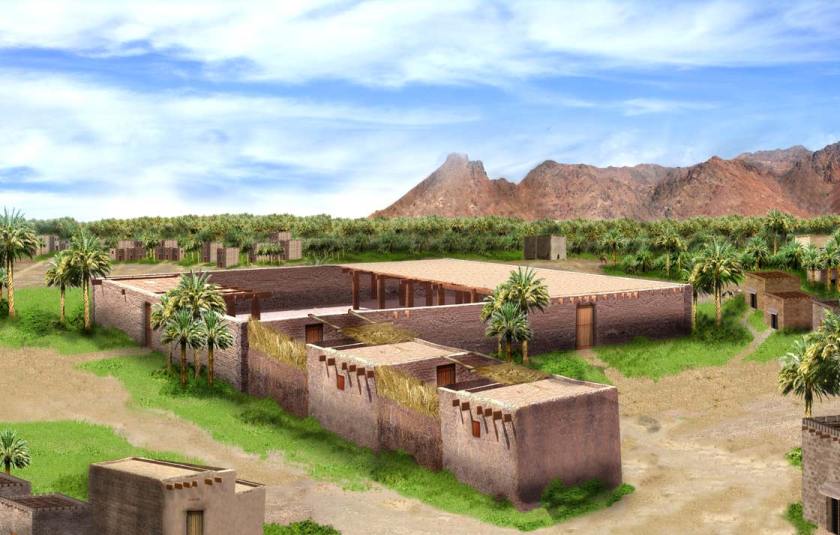

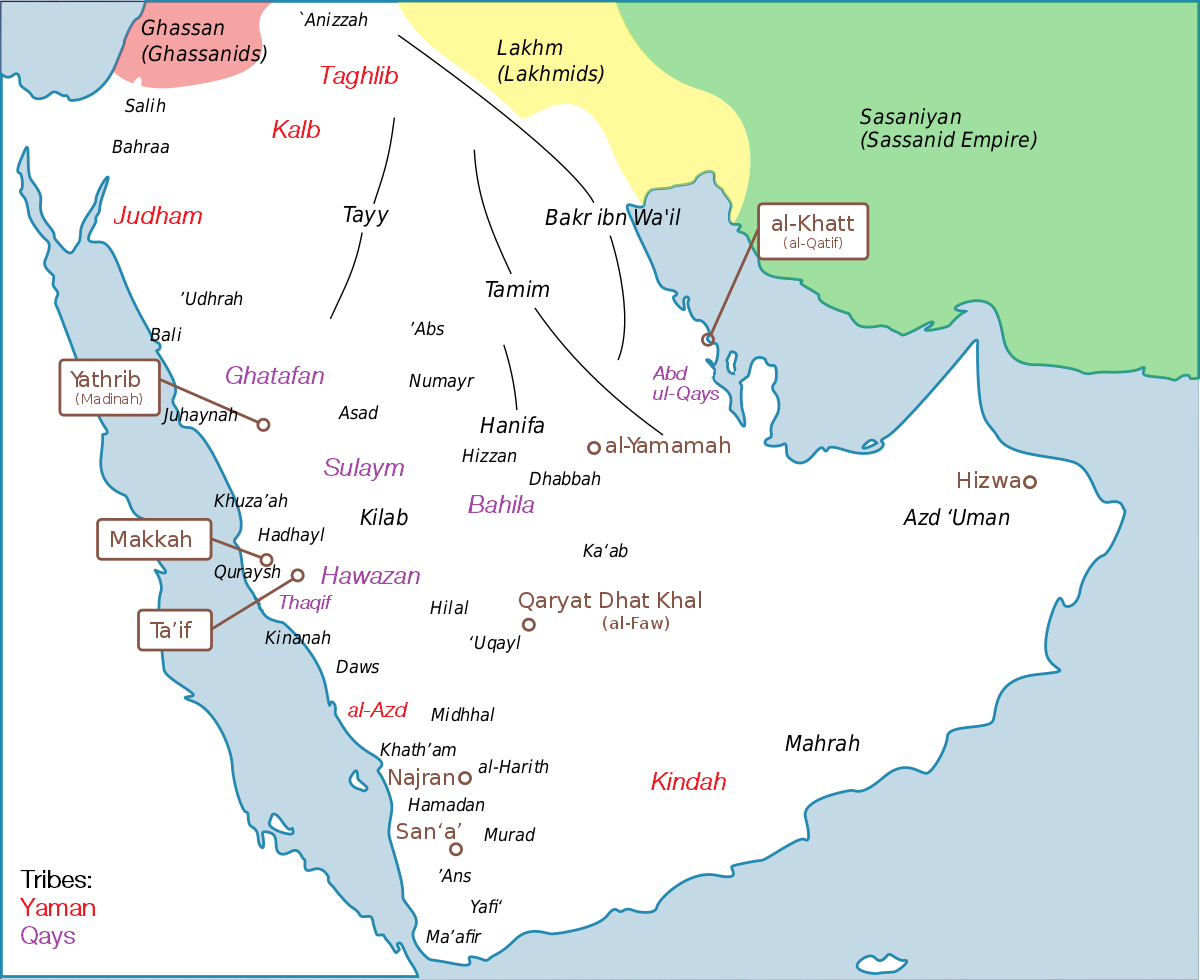





 Islamic Civilization