Latest Posts

Bay’a in Islamic History: The Removal of Walid II

  1. Yazid and Hisham try to change the designated successors
  2. Why did Hisham try and remove Al-Walid as a successor?
  3. Hisham prepares his son for ruling
  4. Al-Walid II makes his two young sons the delegated successors
  5. The removal of Al-Walid ibn Yazid from office
  6. Yazid ibn Al-Walid’s Speech after the removal of Al-Walid II
  7. The Khaleefah is the state
  8. How would a Khaleefah be removed in a future Khilafah?

Al-Walid’s father Yazid ibn Abdul-Malik became the Khaleefah according to the wiliyatul-ahd (succession contract) of Sulayman ibn Abdul-Malik, who nominated him as the successor after Umar ibn Abdul-Aziz. Since the Umayyads only nominated two successors, this allowed Yazid ibn Abdul-Malik to create a new wiliyatul-ahd. Yazid’s brother, the famous general Maslamah ibn Abdul-Malik, persuaded him to nominate his other brother Hisham ibn Abdul-Malik as the next Khaleefah, and then Yazid’s own son Al-Walid (Al-Walid II) after him.

Yazid and Hisham try to change the designated successors

Yazid regretted appointing Hisham before his son Al-Walid, but as mentioned in the section on Al-Walid ibn Abdul-Malik, the prevalent opinion adopted by the ulema and Ahlul hali wal-aqd was that it is forbidden to change the designated successors, unless the successors voluntarily agree to it. Yazid would say, “It is Allah who stands between me and the one who put Hisham between me and you.”[1]This shows that the sharia was adhered to by the Umayyad Khaleefahs who were not absolute monarchs.

When Hisham became Khaleefah he also wanted to change the designated successors, and remove Al-Walid as the next Khaleefah in favour of his own son Maslamah ibn Hisham. Al-Walid refused to relinquish his position and so Hisham said to al-Walid: “Give Maslamah the bay’a (to succeed) after yourself,” but this too al-Walid refused to do.[2]

Why did Hisham try and remove Al-Walid as a successor?

The reason Hisham ibn Abdul-Malik tried to remove Al-Walid from the wiliyatul-ahd was due to his growing immoral behaviour which would make him unfit to be a Khaleefah. According to Tabari, Al-Walid started keeping bad company and drinking wine. Hisham wanted to keep Al-Walid ibn Yazid away from these bad influences so he appointed him as Head of Hajj in 116H/735CE. Unfortunately, this didn’t help. Al-Walid secretly took hunting dogs with him for the trip which were hidden in trunks. One of the trunks fell and the people saw the dog, but blamed the camel driver, for which he was harshly beaten. Al-Walid also ordered a dome-like tent the size of the Ka’bah to be built for him so that it could be set up on top of the Ka’bah where he and his companions would sit. He also took along with him various wines. When he reached Makkah, his companions warned him off the idea saying, “We don’t feel safe, either on your behalf or our own, from what the people might do,” butthe pilgrims still witnessed Al-Walid behaving in a contemptuous and flippant way towards the religion, and Hisham came to hear about it. It is for this reason Hisham tried to remove Al-Walid as being unfit for the Khilafah.[3]

One of the seven contractual conditions of the bay’a is that the Khaleefah is ‘adl (just). Mawardi mentions, “Two changes in a person’s state will exclude him from the Imamate: the first of these is a lack of decency and the second is a physical deficiency.

As for a lack of decency, that is a moral deviation, it is of two kinds: the first of them resulting from lust, the second from his holding dubious opinions. As for the first it is connected to physical action: he commits forbidden acts, pursues evil, is ruled by his lust and is subject to his passions; this counts as a moral deviation which excludes him from taking up the Imamate or from carrying on with it. Thus if such behaviour befalls someone who has become the Imam, he is disqualified. If he recovers his decency he may not return to the Imamate except by way of a new contract; some of the mutakallimun, however, have said that he may return to the Imamate on his return to probity – without a renewal of his contract and without the bay’a – because of his overall authority in governance and the difficulty involved in renewing his bay’a.”[4]

Hisham prepares his son for ruling

Another contractual condition of the bay’a is capability to rule. All the Umayyad Khaleefahs had ruling experience prior to coming to power. Mostly they would be assigned as heads of the army or hajj, or given a governorship to hone their ruling skills. This continued throughout the Abbasid period until the Khaleefah became a mere figurehead from the 10th to 16th century, with the Sultans being the de facto rulers. Selim I, who was the first Ottoman Khaleefah combined the role of Sultan and Khaleefah and a new line of strong, independent Khaleefahs emerged. Unfortunately, the Ottomans adopted a ‘survival of the fittest’ approach to the next Khaleefah, leaving the succession open to which of the Sultan’s son could make it to Constantinople first and claim the authority. The new Sultan would then have his brothers executed to prevent any fitna arising from potential power rivals. In 1595CE Mehmed III went a step too far in this and executed 19 of his brothers, which led to outcry among the ulema and other officials of the state. After his successor and son Ahmet I died a new system of Kafes (cage) was adopted, where instead of executing the Sultan’s brothers who were potential rivals to the throne, they were imprisoned under house arrest in the harem. This meant they had no ruling experience if at a later date they were called upon to succeed the Khaleefah upon his death or removal. This will be discussed in more detail in Part 5: Bay’a in Islamic History – The Ottoman Khilafah.

Hisham said, “Woe to you, Walid! By Allah, I do not know whether you are for Islam or not. You commit every reprehensible action without feeling any shame or bothering to conceal it.” So al-Walid wrote to Hisham the following poem:

‘O you who ask about our religion,

we follow the religion of Abu Shakir (Maslamah ibn Hisham).

We drink it (the wine) both pure and mixed,

sometimes warmed and sometimes cooled.’

After reading this, Hisham was furious with his son Maslamah whose kunyah (nickname) was Abu Shakir and said to him: “Al-Walid is making use of you to mock me. To think I was rearing you for the Khilafah! Behave in a civilized way and attend the collective prayer.” Hisham put Maslamah in charge of the Hajj in 119H / 737CE where Maslamah devoted himself to acts of religious devotion and behaved in a steady and gentle manner, and distributed money in Makkah and Madinah.[5]

In the end Hisham could not replace Al-Walid with his son Maslamah as the next Khaleefah after him, and in 125H / 743CE Al-Walid ibn Yazid ibn Abdul-Malik became the Khaleefah according to the wiliyatul-ahd of his father.

Al-Walid II makes his two young sons the delegated successors

Maturity is a condition for the post of Khaleefah. Someone who has not reached puberty cannot give bay’a or be given bay’a. Abdullah Ibn Hisham, who was a child at the time of the Prophet ﷺ, was taken by his mother Zainab bint Humair to the Messenger of Allah ﷺ where she said, “O Messenger of Allah! Take his bay’a”. The Prophet ﷺ said: “He is still a little boy”, so he stroked his head and prayed for him,[6] meaning the Prophet ﷺ did not take his bay’a as he was not mature.

Al-Walid ibn Yazid wanted the bay’a to be given to his two young sons, al-Hakam and Uthman so he consulted some of the influentials from the Ahlul hali wal-aqd on this. He consulted Said ibn Bayhas who said, “Don’t do it, for they are young boys who have not yet reached puberty. Have the bay’a given to ‘Atiq ibn Abdul-Aziz ibn al-Walid ibn Abdul-Malik.” Al-Walid was furious and put Said in prison, where he died.[7]

Al-Walid approached Khalid bin Abdullah, the former governor of Iraq and Khorasan under Hisham, to give bay’ato his two sons but Khalid also refused. Some of Khalid’s family said to him: “The Ameer ul-Mu’mineen wanted you to give the bay’a to his two sons yet you refused!” Khalid retorted, “Woe to you! How can I give the bay’a to those behind whom I cannot say my prayers or whose testimony (shahadah) I cannot accept?” They replied: “What about al-Walid? You know all about his wantonness and depravity, yet you still accept his testimony!” Khalid replied: “Al-Walid’s activities are hearsay. I cannot be sure about them. It is only vulgar rumours.”[8] Al-Walid was furious with Khalid and later had him tortured and killed.

In the end Al-Walid did succeed in making his sons, al-Hakam and Uthman as the delegated successors after him.

The removal of Al-Walid ibn Yazid from office

We already mentioned Al-Walid’s immoral behaviour which was well known prior to him becoming Khaleefah. On coming to power, he persisted in this and spent more time in the pursuit of idle pleasures, hunting, drinking wine and keeping bad company.[9] He quickly made many enemies due to his policy of revenge against those who were allies of the previous Khaleefah Hisham, and other members of the Umayyad family who he saw as a threat.

The sons of the previous Khaleefahs, al-Walid ibn Abdul-Malik and Hisham ibn Abdul-Malik had been badly mistreated by Al-Walid. He sentenced Sulayman ibn Hisham ibn Abdul-Malik to 100 lashes, shaving his head and beard and banishing him to ‘Amman, where he put him in prison. He also imprisoned Sulayman’s brother Yazid ibn Hisham.[10]

The tribe of Banu al-Qa’qa’ had supported the previous Khaleefah Hisham ibn Abdul-Malik when he attempted to remove Al-Walid as the delegated successor, and two of their men, al-Walid bin al-Qa’qa’ and Abdul-Malik bin al-Qa’qa’ had been made governors of Qinnasrin and Hims respectively by Hisham. When Al-Walid II came to power the Banu al-Qa’qa’ knew they would be targeted for revenge, and so al-Walid bin al-Qa’qa’ and Abdul-Malik bin al-Qa’qa’ were tortured and killed along with two other men from the tribe.[11]

All of these people and their supporters, along with the Yamani tribes who were part of the Ahlul hali wal-aqd in Ash-Sham and made up most of its soldiers, had a deep hatred for Al-Walid because of his treatment of Khalid bin Abdullah, and his ruining of the Yamani tribes in Khurasan who were its greatest army.[12] Accordingly, the Yamani went to Al-Walid’s cousin Yazid ibn al-Walid who was known for his righteousness and piety, and tried to persuade him to take the bay’a and become the Khaleefah.

Yazid ibn al-Walid consulted ‘Amr b. Yazid al-Hakami, who said: “The people will not give the bay’a to you over this matter. Consult your brother al-‘Abbas ibn al-Walid, for he is the head of the Banu Marwan. If al-‘Abbas gives you the bay’a, no one else will oppose you. If al-‘Abbas refuses, then the people will be more likely to obey him. If you insist on sticking to your opinion, then proclaim publicly that al-‘Abbas has given the bay’a to you.”[13]

As Mawardi mentions, moral deviation “excludes him [the ruler] from taking up the Imamate or from carrying on with it.”[14] Violation of the sharia rules is a red line which must never be crossed. If the Khaleefah does cross this line then his bay’a will become fasid (defective), and if it cannot be remedied through a change in his behaviour, or restitution of the rights of those he has wronged, then he must be removed from office.

In origin this removal must be sanctioned by the judiciary who issue a fatwa of removal. In the Umayyad period there was no Chief Judge (Qadi ul-Qudah) or judicial court which would investigate and pass judgements on government oppression (mazlama). The Abbasids were the first to create the post of Qadi ul-Qudah and the later Sultans institutionalised the court which dealt with government oppression as a Dar Al-Adl (House of Justice). In a future Khilafah this is known as the Mahkamat ul-Mazalim (Court of Unjust Acts) or Supreme Court.

With no judge in the position of Qadi ul-Mazalim, it was left to the Ahlul hali wal-aqd from among the Yamani tribes and Umayyad family to instigate a coup d’état against Al-Walid II.

Initially Yazid ibn al-Walid’s brother Al-Abbas was on the side of Al-Walid, but later defected and gave the bay’a to his brother Yazid. Once Al-Abbas defected so did most of Al-Walid’s forces. Yazid’s other brother Abdul-Aziz ibn al-Walid commanded the army against Al-Walid’s forces.[16] The soldiers of Yazid ibn al-Walid carried a notice attached to a spear on which was written, “We summon you to the Book of Allah and the sunnah of His Prophet, and (we request) that the matter should be determined by shura.”[17]

After a number of skirmishes between the forces of Al-Walid and Abdul-Aziz, Al-Walid fell back and took refuge in a fortress in al-Bakhra (modern day Homs governate Syria) which was originally built by the Persians.[18] The forces of Abdul-Aziz ibn al-Walid surrounded the fortress and Al-Walid asked from behind the fortress door, “Is there anyone amongst you who is an honorable man of noble descent and who has a proper sense of shame, to whom I can speak?” Yazid bin ‘Anbasah al-Saksaki stepped forward and said, “Speak with me.” Al-Walid asked him who he was and he replied: “I am Yazid bin ‘Anbasah.” Then al-Walid exclaimed: “O brother of the Sakasik! Did I not increase your stipends? Did I not remove onerous taxes from you? Did I not make gifts to your poor and give servants to your cripples?” Yazid replied, “We don’t have any personal grudge against you. We are against you because you have violated the sacred ordinances of Allah, because you have drunk wine, because you have debauched the mothers of your father’s sons, and because you have held Allah’s command in contempt.”[19]

Abdul-Aziz’s forces scaled the walls of the fortress and the first one over the top was Yazid bin ‘Anbasah who went to Al-Walid and attempted to bring him in to custody, so they could have consultations on what should be done with him. At that point, ten soldiers from Abdul-Aziz’s army came in to the room and set upon Al-Walid killing him.[20] His head was then taken to Yazid ibn Al-Walid who was camped out in the desert and he formerly became the next Khaleefah by the bay’a of the Yamani tribes and Umayyad family.

Yazid ibn Al-Walid’s Speech after the removal of Al-Walid II

When Yazīd killed al-Walīd, he stood up and said in a khuṭba, “By Allah, I did not revolt out of insolent ingratitude and pride, nor worldly aspiration or desire for kingship. I would be a wrongdoer to myself, if it was not for the mercy of my Lord. On the contrary, I revolted in anger for the sake of Allah and His religion. I came to summon to His Book and the Sunna of His Messenger at a time when the signposts of guidance had been effaced, the light of the godfearing people had been extinguished and a tyrant had appeared, who legalised the unlawful and engaged in innovations. When I saw all this, I was afraid that, because of the large number of your sins and the hardness of your hearts, you would be covered by a darkness that would not be removed. I was afraid that he would summon many people to his way and that they would respond. Therefore, I asked Allah for guidance in my affair and summoned those of my family and the people under my authority who responded. Then Allah relieved the lands and the people from al-Walīd. Sovereignty is from Allah. There is no power or strength, except by Allah.

People! If I am given charge of your affairs, I promise that I will not place brick upon brick nor stone upon stone and that I will not transfer wealth from one region to another until I have fortified its frontiers and seen that its military posts are manned to make you secure. If there is any surplus, I will take it to the next region in order to the means of livelihood are put in order and you are all equal with respect to it. If you want to pledge allegiance to me according to what I have proposed to you, then I am yours. If I deviate, the bay’a is not binding upon you. If you see anyone more capable than me in this and prefer to pledge allegiance to him instead, then I would be the first to give him my allegiance and obey him. I ask Allah to forgive me and you.”[21]

From Yazid’s speech we can clearly see the sharia is the foundation on which the pillars of the bay’a are built. The bay’a being given with free consent and choice by the people of influence, and the Khaleefah fulfilling the conditions of the bay’a stand out here.

The Khaleefah is the state

It’s important to remember that the Khaleefah is the state. His removal is not something which should be taken lightly, or become easy to do when the people express dissatisfaction with his policies. If he is ruling by Islam then he has the authority to make unpopular decisions in the pursuit of the wider objectives of Islam which benefit all of mankind.

It was narrated from ‘Aisha that the Messenger of Allah ﷺ said: “O ‘Uthman, if Allah places you in authority over this matter (as the Khaleefah) someday and the hypocrites want to rid you of the garment with which Allah has clothed you (i.e., the position of Khaleefah), do not take it off.” He said that three times. (One of the narrators) Nu’man said: “I said to ‘Aishah: ‘What kept you from telling the people that?’ She said: ‘I was made to forget it.’”[22]

Also benefit and harm are not a valid criterion for breaking the bay’a.

The Messenger of Allah ﷺ said, “There will be three types of people whom Allah will neither speak to on the Day of Resurrection, nor will He purify them from sins, and they will have a painful punishment. They are,

(1) a man who possessed surplus water (more than he needs) on a way and he withholds it from the travellers.

(2) a man who gives bay’a to an Imam and gives it only for worldly benefits, if the Imam gives him what he wants, he abides by his pledge, otherwise he does not fulfill his pledge

(3) and a man who sells something to another man after the `Asr prayer and swears by Allah (a false oath) that he has been offered so much for it whereupon the buyer believes him and buys it although in fact, the seller has not been offered such a price.”[23]

The removal of a Khaleefah, if not done correctly, can set off a chain of events which leads to fitna and civil war. This is what occurred after the assassination of Uthman bin Affan. Abdullah ibn Salam came upon those who were besieging Uthman ibn Affan and said, “Do not kill him, for, by Allah, any man of you who kills him will meet Allah without a hand. The sword of Allah will remain sheathed, and by Allah, if you kill him, Allah will draw it out and He will never sheathe it again. A prophet was never killed but that seventy thousand were killed because of him, nor a Khaleefah but that thirty-five thousand were killed because of him before they were again united.”[24]

The killing of Al-Walid II and then the coup against Yazid ibn al-Walid’s successor Ibrahim ibn al-Walid by Marwan II, led to internal discord within the state, and the eventual end of Umayyad rule at the hands of the Abbasids.

How would a Khaleefah be removed in a future Khilafah?

The bay’a contract has no fixed time limit similar to other Islamic contracts such as nikah (marriage). This allows the Khaleefah to focus on long term strategic interests of the state rather than short-termism which is a feature of democratically elected presidents. Tocqueville comments on the re-election of the US President in his book ‘Democracy in America’, “Intrigue and corruption are vices natural to elective governments. But when the head of state can be reelected, the vices spread indefinitely and compromise the very existence of the country. When a plain candidate can succeed by intrigue, his maneuvers can only be exercised in a limited space. When, on the contrary, the head of state puts himself in the running, he borrows the force of the government for his own use.”[25]

Although the bay’a in origin is for life, there is provision for annulling the contract if the pillars of the bay’a such as implementation of Islam and justice are contravened as we saw with Al-Walid II. The Khaleefah is not above the law or an absolute monarch, because he is restricted by the sharia in legislation and judiciary.

In the Umayyad period there was no independent judge in the position of Qadi ul-Mazalim, so it was left to the Ahlul hali wal-aqd from among the Yamani tribes and Umayyad family to instigate a coup d’état against Al-Walid II.

In a future Khilafah there needs to be a formal constitutional process for impeaching the Khaleefah to prevent instability and fitna which occurs through coups and revolution.

Impeachment is a judicial function and must be performed by the Supreme Court which is the Court of Unjust Acts (mazalim) that acts in a similar manner to an upper house. This is the only institution within the state which has the power to remove the Khaleefah. The Khaleefah has no power to remove any judge who is investigating him, and the Khaleefah’s removal must be because he contradicted one or more of the seven contractual conditions of the bay’a, leading to the contract either becoming void (batil) or defective (fasid). If the bay’a contract is still valid, then no impeachment will take place and the Khaleefah will remain in office.

In the Ottoman Khilafah the Sheikh ul-Islam held the position of Qadi Mazalim, and he had the authority to issue a fatwa of removal against the Sultan and Khaleefah. This occurred when he issued a fatwa of removal against Selim III (r. 1789-1807).[27]

Notes


[1] Abu Ja`far Muhammad b. Jarir al-Tabari, ‘The History of Al-Tabari’, translation of Ta’rikh al-rusul wa’l-muluk, State University of New York Press, Volume XXVI, pp.87

[2] Ibid, pp.89

[3] Ibid, pp.88

[4] Abu l-Hasan al-Mawardi, The Laws of Islamic Governance, translation of Al-Ahkam as-Sultaniyah, Ta Ha Publishers, pp.29

[5] al-Tabari, Op.cit., pp.89

[6] Bukhari 7210, https://sunnah.com/bukhari:7210

[7] al-Tabari, Op.cit., pp.128

[8] Ibid

[9] al-Tabari, Op.cit., pp.126

[10] Ibid, pp.127

[11] Ibid, pp.136

[12] Ibn Katheer, ‘The Khilafah of Banu Umayyah The First Phase,’ translation of Al-Bidiyah wan-Nihayah, Dar us-salam, pp.611

[13] al-Tabari, Op.cit., pp.137

[14] al-Mawardi, Op.cit., pp.29

[16] al-Tabari, Op.cit., pp.152

[17] Ibid, pp.158

[18] Denis Genequand, ‘Al-Bakhra’ (Avatha), from the Tetrarchic Fort to the Umayyad Castle,’

https://www.researchgate.net/publication/233644468_Al-Bakhra’_Avatha_from_the_Tetrarchic_Fort_to_the_Umayyad_Castle

[19] al-Tabari, Op.cit., pp.153

[20] Ibid

[21] Jalal ad-Din as-Suyuti, ‘History of the Umayyad Khaleefahs,’ translated by T.S.Andersson, Ta Ha Publishers, pp.87

[22] Ibn Majah 112, https://sunnah.com/ibnmajah:112

[23] Sahih al-Bukhari 7212, https://sunnah.com/bukhari:7212

[24] Jalal ad-Din as-Suyuti, ‘History of the Khalifahs who took the right way,’ translated by Abdassamad Clarke, Ta Ha Publishers, pp.177, Abd ar-Razzaq narrated in the Musannaf from Humayd ibn Hilal

[25] Alexis De Tocqueville, ‘Democracy in America,’ THE UNIVERSITY OF CHICAGO PRESS, 2002, pp.178

[27] Dr. Yakoob Ahmed, Ottoman History Course
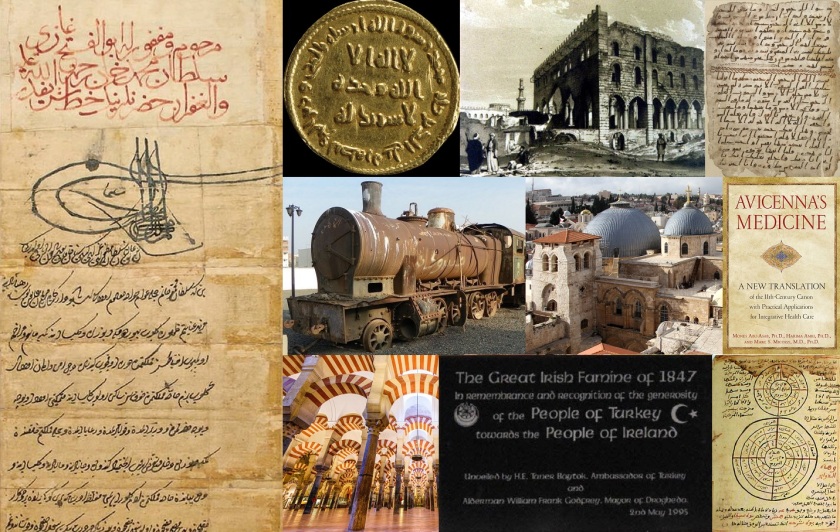
A History of Islam in 10 Objects

Historical objects such as artefacts, manuscripts and buildings are one of the primary sources in the study of history. Their presence or absence in a society can offer a unique insight in to the past, especially when combined with other sources such as oral narrations. They can offer a more holistic view towards society, and easily dispel the sweeping generalisations we see among those who attempt to distort Islamic history for their own nefarious purposes.

Read More

6. CALIPHATE CONTENTIONS: Establishing the caliphate isn’t an obligation for me personally

BY DR. REZA PANKHURST
This article has been reproduced from Prophetic Politics.

Discussion of the Personal Obligation Denial argument – or summed up as “it’s not an obligation for me because (I’m not capable/ it’s something that the scholars and people of influence have to do as an obligation of sufficiency/Allah will establish it/ it’s not actually an obligation to begin with)”

As for the last argument – that the caliphate is not obligatory to begin with, if we have to go over that again then please refer to earlier contentions here that deal with this question comprehensively (but here is one sample quote for those in a hurry:

Sa`ad al-din al-Taftazani mentions it in his Sharh al-Maqasid where he states: “‘and whoever dies without knowing his Imam, dies the death of jahiliyya’ – and this is because the obligation to obey (those in authority) and to know (the Imam) requires that Imam to be established.”

وقوله ﷺ: «من مات ولم يعرف إمامه مات ميتة جاهلية.» فإن وجوب الطاعة والمعرفة يقتضي وجوب الحصول

The focus here are the other common arguments used by those who promote the “personal obligation denial” point of view – which generally accepts that ruling by Islam and establishing the caliphate is a good thing, and concede its obligatory, but not on a personal basis.

Common Argument A

“The caliphate is not an obligation for me, because Allah will establish it” or “Allah won’t ask me about the Caliphate”

Yes, Allah will establish the caliphate. The correct way to understand this point is that Allah will not hold someone accountable for establishing the caliphate but will hold them accountable for their efforts to fulfil the obligation of establishing the caliphate. This is like how no-one is accountable for other people accepting Islam but are certainly accountable for their efforts in spreading in Islam.

Yes.

It’s that simple.

Common Argument B

“I am not capable of establishing it – and Allah tells us in the Quran that no soul is burdened with more than it can bear”

This is basically a subset of argument A – and the response is the same.

As the Prophet Muhammad – peace be upon him – said in one narration:

مَا نَهَيْتُكُمْ عَنْهُ فَاجْتَنِبُوهُ وَمَا أَمَرْتُكُمْ بِهِ فَافْعَلُوا مِنْهُ مَا اسْتَطَعْتُمْ 

What I have prohibited for you, avoid it. What I have commanded you, do it as much as you can.

Accountability with Allah is linked to one’s capacity, and the effort to do as much as they can do, and this holds true in the work to establish the caliphate which is a political change requiring political effort:

مَنْ رَأَى مِنْكُمْ مُنْكَرًا فَلْيُغَيِّرْهُ بِيَدِهِ فَإِنْ لَمْ يَسْتَطِعْ فَبِلِسَانِهِ فَإِنْ لَمْ يَسْتَطِعْ فَبِقَلْبِهِ وَذَلِكَ أَضْعَفُ الْإِيمَانِ

Whoever among you sees evil, let him change it with his hand. If he is unable to do so, then with his tongue. If he is unable to do so, then with his heart, and that is the weakest level of faith.

The caliphate is a well-known, proven obligation – so each Muslim has to do what is within their capability to fulfil that obligation. If they have no idea or capacity to do anything – then at least to pray for it, and if they are able, to call others to it and to hold those who can establish it to account for their lack of action in doing so.

And of course, if they are in fact capable of establishing the caliphate themselves – then the actual responsibility for change falls upon their neck, and neither prayer nor talking about it would be sufficient for such a person.

So in summary – lack of capability isn’t a valid argument for lack of effort. If someone feels they are not capable due to lack of knowledge – but recognise its an obligation – then they should do what they are capable of (praying) and set about learning whatever they feel they need to know to able to propagate and discuss the issue with others (just like if someone didn’t know how to pray – the obligation doesn’t just fall from them, they have to learn how to pray while in the interim doing what they can).

Common Argument C –

“It’s an obligation of sufficiency, and the ones who are capable are the people of power and not the common person. Therefore, as a common person I’m not accountable”

This argument has some basis in that the obligation to establish the Caliphate is indeed an obligation of sufficiency – meaning that if it is established then the obligation is fulfilled for all. The converse is that – if it is not established then the obligation falls upon everyone and the sin is upon all the Muslims.

It should be noted though that some scholars such as Imam al-Mawardi stated that the obligation fell upon two groups of people – those who fulfilled the criteria to be the caliph, and those who were the people who had the influence and power to select the caliph from among the valid candidates. He then stated that if neither of those fulfilled their obligation, then the sin was upon their necks only and no one else was accountable.

However – this understanding is inaccurate. Though the obligation is more pressing upon the shoulders of those who have influence and can make the change, when any obligation of sufficiency is left unfulfilled it falls upon the totality of the Muslims aware of it, and each of them must try to the best of their ability to fulfil that obligation according to the limits of their capability. Refer to common argument B.

Conclusion: ignoring that ruling by Islam and having a united Muslim polity is an obligation upon the Muslim ummah (which is the central meaning of the caliphate) and denying one’s own responsibility to help bring that about (while considering the limits of their capability) is a mistake and incorrect understanding. Lack of capability is not a valid excuse for lack of effort, and waiting for others to fulfil the obligation on all our behalf is negligent of our responsibilities to Allah and His Messenger.

Dr. Reza Pankhurst is the author of The Inevitable Caliphate (Oxford University Press, 2012) and The Untold History of the Liberation Party (C Hurst & Co, 2016)

5. CALIPHATE CONTENTIONS: Historically, there was rarely a single unified caliphate, and therefore it is an unrealistic, utopian idea

BY DR. REZA PANKHURST
This article has been reproduced from Prophetic Politics.

Discussion of the Historical Precedence Argument –  summed up as “the practical reality was that there were several competing caliphs or sultans, and therefore it is not an obligation or realistic to have a single Imam”.

Without debating the premise of the argument (which could itself be considered historically problematic) – it is important to consider that Islam came to deal with the human condition, in all its aspects – political, social, personal. And in doing so – while laying down ideals and normative standards, it also provided Muslims with a reference for correction – hence the entire corpus on enjoining the good and forbidding the evil for example.

The fact that the Prophet – peace be upon him – made the statement that if two caliphs are appointed then the second should be killed – is evidence that disunity will occur among Muslims, and that there would be situations where authority would be contested. The direction of the Prophet to kill the second claimant to the caliphate both ascertains the seriousness of the issue – by making deliberate attempts to violate political unity a capital offence, mandating death if necessary in order to remove the conflict – as well as the clear injunction that political unity of the Muslim ummah is a general and all-encompassing rule.

It is indisputable that disunity, competing claims and alternative power bases around the caliphate reaches back to the first centuries of Islamic history. With contested opinions over ruling and authority throughout history, and the spread of Islam to as far as Spain and India, such realities were considered by all of the scholars who talked upon the subject. And the vast majority conveyed that the normative position was that despite whatever the status quo was at the time, the Islamic rule was that a single ruler was mandated – as can be read in detail here

As for what to do in the situation where there is division due to the shortcomings within the Muslim community, Sheikh ibn Taymiyya wrote that it is imperative that each leader still implements Islam in their authority.

والسنة أن يكون للمسلمين إمام واحد، والباقون نوابه، فإذا فرض أن الأمة خرجت عن ذلك لمعصية من بعضها، وعجز من الباقين، أو غير ذلك فكان لها عدة أئمة، لكان يجب على كل إمام أن يقيم الحدود، ويستوفي الحقوق

According to the sunnah, the Muslims should have a single Imam, and the other leaders are his assistants. If it was the case that the Muslim ummah were no longer united under a single ruler, due to the sinfulness of some of the Muslims (by separating from the leadership), and the inability of the rest of the Muslims to prevent that from happening, or for any other reason, and as a result there were numerous leaders – then it is obligatory upon each leader to establish the hudud and ensure that peoples’ rights are fulfilled

A brief survey of Islamic history highlights that during the period of greater disunity, greater calamities befell the Muslim ummah such as the fall of al-Andalus, the long occupation of the Crusaders across Muslim lands including al-Quds, the sacking of Baghdad, and ultimately the abolition of the caliphate itself. These are just some of the examples of the loss of authority and security which can be contrasted to the spread of Islamic authority and security during periods of relative unity and stability.

Historical precedence is not an evidence for permissibility. That it is not a source of Islamic ruling should be clear – if taken to its conclusion that would mean that we can point to the actions of some of the leaders historically to align themselves with groups hostile to the Muslims such as the crusaders or Mongols, or enforced hereditary rule, or other indiscretions of specific rulers which went unchecked, whether personal or otherwise – and suggest that they were also permitted since they took place. Such an argument is irresponsible, incorrect and contrary to Islamic thought.

This lesson is even more pertinent today, a period of greater disunity than any other, among the consequences being the attempted genocide of Muslims in places are distant as Bosnia, China, Burma and Palestine, the killing between Muslims due to nationalism and tribalism such as in Yemen, the Iraq-Iran war, Sudan, and the displacement of Muslims who do not fit into the current nation-state forms such as the Kashmiris, the Kurds, the dispossessed in Kuwait and elsewhere, along with too many other issues to be listed here.

In conclusion – Islam mandates a unitary rule for Muslims and it is obligatory to seek such a polity, and historical precedence is not an excuse for inaction or pessimism.

Dr. Reza Pankhurst is the author of The Inevitable Caliphate (Oxford University Press, 2012) and The Untold History of the Liberation Party (C Hurst & Co, 2016)

Bay’a in Islamic History: Umar bin Abdul-Aziz changes the bay’a back to shura

  1. How Umar bin Abdul-Aziz became the Heir Apparent
  2. Why didn’t Umar bin Abdul-Aziz want to be Khaleefah?
  3. Changing the bay’a back to shura
  4. Umar contemplates removing Yazid II as the Wali ul-Ahd
  5. The Mujaddid (reviver) of the first century

How Umar bin Abdul-Aziz became the Heir Apparent

When Sulayman ibn Abdul-Malik was Khaleefah he was advised by the righteous scholar Raja’ bin Haywah al-Kundi, to nominate his nephew and Wazir Umar bin Abdul-Aziz as the next Khaleefah instead of his own son and brother. Sulayman did this, and knowing that Banu Umayyah would not be happy, he nominated his brother Yazeed ibn Abdul-Malik as the Khaleefah after Umar.

Raja’ bin Haywah who was the provisional leader overseeing the transition process to the next Khaleefah, describes the events surrounding Umar bin Abdul-Aziz’s nomination as narrated by Tabari.

Raja’ bin Haywah says: ‘On the day of Jumu’ah, Sulayman ibn Abd al-Malik was wearing green silk robes and as he looked in mirror, he said: “By Allah! I am a young king.” He then left for prayer, led the people in the Friday congregation and he did not return except that he had fallen ill.

When he later burdened his son, Ayyub, who was just a boy at the time, with writing a book on his Khilafah, I said: “What are you doing, O Amir ul-Mu’mineen? Among the things that can preserve the Khaleefah in his grave is the appointment of a righteous successor.” Sulayman said: “I will seek Allah’s counsel on the book. Wait and see. I have not decided upon it yet.”

After one or two days, however, he had torn up the book and upon summoning me, he said: “What do you think of Dawud bin Sulayman?” I answered: “He is away in Constantinople and you do not know if he is alive or dead.” He said: “O Raja’, who do you see fit?” So I said: “It is your choice, O Amir ul-Mu’mineen. I want to see who you mention.”

He then said: “What do you think of Umar bin Abdul-Aziz?” I replied: “I know, by Allah, that he is a pious, good Muslim.” So he said: “He was certainly that while he was governor. He is not the first in line considering Abd al-Malik’s sons, and will certainly never leave him to be appointed over them unless I make one of them his successor after him. Yazeed ibn Abd al-Malik is absent this season, so I will make him his successor. This should appease Umar and keep the others satisfied.” I said: “It is your choice.” He then wrote down:

In the name of Allah, the Most Gracious, Most Merciful.

This is a deed from the servant of Allah, Sulayman bin ‘Abd al-Malik, Amir ul-Mu’mineen, to Umar bin Abdul-Aziz. Verily, I have handed over the Khilafah to him after me, and after him, to Yazeed ibn ‘Abd al-Malik. Therefore, hear and obey him, fear Allah and do not differ over it lest it make you avaricious.

He then sealed the deed and sent Ka’ab bin Hamid, Chief of Police, to the members of his family who he had told to gather, which they did.

Next, he sent the letter with me after giving me instructions to inform them that it was his deed, to pass it on to all of them and then to take their bay’a to the one he appointed therein. Accordingly, I went to them and when I told them that it was the deed of Sulayman, they automatically said: “We hear and we obey whoever is in it. May we enter and give our greetings to the Amir al-Mu’mineen?” I answered in the affirmative and they entered upon Sulayman who said to them: “This deed – and pointed to it for them to look at in my hands – is my covenant, so hear, obey and pledge allegiance to whoever is named therein.” He then left while the sealed deed was in my hand.

After Sulayman’s death, the provisional leader Raja’ ascended the minbar in Dabiq Masjid and opened Sulayman’s sealed deed, which Banu Umayyah had pledged upon previously, and read out its contents. Raja’ says, ‘When I reached the part that mentioned Umar’s name, Hisham exclaimed: “We will never pledge allegiance to him!” I said: “I will, by Allah, have you beheaded! Stand up and give bay’a!” So dragging his feet, he stood up. I then escorted Umar onto the Minbar where I sat him down while Umar was visibly reluctant.[1]

The provisional leader has the power to call on the police to assist him in quelling rebellion and dissent during the transition process if required. The police chief assisting Raja’ was Ka’ab bin Hamid al-‘Unsi.[2]

This is similar to what occurred when Umar ibn Al-Khattab appointed the council of six to nominate a new Khaleefah after his death. Suhaib Ar-Rumi was appointed as the Provisional Leader of the state overseeing the election process, and he was assisted by Abu Talha Al-Ansari who had 50 men with him to protect the council.[3]

This incident clearly shows that the adopted laws regarding the bay’a were adhered to by the ahlul hali wal-aqd. No one is above the law in the Khilafah, not even Hisham, a future Khaleefah who was part of the ruling family.

Why didn’t Umar bin Abdul-Aziz want to be Khaleefah?

As mentioned, Sulayman’s decision on nominating Umar bin Abdul-Aziz was sealed so no one could read it. The only one aware of its contents was the provisional leader Raja’ bin Haywah. Umar had a suspicion that Sulayman had nominated him so he went to Raja’ and asked him: “O Abi al-Miqdam! I fear that Sulayman might have attached this affair to me in some way. If Sulayman has any reverence and respect for me, or wished to put my mind at ease, I implore by Allah and my respect and esteem, that you inform me if this is the case, so I can ask him to pardon me of it now before a situation emerges in which I will have no power to do so, as I have no power on the Hour.” Raja’ replied: “No, by Allah, not even a single letter.” Umar then left angrily.

The reason for this reluctance was due to the immense responsibility on the neck of the ruler, and the taqwa of Umar bin Abdul-Aziz which is an essential attribute of any leader. Without taqwa the ruler has the propensity for severe oppression as we witness throughout the world today. The Messenger of Allah ﷺ said: “A ruler who, having obtained control over the affairs of the Muslims, does not strive for their betterment and does not serve them sincerely shall not enter Paradise with them.”[4]

Despite this heavy responsibility and reluctance Umar accepted the position of Khaleefah and was a just Khaleefah , an Imam ‘Adil as mentioned in the hadith:

 سبعة يظلهم الله في ظله يوم لا ظل إلا ظله‏:‏ إما عادل

“Seven types of people Allah will shade them by His Shade on the Day of Resurrection when there will be no shade except His Shade. They will be, a just ruler…”[5]

He discharged his duties in an exemplary manner and so is exempt from the humiliation on the day of judgement. It has been narrated on the authority of Abu Dharr who said:

قُلْتُ يَا رَسُولَ اللَّهِ أَلاَ تَسْتَعْمِلُنِي قَالَ فَضَرَبَ بِيَدِهِ عَلَى مَنْكِبِي ثُمَّ قَالَ

يَا أَبَا ذَرٍّ إِنَّكَ ضَعِيفٌ وَإِنَّهَا أَمَانَةٌ وَإِنَّهَا يَوْمَ الْقِيَامَةِ خِزْىٌ وَنَدَامَةٌ إِلاَّ مَنْ أَخَذَهَا بِحَقِّهَا وَأَدَّى الَّذِي عَلَيْهِ فِيهَا

I said to the Prophet ﷺ: “Messenger of Allah, will you not appoint me to a public office?” He stroked my shoulder with his hand and said: “Abu Dharr, you are weak and authority is a trust, and on the Day of judgment it is a cause of humiliation and repentance except for one who fulfils its obligations and (properly) discharges the duties attendant therein.”[6]

Changing the bay’a back to shura

As-Sallabi mentions the events after Umar bin Abdul-Aziz had received the bay’a. “Having now officially assumed the seat of the Khilafah, Umar ascended the Minbar (pulpit) in what would be his first encounter with the Ummah. He said: “O people! I have been burdened with the responsibilities of the Khilafah against my own will and without your consent. I thereby remove the bay’a to me that is on your necks so that you are at liberty to elect anyone whom you like.” But the audience cried out with one voice that he was the fittest person for the high office and said: “We have chosen you, O Amir al-Mu’mineen, and we are pleased that you have blessed and honoured our good affair.” At this juncture, Umar sensed that he was not going to be able to evade bearing the responsibility of the Khilafah, and so he decided to go on with determining his method and approach in dealing with the politics of the Muslim Ummah…”[7]

After Umar bin Abdul-Aziz’s death, the Umayyads continued with the wiliyatul-Ahd (succession contract) and so Yazeed ibn Abdul-Malik (Yazeed II) became the Khaleefah according to the contract laid down by Sulayman.

Umar contemplates removing Yazid II as the Wali ul-Ahd

As discussed, the mainstream opinion during the Umayyad Khilafah was that the Khaleefah can not only nominate the next Khaleefah, but also the Khaleefah after him. This is how Umar bin Abdul-Aziz became the Khaleefah in the first place, by the ahd (covenant) of Sulayman ibn Abdul-Malik. Sulayman also designated his brother Yazid ibn Abdul-Malik as the Khaleefah after Umar bin Abdul-Aziz.

In 719/100 the Kharijites rebelled in Iraq under the leadership of Bistam. Umar bin Abdul-Aziz wrote to Bistam requesting that he comes and discuss the reasons for his revolt with him. It is reported that Bistam sent two men to debate with Umar. They engaged him in debate, saying, “Tell us about Yazid. Why do you acknowledge him to be your successor as Khaleefah?” ‘Umar replied, “Someone else appointed him as my successor.” They said, “Consider the following case: Suppose you were administering some property that belonged to someone else and you then entrusted it to someone who was unreliable. Do you think that you would have conveyed the trust to its owner?” ‘Umar said, “Give me three days,” and the two men left.

The Banu Marwan were afraid that ‘Umar would confiscate the properties that they owned and administered and that he would renounce Yazid; therefore, they had someone poison his drink. He died less than three days after the two men left him. [Tabari, State University of New York Press, vol.24, pp.78]

The Mujaddid (reviver) of the first century

The Prophet Muhammad ﷺ said:

إِنَّ اللَّهَ يَبْعَثُ لِهَذِهِ الأُمَّةِ عَلَى رَأْسِ كُلِّ مِائَةِ سَنَةٍ مَنْ يُجَدِّدُ لَهَا دِينَهَا

“At the turn of every century, Allah will send a person to rectify (tujaddidu) the religious affairs of this Ummah.”[8]

The scholars and historians unanimously agree that Umar bin Abd al-Aziz was the first Mujaddid (Reviver; Renewer) in Islam. The first person to ascribe this title to him was Imam Muhammad bin Shihab az-Zuhri, followed by Imam Ahmad bin Hanbal who said: “It is narrated in the Hadith that at the turn of every century Allah will send a person to rectify the religious affairs of this Ummah. We saw that the Mujaddid of the first century was Umar bin Abdul-Aziz.”[9]

The reason he is known as a mujaddid is because he renewed the ruling principles of the rightly guided Khilafah. He started with abolishing hereditary rule, and reviving the concept of shura where the ahlul hali wal-aqd freely choose the leader. He went on to revive the principles of accountability and justice for all citizens, whether Muslim or non-Muslim, and he applied justice not just internally but externally in the state’s foreign policy. This occurred with his abolition of unjust customs duties (maks)[10], and withdrawing the army from Samarkand because it didn’t follow the sharia method of conquest.[11]

Notes


[1] al-Tabari, ‘The History of Al-Tabari’, State University of New York Press, Volume XXIV, pp.70

[2] Dr. Ali Muhammad As-Sallabi, ‘Umar bin Abd al-Aziz,’ Darussalam, p.106

[3] al-Tabari, Op.cit., Volume XIV, p.146

[4] Sahih Muslim, https://sunnah.com/muslim:142g

[5] Al-Bukhari and Muslim, https://sunnah.com/riyadussalihin:376

[6] Sahih Muslim 1825, https://www.sunnah.com/muslim/33/19

[7] As-Sallabi, Op.cit. pp.107

[8] Sunan Abi Dawud 4291, https://sunnah.com/abudawud:4291

[9] As-Sallabi, Op.cit. pp.203

[10] Ibid, pp.154

[11] Ibid, pp.150

Bay’a in Islamic History: Al-Walid’s attempt to change the designated successors

Abdul-Aziz ibn Marwan (father of Umar ibn Abdul-Aziz) was designated as the next Khaleefah (wali ul-Ahd) after Abdul-Malik but he passed away before Abdul-Malik, so that allowed a new succession contract to be created. Abdul-Malik designated his son Al-Walid as the first successor and Sulayman as the successor after him.

When Abdul-Malik died, his son Al-Walid became the Khaleefah and was given the bay’a by the Ahlul hali wal-aqd in Ash-Sham. Under his rule the Khilafah reached its highpoint in terms of conquests, with Spain, Sindh and Central Asia all becoming part of the state.

Expansion of the Islamic State

In 95H/714CE[1], Al-Walid attempted to change the succession contract (wiliyat ul-ahd) his father Marwan had instituted, by removing his brother Sulayman as the next Khaleefah after him. Al-Walid wanted his son Abdul-Aziz to be the next Khaleefah instead of Sulayman. As discussed, designating two or more successors as part of the wiliyat ul-ahd, which was Marwan’s ijtihad, was considered valid by the ulema and Ahlul hali wal-aqd, and so represents a shubhat daleel (semblance of an evidence). Mawardi mentions that this was acted upon throughout the Umayyad and Abbasid periods and the ulema of the time consented to this.[2]

In terms of Al-Walid’s attempts to alter the wiliyat ul-ahd then there is ikhtilaaf (difference of opinion) among the ulema on whether this is permitted or not. Mawardi says, “If the Khaleefah dies while the three to whom he has designated succession are still alive and the Khilafah falls to the first of them and he wishes to pledge succession to someone other than the two whom the previous Khaleefah had chosen for succession, then there are some fuqaha who forbid it basing their judgement on the order of succession stipulated (by the previous Khaleefah)- except if they forgo their right to it voluntarily.

As-Safah (first Abbasid Khaleefah) pledged succession to al-Mansur, may Allah be pleased with them both, and then to Isa ibn Musa second in line after him; then al-Mansur wanted to give preference to al-Mahdi over Isa and wanted the latter to renounce his right of succession and to refrain from making any claim to it; numerous fuqaha of the time, however, did not consider he was justified in depriving him against his will of his inheritance of the succession but rather to seek to induce him with gentleness to step down of his own free will.”[3]

Al-Mansur, the second Abbasid Khaleefah succeeded in changing the wiliyat ul-ahd and replaced his nephew Isa ibn Musa with his son Al-Mahdi. Even though the Abbasids overthrew the Umayyads and took over the Khilafah, they continued to implement the same adopted sharia rules regarding the bay’a. Mawardi then goes on to explain the Shafi’i opinion which permits what Al-Walid was attempting.

He says, “What is most evident within the school of ash-Shafi’i, may Allah have mercy on him, and amongst the majority of the fuqaha is that it is permitted for the one who becomes Khaleefah from amongst the designated successors to designate the next successor from amongst whomever he pleases and to remove any right of succession from those following after him in line since this line of succession is restricted to those who have a claim to the Khilafah after the death of the one who has named them. Thus if the Khilafah falls to one of them, in accordance with the designated order, it is this person who is most entitled to designate succession as he pleases since overall authority for the execution of the responsibilities of this office became his when the Khilafah fell to him: thus his right is the strongest and his capacity to pledge succession takes precedence.”[4]

The Shafi’i position is that since all executive power is with the Khaleefah then he is permitted to change the designated successors. It should be noted that in Al-Walid’s time this was not the prevalent opinion, and so the ulema and Ahlul hali wal-aqd adopted that it was forbidden to change the designated successors, unless the successors voluntarily agreed to it. This follows the laws of contract in Islam where they must be based on free choice and consent.

Initially Al-Walid tried to persuade Sulayman to allow his son Abdul-Aziz ibn Al-Walid to become the next Khaleefah, and then Sulayman would be Khaleefah after Abdul-Aziz, but Sulayman refused. Then Al-Walid offered large sums of money to Sulayman if he would renounce his place, but again Sulayman refused. Al-Walid then wrote to his governors ordering them to take the bay’a for his son Abdul-Aziz instead of Sulayman, but they all refused to obey his order except al-Hajjaj, the infamous governor of Iraq and Qutaybah ibn Muslim, the governor of Khorasan.[5] This shows that while the Khaleefah has full executive powers in Islam, he is bound by the sharia (legislative branch) and so are all his deputies. The Prophet ﷺ said, “It is a duty upon a Muslim to listen and obey (the ruler), whether he likes it or not, unless they command sinful disobedience. If they command sinful disobedience, then there is no listening or obedience to them.”[6]

Umar ibn Abdul-Aziz was one of the advisors to Al-Walid ibn Abdul-Malik and accounted him on his attempts to alter the wiliyat ul-ahd saying, “O Amir al-Mu’mineen! If we pledge allegiance to both of you in a single covenant, then how can we renounce him and leave you?” Al-Walid was outraged by Umar’s comments and it is said that he attempted to deal with him harshly as a means of getting him to agree to do what he wanted. It has been stated that he locked him in a room and sealed the door shut until Umm al-Banin, Umar’s sister and the wife of Al-Walid requested to enter. As a result, the door was opened after three (days or weeks) by which time Umar’s face had become withdrawn and his neck had become bent.[7]

Umar ibn Abdul-Aziz’s stance in opposing the deposition of Sulayman was mentioned by adh-Dhahabi as one of the reasons Sulayman nominated Umar as the Khaleefah after him. “Because of that, Sulayman was grateful to Umar and nominated him as his successor to the Khilafah.”[8]

All of Al-Walid’s attempts to change the next Khaleefah to his son failed. So after his death Sulayman ibn Abdul-Malik was given the bay’a in 96H/715CE. Since there was no third successor, this allowed Sulayman to create his own succession contract and he designated his nephew Umar ibn Abdul-Aziz as the next Khaleefah, and then his brother Yazid ibn Abdul-Malik after him.

Notes


[1] Tabari places this event under 96H but al-Hajjaj died in Ramadan/Shawwal 95H, 8 months before Al-Walid died so it had to take place in 95H.

[2] Abu l-Hasan al-Mawardi, The Laws of Islamic Governance, translation of Al-Ahkam as-Sultaniyah, Ta Ha Publishers, pp.23

[3] Ibid, pp.24

[4] Ibid, pp.25

[5] Abu Ja`far Muhammad b. Jarir al-Tabari, ‘The History of Al-Tabari’, translation of Ta’rikh al-rusul wa’l-muluk, State University of New York Press, Volume XXIII, pp.222

[6] Ṣaḥīḥ al-Bukhārī 7144, https://sunnah.com/bukhari:7144 ; Ṣaḥīḥ Muslim 1839, https://sunnah.com/muslim:1839a

[7] Siyar A ‘lam an-Nubala’ [The Lives of Noble Figures] (5/148-9); Athar al-‘Ulama’ fil-Hayat as-Siyasiyyah [The Influence of Scholars in Political Life], pp. 167

[8] Siyar A ‘lam an-Nubalii’ [The Lives of Noble Figures] (5/149)

Bay’a in Islamic History – When did Abdul-Malik ibn Marwan’s Khilafah begin?

Marwan ibn al-Hakam designated his son Abdul-Malik as the next Khaleefah (wali al-ahd) after his death. Marwan also designated his other son Abdul-Aziz, the father of Umar ibn Abdul-Aziz as the next Khaleefah after Abdul-Malik. Abdul-Aziz was the governor of Egypt under Abdul-Malik, but passed away before Abdul-Malik died. This meant Abdul-Malik could change the designated successors to his two sons Al-Walid and Sulayman, according to the opinion they had adopted on the bay’a at the time.

While the Ahlul hali wal-aqd of ash-Sham did give bay’a to Abdul-Malik in 66H/685CE, this bay’a was initially invalid (batil) because Abdullah ibn az-Zubayr was the legitimate Khaleefah. It is not permitted for the bay’a to be given to two Khaleefahs at the same time. This is well-established from the sunnah where the Messenger of Allah ﷺ said, “If a bay’a is taken for two Khaleefahs, kill the latter among them.”[1]

The sahaba acted upon this sunnah and when they gathered in the courtyard (saqifa) of Banu Sa’ida to elect the first Khaleefah, one of the Ansar said, “Let there be an Ameer from among us and an Ameer from among you.”[2] Abu Bakr responded, “And it is not permitted for the Muslims to have two Ameers. If that would occur it would lead to a differing in their affairs and rulings, and their community (jamaa’ah) would be divided, and there would be dispute between them. That would be discarding the sunnah, bidah would arise and fitna would spread. None of that would be goodness for anyone.”[3]

Mawardi mentions, “If two Imamates are established in two countries none of the two is valid as it is not permitted for there to be two imams at one time.”[4]

Suyuti summaries the bay’a to Abdul-Malik. “He received the bay’a according to his father’s contract during the Khilafah of Ibn az-Zubayr, but his Khilafah was not valid and he remained as the usurper (mutaghallib) of Egypt and Syria. He then seized Iraq and its provinces before Ibn az-Zubayr was killed in 73H/692CE. From that day, his Khilafah became valid and his authority firmly established.”[5]

Taqiudeen an-Nabhani explains the situation when a Usurper المتسلط (Al-Mutasalit) or Dominant Sultan السلطان المتغلب (As-Sultan Al-Mutaghalib) takes the bay’a by force. If a usurper were to seize power by force he would not become Khaleefah, even if he declared himself to be the Khaleefah of the Muslims. This is because the Muslims in this case would not have contracted the Khilafah to him. If he were to take the bay’a from the people by force and coercion he would not become Khaleefah even if the bay’a was given to him. This is because a bay’a that is taken by force and coercion is not considered valid and the Khilafah cannot be concluded by it. For it is a contract based on mutual consent and choice and cannot be concluded forcefully or by coercion. The Khilafah cannot therefore be concluded except by a bay’a of consent and choice.

However, if the usurper managed to convince the people that it would be in the interest of the Muslims to give him their bay’a and that the implementation of the Shar’a rules obliges them to give the bay’a, and they were convinced of that and accepted it and then gave him the bay’a by consent and free choice, he would become Khaleefah from the moment that the bay’a was given to him by consent and choice. This is the case, even though in the first place he seized the authority by coercion and force. The condition is giving the bay’a and that it must be by mutual consent and free choice, regardless of whether the one who was given the bay’a was the ruler or not.”[6]

Ibn Hajar says, “The jurists have unanimously agreed that it is obligatory to obey the dominant sultan and jihad with him, and that obedience to him is better than revolting against him because that (will lead to) shedding blood and pacifying the masses.”[7]

The legitimacy of the bay’a to the dominant sultan is not a license for usurping power. There are conditions which he must fulfil. Ata Abu Rashta mentions:

“As for the matter of the Dominant Sultan which was mentioned in some jurisprudence books, its meaning needs to be understood, not just repeat the terms “dominant Sultan”, without understanding when and how it is to be Islamically erected and when and how it is not Islamically erected; otherwise it will have dire consequences on its people!

The dominant Sultan would be sinful for Muslim bloodshed and dominating them through subjugation, force and coercion, and a legitimate Khilafah would not rise through him for violating the Islamic legislative method… However, some scholars see that this dominant Sultan’s ruling becomes Islamically valid if he fulfilled conditions, most notably:

a) He becomes dominant in a land that has the components of a State as per the region surrounding it, so he has a stable authority in it and has control over the internal and external security of the land towards the region surrounding him.

b) Implements Islam with justice and benevolence in that land, and sets a good repute for himself between the people, thus liking them and them liking him and being satisfied with him.

c) The people of that land give him the bay’a of contract with satisfaction and choice, not with coercion and force, and fulfilling the conditions of the legitimate bay’a including that the bay’a in origin should be from the people of that land, and not from the group of the dominant Sultan, because the legitimate Bayah is like that following the example of the Messenger of Allah ﷺ, the Prophet ﷺ was keen to take the initial bay’a from the Ansar of the Madinah with satisfaction and choice, not take it from his Sahabah the Muhajirun, and the second pledge of allegiance proves this.

Thus, the dominant Sultan continues to be in sin, and no legitimate base is erected except after he fulfills the above three conditions, then the ruling of the dominant Sultan becomes legitimate from the moment of that bay’a with satisfaction and choice. This is the reality of the dominant Sultan, hoping that attentive ears may retain it… and it becomes clear from it that these conditions were not fulfilled for the owners of that announcement, they however imposed themselves and their announcement was done unjustly.”[8]

This then explains the difference between the bay’a to Yazid ibn Mu’awiya and Abdul-Malik ibn Marwan who were both usurpers. The bay’a to Yazid was never legally convened because the Ahlul hali wal-aqd never gave bay’a through free choice and consent. Whereas with Abdul-Malik the Ahlul hali wal-aqd in Hijaz and Iraq, finally agreed to give bay’a once Abdullah ibn az-Zubayr had been killed by Abdul-Malik’s infamous commander, Hajjaj bin Yusuf. Among those who gave bay’a to Abdul-Malik after ibn az-Zubayr’s death were Abdullah ibn Umar and his family in Madinah.

Bukhari narrates from Abdullah bin Dinar: “I witnessed Ibn Umar when the people gathered around Abdul Malik. Ibn Umar wrote: ‘I gave the bay’a that I will listen to and obey Allah’s Slave, Abdul-Malik, Ameer of the believers according to Allah’s Laws and the Traditions of His Messenger as much as I can; and my sons too, give the same pledge.’[9]

Notes


[1] Sahih Muslim 1853, https://sunnah.com/muslim:1853

[2] Sahih al-Bukhari 3667, https://sunnah.com/bukhari:3667

[3] Baihaqi from Ibn Ishaq, https://al-maktaba.org/book/6947/987

[4] Abu l-Hasan al-Mawardi, The Laws of Islamic Governance, translation of Al-Ahkam as-Sultaniyah, Ta Ha Publishers, pp.16

[5] Jalal ad-Din as-Suyuti, ‘History of the Umayyad Khaleefahs,’ translated by T.S.Andersson, Ta Ha Publishers, pp.45

[6] Taqiuddin an-Nabhani, ‘The Ruling System in Islam,’ translation of Nizam ul-Hukm fil Islam, Khilafah Publications, Fifth Edition, pp.62

[7] Ibn Hajar, Fath Al-Bari (13/7)

[8] Ata Abu Rashta, ‘Q&A: The Legislative (Shari’) Method of Establishing the Khilafah and the Dominant Sultan,’ Facebook

[9] Sahih al-Bukhari 7203, https://sunnah.com/bukhari:7203

Bay’a in Islamic History – Marwan ibn al-Hakam designates two successors

  1. Was Marwan a legitimate Khaleefah?
  2. What happened in the provinces?
  3. Basra
  4. Kufa
  5. Khorasan
  6. Damascus
  7. The Qaysi/Yamani Rivalry
  8. The bay’a to Marwan ibn al-Hakam
  9. The Candidates
  10. The Time Limit
  11. The debate
  12. Adding conditions to the bay’a
  13. Delegating two successors
  14. Changing the delegated successors

Marwan ibn al-Hakam ruled from 65H/684CE to 66H/685CE.

When Abdullah ibn az-Zubayr became the Khaleefah he appointed his brother, ‘Ubaydah ibn az-Zubayr, as the governor of Madinah. His brother then began the task of exiling Banu Umayyah from Madinah. Upon leaving, Banu Umayyah travelled to ash-Sham after meeting up with the army of Hussain ibn Numayr. Among those of Banu Umayyah who were exiled were Marwan ibn al-Hakam and his son, ‘Abdul-Malik.[1]

Was Marwan a legitimate Khaleefah?

Suyuti says, “The soundest view is that of adh-Dhahabī, who said that Marwān is not regarded as one of the Amirs of the Believers, but as a rebel (bāghin) against Ibn az-Zubayr, and that his appointment of his son was not valid. ʿAbd al-Malik’s Khilafah only became valid when Ibn az-Zubayr was killed.”[2]

What happened in the provinces?

The Khaleefah appoints and removes the governors (wulah) of the provinces (wilayat). This contract of appointment (‘aqd taqleed) does not end with the death or removal of the Khaleefah. It continues, and the new Khaleefah will decide whether to renew the contract and keep the governors in place, or appoint new governors. Abu Bakr for example, kept the same governors as the Prophet ﷺ had appointed, but Umar when he became Khaleefah changed the governors and appointed new ones. During the volatile period after the death of Mu’awiya ibn Yazid, the people of Iraq and Khorasan actually elected new governors until a Khaleefah had been chosen. This is based on the hadith, where the Messenger of Allah ﷺ said,

وَلَا يَحِلُّ لِثَلَاثَةِ نَفَرٍ يَكُونُونَ بِأَرْضِ فَلَاةٍ إِلَّا أَمَّرُوا عَلَيْهِمْ أَحَدَهُمْ

“It is not permissible for three people to be in an open country (desert) without appointing one of them as their Amir.”[3]

Basra

Ubaydallah ibn Ziyad was the governor of Basra and Kufa under Yazid ibn Mu’awiya,[4] and was the one responsible for the killing of al-Hussain and his followers. Initially the people of Basra elected him as their governor, but then they regretted it after remembering what he did to al-Hussain. So they withdrew their allegiance to him.[5] Ubaydallah then made his way to Syria and was instrumental in getting Marwan ibn al-Hakam to take up the post of Khaleefah instead of giving bay’a to Abdullah ibn az-Zubayr.

Tabari mentions, “The Basrans decided together to give authority to one of themselves to lead the prayer until an imam should be agreed upon. They appointed Abd al-Malik bin Abdallah bin Amir for a month and then they appointed Babbah, who was Abdallah bin al-Harith bin Abd al-Muttalib. He led them in prayer for two months until Umar ibn Ubaydullah bin Ma’mar came to them from Ibn az-Zubayr.”[6]

As discussed previously under the Provisional Ameer section of Part 1: Bay’a in Islamic History – The Rightly Guided Khilafah, leading of the prayer is an indication of leading the people in ruling not just prayer in the masjid.

Kufa

When Mu’awiya ibn Yazid died, Amr bin Hurayth was the ‘Amil (mayor) for Ubaydallah ibn Ziyad over Kufa. The people of Kufa then deposed him and gathered in the masjid saying, “Let us appoint somebody to authority until a Khaleefah is agreed upon.”[7] Initially they chose Umar ibn Sa’d ibn Abi Waqqas who was the commander sent by Ubaydallah ibn Ziyad to fight al-Hussein, but the women of Hamdan (a tribe who supported al-Hussein) came weeping for al-Hussein, and the men of Hamdan came with their swords and encircled the minbar. After some debate they chose Amir bin Masud as their governor and wrote to ibn az-Zubayr who confirmed his appointment.[8]

Khorasan

Ubaydallah ibn Ziyad’s brother Salm ibn Ziyad, was appointed as governor over Khorasan and Sijistan by Yazid ibn Mu’awiya. Following Yazid and his son Mu’awiya’s death the army of Khorasan gave allegiance to Salm ibn Ziyad that he would remain in power until a Khaleefah was agreed upon.[9] As happened in Basra, the people of Khorasan deposed Salm ibn Ziyad which then led to instability and fitna in the region as rival leaders such as Abdullah ibn Khazim al-Sulami rose up and fought to take power. Ibn Khazim eventually become the governor, but in 72AH he was forcibly removed by Abdul-Maik ibn Marwan.[10]

Damascus

Al-Dahhak bin Qays al-Fihri was a former governor of Kufa under Mu’awiya,[11] and his Chief of Police (sahib ash-Shurta) in Damascus.[12] Ash-Sham at the time of Mu’awiya ibn Yazid’s death was split in to five provinces[13]:

ProvinceGovernorTribal grouping
Damascusal-Dahhak bin Qays al-Fihri[14]Quraish
QinnasrinZufar bin al-Harith al-Kilabi[15]Qays
Himsal-Nu’man bin Bashir al-Ansari[16]Sahabi/Ansar
PalestineNatil bin Qays[17]Qays
JordanHassan ibn Malik ibn Babdal al-Kalbi [18]Yamani

Tabari mentions, “The people had given an oath of allegiance to al-Dahhak bin Qays al-Fihri on the understanding that he should lead them in prayer and manage their affairs until the question of authority over the community of Muhammad had been settled.”[19]

This echoes what occurred in all the other regions of the state except Hijaz where Abdullah ibn az-Zubayr received the bay’a from the Ahlul hali wal-aqd in Makkah and Madinah and was pronounced the Khaleefah of the Muslims. Tabari mentions that after the death of Mu’awiya ibn Yazid, the Kufans, the Basrans, Hijaz, the Syrians and the people of Mesopotamia all accepted ibn az-Zubayr, except for the people of Jordan.[20] The province of Jordan was under the leadership of Hassan ibn Malik who was a Yamani and he worked to secure Marwan ibn al-Hakam as the Khaleefah as we will discuss next. This split between the Qaysi supporting Abdullah ibn az-Zubayr and the Yamani’s supporting Marwan sowed the seeds for future discord which the Umayyad Khaleefah’s had to try and manage.

The Qaysi/Yamani Rivalry

As mentioned Mu’awiya was primarily dependent on Banu Kalb who were part of the Yamani tribes from Southern Arabia who had settled there before Islam. One of Mu’awiya’s wives was Maysun bint Bahdal al-Kalbiyah, the daughter of a leader of Banu Kalb and the mother of Yazid ibn Mu’awiya. Some of the prominent Yamani tribes were Kalb, Tanukh, Judham, Kindah, Azd and Taghlib.[21]

Another tribal group was the Qaysi tribes from Northern Arabia who settled in Ash-Sham and Iraq during the Islamic conquests of the Rightly Guided Khaleefahs, and so were relative newcomers to the region. The Qaysi tribes consisted of Tamim, Ghatafan, Hawazin, Banu Amir, Thaqif, Banu Sulaym, Kilab and Bahila to name but a few.[22]

Mu’awiya, despite being close to the Yamani tribes, had the support of both the Yamani and Qaysi and didn’t favour one over the other, and appointed governors from both. The tribal groupings did not become an issue until the civil war and fitna of Yazid. This is generally the case, even today where in times of hardship and introspection people will start blaming ‘the other’ for problems or looking out for their own family interests. The Prophet ﷺ warned against this saying, “Whoever fights for a cause that is not clear, advocating tribalism (asabiya), getting angry for the sake of tribalism, then he has died a death of Jahiliyyah.”[23]

After being deposed in Khorasan, Salm ibn Ziyad left al-Muhallab bin Abi Sufrah, a Yamani as his deputy over the region. Salm then departed and when he reached Sarakhs he met with Sulayman bin Marthad from Banu Qays bin Tha’labah who asked him, “Who have you left behind over Khurasan?” Salm replied, “Al-Muhallab.”Sulayman said to him, “Was Nizar (Qaysi) so straitened that you made one of the Yamani a governor!” Consequently, Salm made Sulayman governor over Marw al-Rudh, al-Faryab, al-Taligan and al-Juzjan, and Aws bin Tha’labah bin Zufar, another Qaysi as governor over Herat.[24] It seems this was to head off a potential tribal conflict between the two.

Salm then continued on his way and when he reached Nisabur he met Abdallah ibn Khazim another Qaysi who asked him, “Who have you put in charge of Khurasan?” When Salm told him, ibn Khazim said, “Could you not find a man among Mudar (Qaysi) to appoint to office that you had to divide Khurasan between Bakr bin Wa’il (Sulayman bin Marthad & Aws bin Tha’labah) and Mazun of Uman (al-Muhallab)?”

Abdullah ibn Khazim then began fighting the other governors in the region including Qaysi governors Sulayman bin Marthad and Aws bin Tha’labah, before eventually defeating his rivals and becoming governor of Khorasan in 64AH. In 72AH he was forcibly removed by Abdul-Malik ibn Marwan.[25]

This shows that viewing events during the later Umayyad period through the lens of the Qaysi/Yamani rivalry alone is not correct. In most cases the disputes were simply struggles for power as in the case of Abdullah ibn Khazim who fought his Qaysi brothers in Khorasan.

We also saw that most of the Yamani gave bay’a initially to Abdullah ibn az-Zubayr via al-Dahhak bin Qays who was the interim leader in Damascus. Tabari mentions, “The majority of the men of Damascus, both Yemenis and others, gave him the bay’a on that basis.”[26]

The bay’a to Marwan ibn al-Hakam

The Candidates

NameSupporters in Ash-Sham
Abdullah ibn az-ZubayrAlready given bay’a by most of the regions and all districts in Ash-Sham except Jordan.[27]
Abdullah ibn UmarUnknown but his name was put forward as a candidate.[28]
Khalid bin YazidMalik bin Hubayrah al-Sakuni who was leader of Kindah, a Yamani tribe in Syria.[29]
Marwan ibn al-HakamUbaydallah ibn Ziyad and al-Hussain ibn Numair. Al-Hussain was also a leader of Kindah. [30]

The Time Limit

Banu Umayyah and their followers stayed at Marj Rahit, al-Jabiyah (near the Golan Heights in Modern day Syria) and were led by al-Hassan ibn Malik for 40 days there. Al-Hassan was in the position of the Provisional Ameer overseeing the election.[31]

On the Monday, al-Hassan ibn Malik went up on the minbar and said, “Oh people, we shall, Allah willing, appoint a Khaleefah on Thursday.”[32] This allowed for three days of debate and follows the widely accepted time limit for electing a Khaleefah that Umar ibn al-Khattab first announced, and which the sahaba collectively consented to. See Part 1: Bay’a in Islamic History – The Rightly Guided Khilafah for an explanation of the ijtihad behind this.

The debate

Candidate 1: Abdullah ibn az-Zubayr

Marwan ibn al-Hakam and his family were exiled from Hijaz by Abdullah ibn az-Zubayr. Despite this, Marwan initially wanted to rush and give bay’a to ibn az-Zubayr, but was talked out of it by Ubaydullah ibn Ziyad and al-Hussain ibn Numair. They said to Marwan, “You are the Sheikh (leader; elder) and chief of the Quraish and therefore you have the most right to pursue this matter.”[33]

Rawh bin Zinba al-Judhami, a former governor of Palestine said, “As for what is said about Abdullah ibn az-Zubayr and what is claimed for him, by Allah it is just as they say as to his being the son of az-Zubayr, who was the disciple of the Messenger of Allah and of Asma’, who was the daughter of Abu Bakr the Righteous One, and ‘mistress of the two girdles.’

Furthermore, he is just as you say regarding his precedence in Islam and his merit. But Ibn az-Zubayr is a hypocrite who has rejected two Khaleefahs, Yazid and his son Mu’awiyah bin Yazid, shed blood, and broken the staff of the Muslims. A hypocrite cannot be the master of the affairs of Muhammad’s community.”[34]

Candidate 2: Abdullah ibn Umar

Rawh bin Zinba al-Judhami said, “Oh people, you talk about Abdullah ibn Umar bin al-Khattab, his

companionship with the Prophet and his precedence in Islam. He is just as you say, but Ibn Umar is a weak man and no weak man can be master of the community of Muhammad.”[35]

Candidate 3: Khalid bin Yazid

As mentioned, the mother of Yazid ibn Mu’awiya was Maysun bint Bahdal al-Kalbiyah, the daughter of a leader of Banu Kalb, a Yamani tribe in Syria. Malik bin Hubayrah al-Sakuni and al-Hussain ibn Numair were both leaders of another Yamani tribe called Kindah.

Malik bin Hubayrah said to al-Hussain ibn Numair, “Come on, let us give the bay’a to this lad (Khalid bin Yazid) whose father we begat (Yazid ibn Mu’awiya). He is descended from one of our women and you know that our present status derives from his father, and he will shortly place our yoke on the necks of the Arabs.” But al-Hussain said, “No, by Allah Eternal, the Arabs will not come to us with a shaykh while we go to them with a youth!”[36]

Candidate 4: Marwan ibn al-Hakam

Malik bin Hubayrah said to al-Hussain ibn Numair, “By Allah, if you give the Khilafah to Marwan and his family, they will be jealous even of your whip, the lace of your sandal, and the shade of a tree where you seek shelter from the sun. Marwan is the father of a clan, the brother of a clan and the uncle of a clan, and if you give him the bay’a you will be their slaves. Rather, accept the authority of Khalid, the descendant of a woman of your own blood!”

But al-Hussain replied, “In a dream I saw a candlestick suspended from the heavens. Those who are now eager for the Khilafah reached out for it but did not obtain it, but Marwan reached out for it and got it. By Allah, we will indeed appoint him as Khaleefah.” Malik said to him, “Woe to you, Hussain! Will you give the bay’a to Marwan and the family of Marwan when you know they are a leading family of Qays?”[37]

Rawh bin Zinba al-Judhami then intervened in the debate and said, “As for Marwan b. al-Hakam, by Allah, there has never been a split in Islam but that Marwan was one of those who repaired it. He fought for the Amir ul-Mu’mineen Uthman bin al-Affan on the ‘Day of the House’ (when Uthman’s residence was attacked) and he fought against Ali ibn Abi Talib at the ‘Day of the Camel.’ We think the people should give the bay’a to the elder and consider the junior too immature.” (By the ‘elder’ he meant Marwan and by the ‘junior’ Khalid.)[38] Khalid was named as heir apparent to succeed Marwan after his death but Marwan managed to alter this arrangement and instead nominated his two sons as heir apparents as we will discuss.

Banu Umayyah and the other Yamani tribes present at Al-Jabiyah then gave bay’a to Marwan. Afterwards Marwan fought al-Dahhak bin Qays and managed to defeat him. He then brought all of Ash-Sham and Egypt under his authority, while Hijaz and Iraq were under the authority of Abdullah ibn az-Zubayr, the legitimate Khaleefah.

We can see from the debate that seniority and ruling experience was the deciding factor that swung in favour of Marwan. We can also see that unity of the state and Muslims was central in the minds of those present.

Marwan’s rule marks the end of the Sufyanid rule and the start of the Marwanid rule within the Umayyad Khilafah. Mu’awiya started the hereditary rule by appointing his son Yazid but his family line only lasted four years before Marwan’s line took over.

Adding conditions to the bay’a

Al-Hussain ibn Numair imposed a condition on the bay’a to Marwan that he settle those members of Kindah who were in Syria, in the Balqa region in Jordan.[39] He was also given bay’a on the condition he accepts Khalid bin Yazid and Amr bin Said ibn al-‘As as the successors to rule after him.

Delegating two successors

Mu’awiya had made Yazid the wali ul-ahd (heir apparent) but Marwan went a step further, and not only appointed the first wali ul-ahd but the second one as well. Khalid bin Yazid was appointed as the first successor and then after him would be Amr bin Said ibn al-‘As.[40]

The ijtihad behind this delegating two successors is explained by Mawardi. He states: “It is permitted for the Khaleefah to designate succession to two persons or more and to lay down an order of succession amongst them by saying, ‘The Khaleefah after me is such and such a person, and if he dies then the Khaleefah after his death will be such and such, and if he dies then the Khaleefah after him will be such and such a person.’ Thus the Khilafah will be transferred to the three persons in the order he has designated.

The Messenger of Allah ﷺ designated Zayd ibn Harith as vice-commander over the army of Mu’tah saying, ‘If he is struck down then Ja’far ibn Abi Talib, and if he is struck then Abdullah ibn ar-Rawahah, and if he is struck then the Muslims should agree on another man.’ So it was that Zayd went forward and was killed, and then Ja’far took the banner and went forward and was killed; then Abdullah ibn ar-Rawahah took the banner, advanced and was killed and so the Muslims chose Khalid ibn al-Walid after him. If the Prophet ﷺ did this with regard to amirate, the like is permitted regarding the Khilafah.

If it is argued that it is a contract of authority with a particular character and condition, and that contracts of authority are not based on such specific conditions and characteristics, then it must be replied that it is a general matter of public interest which should be addressed with more flexibility than in the case of private contracts between individuals.

This was acted upon during two dynasties (the Umayyads and the Abbasids) and none from amongst the ulema of the age have rejected it. Sulyman ibn Abdul-Malik pledged succession to Umar ibn Abdul-Aziz and then after him to Yazid ibn Abdul-Malik. Even though Sulayman’s judgement was not accepted as proof, his acceptance by those amongst the ulema of the Tabieen who were his contemporaries and among those, ‘who do not fear the censure of those who censure’ (Al-Ma’ida, 5:55), in matters regarding the truth constitutes a proof.”[41]

The appointment of the Khaleefah is through the bay’a contract which is unique and specific to the Khaleefah. The appointment of any other official in the Islamic State including army commanders is through a contract of assignment (‘aqd ta’yeen) or contract of appointment (‘aqd taqleed).[42] Therefore, qiyas (analogy) cannot be performed between the appointment of a Khaleefah and the appointment of army commanders. Delegating one or multiple successors as occurred from Marwan’s time is not permitted. However, this ijtihad of Marwan and Mawardi is still an Islamic opinion and represents a shubhat daleel (semblance of an evidence) in usul ul-fiqh. As Mawardi mentions this was acted upon throughout the Umayyad and Abbasid periods and the ulema of the time consented to this.

Changing the delegated successors

Marwan was given the bay’a on the condition that he accept Khalid bin Yazid as his first successor and Amr bin Said ibn al-‘As as the second. After assuming office however, he wanted to change the successors to his own sons, Abdul-Malik and Abdul-Azeez. This wasn’t permitted by the adopted opinion of the time, as Mawardi mentions, “The Imam who is still in office may not dismiss his successor as long as his state does not change,” so Marwan undertook a number of measures to bring this plan in to fruition.

Some people advised Marwan, “Marry Khalid’s mother so you can diminish his importance and he will not seek the Khilafah.”[43] This is what Marwan did. He married the widow of Yazid ibn Mu’awiya (Umm Khalid, the daughter of Abu Hashim bin ‘Utbah) who was the mother of Khalid bin Yazid. This made Marwan the step-father of Khalid and meant he now had authority over him to pressure him to relinquish his claim to the Khilafah.

With regards Amr bin Said who was the second successor, Amr had made it publicly known that Marwan had promised him the post of Khaleefah after his death. Marwan called Hassan ibn Malik who was one of the Ahlul hali wal-aqd that oversaw his bay’a and informed him about his decision to make Abdul-Malik and Abdul-Azeez his successors in place of Amr bin Said. Hassan told him, “I will deal with Amr for you!” When the people had gathered in front of Marwan in the evening, Hassan ibn Malik stood and said, “We have heard that there are some men who have fanciful desires. Stand and give the bay’a to Abdul-Malik and to Abdul-Azeez after him!” So the people stood and gave the bay’a down to the last man.[44]

Notes


[1] Ibn Katheer, ‘The Khilafah of Banu Umayyah The First Phase,’ translation of Al-Bidiyah wan-Nihayah, Dar us-salam, pp.20

[2] Jalal ad-Din as-Suyuti, ‘History of the Umayyad Khaleefahs,’ translated by T.S.Andersson, Ta Ha Publishers, pp.42

[3] Musnad Ahmed 6647, https://shamela.ws/book/25794/5118

[4] Abu Ja`far Muhammad b. Jarir al-Tabari, ‘The History of Al-Tabari’, translation of Ta’rikh al-rusul wa’l-muluk, State University of New York Press, Volume XIX, pp.1

[5] al-Tabari, Op.cit., Volume XX, pp.7

[6] al-Tabari, Op.cit., Volume XX, pp.43

[7] al-Tabari, Op.cit., Volume XX, pp.39

[8] al-Tabari, Op.cit., Volume XX, pp.39

[9] al-Tabari, Op.cit., Volume XX, pp.69

[10] al-Tabari, Op.cit., Volume XXI, pp.210

[11] al-Tabari, Op.cit., Volume XVIII, pp.182

[12] al-Tabari, Op.cit., Volume XVIII, pp.209

[13] al-Tabari, Op.cit., Volume XX, pp.49

[14] al-Tabari, Op.cit., Volume XX, pp.50

[15] al-Tabari, Op.cit., Volume XX, pp.49

[16] al-Tabari, Op.cit., Volume XX, pp.49

[17] al-Tabari, Op.cit., Volume XX, pp.50

[18] al-Tabari, Op.cit., Volume XX, pp.50

[19] al-Tabari, Op.cit., Volume XX, pp.48

[20] al-Tabari, Op.cit., Volume XX, pp.47

[21] Hugh Kennedy, ‘The Prophet and the Age of the Khilafahs: The Islamic Near East from the 6th to the 11th Century,’ 2nd Edition, Harlow: Pearson Education Ltd, pp.92

[22] Ibid

[23] Sunan an-Nasa’i 4115, https://sunnah.com/nasai:4115

[24] al-Tabari, Op.cit., Volume XX, pp.71

[25] al-Tabari, Op.cit., Volume XXI, pp.210

[26] al-Tabari, Op.cit., Volume XX, pp.56

[27] al-Tabari, Op.cit., Volume XX, pp.56

[28] al-Tabari, Op.cit., Volume XX, pp.57

[29] al-Tabari, Op.cit., Volume XX, pp.56

[30] al-Tabari, Op.cit., Volume XX, pp.56

[31] al-Tabari, Op.cit., Volume XX, pp.56

[32] al-Tabari, Op.cit., Volume XX, pp.59

[33] Ibn Katheer, ‘The Khilafah of Banu Umayyah The First Phase,’ translation of Al-Bidiyah wan-Nihayah, Dar us-salam, pp.209

[34] al-Tabari, Op.cit., Volume XX, pp.58

[35] al-Tabari, Op.cit., Volume XX, pp.57

[36] al-Tabari, Op.cit., Volume XX, pp.56

[37] al-Tabari, Op.cit., Volume XX, pp.57

[38] al-Tabari, Op.cit., Volume XX, pp.58

[39] al-Tabari, Op.cit., Volume XX, pp.69

[40] al-Tabari, Op.cit., Volume XX, pp.58

[41] al-Mawardi, Op.cit., pp.23

[42] Taqiuddin an-Nabhani, ‘The Ruling System in Islam,’ translation of Nizam ul-Hukm fil Islam, Khilafah Publications, Fifth Edition, p.223

[43] al-Tabari, Op.cit., Volume XX, pp.161

[44] al-Tabari, Op.cit., Volume XX, pp.160

How Muslims in the 19th century viewed the Caliphate

What follows are some extracts from the highly recommended book, ‘Islam in Victorian Liverpool: An Ottoman Account of Britain’s First Mosque Community by Yusuf Samih Asmay. This book gives an insight in to the Muslims of the 19th century and how they viewed the Ottoman State. One common thread that appears throughout the book is that Muslims, whether in the west or Muslim world, viewed the Ottomans as the official representatives of Islam, since they held the seat of the Caliphate. Any complaints or requests Muslims in the UK or America had, were directed through the Ottoman Consulate in their respective countries. This conforms to the definition of the Caliph who is “the man who represents the Ummah in ruling, authority and in the implementation of the Divine laws (Sharia).” Al-Mawardi mentions, “Imamate is prescribed to succeed prophethood as a means of protecting the deen and of managing the affairs of this world.”[3]

1- Muslims in America

In 1894, Muhammad Alexander Russell Webb, a leading American Muslim convert appointed Nafeesa Keep, another convert to Islam in America, as secretary of the Moslem World Publishing Company, secretary of the American Islamic Propaganda, and editor-in-chief for The Voice of Islam.

She had a dispute with Webb over the management of his movement and so wrote to the Ottoman Consul in New York, Ismael Bey to resolve them.[4]

2- Muslims in the UK

On 3rd August 1895, Nafeesa Keep, who had now moved to Liverpool from America, wrote a letter to the Caliph Abdulhamid II requesting he grant her citizenship of the Ottoman Caliphate.  She wrote, “I want to reach a country where the people are true Muslims. I want to learn the Moslem prayers and ablutions. I want to live and die amongst true Believers.

My fortune is gone, my husband is dead, I have no children, I have no money, my health is broken fighting against the false teachers of Islam in America and in England: therefore I pray your gracious Majesty help me to find a home, among your gracious Majesty’s loyal subjects, where I may earn enough money to feed and clothe myself properly.”[5]

Abdullah Quilliam was President of the Liverpool Muslim Institute (LMI), and on 2nd May 1898 he had a private interview with Abdulhamid II and reported that the caliph had told him that “the success of Islam in the British Isles lies very near to His Majesty’s noble and generous heart.” His second, successful trip to Istanbul was crowned by the caliph awarding him the Order of the Osmanieh (fourth class) ten days later, a prestigious honour normally given to civil servants and military personnel for services to the Ottoman state.[6]

At the tenth annual meeting of the Liverpool Muslim Institute on 22nd June 1896 the members proceeded to elect officers of the Institution and they chose as their patron, His Imperial Majesty Ghazi Abdul-Hamid Khan, Sultan of Turkey, Protector of the Holy Cities, Caliph of the Faithful and Defender of the Faith.[7]

3- Muslims in Nigeria

Muhammed Shitta Bey, a black sheikh from among the Islamic scholars of Lagos in Nigeria, one of the British colonies, was granted the Ottoman Order of the Third Medjidie by His Highness the Caliph in order to reward his efforts to raise money to build a mosque in the above-mentioned city. The Ottoman Foreign Office sent the said order to the Ottoman Embassy in London to be delivered to the said sheikh.

The Ottoman Embassy in London sent the Order to the Ottoman Consulate in Liverpool for handing over to Abdullah Quilliam who then sailed to Nigeria and handed over the Order directly to the sheikh.

[In 1894] When Mr. Quilliam described the overwhelming respect and esteem in which he was held by the Muslims of Lagos, he related that [they said], “Since you came here as the deputy of the Caliph of the Muslims, we will carry you over our heads all the way to Khartoum should you wish it so.”[8]

4- Muslims in Egypt

Yusuf Asmay was a Turkish-language teacher based at an Ottoman-run school in Tanta Egypt. He was also a journalist and produced a pro-Ottoman newspaper Mıṣr, written in Turkish. He was also a keen travel writer and is the author of the book we are now quoting from.

The LMI produced a weekly English newspaper called The Crescent which promoted Islamic unity and was sent out across the Muslim world.

Yusuf Asmay was critical of this newspaper and said, “When I stated the truth and averred that the language of Muslims is not English, but that knowledge is with our Prophet, the Imam of Muslims. Muslims are brothers and sisters and while they are spiritually connected, they are physically connected too through the call of “O Muslims” by the caliph of the prophet of the Lord of the Worlds. If you publish The Crescent in Arabic and choose the seat of the caliphate as the disseminating point for your publications, it would be regarded as authoritative among the Muslims.”[9]


Notes


[3] Abul-Hasan al-Mawardi, The Laws of Islamic Governance, translation of Al-Ahkam as-Sultaniyah, Ta Ha Publishers, pp.10

[4] Yusuf Samih Asmay, ‘Islam in Victorian Liverpool: An Ottoman Account of Britain’s First Mosque Community’ pp.170

[5] Ibid, pp.130

[6] Ibid, pp.52

[7] Ibid, pp.158

[8] Ibid, pp.123

[9] Ibid, pp.80

How to write to the Caliph in 1895 from the UK

On 3rd August 1895, Nafeesa Keep based in Liverpool, England wrote a letter to Sultan Abdulhamid II. The contents of the letter can be read in the book ‘Islam in Victorian Liverpool: An Ottoman Account of Britain’s First Mosque Community’ by Yusuf Samih Asmay. What is interesting about this letter is the official path it took, and the various state institutions (ajhizat) it passed through before reaching the Caliph. The letter took approximately three weeks to reach Abdulhamid.

Read More