It is well-known that the cornerstone of democracy is that sovereignty belongs to the people (popular sovereignty). Benjamin Franklin famously said, “In free governments, the rulers are the servants and the people their superiors and sovereigns.”[1]
This is why the US Constitution begins, “We the People of the United States, in Order to form a more perfect Union, establish Justice, insure domestic Tranquility, provide for the common defence, promote the general Welfare, and secure the Blessings of Liberty to ourselves and our Posterity, do ordain and establish this Constitution for the United States of America.”[2]
The idea of popular sovereignty has its roots in medieval Europe during the age of ‘enlightenment’. As mentioned earlier, this post-renaissance period saw a number of philosophers, develop political theories in response to the tyranny of the catholic church, and the absolute monarchs who ruled on their behalf by ‘divine right’. These thinkers therefore, developed models which would curtail the influence of religion, and limit the powers of the monarchy.
One such theory, developed by Hobbes, Locke and Rosseau, is the idea of a social contract, which governed the relationship between the sovereign (ruler) and the people. A “social contract, in political philosophy, is an actual or hypothetical compact, or agreement, between the ruled or between the ruled and their rulers, defining the rights and duties of each.”[3]
Rousseau in his book ‘The Social Contract’ articulated the idea that sovereignty should be vested in the general will of the people, which is their collective will or common interest, i.e. the people are the lawgivers, and not the monarch or God. He says, “Sovereignty, being nothing less than the exercise of the general will, can never be alienated, and that the Sovereign, who is no less than a collective being, cannot be represented except by himself: the power indeed may be transmitted, but not the will.”[4]
Islam also defines a ruling contract called the bay’ah or pledge of allegiance. This is a contract which governs the relationship between Muslims and the Islamic state. For those Muslims living under the authority of the state, the bay’ah is their citizenship contract with its ruler – the caliph.
The bay’ah is the method of appointing the caliph and legitimising his rule. It must be given with the consent of the ummah, who are free to choose whomever they wish to rule them, within the boundaries of the sharia rules. If the bay’ah and its conditions are absent, then the caliph has no authority to rule and will be considered a usurper. From the time of Abu Bakr to the last Ottoman caliph Abdul-Majed II, the bay’ah was always present and legally convened, albeit misapplied for much of Islamic history.
While on the surface, the bay’ah contract seems similar to the social contract, they are in fact worlds apart, as Ulrika Martensson has mentioned.[5] The “social contract” is not in line with Islamic thought because the premise in the “social contract” is that man is sovereign, whereas in Islam the sharia is sovereign.[6]
Shahrough Akhavi elaborates on this point: “Although social-contract theorists differ on a number of points, they concur that human beings choose to form associations to promote their interests. An important corollary is that tension exists between the individual’s inherent independence and freedom and the authority to which she or he must submit to achieve compliance with the goals of the contract. Occasionally, a theorist discusses God in the overall scheme of things, but the conception is deistic, so that the God who created the world does not intervene in its operation. For the rest, contractarian theories privilege natural law and natural rights, according to which the individual is treated as a social being who is fully rational, free, and independent. Fundamentally, three steps are taken in the process of making the social contract: (1) creating society; (2) creating the sovereign state; (3) discharging obligations and enjoying benefits.
Because mainstream Ash’ari Sunni Islam views God as continuously intervening in the operation of the universe and insists on the human being’s “acquisition” of his or her actions from such a God, it did not generate a theory of social contract. The theory was introduced in the 19th century as a convention to the Muslim world, when reformers such as the Egyptian Azharite scholar Rifa’ah Rafi’ al-Tahtawi (d. 1873) and the Young Ottoman writer Namik Kemal (d. 1888) became interested in contractarian theorists. This is not to say that Muslim traditions lack ideas and concepts that are important to the elaboration of a theory of social contract, such as justice, obligation, mutuality, and interests. But, before the 19th century, jurists would not have referred to individual Muslims ceding their discrete interests to the community as a whole and converting them into a collective interest for which that community would be the trustee.”[7]
Purpose of Government in democracy
Thomas Paine famously said, “Whatever the form or Constitution of Government may be, it ought to have no other object than the general happiness.”[8]
The pursuit of “happiness” in the western secular tradition is primarily concerned with the maximising of materialistic pleasures through the accumulation of wealth, Get Rich or Die Tryin’. A secular-liberal government will therefore focus primarily on implementing policies aimed at increasing economic growth (GDP), which in turn leads to an increase in its citizens’ material standard of living.
Tocqueville writing in the mid-19th century on democracy in America comments that, “The inhabitant of the United States attaches himself to the goods of this world as if he were assured of not dying, and he rushes so precipitately to grasp those that pass within his reach that one would say he fears at each instant he will cease to live before he has enjoyed them. He grasps them all but without clutching them, and he soon allows them to escape from his hands so as to run after new enjoyments… Death finally comes, and it stops him before he has grown weary of this useless pursuit of a complete felicity that always flees from him.”[9] He continues, “that their principal affair is to secure by themselves a government that permits them to acquire the goods they desire and that does not prevent them from enjoying in peace those they have acquired.”[10]
This is what the “social contract” and people being sovereign means in theory. In reality though this is far from the case.
In America the legislative branch is Congress which theoretically represents the will of the people, because America is a democracy, and in a democracy the people are sovereign. It’s clear however that those sitting in Congress do not represent the people. They represent their rich and wealthy backers who fund their million-dollar election campaigns. These backers are not only corporations, banks and hedge funds but also include foreign states, most notably Israel which through AIPAC (American Israel Public Affairs Committee) funds the campaigns of many sitting in Congress. This support is not hidden and recently AIPAC spent a record $14.5 million to defeat Representative Jamaal Bowman who was a critic of Israel.[11] US President Dwight Eisenhower in his farewell address to the nation in 1961 warned of this type of influence when he said, “In the councils of government, we must guard against the acquisition of unwarranted influence, whether sought or unsought, by the military-industrial complex. The potential for the disastrous rise of misplaced power exists and will persist.”[12]
US Senator Bernie Sanders writing in the Guardian said, “Today, half of our people are living paycheck to paycheck, 500,000 of the very poorest among us are homeless, millions are worried about evictions, 92 million are uninsured or underinsured, and families all across the country are worried about how they are going to feed their kids. Today, an entire generation of young people carry an outrageous level of student debt and face the reality that their standard of living will be lower than their parents’. And, most obscenely, low-income Americans now have a life expectancy that is about 15 years lower than the wealthy. Poverty in America has become a death sentence.
Meanwhile, the people on top have never had it so good. The top 1% now own more wealth than the bottom 92%, and the 50 wealthiest Americans own more wealth than the bottom half of American society – 165 million people. While millions of Americans have lost their jobs and incomes during the pandemic, over the past year 650 billionaires have seen their wealth increase by $1.3tn.”[13]
This is the shocking state of western societies and what happens when a tiny subset of people take on sovereignty for themselves and disregard their Creator’s guidance. Allah ta’ala says,
“If the truth were to follow their whims and desires, the heavens and the earth and everyone in them would have been brought to ruin. No indeed! We have given them their Reminder, but they have turned away from it.”[14]
Purpose of Government in Islam
Islam on the other hand has a very different view towards “happiness” and rejects the notion that the pursuit of the material value is the ultimate goal in life. Hamza Tzortzis writes, “The primary purpose of the human being is not to enjoy a transitory sense of happiness; rather, it is to achieve a deep internal peace through knowing and worshipping God. This fulfilment of the Divine purpose will result in everlasting bliss and true happiness. So, if this is our primary purpose, other aspects of human experience are secondary.”[15]
This concept of happiness gives a completely different view towards the purpose of government in Islam, as Imam Ghazali said, “Well-ordered religious affairs are achieved through knowledge and worship. These cannot be achieved without the health of the body, the maintenance of life, the fulfillment of needs – such as those for clothing, shelter and food – and security from the onset of calamities. How true this is:
“When a man wakes up safe among his family, with a healthy body, and in possession of his daily sustenance, it is as if the whole world is made available to him.”[16]
A man does not achieve security in his life, body, wealth, home, and sustenance under all circumstances but [only] under some. Religious affairs cannot flourish unless security is achieved in these important and necessary matters. Otherwise, if one spends all his time being occupied with protecting himself against the swords of oppressors, and with winning his sustenance from exploiters, when would he find time for working and seeking knowledge, which are his means for achieving happiness in the hereafter?
Therefore well-ordered worldly affairs – I mean the fulfillment of needs – are a condition for well-ordered religious affairs.[17]…a sultan is necessary for achieving well-ordered worldly affairs, and well-ordered worldly affairs are necessary for achieving well-ordered religious affairs, and well-ordered religious affairs are necessary for achieving happiness in the hereafter, which is decidedly the purpose of all the prophets.”[18]
Aisha Bewley says, “A major problem lies in the fact that there has been a change of view in the purpose of the state– brought about by forced immersion in Western political principles. In fiqh, the principal function of government is to enable the individual Muslim to practise the deen and fulfill his obligations to Allah – which, of course, also entails certain societal obligations [mu’amilat]. This is, at the bottom line, the sole purpose of the state for which purpose alone it is established by Allah, for which purpose alone those in authority possess.”[19]
The primary function of an Islamic government is therefore completely different to that of a secular-liberal government. An Islamic government is there to facilitate the worship (‘ibadah) of Allah ta’ala alone, leading to its Muslim citizens achieving true happiness which is pursuing Allah’s pleasure. He ta’ala says,
“Allah has promised the believers, both men and women, Gardens under which rivers flow, to stay there forever, and splendid homes in the Gardens of Eternity, and—above all—the pleasure of Allah. That is ˹truly˺ the ultimate triumph.”[20]
An Islamic government is a trust given to it by the ummah through the bay’ah. Politicians, ministers and rulers are not there to line their own pockets at the expense of the people, as we see in most countries of the world today whether Muslim or non-Muslim. Abu Dharr al-Ghaffari narrates,
“I said: O Messenger of Allah, Why do you not appoint me as an ‘amil (government post)?” He ﷺ patted me on the shoulder with his hand and said, “O Abu Dharr, you are a weak man and it is a trust (amanah) and it will be a cause of disgrace and remorse on the Day of Resurrection except for the one who takes it up with a full sense of responsibility and fulfills what is entrusted to him.”[21]
Is the caliph a wakil (representative) of the ummah?
The caliph cannot take office without the bay’ah given to him through free choice and consent by the ummah. In a general sense the caliph represents Islam and the people at home and abroad but in a strictly legal sense this representation is not a contract of wakalah (representation). If the bay’ah was a contract of wakalah as it is in democracy, then the people would have the right to remove the caliph even without a valid sharia reason as Hashim Kamali mentions. He says, “government in Islam is a trust (amanah) and the head of state is a representative (wakil) of the electorate, entrusted with the exercise of power that belongs to the community. In a contract of wakalah, each of the contracting parties is entitled to terminate the contract unilaterally even without the consent of the other party.”[22]
Abdul-Qadeem Zallum comments on such a scenario, “the Ummah does not give the bay’ah to the Khaleefah as if hired (ajeer) by her to execute what she wishes, as is the case in the democratic system. He is rather given the bay’ah on the Book of Allah and the Sunnah of His Messenger ﷺ, so as to execute the Book of Allah and the Sunnah of His Messenger ﷺ i.e. to implement the shar’a and not what the people wish.”[23]
This does not mean the caliph cannot be removed once he is appointed to office. What it means is that he remains in office as along as he abides by the law i.e. the sharia. If he violates the sharia then he is removed from office because it is the sharia which is sovereign and not the people. Al-Mawardi says, “So if the Imam fulfils the rights of the Ummah, as we have described above, he will have executed the claim of Allah, may He be exalted, regarding their rights and their duties: in which case they have a duty to obey and support him as long as his state does not change. Two changes in a person’s state will exclude him from the Imamate: the first of these is a lack of decency and the second is a physical deficiency.”[24]
This is clear from the sunnah and the practice of the rightly guided caliphs. The Messenger of Allah ﷺ said,
“There will be three types of people whom Allah will neither speak to them on the Day of Resurrection nor will purify them from sins, and they will have a painful punishment.”[25]
“a man who gives bay’ah to an Imam only for worldly benefits, if the Imam gives him what he wants, he abides by his pledge, otherwise he does not fulfill his pledge.”[26]
If people had the right to remove the government without a valid sharia excuse, then this could lead to western backed “colour revolutions” toppling the caliph in favour of a pro-western “un-Islamic” regime. The Middle East saw numerous coups and counter-coups throughout the 20th century by the western countries lead by America. These regime-change policies continue to this day, and no doubt this will be the primary focus of the west once a future caliphate emerges on the world stage.
Near the end of Uthman bin Affan’s rule, anti-government demonstrations occurred which culminated in the assassination and martyrdom of Uthman, and ignited years of fitna and civil war. Imam al-Zuhri said, “Uthman ruled for twelve years as caliph, during the first six years of which the people did not criticize him for anything, and he was more beloved to Quraysh than ‘Umar ibn al-Khattab because ‘Umar had been very strict with them, but ‘Uthman was lenient and generous towards them. Then the turmoil began after that. The Muslim historians call the events that happened in the second half of ‘Uthman’s reign (30-35 AH) the fitnah (turmoil), which ended in the martyrdom of ‘Uthman.”[27]
These anti-government demonstrations were an organized campaign instigated primarily by Abdullah ibn Sab’a[28] and his supporters. Similar tactics were used that we see today with a misinformation campaign spread against Uthman falsely accusing him of violating the sharia, nepotism and oppression. When the rebel groups finally occupied Madinah demanding the removal of the caliph, Uthman refused. This is because the rebels were hypocrites who had no legitimate sharia reason for this removal. In addition Uthman was ordered by the Prophet ﷺ to remain in office if he ever was given the responsibility of khilafah.
It was narrated from ‘Aisha that the Messenger of Allah ﷺ said: “O ‘Uthman, if Allah places you in authority over this matter (as the caliph) someday and the hypocrites want to rid you of the garment with which Allah has clothed you (i.e., the position of caliph), do not take it off.” He said that three times. (One of the narrators) Nu’man said: “I said to ‘Aishah: ‘What kept you from telling the people that?’ She said: ‘I was made to forget it.’”[29]
A similar incident occurred during the Umayyad period, when opposition to the caliph Al-Walid II (r. 125H/743CE – 126H/744CE) culminated in his removal from office. Unlike in Uthman’s time, the grievances against Al-Walid were legitimate because Al-Walid had violated the sharia. This was made clear by Yazid bin ‘Anbasah who was sent to speak with Al-Walid while he in his fortress in al-Bakhra (modern day Homs governate Syria). Al-Walid said to Yazid, “O brother of the Sakasik! Did I not increase your stipends? Did I not remove onerous taxes from you? Did I not make gifts to your poor and give servants to your cripples?” Yazid replied, “We don’t have any personal grudge against you. We are against you because you have violated the sacred ordinances of Allah, because you have drunk wine, because you have debauched the mothers of your father’s sons, and because you have held Allah’s command in contempt.”[30]
Even though Al-Walid II had provided lavishly for many of the influential tribes, his violation of the sharia rules was a red-line that can never be crossed.
The caliph will from time to time will have to make unpopular decisions for the sake of Islam, such as declaring war to protect oppressed peoples outside the state. Such a policy will entail the citizens of the Islamic state making huge sacrifices in pursuit of this endeavour, as happened during the Islamic conquests of the past. This was only possible because the ummah understood that it was Allah ta’ala and Islam that was the centre of their lives. Allah ta’ala says,
“O believers! Respond to Allah and His Messenger when he calls you to that which gives you life.”[31]
Therefore, in origin the ummah cannot remove the Imam (caliph) and must obey him. It is only with a violation of sharia that will lead to the caliph’s potential impeachment. Al-Mawardi divides these violations of sharia in to two, lack of decency and physical deficiency[32], which encompasses all seven contractual conditions of the bay’ah. This again reiterates the point that the sharia and not the ummah is sovereign.
Notes
[1] Benjamin Franklin, The Political Thought of Benjamin Franklin. 2003. Edited by Ralph Ketchum; Hackett Publishing, p.398.
[4] Jean Jacques Rousseau, ‘The Social Contract,’ Translated by G. D. H. Cole, public domain, p.18
[5] Martensson, U. (2017). Social Contract Theory in Islamic Sources?. Comparative Islamic Studies, 10(2), 129–136. https://doi.org/10.1558/cis.32431
[6] It is important to note that the concept of sovereignty (السِيادَة) is a political and legal concept, i.e. related to temporal life (dunya) and not the hereafter. The Qur’an uses the word ٱلْمُلْكَ which is sometimes translated as sovereignty. This is completely different to the word السِيادَة which in origin is a western term.
[7] Akhavi, Shahrough. “Sunni Modernist Theories of Social Contract in Contemporary Egypt.” International Journal of Middle East Studies 35, no. 1 (2003): 23–49. http://www.jstor.org/stable/3879926
[8] Thomas Paine, The Rights of Man [1790] (1996, p. 164).
[9] Alexis De Tocqueville, ‘Democracy in America,’ The University of Chicago Press, 2002, p.506; first published in 1835.
[17] Al-Ghazali’s Moderation in Belief: Al-Iqtiṣād fi al-I‘tiqād, translated by A M Yaqub, University of Chicago Press, Chicago and London, 2013, p.230
[30] Abu Ja`far Muhammad b. Jarir al-Tabari, ‘The History of Al-Tabari’, translation of Ta’rikh al-rusul wa’l-muluk, State University of New York Press, Volume XXVI, p.153
Wael b. Hallaq says, “In fiqh, contracts do not stand as a separate category, in the manner, say, American or French law articulates them in textbooks and treatises. Rather, Islamic conceptions of contract are implicit in juristic discussions pertaining to pecuniary and commercial transactions, among others. They are constituted by three essential elements (arkān; sing. rukn), namely:
(a) the parties;
(b) the form (ṣīgha) of offer and acceptance; and
(c) the object, or subject-matter.
(a) The contracting parties: A person qualified to enter into a contract on behalf of oneself or another must be of major age (bāligh) and have attained rushd, namely, the capacity to behave in a responsible and constructive manner (muṣliḥan), and without this capacity being subject to interdiction (ḥajr). Minors and the insane cannot enter into a contract without a guardian acting in their interest, except for discerning minors (mumayyiz) who can, inter alia, receive gifts and be the beneficiaries of a waqf.
(b) Offer and acceptance(ījāb and qabūl): The majority of jurists associate offer with the owner (mālik) of the object, and acceptance with the party to whom ownership or possession of that object (or usufruct) is transferred. The Hanafites placed greater importance on the order of occurrence, declaring the first proposition seeking to contract to be the offer, and the second in chronological order to be the acceptance. Key to any contract is the presence of rida wholehearted consent without any trace of coercion whatsoever…
(c) The locus [subject-matter] of the contract: It is largely because of the existence of a variety of contractual objectives and aims that several types of contract have come to be recognized. These range from objects to be sold and bought, to those gifted, pawned, loaned, hired or rented. As we shall see, in contracts of sale, not only must the object be in existence (with the single exception of the salam contract) but its characteristics must also be known with a great deal of specificity.” [1]
A Saheeh, Baatil or Faasid Contract
Islamic contracts can be classified as either Saheeh (correct), Baatil (invalid) or Faasid (defective).
A saheeh contract is one in which the Arkaan (pillars) and Shuroot (conditions) are correct. So a saheeh marriage contract (nikah) would be one with the choice and consent of the man and woman, both of who are Muslim, or the woman is from the people of the book, the correct number and type of witnesses, permission from the wali ul-amr (guardian) and a specified mahr (dowry).[2]
A baatil contract is one in which a rukn (pillar) was missing. Such a contract cannot be rectified and is null and void. So a baatil marriage contract is one in which a Muslim woman marries a non-Muslim man.
A faasid contract is one in which a condition does not violate the Arkaan of the contract, and this condition can be rectified. [3] So a faasid marriage contract is one in which the mahr was not specified. The amount of the mahr can be specified after the marriage, turning the contract from faasid to saheeh.
The Hanafis says: “The Aqd (contract) that is not Saheeh is divided into two categories: The Baatil and the Faasid. If the deficiency or violation occurred in the pillar (rukn) of the contract it would be Baatil and no effects will be built upon this invalid transaction as a consequence of it, like the sale of carrion (Al-Maitah) for example. That is because the ownership of the carrion does not result from it nor does the ownership of its price or value and there is no permissibility in respect to benefitting through the Maitah (carrion) or its price.
If, however, the flaw, violation or deficiency (Khalal) occurred in one of the conditions (shart) of the contract then the ‘Aqd would be Faasid and some effects would be consequential to it like the contraction of the marriage without the specification of the Mahr. That is because the consequences of the Saheeh (valid) marriage are built upon it whilst the Fasaad (corruption or corrupted element) is removed by specifying the Mahr.”[4]
Notes
[1] Wael b. Hallaq, ‘Sharia: Theory, Practice, Transformations,’ Cambridge University Press, 2009, p.239
[2] Taqiuddin an-Nabhani, ‘The Social System in Islam,’ 3rd Edition, 1990, Al-Khilafah Publications, p.127
[3] Muhammad Hussein Abdullah, ‘Al-Waadih Fee Usool ul-Fiqh,’ p.364
The bay’ah or pledge of allegiance, is a ruling contract which governs the relationship between Muslims and the Islamic state. For those Muslims living under the authority of the state, the bay’ah is their citizenship contract with its ruler – the Khaleefah.
The bay’ah is the method of appointing the Khaleefah and legitimising his rule. It must be given with the consent of the ummah, who are free to choose whomever they wish to rule them, within the boundaries of the sharia rules. If the bay’ah and its conditions are absent, then the Khaleefah has no authority to rule and will be considered a usurper. From the time of Abu Bakr to the last Khaleefah Abdul-Majed II, the bay’ah was always present and legally convened, albeit misapplied for much of Islamic history.
If we look back to Islamic history, most of the major political problems and fitan (tribulations) that occurred, can be traced back in some way or the other to the misapplication of the bay’ah. It’s the misapplication of the bay’ah that distinguishes a rightly guided Khilafah from mulk (monarchy), and it’s the misapplication of the bay’ah which sowed the seeds of the sunni shia schism which lasts to this day.
Hundreds of thousands of Muslims needlessly lost their lives throughout the centuries in civil wars over who should govern the Muslims. Mu’awiya’s decision to appoint his son Yazid as the next Khaleefah after him, without the consent of the sahaba, transformed the Khilafah in to mulk, not in the sense of the Khaleefah being sovereign like an absolute monarch or king, but in the characteristics of a monarchy like hereditary rule and abuse of power. This was prophesised by the Messenger of Allah ﷺ who said,
“The Khilafah will be for thirty years. Then it will become mulk (monarchy).”[1]
Eric Hanne mentions, “A case in point were the difficulties inherent in the Buyid, Saljuq, and Abbasid household politics. The familial-confederacy system, although irrevocably linked to the cousin-clan tradition from which both dynasties arose, was an inherently volatile form of rule. Baha’ al-Dawla rose to power only after he had earned the position through a protracted struggle with his relatives. To secure his rule he had to maintain this effort, a process that involved recognizing the status of such older relatives as Fakhr al-Dawla, and simultaneously bolster his own position in the region partly through the deposition of al-Ta’I’ and the installation of al-Qadir in Baghdad. Upon Baha’ al Dawla’s death, however, his lands, and those of the other Buyids in the region, experienced a prolonged series of conflicts among the various Buyid sons, brothers, and uncles.
The Saljuq system, although initially more successful than that of the Buyids, fell victim to the same centrifugal tendencies. After the relatively “cohesive” reigns of Tughril Bek, Alp Arslan, and Malikshah, the central Islamic lands experienced almost a century of constant warfare among the rival claimants to the Saljuq sultanate.”[2]
Does Islam have a ruling system?
This question was never on the minds of the Muslims because to them the Islamic ruling system of Khilafah was an inseparable part of Islam. The Prophet ﷺ said, “Whoever removes himself from the Jama’at [the unified Muslim Ummah] by a handspan then he has taken Islam from his neck until he returns.” And he ﷺ said, “Whoever dies and does not have an Imam of the Jama’at over him then his death is a death of jahiliyah.”[3]
Abu Hurairah said: “By the One Whom there is no god but him, if Abu Bakr had not been appointed as Khaleefah then Allah would not have been worshipped.”[4]
Mona Hassan says, “For many Muslims, the caliphate even constituted a symbol of Islam itself, one deeply embedded in a rich intellectual and cultural discourse that could readily evoke a sense of the wider community’s glory, righteousness, and esteem.”[5]
Israel Gershoni and James Jankowski said: “In much of the Islamic world by the beginning of the twentieth century, identity as a Muslim had come to mean political solidarity with the Ottoman Empire and manifested itself in declarations of allegiance to its Sultan/Caliph, acceptance of its theoretical authority as an alternative to final subjection by Europe, and support for it in the international crises in which it was involved.”[6]
During the last period of the Abbasid Khilafah, the power of the Khulufa’ was limited to a near ceremonial role, with the Saljuq Sultans retaining actual executive power[7]. Imam Ghazali commented on this situation, and whether the ulema should declare the Khilafah (Imamah) void due to the Khaleefah’s loss of executive power. He said, “So which situation is better, to say that the judges are discharged and public functions are invalid and marriages cannot be contracted and all the transactions of the holders of public office across the world cannot be implemented and that all creation is engaged in what is forbidden, or to say that the imamate is contracted and that transactions and public functions can be implemented based on contemporary circumstances and necessity?!”[8] We will come back to this question later. Does the bay’ah become batil (void) or fasid (defective) in a situation where the Khaleefah ’outsources’ his executive power to a wazir or sultan?
The abolition of the Khilafah on 3rd March 1924 (28 Rajab 1342H) in Turkiye sent shockwaves across the Muslim world. On 19th March 1924, the Albanian newspaper Shpresa Kombëtare expressed a common sentiment among the ummah: “At the time of the Young Turk Revolution in Constantinople Sultan [Abdül-] Hamid was dethroned, but no one suspected that bold commencement would end by wiping out, not only the Imperial House and the ancient might of the House of Osman, but would also drive out of Turkey that which for three hundred million Moslems is the religious centre of their lives.”[9]
After the Khilafah was abolished a number of thinkers, reformists and orientalists emerged to discuss the next steps. One such reformist – Ali Abdel Razek – living under British rule in occupied Egypt, wrote a controversial book called ‘Islam and the Foundations of Governance’ published in 1925. He said, “If the establishment of a state had indeed been part of his appointed purpose, how could he have left it so vague that the Muslims, finding themselves completely in the dark [after his death], fell to killing one another? Why did he not address the problem of succession or the head of state when holders of power always and everywhere regard it as a duty to settle this question as a matter of priority? How could he have left his people in such utter confusion as that which swept over them and instantly plunged them into the most vicious violence even before they could see his body to the grave?”[10]
His book on the Khilafah was outside the limits of ‘ijma ‘ulema (consensus of the scholars) which had been established for over a millennium. For this reason it led to his excommunication from Al-Azhar.
The British orientalist Thomas Arnold said, “The Prophet Muhammed nominated no successor. It would be idle to speculate why with his genius for organization he neglected to make such provision for the future of the new religious community he had founded.”[11]
These shallow arguments are easily debunked by the sahih hadith on the bay’ah which we will discuss in due course, and the ijma (consensus) of the sahaba who acted according to these hadith upon the death of the Messenger ﷺ. One such hadith which is agreed upon (متفق عليه) by Bukhari and Muslim is:
“The prophets ruled over the children of Israel, whenever a prophet died another prophet succeeded him, but there will be no prophet after me. There will soon be Khulafaa’ and they will number many.” They asked; “What then do you order us?” He said: “Fulfil the bay’ah to them, one after the other, and give them their dues for Allah will verily account them about what he entrusted them with.”[12]
“According to Ibn Taymiyyah’s analysis [of this hadith], the acknowledgment of a future multitude of caliphs indicates that there would be more caliphs than just the first few righteous ones (since they alone could not be considered “many”). The Prophet’s instruction to be loyal to one’s pledge of allegiance to whoever had assumed the caliphate first also suggested to Ibn Taymiyyah that, unlike the time of the Rightly Guided Caliphs, succession would later become a matter of dispute. Ibn Taymiyyah further regards the Prophet’s injunction to respect the rights of those later caliphs, who would eventually be taken to task by God for their shepherding of the Muslim community, as evidence supporting the Sunni position of recognizing temporal political authority.”[13]
After the death of the Prophet ﷺ, the senior sahaba gathered and elected Abu Bakr as the first Khaleefah, by giving him the bay’ah. Abu Bakr then organised the state according to the same ajhizat (structure) established by the Prophet ﷺ. This proves that Islam has a detailed ruling system which is the Khilafah. For further information please read History of the Islamic State’s Institutions
Who is the Khaleefah?
The Khaleefah (Caliph) or Imam is the head of the Khilafah or Islamic State. The scholars have formally defined this institution as: “The Khilafah (Caliphate) is the general leadership over all the Muslims, in the whole world, whose responsibility is to implement the laws of Islam, and to convey the Islamic Message to the whole world. It is also known as the Imamah (Imamate), so Imamah and Khilafah are synonymous,”[14] and “Imamate is prescribed to succeed prophethood as a means of protecting the deen and of managing the affairs of this world. There is a consensus of opinion that the person who discharges the responsibilities of this position must take on the contract of Imamate of the Ummah.”[15]
A Khaleefah cannot exist without a Khilafah and vice-versa, because the Khaleefah is the state. The title ‘Khaleefah’ is not important, but the function of the post is, which is a leader ruling by Islam over a land (dar) whose security is in the hands of the Muslims i.e. dar ul-Islam, with a legitimate bay’ah from the Muslim ummah. This is the criteria against which we assess rulers and states. As an example, King Salman of Saudi Arabia is called a king and Mu’awiya was called a king, but Mu’awiya was a Khaleefah with a legitimate bay’ah whereas King Salman is not a Khaleefah, because the bay’ah given to him is batil (void) due to him not ruling by Islam.
The Khilafah is a general leadership (Riyaashah ‘Aammah)[16], because the Khaleefah is the Ameer of Ameers, and sits above all the leadership positions in the state.
Ruling Contracts
Allah (Most High) revealed a detailed system for governing the relationships between people. These relationships are known as the mu’amilaat (transactions) and account for the largest section of Islamic Fiqh. The contract (‘aqd) is a fundamental concept in mu’amilaat for defining these relationships. Allah (Most High) says,يَـٰٓأَيُّهَا ٱلَّذِينَ ءَامَنُوٓا۟ أَوْفُوا۟ بِٱلْعُقُودِ “O you who believe, fulfil your contracts.”[17]
The relationship of marriage between men and women is governed by the contract of Nikah. The relationship of trade is governed by the contract of Al-Bay’, and the relationship of establishing companies is governed by the contract of Sharika (partnership) and so on.
The relationships of ruling are no different. They are governed by three specific contracts which are:
1- Bay’ah(بَيْعَة) – contract between the Muslims and the Khaleefah
2- Dhimmah(ذِمَّة) – contract between the non-Muslim citizens and the Khaleefah
3- Mu’aahadah (مُعاهَدَة) – treaty between other states and the Khaleefah
Our concern here is with the bay’ah which is a contract between two parties – the Muslims and the Khaleefah who is head of the Islamic State or Khilafah.
Difference between ‘aqd and ‘ahd
In this series on the bay’ah, two terms will be used for ruling contracts – ‘aqd (عقد) and ‘ahd (عهد). Both have similar meanings, but ‘aqd is more appropriate for the bay’ah, and ‘ahd more appropriate for the succession contract. In Islamic history the succession contract which governed who would be the next Khaleefah, became known as the Wiliyatul-‘Ahd based on the ‘ahd of Abu Bakr nominating Umar as his successor. Abu Bakr summoned Uthman to him in private and said to him, “Write, ‘In the name of Allah, the Merciful, the Most Merciful. This is the ‘ahd which Abu Bakr bin Abi Quhafah has enjoined on the Muslims. Now then…’”[18] Treaties with other nations are also a derivative (form III) of ‘ahd called mu’ahadaat (المعاهدات).
What is the meaning of bay’ah?
Linguistically bay’ah (بَيْعَة) is derived from the verbal noun[19] البيع which means “selling or purchasing”.[20] Form III of this verb بايع means “to contract” or “pledge allegiance”.[21]
The sharia texts (Qur’an and Sunnah) have assigned a different meaning to the word بَيْعَة which is – the contract between the Muslim Ummah and the Khaleefah. This contract stipulates that the Khaleefah must rule by Islam and the Ummah must obey the Islamic laws he adopts. This is why bay’ah only existed in the Islamic State of Madinah or in relation to assuming authority in Madinah (1st and 2nd pledges of Al-Aqaba). Prior to this, anyone who became Muslim in Makkah simply attested to the shahada, أشهد أن لا إله إلا الله وأشهد أن محمدا رسول الله and by doing so obeying the Messenger ﷺ was obliged upon them in his ﷺ capacity as a Prophet and Messenger. Allah (Most High) says in Surah Al-Jinn, a Makki surah,
“As for him who disobeys Allah and His Messenger, he will have the Fire of Hell, remaining in it timelessly, for ever and ever.”[22]
After the Messenger of Allah ﷺ assumed authority in Madinah, he was acting in his capacity as a ruler of a state and this is the reason obedience is restated in the bay’ah, وَلَا يَعْصِينَكَ فِي مَعْرُوفٍ“or disobey you in respect of anything right”.[23] In his capacity as a Prophet and Messenger, he ﷺ was infallible and would never order anything except that which is right. But in his ﷺ capacity as a ruler he acted differently. The Messenger of Allah ﷺ said: “…I verily would wish to meet Allah Azza wa Jall without anyone claiming from me for an act of injustice I had committed against him be it blood or money.”[24]
Abdul-Qadeem Zaloom mentions, “This clearly indicates that he ﷺ held two posts: Prophethood, together with Messengership and the leadership over all the Muslims in the world in order to establish the Shari’ah of Allah which He revealed to him ﷺ. He ﷺ performed each task in accordance with that which the task itself required, acting differently in each role. He ﷺ took the Bay’ah to rule upon the Muslims in ruling. He took it from men and women but not from children who had not yet reached puberty. This only confirms that it was a Bay’ah over ruling and not over Prophethood.”[25]He also says,“Thus his execution of ruling does not require infallibility as such, but in reality he ﷺ was infallible because he was a Prophet and a Messenger.”[26]
The Khaleefah therefore succeeds the Prophet ﷺ in ruling not prophethood, as the temporal head of the ummah.
Ibn Khaldun says, “It should be known that the bay’ah is a contract to render obedience. It is as though the person who renders the oath of allegiance made a contract with his Ameer, to the effect that he surrenders supervision of his own affairs and those of the Muslims to him and that he will not contest his authority and that he will obey him by (executing) all the duties with which he might be charged, whether agreeable or disagreeable.
When people rendered the oath of allegiance to the Ameer and concluded the contract, they put their hands into his hand to confirm the contract. This was considered to be something like the action of buyer and seller (after concluding a bargain). Therefore, the oath of allegiance was called bay’ah, the infinitive of bâ‘a ‘to sell (or buy)’. The bay’ah was a handshake. Such is its meaning in customary linguistic terminology and the accepted usage of the religious law.”[27]
Are there any other meanings of bay’ah?
Since bay’ah has a linguistic meaning of making a pledge, it is sometimes used for pledging to other than the Khaleefah. In Sufism for example, bay’ah is used for a mureed (seeker of spiritual knowledge) who attaches himself to a sheikh who teaches him. Bay’ah here is used in the linguistic sense and means making an oath of commitment.
After the Umayyad ‘Khaleefah’ Mu’awiya ibn Yazid (64H/683CE) died, the Muslims in the provinces elected Ameers to rule over them until a new Khaleefah had been appointed. The term bay’ah was used here for this pledge to the Ameer. Tabari mentions,
و الضحاك بن قيس الفهرى قد بايعه أهل دمشق على أن يصلى بهم و يقم لهم أمرهم حتى يجتمع أمر أمة مح مد[28]
“The people had given bay’ah to al-Dahhak bin Qays al-Fihri on the understanding that he should lead them in prayer and manage their affairs until the question of authority over the community of Muhammad had been settled.”[29]
Bay’ah was also used in the Umayyad period for the wali ul-ahd (succession contract). This started with Mu’awiya who took ‘bay’ah’ for his son Yazid while he was still in office. It was well known during that period that bay’ah can only be given to one Khaleefah at a time. Abdullah ibn az-Zubayr said to Mu’awiya regarding him taking bay’ah for Yazid, “Allegiance to both of you can never be combined.”[30]This is based on the famous hadith, إِذَا بُويِعَ لِخَلِيفَتَيْنِ فَاقْتُلُوا الآخَرَ مِنْهُمَا “When bay’ah has been taken for two Khaleefahs, kill the latter of them.”[31]So although the word bay’ah was used by Mu’awiya and subsequent Khulufa’, it actually means wali ul-ahd.
Is bay’ah on belief or action?
The 9th year of the Hijrah is known as the ‘Year of the Delegations’ (سنة الوفود), in which each Arab tribe sent a group of representatives to meet with the Prophet ﷺ in Madinah. Apart from the Christians of Najran who chose to remain on their religion and pay the jizya, the rest of the Arab tribes accepted Islam and gave their bay’ah to the Prophet ﷺ. Since the bay’ah for many of these tribes and individuals was given at the same time as accepting Islam, this may lead someone to the conclusion that the bay’ah is related to belief, and withdrawing bay’ah is apostasy.
In response to this, bay’ah is related to ruling which is an action, and those who give bay’ah are already Muslim. The evidences for this are as follows.
1- Bay’ah is always taken from a believer
Allah (Most High) says:
يا أَيُّهَا النَّبِيُّ إِذا جاءَكَ المُؤمِناتُ يُبايِعنَكَ
“O Prophet! When women who have iman come to you pledging allegiance to you…”[32]
لقد رضي الله عن المؤمنين إذ يبايعونك تحت الشجرة
“Allah was pleased with the believers when they pledged allegiance to you under the tree.”[33]
“Those who pledge you their allegiance pledge allegiance to Allah.”[34]
When the Prophet ﷺ met members of the Al-Khazraj tribe at Hajj, two years before the hijra, six converted to Islam but there was no bay’ah. The following year ten members of Al-Khazraj and two from Al-Aws met with the Prophet ﷺ at Hajj and all were Muslim. When the Prophet ﷺ saw that their number had increased, and that they had started to convert members of their traditional enemy the Al-Aws tribe, he ﷺ saw a potential for gaining authority in Yathrib, so he ﷺ took the first bay’ah of Al-Aqaba from them, and then despatched Mus’ab ibn Umayr to prepare the society of Yathrib for Islam.
2- Bay’ah is not taken from a child whereas belief in Islam is accepted from a child
Zainab bint Humair took her son ‘Abdullah Ibn Hisham to the Messenger of Allah ﷺ and said: يَا رَسُولَ اللَّهِ بَايِعْهُ ‘O Messenger of Allah! Take his Bay’ah’. The Prophet ﷺ said: هُوَ صَغِيرٌ“He is young”, so he stroked his head and prayed for him.[35]
Zubair ibn Al-Awwam asked his son Abdullah ibn Zubair to go to the Messenger of Allah ﷺ to give the bay’ah.
ثُمَّ جَاءَ وَهُوَ ابْنُ سَبْعِ سِنِينَ أَوْ ثَمَانٍ لِيُبَايِعَ رَسُولَ اللَّهِ صلى الله عليه وسلم وَأَمَرَهُ بِذَلِكَ الزُّبَيْرُ فَتَبَسَّمَ رَسُولُ اللَّهِ صلى الله عليه وسلم حِينَ رَآهُ مُقْبِلاً إِلَيْهِ ثُمَّ بَايَعَهُ
“He (Abdullah) went to him ﷺ when he had attained the age of seven or eight years in order to pledge allegiance to Allah’s Messenger ﷺ as Zubair had commanded him to do. Allah’s Messenger ﷺ smiled when he saw him coming towards him and then accepted his allegiance.”[36]
Nawawi comments on this saying, هَذِهِ بَيْعَة تَبْرِيك وَتَشْرِيف لَا بَيْعَة تَكْلِيف “This is a bay’ah of blessing and honor, not a bay’ah of (shar’i) responsibility.”[37]
This is different to accepting Islam, because reaching puberty is not a condition for becoming Muslim. We know from the seerah that Ali ibn Abi Talib was the first boy to accept Islam and he hadn’t reached puberty. Ibn Kathir says, “And the first boy to accept Islam was Ali ibn Abi Talib; he was young then and had not reached puberty – as generally believed.”[38]
3- A Bedouin requested to be relieved of his bay’ah and wasn’t executed for apostasy
A Bedouin came to the Prophet ﷺ and said, بَايِعْنِي عَلَى الإِسْلاَمِ “Please take my bay’ah for Islam.” So the Prophet took from him the bay’ah for Islam. He came the next day with a fever and said to the Prophet ﷺ أَقِلْنِي “Cancel my pledge.” But the Prophet ﷺ refused and when the Bedouin went away, the Prophet said, الْمَدِينَةُ كَالْكِيرِ، تَنْفِي خَبَثَهَا، وَيَنْصَعُ طِيبُهَا “Madinah is like a pair of bellows (furnace): It expels its impurities and brightens and clears its good.”[39]
Abdul-Qadeem Zaloom comments on this hadith, “It would be wrong to claim that the Bedouin wanted to leave Islam by seeking relief from his bay’ah rather than the obedience to the Head of State. This is because if this had been the case, his act would have been considered as apostasy, and the Messenger of Allah ﷺ would most certainly have killed him, since the punishment for the apostate is killing. The bay’ah itself is not a bay’ah for embracing Islam but for obedience. Therefore, the Bedouin wanted to rid himself from his oath of obedience, not to apostasise.”[40]
So coming back to the original point that the tribes and individuals in Madinah gave bay’ah at the same time as accepting Islam, what actually happened was the bay’ah was combined, or made at the same time as the shahada to accept Islam. This is evident from Khalid bin Walid’s conversion to Islam, as narrated in the Seerah of Ibn Hisham where Khalid first accepted Islam (submitted) and then gave the bay’ah.
“So Khalid bin Walid came forward and submitted, then gave bay’ah.”[41]
Two parts of the bay’ah
The bay’ah can be split into two parts:
1- Bay’ah of Contract (بيعة الانعقاد)
2- Bay’ah of Obedience (بيعة الطاعة)
The reason for this split is because the bay’ah is a contract of one-to-millions i.e. between the Khaleefah and the Muslim ummah. This is different to other Islamic contracts which are one-to-one such as buying, selling and marriage. This therefore poses a challenge on how you get the consent of millions of people which is a condition in Islamic contracts. Historically, it was not possible for every Muslim to participate in the election of the Imam, which is why in the rightly guided Khilafah of the sahaba, the senior representatives of the people would contract the bay’ah to the Khaleefah. The rest of the Muslims would accept their opinion and rush to pledge their bay’ah to the newly appointed Khaleefah. This was done either directly in the Prophet’s Mosque in Madinah, which was the capital of the state, or indirectly through the governors in the other provinces.[42] The classical scholars called this contracting group the Ahlul hali wal-aqd which literally means the ‘people who loosen and bind’.
Ahmad ibn Hanbal says: “The imamah is not effective except with its conditions […], so if testimony was given to that by the Ahlul hali wal-aqd of the scholars of Islam and their trustworthy people, or the imam took that position for himself and then the Muslims were content with that, it is also effective.”[43]
Mawardi says: “Imamate comes into being in two ways: the first of these is by the election of the Ahlul hali wal-aqd, and the second is by the delegation of the previous Imam.”[44]
The sharia has not defined who the Ahlul hali wal-aqd or people’s representatives are. This falls under manat ul-hukm (reality the rule is applied to) and will vary through the ages. We will come back to this point later.
The bay’ah of contract is the actual contracting ceremony where the Khaleefah is appointed. This is referred to by some as the private bay’ah(bay’at al-khassa)Once its concluded, the Khaleefah is the new ruler, and he must fulfil the conditions of his contract which is primarily ruling by Islam. The Muslims must also fulfil their side of the contract which is obedience.
The bay’ah of obedience, also referred to as the public bay’ah (bay’at al-‘amma)is not another bay’ah. It is simply the Muslims publicly confirming their side of the existing bay’ah contract, which is obedience. In fact, the bay’ah of obedience can be given multiple times, and the Khaleefah can demand it from the Muslims if he so wishes. This is similar to what some westerners do when they renew their marriage vows. They are still contractually married, but renew their vows with each other to reconfirm and celebrate their relationship.
Abdul-Qadeem Zalloom says, “Therefore, the Khilafah is contracted if the Bay’ah was taken from those who represent the majority of the Islamic Ummah that lives under the authority of the (last) Khaleefah, in whose place another Khaleefah is sought to be appointed, as it was the case at the time of the Khulafaa’ Ar-Rashidoon. Their Bay’ah would constitute a Bay’ah of contract, while for the others, once the Khilafah has been contracted; their Bay’ah would be classed as a Bay’ah of obedience, i.e. a Bay’ah of allegiance to the Khaleefah and not a Bay’ah of contract.”[45]
The election of the first Khaleefah in Islam – Abu Bakr As-Siddiq clearly illustrates the two parts of the bay’ah. After the Prophet Muhammad ﷺ passed away, the senior sahaba from the Muhajireen and Ansar who were the Ahlul hali wal-aqd, met in the saqeefa (portico) of the Sa’ida clan of the Al-Khazraj tribe to appoint a new head of state. A heated debate ensued, and then Abu Bakr was selected and given the bay’ah, becoming the first Khaleefah of Islam. This is the bay’ah of contract. The next day the Muslims of Madinah gathered in the Masjid and Abu Bakr’s appointment was announced. They then came one by one giving him the bay’ah by shaking his hand. Messengers were dispatched to the various provinces, and the Muslims living there gave bay’a via their governors.[46] Abdul-Qadeem Zalloom says, “Thus the first Bay’ah of the Saqeefah was the Bay’ah of contract, while the Bay’ah of the Masjid, on the next day, was that of obedience.”[47]
The two bay’ah ceremonies continued throughout the Khilafah and this is shown in the bay’ah to the Abbasid Khaleefah Al-Qadir. Hanne says, “Going beyond the concerns of regional and household politics, however, the events surrounding al-Qadir’s rise to the Caliphate also shed light on the procedural issues surrounding the installation of new caliphs. Al-Qadir was required to participate in two bay’a ceremonies, the first the bay’at al-khassa (private bay’a), generally limited to the household and members of the new caliphal administration and court, and the second one, the bay’at al-‘amma (public bay’a), a general audience in which the people were allowed to give their oath of allegiance to the new caliph. The final phase of the procedure with regard to Baha’ al-Dawla and al-Qadir included an officially witnessed ceremony wherein both leaders swore mutual oaths of fealty to one another. [48]
Evidence for the Bay’ah
The Bay’ah of Contract is Fard Al-Kifayah (a collective obligation)[49]. Although it is the right of every Muslim man or woman to participate in contracting the Khaleefah, it is not obligatory for them to practice this right, as long as some from among the ummah are engaged in this. As mentioned before, those involved in contracting the bay’ah are the Ahlul hali wal-aqd who represent the opinion of the Muslims at large. The bay’ah of obedience on the other hand is Fard Al-‘Ain (an individual duty).
The evidence for the bay’ah being an obligation is from the sunnah. The Prophet ﷺ said,
“The prophets ruled over the children of Israel, whenever a prophet died another prophet succeeded him, but there will be no prophet after me. There will soon be Khulafaa’ and they will number many.” They asked; “What then do you order us?” He said: “Fulfil the bay’ah to them, one after the other, and give them their dues for Allah will verily account them about what he entrusted them with.”[50]
The commandفُوا بِبَيْعَةِ“Fulfil the bay’ah to them” is an obligation because of the decisive qareena (indication) found in many other hadith such as:
It has been reported on the authority of Nafi’, that Abdullah ibn Umar paid a visit to Abdullah ibn Muti’[51] in the days (when atrocities were perpetrated on the People of Madinah) at Harrah in the time of Yazid ibn Mu’awiya. Ibn Muti’ said: ‘Place a pillow for Abu ‘Abd al-Rahman (family name of ‘Abdullah b. ‘Umar). But the latter said: I have not come to sit with you. I have come to you to tell you a tradition I heard from the Messenger of Allah ﷺ. I heard him say:
“Whoever withdraws his hand from obedience (to the Ameer) will find no argument (in his defence) when he stands before Allah on the Day of Judgment, and whoever dies while having no bay’ah on his neck he dies the death of Jahiliyah.”’[52]
Also narrated by Abdullah ibn Umar through Nafi’ that the Prophet ﷺ said:
” من خرج من الجماعة قيد شبر فقد خلع ربقة الإسلام من عنقه حتى يراجعه ” قال : ” ومن مات وليس عليه إمام جماعة فإن موتته موتة جاهلية “
“Whoever removes himself from the Jama’at [the unified Muslim Ummah] by a handspan then he has taken Islam from his neck until he returns.” [and] he ﷺ said, “Whoever dies and does not have an Imam of the Jama’at over him then his death is a death of jahiliyah.”[53]
The phrase “death of jahiliyah”doesn’t mean the person is a disbeliever, because the subject matter of the hadith is action not iman. In usul ul-fiqh (the science which governs the actions of people), any text of the Qur’an and Sunnah related to actions which negate Iman, is considered a decisive qareenah which indicates an obligation or prohibition, not kufr.[54]
Muhammad Hussein Abdullah says, “If the Daleel (evidence) indicates that leaving, or not doing the action has a punishment built upon that in the Dunya (the life of this world) or in the Akhirah (the hereafter), or the hate (detestation) or anger of Allah is attached to it or the negation of Imaan (belief),”[55] then it is a decisive qareenah in the command or prohibition which means its either fard or haram. An indecisive qareenah would only indicate the action being mandub (recommended) or makruh (disliked). This is similar to the hadith where the Messenger of Allah ﷺ said,
“If a man says to his brother, O Kafir! Then surely one of them is such.”[56]
This doesn’t mean the man saying this is a kafir. Rather it means because it is related to an action it is a decisive qareenah that saying to a believer “O Kafir” is a major sin.
Abu Ubayd al-Qaasim ibn Sallam (d.224H/838CE) comments on such hadith saying, “These reports are not to be interpreted as meaning that the one who commits sin is to be labelled as belonging to the people of jahiliyah, a kafir or a hypocrite when he believes in Allah and the message sent by Him, and he fulfils the obligatory duties. What these reports mean is that these sins are part of the actions of the kuffar which are forbidden in the Qur’an and Sunnah, so that the Muslims can avoid these things and steer clear of them, and not imitate the kuffar in any of their attitudes or ways.”[57]
These two hadith are clear in that it is Fard Al-‘Ain for all Muslim men or women to have a bay’ah on their neck because of the generality indicated in the use of من (whoever). In other words, they are bound by the bay’ah of obedience, even if they were not part of the process to contract the bay’ah to the Khaleefah.
The second hadith explains what is meant by the metaphor “having no bay’ah on his neck” with the words “does not have an Imam of the Jama’at over him”. [58] Therefore establishing the Khilafah today is an obligation based on the sharia principle “whatever leads to a wajib (obligation) is itself wajib”.[59]Abdul-Qadeem Zalloom says, “The obligation therefore, is the existence of a bay’ah on the neck of every Muslim. This necessitates the existence of a Khaleefah, who, through his existence, is entitled to a bay’ah (on the neck of every Muslim). Thus, the existence of the Khaleefah is the issue that necessitates a bay’ah on the neck of every Muslim, whether he actually gave the bay’ah [in person] or not.”[60]
More in this series (coming soon):
The Bay’ah Contract
Misapplication of the Bay’ah
Who contracts the Bay’ah?
The Designated Successor (Wali ul-Ahd)
Bay’ah in Islamic History: The Islamic State of the Prophet (saw)
Bay’ah in Islamic History: The Rightly Guided Khilafah
The hidden pronoun (dameer mustatir) in the verb تصير is a هي and it refers back to the word Khilafah. This doesn’t mean the Khilafah will end after thirty years, rather it means the Khilafah will continue but with the characteristics of mulk. Sayf ad-Deen al-Amidi (d.1233CE) says,
أنه قال: «ثم تصير ملكا» والضمير فى قوله: تصير ملكا، إنما هو عائد إلى الخلافة؛ إذ لا مذكور يمكن عود الضمير إليه غير الخلافة، وتقدير الكلام، ثم تصير الخلافة ملكا، حكم عليها بأنها تصير ملكا، والحكم على الشيء، يستدعى وجود ذلك الشيء He ﷺ said, «ثم تصير ملكا» “Then it becomes a kingdom.” The [hidden] pronoun in his phrase, تصير ملكا “It becomes a kingdom,” refers to the caliphate, as there is no mentioned entity to which the pronoun can refer other than the caliphate. The interpretation of the statement, ثم تصير الخلافة ملكا “Then the caliphate becomes a kingdom,” is a hukm that it will become a kingdom, and a ruling on something requires the existence of that thing. [Sayf ad-Deen al-Amidi, ‘al-Imaamah min abkar al-afkar fi usul ad-din,’ Shamela edition, p.1151]
[2] Eric J. Hanne, ‘Putting the Caliph in His Place: Power, Authority, and the Late Abbasid Caliphate,’ 2007, Fairleigh Dickinson University Press, p.205
[4] Jalal ad-Din as-Suyuti, ‘The history of the Khalifahs who took the right way’, translation of Tareekh ul-Khulufaa, Ta Ha Publishers, p.60
[5] Mona Hassan, ‘Longing for the Lost Caliphate,’ Princeton University Press, 2016, p.13
[6] Israel Gershoni and James Jankowski, Egypt, Islam, and the Arabs: The Search for Egyptian Nationhood, 1900– 1930 (NY: Oxford University Press, 1986), 5; Quoted in Mona Hassan, ‘Longing for the Lost Caliphate,’ p.10
[7] This made the bay’ah contract fasid (defective) but NOT batil (void)
[8] Abū Ḥāmid Muḥammad b. Muḥammad al- Ghazālī, al- Iqtiṣād fῑ’l-ʾItiqād, ed. Hüseyin Atay (Ankara: Nur Matbaası, 1962), p.240. Quoted in Mona Hassan, ‘Longing for the Lost Caliphate,’ p.102
[9] T.N.A., F. O. 371/10218/E2823, March 31, 1924; Quoted in Mona Hassan, ‘Longing for the Lost Caliphate,’ p.151
[10] Ali Abdel Razek, ‘Islam and the Foundations of Political Power,’ a translation of Al-Islam Wa Usul Al-Hukm, 1925, Translated by Maryam Loutfi, Aga Khan University-ISMC; Edinburgh University Press, 2013, p.104
[11] Thomas W. Arnold, ‘The Caliphate,’ Oxford University Press, 1924, p.19
[13] Ibn Taymiyyah, Majmūʾ Fatāwā, 35:20; Quoted in Mona Hassan, ‘Longing for the Lost Caliphate,’ p.113
[14] Abdul-Qadeem Zaloom, ‘The Ruling System in Islam,’ translation of Nizam ul-Hukm fil Islam, Khilafah Publications, Fifth Edition, p.35; Ibn ‘Aabideen also said, “The general leadership (Riyaashah ‘Aammah) in respect to the Deen and the Dunyaa, in successorship (Khilafatan) to the Nabi ﷺ” [Haashiyah Ibn ‘Aabideen: 1/571-572]
[15] Abu l-Hasan al-Mawardi, The Laws of Islamic Governance, translation of Al-Ahkam as-Sultaniyah, Ta Ha Publishers, p.10
[18] al-Tabari, ‘The History of Al-Tabari’, translation of Ta’rikh al-rusul wa’l-muluk, State University of New York Press, Volume XI, pp.147
[19] The grammarians disagreed on the original roots of every derived Arabic word. Some said they are derived from the masdar (verbal noun) as is mentioned here. Others said they are derived from the verb (three-letter roots).
[30] Jalal ad-Din as-Suyuti, ‘History of the Umayyad Caliphs,’ a translation of Tarikh al-Khulafa’, Translated by Abdassamad Clarke, Ta-Ha Publishers Ltd, p.24
[49] Fard Al-Kifayah means if some Muslims fulfil the duty then the sin is dropped from the rest of the ummah. Janazah prayer is another example of Fard Al-Kifayah.
[51] He was a commander for the Muslims of Madinah who rebelled against Yazid at the battle of al-Harrah. Abdullah ibn Umar had given bay’ah to Yazid, and held a different opinion to ibn Muti’ and those who fought against Yazid at al-Harrah.
[54] If the text is applicable to both actions and iman then depending on the context it may indicate kufr such as the ayah, وَمَنْ لَمْ يَحْكُمْ بِمَا أَنْزَلَ اللَّهُ فَأُولَٰئِكَ هُمُ الْكَافِرُونَ “Those who do not judge by what Allah has sent down, such people are kafirun.” [al-Maaida, 44] “if he [Khaleefah] adopted rules from other than the Islamic rules and he knew that what he had adopted was something other than the Islamic Shari’ah then the words of Allah (swt)
“And whosoever rules by other than what Allah has revealed then such are the disbelievers” apply to him, so if he believed in the rule that he adopted then he has committed disbelief and apostatised from Islam.” [Taqiuddin an-Nabhani, ‘An Introduction to the Constitution and its obligation’ translation of Muqadimatud-Dustur Aw al-Asbabul Mujibatulah, Article 38, p.115]
[55] Muhammad Hussein Abdullah, ‘Al-Waadih Fee Usool ul-Fiqh,’ 1995, First Translated English Edition 2016, p.525
[57] Kitaab al-Eemaan by Abu Ubayd al-Qaasim ibn Sallam, p.94; Quoted in Umar al-Ashqar, ‘Belief in Allah in the light of the Qur’an and Sunnah,’ International Islamic Publishing House, p.61
[58] Abu Luqman Fathullah, ‘The Sixty Sultaniyya,’ p.13
Regarding the Current Economic Situation in Pakistan, it is vital to appreciate that the Global Economy is going through a challenging time; this is not specific to Pakistan. However, Pakistan indeed has systemic issues with its Economy, and that is linked to the inherited Colonial Capitalist Economic System that it follows.
The GDP in Pakistan is 347.75 Billion USD; however, Countries with similar populations like Brazil and Indonesia have done significantly better in terms of Economic Development compared to Pakistan. In Pakistan’s case, the problem of interest-based debt traps that Pakistan is stuck in and combined with inefficient Economic policies have led to an Economic Failure.
The root for all these problems lies in reliance on Capitalist Economic Policies instead of the Islamic Economic Policies based on Divine Guidance – Quran and Sunnah.
A Radical shift in the Economic Policies with a key reset of the system can help free Pakistan from the clutches of the global loan sharks and their interest-based debts and help it develop its Economy in an independent yet robust manner.
Certain Key Points to Consider about the existing Revenue & Expenditure Setup and how it can be solved.
1- Introduction
True Economic Development is not possible through existing Economic Policies. Existing Policies are developed without consideration for authentic Economic Development, rather, it is a patchwork that is intended to serve as temporary solutions without actual scrutiny of the real problems.
Sufficient revenues in the state treasury are essential for looking after the people’s affairs and managing the state expenses, such as the armed forces, health and education. However, in Pakistan’s current system, the Ruling class secure the economic interests in light of the Capitalist system, so the preference lies in addressing the interests of foreign powers and other influentials in the leadership setup. To achieve this, the World Bank, and IMF in cahoots with the government selectively employ humiliating policies of taxation and privatization. These policies deprive the population of public ownership of vast sources of revenue and then leaves the people to take the burden of the expenses of the state, by imposing an entire host of taxes, that choke economic activity and add to the people’s misery, usurping what private wealth they have left. Taxation on buying food, clothing, shelter, earning, inheritance, administration, health and education, renders them “luxuries” for the “privileged” few, and not guaranteed needs for all.
2- Depriving the society of revenue from public properties
Capitalism, as implemented by Pakistan deprives the state and the general public of huge sources of revenue, through privatization of the public properties, such as oil, gas and electricity. Local and foreign owners of the oil, gas and electricity assets generate huge revenues and sizeable profits from these valuable resources.
Pakistan is endowed with huge reserves of minerals covering an outcrop area of 600,000 sq. Kms.There are 92 known minerals of which 52 are commercially exploited, with a total production of 68.52 million metric tons per year. The country has the world’s second-largest salt mines, fifth largest copper and gold reserves, second largest coal deposits, and estimated billions of barrels of crude oil. Despite huge potential, the contribution of the mineral sector to Pakistan’s GDP is around 3 % and country’s exports are only about 0.1% of the world’s total. In the year 2017, Pakistan’s total mineral exports were 0.5 Billion USD compared to the world’s 401 Billion USD.
From an Islamic perspective, all natural resources belong to the public and cannot be privatized. The Mineral Sector in Pakistan if exploited and developed with the right strategy and planning, has the potential to be a major driving force for Pakistan’s Economy. Mineral sector has been one of the significant source of economic development of a number of developed countries; China, Italy, Turkey, Spain, Brazil etc.
3- Strangling most of the people with taxes, whilst only a few thrive
Under IMF supervision, all the way from before Nawaz Sharifs time followed by Musharraf, continuing under Kayani-Zardari, Pakistan’s Economy has been strangled by huge taxation on earnings and consumption of goods. So, For example consider that total revenues in 1987-88 were Rs. 117,021 million, in 2002/3 they were Rs. 706,100 million and in 2011/12 they were 2,536,752 million. Of this total, direct taxes, which are income tax, property tax and corporate tax, were Rs. 12,441 million in 1987-88, then rose to Rs. 153,072 million in 2002/2 and then again in 2011/12 to Rs. 745,000. This represents an initial jump in direct taxes, from 10% to over 20% of total revenues, and then a further rise to 29% under Kayani and Zardari in 2011/12.
Moreover, income tax alone surged from 17% to 32% of the major state revenues, between 1987-8 and 2002-3. This has meant that the labour force, blue and white collar workers, are facing ever greater hardships, with increased taxation eating away at their wages. Yet the government calls for increased taxation echoing demands of the western colonialist.
Consider also indirect taxes, which are excise, tax on international trade, sales tax, surcharges on gas and petroleum and other taxes such as stamp duties, foreign travel tax, motor vehicle tax were Rs. 81,015 million in 1987/88 and then rose to Rs. 397,875 million in 2002/3. Significantly, under the Musharraf regime, within this category, it is sales tax that surged from 9% in 1987/88 to 43% of the state’s major taxes. It is this sales tax that has made buying medicine, food, inputs for agriculture and industry unbearable for people, choking their ability to contribute to the Economy and secure basic needs. Such taxation naturally leads to the concentration of wealth in the society in the hands of the few, as those at the bottom of the ladder are hit hardest, twice, by what they earn and also what they are able to consume. Over time, this means more collapses within industry and agriculture, leading to a concentration of wealth in the hands of a small fraction of the population.
So after all, capitalism has ensured that the combined revenues of sales tax and income tax alone are over 60% of all the state revenues. This means the major share of the revenues is from usurping the wages of the people and undermining their ability to buy essentials.
In an Islamic system, neither income tax nor sales tax exists, because private property in origin is inviolable. Taxation occurs on surplus wealth beyond that which is needed to secure basic needs and some luxuries, and that too under stringent conditions. What allows this low taxation policy is the fact that the Islamic State has abundant sources of revenues from public and state property, as well as a unique set of laws for revenue generation from agriculture and industry.
4- Expenditure that is biased
Having deprived the Ummah of its rightful revenues and also choked its earnings and ability to buy and produce, the government then takes interest-based loans from the Western countries. These loans are a trap, designed to keep Pakistan in debt so as to strip it of its assets and gravely reduce its ability to stand on its feet as a challenge to the West. Over decades Pakistan has paid $3.66 billion every year, yet has seen its external debts double. And the situation continues to worsen with every decade. Consider the staggering debt to just one foreign institution, at the end of May 2022, debt owed to IMF aggregated up to $6.4 billion. This is money that is taken away from the Economy, looking after the affairs and securing the people’s basic needs. And it is a global injustice, as like Pakistan, many countries have paid back their loans many times over, but remain in debt due to interest and unjust colonialist conditions.
Legal Injunctions: Pertaining to establishing the Economy on a firm footing
1- Revenue and expenses overview
Unlike Capitalism, Islam does not rely on taxation on income and consumption as a dominant means to generate revenue. Its revenue generation is based on accrued wealth beyond the basic needs, as well as upon actual production. Even when the Islamic State does tax, it is with stringent conditions that are based upon accumulated wealth, so it does not penalize the poor and underprivileged who are unable to secure their basic needs. This is possible because partly because of the huge revenue that the state will generate from state-owned and publicly owned enterprises such as energy resources, machinery and infrastructure manufacture and partly through Islam’s unique revenue laws, which increase distribution of the wealth, rather than its concentration.
2- Industry as a source of revenue
The industry will thrive in an Islamic system. It will not be strangled by taxes for all manner of crucial inputs, from energy to machinery. Instead, the state will generate revenue from profits of the trade and accrued trading merchandise. This allows the businesses to focus on production without fetters, whilst circulation is ensured by giving revenues from their profits or accumulated wealth.
3- Agriculture: Kharaaj as a source of revenue does not strangle farmers
Under Islamic rule, the Indian Subcontinent, a predominately agricultural society, produced almost a quarter of the world’s GDP. One of the factors was the concept of Kharaj. Under Kharaj, the neck of the land was owned by all the Muslims, but its use and benefit was with the one who cultivated it. So the one who cultivated it benefited from its production directly. This allowed the circulation of wealth and boosted production. In return for a strong source of livelihood, the Muslims generated revenue from the land for the state, in accordance to its capacity. With the introduction of capitalism, under the British rule, the cultivators were taxed heavily, were forced then to take interest-based loans, subsequently drowned in debt and ultimately had to sell their lands. This was asides from the land seizures by the colonialists for the sake of themselves and their collaborators. Agriculture continues to suffer from capitalism until today, even though Pakistan’s existing agriculture remains world-class in many fields, and has potential to develop far further. The farmers face huge taxation on agricultural inputs from fertilizer, seed, machinery, transport and fuel. Then they are forced to try and increase profits by exports to foreign markets. This in turn drowns Pakistan in suffering by forcing it to make more and more expensive imports of the same grains and crops that it can grow in abundance. In Islam, the revenue generation is not based on taxation of agricultural inputs, but on production from the land, which enables the farmer to maximize the production, without being slowed down by over-expensive inputs.
POLICY: Revenue generation and expenditure to propel a world leading global power
P1. Great revenues generated through public ownership of oil, gas and electricity resources as well as prominent state ownership of the manufacture of heavy machinery and weaponry, etc.
P2. Ending taxation on inputs to industry and agriculture that choke production. Revenue generation from the profits and accrued merchandise of industry, as well as from the production from the land, according to the Shari’ah rulings.
P3. Rejection of the debt to the Western colonialist institutions, whose loans have been repaid many times over due to the oppressive interest. Focusing expenditure on the Shar’i needs of the Muslims and looking after their affairs, including building strong industrial basis, for strength and prosperity.
This is a brief outline of the current reality of the Revenue & Expenditure aspect of the Pakistan Economy and how Islam can solve the problem fundamentally.
The following are answers to several questions related to the future Dar Ul Islam state and the transition of the current currency to the Gold and Silver Standard.
Question: Is it permissible in Islam for the Dar Ul Islam to partially back its currency during a transitional period on the justification (if it is so) that it does not have the capacity (in reserves) to maintain 100% convertibility. In terms of the US, this would mean that it could partially back (at around 20%) all of its currency at the current rate, without having to change that parity or endure the negative effects associated with this. This would grant it the stability it would need to expand its reserves (through various means) so that it can gradually move towards a 100% backed rate.
Answer:
For the state to issue a gold and silver based currency it will have to depend on the availability of these metals in its treasuries. In addition to this the state will also have to attain the available gold and silver from the merchants, goldsmiths and the general population apart from attempting to extract the metal from the earth.
And in the situation if it does not has the necessary amount of gold and silver so as to be able to replace the existing currency completely then the state will look at mechanisms to attain the gold and silver from outside the state.
However, considering the reality that we live in today and because of the very limited gold and silver reserves maintained by treasuries and the proliferation of fiat currency, it is very likely that the state will not be able to find the necessary amounts of gold and silver to issue enough currency which can replace the existing currency in any state.
The unavailability of the necessary amount of gold and silver to issue currency is similar to the well-researched and discussed subject among the scholars, which is called ‘انقطاع النقد’ among the scholars which is the reality when a currency runs out in a marketplace.
This is a reality that often occurred in the Muslim market places where people would deal with metallic currencies such as the dirhams and dinars and fils and so on, and many a times a person would make a trade deal only to find that the currency has run out at the time of payment. The scholars discussed about this in detail and especially the ahnaaf who mentioned that in such a situation, the ‘قيمة’ is still applicable i.e the value is still payable as was agreed upon and it remains a debt.
Note that the term ‘value’ here is different to the price. So the price may have been agreed as 10 dirhams for a certain product, and the dirhams were no more available in the market at the time of payment, then the buyer pays the value of the 10 dirhams in another currency and this will be calculated based on the rate of exchange between this currency and the dirham on the last day before the dirham ran out in the market.
Ibn Abidin writes in his Hashiya –
إذا انقطعت ـ أي النقود ـ بأن لا توجد في الأسواق، ولو وجدت في يد الصيارفة، أو في البيوت، تجب القيمة هنا في آخر يوم الانقطاع وهو المختار”
“if the money/currency ran out in the market, even if it was available with the currency exchangers or in the houses of the people, the value is obliged based on what the value was on the day when the currency ran out”
In Tanbeeh arruqood ala masail al uqood, Ibn Abideen says
وإن انقطع بحيث لا يقدر عليه، فعليه قيمتها ـ أي في الدين والعقود ـ في آخر يوم انقطع، من الذهب والفضة، وهو المختار”.
“if the currency is not available then the value applies on him in gold or silver i.e in debts and contracts as was the rate of exchange on the last day when the currency ran out”
The reality of the currency running out in a market or its demonetization and the removal of the state that minted a currency that people currently use and the loss of the value of this currency are similar. The removal of the state that minted the currency is equivalent to the ‘انقطاع النقد’ i.e after the removal of the state the currency has no value.
The illah (legal reason) that relates the two realities is the loss of the currency’s value due to a cause and the people’s dependency on conducting transactions on it.
Therefore, in the reality that the Dar ul Islam was not to be able to exchange peoples existing currency with a gold backed currency, it can still issue the currency to them which will be considered a debt on the state. This currency that the state will issue will be similar to a cheque or a bond that the state has to return, and this has been discussed in the books of fiqh as ‘qutoot’ which is a currency issued by the state in the form of a debt.
The evidence to issue Sukook or Qutoot is found in the hadith of Bukhari,
Narrated Al-Miswar bin Makhrama and Marwan:When the delegates of the tribe of Hawazin came to the Prophet (ﷺ) he stood up amongst the people, Glorified and Praised Allah as He deserved, and said, “Then after: Your brethren have come to you with repentance and I see it logical to return to them their captives; so whoever amongst you likes to do that as a favor, then he can do it, and whoever of you like to stick to his share till we give him his right from the very first Fai (war booty) (1) which Allah will bestow on us, then (he can do so).” The people replied, “We do that (to return the captives) willingly as a favor for your sake.” [Bukhari]
Return to them (Hawazin) their women and their sons. If any of you withholds anything from this booty, we have six camels for him from the first booty which Allah gives us. [Abu Dawud]
There are other evidences to prove that the prophet would borrow from the people in his capacity as the head of the state, and he had appointed bilal ibn Rabbah (ra) to undertake this responsibility of raising debt for spending on the people.
These Sukook/Qutoot is acceptable to be sold and purchased. Ibn Shaibah narrated in his Musannaf under the chapter of ‘sale of Sukook arrizq’ that Umar bin Al khattab and Zaid accepted the sale of Qutoot and they and applied the rules of money on them.
In short, the state will make all attempts to avail the necessary amounts of gold and silver to be able to issue the currency and wherever the state falls short it will issue the currency in the form of ‘sanadaat – cheques/bonds’, and in this case the amount of gold/silver equivalent to the currency will be a debt on the state.
Question: Is it possible in Islam to fix a parity, announce it, and work towards that conversion rate or would that come under the subject of price fixing (taster) in Islam? It may be conducive to have a parity to work with, in order to accrue enough reserves to meet that rate and ensure that the state can convert all of its currency to gold if it needs to. Also if it announces a rate, people can adjust and plan on that.
If not, can experts estimate what parity the market would likely reach in the future based on the scarcity of gold within the country and the current demand for money, sort its reserves based on this figure, without informing the public – and when transition comes (the conversion rate should be similar to what the experts estimated) the state would simply adopt this figure as the true value so as to enable a smooth transition? In doing this it would not fix the parity but estimate what it would settle at in the future so that it can expand its reserves in the meantime.
Answer:
The state when it is established will bring about a new economic regime after ending the existing capitalist regime. The state will have to define the exchange value of the dinar compared to the goods and services. And the shari way to do that would be to not give the dinar any additional value other than what the market has given it, i.e its price in gold and silver. For eg, the price of 4.25 grams of pure gold was equivalent to ‘x’ kg of a vital good. In this way the state would have not only set the exchange rates for the new currency and the goods and services but also the exchange rates of the new currency with the demonetized currency.
In short, the value of the demonetized currency will be defined based on its value in the market by comparison to the goods and services that could be purchased with this currency.
Based on this assessment of value at the time of demonetization, the new currency’s exchange rate will be defined.
As for the hadith that price fixing is prohibited in Islam and that the prophet did not fix the prices of gold and silver, it is true and the principle is that the state does not fix prices. However, there is a difference between the two realities, i.e the reality of the prophet and the reality of the upcoming state. When he (saw) came to Makkah, the dirham and dinar were already being circulated so he did not undertake any changes but rather accepted what was already the situation. However, the state upon its establishment will encounter a new reality which is the responsibility to replace the existing currency with a gold/silver-backed currency, so it will have to fix a rate of exchange and thereafter leave the matter to the market.
This is something the state will have to undertake so as to avoid chaos and confusion among the people , so it is not considered as ‘price fixing’ rather, it is considered from the aspects of ‘riayah – care’ of the people.
Question: Is it permissible for the Dar Ul Islam to purchase gold from its people (or ask them to sell) at a just and fair rate in times of desperation? This would add significant gold to our reserves and maintain convertibility – if we could not find the gold in any other way
Answer:
Upon the establishment of the first Islamic state, the prophet (saw) encouraged the people of Madina to contribute to the building the bayt al Maal and there are many ahadith that discuss about the sahaba’s sacrifices.
In a similar way, the future Dar Ul Islam will encourage people to contribute their gold and silver items to the state, and the state will also buy these metals from the people in return of lands that the state owns or in return of bonds to return the metal upon availability in the future.
However, the state cannot compel or force the general population rather it can only encourage them except for those who the state finds are hoarding gold and silver, in which case the hukm of hoarding would apply on them.
Disputes broke out many times throughout the Khilafah’s 1300-year history over who should govern the state. One thing remained constant however and that was the bay’a. No Khaleefah ever came to power without the bay’a, and this method of appointing the ruler continued until 1924.
During the civil war between Mu’awiya and Ali, Mu’awiya never claimed the Khilafah for himself or took the bay’a for himself. Rather he made his bay’a conditional on Ali handing over Uthman’s assassins which Ali was unable to fulfil at that time.
Abu Muslim Al-Khawlani and a group of people said to Mu’awiyah: “Do you disagree with Ali or are you like him?” So Mu’awiyah said: “No, By Allah! I know that Ali is better than me, and he has more right to the leadership than me. However, do you not know that Uthman was killed wrongfully!? I am his cousin (‘Uthman’s cousin), and I am asking for his blood, so go to Ali and tell him this. So let him give up the killers of Uthman and I will give up (the leadership).” So they went to Ali and told him and spoke to him about it, but he did not give them up to Mu’awiyah.[1]
As discussed previously Al-Abbas contracted the bay’a to Ali in Madinah, the capital of the Khilafah, and all the Muslims in Madinah consented to this. Mu’awiya was not involved in the contracting of the bay’a and his consent was not necessary for Ali to become the Khaleefah because the Ahlul hali wal-aqd i.e. senior sahaba were in Madinah.
Once the bay’a is contracted legitimately to a Khaleefah (bay’a al-in’iqaad), then the rest of the ummah is bound by this bay’a and have to fulfil its conditions. This entails obedience to the Khaleefah inwardly and outwardly as the Messenger of Allah ﷺ said, “Whosoever gave a bay’a to an Imam, giving him the clasp of his hand, and the fruit of his heart shall obey him as long as he can, and if another comes to dispute with him, you must strike the neck of that man.”[2] This is called the bay’a of obedience (bay’a at-taa’ah). If the ummah withhold their bay’a of obedience and rebel, then it’s the right of the Khaleefah to use force if necessary to quell the rebellion and reunite them with the state. This is what Ali did when he confronted Mu’awiya.
When the Byzantine Emperor heard about this dispute, he tried to take advantage of it and marched to Ash-Sham with a large number of troops. Mu’awiyah wrote to him, saying: “By Allah, if you do not give up and go back to your own country, Oh cursed one, I shall reconcile with my cousin against you, and I shall drive you from all of your land and leave you no room on earth, vast as it is.” At that point, the Byzantine Emperor got scared and refrained from fighting, and he sent a message asking for a truce.”[3]
This shows that Islam was always the central reference point in the Khilafah even though elements were misapplied from time to time through weak ijtihad by the Khaleefahs.
After the abdication of al-Hasan ibn Ali, Mu’awiyah was accepted as the legitimate Khaleefah by the Ahlul hali wal-aqd residing in Madinah, Iraq and Ash-Sham,and by the majority of the Muslim masses. The capital of the Khilafah moved from Kufa to Damascus where Mu’awiyah and his tribe Banu Umayyah, and the Yamani tribal groups which gave him support were now based. Part of the Ahlul hali wal-aqd were therefore now based in Ash-Sham. Quraysh, the sahaba and tab’ieen were dispersed throughout the Khilafah but there was still a strong powerbase in Madinah and Mu’awiya would not have a legitimate bay’a without their consent.
In Ash-Sham, Mu’awiya was primarily dependent on Banu Kalb who were part of the Yamani tribes from Southern Arabia who had settled there before Islam. They were initially Christian Arabs and part of the Byzantine Empire, but started converting to Islam during the time of the Prophet ﷺ and throughout the Rightly Guided Khilafah. One of Mu’awiya’s wives was Maysun bint Bahdal al-Kalbiyah, the daughter of a leader of Banu Kalb and the mother of Yazid ibn Mu’awiya.
A number of Muslim Yamani tribes also settled in Ash-Sham during the time of Abu Bakr, when he wrote a letter to Yemen requesting they join the Islamic conquest of Ash-Sham.[4] Some of the prominent Yamani tribes were Kalb, Tanukh, Judham, Kindah, Azd and Taghlib.[5]
Another tribal group was the Qaysi tribes from Northern Arabia who settled in Ash-Sham and Iraq during the Islamic conquests of the Rightly Guided Khaleefahs, and so were relative newcomers to the region. The Qaysi tribes consisted of Tamim, Ghatafan, Hawazin, Banu Amir, Thaqif, Banu Sulaym, Kilab and Bahila to name but a few.[6]
These tribal groupings became a powerbase during the time of Mu’awiya and throughout the Umayyad period, and were effectively part of the Ahlul hali wal-aqd who supported the Umayyad Khaleefahs. This shift in the people of power and influence is important to understand when we come to discuss the bay’a to Yazid ibn Mu’awiya.
Qaysi and Yamani tribal groupings
As mentioned previously, al-Hasan’s motivation for resigning from the Khilafah was to restart the Islamic conquests which had halted after Uthman’s assassination, and to deal with the other territories who had taken advantage of the situation and rebelled in the East. Al-Hasan said, “I have been thinking of going to Madinah to settle there and yielding (the Khilafah) to Mu’awiya. The turmoil has gone on for too long, blood has been shed, ties of kinship have been severed, the roads have become unsafe, and the borders have been neglected.”[7]
Once Mu’awiya became Khaleefah the conquests resumed on three fronts:
Byzantine Empire
North Africa
Sijistan, Khorasan and Transoxiana in the East which had rebelled
Mu’awiya outlined his foreign policy when he said, “Tighten the stranglehold on the Byzantines so that you will be able to gain control over other nations.”[8]
Mu’awiya’s rule marks the end of the Rightly Guided Khilafah and the beginning of the Umayyad Khilafah based on hereditary rule. The Prophet ﷺ said, “The Khilafah in my Ummah will be for thirty years. Then there will be mulk (kingdom) after that.”[9]
Ibn Kathir says, “The first monarchy began with the rule of Mu‘awiyah, making him the first king (malik) in Islam and the best of them all.”[10]
The reason the ulema used the title Malik for the Umayyad and Abbasid Khaleefahs was because these Khaleefahs were not following completely in the footsteps of the Prophet Muhammad ﷺ when it came to ruling. Abu Bakr, the first Khaleefah was given this title because Khaleefah means successor, and Abu Bakr was a successor to the Prophet ﷺ in ruling. Mawardi says, “He is called the Khaleefah (successor) as he stands in for the Messenger of Allah at the head of his Ummah and so it is permitted for someone say, ‘Oh Khaleefah of the Messenger of Allah!’ or for someone to say, ‘Khaleefah’ on its own.”[11]
Umar ibn al-Khattab said, “By Allah, I do not know whether I am a Khaleefah or a king, for if I am a king then this is a tremendous matter.” Someone said, “Amir al-Mu’minin, there is a distinction between the two of them.” He said, “What is it?” He said, “A Khaleefah does not take except what is due and he does not use it except in the right way, and you, praise be to Allah, are like that. The king treats people unjustly, and takes from this one and gives to that one.” ‘Umar was silent.[12]
It should be noted that the Khaleefah was never sovereign like the Byzantine and Persian Emperors because sovereignty was always to the sharia.
In the year 56H/675CE, Mu’awiya made his son Yazid the wali al-ahd (heir apparent), instigating the start of hereditary rule within the Khilafah which would last until 1924.
Al-Hasan al-Baṣri said: Two men put disorder into people’s affair. First, ʿAmr ibn al-ʿAs when he advised Mu’awiya to raise the copies of the Qurʾan and they were lifted up. He said, “Where are the reciters (al-qurraʾ)?” Then the Khawarij asserted that judgement only belongs to Allah. This assertion of Allah’s judgement will continue until the Day of Rising.
Second, al-Mughira ibn Shuʿba, when he was Mu’awiya’s governor over Kufa and Mu’awiya wrote to him, “When you read my letter, come to me, dismissed from your office.” But he delayed and when he finally came to him, Mu’awiya asked, “What took you so long?” Al-Mughira replied, “An affair that I had to settle.” He said, “And what was that?” He said, “The bay’a for Yazid’s succession after you.” He said, “And did you complete it?” He replied, “Yes.” Then Mu’awiya said, “Return to your post.” When al-Mughira departed, his companions asked him how it went and he replied, “I have placed Mu’awiya’s foot in a stirrup of error, in which it will remain until the Day of Rising.”
Al-Hasan al-Basri added: Therefore, they have taken bay’a for their sons and were it not for that, it would have been a matter of consultation (shura) until the Day of Rising.[13]
After receiving al-Mughira ibn Shuʿba’s advice on appointing his son Yazid, Mu’awiya embarked on a campaign to bring this in to fruition.
The first attempts at taking bay’a for Yazid started prior to 50H because al-Mughira ibn Shuʿba died during the plague of Kufa in 50H. Mu’awiya’s initial attempts failed due to widespread opposition from the sahaba and the Ahlul hali wal-aqd of the regions.
When Ziyad ibn Abi Sufyan, Governor of Iraq and Khorasan died in 53H. Mu’awiya again attempted to bring up the issue. He sent 100,000 dirhams to Abdullah ibn Umar but Ibn Umar refused to be bribed and this attempt also failed.[14]
Then in the year 56H Mu’awiya finally managed to force the issue and made Yazid the wali al-ahd (heir apparent) by taking the bay’a from the Ahlul hali wal-aqd of the regions.
Ibn Kathir narrates the events of 56H. This was the year in which Mu’awiyah called on the people, including those within the outlying territories, to pledge allegiance to his son, Yazid, to be his heir to the Khilafah after him. Almost all the subjects offered their allegiance, with the exception of ‘Abdur-Rahman bin Abu Bakr, ‘Abdullah bin ‘Umar, al-Hussain bin ‘Ali, ‘Abdullah bin Az-Zubayr and Ibn ‘Abbas.
Because of this, Mu’awiyah passed through al-Madinah on his way back from Makkah upon completion of his ‘Umrah, where he summoned each one of the five aforementioned individuals and threatened, intimidated and imprisoned them. The speaker who addressed Mu’awiyah sharply, with the greatest firmness amongst them was ‘Abdur-Rahman bin Abu Bakr as-Siddiq, while ‘Abdullah bin ‘Umar bin al-Khattab was the most soft spoken amongst them. Mu’awiyah then delivered a sermon, having stood these five men below the pulpit in full view of the people, after which the people pledged allegiance to Yazid as they (five sahabi) stood in silence without displaying their disagreement or opposition for fear of being humiliated and threatened. This was done in the other regions of the country in order to facilitate the progress of pledging allegiance to Yazid.[15]
The five sahabi remained silent and did not rebel against Mu’awiya because they were acting on the hadith of the Messenger ﷺ, ‘There will be ameers, you recognise (something of what they do) and you reject (some). Whosoever recognised, he would be absolved (of sin) and whosoever rejected, he would be safe. But whosoever accepted and followed (what they do, he would not be safe).’ They (the Sahabah) asked ‘Shouldn’t we fight them?’ He ﷺ said: ‘No, as long as they pray.’[16]
Imam Nawawi explains the meaning of the, ‘Shouldn’t we fight them?’ He said; ‘No, as long as they pray’. In it is the meaning of what preceded this, that khurooj (rebellion) is not allowed against the Khulufaa’ due to their oppression or transgression as long as they don’t change anything from the principles of Islam.[17]
The five senior sahabi were part of the Ahlul hali wal-aqd and as such Mu’awiya had to get their consent for the bay’a after his death to be valid.
The Five Senior Sahabi of Madinah
al-Hussain bin Ali
Abdur-Rahman bin Abu Bakr
Abdullah ibn Umar
Abdullah ibn Az-Zubayr
Abdullah ibn ‘Abbas
When Mu’awiyah came to Madinah he sent for al-Hussain bin Ali saying, “Oh cousin, the people have been able to acknowledge Yazid except for five persons of the Quraysh whom you lead. Oh cousin, what is your purpose in disagreeing?” He replied, “Do I lead them?” Mu’awiyah replied that he did.[18]
It should be noted that bay’a is a contract between the Muslims and the Khaleefah. Bay’a cannot be given to a successor while the previous Khaleefah is still in office, as Mu’awiya did. Abdullah ibn az-Zubayr said to Mu’awiya, “Allegiance to both of you can never be combined.”[19]Making Yazid the crown prince was not a valid bay’a but simply a contract of nomination (wilayatul ‘ahd). After Mu’awiya’s death the Muslim representatives were free to dispose of this nomination and choose someone else if they so wished. This is similar to Abu Bakr’s nomination of Umar. The bay’a was only given to Umar ibn Al-Khattab after Abu Bakr had passed away.
Although Mu’awiya tried to justify his actions by what Abu Bakr did in nominating Umar, this is invalid because as discussed earlier Abu Bakr took shura from the ummah and chose someone based on meritocracy not familial ties. The people said to Abu Bakr, “O Khaleefah of the Messenger Allah, your opinion is our opinion (i.e., appoint your successor for us).” He said, “Then give me some time, so that I can see what is best in the view of Allah and what is best for His religion and His slaves.”[20]
Mu’awiya had initially tried to take bay’a for Yazid via his governor in Madinah Marwan ibn Al-Hakam. He wrote to Marwan to take the bay’a and Marwan addressed the people: “The Ameer of the Believers has decided to appoint his son, Yazid, as his successor over you, according to the sunna of Abu Bakr and ʿUmar.” Abd ar-Rahman ibn Abi Bakr stood up and said, “Rather, according to the sunna of Khusraw and Caesar! Abu Bakr and ʿUmar did not appoint their sons to it, nor anyone from their families.”[21]
Later when Mu’awiya came in person to Madinah to take the bay’a, Abu Bakr’s other son Muhammad ibn Abi Bakr said to him, “You want us to entrust you to Allah in the affair of your son, but, by Allah, we will not do that. By Allah, return this affair as a matter of shura among the Muslims or we will bring it against you all over again.”[22]
From these statements it is clear that the core issue on why the sahaba opposed Yazid was due to him taking the bay’a through hereditary rule rather than shura and meritocracy. If Mu’awiya had chosen based on merit then he would have chosen al-Hussain or Abdullah ibn az-Zubayr or another of the sahabi, as the sahaba are of a distinguished rank unmatched by anyone as Allah says, “The forerunners (sabiqun) – the first of the Muhajirun and the Ansar – and those who have followed them in doing good: Allah is pleased with them and they are pleased with Him.”[23]
As mentioned Mawardi says: “Imamate comes into being in two ways: the first of these is by the election of the Ahlul hali wal-aqd, and the second is by the delegation of the previous Imam.”[24]But he puts conditions on this delegation if he is appointing a close relative. He says, “If the Imam wants to entrust the Imamate to a successor he should strive toarrive at a clear decision as to who has the greatest claim to it and who bestfulfils its conditions. If, in his effort to decide, someone becomes clear to him,then this choice should be examined: if it is neither his son nor father, he may,on his own, make the bay’a to him and may delegate authorityto him without taking council with any of the electors. There is a differenceof opinion, however, as to whether or not there must be some sign ofacceptance on their part of the contracting and execution of his act of allegiance.
Some of the ‘ulama of the people of Basra maintain that the electors’ (Ahlul hali wal-aqd) acceptance of his transfer of allegiance must exist before it is binding on the Ummah as it is a right which belongs to the electors and the transfer of Imamate is not binding on the Ummah except with the acceptance of those amongst them involved in the election.
The valid position is that this transfer of allegiance stands and that their acceptance of it is not taken into consideration as the act of allegiance to ‘Umar, may Allah be pleased with him, was not dependent upon the acceptance of the companions and as the Imam has more right over the Imamate than them – his choice of another for the Imamate takes precedence and his word in the matter is executed.
If the successor is his son or father there are three differences of opinion as to whether he is permitted to carry out the transfer of Imamate alone.
The first of these is that it is not permitted until he has sought counsel of the electors and they consider that he is worthy of this post: if this does happen his act of allegiance to a successor is validated as this seeking of council is like an assessment of his integrity and has the same value as a testimony and the appointment conferred on him over the Ummah has the same value as a legal judgement.[25]
The capital of the Khilafah was now in Damascus and as such, some of the Ahlul hali wal-aqd from the Arab tribes were in Ash-Sham. Mu’awiya feared that the Arab tribes in Ash-Sham would not accept someone from outside Banu Umayyah to lead them. He said to Muhammad ibn Abi Bakr after he refused to give bay’a to Yazid, “Take it easy, man. Don’t go close to the Syrians. I fear that they will anticipate me regarding you (i.e. kill you) unless I announce in the evening that you have pledged allegiance. Afterwards do whatever seems proper to you.”
After failing to get support from the sahaba in Madinah, Mu’awiya ascended the minbar, praised Allah and said, “We found what people say is wrong. They claim that Ibn ʿUmar, Ibn az-Zubayr and Ibn Abi Bakr did not pledge allegiance to Yazid, but they did hear, obey and pledge allegiance to him.” But the Syrians said, “No, by Allah! We will not be satisfied until they pledge allegiance to him in public. If they don’t, we will cut off their heads!” Mu’awiya replied, “Glory be to Allah, how quick people are to harm Quraysh! I do not want to hear this kind of talk from anyone after today.”
Then he descended. The people said, “Ibn ʿUmar, Ibn Abi Bakr and Ibn az-Zubayr pledged allegiance,” whereas they said, “No, by Allah, we did not pledge allegiance.” But the people maintained that they did (pledge allegiance). Mu’awiya then departed and returned to Syria.[26]
Ibn Khaldoon says, “What prompted Mu‘awiyah to give precedence to his son Yazid and appoint him as Khaleefah, rather than anyone else, was the belief that this would serve the interests of the Muslims by uniting them and bringing them together behind one man, with the approval of the decision-makers at that time, who were from Banu Umayyah, because at that time Banu Umayyah would not accept anyone (as Khaleefah) except one of their own number. They were the strongest clan of Quraysh and the ones who had the greatest influence.
So Mu‘awiyah preferred Yazid, over others who may have been thought more qualified than him for that reason, and he overlooked others who were more virtuous in favour of one who was less virtuous, because he was keen to keep the Muslims united behind one leader, which is a matter of great importance in Islamic teachings. It is not possible to think of any other motive for Mu‘awiyah than that, because his good character and the fact that he was a Sahaabi would rule out any other motive.
The fact that some of the senior Sahaabah were present and kept quiet indicates that there was nothing suspicious in what Mu‘awiyah did, because such people would not be deterred from speaking out against something wrong, and Mu‘awiyah was not one of those who would be too arrogant to accept the word of truth. All of them were too noble to do that, and their good character would rule it out.”[27]
He also says, “Mu’awiyah issued instructions for Yazid to become Khaleefah for fear of the Muslims becoming divided.”[28]
One of the benefits cited for a monarchy is the clear line of succession for future rulers of the kingdom. Historically, this was seen as providing a stable system that prevents a power vacuum after the King dies. While Mu’awiya may have had good intentions in appointing Yazid and wanting to stabilise the Khilafah after his death, in actuality this deviation from shura and instituting hereditary rule had the opposite effect. Allah says, “Perhaps you dislike something which is good for you and like something which is bad for you. Allah knows and you do not know.”[29]
There is ikhtilaaf (difference of opinion) among the ulema on Yazid’s legitimacy. Many scholars accept he was a legitimate Khaleefah such as Al-Dhahabi, but that he was sinful and blameworthy for the oppression and persecution he committed against the sahaba, and the murder of al-Hussain and his family. Others such as ibn al-Jawzi reject his legitimacy and call him a usurper, because he never had a legally convened bay’a that was given through free choice and consent by the majority of the Ahlul hali wal-aqd (political representatives of the ummah).
Al-Dhahabi says, “(Yazid) he was the commander of that army during the campaign against Constantinople, among which were people such as Abu Ayyoob al-Ansaari. Yazid was appointed by his father as his heir, so he took power after his father died in Rajab 60 AH at the age of thirty-three, but his reign lasted for less than four years.
Yazid is one of those whom we neither curse nor love. There are others like him among the Khaleefahs of the two states (Umayyad and Abbasid) and the governors of various regions, indeed there were some among them who were worse than him. But the issue in the case of Yazid is that he came to power forty-nine years after the death of the Prophet ﷺ, and it was still close to the time of the Prophet and some of the Sahaabah were still alive such as Ibn ‘Umar who was more entitled to the position than him or his father or his grandfather.
His reign began with the killing of the martyr al-Hussain and it ended with the battle of al-Harrah, so the people hated him and he was not blessed with a long life. There were many revolts against him after al-Hussain, such as the people of Madeenah who revolted for the sake of Allaah, and Ibn az-Zubayr.”[30]
It was mentioned in the Tafseer of Al-Alusi: “Ibn al-Jawzi (May Allah’s mercy be upon him) stated in his book: ‘As-Sirr ul-Masun’: “From the general beliefs that is prevalent amongst those attributed to the Sunnah is that they say: That Yazid was in the right and that Al-Hussain (ra) was wrong to rebel against him. Had they examined the Seerahs they would have become aware of how the bay’a was contracted to him and that the people were compelled with it! And that he did every ugly (or abominable) act. If we would have evaluated the Sihhah (correctness and validity) of the bay’a contract, then there appeared from it all that would oblige the annulment of the contract. Nobody inclines to that view except every ignorant person, blind in the Madhhab who believes that by adopting that opinion he is being harsh against the Rawaafid (i.e. Shi’ah).”[31]
The Ahlul hali wal-aqd resided in three areas at the time of Yazid. These centres of power were:
Ash-Sham with Damascus as the capital of the Khilafah and seat of central government.
Iraq – Kufa and Basra
Hijaz – Makkah and Madinah
The Ahlul hali wal-aqd in Damascus and Ash-Sham gave bay’a to Yazid, but this is not enough because free consent and choice is required from all the Muslims, and so the political representatives who resided in the Hijaz and Iraq also needed to give consent. Mawardi says, “Those living in the country of the Imam do not possess any advantages over those living in other countries: it is rather that someone resident in the country of the Imam contracts to elect the Imam by custom not by any legal imposition of the shari’a; moreover such residents will come to know of the death of the Imam before people from other countries and usually the person who is most fitting for the succession is to be found in the country of the Imam.”[32]
The strongest opinion on this issue is that of ibn Al-Jawzi which is that Yazid did not have a legally convened (sihah) bay’a. This is why the Muslims of Madinah, Makkah and Kufa all rebelled against Yazid’s authority, which is their right (haqq) in fighting an injustice mazlama. The evidence for fighting the usurper is clearly established from the sunnah and ijma as-Sahaba.
As for the sunnah. In the Musnad of Ahmad Bin Hanbal he recorded the Messenger of Allah ﷺ saying:
مَنْ قُتِلَ دُونَ مَظْلَمَتِهِ فَ هُوَ شَهِيدٌ
“Whoever is killed in defence of an injustice (Mazlamah) against him, he is Shaheed.”[33]
The ightisaab (usurpation) of the authority from the Ummah is a Mazlamah from amongst the Mazhaalim (acts of injustice), and it is the Ummah’s right to fight to regain what was usurped from them. Whoever is killed in that fighting is a Shaheed.
Ahmad Bin Hanbal also related in his Musnad that the Nabi ﷺ said:
“What an excellent death it is for the man to die in defence of his Haqq (right).”[34]
The Sultah (authority) is a Haqq for the Ummah and as such it is her right to fight until death to regain this right from the one who has taken it without right!
As for the ijma as-Sahaba. Umar ibn Al-Khattab in a public speech said, “I have been informed that a speaker amongst you says, ‘By Allah, if Umar should die, I will give the bay’a to such-and-such person.’
One should not deceive oneself by saying that the bay’a given to Abu Bakr was given and completed suddenly. No doubt, it was like that, but Allah protected (the people) from its evil, and there is none among you who has the qualities of Abu Bakr. Remember that whoever gives the bay’a to anybody among you without consulting the other Muslims, neither that person, nor the person to whom the bay’a was given, are to be supported, lest they both should be killed.”
‘Umar Ibn Al-Khattaab then continued his Khutbah and came to the story of the bay’a that was given to Abu Bakr and how it happened in a sudden manner: “That it happened suddenly without prior consultation, but Allah protected the Muslims from the evil of disagreement in the selection of Abu Bakr due to everyone’s admission of his favour and merit, his precedence and the fact that he had the most right to the Khilafah, and so they (thereafter) gave him the bay’a out of willing choice …”
Umar continued: “So, if any person gives the bay’a to somebody (to become a Khaleefah) without consulting the other Muslims, then the one he has selected should not be granted allegiance, lest both of them should be killed.”[35]
Dr Muhammad Khair Haikal comments on this speech of Umar. “This is the speech of ‘Umar Ibn Al-Khattaab delivered to a gathering of Fuqahaa’ from the Sahaabah immediately following the Hajj season in relation to the subject of the usurpation of the authority in addition to what was mentioned in Fat’h ul-Baari in terms of the explanation of Al-Khattaabi. The intended purpose of presenting this speech of ‘Umar’s (ra) and the explanation for it, is to show that ‘Umar Ibn ‘Al-Khattaab warned those who sought to attribute the authority to a particular person, being content to not present the matter to consultation amongst the individuals of the Ummah and its representatives. In addition, that the one who does that is exposing himself to being killed just as the one who wanted to attribute the authority to him would also be exposed to being killed.
The sahaabah listened to this speech and none spoke out against what was said. Consequently, it represented and Ijmaa’ (consensus) upon what was mentioned in terms of the obligation to take the opinion of the Muslims in respect to whom is chosen to be a Khalifah over them. Just as it represented an Ijmaa’ (consensus) over the matter to beware of those who want to usurp the affairs of the Muslims as ‘Umar expressed in his speech. And it also represents a consensus upon that being killed (i.e. the punishment of death) lies in wait for those usurpers, those who have gone outside from the method of shura to arrive to the position of the authority, and that it (i.e. death) applies equally to those who aspire and have ambition for the Khilafah and those who support them!”[36]
Although some of the sahaba such as Abdullah ibn Umar and Abdullah ibn Abbas gave bay’a to Yazid freely and with consent, the majority in Madinah did not give consent and they refused to submit to his authority. Ibn Umar and Ibn Abbas (May Allah be pleased with them) were following their own ijtihad on the issue, but this is their individual opinion. In sharia the individual opinion of a sahabi is not a sharia daleel. Only the collective agreement (ijma) on an issue is a daleel (evidence). In the case of fighting the usurper there is explicit evidence from the sunnah and ijma as-sahaba as mentioned above, and this is what the majority of the sahaba and tabi’een followed and Allah knows best.
After Mu’awiya died, Yazid was given the bay’a by the Ahlul hali wal-aqd of Ash-Sham but the Ahlul hali wal-aqd from among the senior sahaba and tabi’een were split. The collective consensus of the sahaba (ijma) is a sharia evidence for us, but the individual opinion and ijtihad of a sahabi is not. Someone is free to adopt or disagree with such an opinion as the scholars of the past have done. With regards to Yazid, each sahabi was following a valid ijtihad and as such there is no blame on them for what they did since they are the best generation.
The core issue on why the sahaba opposed Yazid was due to him corrupting the bay’a by transferring it from shura and meritocracy to hereditary rule. This was a vital issue for them and is why they sacrificed their lives. This can be seen from their numerous statements as discussed previously. If Mu’awiya had chosen based on merit then he would have chosen al-Hussain or Abdullah ibn az-Zubayr or another of the sahabi, as the sahaba are of a distinguished rank unmatched by anyone as Allah says, “The forerunners (sabiqun) – the first of the Muhajirun and the Ansar – and those who have followed them in doing good: Allah is pleased with them and they are pleased with Him.”[37]
Yazid is appointed ‘Khaleefah’ with a contracting bay’a from the tribes in Ash-Sham.[38]
Rajab 60H
Al-Walid ibn Utbah, the governor of Madinah tries to take the bay’a forcibly from Ibn Umar, Ibn Zubayr and al-Hussain.[39]
26 Rajab 60H
Ibn Zubayr and his brother Ja’far leave for Makkah at night. Al-Walid sends 30 or 80 horsemen after him but they fail to stop him.[40]
27 Rajab 60H
Al-Hussain and his family leave for Makkah at night. Al-Walid is distracted by his pursuit of ibn Zubayr allowing al-Hussain to escape.[41]
Sha’ban 60H
Ibn Abbas and Ibn Umar give bay’a to Yazid via the governor of Madinah Al-Walid.[42]
Ramadan 60H
Al-Walid ibn Utbah is removed from Madinah for failing to take the bay’a from ibn Zubayr and al-Hussain. His replacement is Amr bin Sa’id who arrives in Madinah during this month.[43]
Ramadan 60H
The people of Kufa send messengers to al-Hussain requesting he comes to them so they can give him bay’a and appoint him Khaleefah.[44]
Ramadan 60H
Al-Hussain dispatches his cousin Muslim ibn ‘Aqil ibn Abi Talib to investigate the Kufan’s offer.[45]
Shawwal 60H
Muslim ibn ‘Aqil arrives in Kufa and 12,000 pledge allegiance to al-Hussain. Ibn ‘Aqil writes to al-Hussain informing him of this so al-Hussain makes preparations to leave Makkah for Kufa.[46]
Shawwal 60H Dhul Qa’dah 60H
Al-Nu’man ibn Bashir does not oppose the plans of the Kufans. When Yazid ibn Mu’awiyah is informed of this replaces Al-Nu’man with Ubaydullah ibn Ziyad who at the time was the governor of Basra, so ibn Ziyad had Kufa under his authority as well.[47]
Dhul Qa’dah 60H
Yazid ibn Mu’awiyah sends messengers to Abdullah Ibn az-Zubayr in Makkah trying to force him to pledge his allegiance. Ibn az-Zubayr refuses.[48]
Dhul Qa’dah 60H
‘Amr ibn az-Zubayr is then sent by the governor of Madinah Amr bin Sa’id with an army of 2,000 to attack his brother in Makkah.[49]
Dhul Hijjah 60H
Ubaydullah ibn Ziyad arrives in Kufa heavily veiled so people don’t know who he is and assume he is al-Hussain. Every group he passes by says to him, “Greetings, son of the daughter of the Messenger of Allah.”[50]
Dhul Hijjah 60H
Ubaydullah ibn Ziyad starts working to thwart the plans of Muslim ibn ‘Aqil and is successful in this. He executes Muslim ibn ‘Aqil along with his main protector Hani ibn Urwah.[51]
8 Dhul Hijjah 60H
Al-Hussain, unaware of the events in Kufa, departs from Makkah with his family.[52]
Dhul Hijjah 60H
‘Amr ibn az-Zubayr fails to defeat his brother Abdullah ibn az-Zubayr, and Makkah remains outside of Yazid’s authority for the rest of his rule.[53]
10 Muharram 61H
Hussain and 72 of his followers are martyred at Karbala by the army of Ubaydullah ibn Ziyad.
61H
Ibn az-Zubayr starts making preparations to take the bay’a but isn’t formally contracted as Khaleefah until after Yazid dies.[54]
61H
The people of Madinah write to Ibn az-Zubayr saying that since al-Hussain has gone, there was no one who can dispute with him, as he is the next most suitable candidate for the post of Khaleefah.[55]
61H
Amr bin Said is removed and Al-Walid ibn Utbah is reappointed as governor.[56]
62H
Yazid removes Al-Walid ibn Utbah and appoints his cousin Uthman ibn Muhammad ibn Abi Sufyan as governor of Madinah.[57]
62H
A delegation from the Ahlul hali wal-aqd ofMadinah is invited by Yazid to Damascus headed by Abdullah ibn Hanzalah al-Ghasil al-Ansari.[58]
62H
When the delegation returns to Madinah, they publicly repudiate Yazid and make Abdullah ibn Hanzalah their leader.[59]
62H
Yazid dispatches al-Nu’man ibn Bashir al-Ansari to Madinah to try and persuade them to desist from their rebellion, but al-Nu’man’s efforts fail.[60]
63H
The governor of Madinah Uthman bin Muhammad is deposed by the people and replaced with Abdullah ibn Hanzalah. The people of Madinah lay siege to Banu Umayyah in the city.[61]
63H
Banu Umayyah write to Yazid about their predicament and Yazid dispatches an army of 12,000 to Madinah under the command of Muslim ibn Uqbah.[62]
Dhul Hijja 63H
The Battle of Harrah. Muslim ibn Uqbah’s army slaughter hundreds and some say thousands of Muslims in a three-day rampage on Madinah. Among those killed were many prominent sahaba and tabi’een.[63]
Muharram 64H
Muslim ibn Uqbah dies and his deputy Hussain ibn Numayr al-Sakuni takes over and proceeds to Makkah to lay siege to Abdullah ibn az-Zubayr.[64]
14 Rabi’ al‐Awwal, 64H
Yazid ibn Mu’awiya dies.
Rabi’ al-Thani, 64H
After being informed of Yazid’s death, Hussain ibn Numayr halts the siege on Makkah and offers to contract the bay’a to Ibn Zubayr if he comes to Damascus. Due to mistrust from Ibn Zubayr against his former enemy he refuses and stays in Makkah.[65] He starts taking the bay’a and becomes the Khaleefah.
Yazid’s only concern when he assumed power was to receive the bay’a from those influentials among the sahaba and tab’ieen who had refused to accept his father’s demand that bay’a be given to him. On entering office in the month of Rajab 60H he wrote a letter to his governor and cousin in Madinah al-Walid bin ‘Utbah bin Abi Sufyan, demanding he take the bay’a by force from the senior sahaba.
Yazid wrote:
“In the Name of Allah, the Merciful, the Compassionate
From Yazid, Amir ul-Mu’mineen, to Walid ibn Utbah…
Mu’awiyah was one of the servants of Allah, whom Allah had blessed, appointed to authority, and given power and ability. He lived for a measured time and died at an appointed time. May Allah have mercy on him, for he lived as a praiseworthy man and died as a pious, Allah-fearing man. Peace be with you.”
Accompanying this letter, he wrote to him on another parchment as small as a rat’s ear for secrecy:
“Seize Hussain, Abdullah ibn Umar, and Abdullah ibn az-Zubayr to give the bay’a. Act so fiercely that they have no chance to do anything before giving the bay’a. Peace be with you.”[66]
This letter clearly shows that the bay’a was to be taken by force from the Ahlul hali wal-aqd which would make their bay’a invalid (batil).
After receiving this letter, al-Walid ibn Utbah set out to take the bay’a forcibly from Abdullah ibn Umar, Abdullah ibn az-Zubayr and al-Hussain as ordered by Yazid.[67] He sent one of his mawali (servants) to Ibn az-Zubayr who abused him and shouted at him, “Son of Kahiliyyah![68]By Allah! You should come to the governor or he will kill you!”[69]
Abdullah ibn az-Zubayr managed to buy some extra time by sending his brother Ja’far to visit al-Walid and to tell him that he would give bay’a the next day. That night on 26th Rajab 60H, Abdullah ibn Zubayr and his brother Ja’far manged to flee Madinah and head for Makkah. When al-Walid found out he sent 30 or 80 horsemen after them but failed to stop them.[70] The next night on the 27th Rajab, while al-Walid was distracted by his pursuit of ibn az-Zubayr, al-Hussain and his family also managed to escape to Makkah.[71]
According to Al-Waqidi, Ibn az-Zubayr and al-Hussain left Madinah on the same night, and on the way met Abdullah ibn Abbas and Abdullah ibn Umar who were coming back from Makkah. The latter two asked them what the situation was like in Madinah. Ibn az-Zubayr and al-Hussain replied, “The death of Mu’awiya, and the demand for the bay’a to be made to Yazid.” Ibn Umar warned them to be pious toward Allah and not to divide the unity of the Muslims. He along with Ibn Abbas then proceeded to Madinah and stayed there for some days. Ibn Umar waited until the bay’a came from the provinces and then went to al-Walid and gave him his bay’a. Ibn Abbas then came and gave his bay’a.[72] Although ibn Umar and ibn Abbas did give bay’a of their own free will[73] the majority of the sahaba and tabi’een in Madinah did not give bay’a through free consent and choice. Ibn Umar and ibn Abbas (May Allah be pleased with them) were following their own ijtihad on the issue, which is their individual opinion and in sharia the individual opinion of a sahabi is not a sharia daleel as mentioned earlier.
Al-Hussain’s half-brother Muhammad ibn al-Hanafiyyah, made it clear that Yazid did not have a legitimate bay’a. Instead, he encouraged al-Hussain to go and seek the bay’a for himself. If Yazid was considered a legitimate Khaleefah by Muhammad ibn al-Hanafiyyah then he would not have encouraged this because the hadith is clear, where the Messenger of Allah ﷺ said, “When the bay’a has been taken for two Khaleefahs, kill the latter one.”[74]
Muhammad ibn al-Hanafiyyah said to al-Hussain before he departed Madinah, “My brother, you are the most lovable of people and the dearest to me. I could not give my stored advice to any creature more entitled to it than you. Keep away from Yazid ibn Mu’awiyah with your followers, and avoid the provinces as long as you can.
Then send your messengers to the people and summon them to you. If they give you the bay’a, I praise Allah for that. If the people agree upon someone other than you, Allah will neither make your religion nor your reason deficient on that account; He will not remove your manliness and outstanding merit either. Yet I am afraid that you will enter one of these provinces and you will come to a group of people. They will differ among themselves: one group will be with you and another against you. They will fight, and you will be a target for the first of their spears. Then the best of all this community in person, in father, and in mother would be the one whose blood was most wastefully squandered and whose family most humiliated.”
Al-Hussain asked him where he should go, and he answered, “Stay at Makkah. If that place is secure for you, it will serve its purpose. However, if it is unsuitable for you, you can resort to the deserts and the mountain peaks; You can move from place to place until you see what becomes of the affairs of the people and then you will know their views. You will be most correct in judgment and firmest in action as long as you can directly face matters. Affairs will never be more abstruse for you than when you turn your back on them.” Al-Hussain replied, “Brother, you have given good advice and shown your concern. I hope that your judgment is correct and appropriate.”[75]
In the month of Ramadan, Yazid removed Al-Walid ibn Utbah from the governorship of Madinah for failing to take the bay’a from ibn Zubayr and al-Hussain. He replaced him with Amr bin Sa’id who arrived in Madinah during this month or the next.[76]
Amr bin Sa’id appointed Abdullah ibn Zubayr’s brother ‘Amr ibn az-Zubayr as his Chief of Police in Madinah. ‘Amr ibn az-Zubayr then started hunting down those who were in favour of his brother and had them flogged. Among those who were lashed were members of his own family. He flogged his brother al-Mundhir ibn az-Zubayr and his nephews Muhammad ibn al-Mundhir and Khubayb ibn Abdullah ibn az-Zubayr. He also flogged Abd al-Rahman ibn al-Aswad, Uthman ibn Abdullah ibn Hakim and Muhammad ibn Ammar bin Yasir. He had them flogged from forty to fifty or sixty lashes.[77]
In Dhul Qa’dah, Yazid ibn Mu’awiyah started sending messengers to Abdullah ibn az-Zubayr in Makkah trying to force him to pledge his allegiance. Ibn az-Zubayr refused.[78] Amr bin Sa’id then dispatched ‘Amr ibn az-Zubayr with an army of 2,000 to attack his brother in Makkah and force his allegiance.[79] ‘Amr ibn az-Zubayr launched an attack on Makkah but he and his army were defeated, and Makkah remained outside of Yazid’s authority for the rest of his rule.[80]
In 61H, Yazid removed Amr ibn Sa’id for his failure to subdue Abdullah ibn az-Zubayr and his supporters. The following year Amr met Yazid in Damascus and when asked about his failure Amr replied, “Amir ul-Mu’mineen! One who was present would have seen what one who was absent could not have seen. The majority of the people of Makkah and Madinah were inclined toward ibn az-Zubayr, they favoured him and gave their consent to him. They summoned each other both in secret and publicly.”[81]
After al-Hussain was martyred on 10th Muharram 61H, ibn az-Zubayr became the most suitable candidate for the post of Khaleefah. He was a sahabi, with the support from the Ahlul hali wal-aqd in Madinah, and had a power base in Makkah from which he could establish himself. The people of Madinah wrote to him and said that since al-Hussain had been destroyed, there was no one who could dispute with him.[82] Ibn az-Zubayr’s companions said to him, “Make public your acceptance of the bay’a to you, for no one remains now that Hussain is dead who can dispute this affair with you.”[83]
Ibn az-Zubayr started making preparations and taking the bay’a secretly but wasn’t formally contracted as Khaleefah until after Yazid died, because he didn’t have the necessary support at that time to take authority.[84]
In Ramadan, the people of Kufa began sending messengers to al-Hussain requesting he comes to them and be appointed the Khaleefah. They said, “We have kept ourselves exclusively for you. We do not attend the Friday prayer with the governor (Al-Nu’man bin Bashir al-Ansari), so come to us.”[85]Al-Hussain then dispatched his cousin Muslim ibn ‘Aqil ibn Abi Talib to investigate the Kufan’s offer.[86]
Muslim ibn ‘Aqil arrived in Kufa in the month of Shawwal and 12,000 Kufans pledged the bay’a to al-Hussain. Ibn ‘Aqil then wrote back to al-Hussain informing him of this so al-Hussain started making preparations to leave Makkah for Kufa.[87]
Al-Nu’man ibn Bashir, the governor of Kufa did not oppose the plans of the Kufans so one of Yazid ibn Mu’awiyah’s supporters stood up before al-Nu’man and said to him, “You are either a weak man or you are acting like a weak man. The town has been corrupted!”
Al-Nu’man replied, “I would prefer to be a weak man in obedience to Allah than a strong man in disobedience of Allah. I would not tear off a cover that Allah has spread.”[88]
Yazid was informed of Al-Nu’man’s words and Yazid’s Wazir Sarjun ibn Mansur advised Yazid to appoint Ubaydullah ibn Ziyad in his place. He said, “The only man for al-Kufah is Ubaydullah ibn Ziyad. Give him authority over the city.” So Yazid replaced al-Nu’man with Ubaydullah ibn Ziyad who at the time was the governor of Basra, so ibn Ziyad had Kufa under his authority as well.[89]
In Dhul Hijjah, Ubaydullah ibn Ziyad arrived in Kufa heavily veiled so people didn’t recognise him and assumed he was al-Hussain. Every group he passed by said to him, “Greetings, son of the daughter of the Messenger of Allah.”[90]
Ubaydullah ibn Ziyad began immediately working to thwart the plans of Muslim ibn ‘Aqil. He started by sending his mawla (servant) as a spy with 3,000 dirhams to find out where ibn ‘Aqil was staying. He was successful in this and found that he was staying in the home of one of the Kufan nobles Hani ibn Urwah.[91]
Ibn Ziyad then imprisoned Hani bin Urwah and invited all the Kufan tribal chiefs to his palace. When Muslim ibn ‘Aqil found out about Hani’s imprisonment he gathered an army of 4,000 Kufans who marched to the gate of ibn Ziyad’s palace. The Kufan tribal chiefs in the palace then persuaded all their people to go home, and eventually Muslim ibn ‘Aqil was abandoned and left to wander the city. He did manage to find refuge in one house but one of the inhabitants informed Ubaydullah ibn Ziyad and Muslim ibn ‘Aqil was subsequently captured and executed along with Hani ibn Urwah.[92] This is what ibn Abbas feared when he said to al-Hussain before his departure to Iraq, “I fear for you ruin and elimination in this direction. If the people of Iraq want you, as they claim, then write to them, for them to expel their enemy and thereafter say that I am coming to you …”[93]
Dr Muhammad Khair Haikal comments on this. “So Ibn ‘Abbas (ra), who was one of the representatives of the Ummah and one of the prominent sahaabah, in this text, at that time, did not oppose Hussain in respect to the legal legitimacy of rebelling against the usurper of the Khilafah (Yazid Bin Mu’awiya) but rather opposed his reliance upon the people of Iraq, due to prior experience with them in the time of his father ‘Ali (ra) and his brother Hasan (ra), which indicated that they were a people whom could not be depended on for strength and support. Consequently, there was no faithfulness to their covenant and no security in their betrayal! Al-Hussain later remembered this advice of Ibn ‘Abbas and so on the night of Al-Karbalaa’ he said: “How capable Allah has made Ibn ‘Abbas regarding what he advised me with.”[94]
On the 8th Dhul Hijjah, al-Hussain and his followers departed Makkah for Kufa.[95] At Tha’labiyya (Northern Saudi Arabia today) al-Hussain found out about ibn ‘Aqil’s death and he considered turning back but the brothers of ibn ‘Aqil wanted revenge and persuaded al-Hussain to continue on to Iraq. He continued on and nearing Kufa he was met by the army of Ubaydullah ibn Ziyad who were 1,000 men strong led by Hurr ibn Yazid al-Tamimi (Hurr ibn Yazid later defected to the side of al-Hussain and was martyred alongside him).
Hurr refused to let him enter Kufa so al-Hussain and his followers made camp at Karbala in the beginning of Muharram 61H. After negotiations for his surrender failed, al-Hussain and 72 of his followers were martyred on the 10th Muharram (Ashura).
In 62H a delegation from the Ahlul hali wal-aqd ofMadinah were invited by Yazid to Damascus to stay with him. This delegation included Abdullah ibn Hanzalah al-Ghasil al-Ansari, who is the son of the famous sahabi who the angels performed ghusl upon after he was martyred at Uhud.[96]
When the delegation returned to Madinah they publicly cursed and repudiated Yazid and the rest of the people followed them this. They then appointed Abdullah ibn Hanzalah as their leader.[97]
After hearing of this Yazid dispatched the famous sahabi al-Nu’man ibn Bashir al-Ansari to Madinah to try and persuade them to desist from their rebellion. Yazid b. Mu’awiyah sent for al-Nu’man and said to him, “Go to the people of Madinah and your own people. Soothe them away from what they are intending to do. If they do not rise up in this matter, the people will not dare to oppose me. There are those of my clan who would not want to rise up in this discord (fitnah), for they fear destruction.” Al-Nu’man then departed and went to his people in Madinah. He summoned the people and ordered them to obey and to adhere to unity and he warned them against fitnah. He told them, “You have no power against the Syrians.” Abdullah ibn Muti’, another famous sahabi, said, “Al-Nu’man, what is making you split our unity and corrupt our affairs that Allah has set right?” Al-Nu’man answered, “By Allah! It is as if I can see that which you are calling for (i.e., civil war) taking place, with men mounting their horses and striking blows against the heads of the other party and their faces. The mill of death revolves between the two parties. It is as if I can see you flying on your mule and setting your face in the direction of Makkah, leaving these wretched people (meaning the Ansar) behind to be killed in their alleys, in the mosques, and at the doors of their houses.”[98]
In 63H the majority of the people of Madinah rose up against Yazid and refused to give him their bay’a. They removed the governor Uthman bin Muhammad bin Abi Sufyan, and laid siege to Banu Umayyah who were almost a thousand strong and holed up in the dwellings of Marwan bin al-Hakam. Marwan’s son Abdul-Malik ibn Marwan was also among them.[99] This is important to note for future events.
The people of Madinah appointed Abdullah ibn Muti’ over the Quraish, Abdullah ibn Hanzalah over the Ansar and Ma‘qil bin Sinan al-Ashja‘i over the Muhajireen.[100] Abdullah ibn Hanzalah was the overall leader and Corp commander.
Ali bin al-Hussain (Zain ul-‘Abideen), on the other hand, chose to dissociate himself from the conflict and likewise, Abdullah bin ‘Umar did not renounce Yazid nor did any other member of his family. Similarly, no one from the Banu ‘Abdul-Muttalib tribe renounced Yazid.[101]
It has been reported on the authority of Nafi, that Abdullah ibn Umar paid a visit to Abdullah ibn Muti’ in the days (when atrocities were perpetrated on the People of Madinah) at Harrah in the time of Yazid ibn Mu’awiya. Ibn Muti’ said: “Place a pillow for Abu ‘Abd al-Rahman (family name of ‘Abdullah b. ‘Umar).” But the latter said: “I have not come to sit with you. I have come to you to tell you a tradition I heard from the Messenger of Allah ﷺ. I heard him say: ‘One who withdraws his band from obedience will find no argument when he stands before Allah on the Day of Judgment, and one who dies without having a bay’a on his neck will die the death of Jahiliyyah.’”[102]
Nafi’ also narrated: “When the people abandoned the leadership of Yazid bin Mu’awiyah, Ibn Umar gathered his children and family together, “I heard the Prophet ﷺ saying, ‘A flag will be fixed for every betrayer on the Day of Resurrection,’ and we have given the bay’a to this person (Yazid) in accordance with the conditions enjoined by Allah and His Messenger and I do not know of anything more faithless than fighting a person who has been given the bay’a in accordance with the conditions enjoined by Allah and His Messenger, and if ever I learn that any person among you has agreed to dethrone Yazid, by giving the bay’a (to somebody else) then there will be separation between him and me.”[103]
This is the ijtihad and individual opinion of ibn Umar as discussed previously.
As mentioned, the majority of Muslims in Madinah were initially forced to give bay’a to Yazid by the governor Al-Walid ibn Utbah. The Messenger of Allah ﷺ said, “Allah had forgiven my Ummah for the mistake and forgetfulness and that which they were compelled to do.”[104]
Later some sahabi such as Abdullah ibn Umar and Abdullah ibn Abbas did give bay’a freely but many had not. It seems the people of Madinah were putting their hopes in al-Hussain becoming the Khaleefah, but after his death they were in shock and this then spurred them on as it did with Abdullah ibn az-Zubayr to make an organised rebellion against Yazid.
Banu Umayyah wrote to Yazid concerning the siege, abuse, hunger and thirst they were facing which deeply stirred Yazid. He then dispatched an army of 12,000 to Madinah under the command of the notorious Muslim bin ‘Uqbah al-Murri, who was a feeble, elderly man, to force them to give him bay’a.
Abdullah bin Ja‘far said to Yazid: “Do you reckon that if they return in obedience it will be accepted from them?” He said: “They will, as there is nothing keeping them from doing so.” Then Yazid said to Muslim bin ‘Uqbah: “If you arrive in al-Madinah and you are not forced out and they listen and obey you, then do not confront any one of them but instead proceed straight to the deviant Ibn az-Zubayr.”[105]Yazid also said to him, “Leave the people for three days. If they agree to your demands, so be it. Otherwise fight them and when you overcome them, give license to pillage the city for three days.”[106]
Ibn Kathir comments on this, “Yazid committed a grave mistake by authorising Muslim bin Uqbah to exercise his control over al- Madinah for three days. This was because during those three days, Muslim carried out the most unspeakable and indescribable atrocities to ever be witnessed by the Prophetic land of al-Madinah, whose severity is known by Allah alone.”[107]
In Dhul Hijja 63H, Muslim ibn ‘Uqbah arrived in Madinah and stationed his army at al-Harrah, east of Madinah where he called on the people for a period of three days, but it was to no avail as the people refused to comply with him. He then set out carrying out the “most unspeakable and indescribable atrocities” as Ibn Kathir mentioned.
Those remaining in the city were then forced to give bay’a to Yazid. Al-Mada’ini said: “Sa’eed bin al-Musayyib was brought to Muslim ibn ‘Uqbah who said to him: ‘Pledge your allegiance.’ So he said: ‘I pledge allegiance to the path of Abu Bakr and ‘Umar.’ So he was ordered to be executed by beheading and his order was just about to be carried out when a man testified to his insanity, on which grounds he was left alone.”[108]
Ibn Kathir says, “The number of eminent Companions and others who died in this year due to the al-Harrah incident is so extensive that it would take too long to name them all. However, to mention just a few prominent figures: Abdullah bin Hanzalah, the commander of al-Madinah at the time of the battle of of al-Harrah, Ma‘qil bin Sinan, ‘Ubaidullah bin Zaid bin ‘Asim (May Allah be pleased with them) and Masrooq bin aI-Ajda‘.”[109]
In the month of Muharram 64H, after the sacking of Madinah, Muslim ibn Uqbah made his way to Makkah but died on the way. His deputy Hussain ibn Numayr al-Sakuni took over command and laid siege to Makkah for 60 days.[110] Then on 14th Rabi’ al‐Awwal, 64H Yazid ibn Mu’awiya also died.
After Yazid’s death, Hussain ibn Numayr made contact with Ibn az-Zubayr and they met outside Makkah at Al-Abtah. Hussain to him, “If this man (Yazid) dies then you are the most deserving of this matter after him. Now then come! Travel with me to ash-Sham as, by Allah, neither of the two of you will differ on this.”[111]
Abdullah ibn az-Zubayr did not trust ibn Numayr and used rude language towards him which caused him to walk away in a huff.Ibn Numayr later remarked: “I summon him to the Khilafah and he speaks to me rudely?”[112]
Ibn al-Zubayr regretted his remarks so sent Hussain ibn Numayr a message, “As for going to Syria, I will not do it, for I do not like to leave Makkah; but give me the bay’a here and I will grant you security and act justly among you.” Hussain replied, “What do you think I am to do if you will not come yourself while I have found there many members of this family (Banu Umayyah) who are seeking it and to whom the men will respond?”[113]
Hussain ibn Numayr and his army then left Makkah and headed towards Madinah.
Abdullah ibn az-Zubayr then started receiving the bay’a publicly from the Ahlul hali wal-aqd in Makkah and Madinah and was pronounced the Khaleefah of the Muslims. Tabari mentions that after the death of Mu’awiya ibn Yazid, the Kufans, the Basrans, Hijaz, the Syrians and the people of Mesopotamia all accepted ibn az-Zubayr, except for the people of Jordan.[114] The ‘Amil of Jordan was Hassan ibn Malik ibn Bahdal al-Kalbi from the Yamani tribal grouping, and he wanted Marwan ibn al-Hakam as the next Khaleefah as we will discuss later.[115]
Hussain ibn Numayr and his army met up with Marwan bin al-Hakam and the rest of Banu Umayyah who were leaving Madinah after Abdullah ibn az-Zubayr’s newly appointed governor ‘Ubaidah ibn az-Zubayr had expelled them. The army then embarked on the journey to Ash-Sham and upon their arrival in Damascus they discovered that Mu’awiya ibn Yazid had been appointed as the hereditary successor of his father Yazid by the Ahlul hali wal-aqd in the capital.[116]
Mu’awiya ibn Yazid was made wali al-ahd (heir apparent) by his father Yazid ibn Mu’awiya. Like his father he received the bay’a from the Ahlul hali wal-aqd in Ash-Sham but the Ahlul hali wal-aqd in Hijaz gave bay’a to Abdullah ibn az-Zubayr.
Mu’awiya ibn Yazid was a pious and honest man but he was only in power for forty days before passing away. He is noted as one of the Umayyads who tried to remove hereditary rule and bring back shura for the bay’a. He assembled the people together and said: “O people! Indeed, I have been entrusted with your affairs while I am weak and unable. I would therefore like for you to concede leadership to a man of strength in the same manner that as-Siddiq i.e. Abu Bakr) endowed ‘Umar. If you will, then appoint a committee for consultation comprised of six persons from amongst you as ‘Umar bin al-Khattab did; for just one of you cannot be right concerning it. And so, I have bequeathed your affairs to yourselves, therefore you should appoint the one that is most fitting to undertake leadership over you.”
He then stepped down and entered his house, and did not come out until he had died. It is believed that he was either poisoned or stabbed.[117] Another martyr in trying to correct the bay’a and reverse hereditary rule.
Mu’awiya ibn Yazid marks the end of what historians call the Sufyanid authority i.e. rulers from Banu Umayyah who are from Abu Sufyan’s lineage, and the start of the Marwanids, i.e. rulers from Marwan ibn al-Hakam’s line.
When Abdullah ibn az-Zubayr became the Khaleefah he appointed his brother, ‘Ubaydah ibn az-Zubayr, as the governor of Madinah. His brother then began the task of exiling Banu Umayyah from Madinah. Upon leaving, Banu Umayyah travelled to ash-Sham after meeting up with the army of Hussain ibn Numayr. Among those of Banu Umayyah who were exiled were Marwan bin al-Hakam and his son, ‘Abdul-Malik.[118]
The Khaleefah appoints and removes the governors (wulah) of the provinces (wilayat). This contract of appointment (‘aqd taqleed) does not end with the death or removal of the Khaleefah. It continues, and the new Khaleefah will decide whether to renew the contract and keep the governors in place or appoint new governors. Abu Bakr for example, kept the same governors as the Prophet ﷺ had appointed, but Umar when he became Khaleefah changed the governors and appointed new ones. During the volatile period after the death of Mu’awiya ibn Yazid, the people of Iraq and Khorasan actually elected new governors until a Khaleefah had been chosen. This is based on the hadith, where the Messenger of Allah ﷺ said,
Ubaydallah ibn Ziyad was the governor of Basra and Kufa under Yazid ibn Mu’awiya,[121] and was the one responsible for the killing of al-Hussain and his followers. Initially the people of Basra elected him as their governor, but then they regretted it after remembering what he did to al-Hussain. So they withdrew their allegiance to him.[122] Ubaydallah then made his way to Syria and was instrumental in getting Marwan ibn al-Hakam to take up the post of Khaleefah instead of giving bay’a to Abdullah ibn az-Zubayr.
Tabari mentions, “The Basrans decided together to give authority to one of themselves to lead the prayer until an imam should be agreed upon. They appointed Abd al-Malik bin Abdallah bin Amir for a month and then they appointed Babbah, who was Abdallah bin al-Harith bin Abd al-Muttalib. He led them in prayer for two months until Umar ibn Ubaydullah bin Ma’mar came to them from Ibn az-Zubayr.”[123]
As discussed previously under the Provisional Ameer section, leading of the prayer is an indication of leading the people in ruling not just prayer in the masjid.
When Mu’awiya ibn Yazid died, Amr bin Hurayth was the ‘Amil (mayor) for Ubaydallah ibn Ziyad over Kufa. The people of Kufa then deposed him and gathered in the masjid saying, “Let us appoint somebody to authority until a Khaleefah is agreed upon.”[124]Initially they chose Umar ibn Sa’d ibn Abi Waqqas who was the commander sent by Ubaydallah ibn Ziyad to fight al-Hussein, but the women of Hamdan (a tribe who supported al-Hussein) came weeping for al-Hussein, and the men of Hamdan came with their swords and encircled the minbar. After some debate they chose Amir bin Masud as their governor and wrote to ibn az-Zubayr who confirmed his appointment.[125]
Ubaydallah ibn Ziyad’s brother Salm ibn Ziyad, was appointed as governor over Khorasan and Sijistan by Yazid ibn Mu’awiya. Following Yazid and his son Mu’awiya’s death the army of Khorasan gave allegiance to Salm ibn Ziyad that he would remain in power until a Khaleefah was agreed upon.[126] As happened in Basra, the people of Khorasan deposed Salm ibn Ziyad which then led to instability and fitna in the region as rival leaders such as Abdullah ibn Khazim al-Sulami rose up and fought to take power. Ibn Khazim eventually become the governor, but in 72AH he was forcibly removed by Abdul-Maik ibn Marwan.[127]
Al-Dahhak bin Qays al-Fihri was a former governor of Kufa under Mu’awiya,[128] and his Chief of Police (sahib ash-Shurta) in Damascus.[129] Ash-Sham at the time of Mu’awiya ibn Yazid’s death was split in to five provinces[130]:
Tabari mentions, “The people had given an oath of allegiance to al-Dahhak bin Qays al-Fihri on the understanding that he should lead them in prayer and manage their affairs until the question of authority over the community of Muhammad had been settled.”[136]
This echoes what occurred in all the other regions of the state except Hijaz where Abdullah ibn az-Zubayr received the bay’a from the Ahlul hali wal-aqd in Makkah and Madinah and was pronounced the Khaleefah of the Muslims. Tabari mentions that after the death of Mu’awiya ibn Yazid, the Kufans, the Basrans, Hijaz, the Syrians and the people of Mesopotamia all accepted ibn az-Zubayr, except for the people of Jordan.[137] The province of Jordan was under the leadership of Hassan ibn Malik who was a Yamani and he worked to secure Marwan ibn al-Hakam as the Khaleefah as we will discuss next. This split between the Qaysi supporting Abdullah ibn az-Zubayr and the Yamani’s supporting Marwan sowed the seeds for future discord which the Umayyad Khaleefah’s had to try and manage.
As mentioned Mu’awiya was primarily dependent on Banu Kalb who were part of the Yamani tribes from Southern Arabia who had settled there before Islam. One of Mu’awiya’s wives was Maysun bint Bahdal al-Kalbiyah, the daughter of a leader of Banu Kalb and the mother of Yazid ibn Mu’awiya. Some of the prominent Yamani tribes were Kalb, Tanukh, Judham, Kindah, Azd and Taghlib.[138]
Another tribal group was the Qaysi tribes from Northern Arabia who settled in Ash-Sham and Iraq during the Islamic conquests of the Rightly Guided Khaleefahs, and so were relative newcomers to the region. The Qaysi tribes consisted of Tamim, Ghatafan, Hawazin, Banu Amir, Thaqif, Banu Sulaym, Kilab and Bahila to name but a few.[139]
Qaysi and Yamani tribal groupings
Mu’awiya, despite being close to the Yamani tribes, had the support of both the Yamani and Qaysi and didn’t favour one over the other, and appointed governors from both. The tribal groupings did not become an issue until the civil war and fitna of Yazid. This is generally the case, even today where in times of hardship and introspection people will start blaming ‘the other’ for problems or looking out for their own family interests. The Prophet ﷺ warned against this saying, “Whoever fights for a cause that is not clear, advocating tribalism (asabiya), getting angry for the sake of tribalism, then he has died a death of Jahiliyyah.”[140]
After being deposed in Khorasan, Salm ibn Ziyad left al-Muhallab bin Abi Sufrah, a Yamani as his deputy over the region. Salm then departed and when he reached Sarakhs he met with Sulayman bin Marthad from Banu Qays bin Tha’labah who asked him, “Who have you left behind over Khurasan?” Salm replied, “Al-Muhallab.”Sulayman said to him, “Was Nizar (Qaysi) so straitened that you made one of the Yamani a governor!” Consequently, Salm made Sulayman governor over Marw al-Rudh, al-Faryab, al-Taligan and al-Juzjan, and Aws bin Tha’labah bin Zufar, another Qaysi as governor over Herat.[141] It seems this was to head off a potential tribal conflict between the two.
Salm then continued on his way and when he reached Nisabur he met Abdallah ibn Khazim another Qaysi who asked him, “Who have you put in charge of Khurasan?” When Salm told him, ibn Khazim said, “Could you not find a man among Mudar (Qaysi) to appoint to office that you had to divide Khurasan between Bakr bin Wa’il (Sulayman bin Marthad & Aws bin Tha’labah) and Mazun of Uman (al-Muhallab)?”
Abdullah ibn Khazim then began fighting the other governors in the region including Qaysi governors Sulayman bin Marthad and Aws bin Tha’labah, before eventually defeating his rivals and becoming governor of Khorasan in 64AH. In 72AH he was forcibly removed by Abdul-Malik ibn Marwan.[142]
This shows that viewing events during the later Umayyad period through the lens of the Qaysi/Yamani rivalry alone is not correct. In most cases the disputes were simply struggles for power as in the case of Abdullah ibn Khazim who fought his Qaysi brothers in Khorasan.
We also saw that most of the Yamani gave bay’a initially to Abdullah ibn az-Zubayr via al-Dahhak bin Qays who was the interim leader in Damascus. Tabari mentions, “The majority of the men of Damascus, both Yemenis and others, gave him the bay’a on that basis.”[143]
Banu Umayyah and their followers stayed at Marj Rahit, al-Jabiyah (near the Golan Heights in Modern day Syria) and were led by al-Hassan ibn Malik for 40 days there. Al-Hassan was in the position of the Provisional Ameer overseeing the election.[148]
On the Monday, al-Hassan ibn Malik went up on the minbar and said, “Oh people, we shall, Allah willing, appoint a Khaleefah on Thursday.”[149]This allowed for three days of debate and follows the widely accepted time limit for electing a Khaleefah that Umar ibn al-Khattab first announced, and which the sahaba collectively consented to. See Part 1: Bay’a in Islamic History – The Rightly Guided Khilafah for an explanation of the ijtihad behind this.
Marwan ibn al-Hakam and his family were exiled from Hijaz by Abdullah ibn az-Zubayr. Despite this, Marwan initially wanted to rush and give bay’a to ibn az-Zubayr, but was talked out of it by Ubaydullah ibn Ziyad and al-Hussain ibn Numair. They said to Marwan, “You are the Sheikh (leader; elder) and chief of the Quraish and therefore you have the most right to pursue this matter.”[150]
Rawh bin Zinba al-Judhami, a former governor of Palestine said, “As for what is said about Abdullah ibn az-Zubayr and what is claimed for him, by Allah it is just as they say as to his being the son of az-Zubayr, who was the disciple of the Messenger of Allah and of Asma’, who was the daughter of Abu Bakr the Righteous One, and ‘mistress of the two girdles.’
Furthermore, he is just as you say regarding his precedence in Islam and his merit. But Ibn az-Zubayr is a hypocrite who has rejected two Khaleefahs, Yazid and his son Mu’awiyah bin Yazid, shed blood, and broken the staff of the Muslims. A hypocrite cannot be the master of the affairs of Muhammad’s community.”[151]
Candidate 2: Abdullah ibn Umar
Rawh bin Zinba al-Judhami said, “Oh people, you talk about Abdallah ibn Umar bin al-Khattab, his
companionship with the Prophet and his precedence in Islam. He is just as you say, but Ibn Umar is a weak man and no weak man can be master of the community of Muhammad.”[152]
Candidate 3: Khalid bin Yazid
As mentioned, the mother of Yazid ibn Mu’awiya was Maysun bint Bahdal al-Kalbiyah, the daughter of a leader of Banu Kalb, a Yamani tribe in Syria. Malik bin Hubayrah al-Sakuni and al-Hussain ibn Numair were both leaders of another Yamani tribe called Kindah.
Malik bin Hubayrah said to al-Hussain ibn Numair, “Come on, let us give the bay’a to this lad (Khalid bin Yazid) whose father we begat (Yazid ibn Mu’awiya). He is descended from one of our women and you know that our present status derives from his father, and he will shortly place our yoke on the necks of the Arabs.” But al-Hussain said, “No, by Allah Eternal, the Arabs will not come to us with a shaykh while we go to them with a youth!”[153]
Candidate 4: Marwan ibn al-Hakam
Malik bin Hubayrah said to al-Hussain ibn Numair, “By Allah, if you give the Khilafah to Marwan and his family, they will be jealous even of your whip, the lace of your sandal, and the shade of a tree where you seek shelter from the sun. Marwan is the father of a clan, the brother of a clan and the uncle of a clan, and if you give him the bay’a you will be their slaves. Rather, accept the authority of Khalid, the descendant of a woman of your own blood!”
But al-Hussain replied, “Ina dream I saw a candlestick suspended from the heavens.Those who are now eager for the Khilafah reached out for itbut did not obtain it, but Marwan reached out for it and gotit. By Allah, we will indeed appoint him as Khaleefah.” Malik said to him, “Woe to you, Hussain! Will you give the bay’a to Marwan and the family of Marwan when youknow they are a leading family of Qays?”[154]
Rawh bin Zinba al-Judhami then intervened in the debate and said, “As for Marwan b. al-Hakam, by Allah, there has never been a split in Islam but that Marwan was one of those who repaired it. He fought for the Amir ul-Mu’mineen Uthman bin al-Affan on the ‘Day of the House’ (when Uthman’s residence was attacked) and he fought against Ali ibn Abi Talib at the ‘Day of the Camel.’ We think the people should give the bay’a to the elder and consider the junior too immature.” (By the ‘elder’ he meant Marwan and by the ‘junior’ Khalid.)[155] Khalid was named as heir apparent to succeed Marwan after his death but Marwan managed to alter this arrangement and instead nominated his two sons as heir apparents as we will discuss.
Banu Umayyah and the other Yamani tribes present at Al-Jabiyah then gave bay’a to Marwan. Afterwards Marwan fought al-Dahhak bin Qays and managed to defeat him. He then brought all of Ash-Sham and Egypt under his authority, while Hijaz and Iraq were under the authority of Abdullah ibn az-Zubayr, the legitimate Khaleefah.
We can see from the debate that seniority and ruling experience was the deciding factor that swung in favour of Marwan. We can also see that unity of the state and Muslims was central in the minds of those present.
Marwan’s rule marks the end of the Sufyanid rule and the start of the Marwanid rule within the Umayyad Khilafah. Mu’awiya started the hereditary rule by appointing his son Yazid but his family line only lasted four years before Marwan’s line took over.
Al-Hussain ibn Numair imposed a condition on the bay’a to Marwan that he settle those members of Kindah who were in Syria, in the Balqa region in Jordan.[156] He was also given bay’a on the condition he accepts Khalid bin Yazid and Amr bin Said ibn al-‘As as the successors to rule after him.
Mu’awiya had made Yazid the wali ul-ahd (heir apparent) but Marwan went a step further, and not only appointed the first wali ul-ahd but the second one as well. Khalid bin Yazid was appointed as the first successor and then after him would be Amr bin Said ibn al-‘As.[157]
The ijtihad behind this delegating two successors is explained by Mawardi. He states: “It is permitted for the Khaleefah to designate succession to two persons or more and to lay down an order of succession amongst them by saying, ‘The Khaleefah after me is such and such a person, and if he dies then the Khaleefah after his death will be such and such, and if he dies then the Khaleefah after him will be such and such a person.’ Thus the Khilafah will be transferred to the three persons in the order he has designated.
The Messenger of Allah ﷺ designated Zayd ibn Harith as vice-commander over the army of Mu’tah saying, ‘If he is struck down then Ja’far ibn Abi Talib, and if he is struck then Abdullah ibn ar-Rawahah, and if he is struck then the Muslims should agree on another man.’ So it was that Zayd went forward and was killed, and then Ja’far took the banner and went forward and was killed; then Abdullah ibn ar-Rawahah took the banner, advanced and was killed and so the Muslims chose Khalid ibn al-Walid after him. If the Prophet ﷺ did this with regard to amirate, the like is permitted regarding the Khilafah.
If it is argued that it is a contract of authority with a particular character and condition, and that contracts of authority are not based on such specific conditions and characteristics, then it must be replied that it is a general matter of public interest which should be addressed with more flexibility than in the case of private contracts between individuals.
This was acted upon during two dynasties (the Umayyads and the Abbasids) and none from amongst the ulema of the age have rejected it. Sulyman ibn Abdul-Malik pledged succession to Umar ibn Abdul-Aziz and then after him to Yazid ibn Abdul-Malik. Even though Sulayman’s judgement was not accepted as proof, his acceptance by those amongst the ulema of the Tabieen who were his contemporaries and among those, ‘who do not fear the censure of those who censure’ (Al-Ma’ida, 5:55), in matters regarding the truth constitutes a proof.”[158]
The appointment of the Khaleefah is through the bay’a contract which is unique and specific to the Khaleefah. The appointment of any other official in the Islamic State including army commanders is through a contract of assignment (‘aqd ta’yeen) or contract of appointment (‘aqd taqleed).[159] Therefore, qiyas (analogy) cannot be performed between the appointment of a Khaleefah and the appointment of army commanders. Delegating one or multiple successors as occurred from Marwan’s time is not permitted. However, this ijtihad of Marwan and Mawardi is still an Islamic opinion and represents a shubhat daleel (semblance of an evidence) in usul ul-fiqh. As Mawardi mentions this was acted upon throughout the Umayyad and Abbasid periods and the ulema of the time consented to this.
Marwan was given the bay’a on the condition that he accept Khalid bin Yazid as his first successor and Amr bin Said ibn al-‘As as the second. After assuming office however, he wanted to change the successors to his own sons, Abdul-Malik and Abdul-Azeez. This wasn’t permitted by the adopted opinion of the time, as Mawardi mentions, “The Imam who is still in office may not dismiss his successor as long as his state does not change,” so Marwan undertook a number of measures to bring this plan in to fruition.
Some people advised Marwan, “Marry Khalid’s mother so you can diminish his importance and he will not seek the Khilafah.”[160] This is what Marwan did. He married the widow of Yazid ibn Mu’awiya (Umm Khalid, the daughter of Abu Hashim bin ‘Utbah) who was the mother of Khalid bin Yazid. This made Marwan the step-father of Khalid and meant he now had authority over him to pressure him to relinquish his claim to the Khilafah.
With regards Amr bin Said who was the second successor, Amr had made it publicly known that Marwan had promised him the post of Khaleefah after his death. Marwan called Hassan ibn Malik who was one of the Ahlul hali wal-aqd that oversaw his bay’a and informed him about his decision to make Abdul-Malik and Abdul-Azeez his successors in place of Amr bin Said. Hassan told him, “I will deal with Amr for you!” When the people had gathered in front of Marwan in the evening, Hassan ibn Malik stood and said, “We have heard that there are some men who have fanciful desires. Stand and give the bay’a to Abdul-Malik and to Abdul-Azeez after him!” So the people stood and gave the bay’a down to the last man.[161]
Marwan ibn al-Hakam designated his son Abdul-Malik as the next Khaleefah (wali al-ahd) after his death. Marwan also designated his other son Abdul-Aziz, the father of Umar ibn Abdul-Aziz as the next Khaleefah after Abdul-Malik. Abdul-Aziz was the governor of Egypt under Abdul-Malik, but passed away before Abdul-Malik died. This meant Abdul-Malik could change the designated successors to his two sons Al-Walid and Sulayman, according to the opinion they had adopted on the bay’a at the time.
While the Ahlul hali wal-aqd of ash-Sham did give bay’a to Abdul-Malik in 66H/685CE, this bay’a was initially invalid (batil) because Abdullah ibn az-Zubayr was the legitimate Khaleefah. It is not permitted for the bay’a to be given to two Khaleefahs at the same time. This is well-established from the sunnah where the Messenger of Allah ﷺ said, “If a bay’a is taken for two Khaleefahs, kill the latter among them.”[162]
The sahaba acted upon this sunnah and when they gathered in the courtyard (saqifa) of Banu Sa’ida to elect the first Khaleefah, one of the Ansar said, “Let there be an Ameer from among us and an Ameer from among you.”[163] Abu Bakr responded, “And it is not permitted for the Muslims to have two Ameers. If that would occur it would lead to a differing in their affairs and rulings, and their community (jamaa’ah) would be divided, and there would be dispute between them. That would be discarding the sunnah, bidah would arise and fitna would spread. None of that would be goodness for anyone.”[164]
Mawardi mentions, “If two Imamates are established in two countries none of the two is valid as it is not permitted for there to be two imams at one time.”[165]
Suyuti summaries the bay’a to Abdul-Malik. “He received the bay’a according to his father’s contract during the Khilafah of Ibn az-Zubayr, but his Khilafah was not valid and he remained as the usurper (mutaghallib) of Egypt and Syria. He then seized Iraq and its provinces before Ibn az-Zubayr was killed in 73H/692CE. From that day, his Khilafah became valid and his authority firmly established.”[166]
Taqiudeen an-Nabhani explains the situation when a Usurper المتسلط (Al-Mutasalit) or Dominant Sultan السلطان المتغلب (As-Sultan Al-Mutaghalib) takes the bay’a by force. “If a usurper were to seize power by force he would not become Khaleefah, even if he declared himself to be the Khaleefah of the Muslims. This is because the Muslims in this case would not have contracted the Khilafah to him. If he were to take the bay’a from the people by force and coercion he would not become Khaleefah even if the bay’a was given to him. This is because a bay’a that is taken by force and coercion is not considered valid and the Khilafah cannot be concluded by it. For it is a contract based on mutual consent and choice and cannot be concluded forcefully or by coercion. The Khilafah cannot therefore be concluded except by a bay’a of consent and choice.
However, if the usurper managed to convince the people that it would be in the interest of the Muslims to give him their bay’a and that the implementation of the Shar’a rules obliges them to give the bay’a, and they were convinced of that and accepted it and then gave him the bay’a by consent and free choice, he would become Khaleefah from the moment that the bay’a was given to him by consent and choice. This is the case, even though in the first place he seized the authority by coercion and force. The condition is giving the bay’a and that it must be by mutual consent and free choice, regardless of whether the one who was given the bay’a was the ruler or not.”[167]
Ibn Hajar says, “The jurists have unanimously agreed that it is obligatory to obey the dominant sultan and jihad with him, and that obedience to him is better than revolting against him because of that of shedding blood and pacifying the masses.”[168]
The legitimacy of the bay’a to the dominant sultan is not a license for usurping power. There are conditions which he must fulfil. Ata Abu Rashta mentions. “As for the matter of the Dominant Sultan which was mentioned in some jurisprudence books, its meaning needs to be understood, not just repeat the terms “dominant Sultan”, without understanding when and how it is to be Islamically erected and when and how it is not Islamically erected; otherwise it will have dire consequences on its people!
The dominant Sultan would be sinful for Muslim bloodshed and dominating them through subjugation, force and coercion, and a legitimate Khilafah would not rise through him for violating the Islamic legislative method… However, some scholars see that this dominant Sultan’s ruling becomes Islamically valid if he fulfilled conditions, most notably:
a) He becomes dominant in a land that has the components of a State as per the region surrounding it, so he has a stable authority in it and has control over the internal and external security of the land towards the region surrounding him.
b) Implements Islam with justice and benevolence in that land, and sets a good repute for himself between the people, thus liking them and them liking him and being satisfied with him.
c) The people of that land give him the bay’a of contract with satisfaction and choice, not with coercion and force, and fulfilling the conditions of the legitimate bay’a including that the bay’a in origin should be from the people of that land, and not from the group of the dominant Sultan, because the legitimate Bayah is like that following the example of the Messenger of Allah ﷺ, the Prophet ﷺ was keen to take the initial bay’a from the Ansar of the Madinah with satisfaction and choice, not take it from his Sahabah the Muhajirun, and the second pledge of allegiance proves this.
Thus, the dominant Sultan continues to be in sin, and no legitimate base is erected except after he fulfills the above three conditions, then the ruling of the dominant Sultan becomes legitimate from the moment of that bay’a with satisfaction and choice. This is the reality of the dominant Sultan, hoping that attentive ears may retain it… and it becomes clear from it that these conditions were not fulfilled for the owners of that announcement, they however imposed themselves and their announcement was done unjustly.”[169]
This then explains the difference between the bay’a to Yazid ibn Mu’awiya and Abdul-Malik ibn Marwan who were both usurpers. The bay’a to Yazid was never legally convened because the Ahlul hali wal-aqd never gave bay’a through free choice and consent. Whereas with Abdul-Malik the Ahlul hali wal-aqd in Hijaz and Iraq, finally agreed to give bay’a once Abdullah ibn az-Zubayr had been killed by Abdul-Malik’s infamous commander, Hajjaj bin Yusuf. Among those who gave bay’a to Abdul-Malik after ibn az-Zubayr’s death were Abdullah ibn Umar and his family in Madinah.
Bukhari narrates from Abdullah bin Dinar: “I witnessed Ibn Umar when the people gathered around Abdul Malik. Ibn Umar wrote: ‘I gave the bay’a that I will listen to and obey Allah’s Slave, Abdul-Malik, Ameer of the believers according to Allah’s Laws and the Traditions of His Messenger as much as I can; and my sons too, give the same pledge.’”[170]
Abdul-Aziz ibn Marwan (father of Umar ibn Abdul-Aziz) was designated as the next Khaleefah (wali ul-Ahd) after Abdul-Malik, but he passed away before Abdul-Malik, so that allowed a new succession contract to be created. Abdul-Malik designated his son Al-Walid as the first successor and Sulayman as the successor after him.
When Abdul-Malik died, his son Al-Walid became the Khaleefah and was given the bay’a by the Ahlul hali wal-aqd in Ash-Sham. Under his rule the Khilafah reached its highpoint in terms of conquests, with Spain, Sindh and Central Asia all becoming part of the state.
In 95H/714CE[171], Al-Walid attempted to change the succession contract (wiliyat ul-ahd) his father Marwan had instituted, by removing his brother Sulayman as the next Khaleefah after him. Al-Walid wanted his son Abdul-Aziz to be the next Khaleefah instead of Sulayman. As discussed, designating two or more successors as part of the wiliyat ul-ahd, which was Marwan’s ijtihad, was considered valid by the ulema and Ahlul hali wal-aqd, and so represents a shubhat daleel (semblance of an evidence). Mawardi mentions that this was acted upon throughout the Umayyad and Abbasid periods and the ulema of the time consented to this.[172]
In terms of Al-Walid’s attempts to alter the wiliyat ul-ahd then there is ikhtilaaf (difference of opinion) among the ulema on whether this is permitted or not. Mawardi says, “If the Khaleefah dies while the three to whom he has designated succession are still alive and the Khilafah falls to the first of them and he wishes to pledge succession to someone other than the two whom the previous Khaleefah had chosen for succession, then there are some fuqaha who forbid it basing their judgement on the order of succession stipulated (by the previous Khaleefah)- except if they forgo their right to it voluntarily.
As-Safah (first Abbasid Khaleefah) pledged succession to al-Mansur, may Allah be pleased with them both, and then to Isa ibn Musa second in line after him; then al-Mansur wanted to give preference to al-Mahdi over Isa and wanted the latter to renounce his right of succession and to refrain from making any claim to it; numerous fuqaha of the time, however, did not consider he was justified in depriving him against his will of his inheritance of the succession but rather to seek to induce him with gentleness to step down of his own free will.”[173]
Al-Mansur, the second Abbasid Khaleefah succeeded in changing the wiliyat ul-ahd and replaced his nephew Isa ibn Musa with his son Al-Mahdi. Even though the Abbasids overthrew the Umayyads and took over the Khilafah, they continued to implement the same adopted sharia rules regarding the bay’a. Mawardi then goes on to explain the Shafi’i opinion which permits what Al-Walid was attempting.
He says, “What is most evident within the school of ash-Shafi’i, may Allah have mercy on him, and amongst the majority of the fuqaha is that it is permitted for the one who becomes Khaleefah from amongst the designated successors to designate the next successor from amongst whomever he pleases and to remove any right of succession from those following after him in line since this line of succession is restricted to those who have a claim to the Khilafah after the death of the one who has named them. Thus if the Khilafah falls to one of them, in accordance with the designated order, it is this person who is most entitled to designate succession as he pleases since overall authority for the execution of the responsibilities of this office became his when the Khilafah fell to him: thus his right is the strongest and his capacity to pledge succession takes precedence.”[174]
The Shafi’i position is that since all executive power is with the Khaleefah then he is permitted to change the designated successors. It should be noted that in Al-Walid’s time this was not the prevalent opinion and so the ulema and Ahlul hali wal-aqd adopted that it was forbidden to change the designated successors, unless the successors voluntarily agreed to it. This follows the laws of contract in Islam where they must be based on free choice and consent.
Initially Al-Walid tried to persuade Sulayman to allow his son Abdul-Aziz ibn Al-Walid to become the next Khaleefah, and then Sulayman would be Khaleefah after Abdul-Aziz, but Sulayman refused. Then Al-Walid offered large sums of money to Sulayman if he would renounce his place, but again Sulayman refused. Al-Walid then wrote to his governors ordering them to take the bay’a for his son Abdul-Aziz instead of Sulayman, but they all refused to obey his order except al-Hajjaj, the infamous governor of Iraq and Qutaybah ibn Muslim, the governor of Khorasan.[175] This shows that while the Khaleefah has full executive powers in Islam, he is bound by the sharia (legislative branch) and so are all his deputies. The Prophet ﷺ said, “It is a duty upon a Muslim to listen and obey (the ruler), whether he likes it or not, unless they command sinful disobedience. If they command sinful disobedience, then there is no listening or obedience to them.”[176]
Umar ibn Abdul-Aziz was one of the advisors to Al-Walid ibn Abdul-Malik and accounted him on his attempts to alter the wiliyat ul-ahd saying, “O Amir al-Mu’mineen! If we pledge allegiance to both of you in a single covenant, then how can we renounce him and leave you?” Al-Walid was outraged by Umar’s comments and it is said that he attempted to deal with him harshly as a means of getting him to agree to do what he wanted. It has been stated that he locked him in a room and sealed the door shut until Umm al-Banin, Umar’s sister and the wife of Al-Walid requested to enter. As a result, the door was opened after three (days or weeks) by which time Umar’s face had become withdrawn and his neck had become bent.[177]
Umar ibn Abdul-Aziz’s stance in opposing the deposition of Sulayman was mentioned by adh-Dhahabi as one of the reasons Sulayman nominated Umar as the Khaleefah after him. “Because of that, Sulayman was grateful to Umar and nominated him as his successor to the Khilafah.”[178]
All of Al-Walid’s attempts to change the next Khaleefah to his son failed. So after his death Sulayman ibn Abdul-Malik was given the bay’a in 96H/715CE. Since there was no third successor, this allowed Sulayman to create his own succession contract and he designated his nephew Umar ibn Abdul-Aziz as the next Khaleefah, and then his brother Yazid ibn Abdul-Malik after him.
When Sulayman ibn Abdul-Malik was Khaleefah he was advised by the righteous scholar Raja’ bin Haywah al-Kundi, to nominate his nephew and Wazir Umar bin Abdul-Aziz as the next Khaleefah instead of his own son and brother. Sulayman did this, and knowing that Banu Umayyah would not be happy, he nominated his brother Yazeed ibn Abdul-Malik as the Khaleefah after Umar.
Raja’ bin Haywah who was the provisional leader overseeing the transition process to the next Khaleefah, describes the events surrounding Umar bin Abdul-Aziz’s nomination as narrated by Tabari.
Raja’ bin Haywah says: ‘On the day of Jumu’ah, Sulayman ibn Abd al-Malik was wearing green silk robes and as he looked in mirror, he said: “By Allah! I am a young king.” He then left for prayer, led the people in the Friday congregation and he did not return except that he had fallen ill.
When he later burdened his son, Ayyub, who was just a boy at the time, with writing a book on his Khilafah, I said: “What are you doing, O Amir ul-Mu’mineen? Among the things that can preserve the Khaleefah in his grave is the appointment of a righteous successor.” Sulayman said: “I will seek Allah’s counsel on the book. Wait and see. I have not decided upon it yet.”
After one or two days, however, he had torn up the book and upon summoning me, he said: “What do you think of Dawud bin Sulayman?” I answered: “He is away in Constantinople and you do not know if he is alive or dead.” He said: “O Raja’, who do you see fit?” So I said: “It is your choice, O Amir ul-Mu’mineen. I want to see who you mention.”
He then said: “What do you think of Umar bin Abdul-Aziz?” I replied: “I know, by Allah, that he is a pious, good Muslim.” So he said: “He was certainly that while he was governor. He is not the first in line considering Abd al-Malik’s sons, and will certainly never leave him to be appointed over them unless I make one of them his successor after him. Yazeed ibn Abd al-Malik is absent this season, so I will make him his successor. This should appease Umar and keep the others satisfied.” I said: “It is your choice.” He then wrote down:
In the name of Allah, the Most Gracious, Most Merciful.
This is a deed from the servant of Allah, Sulayman bin ‘Abd al-Malik, Amir ul-Mu’mineen, to Umar bin Abdul-Aziz. Verily, I have handed over the Khilafah to him after me, and after him, to Yazeed ibn ‘Abd al-Malik. Therefore, hear and obey him, fear Allah and do not differ over it lest it make you avaricious.
He then sealed the deed and sent Ka’ab bin Hamid, Chief of Police, to the members of his family who he had told to gather, which they did.
Next, he sent the letter with me after giving me instructions to inform them that it was his deed, to pass it on to all of them and then to take their bay’a to the one he appointed therein. Accordingly, I went to them and when I told them that it was the deed of Sulayman, they automatically said: “We hear and we obey whoever is in it. May we enter and give our greetings to the Amir al-Mu’mineen?” I answered in the affirmative and they entered upon Sulayman who said to them: “This deed – and pointed to it for them to look at in my hands – is my covenant, so hear, obey and pledge allegiance to whoever is named therein.” He then left while the sealed deed was in my hand.
The provisional leader has the power to call on the police to assist him in quelling rebellion and dissent during the transition process if required. The police chief assisting Raja’ was Ka’ab bin Hamid al-‘Unsi.[180]
This is similar to what occurred when Umar ibn Al-Khattab appointed the council of six to nominate a new Khaleefah after his death. Suhaib Ar-Rumi was appointed as the Provisional Leader of the state overseeing the election process, and he was assisted by Abu Talha Al-Ansari who had 50 men with him to protect the council.[181]
This incident clearly shows that the adopted laws regarding the bay’a were adhered to by the ahlul hali wal-aqd. No one is above the law in the Khilafah, not even Hisham, a future Khaleefah who was part of the ruling family.
As mentioned, Sulayman’s decision on nominating Umar bin Abdul-Aziz was sealed so no one could read it. The only one aware of its contents was the provisional leader Raja’ bin Haywah. Umar had a suspicion that Sulayman had nominated him so he went to Raja’ and asked him: “O Abi al-Miqdam! I fear that Sulayman might have attached this affair to me in some way. If Sulayman has any reverence and respect for me, or wished to put my mind at ease, I implore by Allah and my respect and esteem, that you inform me if this is the case, so I can ask him to pardon me of it now before a situation emerges in which I will have no power to do so, as I have no power on the Hour.” Raja’ replied: “No, by Allah, not even a single letter.” Umar then left angrily.
The reason for this reluctance was due to the immense responsibility on the neck of the ruler, and the taqwa of Umar bin Abdul-Aziz which is an essential attribute of any leader. Without taqwa the ruler has the propensity for severe oppression as we witness throughout the world today. The Messenger of Allah ﷺ said: “A ruler who, having obtained control over the affairs of the Muslims, does not strive for their betterment and does not serve them sincerely shall not enter Paradise with them.”[182]
Despite this heavy responsibility and reluctance Umar accepted the position of Caliph and was a just Caliph, an Imam ‘Adil as mentioned in the hadith:
سبعة يظلهم الله في ظله يوم لا ظل إلا ظله: إما عادل
“Seven types of people Allah will shade them by His Shade on the Day of Resurrection when there will be no shade except His Shade. They will be, a just ruler…”[183]
He discharged his duties in an exemplary manner and so is exempt from the humiliation on the day of judgement. It has been narrated on the authority of Abu Dharr who said:
I said to the Prophet ﷺ: “Messenger of Allah, will you not appoint me to a public office?” He stroked my shoulder with his hand and said: “Abu Dharr, you are weak and authority is a trust, and on the Day of judgment it is a cause of humiliation and repentance except for one who fulfils its obligations and (properly) discharges the duties attendant therein.”[184]
As-Sallabi mentions the events after Umar bin Abdul-Aziz had received the bay’a. “Having now officially assumed the seat of the Khilafah, Umar ascended the Minbar (pulpit) in what would be his first encounter with the Ummah. He said: “O people! I have been burdened with the responsibilities of the Khilafah against my own will and without your consent. I thereby remove the bay’a to me that is on your necks so that you are at liberty to elect anyone whom you like.” But the audience cried out with one voice that he was the fittest person for the high office and said: “We have chosen you, O Amir al-Mu’mineen, and we are pleased that you have blessed and honoured our good affair.” At this juncture, Umar sensed that he was not going to be able to evade bearing the responsibility of the Khilafah, and so he decided to go on with determining his method and approach in dealing with the politics of the Muslim Ummah…”[185]
After Umar bin Abdul-Aziz’s death, the Umayyads continued with the wiliyatul-Ahd (succession contract) and so Yazeed ibn Abdul-Malik (Yazeed II) became the Khaleefah according to the contract laid down by Sulayman.
Umar contemplates removing Yazid II as the Wali ul-Ahd
As discussed, the mainstream opinion during the Umayyad Khilafah was that the Khaleefah can not only nominate the next Khaleefah, but also the Khaleefah after him. This is how Umar bin Abdul-Aziz became the Khaleefah in the first place, by the ahd (covenant) of Sulayman ibn Abdul-Malik. Sulayman also designated his brother Yazid ibn Abdul-Malik as the Khaleefah after Umar bin Abdul-Aziz.
In 719/100 the Kharijites rebelled in Iraq under the leadership of Bistam. Umar bin Abdul-Aziz wrote to Bistam requesting that he comes and discuss the reasons for his revolt with him. It is reported that Bistam sent two men to debate with Umar. They engaged him in debate, saying, “Tell us about Yazid. Why do you acknowledge him to be your successor as Khaleefah?” ‘Umar replied, “Someone else appointed him as my successor.” They said, “Consider the following case: Suppose you were administering some property that belonged to someone else and you then entrusted it to someone who was unreliable. Do you think that you would have conveyed the trust to its owner?” ‘Umar said, “Give me three days,” and the two men left.
The Banu Marwan were afraid that ‘Umar would confiscate the properties that they owned and administered and that he would renounce Yazid; therefore, they had someone poison his drink. He died less than three days after the two men left him. [Tabari, State University of New York Press, vol.24, pp.78]
“At the turn of every century, Allah will send a person to rectify (tujaddidu) the religious affairs of this Ummah.”[186]
The scholars and historians unanimously agree that Umar bin Abd al-Aziz was the first Mujaddid (Reviver; Renewer) in Islam. The first person to ascribe this title to him was Imam Muhammad bin Shihab az-Zuhri, followed by Imam Ahmad bin Hanbal who said: “It is narrated in the Hadith that at the turn of every century Allah will send a person to rectify the religious affairs of this Ummah. We saw that the Mujaddid of the first century was Umar bin Abdul-Aziz.”[187]
The reason he is known as a mujaddid is because he renewed the ruling principles of the rightly guided Khilafah. He started with abolishing hereditary rule, and reviving the concept of shura where the ahlul hali wal-aqd freely choose the leader. He went on to revive the principles of accountability and justice for all citizens, whether Muslim or non-Muslim, and he applied justice not just internally but externally in the state’s foreign policy. This occurred with his abolition of unjust customs duties (maks)[188], and withdrawing the army from Samarkand because it didn’t follow the sharia method of conquest.[189]
Al-Walid’s father Yazid ibn Abdul-Malik became the Khaleefah according to the wiliyatul-ahd (succession contract) of Sulayman ibn Abdul-Malik, who nominated him as the successor after Umar ibn Abdul-Aziz. Since the Umayyads only nominated two successors, this allowed Yazid ibn Abdul-Malik to create a new wiliyatul-ahd. Yazid’s brother, the famous general Maslamah ibn Abdul-Malik, persuaded him to nominate his other brother Hisham ibn Abdul-Malik as the next Khaleefah, and then Yazid’s own son Al-Walid (Al-Walid II) after him.
Yazid regretted appointing Hisham before his son Al-Walid, but as mentioned in the section on Al-Walid ibn Abdul-Malik, the prevalent opinion adopted by the ulema and Ahlul hali wal-aqd was that it is forbidden to change the designated successors, unless the successors voluntarily agree to it. Yazid would say, “It is Allah who stands between me and the one who put Hisham between me and you.”[190]This shows that the sharia was adhered to by the Umayyad Khaleefahs who were not absolute monarchs.
When Hisham became Khaleefah he also wanted to change the designated successors, and remove Al-Walid as the next Khaleefah in favour of his own son Maslamah ibn Hisham. Al-Walid refused to relinquish his position and so Hisham said to al-Walid: “Give Maslamah the bay’a (to succeed) after yourself,” but this too al-Walid refused to do.[191]
The reason Hisham ibn Abdul-Malik tried to remove Al-Walid from the wiliyatul-ahd was due to his growing immoral behaviour which would make him unfit to be a Khaleefah. According to Tabari, Al-Walid started keeping bad company and drinking wine. Hisham wanted to keep Al-Walid ibn Yazid away from these bad influences so he appointed him as Head of Hajj in 116H/735CE. Unfortunately, this didn’t help. Al-Walid secretly took hunting dogs with him for the trip which were hidden in trunks. One of the trunks fell and the people saw the dog, but blamed the camel driver, for which he was harshly beaten. Al-Walid also ordered a dome-like tent the size of the Ka’bah to be built for him so that it could be set up on top of the Ka’bah where he and his companions would sit. He also took along with him various wines. When he reached Makkah, his companions warned him off the idea saying, “We don’t feel safe, either on your behalf or our own, from what the people might do,” butthe pilgrims still witnessed Al-Walid behaving in a contemptuous and flippant way towards the religion, and Hisham came to hear about it. It is for this reason Hisham tried to remove Al-Walid as being unfit for the Khilafah.[192]
One of the seven contractual conditions of the bay’a is that the Khaleefah is ‘adl (just). Mawardi mentions, “Two changes in a person’s state will exclude him from the Imamate: the first of these is a lack of decency and the second is a physical deficiency.
As for a lack of decency, that is a moral deviation, it is of two kinds: the first of them resulting from lust, the second from his holding dubious opinions. As for the first it is connected to physical action: he commits forbidden acts, pursues evil, is ruled by his lust and is subject to his passions; this counts as a moral deviation which excludes him from taking up the Imamate or from carrying on with it. Thus if such behaviour befalls someone who has become the Imam, he is disqualified. If he recovers his decency he may not return to the Imamate except by way of a new contract; some of the mutakallimun, however, have said that he may return to the Imamate on his return to probity – without a renewal of his contract and without the bay’a – because of his overall authority in governance and the difficulty involved in renewing his bay’a.”[193]
Another contractual condition of the bay’a is capability to rule. All the Umayyad Khaleefahs had ruling experience prior to coming to power. Mostly they would be assigned as heads of the army or hajj, or given a governorship to hone their ruling skills. This continued throughout the Abbasid period until the Khaleefah became a mere figurehead from the 10th to 16th century, with the Sultans being the de facto rulers. Selim I, who was the first Ottoman Khaleefah combined the role of Sultan and Khaleefah and a new line of strong, independent Khaleefahs emerged. Unfortunately, the Ottomans adopted a ‘survival of the fittest’ approach to the next Khaleefah, leaving the succession open to which of the Sultan’s son could make it to Constantinople first and claim the authority. The new Sultan would then have his brothers executed to prevent any fitna arising from potential power rivals. In 1595CE Mehmed III went a step too far in this and executed 19 of his brothers, which led to outcry among the ulema and other officials of the state. After his successor and son Ahmet I died a new system of Kafes (cage) was adopted, where instead of executing the Sultan’s brothers who were potential rivals to the throne, they were imprisoned under house arrest in the harem. This meant they had no ruling experience if at a later date they were called upon to succeed the Khaleefah upon his death or removal. This will be discussed in more detail in Part 5: Bay’a in Islamic History – The Ottoman Khilafah.
Hisham said, “Woe to you, Walid! By Allah, I do not know whether you are for Islam or not. You commit every reprehensible action without feeling any shame or bothering to conceal it.” So al-Walid wrote to Hisham the following poem:
‘O you who ask about our religion,
we follow the religion of Abu Shakir (Maslamah ibn Hisham).
We drink it (the wine) both pure and mixed,
sometimes warmed and sometimes cooled.’
After reading this, Hisham was furious with his son Maslamah whose kunyah (nickname) was Abu Shakir and said to him: “Al-Walid is making use of you to mock me. To think I was rearing you for the Khilafah! Behave in a civilized way and attend the collective prayer.” Hisham put Maslamah in charge of the Hajj in 119H / 737CE where Maslamah devoted himself to acts of religious devotion and behaved in a steady and gentle manner, and distributed money in Makkah and Madinah.[194]
In the end Hisham could not replace Al-Walid with his son Maslamah as the next Khaleefah after him, and in 125H / 743CE Al-Walid ibn Yazid ibn Abdul-Malik became the Khaleefah according to the wiliyatul-ahd of his father.
Maturity is a condition for the post of Khaleefah. Someone who has not reached puberty cannot give bay’a or be given bay’a. Abdullah Ibn Hisham, who was a child at the time of the Prophet ﷺ, was taken by his mother Zainab bint Humair to the Messenger of Allah ﷺ where she said, “O Messenger of Allah! Take his bay’a”. The Prophet ﷺ said: “He is still a little boy”, so he stroked his head and prayed for him,[195] meaning the Prophet ﷺ did not take his bay’a as he was not mature.
Al-Walid ibn Yazid wanted the bay’a to be given to his two young sons, al-Hakam and Uthman so he consulted some of the influentials from the Ahlul hali wal-aqd on this. He consulted Said ibn Bayhas who said, “Don’t do it, for they are young boys who have not yet reached puberty. Have the bay’a given to ‘Atiq ibn Abdul-Aziz ibn al-Walid ibn Abdul-Malik.” Al-Walid was furious and put Said in prison, where he died.[196]
Al-Walid approached Khalid bin Abdullah, the former governor of Iraq and Khorasan under Hisham, to give bay’ato his two sons but Khalid also refused. Some of Khalid’s family said to him: “The Ameer ul-Mu’mineen wanted you to give the bay’a to his two sons yet you refused!” Khalid retorted, “Woe to you! How can I give the bay’a to those behind whom I cannot say my prayers or whose testimony (shahadah) I cannot accept?” They replied: “What about al-Walid? You know all about his wantonness and depravity, yet you still accept his testimony!” Khalid replied: “Al-Walid’s activitiesare hearsay. I cannot be sure about them. It is only vulgar rumours.”[197] Al-Walid was furious with Khalid and later had him tortured and killed.
In the end Al-Walid did succeed in making his sons, al-Hakam and Uthman as the delegated successors after him.
We already mentioned Al-Walid’s immoral behaviour which was well known prior to him becoming Khaleefah. On coming to power, he persisted in this and spent more time in the pursuit of idle pleasures, hunting, drinking wine and keeping bad company.[198] He quickly made many enemies due to his policy of revenge against those who were allies of the previous Khaleefah Hisham, and other members of the Umayyad family who he saw as a threat.
The sons of the previous Khaleefahs, al-Walid ibn Abdul-Malik and Hisham ibn Abdul-Malik had been badly mistreated by Al-Walid. He sentenced Sulayman ibn Hisham ibn Abdul-Malik to 100 lashes, shaving his head and beard and banishing him to ‘Amman, where he put him in prison. He also imprisoned Sulayman’s brother Yazid ibn Hisham.[199]
The tribe of Banu al-Qa’qa’ had supported the previous Khaleefah Hisham ibn Abdul-Malik when he attempted to remove Al-Walid as the delegated successor, and two of their men, al-Walid bin al-Qa’qa’ and Abdul-Malik bin al-Qa’qa’ had been made governors of Qinnasrin and Hims respectively by Hisham. When Al-Walid II came to power the Banu al-Qa’qa’ knew they would be targeted for revenge, and so al-Walid bin al-Qa’qa’ and Abdul-Malik bin al-Qa’qa’ were tortured and killed along with two other men from the tribe.[200]
All of these people and their supporters, along with the Yamani tribes who were part of the Ahlul hali wal-aqd in Ash-Sham and made up most of its soldiers, had a deep hatred for Al-Walid because of his treatment of Khalid bin Abdullah, and his ruining of the Yamani tribes in Khurasan who were its greatest army.[201] Accordingly, the Yamani went to Al-Walid’s cousin Yazid ibn al-Walid who was known for his righteousness and piety, and tried to persuade him to take the bay’a and become the Khaleefah.
Yazid ibn al-Walid consulted ‘Amr b. Yazid al-Hakami, who said: “The people will not give the bay’a to you over this matter. Consult your brother al-‘Abbas ibn al-Walid, for he isthe head of the Banu Marwan. If al-‘Abbas gives you the bay’a, no one else will oppose you. If al-‘Abbas refuses, thenthe people will be more likely to obey him. If you insist on stickingto your opinion, then proclaim publicly that al-‘Abbas hasgiven the bay’a to you.”[202]
As Mawardi mentions, moral deviation “excludes him [the ruler] from taking up the Imamate or from carrying on with it.”[203] Violation of the sharia rules is a red line which must never be crossed. If the Khaleefah does cross this line then his bay’a will become fasid (defective), and if it cannot be remedied through a change in his behaviour, or restitution of the rights of those he has wronged, then he must be removed from office.
In origin this removal must be sanctioned by the judiciary who issue a fatwa of removal. In the Umayyad period there was no Chief Judge (Qadi ul-Qudah) or judicial court which would investigate and pass judgements on government oppression (mazlama). The Abbasids were the first to create the post of Qadi ul-Qudah and the later Sultans institutionalised the court which dealt with government oppression as a Dar Al-Adl (House of Justice). In a future Khilafah this is known as the Mahkamat ul-Mazalim (Court of Unjust Acts) or Supreme Court.
With no judge in the position of Qadi ul-Mazalim, it was left to the Ahlul hali wal-aqd from among the Yamani tribes and Umayyad family to instigate a coup d’état against Al-Walid II.
Initially Yazid ibn al-Walid’s brother Al-Abbas was on the side of Al-Walid, but later defected and gave the bay’a to his brother Yazid. Once Al-Abbas defected so did most of Al-Walid’s forces. Yazid’s other brother Abdul-Aziz ibn al-Walid commanded the army against Al-Walid’s forces.[205] The soldiers of Yazid ibn al-Walid carried a notice attached to a spear on which was written, “We summon you tothe Book of Allah and the sunnah of His Prophet, and (we request)that the matter should be determined by shura.”[206]
After a number of skirmishes between the forces of Al-Walid and Abdul-Aziz, Al-Walid fell back and took refuge in a fortress in al-Bakhra (modern day Homs governate Syria) which was originally built by the Persians.[207] The forces of Abdul-Aziz ibn al-Walid surrounded the fortress and Al-Walid asked from behind the fortress door, “Is there anyone amongst you who is an honorable man of noble descent and who has a proper sense of shame, to whom I can speak?” Yazid bin ‘Anbasah al-Saksaki stepped forward and said, “Speak with me.” Al-Walid asked him who he was and he replied: “I am Yazid bin ‘Anbasah.” Then al-Walid exclaimed: “O brother of the Sakasik! Did I not increase your stipends? Did I not remove onerous taxes from you? Did I not make gifts to your poor and give servants to your cripples?” Yazid replied, “We don’t have any personal grudge against you. We are against you because you have violated the sacred ordinances of Allah, because you have drunk wine, because you have debauched the mothers of your father’s sons, and because you have held Allah’s command in contempt.”[208]
Abdul-Aziz’s forces scaled the walls of the fortress and the first one over the top was Yazid bin ‘Anbasah who went to Al-Walid and attempted to bring him in to custody, so they could have consultations on what should be done with him. At that point, ten soldiers from Abdul-Aziz’s army came in to the room and set upon Al-Walid killing him.[209] His head was then taken to Yazid ibn Al-Walid who was camped out in the desert and he formerly became the next Khaleefah by the bay’a of the Yamani tribes and Umayyad family.
When Yazīd killed al-Walīd, he stood up and said in a khuṭba, “By Allah, I did not revolt out of insolent ingratitude and pride, nor worldly aspiration or desire for kingship. I would be a wrongdoer to myself, if it was not for the mercy of my Lord. On the contrary, I revolted in anger for the sake of Allah and His religion. I came to summon to His Book and the Sunna of His Messenger at a time when the signposts of guidance had been effaced, the light of the godfearing people had been extinguished and a tyrant had appeared, who legalised the unlawful and engaged in innovations. When I saw all this, I was afraid that, because of the large number of your sins and the hardness of your hearts, you would be covered by a darkness that would not be removed. I was afraid that he would summon many people to his way and that they would respond. Therefore, I asked Allah for guidance in my affair and summoned those of my family and the people under my authority who responded. Then Allah relieved the lands and the people from al-Walīd. Sovereignty is from Allah. There is no power or strength, except by Allah.
People! If I am given charge of your affairs, I promise that I will not place brick upon brick nor stone upon stone and that I will not transfer wealth from one region to another until I have fortified its frontiers and seen that its military posts are manned to make you secure. If there is any surplus, I will take it to the next region in order to the means of livelihood are put in order and you are all equal with respect to it. If you want to pledge allegiance to me according to what I have proposed to you, then I am yours. If I deviate, the bay’a is not binding upon you. If you see anyone more capable than me in this and prefer to pledge allegiance to him instead, then I would be the first to give him my allegiance and obey him. I ask Allah to forgive me and you.”[210]
From Yazid’s speech we can clearly see the sharia is the foundation on which the pillars of the bay’a are built. The bay’a being given with free consent and choice by the people of influence, and the Khaleefah fulfilling the conditions of the bay’a stand out here.
It’s important to remember that the Khaleefah is the state. His removal is not something which should be taken lightly, or become easy to do when the people express dissatisfaction with his policies. If he is ruling by Islam then he has the authority to make unpopular decisions in the pursuit of the wider objectives of Islam which benefit all of mankind.
It was narrated from ‘Aisha that the Messenger of Allah ﷺ said: “O ‘Uthman, if Allah places you in authority over this matter (as the Khaleefah) someday and the hypocrites want to rid you of the garment with which Allah has clothed you (i.e., the position of Khaleefah), do not take it off.” He said that three times. (One of the narrators) Nu’man said: “I said to ‘Aishah: ‘What kept you from telling the people that?’ She said: ‘I was made to forget it.’”[211]
Also benefit and harm are not a valid criterion for breaking the bay’a.
The Messenger of Allah ﷺ said, “There will be three types of people whom Allah will neither speak to on the Day of Resurrection, nor will He purify them from sins, and they will have a painful punishment. They are,
(1) a man who possessed surplus water (more than he needs) on a way and he withholds it from the travellers.
(2) a man who gives bay’a to an Imam and gives it only for worldly benefits, if the Imam gives him what he wants, he abides by his pledge, otherwise he does not fulfill his pledge
(3) and a man who sells something to another man after the `Asr prayer and swears by Allah (a false oath) that he has been offered so much for it whereupon the buyer believes him and buys it although in fact, the seller has not been offered such a price.”[212]
The removal of a Khaleefah, if not done correctly, can set off a chain of events which leads to fitna and civil war. This is what occurred after the assassination of Uthman bin Affan. Abdullah ibn Salam came upon those who were besieging Uthman ibn Affan and said, “Do not kill him, for, by Allah, any man of you who kills him will meet Allah without a hand. The sword of Allah will remain sheathed, and by Allah, if you kill him, Allah will draw it out and He will never sheathe it again. A prophet was never killed but that seventy thousand were killed because of him, nor a Khaleefah but that thirty-five thousand were killed because of him before they were again united.”[213]
The killing of Al-Walid II and then the coup against Yazid ibn al-Walid’s successor Ibrahim ibn al-Walid by Marwan II, led to internal discord within the state, and the eventual end of Umayyad rule at the hands of the Abbasids.
The bay’a contract has no fixed time limit similar to other Islamic contracts such as nikah (marriage). This allows the Khaleefah to focus on long term strategic interests of the state rather than short-termism which is a feature of democratically elected presidents. Tocqueville comments on the re-election of the US President in his book ‘Democracy in America’, “Intrigue and corruption are vices natural to elective governments. But when the head of state can be reelected, the vices spread indefinitely and compromise the very existence of the country. When a plain candidate can succeed by intrigue, his maneuvers can only be exercised in a limited space. When, on the contrary, the head of state puts himself in the running, he borrows the force of the government for his own use.”[214]
Although the bay’a in origin is for life, there is provision for annulling the contract if the pillars of the bay’a such as implementation of Islam and justice are contravened as we saw with Al-Walid II. The Khaleefah is not above the law or an absolute monarch, because he is restricted by the sharia in legislation and judiciary.
In the Umayyad period there was no independent judge in the position of Qadi ul-Mazalim, so it was left to the Ahlul hali wal-aqd from among the Yamani tribes and Umayyad family to instigate a coup d’état against Al-Walid II.
In a future Khilafah there needs to be a formal constitutional process for impeaching the Khaleefah to prevent instability and fitna which occurs through coups and revolution.
Impeachment is a judicial function and must be performed by the Supreme Court which is the Court of Unjust Acts (mazalim) that acts in a similar manner to an upper house. This is the only institution within the state which has the power to remove the Khaleefah. The Khaleefah has no power to remove any judge who is investigating him, and the Khaleefah’s removal must be because he contradicted one or more of the seven contractual conditions of the bay’a, leading to the contract either becoming void (batil) or defective (fasid). If the bay’a contract is still valid, then no impeachment will take place and the Khaleefah will remain in office.
In the Ottoman Khilafah the Sheikh ul-Islam held the position of Qadi Mazalim, and he had the authority to issue a fatwa of removal against the Sultan and Khaleefah. This occurred when he issued a fatwa of removal against Selim III (r. 1789-1807).[216]
The year 127H/744CE began with Ibrahim ibn Al-Walid bin Abdul Malik as the Khaleefah according to the wiliyatul-ahd (succession contract) of his brother Yazid ibn Al-Walid. All the governors gave him the bay’a as did all the people of Syria except those in Homs. [217]
Marwan bin Muhammad ibn Marwan also known as ‘Al-Himar’ or ‘the Donkey’ was the governor of Azerbaijan and Armenia as was his father before him. Although he was part of the Umayyad family, he was the son of Abdul-Malik ibn Marwan’s brother Muhammad, so was not in line to be designated as a Khaleefah. All the Marwanid Umayyad Khaleefahs were direct descendants of Abdul-Malik, except Umar bin Abdul-Aziz who was Abdul-Malik’s nephew.
After the killing of Al-Walid II, Marwan saw an opportunity to seek power and began to call for revenge for the blood of Al-Walid. He set out with his army and reached Harran in modern day Turkiye where he stopped his call for revenge and gave bay’a to Yazid ibn Al-Walid. Once Yazid had died and Ibrahim ibn Al-Walid became Khaleefah he resumed his call and set out for Damascus with an army of 80,000 soldiers. He first laid siege to Qinnasreen in Northern Syria until they surrendered and gave him bay’a. Then he proceeded towards Homs, who had refused to give bay’a to Ibrahim, and they also gave bay’a to Marwan. The son of the previous Khaleefah Sulayman ibn Hisham was dispatched by the Khaleefah Ibrahim to fight Marwan but he was defeated and made his way back to the capital Damascus.[218]
As mentioned previously, Al-Walid II had designated his two sons Al-Hakam and Uthman as the Khaleefahs after him. When Al-Walid was killed, the new Khaleefah Yazid ibn Al-Walid imprisoned the two sons to prevent Al-Walid’s supporters from mounting a rebellion and bringing them to power. They continued to be imprisoned under Ibrahim’s rule. The predominant opinion adopted in the Umayyad period, was that the wiliyatul-ahd which designated the next Khaleefahs was a binding contract. If the sons were released then Ibrahim and his governors feared that the Ahlul hali wal-aqd from the Syrian tribes and wider Umayyad family would bring them to power, and take revenge against all those who killed their father.
With Marwan II on the verge of entering Damascus, the Syrian governors gathered in the city and agreed to kill Al-Hakam and Uthman. The governor of Al-Ghouta, Yazeed bin Khalid bin Abdullah Al-Qasri was tasked with their killing and made his way to the prison. He managed to kill the two sons, but another prisoner Abu Muhammad As-Sufyani managed to evade capture. When Marwan finally entered the city the Khaleefah Ibrahim ibn Al-Walid fled with Sulayman ibn Hisham. The former prisoner Abu Muhammad As-Sufyani was brought to Marwan in shackles and greeted him as the Khaleefah. Marwan exclaimed, ‘What!’ in surprise whereupon As-Sufyani responded by saying, ‘The two boys named you as their heir after them.’[219]
Although Marwan II was a usurper, he was now the Khaleefah after taking over the capital Damascus and receiving the bay’a from the influential tribes. Marwan moved his capital to Harran and settled with his army there.
Within a matter of months rebellions broke out across the state in Syria, Iraq, Hijaz and Khorasan as widespread discontent with Umayyad rule finally reached boiling point. Marwan then set out to try and quell these rebellions killing tens of thousands of Muslims in the process. He managed to subdue many of the rebellious provinces but was finally defeated by the army of the Abbasids who had managed to galvanise anti-Umayyad opposition in to one movement. Under the command of Abu Muslim Al-Khorasani and Abul-Abbas as-Saffah, Marwan and the last of the Umayyads were defeated at the Battle of Zab in Iraq in 132H/750CE marking the end of the Umayyad Khilafah.
The rise of the Abbasids and how they managed to galvanise anti-Umayyad opposition will be discussed in Part 3: Bay’a in the Abbasid Khilafah.
Hereditary rule entered the Khilafah when the first Umayyad Khaleefah Mu’awiya made his son Yazid the heir apparent. Ibn Khaldoon says, “What prompted Mu‘awiyah to give precedence to his son Yazid and appoint him as Khaleefah, rather than anyone else, was the belief that this would serve the interests of the Muslims by uniting them and bringing them together behind one man, with the approval of the decision-makers at that time, who were from Banu Umayyah, because at that time Banu Umayyah would not accept anyone (as Khaleefah) except one of their own number. They were the strongest clan of Quraysh and the ones who had the greatest influence.[220]He also says, “Mu’awiyah issued instructions for Yazid to become Khaleefah for fear of the Muslims becoming divided.”[221]
One of the benefits cited for a monarchy is the clear line of succession for future rulers of the kingdom. Historically, this was seen as providing a stable system that prevents a power vacuum after the King dies. While Mu’awiya may have had good intentions in appointing Yazid and wanting to stabilise the Khilafah after his death, in actuality this deviation from shura and instituting hereditary rule had the opposite effect. Seventy years after Mu’awiya instigated hereditary rule the entire Umayyad dynasty collapsed.
Hitti says, “With the fall of the Umayyads the glory of Syria passed away, its hegemony ended. The Syrians awoke too late to the realization that the centre of gravity in Islam had left their land and shifted eastward, and though they made several armed attempts to regain their former importance all proved futile.”[222]
Deviating from the sharia even by an inch will never lead to a good outcome in the long run. Allah says, “Perhaps you dislike something which is good for you and like something which is bad for you. Allah knows and you do not know.”[223]
The Rightly Guided Khaleefahs understood this danger and were strict in preventing any semblance of hereditary rule appearing in the state.
Abu Bakr announced to the people, “Will you be satisfied with him whom I have left as my successor over you? For, by Allah, I do not shun the effort [to reach] the best opinion, nor have I appointed a relative. I have designated Umar ibn al-Khattab as my successor; therefore, hear him and obey.” They responded, “We hear and obey.”[224]
Someone said to Umar ibn Al-Khattab on who the next Khaleefah should be, “I can point to someone, Abdullah ibn ‘Umar.” But (‘Umar) replied, “Allah curse you! You were not saying this for Allah’s sake! You wretch! How can I appoint someone as Khaleefah who has been unable to divorce his wife! We have no desire (to get involved) in your affairs. I have not found (the Khilafah) so praiseworthy that I should covet it for my own family. If things turn out well, we shall have gained our reward from them; but if they turn out badly, then it is enough for the family of ‘Umar that (only) one of them should be called to account and held responsible for what happened to Muhammad ‘s community. I have striven and have kept my own family out.”[225]
As death approached ‘Ali ibn Abi Talib, Jundab bin Abdullah asked him, “Amir ul-Mu’mineen, if we have lost you – and may we not – we will give the bay’a to al-Hasan!” Ali said, “I do not order you to do so, and neither do I forbid it. You people are best fitted to see!”[226] Although al-Hasan became the Khaleefah after Ali, this was the choice based on shura of the people in Kufa.
Transferring the bay’a to hereditary rule and confining ruling positions to the Umayyad family, meant that any other political faction that wanted power would have to fight for it as happened with the Abbasids. It also meant that rulers would emerge who were not suitable for the position such as Walid II, and this would lead to infighting among the ruling family which happened when Marwan II fought against his cousin Ibrahim.
Unfortunately, with the Abbasids coming to power they continued dynastic rule, and this led to the same problems that plagued the Umayyads occurring within the Abbasid family. Harun al-Rashid’s two sons Al-Amin and Al-Ma’mun fought a bitter civil war over who should be the Khaleefah. From the early 10th century the Abbasid Khilafah became fragmented and then semi-independent Sultanates emerged in the 11th century and beyond. From this time the Khaleefah became a mere figurehead with limited power, and although the bay’a and structure of the state existed, the Khilafah never regained its central authority until 600 years later when the Ottomans took over the state under Selim I in 1517.
Most of the civil wars and political instability in Islamic history can be traced back to the misapplication of the bay’a, and disputes over who the next Khaleefah should be.
Going forward we need to devise a stable transfer of power, and find a suitable model for selecting the next Khaleefah which works and is accepted by the majority of the ummah.
This will be discussed in an upcoming series “Modelling the Caliphate”.
[3] Dr Ali Muhammad As-Sallaabee, ‘Ali ibn Abi Talib,’ International Islamic Publishing House, Vol.2, pp.178
[4] Sallaabee, ‘The Biography of Abu Bakr As-Siddeeq’, pp.628
[5] Hugh Kennedy, ‘The Prophet and the Age of the Caliphates: The Islamic Near East from the 6th to the 11th Century,’ 2nd Edition, Harlow: Pearson Education Ltd, pp.92
[18] Abu Ja`far Muhammad b. Jarir al-Tabari, ‘The History of Al-Tabari’, translation of Ta’rikh al-rusul wa’l-muluk, State University of New York Press, Volume XVIII, pp.186
[19] Jalal ad-Din as-Suyuti, ‘History of the Umayyad Khaleefahs,’ Op.cit., pp.24
[20] Sallaabee, ‘The Biography of Abu Bakr As-Siddeeq’, Op.cit., p.724
[21] Jalal ad-Din as-Suyuti, ‘History of the Umayyad Khaleefahs,’ Op.cit., pp.24
[68] This is disparaging reference to Ibn az-Zubayr. The mother of his grandfather Khuwaylid was Zuhrah bint ‘Umar bin Hanthar of the clan of Kahn of the tribe of Asad.
[177] Siyar A ‘lam an-Nubala’ [The Lives of Noble Figures] (5/148-9); Athar al-‘Ulama’ fil-Hayat as-Siyasiyyah [The Influence of Scholars in Political Life], pp. 167
[178] Siyar A ‘lam an-Nubalii’ [The Lives of Noble Figures] (5/149)
The 9th year of the Hijrah is known as the ‘Year of the Delegations’ (سنة الوفود), in which each Arab tribe sent a group of representatives to meet with the Prophet ﷺ in Madinah. Apart from the Christians of Najran who chose to remain on their religion and pay the jizya, the rest of the Arab tribes accepted Islam and gave their bay’ah to the Prophet ﷺ. Since the bay’ah for many of these tribes and individuals was given at the same time as accepting Islam, this may lead someone to the conclusion that the bay’ah is related to belief, and withdrawing bay’ah is apostasy.
In response to this, bay’ah is related to ruling which is an action, and those who give bay’ah are already Muslim. The evidences for this are as follows.
1- Bay’ah is always taken from a believer
Allah (Most High) says:
يا أَيُّهَا النَّبِيُّ إِذا جاءَكَ المُؤمِناتُ يُبايِعنَكَ
“O Prophet! When women who have iman come to you pledging allegiance to you…”[1]
لقد رضي الله عن المؤمنين إذ يبايعونك تحت الشجرة
“Allah was pleased with the believers when they pledged allegiance to you under the tree.”[2]
“Those who pledge you their allegiance pledge allegiance to Allah.”[3]
When the Prophet ﷺ met members of the Al-Khazraj tribe at Hajj, two years before the hijra, six converted to Islam but there was no bay’ah. The following year ten members of Al-Khazraj and two from Al-Aws met with the Prophet ﷺ at Hajj and all were Muslim. When the Prophet ﷺ saw that their number had increased, and that they had started to convert members of their traditional enemy the Al-Aws tribe, he ﷺ saw a potential for gaining authority in Yathrib, so he ﷺ took the first bay’ah of Al-Aqaba from them, and then despatched Mus’ab ibn Umayr to prepare the society of Yathrib for Islam.
2- Bay’ah is not taken from a child whereas belief in Islam is accepted from a child
Zainab bint Humair took her son ‘Abdullah Ibn Hisham to the Messenger of Allah ﷺ and said: يَا رَسُولَ اللَّهِ بَايِعْهُ ‘O Messenger of Allah! Take his Bay’ah’. The Prophet ﷺ said: هُوَ صَغِيرٌ“He is young”, so he stroked his head and prayed for him.[4]
Zubair ibn Al-Awwam asked his son Abdullah ibn Zubair to go to the Messenger of Allah ﷺ to give the bay’ah.
ثُمَّ جَاءَ وَهُوَ ابْنُ سَبْعِ سِنِينَ أَوْ ثَمَانٍ لِيُبَايِعَ رَسُولَ اللَّهِ صلى الله عليه وسلم وَأَمَرَهُ بِذَلِكَ الزُّبَيْرُ فَتَبَسَّمَ رَسُولُ اللَّهِ صلى الله عليه وسلم حِينَ رَآهُ مُقْبِلاً إِلَيْهِ ثُمَّ بَايَعَهُ
“He (Abdullah) went to him ﷺ when he had attained the age of seven or eight years in order to pledge allegiance to Allah’s Messenger ﷺ as Zubair had commanded him to do. Allah’s Messenger ﷺ smiled when he saw him coming towards him and then accepted his allegiance.”[5]
Nawawi comments on this saying, هَذِهِ بَيْعَة تَبْرِيك وَتَشْرِيف لَا بَيْعَة تَكْلِيف “This is a bay’ah of blessing and honor, not a bay’ah of (shar’i) responsibility.”[6]
This is different to accepting Islam, because reaching puberty is not a condition for becoming Muslim. We know from the seerah that Ali ibn Abi Talib was the first boy to accept Islam and he hadn’t reached puberty. Ibn Kathir says, “And the first boy to accept Islam was Ali ibn Abi Talib; he was young then and had not reached puberty – as generally believed.”[7]
3- A Bedouin requested to be relieved of his bay’ah and wasn’t executed for apostasy
A Bedouin came to the Prophet ﷺ and said, بَايِعْنِي عَلَى الإِسْلاَمِ “Please take my bay’ah for Islam.” So the Prophet took from him the bay’ah for Islam. He came the next day with a fever and said to the Prophet ﷺ أَقِلْنِي “Cancel my pledge.” But the Prophet ﷺ refused and when the Bedouin went away, the Prophet said, الْمَدِينَةُ كَالْكِيرِ، تَنْفِي خَبَثَهَا، وَيَنْصَعُ طِيبُهَا “Madinah is like a pair of bellows (furnace): It expels its impurities and brightens and clears its good.”[8]
Abdul-Qadeem Zaloom comments on this hadith, “It would be wrong to claim that the Bedouin wanted to leave Islam by seeking relief from his bay’ah rather than the obedience to the Head of State. This is because if this had been the case, his act would have been considered as apostasy, and the Messenger of Allah ﷺ would most certainly have killed him, since the punishment for the apostate is killing. The bay’ah itself is not a bay’ah for embracing Islam but for obedience. Therefore, the Bedouin wanted to rid himself from his oath of obedience, not to apostasise.”[9]
So coming back to the original point that the tribes and individuals in Madinah gave bay’ah at the same time as accepting Islam, what actually happened was the bay’ah was combined, or made at the same time as the shahada to accept Islam. This is evident from Khalid bin Walid’s conversion to Islam, as narrated in the Seerah of Ibn Hisham where Khalid first accepted Islam (submitted) and then gave the bay’ah.
The bay’a (البيعة) is a ruling contract which governs the relationship between Muslims and the Islamic state. For those Muslims living under the authority of the Khilafah the bay’a is their citizenship contract with the state.
How is free choice and consent of millions achieved in the bay’a?
Historically in the rightly guided Khilafah of the sahaba, the senior representatives of the people would contract the bay’a to the Khaleefah. The rest of the Muslims would accept their opinion and rush to pledge their bay’a to the newly appointed Khaleefah directly in the Prophet’s Mosque in Madinah, which was the capital of the state, or indirectly through the governors in the other provinces.
Historically in the rightly guided Khilafah of the sahaba, the senior representatives of the people would contract the bay’a to the Khaleefah. The rest of the Muslims would accept their opinion and rush to pledge their bay’a to the newly appointed Khaleefah directly in the Prophet’s Mosque in Madinah, which was the capital of the state, or indirectly through the governors in the other provinces.[1] The classical scholars called this contracting group the Ahlul hali wal-aqd which literally means the ‘people who loosen and bind’.
Ahmad ibn Hanbal says: “The imamah is not effective except with its conditions […], so if testimony was given to that by the Ahlul hali wal-aqd of the scholars of Islam and their trustworthy people, or the imam took that position for himself and then the Muslims were content with that, it is also effective.”[2]
Mawardi says: “Imamate comes into being in two ways: the first of these is by the election of the Ahlul hali wal-aqd, and the second is by the delegation of the previous Imam.”[3]
The sharia has not defined who the Ahlul hali wal-aqd or people’s representatives are. This falls under manat ul-hukm (reality the rule is applied to) and will vary through the ages. This is explained in more detail in the Bay’a in Islamic History Series.
The Ahlul hali wal-aqd in the time of Harun al-Rashid
On the annual Hajj in 802CE, the Abbasid Khaleefah Harun al-Rashid (r. 786CE – 809CE) drew up an agreement between his two sons – Al-Amīn and Al-Ma’mun – the successors to the Khilafah, to respect one another’s rights to the succession. Harun had suspected that tensions between his sons would lead to civil strife and fitna after his death, so he drew up this public agreement as a preventative measure. The ceremony took place in Makkah at the Ka’ba before an audience of ‘Banū Hāshim, the army commanders and the legal scholars’, and others, including the Qurashī ‘guardians’ of the Kaʿba. Before this audience, Al-Amīn and al-Maʾmūn both swore to respect one another’s rights to the succession.[4]
What is interesting about this incident is that we have the names of all the influential people or Ahlul hali wal-aqd present at the bay’a ceremony.[5] These people were chosen because they were representatives of their various tribes and institutions and so their consent was necessary for the wiliyatul-ahd (succession contract) to be valid. The witnesses to the contract are listed below.
The Abbasid Family
The first fourteen names on the list are all senior members of the Abbasid family – the ‘people of the house’, or ahl al-bayt; that is, they are all agnatic descendants of ʿAlī b. ʿAbd Allāh b. al-ʿAbbās.
Sulaymān
son of the former Caliph al-Manṣūr
ʿĪsā b. Jaʿfar b. al-Manṣūr
son of the former Caliph al-Manṣūr
Jaʿfar b. Jaʿfar b. al-Manṣūr
son of the former Caliph al-Manṣūr
ʿAbd Allāh b. al-Mahdī
son of the former Caliph al-Mahdī
Jaʿfar b. Mūsā
son of the former Caliph al-Hādī
Isḥāq b. ʿĪsā b. ʿAlī
ʿĪsā b. Mūsā
son of the former Caliph al-Hādī
Isḥāq b. Mūsā
son of the former Caliph al-Hādī
Aḥmad b. Ismāʿīl b. ʿAlī
Sulaymān b. Jaʿfar b. Sulaymān
ʿĪsā b. Ṣāliḥ b. ʿAlī
Dāwūd b. ʿĪsā b. Mūsā
Yaḥyā b. ʿĪsā b. Mūsā
Dāwūd b. Sulaymān b. Jaʿfar
The Caliph’s Administration and entourage
Next thirteen members of Hārūn al-Rashīd’s administration and entourage are listed (eleven in al-Yaʿqūbī – the last two names are missing). The Barmakids listed here were an influential Persian family of administrators who were Wazirs to the early Abbasid Caliphs.
[3] Abu l-Hasan al-Mawardi, The Laws of Islamic Governance, translation of Al-Ahkam as-Sultaniyah, Ta Ha Publishers, pp.12
[4] Abu Ja`far Muhammad b. Jarir al-Tabari, ‘The History of Al-Tabari’, translation of Ta’rikh al-rusul wa’l-muluk, State University of New York Press, Vol. XXX, pp.183
[5] Andrew Marsham, ‘Rituals of Islamic Monarchy – Accession and succession in the first Muslim empire,’ pp.225
The Federal Shariat Court (FSC) of Pakistan announced on April 28th 2022 that the current interest-based banking system is against sharia, and directed the government to implement an interest (riba)-free banking system by December 2027.[1] In fact, the first petition for the abolition of the interest-based banking system was filed in the FSC on June 30, 1990 and it has taken 32 years for a final verdict to be issued![2]
It is well-established in Islam that riba is against sharia because of the numerous clear-cut verses of the Holy Quran such as, “O believers! Fear Allah, and give up outstanding interest if you are ˹true˺ believers. If you do not, then beware of a war with Allah and His Messenger!”[3] and “But Allah has permitted trading and forbidden interest.”[4]
While most Muslims support a ban on riba, very few understand the alternatives to the existing economic system of banking and monetary transactions. The alternatives that emerge focus on offering interest-free loans through complex financial products, where the recipient still pays more than the capital. Those with savings accounts don’t receive interest, but profit on their money by investment schemes implemented by the ‘Islamic’ banks.
Islamabad Chamber of Commerce & Industry (ICCI) President Shakeel Munir said that being a Muslim, the ruling on riba-free banking was a welcome decision for everybody, “But the fact is that Pakistan is under an IMF programme and this is not an easy decision to implement,” he said.[5]
The global banking system is based on interest and all Muslim countries deal in interest even if their constitutions say otherwise. According to article 8 of the Saudi constitution it states, “Governance in the Kingdom of Saudi Arabia is based on justice, shura (consultation) and equality according to Islamic Sharia,”[6] yet, last year Saudi Arabia loaned Pakistan $3billion at an annual interest rate of 4%![7]
The Prophet Muhammad ﷺ said: “There will come a time when there will be no one left who does not consume riba, and whoever does not consume it will nevertheless be affected by its residue.”[8]
The ghubaar (dust or residue) mentioned in the hadith is because riba-based banking is one part of macroeconomics and cannot be detached from the other parts of the economy. Banning riba, but continuing with a fiat-based currency, which is also against the sharia, will lead to a dysfunctional economy. If the ruling system is not based on sharia, then this will also have an impact on the economy. This is why all systems within a state must be based on sharia, in harmony with the concepts, criteria and convictions of society, and this is what the Islamic Khilafah system provides.
What follows is an extract from the book ‘Comparative Economics – Islam’s Panacea to maladies of Capitalism,’ by Faruq ibn Qaysr which mentions six advantages of removing riba from an economy. These advantages would only apply as part of a wider Islamic monetary policy which includes implementing a gold and silver-based currency.
ISLAMIC MONETARY POLICY
It is worth recalling that in contrast to the fiat currency, a gold standard is naturally more rigid. Thus Islamic monetary policy is restricted, insofar as it would seek to influence the supply of money through a fixed number of tools. This is not to say that the state is unable to influence the economy. On the contrary, in order to alter the money supply, it would merely need to buy/sell specie, invest/divest in mining/minting industries, etc.
As for contemporary monetary policy, Islam has categorically forbidden the use of interest. In fact, it is impermissible for one to loan out money on condition that the borrower has to pay the principal and more (interest). This is supported by many textual evidences. The following verse, delineates this particular issue and the severity of dealing with usury in an Islamic economy. Allah (Most High) says in the Holy Quran:
Those who consume interest will stand ˹on Judgment Day˺ like those driven to madness by Satan’s touch. That is because they say, “Trade is no different than interest.” But Allah has permitted trading and forbidden interest. Whoever refrains—after having received warning from their Lord—may keep their previous gains, and their case is left to Allah. As for those who persist, it is they who will be the residents of the Fire. They will be there forever.[9]
This should be the starting point for the Muslim; rather than appraising the rational advantages and disadvantages of interest as an economic policy/variable, we should first appreciate what Islam has decreed. That being said, to remove interest from the equation is to remove many issues within the greater economy.
Firstly, it would greatly reduce the burden on debtors, which would ultimately prevent many defaults.
Secondly, replacing interest-based agreements with definitive interest-free contracts would allow agents (such as investors, consumers, producers, etc) to make improved economic decisions due to a lack of short run volatility and greater long run clarity.
Thirdly, the removal of interest would chain economic profit to real growth so as to not misconstrue performance.
Fourthly, it would avert the cyclical effort to stabilise interest and inflation, which tends to complicate the market with uncertainty. In fact, due to the adoption of a classical gold standard, agents needn’t worry about the interest rate nor prices, for the former is non-existent and the latter is easy to maintain at a low level due to the nature of a commodity backed currency.
Fifthly, with the abolition of interest, Islam would secure both present and future with a natural rate of economic activity as opposed to accelerated consumption and production in the present.
Finally, both investors and households would also have a lower propensity to save, thus allowing for a greater circular flow of income and subsequently higher levels of growth.
As for adjusting the money supply through quantitative easing, reserve requirements and the repurchase rate; these policies would not exist under Islam, as it is the bimetallic standard that restricts credit manipulation. Here, the lack of monetary policy is not indicative of a weaker economic system, rather a stronger one. Through such a currency (whose benefits have already been discussed), the associated effects of the fiat are eradicated along with the failed policies that seek to influence its supply.
To conclude, capitalist monetary policy is an ineffective tool to cure the economy in the long run. This is because it is a means to treat the symptoms of an issue as opposed to its root cause. It can therefore be said, that the laissez-faire system, through the use of monetary policy, is only capable of delaying its own demise. In contrast, Islam, unlike capitalism, is an effective and sustainable economic system that has the capacity to resolve all of the aforementioned monetary issues.[10]
The question of limiting the head of state’s term to a specific number of years, was not an issue in ancient and medieval times because most heads of state were life-long monarchs. The renaissance in Europe paved the way for philosophers to develop new theories of governance based on the democratic model first developed by the ancient Greeks. After the French and American revolutions these new principles were codified in their constitutions. The republican system was developed to replace the monarchies of the past, and central to this was restricting the powers and term of office of the president who headed this system.
The American constitution restricted the president to a four-year term but allowed re-election without restriction. In 1951 the Twenty-Second Amendment was passed which restricted the US President to two terms, so they can never serve more than eight years in office. This was done to prevent a life-long monarch emerging who if corrupt, would be corrupt for life.
The dominance of the western democratic system and the shocking levels of corruption experienced at the hands of life-long presidents and kings in the Muslim world, has led to Muslim academics questioning whether bringing back a Caliph-for-life is a wise idea. Surely history shows that many Caliphs were corrupt and this corruption continued until their death. To rectify this, they propose that a future Caliphate should have a time-limit on the bay’a contract, so if the Caliph fails to fulfil his responsibilities or commits oppression then the ummah can remove him by not extending his term, and re-elect another person who is more worthy.
The evidence for imposing a time-limit on the bay’a
The opinions of those who advocate imposing a time-limit on the bay’a are as follows.
Kamal Hussein says: “Where does it say explicitly in sharia, that the role of the Khaleefah is for life. In fact, contract law, generally no contract is for life. There’s always an end, or there’s some provision for that contract to end. It’s only if there’s any other daleel which stipulates that, then you can say that it is for life. Just because it happened that way. Just because the next Khaleefah was appointed either because he died or he was assassinated does not mean that it is a hukm shari we are bound to follow.”[1]
Muhammad Asad says, “Apart from the stipulation that the prospective amir be a Muslim and the “most righteous of you” -which obviously implies that he must be mature, wise, and superior in character-the sharf’ah does not specify any further conditions for eligibility to this office, nor does it lay down any particular mode of election, or circumscribe the extent of the electorate. Consequently, these details are to be devised by the community in accordance with its best interests and the exigencies of the time.
The same applies to the question of the period during which the amir shall hold office. It is conceivable that a definite number of years may be fixed for this purpose (possibly with the right to reelection); alternatively, the amir’s tenure of office may be subject to termination when the incumbent reaches a certain age limit, provided he discharges his duties loyally and efficiently; or, as a third alternative, the tenure of office may be for life, with the same proviso as above-that is to say, the amir would have to relinquish his office only if and when it becomes evident that he does not loyally perform his duties or that he is no longer able to maintain efficiency owing to bodily ill-health or mental debility. In this wide latitude regarding the tenure of the amir’s office we see another illustration of the great flexibility inherent in the political law of Qur’an and Sunnah.”[2]
In summary there are two key evidences put forward here. One that Islamic contracts generally have a time-limit, the bay’a is an Islamic contract so they bay’a can have a time-limit. The other evidence is based on maslaha (benefit). I will deal with these in turn.
The evidence that the bay’a contract has no time-limit
While many Islamic contracts do have a time-limit imposed on them such as taking a loan, “You who believe, when you contract a debt for a stated term, put it down in writing,”[3] others such as nikah (marriage) have no time-limit because the command is mutlaq (unrestricted). “Marry the single among you and those of your male and female slaves who are fit [for marriage].”[4]
The bay’a is similar to nikah in that the commands to listen and obey are mutlaq, so there is no time-limit imposed. The Prophet Muhammad ﷺ said, “Hear and obey, even if you were ruled by an Abyssinian slave, whose hair is like a raisin.”[5] In another narration, he ﷺ said, “If a slave having some limb of his missing, and having dark complexion is appointed to govern you according to the Book of Allah the Exalted, listen to him and obey him.”[6]
The bay’a given to each of the Rightly Guided Caliphs never contained a time-limit and represents an ijma as-sahaba (consensus of the companions) which is a shara’ daleel (divine evidence). When Abu Bakr was asked to nominate a successor he announced to the people, “Will you be satisfied with him whom I have left as my successor over you? For, by Allah, I do not shun the effort [to reach] the best opinion, nor have I appointed a relative. I have designated Umar ibn al-Khattab as my successor; therefore, hear him and obey.” They responded, “We hear and obey.”[7]Despite his illness, Abu Bakr did not resign and hand over power to Umar. Rather he remained in office as a Caliph until his death.
When Umar ibn Al-Khattab was asked to nominate a successor, he couldn’t find anyone he was completely satisfied with, so he named six sahaba of the ten promised jannah and left the decision with the senior sahaba in Madinah to choose the next Caliph. Again Umar did not resign and remained in office as Caliph until he died. He said, “When you put me into my grave, assemble these people in one room to choose one of their number.”[8]
Uthman bin Affan was told explicitly by the Prophet ﷺ not to resign his office. It was narrated from ‘Aishah that the Messenger of Allah ﷺ said: “O Uthman, if Allah places you in authority over this matter (as the Caliph) someday and the hypocrites want to rid you of the garment with which Allah has clothed you (i.e., the position of Caliph), do not take it off.” He said that three times. (One of the narrators) Nu’man said: “I said to ‘Aishah: ‘What kept you from telling the people that?’ She said: ‘I was made to forget it.’”[9]
Although it’s allowed for the Caliph to resign his position, the order given to Uthman shows that Islam did not want the removal of the Caliph to be taken lightly, or become easy to do when the people express dissatisfaction with his policies. If the Caliph is ruling by Islam, then he has the authority to make unpopular decisions in the pursuit of the wider objectives of Islam which benefit all of mankind. The Messenger of Allah ﷺ said, “There will be three types of people whom Allah will neither speak to on the Day of Resurrection, nor will He purify them from sins, and they will have a painful punishment…[one of these people is] a man who gives bay’a to an Imam and gives it only for worldly benefits, if the Imam gives him what he wants, he abides by his pledge, otherwise he does not fulfill his pledge…”[10]
The sahaba also gave a mutlaqbay’a to the Umayyad Caliphs. Bukhari narrates from Abdullah bin Dinar: “I witnessed Ibn Umar when the people gathered around Abdul Malik. Ibn Umar wrote: ‘I gave the bay’a that I will listen to and obey Allah’s Slave, Abdul-Malik, Ameer of the believers according to Allah’s Laws and the Traditions of His Messenger as much as I can; and my sons too, give the same pledge.’”[11]
No Caliph in Islamic history was ever given the bay’a with a time limit. Mawardi in Ahkam as-Sultaniyah which codified the rules of governance for the Abbasid Caliphate says, “So if the Imam fulfils the rights of the Ummah, as we have described above, he will have executed the claim of Allah, may He be exalted, regarding their rights and their duties: in which case they have a duty to obey and support him as long as his state does not change.”[12]
He also deals with the case where a more qualified candidate appears after the bay’a has been concluded to a Caliph. “If it seems to the electors that one of the two is the more excellent and they make the oath of allegiance to him for the Imamate but then someone more excellent than him appears then this first Imamate stands and it is not permitted to abandon it for someone who is more excellent than him.”[13]
Maslaha has no place in restricting the bay’a to a fixed time period
Someone may bring a shubhat daleel (semblance of an evidence) based on the principle of Al-Maslahah Al-Mursalah (public interest) that limiting the bay’a will prevent the corruption of a life-long ruler. This is one of three options Muhammad Asad proposed, “It is conceivable that a definite number of years may be fixed for this purpose (possibly with the right to reelection).”
Maslaha does not apply in the case of the bay’a because the sunnah and ijma have already established the hukm (rule) as discussed previously. This maslaha therefore becomes Al-Masaalih Al-Mulghaah (a cancelled interest). Muhammad Hussein Abdullah explains what these cancelled interests are. “These are Masaalih (interests) that have been imagined to be Masaalih whilst the Shaari’ relinquished them and they are not given regard due to the Ahkaam that He legislated, indicating that they are not to be given consideration.”[14]
Is a life-long ruler good or bad?
The premise put forward by those who advocate a time-limit on the Caliph, is that it is in the interest of the ummah because it prevents corruption. But is this necessarily the case? Some of the pros and cons of a life-long ruler are as follows.
Pros
If the leader is a tyrant, then his harm is limited to a short period of time
Regular elections will force the head of state to look after the people because if they don’t, then they won’t get re-elected.
Cons
Short-termism
Unable to execute unpopular policies which are required in the long term for the benefit of future generations.
The effect of re-electing the head of state
The debate on limiting a head of state’s term of office is not new. It was discussed by the founding fathers of America when they were laying down the foundations of the new republic, and it was discussed by the French philosophers whose ideas underpinned the American constitution.
The famous French philosopher Tocqueville wrote, “Were the legislators of the United States wrong or right to permit the reelection of the president?”
“Intrigue and corruption are vices natural to elective governments. But when the head of state can be reelected, the vices spread indefinitely and compromise the very existence of the country. When a plain candidate can succeed by intrigue, his maneuvers can only be exercised in a limited space. When, on the contrary, the head of state puts himself in the running, he borrows the force of the government for his own use.”[15]
“It is impossible to consider the ordinary course of affairs in the United States without noticing that the desire to be reelected dominates the thoughts of the president; that the whole policy of his administration tends toward that point; that his least steps are subordinated to that object; that above all as the moment of the crisis approaches, individual interest is substituted in his mind for the general interest.
The principle of reelection therefore renders the corrupting influence of elective governments more extensive and more dangerous. It tends to degrade the political morality of the people and to replace patriotism with cleverness.”[16]
He also compared the US President to the life-long monarchs of Europe. “The power of the king in France has, first, the advantage of longevity over that of the president. For longevity is one of the first elements of force. One loves and fears only what will exist for a long time.”[17]
Alexander Hamilton, one of the founding fathers of America, gave a speech at the Constitutional Convention in 1787, proposing a President-for-Life. According to James Madison’s notes, Hamilton said in regards to the executive, “The English model was the only good one on this subject. The hereditary interest of the king was so interwoven with that of the nation, and his personal emoluments so great, that he was placed above the danger of being corrupted from abroad… Let one executive be appointed for life who dares execute his powers.” He also said, “And let me observe that an executive is less dangerous to the liberties of the people when in office during life than for seven years.”[18] Some of the reasons Alexander Hamilton cited for his preference of a lifetime executive and senate were stability, permanence, protection against foreign invasion, and insulation against the uncertainties of democratic governance.[19]
A Caliph-for-life has the benefit of focusing on long-term strategic planning for the state, rather than short-termism which is undoubtably a problem in democratic republican systems. An example of enacting unpopular decisions to benefit future generations is the policy of the Umayyad Caliph Al-Walid ibn Abdul-Malik (r. 86H/705CE – 96H/715CE), when he ordered the governor of Madinah Umar bin Abdul-Aziz to expand the Prophet’s ﷺ mosque to a size of 200×200 cubits (dhira). A Hashemite cubit is equivalent to 61.6cm[20], so the expansion was to a size of 123×123 metres.
After receiving the order Umar bin Abdul-Aziz convened the Regional Assembly (Majls ul-Wiliyah) and the people of Madinah informing them of the decision. The people were not happy about this decision and exclaimed, “But these apartments have low ceilings made from palm branches, the walls are made of unburnt bricks and the doors are made from cloth, that must remain intact in their original form for the Hajj pilgrims, visitors and travellers to look at so that they might contemplate on the houses of the Prophet ﷺ and be humbled by them. It is incumbent that they are not renovated except out of necessity and even in those dire circumstances they should remain as they are. These lofty buildings that al-Walid proposes are indeed like the dwellings of the Pharaoh and Khosrau in origin and, moreover, they are symbolic of their high hopes of everlasting life in this world.”[21]
Umar informed al-Walid of the outcome of his shura from the people of Madinah, but al-Walid pressed on with his decision and Umar implemented it. Majority shura in this case is not binding on the Caliph and since the Caliph is also the Imam and responsible for the salah he must do what is necessary to facilitate salah for the people. Expanding the mosque to allow more Muslims to pray took precedent in Al-Walid’s opinion over keeping the original houses of the sahaba which surrounded the mosque. This benefited future generations of Muslims.
Ideology prevents corruption not time-limits and re-elections
The Muslim world has regular elections for the head of state, but this does not prevent tyranny and corruption because the societies are not ideological societies, and the authority in many of these countries has been usurped by a ruling junta or foreign power. Sisi in Egypt attained around 97% of the vote in both the 2014 and 2018 Egyptian elections.[22] Assad won a fourth term in Syria in 2021 with 95% of the vote.[23]
The 2000 elections in Uzbekistan sum up much of the Muslim world where the President of the time Islam Karimov gained 92% of the vote, and the sole opposition candidate Abdulhasiz Jalalov admitted he only entered the race to make it seem democratic and even he voted for Karimov![24]
Without an ideology to bind the society together, where the people and institutions all believe in the basis of the system and work in harmony towards a common goal, then no amount of elections and accountability mechanisms will work.
We can see this in the west where the fundamental pillars of secular-liberalism and democracy are slowly being eroded.[25] Democracy only works if people believe in the system and accept that the opinion of the majority is correct. This pillar of democracy is unravelling in the west. The UK Brexit vote and Trump’s election and attempted re-election show that this pillar is crumbling. 70% of Republicans didn’t think the 2020 election was free and fair,[26] and only one-third of Republican voters say they trust the upcoming 2024 Presidential elections to be free and fair.[27] Another poll shows Americans don’t believe in “American Democracy”, with half of Americans saying the storming of the Capitol made them less confident in the stability of democracy in the United States.[28]
How do we deal with a corrupt Caliph-for-life?
When the sharia closes one door, we need to go back to the sharia and find another door. We don’t break down a door that sharia has shut simply based on the prevailing reality, or benefit and harm.
No matter how many checks and balances are put in place, the weakest link is always the human being, because to err is human. This is where the strength of ideology comes in, which is an essential condition for anyone taking up the post of Caliph. When Trump was departing office, he nearly sparked a constitutional crisis because the US President has the power to pardon crimes and Trump was going to use this power to pardon himself and his family.[29] This is something no US President has ever done, and something the founding fathers never envisaged.
In a future constitutional Caliphate apart from the Caliph himself, all rulers in the state – wazirs, governors and mayors – can be removed if the people’s representatives in the Regional Assembly (Majlis ul-Wiliyah) or House of Representatives (Majlis al-Nuwaab) express a vote of no-confidence in them. The Caliph must then remove these officials from office. The day-to-day affairs are run by the governors and mayors in their respective provinces and districts, so they have the biggest effect on people’s day to day lives. In Islamic history, unfortunately this accountability mechanism was not adopted which led to governors at certain times committing huge oppression against their people. Al-Hajjaj bin Yusuf, who was the Umayyad governor of Iraq under Abdul-Malik ibn Marwan and Al-Walid ibn Abdul-Malik caused many people in his province to migrate to the Hijaz which was under the governorship of Umar ibn Abdul-Aziz. This is not a situation we ever want repeated again, and binding the Caliph to a constitution which empowers the people’s representatives to express dissatisfaction in these rulers will mitigate this.
But what about the Caliph himself? What happens if he is corrupt? Do we have to live with this corruption until his death?
The Caliph is not an absolute monarch or dictator, who can legislate laws from his own mind that suit his personal or family interests. Although the Caliph holds all executive powers within the Caliphate his powers are restricted by the sharia. He has no power to legislate because the Caliph is not a lawmaker. His only power in this regard is adopting a sharia rule by either deriving it himself from the Islamic texts through ijtihad, or adopting from his appointed ulema (scholars) who advise the government. In either case the rules would be scrutinised by the Mazalim judges and sharia committee of the Majlis to ensure they conform to the Caliph’s method of deducting rules (istanbat). This separation of powers was noted by some orientalists.
C.A. Nallino (d.1938) an Italian orientalist and Professor of The History and Institutions of Islam, at The Royal University of Rome in 1919, wrote “While these universal Monarchs [caliphs] of Islam possessed, like any other Mussulman [Muslim] sovereign, limitless executive and judicial powers, they were destitute of legislative powers; legislation in the proper sense of the word could be nothing less than the divine law itself, the sceria [sharia], of which the only interpreters are the ulama or doctors.”[30]
Thomas Arnold says, “The law being thus of divine origin demanded the obedience even of the Caliph himself, and theoretically at least the administration of the state was supposed to be brought into harmony with the dictates of the sacred law. It is true that by theory the Caliph could be a mujtahid, that is an authority on law, but the legal decisions of a mujtahid are limited to interpretation of the law in its application to such particular problems as may from time to time arise, and he is thus in no sense a creator of new legislation.”[31]
In regards to administrative laws and policies the Majlis has wide-powers in these areas, some of which are binding if the majority of the Majlis votes for them.
Noah Feldman highlights this, “In the classical Sunni constitutional balance, the shari’a existed alongside a body of administrative regulations that governed many matters in the realms of taxation and criminal law. The Ottoman Empire had long featured thousands of such regulations, called kanun, a word whose derivation from the Latin canon testified to its origins outside the shari’a.”[32]
When we look to the sharia we find that although the bay’a in origin is for life, it is an Islamic contract and as such can become fasid (defective) or batil (void). If the pillars of the bay’a such as implementation of Islam and justice are contravened as we saw with the Umayyad Caliph Al-Walid II, there is provision for rectifying and even annulling the contract. The Caliph is not above the law or an absolute monarch, because he is restricted by the sharia in his executive powers, legislation and judiciary.
Unlike the other rulers of the state, the Majlis has no power in the removal of the Caliph. If the bay’a contract becomes fasid or batil then this is a judicial matter which must be dealt with by the Mahkamat ul-Mazalim (Court of Unjust Acts) which has the sole power to impeach the Caliph.
In the Umayyad period there was no independent judge in the position of Qadi ul-Mazalim, so it was left to the Ahlul hali wal-aqd (influential people) from among the Yamani tribes and Umayyad family to instigate a coup d’état against Al-Walid II.
In a future Caliphate there needs to be a formal constitutional process for impeaching the Caliph to prevent instability and fitna which occurs through coups and revolution.
Impeachment is a judicial function and must be performed by the Supreme Court which is the Court of Unjust Acts that acts in a similar manner to an upper house. This is the only institution within the state which has the power to remove the Caliph. The Caliph has no power to remove any judge who is investigating him, and the Caliph’s removal must be because he contradicted one or more of the seven contractual conditions of the bay’a, leading to the contract either becoming batil or fasid. If the bay’a contract is still valid, then no impeachment will take place and the Caliph will remain in office.
In the Ottoman Caliphate the Sheikh ul-Islam held the position of Qadi Mazalim, and he had the authority to issue a fatwa of removal against the Sultan and Caliph. This occurred when he issued a fatwa of removal against Selim III (r. 1789-1807).[35]
Conclusion
Without a limit on his term of office, the Caliph can focus on long term strategic planning for the state, instead of short-term planning from one election to the next as we find in the democratic-republican system. It also prevents corporate interests from hijacking the government agenda, through campaign contributions that any presidential candidate or party in the west must secure to achieve power. The 2020 US Presidential election cost a staggering $14billion[36].
Limiting the term of office for the head of state is an essential element of accountability in democracy, but not in the Caliphate. The Caliph is under constant investigation and evaluation by the Majlis and Mazalim to ensure he is abiding by his bay’a and the constitution of the state.
Since the Caliph is not a lawmaker or legislator, he is unable to pass legislation that would drastically alter the shape of the state and the rights of Muslim and non-Muslim citizens. This makes the question of who rules less of an issue in the Caliphate as opposed to democracy where different political parties can have a dramatic affect on people’s lives. The rise of authoritarian nationalist leaders in India, Hungary and Austria are examples of this.
Only the sharia defines what is a husn (good) ruling system and what is a qubh (bad) ruling system. Our minds may perceive benefit in limiting the ruler’s term of office but as discussed, this benefit is rejected because it contradicts the Islamic texts which impose no such limit. Allah (Most High) says, “It may be that you hate something when it is good for you and it may be that you love something when it is bad for you. Allah knows and you do not know.”[37]
[7] Abu Ja`far Muhammad b. Jarir al-Tabari, ‘The History of Al-Tabari’, translation of Ta’rikh al-rusul wa’l-muluk, State University of New York Press, Volume XXIII, p.147
[18] Edward J Larson; Michael P. Winship, ‘The Constitutional Convention: A Narrative History from the Notes of James Madison,’ New York: Modern Library. pp.50–51.
[19] Fischer, S. (2018). Creole Revolution, Independence, and Militarization – The Ideology of Creole Revolution: Imperialism and Independence in American and Latin American Political Thought. By Joshua Simon. Cambridge: Cambridge University Press, 2017. p.276.
[20] Abdul-Qadeem Zalloom, ‘Funds in The Khilafah State,’ 2nd edition, Al-Khilafah Publications, p.52
[21] Ibn Katheer, ‘The Caliphate of Banu Umayyah,’ Darussalam, pp.414
[29] New York Times, ‘Trump Is Said to Have Discussed Pardoning Himself,’
[30] C.A. Nallino, ‘Notes on the nature of the caliphate in general and on the alleged Ottoman Caliphate,’ a translation of ‘Appunti sulla natura del Califfato in genere e sul presunto Califfato Otttomano,’ Printed at the press of the foreign office, Rome 1919, p.7



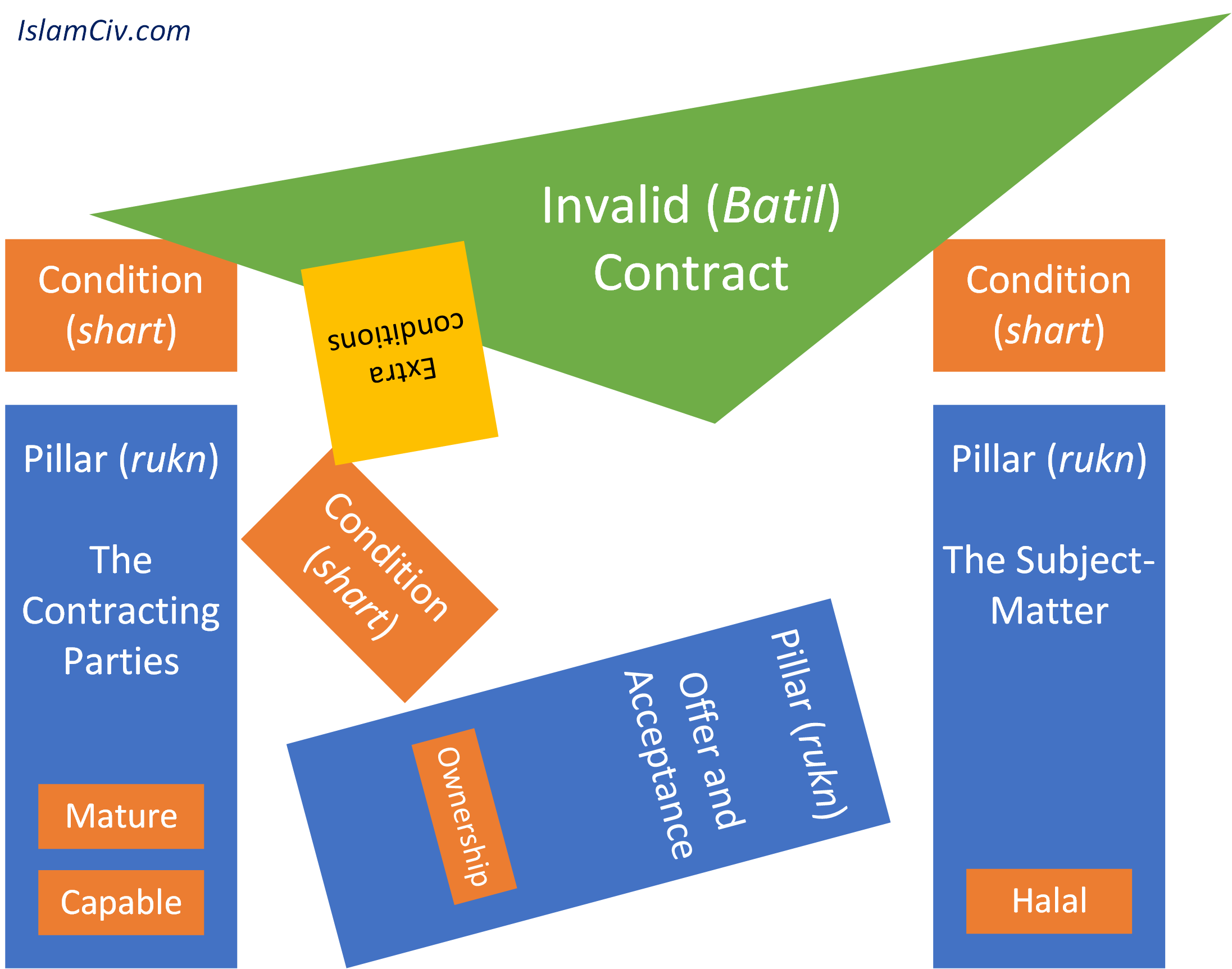



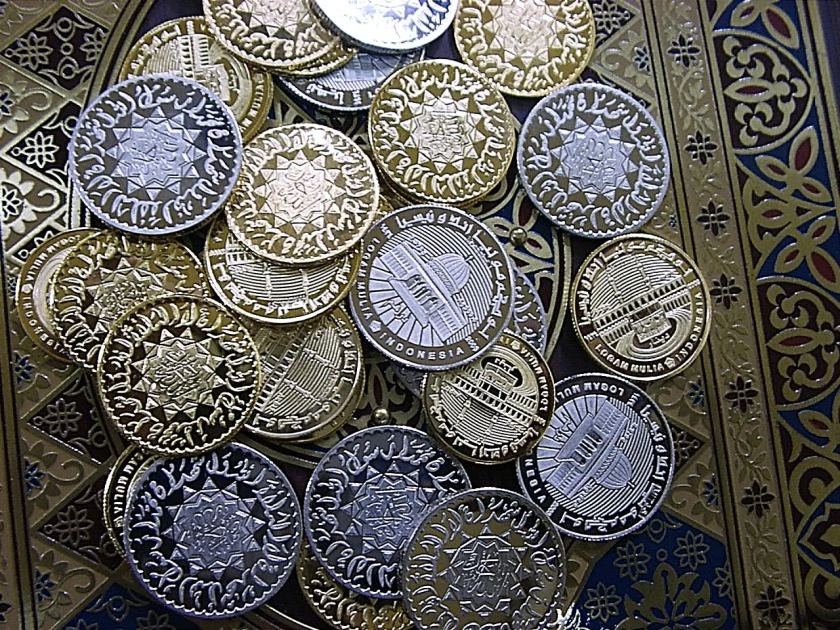


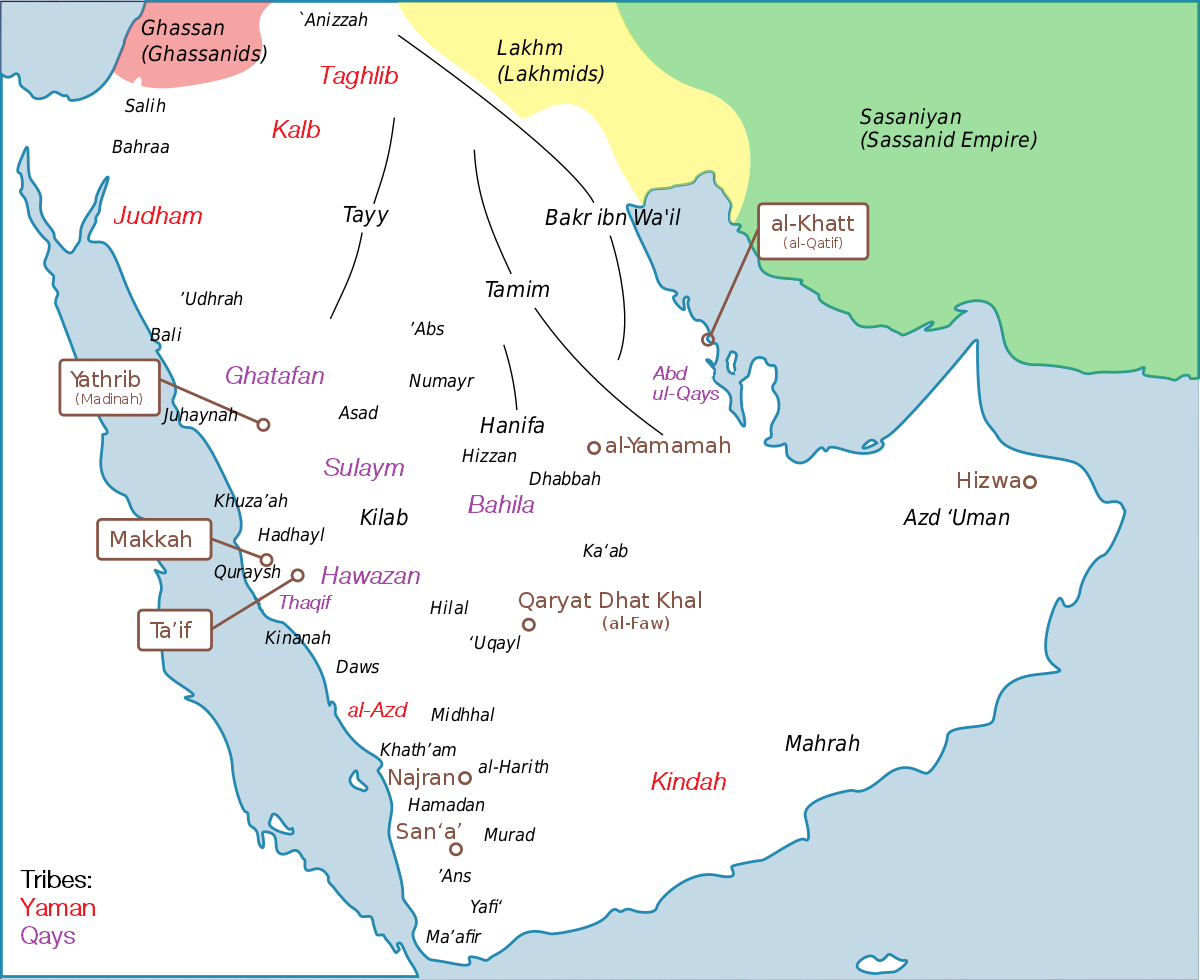


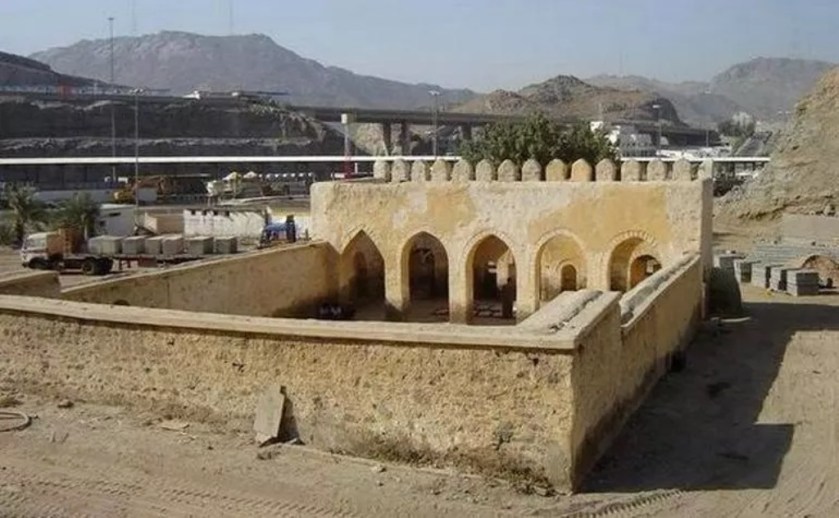


 Islamic Civilization