Latest Posts

What is the meaning of the verse: “Those who do not rule by what Allah has sent down, such people are disbelievers”?

  1. Contention 1: Hukm means judging not ruling
  2. Contention 2: The address is to the Jews and Christians, not the Muslims
    1. What are the circumstances of revelation (Asbab al-Nuzul) of these verses?
    2. The Opinion of a sahabi is not a binding shar’a daleel
    3. What did other sahabi and mufasireen say about this verse?
    4. Consideration is with the generality of the wording, not the specificity of the cause
  3. Contention 3: The verse doesn’t mention judging by ‘all’ of revelation
    1. Where do we get the meaning of ‘all’ in the verse?
  4. Contention 4: Kufr does not mean major kufr but minor kufr (fisq)
  5. Conclusion
  6. Notes

There are many verses in the Holy Qur’an which oblige Muslims to judge and rule by the sharia. Three of these verses contain commands which are identical except for their endings, which is why the mufasireen (interpreters of the Qur’an) linked them together. Allah (ta’ala) says in Surah al-Ma’ida verses 44, 45 and 47,

وَمَنْ لَمْ يَحْكُمْ بِمَا أَنْزَلَ اللَّهُ فَأُولَٰئِكَ هُمُ الْكَافِرُونَ

“Those who do not judge/rule by what Allah has sent down, such people are disbelievers (kafirun).”[1]

وَمَنْ لَمْ يَحْكُمْ بِمَا أَنْزَلَ اللَّهُ فَأُولَٰئِكَ هُمُ الظَّالِمُونَ

“Those who do not judge/rule by what Allah has sent down, such people are oppressors (dhalimun).”[2]

وَمَنْ لَمْ يَحْكُمْ بِمَا أَنْزَلَ اللَّهُ فَأُولَٰئِكَ هُمُ الْفَاسِقُونَ

“Those who do not judge/rule by what Allah has sent down, such people are deviators (fasiqun).”[3]

These verses are political in nature, because they address the governments and judiciaries in the Muslim world, and so can be controversial to those academics and ulema who want to maintain the existing status quo, or aim to ‘reform’ Islam by secularising it and removing it from the public sphere. Ibn Ashur in his Tafseer of Those who do not judge by what Allah has sent down, such people are disbelievers” says,

وهَذِهِ الآيَةُ والَّتِي بَعْدَها في شَأْنِ الحاكِمِينَ

“This verse, and the one after it, is about the rulers.”[4]

A number of questions may be raised concerning these verses such as, “does hukm mean judging or ruling?”, “these were revealed concerning the Jews so are they even applicable to Muslims?”, “does kafirun mean major or minor kufr (fisq)?” and “where does it say rule by ‘all’ of what Allah revealed?” All these questions have been answered by the mufasireen, and so we can derive several usuli (foundational) principles, by explaining the meaning of these verses that will help in understanding other commands in the Qur’an.

We can summarise the main issues regarding this verse in to four:

Contention 1: Hukm means judging not ruling
Contention 2: The address is to the Jews and Christians, not the Muslims
Contention 3: The verse doesn’t mention judging by ‘all’ of revelation
Contention 4: Kufr does not mean major kufr but minor kufr (fisq)

We will now examine these four contentions in turn.

Contention 1: Hukm means judging not ruling

This was addressed in the article Does حُكْم (hukm) mean judging or ruling or both? which discusses this contention in depth, but in summary, the term حُكْم (hukm) means both judging and ruling, and this was its meaning among the Arabs at the time of revelation. The Qur’an itself used hukm to mean ruling and the sahaba interpreted hukm in the Qur’an to mean ruling.

This difference between ruling and judging is subtle because in early times the kings, rulers and tribal chiefs would perform both حُكْم (hukm) and قَضاء (qadaa’), issuing decrees relating to disputes between people, and decrees affecting all their subjects, and this was the case among the Arab tribes including Quraysh. The separation between the two branches of government which occurred in more modern times simply wasn’t there in the early times.

It is well-known that the majority of Arabic words have more than one meaning, and are referred to as mushtarak (homonyms).[5] “Specifying the Mushtarak to one of its meanings requires a Qareenah (indication) that specifies that meaning, and if no Qareenah is found…then it is obligatory to understand it according to all of its meanings.”[6]

With regards to the word حُكْم (hukm), since there is no Qareenah to restrict it to judiciary in the majority of the ayaat of Qur’an, then the meaning will apply equally to both a judge (haakim) in a court of law issuing a hukm (judgement), and a ruler (hakeem)[7] executing a hukm (law) on the people. There are exceptions to this, which is why we refer to the experts in the Qur’an and Arabic language who are the mufasireen. In the hadith the correct usage will be evident from the context as in in the letter from the sahabi Abi Bakrah to his son Ubaidullah ibn Abi Bakrah, who took up the post of Qadi in Sijistan. The hadith “The judge should not judge between two people while he is angry,”[8]thereforeclearly applies to a Qadi in a court of law.

Contention 2: The address is to the Jews and Christians, not the Muslims

The full wording of the verses 44, 45 and 47, of which the last sentence contains the command “those who do not judge…” are as follows. Allah (ta’ala) says,

إِنَّا أَنْزَلْنَا التَّوْرَاةَ فِيهَا هُدًى وَنُورٌ ۚ يَحْكُمُ بِهَا النَّبِيُّونَ الَّذِينَ أَسْلَمُوا لِلَّذِينَ هَادُوا وَالرَّبَّانِيُّونَ وَالْأَحْبَارُ بِمَا اسْتُحْفِظُوا مِنْ كِتَابِ اللَّهِ وَكَانُوا عَلَيْهِ شُهَدَاءَ ۚ فَلَا تَخْشَوُا النَّاسَ وَاخْشَوْنِ وَلَا تَشْتَرُوا بِآيَاتِي ثَمَنًا قَلِيلًا ۚ وَمَنْ لَمْ يَحْكُمْ بِمَا أَنْزَلَ اللَّهُ فَأُولَٰئِكَ هُمُ الْكَافِرُونَ

We sent down the Torah containing guidance and light, and the Prophets who had submitted themselves gave judgement by it for the Jews – as did their scholars and their rabbis – by what they had been allowed to preserve of Allah’s Book to which they were witnesses. Do not be afraid of people, be afraid of Me. And do not sell My Signs for a paltry price. Those who do not judge by what Allah has sent down, such people are kafirun.[9]

وَكَتَبْنَا عَلَيْهِمْ فِيهَا أَنَّ النَّفْسَ بِالنَّفْسِ وَالْعَيْنَ بِالْعَيْنِ وَالْأَنْفَ بِالْأَنْفِ وَالْأُذُنَ بِالْأُذُنِ وَالسِّنَّ بِالسِّنِّ وَالْجُرُوحَ قِصَاصٌ ۚ فَمَنْ تَصَدَّقَ بِهِ فَهُوَ كَفَّارَةٌ لَهُ ۚ وَمَنْ لَمْ يَحْكُمْ بِمَا أَنْزَلَ اللَّهُ فَأُولَٰئِكَ هُمُ الظَّالِمُونَ

We prescribed for them in it: a life for a life, an eye for an eye, a nose for a nose, an ear for an ear, a tooth for a tooth, and retaliation for wounds. But if anyone forgoes that as a sadaqa, it will act as expiation for him. Those who do not judge by what Allah has sent down, such people are dhalimun.[10]

وَلْيَحْكُمْ أَهْلُ الْإِنْجِيلِ بِمَا أَنْزَلَ اللَّهُ فِيهِ ۚ وَمَنْ لَمْ يَحْكُمْ بِمَا أَنْزَلَ اللَّهُ فَأُولَٰئِكَ هُمُ الْفَاسِقُونَ

The people of the Gospel should judge by what Allah sent down in it. Those who do not judge by what Allah has sent down, such people are fasiqun.[11]

Muhammad Amarah says: “The ‘book’ to which these [verses] refer wherein al-hukm is demanded…is not the Quran as the advocates of the theory of ‘al-hakamiyah belongs to Allah’ whimsically imagine, but rather it is the Torah or the Gospels (al-injil)…the desired meaning of ‘al-hukm’ in these verses is ‘adjudication’ (al-qada’) because the occasion for the revelation of the verses decisively confirms that they came and referred to the occurrence of a ‘case’ (qada’iyah) in reality wherein a group of Jews applied to the Messenger for adjudication, and he ruled and judged in it according to what Allah had sent down in their book, the Torah…We are not face-to-face with discussion of political systems or political legislation of society, even if it were correct to extract the theory of ‘divine political hakamiyah’ from these verses; but rather we are confronting a ‘case’ brought by a group from amongst the people of the Book (ahl al-kitab) before the Messenger ‘in order that he adjudicate and judge’ for them in it, so he adjudicated for them [in the matter] in accordance with their book…subsequently most of the communities and Quranic exegetes (muffasirin) – according to al-Qurtubi – agree that these verses pertained to these people of the Book.”[12]

What are the circumstances of revelation (Asbab al-Nuzul) of these verses?

Yousef Meri says, “One of these sciences of the Qur’an is the Asbab al-Nuzul, i.e. the occasions, reasons or causes of revelation. The Qur’an, as is well known, was revealed in instalments over a period of nearly twenty-three years. Muslim scholars agree that the revelations of the Qur’an can be divided into two broad types.

One type includes passages of the Qur’an which were revealed in response to specific events, incidents or questions put forward to the Prophet ﷺ.

The second type includes passages of the Qur’an which were not direct responses to any historical or social development in the life of the Muslim community.”[13]

If we look to the Asbab al-Nuzul of these verses then it’s clear that they were revealed on incidents related to the people of the book.

Al-Bara’ ibn ‘Azib said: “One day, the Messenger of Allah ﷺ passed by a Jewish man who had just been flogged and had his face darkened with coal. He summoned the Jews and asked them: ‘Is this what your Scripture decrees as punishment for the adulterer?’ ‘Yes!’ they replied. He then summoned one of their scholars and asked him: ‘I implore you by Allah who has sent the Torah to Moses, is this what your Scripture decrees as punishment for the adulterer?’

He (the scholar) said: ‘No! And if you had not implored me by Allah, I would not tell you. Our Scripture rules that the punishment of the adulterer is stoning. But it became widespread among our notables. Initially, when one of the notables committed adultery, we left him unpunished while we applied stoning on the communality in cases of adultery. Then we decided to look for a punishment that was applied on both the notables and communality of people. And so we agreed on darkening the face with coal and flogging to replace stoning.’

The Messenger of Allah ﷺ said: ‘O Allah! I am the first to reapply your command after they had suspended it.’ And he ordered that the Jewish man be stoned.

Allah, exalted is He, then revealed يَا أَيُّهَا الرَّسُولُ لاَ يَحْزُنْكَ الَّذِينَ يُسَارِعُونَ فِي الْكُفْرِ “O Messenger! do not be grieved by those who rush headlong into kufr”up to His words ‏‏إِنْ أُوتِيتُمْ هَذَا فَخُذُوهُ “If you are given this, then take it”.[14]

They (the Jews) said: ‘Go to Muhammad; if he directs you to flog the adulterer and darken his face with coal and apply flogging, then follow him. But do not follow him if he directs you to apply stoning on him.’

It was then that Allah revealed: “Those who do not judge by what Allah has sent down, such people are kafirun.”[15] He (the narrator Al-Bara’) said: “This relates to the Jews.”

Up to[16] His words وَمَنْ لَمْ يَحْكُمْ بِمَا أَنْزَلَ اللَّهُ فَأُولَٰئِكَ هُمُ الظَّالِمُونَ “Those who do not judge by what Allah has sent down, such people are dhalimun.”[17] Al-Bara’ said: “This relates to the Christians.”

Up to His words وَمَنْ لَمْ يَحْكُمْ بِمَا أَنْزَلَ اللَّهُ فَأُولَٰئِكَ هُمُ الْفَاسِقُونَ “Those who do not judge by what Allah has sent down, such people are fasiqun.” [18] Al-Bara’ said: “This relates to all disbelievers.”[19]

This seems to indicate that these verses are related to the people of the book i.e. Jews and Christians, and not the Muslims, so is it the case that we cannot use them as a shar’a daleel (divine evidence) that ruling by other than Islam, as all Muslim governments do today, is prohibited and therefore the contention is correct?

The Opinion of a sahabi is not a binding shar’a daleel

The majority of the ulema agreed that the consensus (ijma) of the sahaba can be used as a hujjah (evidential proof) in extracting sharia rules (ijtihad)[20], but they differed on whether the individual opinion of a sahabi can be used as a hujjah or not.

The opinion of the sahabi emanating from a ra’y (opinion) and ijtihad was considered as a hujjah by Imam Maalik, his followers and the majority of the Hanafis in addition to Ar-Razi and Ash-Shaatibi. As for the Mu’tazilah, some of the Mutakallimeen (philosophers), Ash-Shaafi’i, Ahmad Bin Hanbal, Al-Aamadi and Ash-Shawkaani, then they held that the madh’hab (school of thought) of the sahabi is not legally valid as a daleel.[21]

Al-Bara’ ibn ‘Azib was a great sahabi and well-known narrator of hadith who interpreted the above ayaat as being related to the Jews, Christians and disbelievers. This is his individual interpretation which someone may follow, but other sahabi differed with him along with many of the mufasireen. This difference of opinion (ikhtilaaf) in the branches (furu’) of Islam is part of Islamic Jurisprudence (fiqh) and not a problem so long as it’s within the acceptable parameters of the foundations (usul) laid down by the ulema.

Our approach to legitimate difference of opinion should be as Taqiuddin an-Nabhani mentions, “Therefore, the da’awah carriers should consider their understanding of the rules as correct, with the possibility that they may be wrong, while the understanding of other people wrong, with the possibility that they may be correct. This is in order to proceed with the da’wah for Islam and its rules according to their understanding and derivation of them, trying to change the opinions of others which they consider wrong, but could possibly be correct. It is totally incorrect for the da’wah carriers to view their understanding as if it is the opinion of Islam, rather they have to present their opinion as an Islamic opinion.

The mujtahids who established the schools of Fiqh (madh’habs) used to consider their deduction of the rules as correct, accepting the possibility of it being wrong. Each one of them used to say: ‘If a hadith was correct then it will be my madhab, and don’t consider my opinion.’

Likewise the carriers of the da’wah should also consider their opinions which they adopt or derive from Islam in terms of their understanding of such opinions, as being correct but open to error, but their belief in Islam as an ‘aqeedah must not contain any doubt whatsoever.”[22]

This approach is also taken from the hadith of the Messenger of Allah ﷺ where he said,

إِذَا حَكَمَ الْحَاكِمُ فَاجْتَهَدَ ثُمَّ أَصَابَ فَلَهُ أَجْرَانِ ‏.‏ وَإِذَا حَكَمَ فَاجْتَهَدَ ثُمَّ أَخْطَأَ فَلَهُ أَجْرٌ

“If a judge performs ijtihad to the best of his ability and knowledge and gets it right, he will have two rewards. If he performs ijtihad to the best of his ability and knowledge but gets it wrong, he will have one reward.”[23]

What did other sahabi and mufasireen say about this verse?

Ibn Mas’ood and Al-Hasan said:

قَالَ ابْنُ مَسْعُودٍ وَالْحَسَنُ: هِيَ عَامَّةٌ فِي كُلِّ مَنْ لَمْ يَحْكُمْ بِمَا أَنْزَلَ اللَّهُ مِنَ الْمُسْلِمِينَ وَالْيَهُودِ وَالْكُفَّارِ أَيْ مُعْتَقِدًا ذَلِكَ وَمُسْتَحِلًّا لَهُ،

“It is general for anyone who does not judge/rule by what Allah reveals from the Muslims, and the Jews and the disbelievers.” meaning believing in that and making it permissible.”[24]

Ibn Ashur says:

فالمَقْصُودُ اليَهُودُ وتَحْذِيرُ المُسْلِمِينَ مِن مِثْلِ صُنْعِهِمْ

“What is meant is the Jews and warning the Muslims against something similar to what they did.”[25]

Abu Hibban says,

ظاهِرُ هَذا العُمُومُ، فَيَشْمَلُ هَذِهِ الأُمَّةَ وغَيْرَهم مِمَّنْ كانَ قَبْلَهم، وإنْ كانَ الظّاهِرُ أنَّهُ في سِياقِ خِطابِ اليَهُودِ، وإلى أنَّها عامَّةٌ في اليَهُودِ وغَيْرِهِمْ

It is apparent that this is general and includes this Ummah and others who were before them. What is apparent is: that it is in the context of addressing the jews and generally applies to them and others.”[26]

Imam Al-Razi says,

أنَّ هَذِهِ الآيَةَ نَزَلَتْ في اليَهُودِ فَتَكُونُ مُخْتَصَّةً بِهِمْ، وهَذا ضَعِيفٌ؛ لِأنَّ الِاعْتِبارَ بِعُمُومِ اللَّفْظِ لا بِخُصُوصِ السَّبَبِ

“This verse was revealed about the Jews, so it is specific to them, and this is weak. Because consideration is given to the generality of the wording, not to the specificity of the cause.”[27]

Imam Al-Razi also mentions the use of مَن carries the meaning of a general address,

كَلامٌ أُدْخِلَ فِيهِ كَلِمَةُ (مَن) في مَعْرِضِ الشَّرْطِ، فَيَكُونَ لِلْعُمُومِ،

“The speech in which the word (مَن) is included in the presenting of the condition, will be for the generality [of the address].”[28]

Consideration is with the generality of the wording, not the specificity of the cause

This brings us to the well-known principle in usul ul-fiqh which Imam Al-Razi mentioned,

العِبْرَةُ بِعُمومِ اللفْظِ لَا بِخُصوصِ ال سبَبِ

“The importance or consideration is with the generality of the wording and not with the specificity of the cause”[29]

Muhammad Hussein Abdullah explains this principle. “The Wahy, manifested in the Qur’aan and the Hadeeth, descended upon the Messenger of Allah ﷺ to explain the Ahkaam of specific incidents. For example, the Aayah of Saraqah (theft) was revealed in respect to the theft of the shield or cloak of Safwaan, the Aayah of Zhihaar (Al-Mujaadalah) was revealed in respect to Salamah Bin Sakhr or Khawlah Bint Tha’labah the wife of Aws Bin As-Saamit and the Aayah of Al-Li’aan (swearing a curse) was revealed in respect to Hilaal Bin Umayyah.” [30]

“The Nabi ﷺ passed by a dead sheep and then said: هَلاَّ انْتَفَعْتُمْ بِجِلْدِهَا “You could have taken its hide (skin), tanned it and then utilised (or benefit from) it.”[31] In another narration the Messenger ﷺ said: أَيُّمَا إِهَابٍ دُبِغَ فَقَدْ طَهُرَ “Whatever (أيُّما ) hide (animal skin) is tanned then it has become purified.”[32] In this example the statement of the Nabi ﷺ was connected to a specific Sabab (cause) which was that dead sheep that he passed by which was said to have been the sheep of Maymoona. However, the Alfaazh (wordings) of the Hadeeth came in a general manner i.e. with a Lafzh that is indicative of Al-‘Umoom (generality). The Lafzh in this Hadeeth was أيُّ (whatever or whichever) and so this Lafzh encompasses every hide or animal skin in respect to it becoming purified by way of the process of tanning. That is based upon the principle: ‘The importance (or consideration) is found with the generality of the wording and not in the specificity of the cause’.

In the same way every Lafzh ‘Aamm (general wording) that has been mentioned related to a specific Sabab (cause) in relation to a question (that was asked or arose) or an incident (that happened), works in accordance to its generality whilst there is no ‘Ibrah (significance) in respect to the specificity of the Sabab (cause). That is because as Al-Imaam Ash-Shaafi’i said: “The Sabab does not produce anything, rather it is the wordings (Alfaazh) that produce (i.e. benefited from). And it was in accordance to this that the Fuqahaa’ of the Muslims in the era of the Nabi ﷺ and the era of the Sahaabah (rah) proceeded.”[33]

Therefore, regardless of the asbab al-nuzul which relates to the jews, the address in the command is general and so will apply to everyone – Muslim or otherwise – who does not judge/rule by whatever Allah has revealed.

Contention 3: The verse doesn’t mention judging by ‘all’ of revelation

Some modernists have questioned whether the verse orders Muslims to judge/rule by ‘all’ of revelation or only part of it. This attempt at limiting the scope of the revelation is aimed at interpreting the Qur’an in a secular manner, so it excludes government and mu’amilaat (societal transactions), following the Christian model of “Render unto Caesar the things that are Caesar’s, and unto God the things that are God’s.” This paves the way for a secular civil state to be established where Islam is the official religion, but relegated to the private sphere.

Professor Abdullah Saeed says, “Another example is provided by the phrase, ‘what God has revealed’ (bima anzala allahu), in the same verse. Can we simply say that it is the Qur’an ‘as it was revealed’? What is meant by the ruling according to what has been revealed? There are many rulings in the scripture: theological, moral, spiritual, and commandments and exhortations. What aspect of the scripture is thus referred to by this verse? Again, who is the intended audience? How are they to act on this? If this verse refers to the legal aspects of the Qur’an, what exactly are these? Are they specifically related to hudud (prescribed punishments), as many Textualists[34] take it to mean today, or is the issue much broader? Are there any specific rulings on this in the Qur’an, or are they matters of interpretation that we think are clear, unambiguous and legally binding? Again, answers to these questions are not always clear.”[35]

Taqiuddin an-Nabhani, clarifies the correct approach towards interpreting the Qur’an as opposed to the modernist ‘contextualist’ approach advocated by Professor Saeed. He says, “Therefore, we view that the method of performing tafsīr of the Qur’ān is that the Arabic language and the Prophet’s ﷺ Sunnah should be adopted as the only tool in understanding the Qur’ān and its tafsīr in terms of its vocabulary and construction, in terms of the Sharī’ah meanings, Sharī’ah rules, and the thoughts that have a legal reality.

The method of explaining the Qur’ān is that we understand the texts to the extent as is indicated by the speech of the Arabs and their customary usages and whatever the expressions indicate in terms of Sharī’ah meanings mentioned in a Sharī’ah text of the Qur’ān or Sunnah which is not restricted to the understanding of the previous forebearers such as the ‘Ulama, Tabi’un or even the Sahabah because all of these are Ijtihāds which may be mistaken or correct.

Maybe the mind is guided to the understanding of an ayah whose reality becomes conspicuous to the mufassir during an extensive perusal of the Arabic language or it becomes apparent to him during the changing of things, progress of material forms (ashkal madaniyya), realities, events.

By opening the mind to creativity, by understanding & not invention, the creativity in tafsīr takes place within the limits demanded by the word ‘tafsīr’ while at the same time protecting oneself from misguided invention of meanings which has absolutely no relationship to the text being explained.”[36]

Where do we get the meaning of ‘all’ in the verse?

If we follow the traditional approach of Taqiuddin an-Nabhani and interpret the verse through the Arabic language, then the meaning of ‘all’ or ‘whatever’ in the phrase بِمَا أَنْزَلَ اللَّهُ  ‘whatever Allah has sent down’ comes from the particle ما (maa) which is a relative pronoun and particle of generality (‘umoom). Abdul-Qadeem Zallum says, “Allah ta’ala has labelled in these three verses those who do not rule by all the rules He ta’ala  has revealed as being kafirun, dhalimun and fasiqun. This is because ما in the verses is of a general form, so it includes all the Shari’ah rules that Allah ta’ala has revealed, whether they were commands or prohibitions.”[37]

ʻAbd al-ʻAzīz ibn Yaḥyá Kinānī (d.854CE) says:

والرّابِعُ: قالَ عَبْدُ العَزِيزِ بْنُ يَحْيى الكِنانِيُّ: قَوْلُهُ ﴿بِما أنْزَلَ اللَّهُ﴾ صِيغَةُ عُمُومٍ، فَقَوْلُهُ ﴿ومَن لَمْ يَحْكم بِما أنْزَلَ اللَّهُ﴾ مَعْناهُ مَن أتى بِضِدِّ حُكْمِ اللَّهِ تَعالى في كُلِّ ما أنْزَلَ اللَّهُ فَأُولَئِكَ هُمُ الكافِرُونَ، وهَذا حَقٌّ لِأنَّ الكافِرَ هو الَّذِي أتى بِضِدِّ حُكْمِ اللَّهِ تَعالى في كُلِّ ما أنْزَلَ اللَّهُ،

“His speech بِما أنْزَلَ اللَّه “by what Allah has sent down” is on the form of generality, so His speech ومَن لَمْ يَحْكم بِما أنْزَلَ اللَّه “Those who do not judge by what Allah has sent down” its meaning is whoever arrives contrary to the rule of Allah ta’ala in ALL (كُلِّ) what He revealed then those are from the disbelievers, and this is correct because the disbeliever is the one who comes to contrary to the rule of Allah ta’ala in ALL what He has revealed.”[38]

The use of the particle of generality ما is found in other verses of the Holy Qur’an.

Abdullah (bin Masood) narrated that Allah had cursed those women who tattooed and who have themselves tattooed, those who pluck hair from their faces and those who make spaces between their teeth for beautification changing what Allah has created. This news reached a woman of the tribe of Asad who was called Umm Ya’qub and she used to recite the Holy Qur’an. She came to him and said: “What is this news that has reached me from you that you curse those women who tattooed and those women who have themselves tattooed, the women who pluck hair from their faces and who make spaces between their teeth for beautification changing what Allah has created?” Thereupon Abdullah said: “Should I not curse one upon whom Allah’s Messenger has invoked curse and that is in the Book also.” Thereupon that woman said: “I read the Qur’an from cover to cover, but I did not find that in it.” Whereupon he said: “If you had read (thoroughly) you would have definitely found this in that as Allah, the Exalted and Glorious, has said:

وَمَآ ءَاتَىٰكُمُ ٱلرَّسُولُ فَخُذُوهُ وَمَا نَهَىٰكُمْ عَنْهُ فَٱنتَهُوا۟ ۚ وَٱتَّقُوا۟ ٱللَّهَ ۖ إِنَّ ٱللَّهَ شَدِيدُ ٱلْعِقَابِ

“Whatever the Messenger brought you take it; and whatever he forbids you abstain from it. And fear Allah, for Allah’s punishment is very severe.”[39] [40]

Abdul-Qadeem Zallum comments on this ayah, “This means to take and act by whatever the Messenger of Allah ﷺ has brought to you, and abstain and keep away from whatever the Messenger of Allah ﷺ has forbidden you. This is because the relative pronoun مَا in the verse is of a general form. It therefore, contains the obligation to perform all the duties, and to abstain from and avoid all the prohibitions. The command mentioned in the verse is a decisive request, thus it is obligatory. This is deduced from the following command to observe piety and the threat of severe punishment for he who does not take whatever the Messenger of Allah ﷺ brought and does not abstain from whatever he forbade.”[41]

Contention 4: Kufr does not mean major kufr but minor kufr (fisq)

In response to the takfiris who use this verse to label Muslim leaders, governments, and all those assisting them as apostates, a book was written called ‘A Study of the Tafseer of Abdullaah ibn Abbbas (ra) “kufr doona kufr”’ by SalafiManhaj where it examines the opinion of Ibn Abbas, to say that ruling by other than what Allah has revealed doesn’t necessarily make someone an apostate, because kufr in this ayah means minor kufr (fisq). Abdullah ibn ‘Abbas says, “It is not the kufr that you are going towards (in your minds), it is not the kufr that expels one from the religion…[it] is kufr less than kufr (كُفْرٌ دُونَ كُفْرٍ).”[42]

The word كَافِرُونَ doesn’t necessarily mean the person is a disbeliever as Ibn Abbas mentions, because the subject matter of the verse is action not iman. In usul ul-fiqh (the science which governs the actions of people), any text of the Qur’an and Sunnah related to actions which negate Iman, is considered a decisive qareenah (linking indicator) which indicates an obligation or prohibition, not kufr.

Muhammad Hussein Abdullah says “If the daleel (evidence) indicates that leaving, or not doing the action has a punishment built upon that in the dunya (the life of this world) or in the akhirah (the hereafter), or the hate (detestation) or anger of Allah is attached to it or the negation of Imaan (belief),”[43] then it is a decisive qareenah in the command or prohibition which means it’s either fard or haram. An indecisive qareenah would only indicate the action being mandub (recommended) or makruh (disliked). This is similar to the hadith where the Messenger of Allah ﷺ said,

إِذَا قَالَ الرَّجُلُ لأَخِيهِ يَا كَافِرُ فَقَدْ بَاءَ بِهِ أَحَدُهُمَا

“If a man says to his brother, O Kafir! Then surely one of them is such.”[44]

This doesn’t mean the man saying this is a kafir. Rather it means because it is related to an action it is a decisive qareenah that saying to a believer “O Kafir” is a major sin.

Abu Ubayd al-Qaasim ibn Sallam (d.224H/838CE) comments on such hadith saying, “These reports are not to be interpreted as meaning that the one who commits sin is to be labelled as belonging to the people of jahiliyah, a kafir or a hypocrite when he believes in Allah and the message sent by Him, and he fulfils the obligatory duties. What these reports mean is that these sins are part of the actions of the kuffar which are forbidden in the Qur’an and Sunnah, so that the Muslims can avoid these things and steer clear of them, and not imitate the kuffar in any of their attitudes or ways.”[45]

Having said this, if the text is applicable to both actions and iman then depending on the context it may indicate kufr. In the verse under discussion, it will indicate major kufr if the person judging or ruling by other than Islam believes what they are ruling by is better than Islam. This is a meaning that can be extracted related to ‘aqeedah, and is an understanding agreed upon across the different schools of thought.

Taqiuddin an-Nabhani says, “if he [the Khaleefah] adopted rules from other than the Islamic rules and he knew that what he had adopted was something other than the Islamic Shari’ah then the words of Allah (swt): Those who do not rule by what Allah has sent down, such people are disbelievers apply to him, so if he believed in the rule that he adopted then he has committed disbelief and apostatised from Islam. If he did not believe in it but he took it upon the basis that it did not contradict Islam, in the same manner that the Ottoman Khulafaa acted during their final days, then it is forbidden for him but he has not committed disbelief.”[46]

This position is the same as the salafiyya position mentioned by Abdul-Azeez bin Baz who says, “Whoever rules by other than what Allah has revealed does not escape from four issues:

1- The one who says “I rule by this (i.e. man-made laws) because they are better than the Divine Legislation of Islam (i.e. sharia)” then such a person is a disbeliever, who has committed major kufr.

2- The one who says “I rule by these man-made laws as they are like the Divine Legislation of Islam, and ruling by it is permitted, just as ruling by the Divine Legislation of Islam is also permitted” such a person is a disbeliever who has committed major kufr.

3- The one who says “I rule by these laws, but the Divine Legislation of Islam is better, but ruling by other than what Allah has revealed is permitted” such a person is a disbeliever who has committed major kufr.

4- The one who says “I rule by these man-made laws” yet believes that it is not permissible to rule by other than what Allah has revealed and says “Ruling by the Divine Legislation of Islam is better and it is not permissible to rule by other than it” yet is weak or does this out of what his rulers have originated before him, such a person is a believer[sic] who has committed minor kufr which does not expel him from the religion and the action is considered to be from the major sins.”[47]

Conclusion

The Prophet ﷺ foretold of this current situation the Muslim ummah is living in, when he ﷺ said,

لتنقضن عرى الإسلام عروة عروة ، فكلما انتقضت عروة تشبث الناس بالتي تليها ، فأولهن نقضاً الحكم وآخرهن الصلاة

“The knots of Islam will be undone one by one, each time a knot is undone the next one will be grasped, the first to be undone will be the Ruling and the last will be the Prayer.”[48]

Sheikh Muhammad Salih Al-Munajjid says, “The meaning of the phrase “the first bond/knot to be undone will be ruling (al-hukm)” is apparent; it refers to the failure to rule according to the shari’ah of Allah. This is what is happening today in most of the so-called Muslim countries. It is known that what is obligatory upon all is to rule according to the shari’ah of Allah in all things, and to beware of ruling according to laws and customs which go against the shari’ah, because Allah says:

فَلَا وَرَبِّكَ لَا يُؤْمِنُونَ حَتَّىٰ يُحَكِّمُوكَ فِيمَا شَجَرَ بَيْنَهُمْ ثُمَّ لَا يَجِدُوا۟ فِىٓ أَنفُسِهِمْ حَرَجًۭا مِّمَّا قَضَيْتَ وَيُسَلِّمُوا۟ تَسْلِيمًۭا

“By your Lord, they will not be true believers until they let you (O Muhammad) decide between them in all matters of dispute, and find no resistance in their souls to your decisions, accepting them totally”[49] [50]

A return to Islamic rule is the vital issue for the Muslim ummah and serious thinking is required among the intellectuals and influentials of this ummah on how to proceed in this. Only then can we retie the knots of Islam.

Notes


[1] Holy Quran Surah al-Ma’ida, ayah 44

[2] Holy Quran Surah al-Ma’ida, ayah 45

[3] Holy Qur’an, Surah al-Ma’ida, ayah 47

[4] Ibn Ashur, Tahrir wa Tanwir, https://tafsir.app/ibn-aashoor/5/44

[5] Mushtarak is being used here in a general sense rather than Al-Mushtarak, so includes all the different types of Arabic meanings such as metaphorical (majaz) and technical (istilahi). Abdul-Qadeem Zallum and Ata Bin Khalil Abu Al-Rashtah refer to the word hukm as a technical term (istilah). Sheikh Ata says, “the term Hukm is not a homonym (mushtarak) in the definitions Qadaa’ (execution) and Sultaan (Authority), but is a linguistic reality (haqeeqah lughawiyah) when it holds the meaning of Qadaa, and is a specified common reality (haqeeqah ‘urfiyah khassah) i.e. istilah in the meanings of Ruling and Authority.” Regardless of which opinion someone adopts here (mushtarak or haqeeqah ‘urfiyah khassah), the word hukm in the Qur’an and Sunnah means judging and ruling so the commands will apply to both.

[6] Muhammad Hussein Abdullah, ‘Al-Waadih Fee Usool ul-Fiqh,’ 1995, First Translated English Edition 2016, p.505

[7] A judge is referred to as a حاكم (haakim), but a ruler is referred to as a حكيم (hakeem) because of the frequent rules he executes. حكيم is on the pattern (wazn) of فعيل which is used for exaggeration (mubalagha). This is similar to the attribute of Allah – الرَحِيم (ar-raheem)

[8] Jami’ at-Tirmidhi 1334, https://sunnah.com/tirmidhi:1334

[9] Holy Quran Surah al-Ma’ida, ayah 44

[10] Holy Quran Surah al-Ma’ida, ayah 45

[11] Holy Qur’an, Surah al-Ma’ida, ayah 47

[12] Muhammad Amarah, ‘Al-Dawlah Al-Islamiya—Bayan Al-Ilmaniyah Wa Al-Sultah Al-Diniyah’ (The Islamic State: On Understanding Secularism and Religious Authority), Cairo: Dar al-Shuruk. 1988, pp.44–45 quoted in Abdelilah Belkeziz, ‘The State in Contemporary Islamic Thought,’ p.250

[13] Ali Ibn Ahmad, al-Wahidi; Translated by Mokrane Guezzou; Introduction by Yousef Meri (2008). Asbab al-Nuzul. Amman, Jordan: Royal Aal al-Bayt Institute for Islamic Thought, p.iii

[14] Holy Quran Surah al-Ma’ida, ayah 41

[15] Holy Quran Surah al-Ma’ida, ayah 44

[16] Meaning the whole verse as this sentence is part of a wider group of sentences (ayah)

[17] Holy Quran Surah al-Ma’ida, ayah 45

[18] Holy Quran Surah al-Ma’ida, ayah 47

[19] Alī ibn Ahmad al-Wāhidī, Op.cit., p.68; Sahih Muslim 1700a, https://sunnah.com/muslim:1700a

[20] Muhammad Hussein Abdullah, Op.cit., p.294

[21] Muhammad Hussein Abdullah, Op.cit., p.295

[22] Taqiuddin an-Nabhani, Mafahim, Khilafah Publications, p.65

[23] Agreed upon. Sahih Muslim 1716a, https://sunnah.com/muslim:1716a ; Sahih al-Bukhari 7352, https://sunnah.com/bukhari:7352

[24] Imam Qurtubi, Al Jaami li Ahkaam Al-Qur’aan, https://tafsir.app/qurtubi/5/44

[25] Ibn Ashur, Tahrir wa Tanwir, https://tafsir.app/ibn-aashoor/5/44

[26] Abu Hibban, Bahr ul-Muheet, https://tafsir.app/albahr-almuheet/5/44

[27] Imam Al-Razi, Tafsir Al-Kabir, https://tafsir.app/alrazi/5/44

[28] Ibid

[29] Muhammad Hussein Abdullah, Op.cit., p.501

[30] Muhammad Hussein Abdullah, Op.cit., p.501

[31] Sahih al-Bukhari 1492, https://sunnah.com/bukhari:1492

[32] Sunan an-Nasa’i 4241, https://sunnah.com/nasai:4241

[33] Muhammad Hussein Abdullah, ‘Al-Waadih Fee Usool ul-Fiqh,’ 1995, First Translated English Edition 2016, p.502

[34] Abdullah Saeed, ‘Interpreting the Qur’an: Towards a Contemporary Approach,’ Routledge, 2005, p.3. He says, “Textualists argue for a strict following of the text and adopt a literalistic approach to the text. For Textualists, it is the Qur’an that should guide Muslims, rather than any so-called modern ‘needs’. They consider the meaning of the Qur’an to be fixed and universal in its application. For instance, if the Qur’an says that a man may marry four wives, then this should apply forever, without any need to consider the socio-historical context in which this text was ‘revealed’. For them, why the Qur’an allowed a man to marry four wives in the first/seventh-century Hijaz is not important. The clearest examples of Textualists are found today among those referred to as Traditionalists and Salafis.”

[35] Ibid, p.112

[36] Taqiuddin an-Nabhani, ‘Islamic Personality,’ translation of Shakhsiya Islamiya, Vol.1, Dar al-Ilm, 6th Edition, 2005, p.241

[37] Abdul-Qadeem Zallum, ‘The Ruling System in Islam,’ translation of Nizam ul-Hukm fil Islam, Khilafah Publications, Fifth Edition, p.267

[38] Imam Al-Razi, Tafsir Al-Kabir, https://tafsir.app/alrazi/5/44

[39] Holy Qur’an Surah Al-Hashr, ayah 7

[40] Sahih Muslim 2125a, https://sunnah.com/muslim:2125a

[41] Abdul-Qadeem Zallum, Op.cit., p.266

[42] A Study of the Tafseer of Abdullaah ibn Abbbas (ra) “kufr doona kufr”, SalafiManhaj 2008, p.20

[43] Muhammad Hussein Abdullah, Op.cit., p.525

[44] Sahih al-Bukhari 6103, https://sunnah.com/bukhari:6103

[45] Kitaab al-Eemaan by Abu Ubayd al-Qaasim ibn Sallam, p.94; Quoted in Umar al-Ashqar, ‘Belief in Allah in the light of the Qur’an and Sunnah,’ International Islamic Publishing House, p.61

[46] Taqiuddin an-Nabhani, ‘An Introduction to the Constitution and its obligation’ translation of Muqadimatud-Dustur Aw al-Asbabul Mujibatulah, Article 38, p.115

[47] Standing Committee for Research and Legal Verdicts, fatwa no.5741 quoted in Shaykh Abdul-Azeez ar-Rayyis, ‘The Clear Proofs for refuting the doubts of the people of Takfeer and Bombing!’, SalafiManhaj, 2007, p.7

[48] Imam Ahmad in his Musnad, al-Tabarani in al-Mu’jam al-Kabeer, and Ibn Hibban in his Sahih with a good chain of narrators on the authority of Abu Umamah al-Bahili

[49] Holy Qur’an, Surah al-Nisaa’, ayah 65

[50] https://islamqa.info/en/answers/8034/the-meaning-of-the-bonds-of-islam-will-be-undone-one-by-one

Does حُكْم (hukm) mean judging or ruling or both?

  1. The definition of حُكْم (hukm)
  2. حُكْم (hukm) and قَضاء (qadaa’) are synonyms
  3. What is the difference between judging and ruling?
  4. In early times the kings and rulers were both judges and rulers
  5. King Dawud and King Sulayman (as) both judged and ruled
  6. When you rule, rule with justice
  7. How do we know which meaning to use for hukm?
  8. Conclusion
  9. Notes

The term حُكْم (hukm) and its derivatives appear more than 250 times[1] in the Qur’an. Allah (Most High) says,

إِنَّ ٱللَّهَ يَأْمُرُكُمْ أَن تُؤَدُّوا۟ ٱلْأَمَـٰنَـٰتِ إِلَىٰٓ أَهْلِهَا وَإِذَا حَكَمْتُم بَيْنَ ٱلنَّاسِ أَن تَحْكُمُوا۟ بِٱلْعَدْلِ

Allah commands you to return to their owners the things you hold on trust and, when you judge between people, to judge with justice.[2]

يَـٰدَاوُۥدُ إِنَّا جَعَلْنَـٰكَ خَلِيفَةًۭ فِى ٱلْأَرْضِ فَٱحْكُم بَيْنَ ٱلنَّاسِ بِٱلْحَقِّ وَلَا تَتَّبِعِ ٱلْهَوَىٰ فَيُضِلَّكَ عَن سَبِيلِ ٱللَّهِ

Oh Dawud! We have made you a khaleefah on the earth, so judge between people with truth and do not follow your own desires, letting them misguide you from the Way of Allah.[3]

وَمَنْ لَمْ يَحْكُمْ بِمَا أَنْزَلَ اللَّهُ فَأُولَٰئِكَ هُمُ الْكَافِرُونَ

“Those who do not judge by what Allah has sent down, such people are disbelievers (kafirun).”[4]

In most English translations as you can see, hukm is translated as judgement because the Arabic dictionary definition of hukm includes القَضاء (al-qadaa’) which means to issue a decree or judge.

In Lisan al-Arab (1290CE):

 والحُكْمُ: العِلْمُ وَالْفِقْهُ وَالْقَضَاءُ بِالْعَدْلِ، وَهُوَ مَصْدَرُ حَكَمَ يَحْكُمُ… قضى: القَضاء: الْحُكْم

 “Al-Hukm: knowledge; Jurisprudence; judging justly; its roots are Hakama, Yahkumu… Qada (executed): Execution, Ruling”

In Al-Qamus Al-Muheet (1410CE):

 الحُكْمُ، بالضم: القَضاءُ

Al-Hukmu with a damma: execution”.

In Mukhtar As-Sihah (1268CE):

“الْحُكْمُ” الْقَضَاءُ وَقَدْ “حَكَمَ” بَيْنَهُمْ يَحْكُمُ بِالضَّمِّ “حُكْمًا” وَ”حَكَمَ” لَهُ وَحَكَمَ عَلَيْهِ…

Al-Hukm: Execution; and he had “ruled” between them; he rules with a damma “rule” and “he ruled” for it and he ruled over it…

This has led some modernists to cast aspersions on Islamic governance (al-hakamiyah) by claiming that hukm does not relate to ruling and authority but only judiciary (al-qadaa’). Abdelilah Belkeziz says, “There is a second result obtaining from the assertion of al-hakamiyah [governing] in the view of its critics, and that is a distortion of the Quranic meaning of the term hukm (rule) from which the utterance of ‘al-hakamiyah’ was derived according to the assumption that it is indicative of, or signifying, the political order or political authority. The situation is that most of the Quranic uses of the term ‘al-hukm’ signify adjudication (al-qada’) and resolution of disputes, or imply al-hikmah (wisdom) and rectitude of opinion; and furthermore, there is no connection for it to the khilafah or the political order. Thus, when Quranic verses describe Allah as al-Hakim (the ruler), it is not in the connotation of the king or holder of political authority, but rather in the connotation of the one who judges and distinguishes between people about that in which they differ in regard to his command. It is this meaning which is transmitted explicitly and without ambiguity in the Quran: ‘If you judge (wa in hakamta) [between people], then judge justly’.[5] For this reason, all that which those asserting al-hakamiyah call into evidence on the basis of derivations from the Quranic concept of ‘al-hukm’ is invalid in the view of those who take issue with it.”[6]

Although nowadays hukm is clearly used in relation to ruling and authority, is this meaning a new customary term (اِصْطِلاح) which was introduced by later generations of Muslims, or was it known in the time of the Prophet ﷺ and sahaba when the Qur’an was revealed?

If this meaning of ruling and governing was not used by the Arabs when the Qur’an was revealed, then the ayaat of the Qur’an containing the word hukm and its derivatives cannot be applied to ruling and authority. This principle applies not just to hukm but to all Arabic words used in the Qur’an and hadeeth. These meanings MUST have been known to the Arabs at the time of revelation i.e. the Prophet ﷺ and sahaba. For someone centuries later to bring a new meaning to an Arabic word, and then use this meaning in ijtihad (extracting law) or in ‘aqeeda is not permissible and is rejected.

Al-Shatibi says, “Among the assumptions is that it is necessary in the understanding of the sharia to follow what was known to the unlettered people, and these are the Arabs in whose language the Qur’an was revealed. If there was a continuous usage (‘urf) in the language of the Arabs, it is not valid to deviate from such meaning in the understanding of the sharia. If there was no such usage, it is not valid to apply meanings for its understanding that were not known to the Arabs.”

[al-Shatibi, Al-Muwafaqat fi Usul al-Shar’ia (The Reconciliation of the Fundamentals of Islamic Law), Volume II, Garnet Publishing, 2014, p.62]

As an example, the Ahmadiyya re-interpret the clear-cut ayah which refers to the Prophet ﷺ as the final seal of the Prophets خَاتَمَ ٱلنَّبِيِّـۧنَ to mean the best of the Prophets. Allah (Most High) says,

مَّا كَانَ مُحَمَّدٌ أَبَآ أَحَدٍۢ مِّن رِّجَالِكُمْ وَلَـٰكِن رَّسُولَ ٱللَّهِ وَخَاتَمَ ٱلنَّبِيِّـۧنَ ۗ وَكَانَ ٱللَّهُ بِكُلِّ شَىْءٍ عَلِيمًۭا

“Muhammad is not the father of any of your men, but the Messenger of Allah and the Final Seal of the Prophets.”

The Ahmadiyya say, “the phrase Khatamun Nabiyyin idiomatically means the Best of the prophets,” which is not correct, because خاتم (khaatam) did not have a metaphorical meaning of ‘best’ at the time of revelation.

The Seal of Prophethood (Khatam an-Nabuwat) by Professor Muhammad Al Massari

If we apply this concept to the term حُكْم (hukm), then its meaning of ruling, would need to have been known during the time of the Prophet ﷺ and sahaba, for this meaning to be applied to any Qur’anic ayaat or hadeeth. Let us see if this is the case, by examining حُكْم in depth, and how it was used by the Arabs at the time of revelation.

The definition of حُكْم (hukm)

The origin of the verbal noun حُكْم (hukm)[7] as used by the Arabs is the ‘bit’ of a horse.[8] A ‘bit’ is a piece of metal or synthetic material that fits in a horse’s mouth and aids in the communication between the horse and rider. It’s part of the bridle and allows the rider to connect with the horse via the reins. Al-Qurtubi says,

(الْحَكِيمُ) الْمَانِعُ مِنَ الْفَسَادِ، وَمِنْهُ سُمِّيَتْ حِكْمَةُ اللِّجَامِ، لِأَنَّهَا تَمْنَعُ الْفَرَسَ مِنَ الْجَرْيِ وَالذَّهَابِ فِي غَيْرِ قَصْدٍ

“(Al-Hakeem) is the one who prevents corruption, and from which it is called the “hikmah (حِكْمَة) of the bridle” (bit), because it prevents the horse from running and going unintentionally.”[9]

There are many words derived from حُكْم such as حِكْمَة (wisdom), حَكِيم (ruler), حاكِم (judge) and حُكُومَة (government), but all can be linked back to this origin of a ‘bit’ which is about controlling and guiding.

حُكْم (hukm) and قَضاء (qadaa’) are synonyms

The reason these two words are similar in meaning (synonyms) is because both حُكْم (ruling) and قَضاء (judging) are issuing decrees or judgements upon problems and disputes. Abu Hilal al-Askari (d. 1010CE), in his book ‘al-Furūq fī l-lugha’ and adapted by Prof Dr Mohammad Akram Chaudhary in the book ‘Thesaurus of Assumed Synonyms in Arabic’ says:

Hukm: حكم implies prohibition from a dispute; one says: أَحْكَمْتُهُ to mean: I prohibited him; and a poet says:

أبني حنيفة أحكموا سفهاءكم إنّى أخاف عليكم أن أغضبا

“O sons of Hanifah, restrain your foolish ones! I am afraid that I may become angry with you”.

It is also said that حكم is the settling of a matter by passing judgement in accordance with-the requirements of the intellect and the shar’. The expression: حكم بالباطل means “He has put the باطل (falsehood) in the place of the حق (truth)”. And حكم is used where قضاء cannot be used; e.g. one says: حكم هذا كحكم هذا (The ruling of this, is the ruling of this) i.e. the two things have similar causes, etc and أحكام of things can be of two kinds: those which refer back to an origin and those which do not, in that they are the first examples of their kind.

Qadaa’: قضاء implies the complete settling of a matter. One says: قضاه when someone completes something and stops working on it. Allah says, ثُمَّ قَضَىٰٓ أَجَلًۭا “Then He decreed a term”[10] i.e. He made a decision concerning it; وَقَضَيْنَآ إِلَىٰ بَنِىٓ إِسْرَٰٓءِيلَ “And We had decreed against the children of Israel”[11], i.e. We have warned them about it; قَضَيْنَا عَلَيْهِ ٱلْمَوْتَ “We decreed death for him”[12], i.e. We decided his death; and فَقَضَىٰهُنَّ سَبْعَ سَمَـٰوَاتٍۢ فِى يَوْمَيْنِ “So He ordained them seven heavens in two periods”[13], i.e. completed them.[14]

The hadith narrators also used the terms hukm and qadaa’ interchangeably in relation to judiciary, which is acceptable in sharia and does not change the meaning of the command or prohibition. Al-Hasan al-Basri (d. 110H/728CE) is reported to have said, “If we only narrated to you what we could repeat word for word, we would only narrate two hadiths. But if what we narrate generally communicates what the hadith prohibits or allows then there is no problem.”[15]

In a letter from the sahabi Abi Bakrah to his son Ubaidullah ibn Abi Bakrah, who took up the post of Qadi in Sijistan, he quotes the Messenger of Allah ﷺ as saying:

‏لاَ يَحْكُمُ الْحَاكِمُ بَيْنَ اثْنَيْنِ وَهُوَ غَضْبَانُ ‏‏

“The judge should not judge between two people while he is angry.”[16]

The verb used in this hadith narrated by Tirmidhi is يَحْكُمُ (judges).

In another version of the same hadith, this time narrated by Bukhari, it uses the verb يَقْضِي (judges) with a nun thaqeelah attached for additional emphasis. The Messenger of Allah ﷺ said,

‏ لاَ يَقْضِيَنَّ حَكَمٌ بَيْنَ اثْنَيْنِ وَهْوَ غَضْبَانُ

“A judge should not judge between two people while he is angry.”[17]

The reason for the difference in wording is in the isnad (chain of narrators). In the Tirmidhi chain it is: Qutaiba – Abu ‘Awaanah – Abdul-Malik bin ‘Umair – Abdul-Rahman bin Abi Bakrah, whereas in the Bukhari chain it is: Adam – Shu’aib – Abdul-Malik bin ‘Umair – Abdul-Rahman bin Abi Bakrah. The difference must have been introduced by either Qutaiba, Abu ‘Awaanah, Adam or Shu’aib.

Hukm in this hadith means judiciary and not ruling because of the qareenah (indication) in the hadith “judge between two people”, and also the context which is advice to a Qadi.

What is the difference between judging and ruling?

The executive branch of government (ruling) executes laws on people, whereas the judicial branch passes a judgement on a dispute and has no power of execution.

The reason judging and ruling are closely linked is because both are executing rules. A judge (qadi) however, can only issue a judgment on a dispute and has no power of enforcement. Their authority is only in a court of law, and obedience is limited to the court case. They settle disputes between people and so without a plaintiff bringing a case, they have no power to proceed and investigate and resolve problems. The ruler on the other hand does have power of enforcement as he is head of the executive branch, and can issue laws for all his subjects which they must obey anywhere within the state. These differences within the context of an Islamic state can be summarised as[18]:

No.JudgeRuler  
1Needs a claimant, witness or a violation of sharia.Needs no claimant or violation of sharia. He can adopt laws and policies for the state as he deems fit.
2No power to execute the rules. The executive via the police and justice department will do this.Has the power of execution.
3Not obligatory to obey the judge, only his judgement.Obedience to the ruler is obligatory.  
4Authority only in the judicial court or in area of hisba e.g. marketplaceAuthority anywhere within the state.

In early times the kings and rulers were both judges and rulers

This difference between ruling and judging is subtle because in early times the kings, rulers and tribal chiefs would perform both حُكْم (hukm) and قَضاء (qadaa’), issuing decrees relating to disputes between people, and decrees affecting all their subjects. This can be seen in the TV series Ertuğrul where Gümüştekin Bey takes off his Bey hat, and puts on a turban before sitting as a judge.

Taqiuddin an-Nabhani says, “He (the judge) has absolutely no authority of execution, except if he is appointed as judge and ruler. Then, he will execute the rules in his capacity as a ruler and pass judgement in his capacity as a judge. Thus, the reality of the judiciary is different to the reality of ruling.”[19]

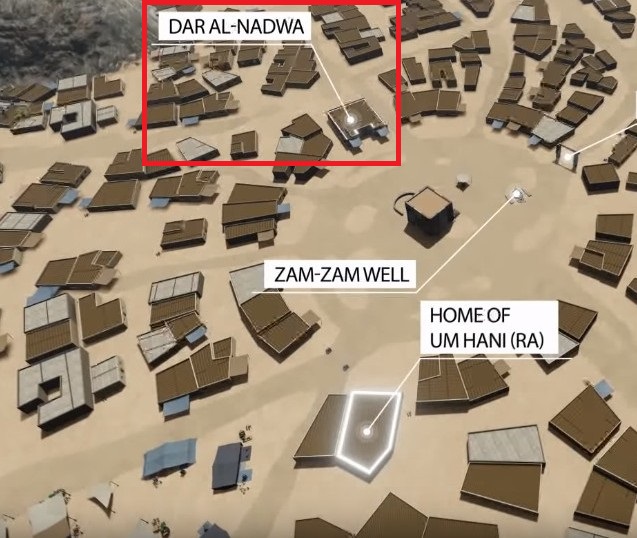
The distinction we see in later times between the executive (ruling) and judicial branches of government simply wasn’t there among the Arab tribes including Quraysh at the time of revelation. The tribal leader performed both ruling and judicial duties. As an example, Abu Jahl bin Hisham who was one of the leaders of Quraysh, was given the title Abū al-Ḥakam (أبو الحكم)[20], as he was considered a man of deep wisdom, cunning and understanding by the elders of Quraysh for which they trusted his opinion and relied on him as an elite member of their ruling assembly – Dār an-Nadwa.

In the early years of the Islamic State in Madinah, the Prophet ﷺ as head of state combined both executive and judicial functions. Sayed Khatab says, “According to al-Maraghi, ‘The Prophet was a leader and a judge by virtue of his divine appointment. Hence he possessed complete judicial power.’”[21] Later when the state expanded to new regions, the Prophet ﷺ appointed separate judges for them, so he ﷺ appointed Ali bin Abi Talib and Mu’aadh ibn Jabal as judges to Yemen.[22] Under Umar ibn Al-Khattab the judiciary expanded greatly as the infrastructure of the state was put in place.

An extract from the book History of the Islamic State’s Institutions – Volume 1

Therefore, the use of the term hukm among the Arabs would contain the meaning of judging and ruling, because as mentioned the separation between the two which occurred later wasn’t there in early times.

Let us now look at how the mufasireen interpreted the word hukm in the Qur’an.

King Dawud and King Sulayman (as) both judged and ruled

Some prophets of Bani Israil were also rulers. The Messenger of Allah ﷺ said, “The prophets ruled over the children of Israel, whenever a prophet died another prophet succeeded him, but there will be no prophet after me.”[23] Dawud (as) and his son Sulayman (as) were both great kings who ruled by the sharia of their times, and they performed hukm which meant ruling and judging. Allah (Most High) says,

‏وَدَاوُۥدَ وَسُلَيْمَـٰنَ إِذْ يَحْكُمَانِ فِى ٱلْحَرْثِ إِذْ نَفَشَتْ فِيهِ غَنَمُ ٱلْقَوْمِ وَكُنَّا لِحُكْمِهِمْ شَـٰهِدِينَ

فَفَهَّمْنَـٰهَا سُلَيْمَـٰنَ ۚ وَكُلًّا ءَاتَيْنَا حُكْمًۭا وَعِلْمًۭا

And remember Dawud and Sulayman, when they gave judgement regarding the field into which sheep strayed by night and grazed. We witnessed their judgement and made Sulayman understand the case [better], though We gave sound judgement and knowledge to both of them.[24]

This ayah and the term hukm are related to judiciary.

Allah (Most High) also says,

يَـٰدَاوُۥدُ إِنَّا جَعَلْنَـٰكَ خَلِيفَةًۭ فِى ٱلْأَرْضِ فَٱحْكُم بَيْنَ ٱلنَّاسِ بِٱلْحَقِّ وَلَا تَتَّبِعِ ٱلْهَوَىٰ فَيُضِلَّكَ عَن سَبِيلِ ٱللَّهِ

Oh Dawud! We have made you a khaleefah on the earth, so judge between people with truth and do not follow your own desires, letting them misguide you from the Way of Allah.[25]

The term khaleefah in this ayah is explicitly linked to the term hukm and so the meaning here will include both ruling and judiciary. Imam Ar-Razi in his Tafseer says one of the meanings of this ayah is:

إنّا جَعَلْناكَ مالِكًا لِلنّاسِ ونافِذَ الحُكْمِ فِيهِم

“We have made you a ruler (malik) over people and an enforcer of judgment (hukm) among them.”[26]

A contemporary interpretation of this ayah is from Sayed Khatab who says, “The word hukm here is a verb that commands the leader to ‘Judge’ and to ‘Rule’ with justice. These Qur’anic texts indicate that the term hukm has both governmental and legal connotations. Thus, the word hukm is to rule and to judge according to the law. This implies that, if the judge is also the ruler or governor, he is commanded to rule and to judge on the basis of the law. This was the case with the Prophet; he was the judge and the ruler. If the ruler is not the judge (the two positions are separate), the Qur’an commands both the ruler and the judge to observe their duties on the basis of the law. This means that, whether the term hukm is to judge or to rule, the law stands sovereign over the rulers and the judges.”[27]

When you rule, rule with justice

Allah (Most High) says,

إِنَّ ٱللَّهَ يَأْمُرُكُمْ أَن تُؤَدُّوا۟ ٱلْأَمَـٰنَـٰتِ إِلَىٰٓ أَهْلِهَا وَإِذَا حَكَمْتُم بَيْنَ ٱلنَّاسِ أَن تَحْكُمُوا۟ بِٱلْعَدْلِ

“Allah commands you to return to their owners the things you hold on trust and, when you rule between people, to rule with justice.” (An-Nisaa, 58)

Ali ibn Abi Talib (ra) said in reference to this ayah:

حقٌّ على الإمام أن يحكم بما أنزل الله، وأن يؤدِّيَ الأمانة، وإذا فعل ذلك، فحقّ على الناس أن يسمعوا، وأن يُطيعوا، وأن يجيبوا إذا دُعوا

“It is the right of the imam to rule by what Allah has revealed, and to fulfill the trust, and if he does that, then it is the right of people to listen, to obey, and to respond when called upon.”[28]

Shahr said,

نزلت في الأمراء خاصة

“It (this verse) was revealed specifically about the rulers (Ameers).”[29]

Imam Al-Tabari adopts the following position:

قال أبو جعفر: وأولى هذه الأقوال بالصواب في ذلك عندي، قولُ من قال: هو خطاب من الله ولاةَ أمور المسلمين بأداء الأمانة إلى من وَلُوا أمره في فيئهم وحقوقهم، وما ائتمنوا عليه من أمورهم، بالعدل بينهم في القضية، والقَسْم بينهم بالسوية. يدل على ذلك ما وَعظ به الرعية في: ﴿أَطِيعُوا اللَّهَ وَأَطِيعُوا الرَّسُولَ وَأُولِي الأمْرِ مِنْكُمْ﴾ ، فأمرهم بطاعتهم، وأوصى الرّاعي بالرعية، وأوصى الرعية بالطاعة، كما:-

Abu Jaafar (Tabari) said: The most correct of these sayings in this regard, according to me, is the saying of those who said: It is an address from Allah to the rulers of the affairs of the Muslims to fulfill the trust to those whom they have entrusted with their affairs, their rights, and what they have been entrusted with of their affairs, with justice between them in the legal case, and the division among them equally. This is evidenced by what He preached to the subjects in: “Obey Allah and obey the Messenger and those in authority among you”, so He commanded them to obey them, and enjoined the guardian (to look after) the citizens and enjoined the citizens with obedience (to the guardian).”[30]

A contemporary interpretation of this ayah is from Ayatollah Khomeini who says, “Those addressed here are the people who hold the reigns of affairs in their hands and conduct the business of government – not judges, for the judge exercises only a juridical function, not a governmental one. The judge is a ruler only in a limited sense; the decrees that he issues are exclusively judicial, not executive. Indeed, in forms of government that have emerged in recent centuries, the judges represent one of the three branches of power, the other two being the executive (consisting of the council of ministers) and the legislative or planning body (the assembly or parliament). More generally, the judiciary is one of the branches of government and it fulfils one of the tasks of government. We must therefore conclude that the phrase “when you rule between people” relates to all the affairs of government, and includes both judges and those belonging to the other branches of power.”[31]

How do we know which meaning to use for hukm?

It is well-known that the majority of Arabic words have more than one meaning, and are referred to as mushtarak (homonyms).[32] “Specifying the Mushtarak to one of its meanings requires a Qareenah (indication) that specifies that meaning, and if no Qareenah is found…then it is obligatory to understand it according to all of its meanings.”[33]

With regards to the word حُكْم (hukm), since there is no Qareenah to restrict it to judiciary in the majority of the ayaat of Qur’an, then the meaning will apply equally to both a judge (haakim) in a court of law issuing a hukm (judgement), and a ruler (hakeem)[34] executing a hukm (law) on the people. There are exceptions to this, which is why we refer to the experts in the Qur’an and Arabic language who are the mufasireen. In the hadith the correct usage will be evident from the context as we saw in the letter from the sahabi Abi Bakrah to his son Ubaidullah ibn Abi Bakrah, who took up the post of Qadi in Sijistan. The hadith “The judge should not judge between two people while he is angry,”[35] therefore clearly applies to a Qadi in a court of law.

Conclusion

In summary, the term حُكْم (hukm) means both judging and ruling, and this was its meaning among the Arabs at the time of revelation. The Qur’an itself used hukm to mean ruling and the sahaba interpreted hukm in the Qur’an to mean ruling, as is evident by the saying of Abi ibn Abi Talib mentioned previously.

This difference between ruling and judging is subtle because in early times the kings, rulers and tribal chiefs would perform both حُكْم (hukm) and قَضاء (qadaa’), issuing decrees relating to disputes between people, and decrees affecting all their subjects, and this was the case among the Arab tribes including Quraysh. The separation between the two branches of government which occurred in more modern times simply wasn’t there in the early times.

The modernist attempts to distort the Quranic meanings of Arabic words, in order to say that the Muslim ummah is not obliged to rule by Islam, so we can adopt a secular, democratic, civil state are fundamentally flawed. These modernist arguments first emerged in the late 19th and early 20th century in British occupied Egypt, and we are seeing a revival of them nowadays with attempts by the west to reform Islam.

The best safeguard against these attempts is to follow what the Prophet ﷺ ordered us, “I have left two matters with you. As long as you hold to them, you will not go astray. They are the Book of Allah and the Sunnah of His Prophet.”[36] Following this command means learning the Arabic language, so we can access the Qur’an and classical Tafseer books directly without relying on translations or interpretations which may fall outside the acceptable parameters of Quranic Arabic.

Notes


[1] Sayed Khatab, ‘The Power of Sovereignty: The political and ideological philosophy of Sayyid Qutb,’ Routledge, 2009, p.17

[2] Holy Quran Surah An-Nisaa, ayah 58

[3] Holy Quran Surah Saad, ayah 26

[4] Holy Quran Surah al-Ma’ida, ayah 44

[5] Holy Qur’an, Surah al-Ma’ida, ayah 42

[6] Abdelilah Belkeziz, ‘The State in Contemporary Islamic Thought: A  Historical Survey of the Major Muslim Political Thinkers of the Modern Era,’ I.B.Tauris Publishers, 2009, p.249

[7] The grammarians differed on the original roots of every derived Arabic word. Some said they are derived from the masdar (verbal noun) as is mentioned here. Others said they are derived from the verb (three-letter roots).

[8] Muhammad Hassan Hassan Jabal, ‘The etymological dictionary of the words of the Holy Qur’an,’ https://furqan.co/ishtiqaqi/%D8%AD%D9%83%D9%85

[9] Imam Qurtubi, Al-Jami’ li Ahkam al-Qur’an, https://tafsir.app/qurtubi/2/32

[10] Holy Qur’an, Surah Al-An’aam, ayah 2

[11] Holy Qur’an, Surah Al-‘Israa’, ayah 4

[12] Holy Qur’an, Surah Al-Sabaa, ayah 14

[13] Holy Qur’an, Surah Al-Fussilat, ayah 12

[14] Mohammad Akram Chaudhary, (1985) al-Furūq fī al-lughah by Abū Hilāl al-ʻAskarī : a thesaurus for distinctions of meaning between assumed synonyms in Arabic. PhD thesis, University of Glasgow, p.294, https://theses.gla.ac.uk/6922/

[15] Jonathan Brown, ‘Did the Prophet Say It or Not? The Literal, Historical, and Effective Truth of Hadîths in Early Sunnism, University of Washington, p.274 https://www.drjonathanbrown.com/wp-content/uploads/2011/08/Did-the-Prophet-Say-It-or-Not-PDF.pdf

[16] Jami’ at-Tirmidhi 1334, https://sunnah.com/tirmidhi:1334

[17] Sahih al-Bukhari 7158, https://sunnah.com/bukhari:7158

[18] Taqiuddin an-Nabhani, ‘Social System in Islam,’ Al-Khilafah Publications, 3rd Edition, 1990, p.92

[19] Ibid

[20] Ibn Kathir, ‘Al-Sira al-Nabawiyya,’ Vol.2, Garnet Publishing, p.152

[21] Sayed Khatab, Op.cit., p.17

[22] Dr Ali Muhammad As-Sallaabee, ‘The Noble Life of the Prophet ﷺ,’ p.1935; Mishkat al-Masabih 3738, https://sunnah.com/mishkat:3738

[23] Sahih Muslim 1842a, https://sunnah.com/muslim:1842a  ; sahih Bukhari 3455, https://sunnah.com/bukhari:3455

[24] Holy Quran Surah Al-Anbiyya, ayaat 78-79

[25] Holy Quran Surah Saad, ayah 26

[26] Imam Ar-Razi, Tafsir Al-Kabir, https://tafsir.app/alrazi/38/26

[27] Sayed Khatab, Op.cit., p.17

[28] Imam Al-Tabari, Jami’ Al-Bayan, https://tafsir.app/tabari/4/58

[29] Ibid

[30] Ibid

[31] Imam Khomeini, ‘Governance of the Jurist,’ translation of Velayat-e-Faqeeh, Iran Chamber Society, https://www.iranchamber.com/history/rkhomeini/books/velayat_faqeeh.pdf p.52

[32] Mushtarak is being used here in a general sense rather than Al-Mushtarak, so includes all the different types of Arabic meanings such as metaphorical (majaz) and technical (istilahi). Abdul-Qadeem Zallum and Ata Bin Khalil Abu Al-Rashtah refer to the word hukm as a technical term (istilah). Sheikh Ata says, “the term Hukm is not a homonym (mushtarak) in the definitions Qadaa’ (execution) and Sultaan (Authority), but is a linguistic reality (haqeeqah lughawiyah) when it holds the meaning of Qadaa, and is a specified common reality (haqeeqah ‘urfiyah khassah) i.e. istilah in the meanings of Ruling and Authority.”  Since the istilahi term was known and in widespread use at the time of revelation, the word hukm in the Qur’an and Sunnah means judging and ruling so the commands will apply to both. This is similiar to the word wazeer which in its linguistic (lughawiyah) meaning is help and assistance, but in its istilahi meaning it means assisting the ruler i.e. a minister. The Prophet ﷺ said, “Whoever among you is appointed to a position of authority – if Allah wills good for him – He will give him a righteous wazir who will remind him if he forgets and help him if he remembers.” https://sunnah.com/nasai:4204

[33] Muhammad Hussein Abdullah, ‘Al-Waadih Fee Usool ul-Fiqh,’ 1995, First Translated English Edition 2016, p.505

[34] A judge is referred to as a حاكم (haakim), but a ruler is referred to as a حكيم (hakeem) because of the frequent rules he executes. حكيم is on the pattern (wazn) of فعيل which is used for exaggeration (mubalagha). This is similar to the attribute of Allah – الرَحِيم (ar-raheem)

[35] Jami’ at-Tirmidhi 1334, https://sunnah.com/tirmidhi:1334

[36] Imam Malik, Muwatta 1623, https://sunnah.com/malik/46/3

Can women be judges in Islam?

There is no dispute among the classical scholars that it’s prohibited for a woman to hold a ruling position such as the Khaleefah or a waali (governor), although she can hold any other non-ruling governmental position, and be an active member of the Majlis al-Nuwaab (House of Representatives). This is based on the hadith narrated by Abi Bakra, that when the Messenger of Allah ﷺ was informed that the Persians had crowned the daughter of Chosroes as their ruler, he ﷺ said,

Read More

Migration to Abyssinia: Fleeing persecution or searching for a base for Islam?

This has been reproduced from Dr As-Sallabi’s seerah book The Noble life of the Prophet ﷺ.

Scholars have mentioned various reasons that prompted the Prophet’s ﷺ Companions to migrate to Abyssinia. One reason was that they felt it necessary to flee with their religion, fearing that constant torture might tempt them to apostatize. Ibn Ishaaq said, “At that point in time, some Muslims from the Prophet’s ﷺ Companions went to Abyssinia, fearing temptation and fleeing towards Allah M with their religion.”[1]

Read More

Conditions of the Caliph: Why only a Muslim Caliph?

  1. The Khaleefah being Muslim is a rukn (pillar) of the bay’ah contract
  2. First evidence: Those in authority are Muslim
    1. Who are “those in authority” (أُو۟لِى ٱلْأَمْرِ)?
    2. Are “those in authority” (أُو۟لِى ٱلْأَمْرِ) rulers or scholars?
  3. Second evidence: Disbelievers cannot have authority over Muslims
  4. If “those in authority” are Muslims does this mean there is no obedience to the rulers in non-Muslim countries?
  5. Conclusion
  6. Notes

The Khilafah (Caliphate) is an ideological Islamic State where the Islamic ‘aqeeda (belief) is the basis of the state, its institutions, systems and societal relationships. There is no separation between religion and politics in Islam as we find in the west. The Khilafah’s strength depends directly on the strength of the ideology within the state. This means those in ruling positions must be people who will work to protect, implement and propagate the deen of Islam, so the state becomes a beacon of high values, and a leading nation in the world. Only someone who believes in the ideology of the state i.e. Islam could do this, which means those in ruling positions must be Muslim.

The Islamic State is no different to any ideological state within the world today. America or Western Europe for example would never accept a Muslim or Communist as President or Prime Minister. The fact that former US President Barack Obama had to repeatedly deny he is a secret Muslim is clear evidence of this. Muhammad Asad says, “One cannot escape the fact that no non-Muslim citizen – however great his personal integrity and his loyalty to the state – could, on psychological grounds, ever be supposed to work wholeheartedly for the ideological objectives of Islam; nor, in fairness, could such a demand be made of him. On the other hand, no ideological organization (whether based on religious or other doctrines) can afford to entrust the direction of its affairs to persons not professing its ideology. Is it, for instance, conceivable that a non-Communist could be given a political key position – not to speak of supreme leadership of the state – in Soviet Russia? Obviously not, and logically so: for as long as communism supplies the ideological basis of the state, only persons who identify themselves unreservedly with its aims can be relied upon to translate those aims into terms of administrative policy.”[1]

The Khaleefah being Muslim is a rukn (pillar) of the bay’ah contract

Al-Mawardi in his famous book Ahkam as-Sultaniyyah ‘The laws of governance’, did not explicitly list being Muslim as a condition for the Khaleefah[2], because it was already understood by his target audience who were scholars, statesmen and rulers of the Islamic State. Even those ulema who mentioned the condition of being Muslim explicitly, such as Imam Ghazali, who says in Mustazhari that “the key conditions of the Imamate are correctness of belief and soundness of religion”,[3] didn’t see any need to expand on this point with sharia evidence, because it was an undisputed fact, known from Islam by necessity that the Imam must be Muslim. Qadi Iyad (d.1149CE) says,

أجمع العلماء علي أن الإمامة لا تنعقد لكافر، وعلى أنه لو طرأ عليه الكفر انعزل، وكذا لو ترك إقامة الصلوات والدعاء إليها

“The scholars have agreed (‘ijma) that the imamate is not valid for a disbeliever, and that if he becomes a disbeliever, he is dismissed, and likewise if he abandons the performance of prayers (salah) and calling to them.”[25]

With the dominance of secularism and non-Islamic systems in the Muslim world today, this condition requires more in-depth discussion, and so some of the sharia evidences regarding the Khaleefah being Muslim will now be presented.

The detailed sharia evidence for the Khaleefah being Muslim is from the Holy Quran.

First evidence: Those in authority are Muslim

Allah (Most High) says,

يَـٰٓأَيُّهَا ٱلَّذِينَ ءَامَنُوٓا۟ أَطِيعُوا۟ ٱللَّهَ وَأَطِيعُوا۟ ٱلرَّسُولَ وَأُو۟لِى ٱلْأَمْرِ مِنكُمْ

“Oh you who believe! Obey Allah and obey the Messenger and those in authority among you.”[4]

Who are “those in authority” (أُو۟لِى ٱلْأَمْرِ)?

The mufassireen (interpreters of the Qur’an) differed on the meaning of “those in authority” (أُو۟لِى ٱلْأَمْرِ) and who they referred to, but they were unanimous that “those in authority” were Muslim. Abdul-Qadeem Zallum says, “The phrase (أُو۟لِى ٱلْأَمْرِ) has always been mentioned in connection with the Muslims, it has not been mentioned in any other context other than to indicate that the people concerned are Muslims. This proves that they must be Muslims. Since the Khaleefah is the person in authority and it is he who appoints people in positions of authority such as his mu’awinoon (assistants), wulah (governors) and ‘ummal (agents), he himself must, therefore, be Muslim.”[5]

The reason “those in authority” are Muslim is because of the next phrase “from among you” (مِنكُمْ), where the second-person masculine plural pronoun كُمْ refers to the beginning of the verse “Oh you who believe” (يَـٰٓأَيُّهَا ٱلَّذِينَ ءَامَنُوٓا۟). Abdul-Qadeem Zallum says, “from among you” (مِنكُمْ) in the verse, clearly indicates that those in authority must be Muslims.”[6]

The word ٱلْأَمْرِ (authority or leadership) in this verse is unrestricted (mutlaq), and applies to all positions of authority (الأمراء) within the Islamic State. Since the Khaleefah is an Ameer (أمير) it applies to him as well. The circumstances of revelation (asbab an-nuzul) of this verse also illustrate this. Ibn ‘Abbas narrates:

‏{‏أَطِيعُوا اللَّهَ وَأَطِيعُوا الرَّسُولَ وَأُولِي الأَمْرِ مِنْكُمْ‏}‏‏.‏ قَالَ نَزَلَتْ فِي عَبْدِ اللَّهِ بْنِ حُذَافَةَ بْنِ قَيْسِ بْنِ عَدِيٍّ، إِذْ بَعَثَهُ النَّبِيُّ صلى الله عليه وسلم فِي سَرِيَّةٍ

The Verse: “obey Allah and obey the Messenger and those in authority among you.” was revealed in connection with Abdullah bin Hudhafa bin Qais bin ‘Adi’ when the Prophet ﷺ appointed him as the commander of a Sariyya (army detachment).”[12]

Are “those in authority” (أُو۟لِى ٱلْأَمْرِ) rulers or scholars?

As mentioned previously, the mufassireen differed on the meaning of (أُو۟لِى ٱلْأَمْرِ) and who they referred to, but they were unanimous that the (أُو۟لِى ٱلْأَمْرِ) were Muslim. Some of the sahaba like Abu Hurairah said they are the rulers (الأمراء) and others like Ibn Abbas and Mujahid, said they are the people of jurisprudence and knowledge (أهل الفقه والعلم).[13]

The strongest opinion is that the (أُو۟لِى ٱلْأَمْرِ) are the officials of the state because obedience is only to the Imam, and who he appoints to run the affairs of the people. Obedience to the scholars is not obliged unless the officials of the state were also scholars. The scholars are themselves obliged to obey the Imam. Sahl ibn Abdullah Al-Tustari (818-896CE) mentions:

 وَإِذَا نَهَى السُّلْطَانُ الْعَالِمَ أَنْ يُفْتِيَ فَلَيْسَ لَهُ أَنْ يُفْتِيَ

“If the sultan forbade the scholar to give fatwas, then he is not allowed to give fatwas.”[14]

Al-Shawkani (1759–1834CE) says,

وأُولِي الأمْرِ: هُمُ الأئِمَّةُ والسَّلاطِينُ والقُضاةُ وكُلُّ مَن كانَتْ لَهُ وِلايَةٌ شَرْعِيَّةٌ لا وِلايَةٌ طاغُوتِيَّةٌ،

“those in authority” (أُو۟لِى ٱلْأَمْرِ): “They are the Ameers and Sultans and Judges, and any who have a legitimate mandate (sharia wiliyah) not a tyrannical mandate (taghoot wiliyah).”[15]

We can combine both opinions here because the Khaleefahs, governors and army commanders in the time of the sahaba, were not only Ameers but they were mujtahideen (scholars) as well. This continued during the Umayyad Khilafah. Nāfiʿ said concerning the Ummayad Khaleefah Abdul-Malik ibn Marwan, “I have seen Madinah, and there is no youth with more zeal, fiqh, devotion and knowledge of the Book of Allah than ʿAbd al-Malik ibn Marwān.”[16]

Al-Mawardi, from the Shafi’i school stipulates mujtahid as one of the mandatory conditions for the Khaleefah, although it was generally accepted that the Khaleefah could rely on other scholars and adopt their opinions, if he was lacking in this area. Imam Ghazali mentions in Mustazhari, in defense of the young Abbasid Khaleefah Al-Mustazhir (r.1094-1118), who was 16 when he took office, “Why can he not fulfill the aim of knowledge through the best men of his time, just as the aims of power and competence can be fulfilled through others? Most of the problems of the Imamate are jurisprudential and conjectural and may be solved by following the prevailing opinion.”[17]

Second evidence: Disbelievers cannot have authority over Muslims

The second evidence for the Khaleefah being Muslim is again from the Holy Qur’an. Allah (Most High) says:

وَلَن يَجْعَلَ ٱللَّهُ لِلْكَـٰفِرِينَ عَلَى ٱلْمُؤْمِنِينَ سَبِيلًا

“And Allah will never allow the disbelievers any way (of authority) over the believers.”[18]

Abdul-Qadeem Zallum says, “Ruling is the strongest way (sabeel) for the ruler over the ruled, hence the term لَن (never) which means the categorical prohibition of the non-Muslim (Kafir) from taking a post of authority over the Muslims, be it the Khilafah or any other post of authority.”[19]

Many of the mufassireen including Ali ibn Abi Talib and Ibn Abbas, interpreted this verse as being related to the Day of Judgment. Abdur-Razzaq recorded that Yasi’ Al-Kindi said, “A man came to Ali bin Abi Talib and said, ‘What about this ayah, And Allah will never give the disbelievers any way over the believers?’ Ali said, ‘Come closer, come closer. Allah will judge between you on the Day of Resurrection, and He will not grant victory for the disbelievers over the believers.’”[20] Ibn Jurayj recorded that ‘Ata’’ Al-Khurasani said that Ibn Abbas said, “And Allah will never give the disbelievers any way over the believers, will occur on the Day of Resurrection.”[21]

This reason they interpreted it for the Day of Judgment, is because if we apply the verse to the temporal life (dunya), then the pronounced meaning (mantuq) contradicts the reality. Muslims have lived under the authority of the disbelievers during many periods throughout Islamic history. Muslims were still living under the authority of the mushrikeen of Quraysh in Makkah, while the Prophet ﷺ was ruling the Islamic State in Madinah. During the Crusades, after the fall of Spain, under the colonial occupation of Britain and France, and today in the west, Muslims lived and continue to live under the authority of the disbelievers.

If we look to the mafhum[22] (implied meaning) of the verse however, then we can apply it to the dunya by deriving a command (amr) that it is prohibited for a disbeliever to rule over a believer, and hence the ruler must be a Muslim.

Taqiuddin an-Nabhani says, “The existence of the authority of the disbelievers over the believers has surely happened. It happened in Makkah while the Messenger was there. Since the Muslims were under the authority of the disbelievers, and it has existed after the Messenger ﷺ like in Andalusia, where Muslims were under the authority of the disbelievers, and it also exists nowadays, the negation of an authority of the disbelievers over the believers that came in the particle “لَن” “never”, which denotes an eternal negation, is impossible because it has certainly happened. So it is inevitable that it is a negation of a verdict that can be negated, and that is the negation of the permissibility, which means it is forbidden for the disbelievers to have an authority over the believers. This is what the Shari’ah requires because of the truthfulness of the report.”[23]

The reason many mufassireen didn’t look to the mafhum of this verse, is because Muslims having a non-Muslim ruler was never a reality for them, and not even in the minds of the ulema. There was, therefore, no need to look for additional evidence above and beyond what was already established from other ayaat, such as the first one we discussed commanding obedience to “those in authority among you”.

If “those in authority” are Muslims does this mean there is no obedience to the rulers in non-Muslim countries?

The Holy Qur’an clearly states: فَلَا تُطِعِ ٱلْكَـٰفِرِينَ “do not obey the disbelievers”[26] and from the discussion above it’s clear that أُو۟لِى ٱلْأَمْر “those in authority” are Muslim. This may lead someone to the erroneous conclusion that Muslims residing in non-Muslim countries don’t have to obey the law, pay taxes and in extreme cases engage in acts of criminality and violence because in the classical sense they are lands of war (Dar al-Harb) ruled by disbelievers, and disbelievers are not allowed to have authority over Muslims.

In Arabic there is a difference between obedience (الطاعَة) and conformity of will (مُوافِقَة الإِرادَة). Abū Hilāl al-ʻAskarī (d.1005 CE) describes the difference: “Conformity of will may or may not be obedience, especially if it doesn’t directly motivate the action. For example, if you want Zayd to give a dirham in charity without him realizing it, then his action is not considered obedience to you. However, if he knew and did it because of your desire, then he would be obedient. Similarly, if he responded positively to your request and complied, then he would be obedient to you.”[32] Therefore just because someone is ‘obeying’ the law does not mean they are obeying disbelievers.

As Muslims we have one god and one law which is Allah and his noble sharia. Allah has forbidden crimes such as treason, murder, rape, domestic violence, robbery, burglary, fraud, assault etc, so obedience to the sharia automatically means obedience to the law in these areas.

Allah (Most High) orders us to fulfil our contracts and covenants,

يَـٰٓأَيُّهَا ٱلَّذِينَ ءَامَنُوٓا۟ أَوْفُوا۟ بِٱلْعُقُودِ

“O believers! Honour your covenants.”[27]

The definite article (alif-lam) on the word العُقُود (covenants) is mutlaq (unrestricted) which means it includes all types of contracts and covenants, such as citizenship and residency, employment and business and so on.

Al-Alusi comments on this verse, “Some commentators (mufasireen) have chosen to interpret this verse as encompassing all that Allah Almighty has obligated His slaves to do, including religious duties and rulings, and the contracts of trusts, transactions, and the like that they enter into among themselves, which must be fulfilled or are considered religiously good. The command is understood as an unrestricted (Mutlaq) request, whether recommended or obligatory, and it includes avoiding forbidden and disliked things. This is because [the command] is more in line with the generality of the expression, since it [العُقُود] is a plural noun with the definite article (alif-lam), and more complete in terms of the generality of the benefit.”[28]

The Prophet ﷺ said:

وَالْمُسْلِمُونَ عَلَى شُرُوطِهِمْ إِلاَّ شَرْطًا حَرَّمَ حَلاَلاً أَوْ أَحَلَّ حَرَامًا

“Muslims are bound by their conditions, except for a condition that makes halal what is haram or makes haram what is halal.”[29]

Therefore, compliance with the terms and conditions of any contract including a citizenship contract and residency visa which entails obeying the law of the land is in itself obedience to Allah.

The Prophet ﷺ said:

أَدِّ الأَمَانَةَ إِلَى مَنِ ائْتَمَنَكَ وَلاَ تَخُنْ مَنْ خَانَكَ

“Fulfill your trust (Al-Amanah) to those who entrusted you with it, and do not betray those who betrayed you.”[30]

In terms of the limits of obedience, these limits generally apply whether in a caliphate or in a country not ruling by Islam.

The Prophet ﷺ said,

لاَ طَاعَةَ فِي مَعْصِيَةٍ، إِنَّمَا الطَّاعَةُ فِي الْمَعْرُوفِ ‏

There is no obedience to anyone if it is disobedience to Allah. Verily, obedience is only in good conduct.”[31]

This is a general principle when it comes to following any order or law from anyone. Muslims, non-Muslims, parents, caliphs, rulers, army commanders, company directors etc are not obeyed in sin. If they order treachery, corruption, unlawful killing, torture and oppression, there is no obedience here. Even in the western justice systems “just following orders” is generally rejected establishing the principle that individuals are responsible for their actions. The Nuremberg Trials of Nazi war criminals is the most famous in this regard.

Conclusion

To conclude the Khaleefah must be a Muslim. If the Khaleefah becomes an apostate (murtad), then this breaks a pillar (rukn) of the contract, and the bay’ah becomes void (batil), and the ummah are relieved of their obedience to him. In the first instance this must be proven by the Mahkamat Al-Mazaalim (Court of Unjust Acts), if it was present in the Khilafah, as this is the highest court within the state. If it was a clear-cut decisive issue, or the Mazalim court was abolished, then the “right of revolution” will come in to play. This is something that exists as a final safeguard against the loss of the Islamic system, and in fact exists in all political systems. The American revolution being a stark example of this.

Narrated by Junada bin Abi Umaiya: We entered upon ‘Ubada bin As-Samit while he was sick. We said, “May Allah make you healthy. Will you tell us a Hadith you heard from the Prophet ﷺ and by which Allah may make you benefit?” He said, “The Prophet ﷺ called us and we gave him the bay’ah for Islam, and among the conditions on which he took the bay’ah from us, was that we were to listen and obey both at the time when we were active and at the time when we were tired, and at our difficult time and at our ease and to be obedient to the ruler and give him his right even if he did not give us our right, and not to fight against him unless we noticed him having open Kufr (كُفْرًا بَوَاحًا) for which we would have a proof with us from Allah.”[24]

Notes


[1] Muhammad Asad, ‘The Principles of State and Government in Islam,’ Dar al-Andalus Ltd, Gibraltar, 1985, p.41

[2] Abu l-Hasan al-Mawardi, The Laws of Islamic Governance, translation of Al-Ahkam as-Sultaniyah, Ta Ha Publishers, p.12

[3] Imam Ghazali, ‘Al-Mustazhari,’ translated by Richard J. McCarthy, Twayne Publishers, 1980, p.276

[4] Holy Qur’an, Surah An-Nisaa, ayah 59

[5] Abdul-Qadeem Zallum, ‘The Ruling System in Islam,’ translation of Nizam ul-Hukm fil Islam, Khilafah Publications, Fifth Edition, p.56

[6] Ibid, p.118

[12] Sahih al-Bukhari 4584, https://sunnah.com/bukhari:4584

[13] Al-Tabari, https://tafsir.app/tabari/4/59

[14] Al-Qurtubi, ‘Al-Jami’Al-Ahkam Al-Qur’an,’ https://tafsir.app/qurtubi/4/59

[15] Muḥammad al-Shawkānī , ‘Fath ul-Qadeer,’ https://tafsir.app/fath-alqadeer/4/59

[16] Jalal ad-Din as-Suyuti, ‘History of the Umayyad Khaleefahs,’ translated by T.S.Andersson, Ta Ha Publishers, p.30

[17] Imam Ghazali, ‘Al-Mustazhari,’ p.279

[18] Holy Qu’ran, Surah Al-Nisaa’ ayah 141

[19] Abdul-Qadeem Zallum, ‘The Ruling System in Islam,’ Op.cit., p.55

[20] Tafseer Ibn Kathir, http://m.qtafsir.com/Surah-An-Nisa/Hypocrites-Wait-and-Watch-what—

[21] Ibid

[22] The principle used here is called: Dalaalat ul-Iqtidaa’ (Indication of requirement/necessity). This is where there is a requirement to change the meaning of a text of the Qur’an or Sunnah so its meaning makes sense. Muhammad Hussein Abdullah says, “Dalaalat ul-Iqtidaa’ is the Dalaalah (indication) of the Lafzh upon a matter that its meaning does not stand up except by its Taqdeer (determination). This necessary Taqdeer (determination) could be dictated by the Shar’a or it could be dictated (i.e. made necessary) by the ‘Aql, either due to the Daroorah (necessity) of the Sidq (truthfulness) of the Mutakallim (source of speech/information) or due to the correctness (Sihhah) of the occurrence of the Lafzh (wording) through it.” ‘Al-Waadih Fee Usool ul-Fiqh,’ p.453

[23] Taqiuddin an-Nabhani, ‘The Islamic Personality,’ Vol.3, Op.cit., p.286

[24] Sahih Bukhari 7055, 7056, https://sunnah.com/bukhari:7055

[25] Imam Nawawi, Sharh Sahih Muslim 12/229

[26] Holy Qur’an, Surah Al-Furqan, ayah 52

[27] Holy Qur’an, Surah Al-Ma’ida, ayah 1

[28] Al-Alusi, Ruh Al-Ma’ani, https://tafsir.app/alaloosi/5/1 Note, this is paraphrased not an exact translation.

[29] Jami’ at-Tirmidhi 1352, https://sunnah.com/tirmidhi:1352

[30] Sunan Abi Dawud 3534, https://sunnah.com/abudawud:3534

[31] Ṣaḥīḥ al-Bukhārī 7257, https://sunnah.com/bukhari:7257; Ṣaḥīḥ Muslim 1840, https://sunnah.com/muslim:1840a

[32] Abū Hilāl al-ʻAskarī, al-Furūq fī al-lughah (Thesaurus of Assumed Synonyms in Arabic), https://shamela.ws/book/10414/202

Conditions of the Caliph

  1. Pillars and conditions of the bay’ah contract
  2. Contracting Party – Khaleefah
  3. Historical Context
  4. Al-Mawardi’s Conditions
  5. Al-Ghazali’s Conditions
  6. Al-Qurtubi’s Conditions
  7. Is Quraysh a contractual conditon?
  8. Why was the Muslim condition not explicitly mentioned?
  9. Capability to rule
  10. The contractual pillars
  11. The contractual conditions
  12. More in this series
  13. Notes

The bay’ah is a contract, and so has pillars (arkaan) and conditions (shuroot) like any other Islamic contract. The bay’ah can be described as either saheeh (valid), baatil (invalid) or faasid (defective).

Pillars and conditions of the bay’ah contract

A summary of the pillars and conditions of the bay’ah contract is below.

Section  Pillar (rukn)Condition (shart)
Contracting Party – KhaleefahMuslim Free (hurr)
Sane (‘aqil)
Mature (baligh)
Male Just (‘adl)
Capable (kifayah)
Contracting Party –
Muslim Ummah
Muslim Mature (baligh) 
Offer by Muslim Ummah  Consent (muradah)Choice (ikhtiyar)
Acceptance by Khaleefah  Consent (muradah) 
Subject MatterRuling by Islam
One Khaleefah
Authority
Security
Obedience
Executive Powers (salaahiyat)

Contracting Party – Khaleefah

Starting with the Khaleefah, while there is consensus (‘ijma) among the scholars on the pillars (arkan) that someone must possess to take up the post of Khaleefah, there are differences of opinion (ikhtilaaf), on some of the other conditions (shuroot) such as being from Quraysh, a mujtahid (able to perform ijtihad) and brave.

The contractual conditions of the Khaleefah must have a shar’a daleel (divine evidence) from the divine text (Qur’an and Sunnah). Imam Ghazali (1058-1111) says, “Conditions for the Imamate must be proved, and proof is either a text from the Trustee of the Law, or a reasoning about the benefit (maslaha) for which the Imamate is sought. The only text is that about descent from Quraysh. The other conditions are from necessity and needed for the purpose of the Imamate.”[1]

Historical Context

Before discussing the opinions of the classical scholars concerning the contractual conditions of a Khaleefah, we need to understand the time period they lived in. Only then can we begin to appreciate why they emphasised certain conditions over others, and why they legitimised certain abnormal situations, such as the Khaleefah delegating (tafweedh) most of his executive powers to a Turkic (non-Qurayshi) Emir or Sultan.

In the later part of the Abbasid Khilafah during the 10th, 11th and 12th centuries, the state split in to a number of autonomous provinces, with some declaring themselves fully independent as rival Khilafahs, and others as Emirates and Sultanates who gave nominal allegiance to the Abbasid Khaleefah in Baghdad. The Fatimids (Ismailis) in Egypt declared independence and a “Khilafah” in 909CE. This lasted until 1171 when Salahudeen Ayyubi who was a Wazir within the Fatimid State, formally abolished it upon the death of its last Emir Al-Adid. He then gave bay’ah to the Abbasid Khaleefah Al-Mustadi in Baghdad, and Egypt became unified with the Khilafah once again, albeit still semi-independent with the Seljuk Sultan Nur ad-Din Zengi in full control of Egypt and Ash-Sham.

In the East, the Buyids established themselves in Iraq, and central and southern Iran from 934 to 1062, but kept the Abbasid Khaleefah in office. The Khaleefah had limited executive power, with most executive power delegated (tafweedh) to the Buyid Emir. The Buyids were replaced by the Seljuk Sultanate (1037-1194), which spanned across Central Asia, Khorasan, Iran and the Middle East in to Ash-Sham and Anatolia, but the Khaleefah continued to exert limited authority, with most executive powers held by the Sultan. Ibn Khaldun says, “From the time of an-Nâṣir (r. 1180-1225) on, the caliphs were in control of an area smaller than the ring around the moon.”[2]

It’s during this time that the ahkam (rules) related to the Khilafah or Imamah, as it was commonly known, were collated and written down.

Al-Mawardi (d.1058 CE), wrote his famous book Al-Ahkam Al-Sultaniyyah ‘The laws of governance’ during the mid-11th century, which collated all the rules related to the Islamic governing system, and which became the de-facto go to reference by later scholars. The ulema of the past were not academics who simply wrote textbooks about hypothetical scenarios. They were scholars who wrote practical guides for the Muslims, so they could implement Islam in their lives and societies like the sahaba did. Al-Mawardi was the Chief Judge (Qadi ul-Qudat) for the Abbasid Khaleefahs Al-Qadir and Al-Qa’im, and an ambassador for them in their dealings with the Buyid Emirs. His book was written for leaders, statesmen and politicians to implement.

Al-Mawardi’s Conditions

Al-Mawardi lays down seven conditions for the Imam (Khaleefah), according to the Shafi’i madhhab (school of thought):[3]

1Justice
2Mujtahid
3Good health in their faculties of hearing, sight and speech
4Sound in limb
5A Judgement capable of organising the people and managing the offices of administration
6Courage and bravery
7Quraysh

Al-Ghazali’s Conditions

Imam Ghazali (d.1111 CE) also from the Shafi’i school mentions ten conditions[4] for the Imam (Khaleefah), six are innate and four are acquired. The six innate conditions are:

1Mature
2Sane
3Free
4Male
5Quraysh
6Sound sight and hearing

The four acquired conditions are:

1Military prowess/bravery (al-najdah)
2administrative competence (al-kifayah)
3piety (al-wara’)
4knowledge (al-‘ilm)

These conditions are from his book Mustazhiri which was written on the orders of the Abbasid Khaleefah Al-Mustazhir (1094-1118) refuting the legitimacy of the Fatimid “Khilafah” based in Egypt.

Al-Qurtubi’s Conditions

Imam Qurtubi (d.1273 CE) from the Maliki school, mentions eleven conditions for the Imam.[5] These are:

1Muslim
2Free
3Sane
4Mature
5Male
6Good character
7Possess [ruling] experience
8Sound limbs
9Knowledge
10Quraysh
11Mujtahid

Is Quraysh a contractual conditon?

Although the condition of Quraysh features prominently as a mandatory condition for all the scholars of the period, its importance started to diminish with the rise of the Turkic Sultans. Power and strength became more important conditions for the Khaleefah, with Ibn Jamāʾah (1241-1333) initiating the idea that “the seizure of power itself gave authority”.[6]

Al-Juwayni (1028-1085), who taught at the Nizamiyya madrassa established by the Seljuk wazir Nizam ul-Mulk (1018-1092) mentions, “If there is in an era someone who possesses sufficiency and strength but does not reach independence in his mastery of knowledge, and has dominated by means of his numerous [troops] and helpers and endorsed by the loyalty of powerful people, then he is the ruler and under his power are the affairs of wealth, military and other offices, but it is incumbent upon him to not finalize any matter without the consultation of the ulama.”[7] “The overall purpose of establishing a leader for the Muslim community, al-Juwaynī argues, is not affected by the question of genealogy, whereas to insist upon a leader of Qurashī blood may in fact be detrimental. Preference, al-Juwaynī explains, should be assigned at all times to a scholarly, capable, and pious candidate for caliph over one who is merely Qurashī.”[8]

Ibn Khaldun (1332-1406) says, “The group feeling (asabiyah) of the Fâṭimids and the Ṭâlibids, indeed, that of all the Quraysh, has everywhere disappeared. There are other nations whose group feeling has gained the upper hand over that of the Quraysh.”[9]

These changes in Islamic political thought, laid the foundations for the rise of the Ottoman Khilafah in 1517, and the end of the powerless Qurayshi Abbasid Khaleefahs in Cairo. After the abolition of the Khilafah in 1924 by Mustapha Kemal, Mustafa Sabri, the last Sheikh ul-Islam of the Ottoman Khilafah, wrote to Mustapha Kemal pointing out that he didn’t need to abolish the Khilafah and that “he could have had himself recognized as caliph, following this tradition, and Muslims around the world would have happily acquiesced. He was after all widely hailed as the hero of Islam and the restorer of its glory, and Muslims no longer felt compelled to limit a caliph’s lineage to Quraysh alone as they had with the Abbasid caliphs in Baghdad and Cairo.”[10]

Why was the Muslim condition not explicitly mentioned?

Although Al-Mawardi and Al-Ghazali didn’t explicitly list Muslim as a condition, this was because it was already understood by the target audience of their books i.e. the scholars, statesmen and rulers of the Islamic State. Imam Ghazali mentions elsewhere in Mustazhiri that “the key conditions of the Imamate are correctness of belief and soundness of religion”.[11]

Capability to rule

As for the conditions related to capability like possessing ruling experience, sound limbs and knowledge we can combine them under one general condition called capability (kifayah). This leaves us with seven contractual conditions for the Khaleefah post which are agreed upon by the ulema, and which have decisive qaraa’in (indications) for being an obligation. This is the opinion of Abdul-Qadeem Zallum (1924–2003) who specified seven contractual conditions for the Khaleefah, four of which are pillars (arkaan) and three of which are conditions (shuroot).[12] He says, “The Khaleefah must satisfy seven contractual conditions in order to qualify for the Khilafah post and for the Bay’ah of Khilafah to him to take place legitimately. These seven conditions are necessary. If just one condition is not observed the Khilafah contract would not have taken place and it would be considered null and void.”[13]

The contractual pillars

The contractual pillars (arkan) of the bay’ah contract for the Khaleefah are four:

1Muslim
2Free (hurr)
3Sane (‘aqil)
4Mature (baligh)

The contractual conditions

The contractual conditions (shurut) of the bay’ah contract for the Khaleefah are three:

1Male
2Just (‘adl)
3Capable (kifayah)

More in this series

Conditions of the Caliph: Why does the Caliph being free actually mean?

Conditions of the Caliph: The Caliph must be sane

Notes


[1] Imam Ghazali, ‘Al-Mustazhari,’ translated by Richard J. McCarthy, Twayne Publishers, 1980, p.278

[2] Ibn Khaldun, ‘The Muqaddimah – An Introduction to History,’ Translated by Franz Rosenthal, Princeton Classics, pp.385

[3] Abu l-Hasan al-Mawardi, The Laws of Islamic Governance, translation of Al-Ahkam as-Sultaniyah, Ta Ha Publishers, p.12

[4] Imam Ghazali, Op.cit., p.278

[5] al-Qurṭubī, ‘Tafsīr al-Qurṭubī Vol. 1,’ translated by Aisha Bewley, Diwan press, p.156

[6] Mona Hassan, ‘Longing for the Lost Caliphate,’ Princeton University Press, 2016, p.104

[7] Al-Juwayni, Ghiyath al-Umam, 392; Quoted in Ovamir Anjum, ‘Politics, Law, and Community in Islamic Thought,’ Cambridge University Press, 2012, p.123

[8] Mona Hassan, Op.cit., p.104

[9] Ibn Khaldun, Op.cit., p.394

[10] Mona Hassan, Op.cit., p.238

[11] Imam Ghazali, Op.cit., p.276

[12] Taqiuddin an-Nabhani, ‘An Introduction to the Constitution and its obligation’ translation of Muqadimatud-Dustur Aw al-Asbabul Mujibatulah, Article 40, p.124

[13] Abdul-Qadeem Zallum, ‘The Ruling System in Islam,’ translation of Nizam ul-Hukm fil Islam, Khilafah Publications, Fifth Edition, p.55