

The Ummah’s Political Representatives (Ahlul hali wal-aqd)?
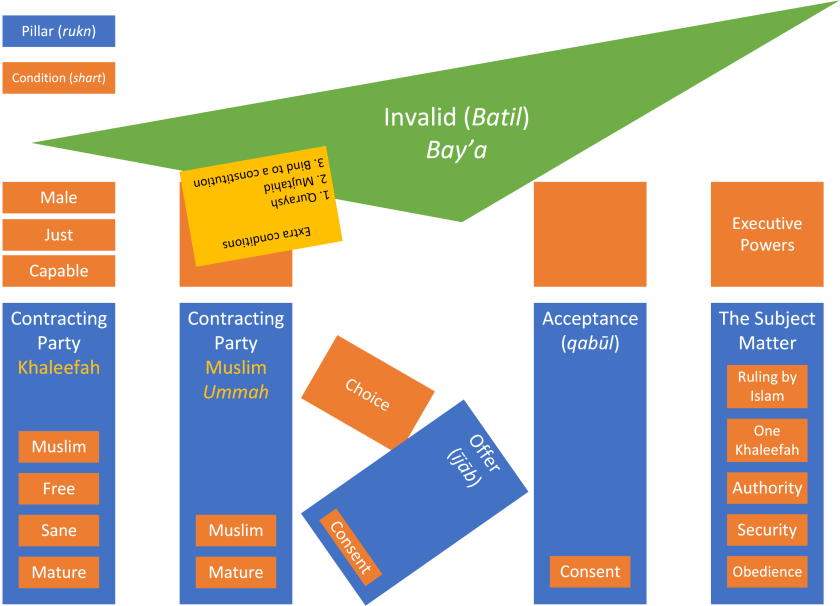
What is the Ahlul hali wal-aqd? The sharia texts related to the bay’ah are ‘aam (general) in their address by use of the relative pronoun مَنْ which translates as whoever.[1] They therefore include the entire Muslim ummah, which is why we say the source of authority in origin is with the ummah. This is seen in numerous ahadith on the bay’ah: مَنْ كَرِهَ مِنْ أَمِيرِهِ “Whoever sees in his Ameer…”[2] مَنْ خَرَجَ مِنَ الطَّاعَةِ “Whoever withdraws obedience (to the Ameer)…”[3] مَنْ بَايَعَ إِمَامًا “Whoever gave bay’ah to an Imam…”[4] مَنْ مَاتَ وَلَيْسَ فِي عُنُقِهِ بَيْعَةٌ “Whoever dies while having no bay’ah on his neck…”[5] When it comes to exercising that authority however, a problem arises because the bay’ah is a contract of one-to-millions i.e. between the caliph and the Muslim ummah. This is different to other Islamic contracts which are one-to-one such as buying, selling and marriage. This poses a challenge on how you get the consent of millions of people which is a condition in Islamic contracts. Historically it was not possible for every Muslim to participate in the election of the Imam, which is why in the rightly guided caliphate of …





 Islamic Civilization