Latest Posts

Rhetorical Perceptions in Surah Al-Takathur

  1. Surah Al-Takathur (The Rivalry in world increase)
  2. The Purpose of the Surah
  3. The Rhetorical Perceptions in the surah
    1. What is the difference between knowledge of certainty, the eye of certainty, and the truth of certainty?
    2. Why was the conjunction (ثم) “then” used in imperative style (Insha’i)?
    3. (ثم) can indicate an order of events, not a chronological order
    4. (ثم) can indicate a sequence in rank
    5. Why was (ثُمَّ) used in the verses, “You will surely see the Hellfire. Again (ثُمَّ), you will surely see it with the eye of certainty”?
    6. The repetition here with (ثُمَّ) is for emphasis
    7. Two types of knowledge
  4. Notes

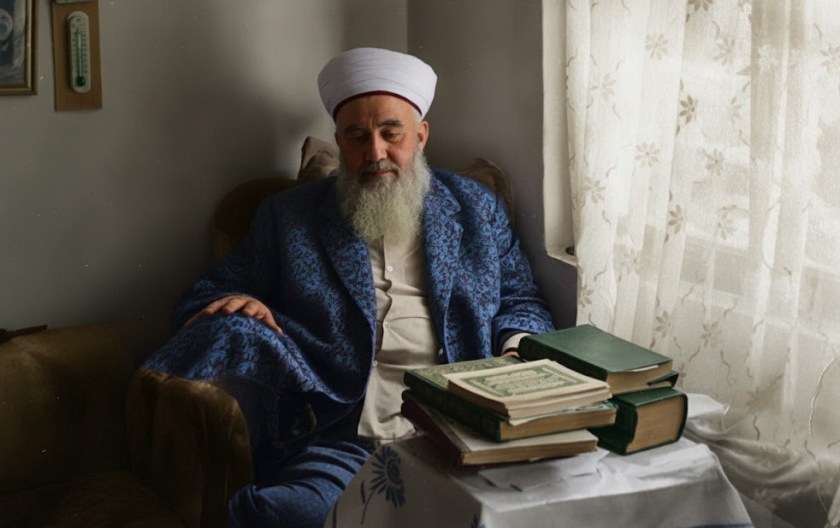
This is a translation from Dr Fadel Saleh Al-Samarra’i’s لَمَسات بَيانِيَّة لِسُوَر القُرْآن الكَرِيم ‘Rhetorical Perceptions in the Surahs of the Holy Qur’an.’ Dr Fadel (b.1933) is a former Professor of Literature at the College of Arabic Language at the University of Sharjah. His full biography can be read here.

Surah Al-Takathur (The Rivalry in world increase)

أَلْهَىٰكُمُ ٱلتَّكَاثُرُ ١

حَتَّىٰ زُرْتُمُ ٱلْمَقَابِرَ ٢

كَلَّا سَوْفَ تَعْلَمُونَ ٣

ثُمَّ كَلَّا سَوْفَ تَعْلَمُونَ ٤

كَلَّا لَوْ تَعْلَمُونَ عِلْمَ ٱلْيَقِينِ ٥

لَتَرَوُنَّ ٱلْجَحِيمَ ٦

ثُمَّ لَتَرَوُنَّهَا عَيْنَ ٱلْيَقِينِ ٧

ثُمَّ لَتُسْـَٔلُنَّ يَوْمَئِذٍ عَنِ ٱلنَّعِيمِ ٨

Competition for more ˹gains˺ diverts you ˹from Allah˺, until you end up in ˹your˺ graves. But no! You will soon come to know. Again, no! You will soon come to know. Indeed, if you were to know ˹your fate˺ with certainty, ˹you would have acted differently˺. ˹But˺ you will surely see the Hellfire. Again, you will surely see it with the eye of certainty. Then, on that Day, you will definitely be questioned about ˹your worldly˺ pleasures.

The Purpose of the Surah

This Meccan surah speaks of people’s preoccupation with the allurements of life and the fleeting pleasures of this world until death comes suddenly and cuts them off from their enjoyment, (أَلْهَىٰكُمُٱلتَّكَاثُرُ حَتَّىٰ زُرْتُمُ ٱلْمَقَابِرَ كَلَّا سَوْفَ تَعْلَمُونَ ثُمَّ كَلَّا سَوْفَ تَعْلَمُونَ) “Competition for more ˹gains˺ diverts you ˹from Allah˺, until you end up in ˹your˺ graves. But no! You will soon come to know. Again, no! You will soon come to know.” Some people live for their bodies and neglect their souls, and this surah warns those who live for their bodies.

The prohibition in this surah against the pursuit of worldly gain is not a prohibition against the act of accumulating wealth itself, but rather a prohibition against being distracted by it (wealth, children, and adornments) from the worship of Allah, the One and Only. The verses warn those who live for their bodies and those who are distracted by the pursuit of worldly gain from the worship of Allah that the end of these bodies is death, where bodies perish and souls ascend to their Creator. The verses warn people: Beware of living solely for your physical bodies. Allah Almighty created the body and placed within it the soul, which has its own nourishment: obedience to Allah and devotion to Him. If people insist on living solely for their physical desires, they will surely witness Hell with their own eyes, and then Allah Almighty will question them about the pleasures of the body, (كَلَّا لَوْ تَعْلَمُونَ عِلْمَ ٱلْيَقِينِ لَتَرَوُنَّ ٱلْجَحِيمَ ثُمَّ لَتَرَوُنَّهَا عَيْنَ ٱلْيَقِينِ ثُمَّ لَتُسْـَٔلُنَّ يَوْمَئِذٍ عَنِ ٱلنَّعِيمِ) “Indeed, if you were to know ˹your fate˺ with certainty, ˹you would have acted differently˺. ˹But˺ you will surely see the Hellfire. Again, you will surely see it with the eye of certainty. Then, on that Day, you will definitely be questioned about ˹your worldly˺ pleasures.”

Therefore, a person is required to maintain a balance between the physical needs of the body and the needs of the soul through acts of worship, observing prayers, seeking forgiveness, drawing closer to Allah, and obeying Him.

The Rhetorical Perceptions in the surah

What is the difference between knowledge of certainty, the eye of certainty, and the truth of certainty?

In Surah At-Takathur, Allah Almighty said: (كَلَّا لَوْ تَعْلَمُونَ عِلْمَ الْيَقِينِ) “Indeed, if you were to know ˹your fate˺ with certainty” and immediately after it: (ثُمَّ لَتَرَوُنَّهَا عَيْنَ ٱلْيَقِينِ) “Again, you will surely see it with the eye of certainty,” and in Surah Al-Haqqah: (وَإِنَّهُ لَحَقُّ الْيَقِينِ) “And indeed, it is the truth of certainty.”

So what is the significance of the difference between knowledge of certainty (علم اليقين), the eye of certainty (عين اليقين), and the truth of certainty (حق اليقين)? Do we understand from this that certainty has different levels?

Certain knowledge (علم اليقين) is to be certain of something. The highest level is absolute certainty (حق اليقين), then comes the eye of certainty (عين اليقين) i.e. certainty being the established, true, and unchanging matter, and below that is certain knowledge (علم اليقين).

When Ibrahim, peace be upon him, asked his Lord, “How do You bring the dead back to life?” He said, “Do you not believe?” He said, “Yes.” This is certain knowledge (علم اليقين). Ibrahim was not doubtful, and Ibrahim knew it with certainty (علم اليقين). He was not uncertain, so he knew it with certainty. When he saw the bird, it became the eye of certainty (عين اليقين), because he saw it and witnessed it with his own eyes. That is why the ancients give an example, saying, “People’s knowledge of death is certain knowledge (علم اليقين). But when one sees the angels of death while in the throes of death, this is the eye of certainty (عين اليقين), and when one experiences it, it becomes absolute certainty (حق اليقين).”

Why was the conjunction (ثم) “then” used in imperative style (Insha’i)?

In grammar books, (ثم) “then” is a conjunction (حرف عطف) that indicates delay. So what is the secret behind the inclusion of the conjunction in the imperative style (الإنشائي) in the Almighty’s saying (ثُمَّ لَتَرَوُنَّهَا عَيْنَ ٱلْيَقِينِ) “Again, you will surely see it with the eye of certainty”?

Firstly, we say that, grammatically speaking, (ثم) is not limited to imperative (إنشائي) or declarative (خَبَر) sentences.[1] (ثم) appears in many places in the Holy Quran:

(ثُمَّ صُبُّوا۟ فَوْقَ رَأْسِهِ) “Then pour over their heads”[2] (imperative),

(ثُمَّ أَفِيضُوا۟ مِنْ حَيْثُ أَفَاضَ ٱلنَّاسُ) “Then pour forth from where the people poured forth”[3] (imperative),

(ثُمَّ كِيدُونِ فَلَا تُنظِرُونِ) “Then plot against me all together”[4] (imperative),

(ثُمَّ تُوبُوٓا۟ إِلَيْهِ) “Then repent to Him”[5] ​​(imperative).

Therefore, (ثم) is not limited to declarative (خَبَر) or imperative (إنشائي) sentences. (For your information, an imperative (إنشائي) sentence is one that includes a command, question, hope, exhortation, etc.) This rule applies to the style regardless of the speaker.

(ثم) can indicate an order of events, not a chronological order

There is another point that (ثم) can simply indicate a sequence in the narrative. (ثم) indicates sequence and a pause, and this is what the grammarians speak of. They say that (ثم) comes simply to indicate a sequence in the narrative, not in the events themselves, as evidenced by the verse: (فَإِلَيْنَا مَرْجِعُهُمْ ثُمَّ ٱللَّهُ شَهِيدٌ عَلَىٰ مَا يَفْعَلُونَ) “to Us is their return and Allah is a Witness over what they do.”[6] There is no commentary (تعقيب) in the verse because Allah is always a witness to what they do.

Similarly, in His saying, (ٱسْتَغْفِرُوا۟ رَبَّكُمْ ثُمَّ تُوبُوٓا۟ إِلَيْهِ) “seek your Lord’s forgiveness and turn to Him in repentance”[7] and as the poet said:

أنا من ساد ثم ساد أبوه ثم قد ساد قبل ذلك جده

“I am the one who ruled, then his father ruled, and before that his grandfather ruled.”[8]

This is an order of events, not a chronological order, as if we were to say, for example: “I liked what you did today, then what you did yesterday was even more impressive.”

This is a sequence in the narration, regardless of its time.

(ثم) can indicate a sequence in rank

Sometimes there is a delay in the order, as in the Almighty’s saying: (أَوْ إِطْعَامٌ فِي يَوْمٍ ذِي مَسْغَبَةٍ يَتِيماً ذَا مَقْرَبَةٍ أَوْ مِسْكِيناً ذَا مَتْرَبَةٍ ثُمَّ كَانَ مِنَ الَّذِينَ آمَنُوا وَتَوَاصَوْا بِالصَّبْرِ وَتَوَاصَوْا بِالْمَرْحَمَةِ) “or to give food in times of famine to an orphaned relative or to a poor person in distress, and—above all—to be one of those who have faith and urge each other to perseverance and urge each other to compassion.”[9]

So what is the meaning of faith (iman) after feeding? This cannot be the intended meaning. Rather, the intended meaning is that the level of iman is higher than feeding, and the word (ثم) was not used to indicate sequence because if one were not a believer, there would be no benefit in it. This is what we call sequence in rank (الترتيب في المنزلة).

Likewise, the Almighty’s saying,

إِنَّ ٱلَّذِينَ قَالُوا۟ رَبُّنَا ٱللَّهُ ثُمَّ ٱسْتَقَـٰمُوا۟ تَتَنَزَّلُ عَلَيْهِمُ ٱلْمَلَـٰٓئِكَةُ أَلَّا تَخَافُوا۟ وَلَا تَحْزَنُوا۟ وَأَبْشِرُوا۟ بِٱلْجَنَّةِ ٱلَّتِى كُنتُمْ تُوعَدُونَ

Surely those who say, “Our Lord is Allah,” and then remain steadfast, the angels descend upon them, ˹saying,˺ “Do not fear, nor grieve. Rather, rejoice in the good news of Paradise, which you have been promised.[10]

There is no doubt that steadfastness (الإستقامة) is the highest rank.

Why was (ثُمَّ) used in the verses, “You will surely see the Hellfire. Again (ثُمَّ), you will surely see it with the eye of certainty”?

This is not an imperative (إنشاء), but rather the response to an oath (جواب القسم). An oath is an imperative, while the response to an oath, according to the rules of grammar, is only an imperative with the preposition “ba” (ب). It can only be an imperative with a declarative statement (الخبر), whether it be a command or a plea.

For example, one cannot say, (والله افعل) “By Allah, do it!” or (والله لا تفعل) “By Allah, don’t do it!” but rather you say, (والله لأفعلنّ) “By Allah, I will do it!” or (والله لتفعلنّ) “By Allah, you will do it!”

The response to an oath cannot be a command or an imperative unless it is preceded by “ba” (ب), as in (بالله عليك افعل) “By Allah, do it!” or (بالله عليك لا تفعل) “By Allah, don’t do it!” or (بربّك هل فعلت؟) “By your Lord, did you do it?” Without “ba” the response to an oath is not a command.

Therefore, the response is declarative (خبر) and only becomes imperative with “ba” (ب), as in (تَٱللَّهِ لَأَكِيدَنَّ أَصْنَـٰمَكُم) “By Allah! I will surely plot against your idols!”[11]

(تَٱللَّهِ) “By Allah” is the imperative (إنشاء), and (لَأَكِيدَنَّ) “I will plot” is the declarative (خبر).

There is a difference between an oath and its response. The response to an oath is declarative, except in the cases we have excluded and those that can be used with “ba” alone; the rest are declarative.

The repetition here with (ثُمَّ) is for emphasis

لَتَرَوُنَّ ٱلْجَحِيمَ ثُمَّ لَتَرَوُنَّهَا عَيْنَ ٱلْيَقِينِ “you will surely see the Hellfire. Again (ثُمَّ), you will surely see it with the eye of certainty.”

Some scholars believe that this use of (ثُمَّ) is for emphasis, and it may occur if the sentence is repeated for emphasis.

إِنَّهُ فَكَّرَ وَقَدَّرَ فَقُتِلَ كَيْفَ قَدَّرَ ثُمَّ قُتِلَ كَيْفَ قَدَّرَ

for he contemplated and determined ˹a degrading label for the Quran˺. May he be condemned! How evil was what he determined! (ثُمَّ) May he be condemned even more! How evil was what he determined![12]

The repetition here is for emphasis, and there is no objection to separating it with a conjunction like (ثُمَّ).

Repetition may also occur without a conjunction, as in the Almighty’s saying (فَإِنَّ مَعَ الْعُسْرِ يُسْراً إِنَّ مَعَ الْعُسْرِ يُسْراً) “So, surely with hardship comes ease. Surely with ˹that˺ hardship comes ˹more˺ ease.”[13]

It can be for emphasis with a conjunction, as in saying (والله ثم والله) “By Allah, then by Allah”.

Another group of scholars said that (ثُمَّ) is not an affirmation for emphasis, but rather the context is different. So the first (ثُمَّ) is in the torment of the grave and the second is in the reckoning on the Day of Resurrection (a delay in time), and this is what most people prefer.

Two types of knowledge

At the beginning of Surat At-Takathur, it says, كَلَّا سَوْفَ تَعْلَمُونَ ثُمَّ كَلَّا سَوْفَ تَعْلَمُونَ “You will soon come to know. Again, no! You will soon come to know.”

Here, knowledge (العلم) is two kinds of knowledge: knowledge at the time of witnessing and dying, and the second kind of knowledge at the time of reckoning on the Day of Resurrection. If the first kind of knowledge is the same as the second kind of knowledge, then (ثُمَّ) is for emphasis. If the second kind of knowledge is not the first kind of knowledge, then (ثُمَّ) is for delay in time because it establishes a new meaning.

Notes


[1] In Arabic grammar, Khabar (الخَبَر) and Insha’i (إنشائي) are two distinct classifications used to categorize sentences based on their function and truth value, particularly within the study of rhetoric (علم المعاني – Ilm ul-Ma’ani). Khabar sentences are used to inform or report information and can be true or false such as “Zaid is a student”. Insha’i sentences on the other hand are sentences that create a new reality or action being spoken upon. They are not designed to convey information that can be verified as true or false. This includes commands, prohibitions, questions, wishes, and vocatives.

[2] Surah Ad-Dukhan, ayah 48

[3] Surah Al-Baqara, ayah 199

[4] Surah Al-A’raf, ayah 195

[5] Surah Hud, ayah 3

[6] Surah Yunus, ayah 46

[7] Surah Hud, ayah 3

[8] Abu Nuwas (d.814 CE). https://www.aldiwan.net/poem62605.html

[9] Surah Al-Balad, ayaat 14-17

[10] Surah Fussilat, ayah 30

[11] Surah Al-Anbiya, ayah 57

[12] Surah Al-Muddaththir, ayaat 18-20

[13] Surah Ash-Sharh, ayaat 5-6

Q&A: Joining feet in congregational prayer

A question which many including myself can relate to was asked to Sheikh Abu Iyas (d.2023) concerning the practice of some of those praying in congregational prayer insisting on physically touching the feet of the person next to them in the salah. This practice leads to harming and distracting the musalli from his salah, creating division and hatred among the worshippers and even forcing someone to leave the saff (row) because they didn’t have enough space to stand! I have personally witnessed and experienced all of this. Such a practice is fanaticism and not from the sunnah and contrary to the concept of Al-Wasatiyyah (balance and moderation) which can be seen throughout the sharia.

Question: You notice with me that some worshippers stick their feet to the feet of other worshippers. If the worshippers are bothered by their feet touching the feet of these people and they move their feet away a little, then these people return to placing their feet on their feet, even if this is repeated several times. Is this action permissible, and what is its hukm?

Sheikh Abu Iyas’s response: This is a literal understanding of what is mentioned in the hadiths, such as: رُصُّوا صُفُوفَكُمْ “Straighten your rows,”[1] سُدُّوا الْخَلَلَ “Fill the gaps,”[2] and وَلاَ تَذَرُوا فُرُجَاتٍ لِلشَّيْطَانِ “Do not leave openings for Satan,”[3] and others. Many have transgressed against these texts without knowledge of them or understanding their implications. They read them and derive rulings from them as if they were scholars, even though they, or many of them, cannot read the texts correctly. This is something I have personally witnessed and heard. May Allah guide them and forgive them.

What is required is that there be no gap between one worshipper and another that would allow another worshipper to stand [in that gap]. It is not permissible for there to be a space between you and the person next to you in prayer that would allow another worshipper to stand i.e. large enough for a person to stand in it, because then the row becomes broken, and this is forbidden according to the text.

However, if the space between you and the person next to you is not large enough for a worshipper to stand, then the row is continuous and not broken, and there is no sin in that, such as if there are five or ten centimeters between your feet and the feet of the person next to you.

The hadith رُصُّوا صُفُوفَكُمْ “Straighten your rows,”[4] does not imply that one foot should be touching the other. Look at the Almighty’s words:

إِنَّ ٱللَّهَ يُحِبُّ ٱلَّذِينَ يُقَـٰتِلُونَ فِى سَبِيلِهِۦ صَفًّۭا كَأَنَّهُم بُنْيَـٰنٌۭ مَّرْصُوصٌۭ

Surely Allah loves those who fight in His cause in ˹solid˺ ranks as if they were one concrete structure.[5]

The phrase بُنْيَـٰنٌۭ مَّرْصُوصٌۭ “a solid structure” does not imply that one fighter should be touching the other in battle, as that is impossible, hinders fighting, is not permissible, and is not what the noble verse requires. The same can be said regarding the hadith رُصُّوا صُفُوفَكُمْ “Straighten your rows.”[6]

Source: Abu Iyas Mahmud ibn Abd al-Latif ibn Mahmud (Awidah), ‘Selected Jurisprudential Issues,’ Expanded and Revised, Second Edition, 2008, question 143

Notes


[1] Bulugh al-Maram, https://sunnah.com/bulugh/2/320

[2] Abu Dawud 681, https://sunnah.com/abudawud:681

[3] Abu Dawud 666, https://sunnah.com/abudawud:666

[4] Bulugh al-Maram, https://sunnah.com/bulugh/2/320

[5] Holy Qur’an, Surah As-Saff, ayah 4

[6] Bulugh al-Maram, https://sunnah.com/bulugh/2/320

Tafsir: “Those who disbelieve spend their wealth barring access to the Way of Allah.”

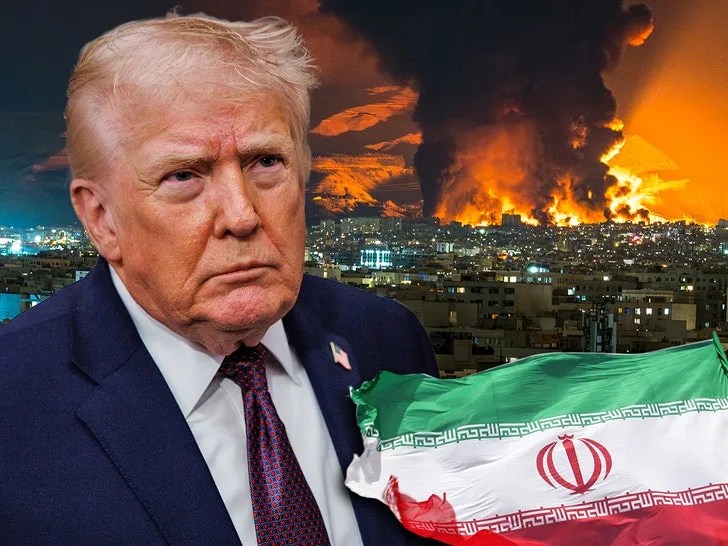
The US war on terror (2001–2021) cost an estimated $8 trillion with yearly US defence spending standing at almost $1 trillion. On top of this, Trump has asked for an additional $200 billion to continue the attack on Iran. In spite of these astronomical sums of money spent attacking Muslim country after Muslim country, it’s clear that this spending has become a source of regret for America and its allies, as the global economic impact of this war tips the world into a major recession. This is not the first time such an event has occurred. The Quraysh followed a similar path and it ended with their defeat and embracing of Islam. The world today is on the same trajectory because Allah has promised this in the Qur’an.

It should be noted that “those who disbelieve” is not speaking about every single non-Muslim. The Qur’an uses the address in a general form which can be applied to multiple individuals and realities. The circumstances of revelation (asbab an-nuzul) shows this verse was applied to the elites of Quraysh. Today we can apply it to the elites of America and its allies during the ‘war on terror’. This is the power of the Qur’an and its timeless message.

Allah (Most High) says,

إِنَّ ٱلَّذِينَ كَفَرُوا۟ يُنفِقُونَ أَمْوَٰلَهُمْ لِيَصُدُّوا۟ عَن سَبِيلِ ٱللَّهِ ۚ فَسَيُنفِقُونَهَا ثُمَّ تَكُونُ عَلَيْهِمْ حَسْرَةًۭ ثُمَّ يُغْلَبُونَ ۗ وَٱلَّذِينَ كَفَرُوٓا۟ إِلَىٰ جَهَنَّمَ يُحْشَرُونَ

Those who disbelieve spend their wealth barring access to the Way of Allah. They will spend it; then they will regret it; then they will be overthrown. Those who disbelieve will be gathered into Hell. [Al-Anfal: 36]

This verse and the preceding verses are referring to the disbelievers of Quraysh who fought Islam from day one of the message. “But why should Allah not punish them now when they bar access to the Masjid al-Haram? They are not its guardians. Only people who have taqwa can be its guardians. But most of them do not know that. Their prayer at the House is nothing but whistling and clapping. So taste the punishment for your disbelief.” [Al-Anfal: 34-35]

Ibn Ashur (d.1973) in At-Tahrir wa at-Tanwir explains the meaning of this verse. What follows is a translation with some minor additions.

After mentioning their barring of Muslims from Masjid Al-Haram, which warranted their punishment, Allah followed [in this verse] by mentioning their attempt to exterminate the Muslims and prevent them from embracing Islam, which is the meaning of “the path of Allah” (سَبِيلِ اللَّهِ). 

This is a new sentence (مُسْتَأْنَفَةً) not connected (مَعْطُوفَةٍ) to a previous sentence i.e. via a conjunction like ‘and’, in order to emphasize its importance. That is, they spend their wealth, which is the dearest thing to them, to prevent people from embracing Islam. 

The present/future tense (Al-Muḍāri’) is used in “they spend” (يُنْفِقُونَ) to indicate that their custom, and their spending is continuous in preparing for war against the Muslims. Their spending has occurred in the past, continues in the present, and will continue in the future. The preposition “li” (لِ) indicates that the spending is continuous because it is linked to a cause inherent in their souls: their hatred of Islam and their efforts to turn people away from it.

The meaning of this expenditure (الإنْفاقُ) is that the Quraysh used to feed their army meat every day on the day of Badr. The feeders were twelve men, namely Abu Jahl, Umayya ibn Khalaf, Al-Abbas ibn Abd al-Muttalib, Utbah ibn Rabi’ah, Al-Harith ibn Amir ibn Nawfal, Tu’aymah ibn Adi ibn Nawfal, Abu al-Bakhtari, Al-As ibn Hisham, Hakim ibn Hizam, and Al-Nadr ibn Al-Harith. Nubayh ibn Hajjaj al-Sahmi, his brother Munabbih, and Suhayl ibn Amr al-Amiri. They used to feed ten camels every day. This expenditure took place on the day of Badr, which has already passed. The use of the present/future tense in this account is to vividly recall the act of giving and the remarkable abundance of resources involved. This is a plural form formed by an idafa construct, which makes it a general expression, as if it were said: “They spend all their money,” (يُنْفِقُونَ أمْوالَهم كُلَّها) as an exaggeration (mubalagha), otherwise they would only spend some of their money.

The “fa” in (فَسَيُنفِقُونَهَا) “they will spend it” is used to indicate that this phrase is a consequence of the underlying reason i.e. barring access to the path of Allah. Since spending was their habit for the aforementioned reason, it follows that this spending will be repeated in the future. That is, they will face hardships from the Muslims that will compel them to repeatedly spend on armies to defend against the Muslims’ power.

The pronoun (هَا) in “they spend it” (يُنْفِقُونَها) refers to wealth (الأَمْوال), not specifically the wealth or money that is spent, but rather the money that remains or what they earn. After that, those funds they spend will be a source of regret for them. 

Regret (حَسْرَة) is intense remorse and longing for what has passed. Regret is attributed to their wealth because it is the cause of regret through their expenditure. Moreover, describing wealth as the source of regret is an exaggeration (mubalagha), like describing the source itself, because wealth is the cause of their regret, not the cause of the regret in of itself. This is a warning that they [disbelievers] will not gain anything from their spending, for the one who spends only regrets and laments if he does not achieve his intended goal. This means that they spend to achieve victory but do not succeed. 

The Quraysh spent on the army on the day [battle] of Uhud where Abu Sufyan hired two thousand of the Ahābish* to fight the Muslims.. The Ahābish were groups of Kinanah gathered from various prominent figures and allied themselves with Quraysh, settling around Mecca. They were called Ahābish, the plural of Ahbūsh, meaning a group or gathering. 

The victory the Muslims achieved at Uhud was equivalent to the victory at the Battle of Badr, but the victory at Badr was even greater. Therefore, on the day of Uhud, Abu Sufyan was convinced to say, يَوْمٌ بِيَوْمِ بَدْرٍ والحَرْبُ سِجالٌ “Day after day, like the Battle of Badr, the war is a series of battles.” He had thought that the Prophet ﷺ had been killed and that Abu Bakr and Umar were killed, so his calculations failed. Then they spent money on the confederates (Ahzab) when they attacked Medina, but they withdrew without achieving anything, so their spending became a source of regret for them.

His statement, “Then they will be defeated,” (ثُمَّ يُغْلَبُونَ) is an escalation in the warning of their impending failure and defeat, because after they gained nothing from their spending, they were threatened with the Muslims overcoming them, just as they had already been defeated at the Battle of Badr. This is a warning to them of the impending conquest of Mecca and the end of their power. This is similar to the warning in His statement, 

قُلْ لِلَّذِينَ كَفَرُوا سَتُغْلَبُونَ وتُحْشَرُونَ إلى جَهَنَّمَ وبِيسَ المِهادُ

˹O Prophet!˺ Tell the disbelievers, “Soon you will be overpowered and driven to Hell—what an evil place to rest!” [Ali-’Imran: 12]

The verb is in the passive voice (المَجْهُولِ) because the agent of the action (فاعِلِ) is known from the context, because the people of Mecca did not fight non-Muslims, and Mecca was a place of fertile land.

* Ahabish (الأحابيش): These were a confederation of tribes (mainly Kinanah) who pledged to support the Quraysh and played a key role in their military actions against the Muslims.

Source: https://tafsir.app/ibn-aashoor/8/36

Islamic History: Battle of the Masts

  1. Dhaat Al-Sawaari (Battle of the Masts) 654 CE
  2. Aftermath

The early Islamic conquests have always perplexed western historians. How was it possible for the desert Arabs, who were viewed by the Persian and Byzantine empires as insignificant, and posing no threat to them, to rise up and within a few years destroy their longstanding empires?

George Hourani, a maritime historian who has researched the early Muslim navy discusses “the problem of the earliest Arab ventures on the Mediterranean: how could they be successfully carried out in such a surprisingly short time?

The decisive event is the battle of Dhaat al-Sawaari (Battle of the Masts). To fight a naval battle, many resources were required: naval bases, including docks, shipbuilding yards, building materials and skilled shipbuilders; [and] warships with their complements of trained sailors, marines and officers.”[1]

The power of Islam is derived from its aqeeda (belief) which forms the intellectual basis upon which all thoughts, actions and systems are based. This aqeeda motivated the early and later Muslims to accomplish astonishing feats, especially with regards to the Islamic conquests. When studying these events however, many focus solely on the strength of the sahaba’s iman or supernatural events such as the angels of Badr, while neglecting other actions they undertook to achieve their victories. This results in many important lessons being missed which we can learn from and follow today.

David Nicolle, a military historian who wrote a book studying the Battle of Yarmouk says: “It is also difficult to separate fact from pious myth. Today, however, the ‘pendulum of credibility’ has swung back from the almost total disbelief of early 20th century Western historians to what might be described as a ‘twilight’ of historical reality.”[2] He then discusses the military tactics used by General Khalid ibn Walid, and the Muslim army which helped achieve this decisive victory.

Dhaat Al-Sawaari (Battle of the Masts) 654 CE

The Byzantines were rapidly losing territory in North Africa and the Mediterranean, so Constantine the son of Heraclius (Constans II) assembled a navy of 500-600 ships and set out to Alexandria to avenge their loses. Ibn Khaldoon says: “Then Ibn Abi’l-Sarh sent out detachments and they subjugated many lands, and they obeyed him and he went back to Egypt. When Ibn Abi’l-Sarh had achieved what he achieved in North Africa and gone back to Egypt, Constantine the son of Heraclius set out to attack Alexandria with six hundred ships.”[3]

19th-century illustration, “Battle of the Masts.” Scene depicts the naval defeat of the Byzantine fleet of Constans II Pogonatus by a Muslim fleet in A.D. 655.

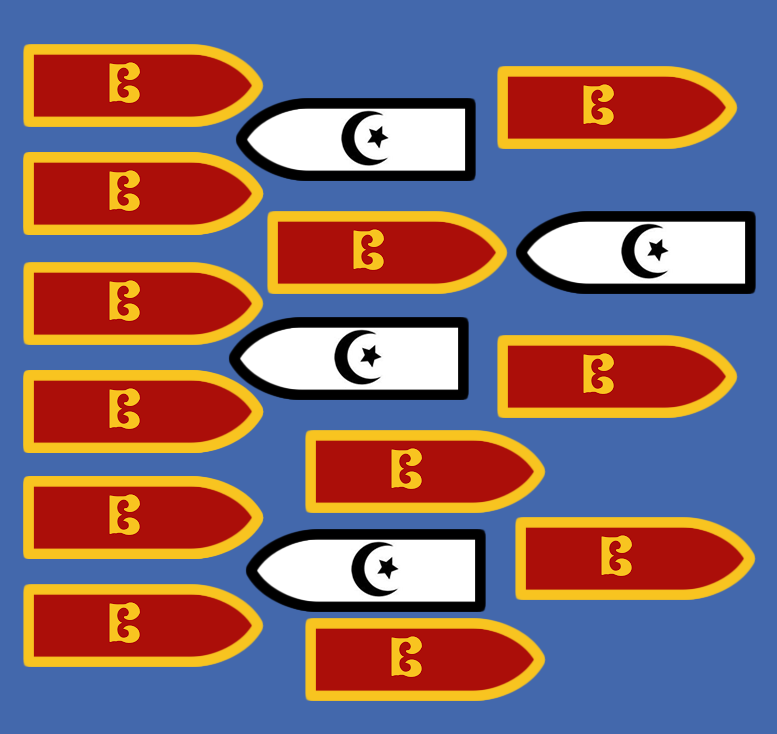
Abdullah ibn Sa’d ibn Abi Sarh, head of the Egyptian navy, set off from Alexandria with his ships and met up with Bisr ibn Artah, head of the Ash-Sham navy in order to confront the Byzantine threat.  Abdullah ibn Sa’d was in overall command of the Muslim fleet and Constans was in command of the Byzantine fleet, which outnumbered the Muslims nearly 3 to 1. The two fleets faced off against each other, off the coast of Egypt to the west of Alexandria near the city of Marsi Matrooh.[4]

Malik ibn Aws ibn al-Hadathaan, who was one of the naval officers present at the battle, narrates how events unfolded. He said: “I was with them at Dhat Al-Sawari. We met in battle on the sea, and we looked at their ships and had never seen anything like them. The wind was against us – i.e., it was in the favour of the Byzantine ships – so we dropped anchor for a while and they dropped anchor near us.

Then the wind dropped, and we said to the Byzantines: ‘Let us make peace between us and you.’ They said: ‘We will give you that, and in return we want peace.’ The Muslims also said to the Byzantines: ‘If you wish, we will go to the coast and fight there until victory is decreed for one of us, or if you wish, we will fight on the sea.’ Maik ibn Aws said: They all shouted as one: ‘No, on the sea!’

Thus it seemed to us that they were putting their trust in their naval experience and hoping for victory because of their skills and experience at sea, as they were used to it and its climate, so they hoped for a victory at sea, especially since they knew that the Muslims were new in this field.”[5]

Peace wasn’t an option because it would mean the Byzantines submitting to the Islamic authority. Thus with war inevitable, the Byzantines who had been seafarers for centuries and whose ships outnumbered the Muslims nearly 3 to 1, had the upper hand. Similar to Quraysh in the Battle of Badr, they believed their numbers and military superiority would gain them victory. How wrong they were!

The Muslim navy spent the night in dhikr and tahajjud seeking the help of Allah in what seemed an impossible mission. After leading the Muslims at Fajr, Abdullah ibn Sa’d gathered his senior officers for counsel. The Muslim’s strength was in fighting on land in hand-to-hand combat, so they devised a brilliant plan which would play to their advantage.

Abdullah ibn Sa’d ordered his ships to get as close as possible to the Byzantine ships which is why this was called Battle of the Masts due to the closeness of the masts. Some Muslim marines then jumped in the water and tied the ships together creating one large land mass on the sea. The battle then became hand-to-hand combat. Hourani mentions, “The tactics employed made it resemble a land battle, with the opposing vessels locked together and the men fighting with arrows and swords. This method of combat suited the Arab warriors.”[6]

This was a fierce and chaotic battle which as Tabari described, “There was more blood than water in this battle.”[7] The Byzantines tried to isolate the Fleet Admiral’s ship by tying ropes to it and attempting to tow it away. A brave marine named ‘Ilqimah ibn Yazeed al-Ghutayfi sacrificed himself by jumping on the ropes and cutting them, saving Abdullah ibn Sa’d and the command ship.[8]

The Byzantine navy was finally defeated, with its ships destroyed and sailors laying dead in the water. Constans, seeing this destruction fled the battle and ended up in Sicily. When the local population found out about his defeat they said, “Christianity and its men are destroyed! If the Muslims want to invade, they will not find anyone to repel them!” They then killed him. Sicily became one of many Mediterranean islands that came under the authority of the Islamic State after this battle.

Aftermath

The Byzantine historian Theophanes the Confessor said, ‘This battle was a second Yarmouk for the Byzantines.’[9] This is because the battle of Yarmouk wiped out Byzantine dominance in Ash-Sham, and Dhaat Al-Sawaari wiped out Byzantine dominance in the Mediterranean.

The navy of the Islamic state then began conquering the Mediterranean islands one by one. Cyprus, Crete, Corsica, Sardinia and the Balearic Islands all fell to the Muslims.

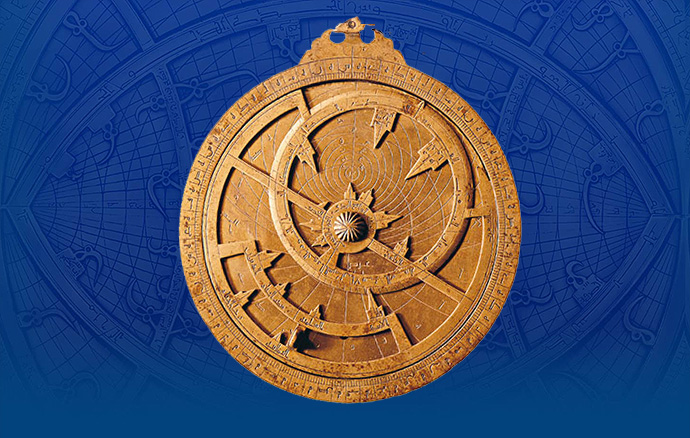
Muslim naval dominance of the Mediterranean continued for centuries and Muslim sailors became renowned for their naval expertise. They excelled in cartography and navigation and are credited with enhancing many naval inventions such as the Astrolabe and the lateen sail.

This is an extract from the article below.

Notes


[1] George Hourani, ‘Arab Seafaring in the Indian Ocean in Ancient and Early Medieval Times,’ Octagon Books, New York 1975, p.57

[2] David Nicolle, ‘The Muslim Conquest of Syria,’ Osprey Military, 1988, p.7

[3] Tareekh ibn Khaldoon, 2/468

[4] As-Sallabi, ‘The Biography of Uthman bin Affan,’ p.298

[5] Ibid

[6] Hourani, Op.cit., p.58

[7] Tareekh at-Tabari, 5/293 (Arabic original)

[8] As-Sallabi, ‘The Biography of Uthman bin Affan,’ p.300

[9] Ibid, p.299

The meaning of Sultan, Jamā’ah and Ulu al-amr

  1. Sultan
  2. Jamā’ah
  3. Ulu al-amr
  4. Notes

Authority is defined as “the power or right to give orders, make decisions, and enforce obedience.”[1] In our discussion here, we are using authority in the context of government and ruling because “in sociology and political science, authority is the legitimate power of a person or group over other people.”[2]

There are different words for authority or the source of authority (masdar al-sultah مَصْدَر السُلْطَة)[3] in the Islamic texts, such as sultan (سُلْطان), jamā’ah (جَماعَة) and ulu’l-amr (أُو۟لِى ٱلْأَمْرِ).

Sultan

In its original usage by the Ancient Arabs (العَرَب العاربة), the word السَليط means oil, and السِلْطة means a long arrow (السَهْم الطَوِيل). “The central meaning is the ability to conquer from afar[4], like a long arrow that strikes from afar, and like oil that is used to light a lamp to overcome darkness, and enable one to see things.”[5] Therefore sultan conforms to the definition of authority being “the power or right to give orders, make decisions, and enforce obedience.”[6]

Sultan may refer specifically to the ruler, or to authority sultah (سُلْطَة) in general i.e. government. The term may also refer to the source of authority from which it gains its legitimacy to rule. As will be discussed later, this locus is the ummah, or more specifically her political representatives known in the classical texts as the Ahlul hali wal-aqd (أَهْل الحَلّ والعَقْد), which literally means ‘the people who loosen and bind’, i.e. those who have the authority to contract, remove and account the caliph.

We can see these three meanings in the hadith of the Prophet Muhammad ﷺ where he said,

مَنْ كَرِهَ مِنْ أَمِيرِهِ شَيْئًا فَلْيَصْبِرْ، فَإِنَّهُ مَنْ خَرَجَ مِنَ السُّلْطَانِ شِبْرًا مَاتَ مِيتَةً جَاهِلِيَّةً

“If anyone sees in his Ameer something that displeases him let him remain patient. For behold! He who separates himself from the sultan by even so much as a hand span and dies thereupon, he has died the death of jahiliyyah (days of ignorance).”[7]

The word sultan here is mutlaq (unrestricted) and can refer specifically to the ruler, or the government in general because the caliph (imam) is the state, and in origin all executive power is with him similar to the US President. This is based on the famous hadith of the Prophet ﷺ where he said,

فَالْإِمَامُ الَّذِي عَلَى النَّاسِ رَاعٍ وَهُوَ مَسْئُولٌ عَنْ رَعِيَّتِهِ

“The Imam[8] is a guardian, and he is responsible over his subjects.”[9]

Abdul-Qadeem Zallum (d.2003) comments on this hadith, “This means that all the matters related to the management of the subjects’ affairs is the responsibility of the caliph. He, however reserves the right to delegate anyone with whatever task he deems fit, in analogy with wakala (representation).”[10] These officials of the state (wakeels) are then part of the overall authority (sultan) of the state.

We also find the words Hukm (حكم) and Mulk (ملك) used in the Qur’an and hadith which refer to ruling and authority. Abdul-Qadeem Zallum says, “Ruling (al-hukm الحكم), reign (al-mulk الملك) and authority (al-sultan السلطان) have the same meaning which is the authority that executes the rules.”[11] In other words they are all synonyms for ruling and authority.

Sultan in this hadith may also refer to the source of authority (masdar al-sultah) which is the ummah and the Ahlul hali wal-aqd. This is the main focus of this article.

Jamā’ah

Jamā’ah (جَماعَة) is a general word that includes many types of groups.[12] “The central meaning is the coming together of many homogeneous things, by meeting, coalescence, or accumulation.”[13]

In a hadith whose wording and meaning is similar to the one above, the Prophet ﷺ said,

مَنْ خَرَجَ مِنَ الطَّاعَةِ وَفَارَقَ الْجَمَاعَةَ فَمَاتَ مَاتَ مِيتَةً جَاهِلِيَّة

“Whoever withdraws obedience (to the Ameer) and separates from the jama’ah and dies thereupon, he has died the death of Jahiliyyah.”[14]

The word jamā’ah in this context is a synonym to sultan, and means the ummah and the Ahlul hali wal-aqd i.e. the source of authority.

Hudhaifa bin Al-Yaman narrates that ‘The people used to ask the Messenger of Allah ﷺ about the good but I used to ask him about the evil lest I should be overtaken by them. So I said, “O Messenger of Allah! We were living in ignorance and in an (extremely) bad atmosphere, then Allah brought to us this good (i.e., Islam); will there be any evil after this good?” He said, “Yes.”

I said, “Will there be any good after that evil?” He replied, “Yes, but it will be tainted (not pure).” I asked, “What will be its taint?” He replied, “(There will be) some people who will guide others not according to my guidance. You will approve of some of their deeds and disapprove of some others.”

I asked, “Will there be any evil after that good?” He replied, “Yes, (there will be) some people calling at the gates of the (Hell) Fire, and whoever will respond to their call, will be thrown by them into the (Hell) Fire.”

I said, “O Messenger of AllahWill you describe them to us?” He said, “They will be from our own people and will speak our language.”

I said, “What do you order me to do if such a state should take place in my life?” He said, “Stick to the jamā’ah and their Imam.”

I said, “If there is neither a jamā’ah nor an Imam?” He said, “Then turn away from all those sects even if you were to bite (eat) the roots of a tree till death overtakes you while you are in that state.”[15]

This hadith makes a clear distinction between the jamā’ah and the ruler (Imam), so jamā’ah is the source of authority meaning the ummah and the Ahlul hali wal-aqd.

In regards to the meaning of the word jamā’ah, Imam Al-Tabari states: “The correct interpretation is that Muslims are obligated to hold fast to the jamā’ah, the group that agrees on who should be appointed to rule, and then obeys him. Anybody who violates his bay’a (pledge of allegiance) has thereby left the jama‘ah.” He continues referencing the hadith of Hudhaifa bin Al-Yaman above: “It is related in the hadith that when the people do not have an imam, and thus split into parties, a Muslim, if he can, should not follow anyone into a schism. He should stay removed from all parties, for fear that he may fall into evil.”[16]

Ulu al-amr

The ulu’l-amr (أُو۟لِى ٱلْأَمْرِ) means those in authority, and is taken from the Holy Qur’an where Allah ta’ala says,

يَـٰٓأَيُّهَا ٱلَّذِينَ ءَامَنُوٓا۟ أَطِيعُوا۟ ٱللَّهَ وَأَطِيعُوا۟ ٱلرَّسُولَ وَأُو۟لِى ٱلْأَمْرِ مِنكُمْ

“O believers! Obey Allah and obey the Messenger and those in authority among you.”[17]

In answer to the question of who are the ulu’l-amr, Al-Shawkani (d. 1834) says,

وأُولِي الأمْرِ: هُمُ الأئِمَّةُ والسَّلاطِينُ والقُضاةُ وكُلُّ مَن كانَتْ لَهُ وِلايَةٌ شَرْعِيَّةٌ لا وِلايَةٌ طاغُوتِيَّةٌ،

“Those in authority: They are the Ameers and Sultans and Judges, and any who have a legitimate mandate (sharia wiliyah) not a tyrannical mandate (taghoot wiliyah).”[18] These officials of the state all derive their authority from the Imam and are wakeels (delegates) to him as mentioned previously.

Ibn Ashur says:

فَأُولُو الأمْرِ هُنا هم مَن عَدا الرَّسُولِ مِنَ الخَلِيفَةِ إلى والِي الحِسْبَةِ، ومِن قُوّادِ الجُيُوشِ ومِن فُقَهاءِ الصَّحابَةِ والمُجْتَهِدِينَ إلى أهْلِ العِلْمِ في الأزْمِنَةِ المُتَأخِّرَةِ، وأُولُو الأمْرِ هُمُ الَّذِينَ يُطْلَقُ عَلَيْهِمْ أيْضًا أهْلُ الحَلِّ والعَقْدِ.

“The people in authority (Ulu al-amr) here are those other than the Messenger, from the Caliph to the Hisbah[19], from the army commanders, from the jurists (fuquha) of the Companions and the mujtahids to the people of knowledge in later times. The Ulu al-amr are also those who are called the Ahlul hali wal-aqd.”[20]

Muhammad Abduh says,

بأولي الأمر جماعة أهل الحل والعقد من المسلمين، وهم الأمراء والحكام، والعلماء ورؤساء الجند وسائر الرؤساء والزعماء الذين يرجع إليهم الناس في الحاجات والمصالح العامة، فهؤلاء إذا اتفقوا على أمر، أو حكم وجب أن يطاعوا فيه بشرط أن يكونوا منا، وألا يخالفوا أمر الله ولا سنة رسوله ـ صلى الله عليه وسلم ـ التي عرفت بالتواتر، وأن يكونوا مختارين في بحثهم في الأمر، واتفاقهم عليه، وأن يكون ما يتفقون عليه من المصالح العامة، وهو ما لأولي الأمر سلطة فيه ووقوف عليه، وأما العبادات وما كان من قبيل الاعتقاد الديني فلا يتعلق به أمر أهل الحل والعقد، بل هو مما يؤخذ عن الله ورسوله فقط ليس لأحد رأي فيه إلا ما يكون في فهمه

“what is meant by those in authority is the group of Ahlul hali wal-aqd from among the Muslims, and they are the Ameers and rulers (hukkam), and the scholars and leaders of the army and all the leaders and chiefs to whom the people refer in needs and public interests. So if they agree on a matter or a ruling, it is obligatory to obey them in it on the condition that they are from us, and that they do not contradict the command of Allah or the Sunnah of His Messenger  ﷺ which is known by continuous transmission (tawatur), and that they are free in their research into the matter and their agreement on it, and that what they agree on is from the public interests, which is what those in authority have authority and control over.

As for acts of worship (‘ibadat) and what is of the type of religious belief (‘aqeeda), the matter of the Ahlul hali wal-aqd is not related to it. Rather it is something that is taken from Allah and His Messenger only, and no one has an opinion on it except what is in his understanding.”[21]

We see again that the three meanings of authority are present here, the ruler, the government and the ummah and her political representatives. Rashid Rida defines the ulu al-amr as the ummah. He says this verse “commands obedience to those who hold authority [ulu al-amr]—who constitute the main body of the ummah—not the one who holds authority. That is because he is one of them. He is obeyed only on the basis that the Muslims who pledge allegiance to him support and have confidence in him.”[22]

Notes


[1] Oxford English Dictionary, https://www.oed.com/search/dictionary/?scope=Entries&q=authority

[2] Bealey, Frank (1999). The Blackwell Dictionary of Political Science: A User’s Guide to Its Terms. Wiley. pp. 22–23. ISBN 0-631-20694-9.

[3] Hashim Kamali, ‘Citizenship and Accountability of Government: An Islamic Perspective,’ The Islamic Texts Society, 2011, p.197

[4] Muhammad Hassan Hassan Jabal, ‘The etymological dictionary of the words of the Holy Qur’an,’ https://tafsir.app/ishtiqaqi/%D8%B3%D9%84%D8%B7

[5] Ibid

[6] Oxford English Dictionary, https://www.oed.com/search/dictionary/?scope=Entries&q=authority

[7] Sahih al-Bukhari 7053, https://sunnah.com/bukhari:7053

[8] Imam here means the khaleefah i.e. the great Imam الْإِمَامُ الْأَعْظَمُ. Ibn Hajar, Fath al Bari, https://shamela.ws/book/1673/7543#p1    

[9] Ṣaḥīḥ al-Bukhārī 7138, Ṣaḥīḥ Muslim 1829

[10] Abdul-Qadeem Zallum, ‘The Ruling System in Islam,’ translation of Nizam ul-Hukm fil Islam, Khilafah Publications, Fifth Edition, p.111

[11] Abdul-Qadeem Zallum, Op.cit., p.12

[12] Abu Hilal al- Askari, “A Thesaurus of Assumed Synonyms in Arabic”, a translation of al-Furūq fī l-lugha. Adaptation By Prof Dr Mohammad Akram Chaudhary, p.408; Original Arabic: https://shamela.ws/book/10414/256

[13] Muhammad Hassan Hassan Jabal, Op.cit., https://tafsir.app/ishtiqaqi/%D8%AC%D9%85%D8%B9

[14] Sahih Muslim 1848, https://sunnah.com/muslim:1848a

[15] Sahih al-Bukhari 7084, https://sunnah.com/bukhari:7084

[16] Ibn Hajar, Fath Al-Bari, https://shamela.ws/book/1673/7468#p1

[17] Holy Qur’an, Surah An-Nisaa, ayah 59

[18] Muḥammad al-Shawkānī , ‘Fath ul-Qadeer,’ https://tafsir.app/fath-alqadeer/4/59

[19] Inspector of any rights which affect the community at large, e.g. market inspector, trading standards, environmental health etc.

[20] Ibn Ashur, https://tafsir.app/ibn-aashoor/4/59

[21] Rashid Rida, Tafsir al-Manar, https://shamela.ws/book/12304/1640

[22] Muhammad Rashid Rida, ‘The Caliphate or Supreme Imamate,’ Translated by Simon A Wood, Yale University Press, 2024, p.60; Original Arabic: https://shamela.ws/book/9682

Legitimate authority in Islam

The famous sociologist Max Weber (d.1920) defines authority as “the probability that a specific command will be obeyed.”[1] He then goes on to discuss three types of legitimate authority.[2]

1- Traditional Authority – power that is rooted in traditional, or long-standing, beliefs and practices of a society. It exists and is assigned to particular individuals because of that society’s customs and traditions. Hereditary rule would fall under this category.

2- Rational-Legal Authority – derives from law and is based on a belief in the legitimacy of a society’s laws and rules and in the right of leaders to act under these rules to make decisions and set policy. This form of authority is a hallmark of modern democracies. It is also the type of authority we find in an Islamic State. Although unlike in a democracy, the laws and rules in an Islamic State are derived from the sharia, since the sharia and not human beings is sovereign.

3- Charismatic Authority – stems from an individual’s extraordinary personal qualities and from that individual’s hold over followers because of these qualities. Many times this type of authority is combined with either traditional or rational-legal authority. The Rightly Guided Caliphs of the past were exemplary personalities and could be described as Philosopher-Kings in Platonic speak, but their legitimacy was always from the Muslim ummah who consented to their rule through the contract of bay’ah. Hence they had a rational-legal authority combined with a charismatic authority.

The bay’ah falls under the category of rational-legal authority since it is a ruling contract. For this contract to be valid the ummah must give their consent, which means they must be consulted (shura) either directly or through their political representatives the Ahlul hali wal-aqd. Ibn Khaldun says, “Therefore, it is necessary to have reference to ordained political norms, which are accepted by the mass and to whose laws it submits. The Persians and other nations had such norms. The dynasty that does not have a policy based on such (norms) cannot fully succeed in establishing the supremacy of its rule.”[3]

Notes


[1] Max Weber, ‘Three Types of Legitimate Rule,’ Translated by Hans Gerth

[2] The University of North Carolina Press, ‘Sociology: Understanding and Changing the Social World,’ 2019, Chapter 14.1

[3] Ibn Khaldun, ‘The Muqaddimah – An Introduction to History,’ Translated by Franz Rosenthal, Princeton Classics, p.251

Shura is a principle of the Islamic ruling system

One of the principles of the Islamic ruling system, and a mark of a rightly guided caliphate is shura (شُورَىٰ).

In Arabic “The pivotal meaning [of shura] is to extract what something contains of goodness or suitable, strong effect. Like honey in the waqba[1] or the hive, it is extracted from it, and like camels containing fat and the appearance of that fat on them, and like the well containing water to water the crops so they grow, and like feeding the fire with fuel so its flame rises and appears. This rise and appearance is from the door of exit.”[2]

Umar bin Al-Khattab informed the senior sahaba in a khutbah (sermon) during his caliphate:

فَمَنْ بَايَعَ رَجُلاً عَلَى غَيْرِ مَشُورَةٍ مِنَ الْمُسْلِمِينَ فَلاَ يُتَابَعُ هُوَ وَلاَ الَّذِي بَايَعَهُ تَغِرَّةً أَنْ يُقْتَلاَ‏‏

“So, if any person gives the bay’ah to somebody without consulting (shura) the other Muslims, then the one he has selected should not be granted allegiance, lest both of them should be killed[3].”[4]

Muhammad Haykal comments on this hadith, “The sahaba listened to this speech and none spoke out against what was said. Consequently, it represented and Ijmaa’ (consensus) upon what was mentioned in terms of the obligation to take the opinion of the Muslims in respect to whom is chosen to be a Khalifah over them.”[5]

Shura as a ruling principle existed throughout the Islamic caliphate but was confined to the ruling class, wazirs, tribal leaders and ‘ulema who made up the Ahlul hali wal-aqd. With regards to the bay’ah, the predominant opinion adopted by the ‘ulema gave the caliph the authority to designate his successor, and the ummah’s political representatives (Ahlul hali wal-aqd) consented to this. Therefore, the bay’ah was legal convened from a contractual viewpoint although we can say it was misapplied since the correct opinion is bay’ah must be through shura as Umar ibn Al-Khattab mentioned. This is the way of all the Rightly Guided Caliphs and those caliphs who followed in their footsteps like Umar ibn Abdul-Aziz.

Notes


[1] Al-Waqba is a small cave at the top of the mountain where bees put honey, which is the most delicious and expensive type of honey. He said: Abu Dhuayb Al-Hudhali He headed to a dome in the top of a mountain, below the setting sun, with an elegant harvest.

[2] Muhammad Hassan Hassan Jabal, Op.cit., https://tafsir.app/ishtiqaqi/%D8%B4%D9%88%D8%B1

[3] Ibn Hajar comments on this: “In respect to his statement: “lest both of them should be killed” it means: A warning to beware of being killed. The meaning of the term used here is تغرة (Taghirratan) which is derived from أغررته تغريرا ‘That the one does that has deceived himself and his companion and exposed them both to being killed.’” [Fath ul-Bari’ 12/144]

[4] Saheeh Al-Bukhari 6830, https://sunnah.com/bukhari:6830

[5] Muhammad Khayr Haykal, ‘Al-Jihad wa’l Qital fi as-Siyasa ash-Shar’iyya,’ vol.1, The Eighth Study, Qitaal Mughtasib As-Sultah (Fighting the usurper of the authority)

Role of Sufism in Islamicising Türkiye

The transformation of Türkiye under Erdogan and the AKP away from extreme secular values has been dramatic and something I have personally witnessed. During the 90s Muslims were leaving Türkiye as it was too un-Islamic. People with beards and hijabs were singled out for harassment. Contrast this to nowadays where many from the west are moving to Istanbul which has a sizeable ex-pat community from western nations.

In May 1999, Merve Kavakci, a newly elected woman MP for the pro-Islamic Virtue Party appeared in parliament wearing a headscarf. She faced a strong reaction from secular MPs and the Prime Minister at the time. She was booed, shouted at and prevented from taking her oath of office. Fast forward 20 years and she became the Turkish ambassador to Malaysia![157.5]

This change in Türkiye didn’t happen overnight but was the result of decades of tarbiya. Soner Cagaptay describes one of the influencers of this change – the Sufi sheikh Mehmet Zahid Kotku.

“The Islamists who followed Erbakan into politics—including Erdogan, who would later name his first-born son, Necmettin Bilal, after his political idol—gained their distinct world view in part from membership of an immersive spiritual community. More than a few of the MSP’s (National Salvation Party) top politicians were members of the Iskenderpasa mosque in Istanbul’s conservative Fatih district, led by the Sufi sheikh Mehmet Zahid Kotku. It was here that these men developed and refined their alternative vision for state and society in Turkey. Their community’s roots ran deep. Shunned by the Kemalist state, the Sufi community evolved to meet the new circumstances of the republic. After the Sufi lodges were shuttered, the sheikhs met with their communities informally, in mosque gardens or in private homes. Many took positions as state-appointed imams at mosques, quietly carrying on their Sufi role as well. Kotku, the imam of the Iskenderpasa mosque, came from just such a tradition. During Kotku’s tenure, which began in 1952, the Iskenderpasa lodge was coming into its own as a place of fellowship for Imam Hatip-educated and other conservative professionals and businessmen, many of whom felt alienated in Istanbul’s secular, European-influenced public life. In spite of his secular upbringing, Erbakan, for instance, was a deeply devout man with reservations about the West and secularism, and his attitude reflected that of a typical Islamic community member.

Sufi communities are traditionally founded upon the deep ties (rabita) that bind followers to a sheikh, whose authority is passed down through a line of teachers that ostensibly reaches all the way back to the Prophet Muhammad. The sheikh leads his community in interactive conversations to instruct them on matters of ethics and morality. Kotku’s followers marveled at the incisiveness of the leader’s conversation. Even outsiders praised Kotku for the cogent, unadorned style of his teachings, which were interwoven with practical messages. Kotku himself never expressed a desire to become overtly involved in politics. It is said that in the years leading up to his death in 1980, he admitted his regret at the extent to which his community had become embroiled in the political contests of the day. But Kotku’s message was undeniably political: his teachings offered a depiction of a just society that implied clear prescriptions for political action. In these teachings, Islam provided a model for the organization of the country’s economy. From Islamic principles, Kotku suggested, it is possible to derive answers on how to govern, even on fairly technical, economic matters. Community members would come to Kotku for practical political advice as well: Turkish politician Korkut Ozal claims that his brother Turgut Ozal, who would later become the country’s prime minister and president, first tried to enter the legislature on the Islamist MSP ticket in 1977 because Kotku advised him to do so. As a young man Erdogan also attended the Iskenderpasa mosque, as did later AKP leaders such as Abdulkadir Aksu and Besir Atalay.”

Source: Soner Cagaptay, ‘The New Sultan: Erdogan and the Crisis of Modern Turkey,’ Published in 2017 by I.B.Tauris & Co. Ltd, p.46

The Objective of State and Authority in Islam

State and authority in Islam is not an end in itself, but a means to an end which is to establish justice so that people can freely worship Allah, fulfil His obligations and refrain from His prohibitions. Allah ta’ala says,

لَقَدْ أَرْسَلْنَا رُسُلَنَا بِٱلْبَيِّنَـٰتِ وَأَنزَلْنَا مَعَهُمُ ٱلْكِتَـٰبَ وَٱلْمِيزَانَ لِيَقُومَ ٱلنَّاسُ بِٱلْقِسْطِ

“We sent Our messengers with clear signs, the Scripture and the Balance, so that people could uphold justice.”[1]

Ibn Ashur (d.1973) explains the meaning of balance (مِيزان) here as “conveying the command to be just (العَدْل) among people. The balance (مِيزان) is a metaphor for justice among people in distributing their rights, as one of the requirements of the balance is the presence of two parties whose equivalence is to be ascertained. Allah ta’ala says, وإذا حَكَمْتُمْ بَيْنَ النّاسِ أنْ تَحْكُمُوا بِالعَدْلِ ‘And when you judge between people, judge with justice.’ [An-Nisa’: 58]”[2]

Aisha Bewley says, “In fiqh, the principal function of government is to enable the individual Muslim to practise the deen and fulfill his obligations to Allah – which, of course, also entails certain societal obligations. This is, at the bottom line, the sole purpose of the state for which purpose alone it is established by Allah, for which purpose alone those in authority possess any authority over others.”[3]

Al-Mawardi (d.1058CE) lists comprehensive justice (عَدْلٌ شَامِلٌ) as one of his six principles of reforming society. He says, “comprehensive justice, results in social harmony and obedience (to the ruler) and makes possible the building of the nation, economic prosperity, population increase and the safety of the ruler. This is why al-Hurmuzan[4] said to Umar when he saw him sleeping with very modest clothes without guards: ‘You practiced justice, earned safety now take a nap (without guards).’

There is nothing that destroys a nation faster, and is more corrupting for the minds of people than injustice because it knows no limits. Every measure sets a pattern of corruption that increases until corruption engulfs everything.”[5]

Imam Ghazali said, “religion and authority are twins” (الدين والسلطان توأمان  ad-deen was-sultan tawaman).[6] This is because you cannot have one without the other, as Ibn Taymiyyah says, “The Ummah is the safeguard for the shar’a.”[7] Ibn Taymiyyah also mentions that “If authority and wealth were intended to make one come nearer to Allah, and were virtually dispensed in His cause, then that would lead to the establishment of deen and to prosperity in worldly affairs. If, on the other hand, authority was divorced from deen or deen was divorced from authority, then the whole affairs of the people would be spoiled.”[8]

While sovereignty and authority are twins, ultimately it’s the sharia (sovereignty) which underpins the nature and legal limits of authority within an Islamic state. Al-Mawardi says, “It is the Law however, which has delegated affairs to those who wield authority over them in matters of the deen- Allah, may He be exalted, has said: يَا أَيُّهَا الَّذِينَ آمَنُوا أَطِيعُوا اللَّـهَ وَأَطِيعُوا الرَّسُولَ وَأُولِي الْأَمْرِ مِنكُمْ ‘O you who believe, obey Allah and obey the Messenger and those in authority among you’.[9]Thus, He has imposed on us obedience to those in authority, that is those who have the command over us.”[10]

Ka’b al-Ahbar (d.652 CE) gives a nice analogy of the relationship between sovereignty (Islam), authority (ruler) and the safeguard of the authority which is the people.

مثل الإسلام والسلطان والناس: مثل الفسطاط والعمود والأوتاد. فالفسطاط الإسلام، والعمود السلطان، والأوتاد الناس. ولا يصلح بعضهم إلا ببعض

“Islam, the ruler, and the people are like a tent, a pole, and pegs. The tent is Islam, the pole is the ruler, and the pegs are the people. Each is useful only with the others.”[11]

Notes


[1] Holy Qur’an, Surah Al-Hadid, ayah 25

[2] https://tafsir.app/ibn-aashoor/57/25

[3] Aisha Abdurrahman Bewley, ‘Democratic Tyranny and the Islamic Paradigm,’ Diwan Press, 1st edition, 2018, Kindle Edition, p.89

[4] Persian general who was captured as a prisoner of war after the battle of Qadisiyyah and taken to Madinah

[5] Al-Mawardi, Adab al-Dunya wa al-Dinhttps://shamela.ws/book/765/118#p1 translation based on the book ‘Living Wisely – Teachings of Mawardi on Ethics and Human Wellbeing. An Abridged Translation of Mawardi’s Adab al-Dunya wa al-Din,’ by Dr. Ahmed Bangura, Turath Publishing, 2024, p.115

[6] Al-Ghazali’s Moderation in Belief: Al-Iqtiṣād fi al-I‘tiqād, translated by A M Yaqub, University of Chicago Press, Chicago and London, 2013, p.229

[7] ‘Ad-Dawlah Wa Nizhaam Al-Hisbah in the view Ibn Taymiyyah, Muhammad Al-Mubaarak: 38

[8] Ibn Taymiyyah, ‘The Political Shariyah on Reforming the Ruler and The Ruled,’ Translation of as-Siyasah ash-Shari’ah fi Islah ar-Ra’i war-Ra’iyah, Dar ul Fiqh, UK, p.256

[9] Holy Qur’an, Surah An-Nisa, ayah 59

[10] Abu l-Hasan al-Mawardi, The Laws of Islamic Governance, translation of Al-Ahkam as-Sultaniyah, Ta Ha Publishers, p.10

[11] Ibn ‘Abd Rabbih, ‘The Unique Necklace,’ translation of Al-‘Iqd al-Farid, Volume I, ‘The Center for Muslim Contribution to Civilization,’ Garnet Publishing, 2006, p.6; Arabic original: https://shamela.ws/book/23789/12

Islamic History: Church of Holy Sepulchre

The Church of Holy Sepulchre is in the Christian quarter of Jerusalem and is one of the holiest sites in Christianity. Dating from the 4th century it predates the Islamic opening of Jerusalem under Umar ibn Al-Khattab.

Justin Welby, the Archbishop of Canterbury claimed in 2018 in the Middle East ‘Christians face daily the threat of violence, murder, intimidation, prejudice and poverty…Across the region Christian communities that were the foundation of the universal Church now face the threat of imminent extinction.’[1]

While some try to frame this as Muslims oppressing Christians, or blame the rise of Islamic sentiments in the region, nothing could be further from the truth.

Muslims even more than Christians face the ‘daily the threat of violence, murder, intimidation, prejudice and poverty’ in the Middle East due to tyrannical rulers who do not implement Islam. This is also the case outside the Middle East in places such as Burma, Palestine and China.

The only reason Christians and Churches still exist in the Middle East is due to Islamic rule – the Khilafah – which protected Christians for over a millennia. However, since the Khilafah’s abolition in 1924 and the rise of nationalistic, secular, non-Islamic states, all peoples both Muslim and non-Muslim are suffering.

Thomas Arnold, who was a lecturer at Aligarh Muslim University in British India says: “But of any organised attempt to force the acceptance of Islam on the non-Muslim population, or of any systematic persecution intended to stamp out the Christian religion, we hear nothing.

Had the Caliphs chosen to adopt either course of action, they might have swept away Christianity as easily as Ferdinand and Isabella drove Islam out of Spain, or Louis XIV made Protestantism penal in France, or the Jews were kept out of England for 350 years.

The Eastern Churches in Asia were entirely cut off from communion with the rest of Christendom, throughout which no one would have been found to lift a finger on their behalf, as heretical communions. So that the very survival of these churches to the present day is a strong proof of the generally tolerant attitude of the Muhammadan governments towards them.”[2]

Hani Shukrallah, a Coptic Christian and a former editor of the newspaper Al-Ahram writes: ‘It is not easy to empty Egypt of its Christians; they’ve been here for as long as there has been Christianity in the world. Close to a millennium and half of Muslim rule did not eradicate the nation’s Christian community, rather it maintained it sufficiently strong and sufficiently vigorous so as to play a crucial role in shaping the national, political and cultural identity of modern Egypt.

Yet now, two centuries after the birth of the modern Egyptian nation state, and as we embark on the second decade of the 21st century, the previously unheard of seems no longer beyond imagining: a Christian-free Egypt, one where the cross will have slipped out of the crescent’s embrace, and off the flag symbolizing our modern national identity…’[3]

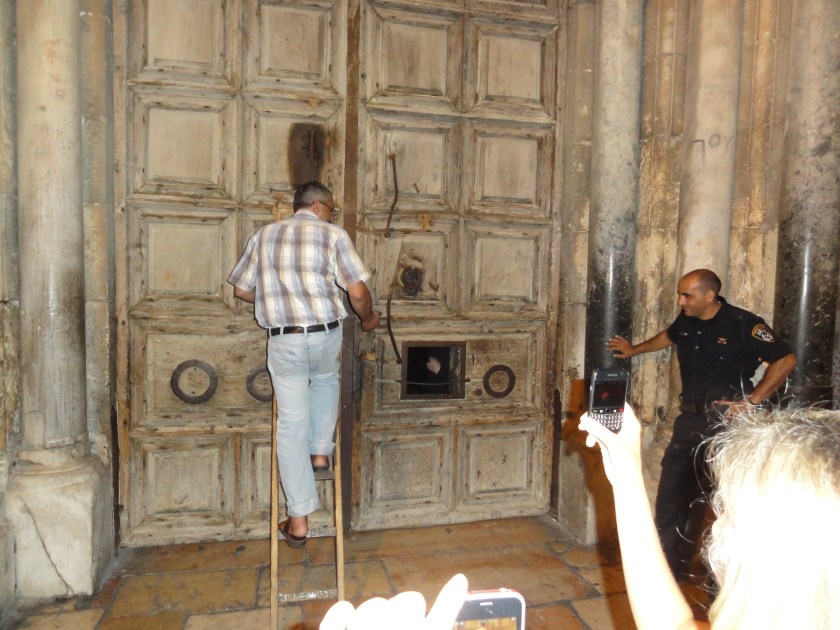
In fact the keys to the Church of Holy Sepulchre are still held by members of the Nusaybah Muslim family in Jerusalem who can trace their lineage back to the great sahabi Ubadah ibn Al-Samit, governor of Jerusalem under Umar ibn Al-Khattab who was first entrusted with the keys.[4]

The Nusaybah family

It is true that the Fatimid Emir (who claimed himself Caliph) Al-Hakim bi-Amr Allah ordered the destruction of the Church of Holy Sepulchre in 1009 but this was a mazlama (oppression) against the Christians and prohibited in Islam. Al-Hakim’s son Ali az-Zahir redressed this mazlama when he came to power after his father died and the church was restored.

We cannot judge 1400 years of Islam’s treatment of Christians by this one event. We need to look to the entire period and as mentioned the existence of churches across the Middle East disprove any claim that there was a ‘genocide’ against the Christians similar to what happened to Muslims and Jews in Spain.

Notes


[1] https://www.dailymail.co.uk/news/article-6451501/Christians-face-imminent-extinction-Middle-East-Archbishop-Canterbury-warns.html

[2] Thomas W. Arnold, ‘The Preaching of Islam,’ Second Edition, Kitab Bhavan Publishers, New Delhi, p.72

[3]  https://www.catholicculture.org/news/headlines/index.cfm?storyid=8820&utm_source=feedburner&utm_medium=feed&utm_campaign=Feed%3A+CatholicWorldNewsFeatureStories+%28Catholic+World+News+%28on+CatholicCulture.org%29%29

[4] http://www.nusseibeh.com/