All posts filed under: Featured

Structure of an Islamic State: The Wazir

The wazirate (ministry), or wizarah (وِزارَة) is a term that refers to the office of the wazir, a high-ranking government official who serves as the caliph’s deputy, chief minister and advisor who aids him in running the state. Al-Mawardi says, “The ministry of delegation (Wizarah Al-Tafwid) is where the Imam appoints a wazir to whom he delegates authority for the organisation of affairs in accordance with his judgement such that he effects them properly by his own efforts.”[1] The wazirate evolved over the centuries, but it existed in one form or another from the first Islamic State headed by the Prophet ﷺ in Medina, until 1922 when the Ottoman Sultanate was officially abolished[2] and along with it the last Grand Vizier. Willem Gerrit Dedel, Ambassador of the Dutch Republic to the Ottoman Caliphate 1765-1768 during the reign of Mustafa III (r.1757-1774) describes the scene when the Sultan’s no.2 man rode past. “We fetched our horses and waited until all the Sultan’s senior officials had ridden past on their fine horses. This was an extremely lovely …

Al-Mawardi’s Structure of an Islamic State

This is the first of a new series of articles discussing the governing structure of an Islamic State. The strongest view among the scholars is that Islam laid down a number of principles of ruling, but the detailed institutional structures are not fixed and will change with the times. A number of 20th century scholars and thinkers however, went a step further from just general principles, and outlined specific institutions which would be needed to run a state. Rashid Rida (d.1936), Al-Sanhūrī (d.1971), Mohammad Barakatullah (d.1927) and Taqiuddin an-Nabhani (d.1977) stand out as the most prominent in this regard, and we will discuss each of them and their models in turn. Imam Al-Mawardi (d.1058) was a jurist, chief justice (Qadi al-Qudah), diplomat and statesman of the Abbasid Caliphate under the caliphs Al-Qadir (r.991-1031CE) and Al-Qa’im (r.1031-1075CE). He wrote his famous book al-Ahkam al-Sultaniyah near the end of his life, drawing on his experiences in government and politics. His book is therefore not theoretical, but a practical guide to ruling which is why it has stood …

The Islamic State of Prophet Muhammad ﷺ

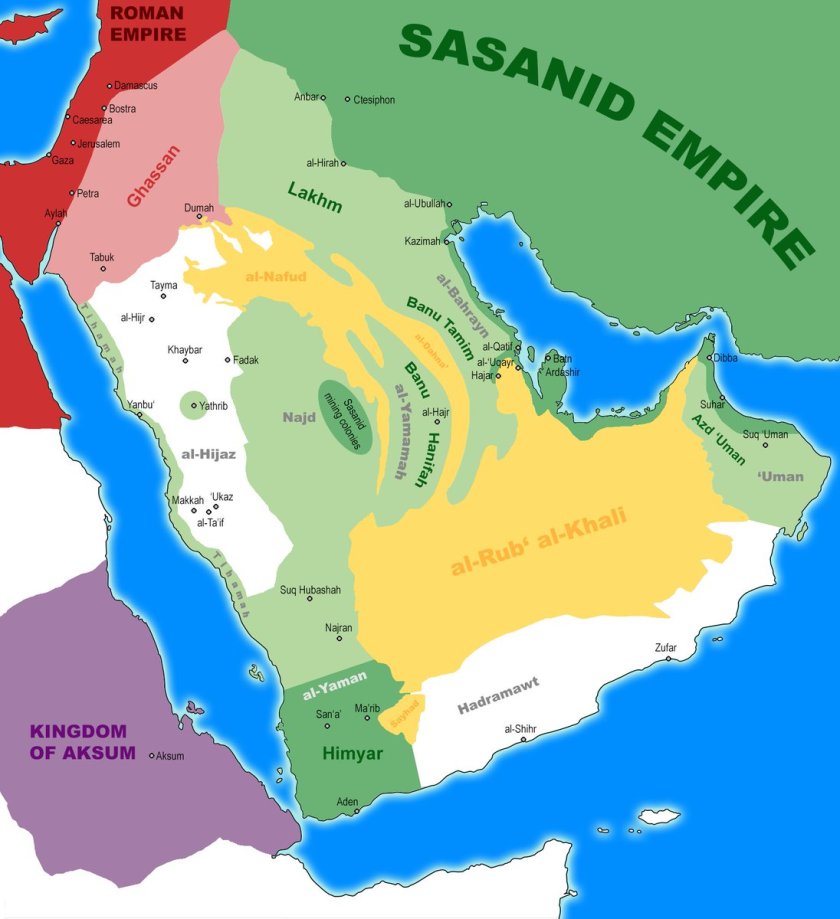
As the 10,000 strong army of the Prophet ﷺ marched into Makkah, Abu Sufyan stood alongside Al-Abbas watching the vast numbers of soldiers as they passed by. Abu Sufyan said to Al-Abbas, “By Allah, O Abu al-Fadl, the kingdom (mulk) of your nephew has become truly great this morning!” I said: “O Abu Sufyan, it is prophethood.” He said: “Yes, indeed.”[44] The Islamic State of the Prophet ﷺ was something out of the ordinary in Nomadic Arabia which had never known a state like this before. Introduction The emergence of the first Islamic State in 622CE went unnoticed at first by the Sassanid and Byzantine empires. The Persians and Romans were fighting each other in a major war[1], and so their focus was not on the nomadic Arabs who had never previously posed any type of threat to their empires. John Saunders says, “Once and once only, did the tide of nomadism flow vigorously out of Arabia. Bedouin raids on the towns and villages of Syria and Iraq had been going on since the dawn of …

Governing Structures in Pre-Islamic Arabia

The Nomadic Zone Islam emerged in the town of Mecca which was part of the Nomadic Zone in Hejaz, a strip of land in western Arabia running parallel to the Red Sea. A series of tribes lived in this Nomadic Zone, some were settled in towns such as Mecca, Taif and Yathrib, and others lived as Bedouins out in the desert. Fred Donner describes the environment in the Nomadic Zone, “There was, then, no state in northern Arabia to impose its control over the tribes, so that society was dominated by the most powerful tribal groups-which were, as we have seen, those focused around warrior nomads or holy families. Despite the fact that confederations headed by warrior nomads as well as those headed by holy families lacked the administrative and legal features that we associate with the state, however, they did resemble the state in one respect: they functioned as sovereign entities, independent of external political control and desiring to extend their domination over new groups and areas. This meant not only that they acted …

The Three Branches of Government in Islam

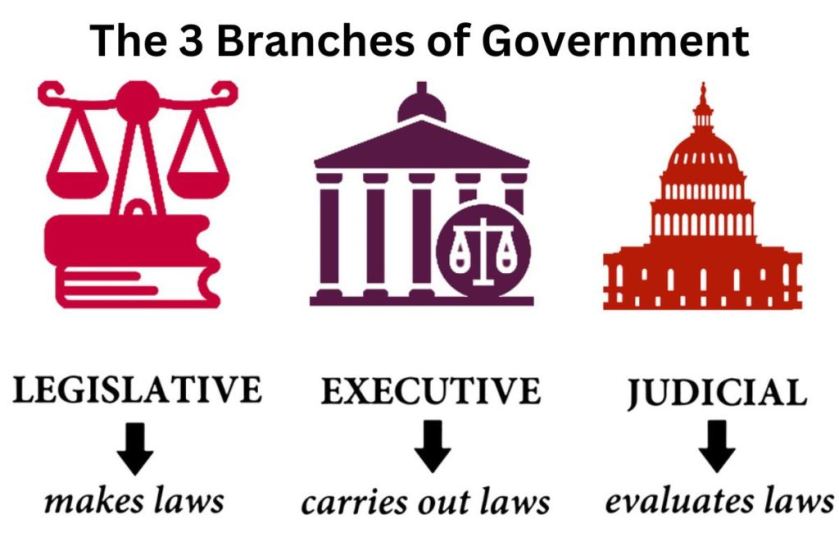
It’s widely accepted in political philosophy that there are three branches of government: 1 Executive implements laws 2 Legislative makes laws 3 Judicial interprets laws and resolves disputes These three branches exist in every ruling system including the Islamic system but differ in their degree of separation. We can classify such a model under the concept of technical terminology (الاِصْطِلاحات istilahiyyat) which are used to teach and understand Islam. Muhammad Hussein Abdullah says, “It is possible for the people of any particular skill, art or expertise, and in any time period to set terminological conventions (istilahiyyat), utilising the worded expressions (أَلْفاظ alfazh) of the language and transfer them to specific meanings associated to their field.”[1] There are many technical terms that scholars and thinkers have used to describe the structure of an Islamic State. Al-Mawardi (d.1058) uses ruling spheres (وِلايات wiliyyat). Rashid Rida (d.1936) and Al-Sanhūrī (d.1971) use councils (مَجالِس majalis). Mohammad Barakatullah (d.1927) uses ministries (وِزارَة wizara), and Taqiuddin an-Nabhani (d.1977) uses institutions (أَجْهِزَة ajhizah). All of these are permissibile as part of the …

Arabic word meanings in Usul al-Fiqh

One of the fundamental concepts in Usul Al-Fiqh (Foundations of Islamic Jurisprudence) is understanding the meaning of a particular Arabic word or expression (لَفْظ lafzh), because the Islamic texts i.e. Qur’an and Sunnah are in Arabic. Muhammad Hussein Abdullah says, “Deducing the sharia rules from the Qur’an Al-Kareem and the Sunnah An-Nabawiyah rests upon knowledge of the Arabic language, knowledge of its categories (disciplines) and its Dalalat (implications and indications). That is because the Qur’an and the Hadith have come in the Arabic language.”[1] Iyad Hilal says, “Unless the text of the Qur’an and Sunnah is correctly understood, no ruling can be deduced from it. The linguistic structure of the text in Qur’an and Sunnah varies from one style to another. Some examples of these linguistic styles are: Dhanni (speculative text), Qata’i (definitive text), ‘Aam (general text), Khass (specific text), Haqiqi (literal text), and Majaazi (metaphorical text). The rules to distinguish and differentiate between these styles are an important subject in Usul al-Fiqh.”[2] Arabic word meanings in sharia are those known at the time of …

Touching a woman does not invalidate wuḍūʼ

This is an excerpt from ‘The Comprehensive Book of the Rulings on Prayer’ by Abu Iyas Uwaydah The opinion presented here is predominately the Hanafi opinion but other scholars also adhere to it. If someone follows a different mazhab (school of thought) such as the Shafi’i school then they need to follow the opinion of their respective mazhab, and not mix opinions without consulting with a scholar first. Introduction Imams and jurists differed on whether touching a woman invalidates wuḍūʼ or not. There are several opinions: Abdullah ibn Mas’ud, Abdullah ibn Umar, al-Zuhri, Rabi’ah, and al-Shafi’i held that touching a woman invalidates wuḍūʼ. Ali ibn Abi Talib, Abdullah ibn Abbas, Ubayy ibn Ka’b, al-Hasan, Mujahid, Qatadah, Sa’id ibn Jubayr, al-Sha’bi, Ata’, Tawus, Abu Hanifa, Abu Yusuf, and Ibn Jarir al-Tabari held that it does not invalidate wuḍūʼ. Abu Hanifa and Abu Yusuf said: “Unless the private parts are touched and the penis is ejaculated, even if no semen is emitted.” Malik, Ahmad, and Ishaq ibn Rahawayh held that touching with lust invalidates wuḍūʼ. To clarify …

Unlocking the secrets of Surah Al-Ikhlas

The Qur’an is the speech of Allah, the Creator and Originator of the universe and everything within. The miraculous nature of the Qur’an is in its language, because Qur’anic Arabic breaks the natural law of language in terms of its eloquence, beauty, rhetoric, structure, rhythm, rhyme, grammar, clarity and depth which is beyond the ability of the best poets and linguistics. Allah placed a challenge in the Qur’an that if anyone doubts this book is from Him, then produce one chapter (surah) like it in Arabic: وَإِن كُنتُم في رَيبٍ مِمّا نَزَّلنا عَلىٰ عَبدِنا فَأتوا بِسورَةٍ مِن مِثلِهِ وَادعوا شُهَداءَكُم مِن دونِ اللَّهِ إِن كُنتُم صادِقينَ “If you have doubts about what We have sent down to Our slave, produce another chapter equal to it, and call your witnesses, besides Allah, if you are telling the truth.”[1] No human being has ever met this challenge, and no one ever will. One aspect of Quranic Arabic is in its perfect word choice. The way the words are placed in the verses, and the similarity between them …

Authority in an Islamic State

Introduction The foundations (‘usul أُصُول) of an Islamic State are ‘sovereignty is to the sharia’ (سيادة للشرع) and ‘authority is with the ummah’ (سلطان للأمة). We have already discussed sovereignty in an Islamic State, and now we will discuss the second ‘usul which is authority. Imam Ghazali said, “religion and authority are twins” (الدين والسلطان توأمان ad-deen was-sultan tawaman).[1] This is because you cannot have one without the other, as Ibn Taymiyyah says, “The Ummah is the safeguard for the shar’a.”[2] Ibn Taymiyyah also mentions that “If authority and wealth were intended to make one come nearer to Allah, and were virtually dispensed in His cause, then that would lead to the establishment of deen and to prosperity in worldly affairs. If, on the other hand, authority was divorced from deen or deen was divorced from authority, then the whole affairs of the people would be spoiled.”[3] While sovereignty and authority are twins, ultimately it’s the sharia (sovereignty) which underpins the nature and legal limits of authority within an Islamic state. Al-Mawardi says, “It is the Law however, …

Hashim Kamali’s 12 Principles of Accountability

Professor Mohammad Hashim Kamali, is the founding CEO of IAIS (International Institute of Advanced Islamic Studies) in Malaysia. He has featured for many years in The 500 Most Influential Muslims in the World, and written numerous books on Islamic law and constitutionalism. This is an excerpt from one of his books ‘Citizenship and Accountability of Government: An Islamic Perspective’. The 12 Principles. (1) Political authority in the Islamic system of rule belongs to the community (ummah) as it is the community that elects the head of state and is ultimately entitled to depose him in the event of manifest abuse. (2) Consultation and the right of the people to be consulted in government affairs is one of the principal means by which the community participates in government, voices its concerns over government policy, and takes the government to account. (3) The Qur’anic principle of promotion of good and prevention of evil (amr bi’l-ma’ruf wa-nahy ‘an al-munkar) and its allied concept of giving sincere advice (nasihah) also render the government accountable to the people and encourage …