Author: islamciv

Is the bay’ah a “social contract”?

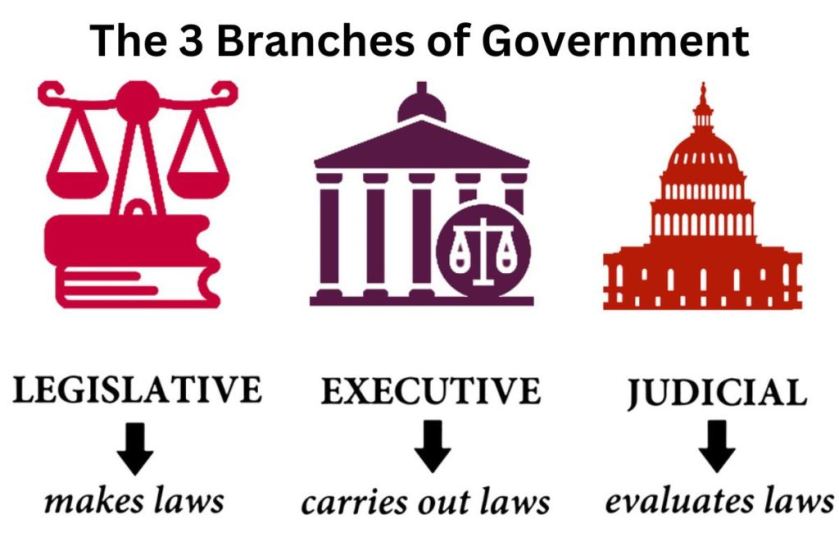
It is well-known that the cornerstone of democracy is that sovereignty belongs to the people (popular sovereignty). Benjamin Franklin famously said, “In free governments, the rulers are the servants and the people their superiors and sovereigns.”[1] This is why the US Constitution begins, “We the People of the United States, in Order to form a more perfect Union, establish Justice, insure domestic Tranquility, provide for the common defence, promote the general Welfare, and secure the Blessings of Liberty to ourselves and our Posterity, do ordain and establish this Constitution for the United States of America.”[2] The idea of popular sovereignty has its roots in medieval Europe during the age of ‘enlightenment’. As mentioned earlier, this post-renaissance period saw a number of philosophers, develop political theories in response to the tyranny of the catholic church, and the absolute monarchs who ruled on their behalf by ‘divine right’. These thinkers therefore, developed models which would curtail the influence of religion, and limit the powers of the monarchy. One such theory, developed by Hobbes, Locke and Rosseau, is …

Contracts in Islam

Wael b. Hallaq says, “In fiqh, contracts do not stand as a separate category, in the manner, say, American or French law articulates them in textbooks and treatises. Rather, Islamic conceptions of contract are implicit in juristic discussions pertaining to pecuniary and commercial transactions, among others. They are constituted by three essential elements (arkān; sing. rukn), namely: (a) the parties; (b) the form (ṣīgha) of offer and acceptance; and (c) the object, or subject-matter. (a) The contracting parties: A person qualified to enter into a contract on behalf of oneself or another must be of major age (bāligh) and have attained rushd, namely, the capacity to behave in a responsible and constructive manner (muṣliḥan), and without this capacity being subject to interdiction (ḥajr). Minors and the insane cannot enter into a contract without a guardian acting in their interest, except for discerning minors (mumayyiz) who can, inter alia, receive gifts and be the beneficiaries of a waqf. (b) Offer and acceptance (ījāb and qabūl): The majority of jurists associate offer with the owner (mālik) of the object, and acceptance with the party to whom ownership or …

What is the Bay’ah?

The bay’ah or pledge of allegiance, is a ruling contract which governs the relationship between Muslims and the Islamic state. For those Muslims living under the authority of the state, the bay’ah is their citizenship contract with its ruler – the Khaleefah. The bay’ah is the method of appointing the Khaleefah and legitimising his rule. It must be given with the consent of the ummah, who are free to choose whomever they wish to rule them, within the boundaries of the sharia rules. If the bay’ah and its conditions are absent, then the Khaleefah has no authority to rule and will be considered a usurper. From the time of Abu Bakr to the last Khaleefah Abdul-Majed II, the bay’ah was always present and legally convened, albeit misapplied for much of Islamic history. If we look back to Islamic history, most of the major political problems and fitan (tribulations) that occurred, can be traced back in some way or the other to the misapplication of the bay’ah. It’s the misapplication of the bay’ah that distinguishes a …

Pakistan: A Solution to an Ailing Economy

This article has been reproduced from Prophetic Economics Regarding the Current Economic Situation in Pakistan, it is vital to appreciate that the Global Economy is going through a challenging time; this is not specific to Pakistan. However, Pakistan indeed has systemic issues with its Economy, and that is linked to the inherited Colonial Capitalist Economic System that it follows. The GDP in Pakistan is 347.75 Billion USD; however, Countries with similar populations like Brazil and Indonesia have done significantly better in terms of Economic Development compared to Pakistan. In Pakistan’s case, the problem of interest-based debt traps that Pakistan is stuck in and combined with inefficient Economic policies have led to an Economic Failure. The root for all these problems lies in reliance on Capitalist Economic Policies instead of the Islamic Economic Policies based on Divine Guidance – Quran and Sunnah. A Radical shift in the Economic Policies with a key reset of the system can help free Pakistan from the clutches of the global loan sharks and their interest-based debts and help it develop its …

The Fiqh of Transitioning to the Gold & Silver Standard

This article has been reproduced from Prophetic Economics The following are answers to several questions related to the future Dar Ul Islam state and the transition of the current currency to the Gold and Silver Standard. Question: Is it permissible in Islam for the Dar Ul Islam to partially back its currency during a transitional period on the justification (if it is so) that it does not have the capacity (in reserves) to maintain 100% convertibility. In terms of the US, this would mean that it could partially back (at around 20%) all of its currency at the current rate, without having to change that parity or endure the negative effects associated with this. This would grant it the stability it would need to expand its reserves (through various means) so that it can gradually move towards a 100% backed rate. Answer:  For the state to issue a gold and silver based currency it will have to depend on the availability of these metals in its treasuries. In addition to this the state will also have …

Bay’ah in Islamic History – The Umayyad Khilafah

Disputes broke out many times throughout the Khilafah’s 1300-year history over who should govern the state. One thing remained constant however and that was the bay’a. No Khaleefah ever came to power without the bay’a, and this method of appointing the ruler continued until 1924. 1.    Mu’awiyah ibn Abi Sufyan (41H/661CE – 60H/680CE) The Civil War between Mu’awiyah and Ali During the civil war between Mu’awiya and Ali, Mu’awiya never claimed the Khilafah for himself or took the bay’a for himself. Rather he made his bay’a conditional on Ali handing over Uthman’s assassins which Ali was unable to fulfil at that time. Abu Muslim Al-Khawlani and a group of people said to Mu’awiyah: “Do you disagree with Ali or are you like him?” So Mu’awiyah said: “No, By Allah! I know that Ali is better than me, and he has more right to the leadership than me. However, do you not know that Uthman was killed wrongfully!? I am his cousin (‘Uthman’s cousin), and I am asking for his blood, so go to Ali and …

Is the bay’ah on belief or action?

The 9th year of the Hijrah is known as the ‘Year of the Delegations’ (سنة الوفود), in which each Arab tribe sent a group of representatives to meet with the Prophet ﷺ in Madinah. Apart from the Christians of Najran who chose to remain on their religion and pay the jizya, the rest of the Arab tribes accepted Islam and gave their bay’ah to the Prophet ﷺ. Since the bay’ah for many of these tribes and individuals was given at the same time as accepting Islam, this may lead someone to the conclusion that the bay’ah is related to belief, and withdrawing bay’ah is apostasy. In response to this, bay’ah is related to ruling which is an action, and those who give bay’ah are already Muslim. The evidences for this are as follows. 1- Bay’ah is always taken from a believer Allah (Most High) says: يا أَيُّهَا النَّبِيُّ إِذا جاءَكَ المُؤمِناتُ يُبايِعنَكَ “O Prophet! When women who have iman come to you pledging allegiance to you…”[1] لقد رضي الله عن المؤمنين إذ يبايعونك تحت الشجرة …

The Ahlul hali wal-aqd in the time of Harun al-Rashid

The bay’a (البيعة) is a ruling contract which governs the relationship between Muslims and the Islamic state. For those Muslims living under the authority of the Khilafah the bay’a is their citizenship contract with the state. How is free choice and consent of millions achieved in the bay’a? Historically in the rightly guided Khilafah of the sahaba, the senior representatives of the people would contract the bay’a to the Khaleefah. The rest of the Muslims would accept their opinion and rush to pledge their bay’a to the newly appointed Khaleefah directly in the Prophet’s Mosque in Madinah, which was the capital of the state, or indirectly through the governors in the other provinces. Historically in the rightly guided Khilafah of the sahaba, the senior representatives of the people would contract the bay’a to the Khaleefah. The rest of the Muslims would accept their opinion and rush to pledge their bay’a to the newly appointed Khaleefah directly in the Prophet’s Mosque in Madinah, which was the capital of the state, or indirectly through the governors in the other provinces.[1] The classical scholars called this …

Islamic Monetary Policy in light of Pakistan’s ban on riba (interest)

The Federal Shariat Court (FSC) of Pakistan announced on April 28th 2022 that the current interest-based banking system is against sharia, and directed the government to implement an interest (riba)-free banking system by December 2027.[1] In fact, the first petition for the abolition of the interest-based banking system was filed in the FSC on June 30, 1990 and it has taken 32 years for a final verdict to be issued![2] It is well-established in Islam that riba is against sharia because of the numerous clear-cut verses of the Holy Quran such as, “O believers! Fear Allah, and give up outstanding interest if you are ˹true˺ believers. If you do not, then beware of a war with Allah and His Messenger!”[3] and “But Allah has permitted trading and forbidden interest.”[4] While most Muslims support a ban on riba, very few understand the alternatives to the existing economic system of banking and monetary transactions. The alternatives that emerge focus on offering interest-free loans through complex financial products, where the recipient still pays more than the capital. Those …

Can a time limit be placed on the Caliph’s term of office?

The question of limiting the head of state’s term to a specific number of years, was not an issue in ancient and medieval times because most heads of state were life-long monarchs. The renaissance in Europe paved the way for philosophers to develop new theories of governance based on the democratic model first developed by the ancient Greeks. After the French and American revolutions these new principles were codified in their constitutions. The republican system was developed to replace the monarchies of the past, and central to this was restricting the powers and term of office of the president who headed this system. The American constitution restricted the president to a four-year term but allowed re-election without restriction. In 1951 the Twenty-Second Amendment was passed which restricted the US President to two terms, so they can never serve more than eight years in office. This was done to prevent a life-long monarch emerging who if corrupt, would be corrupt for life. The dominance of the western democratic system and the shocking levels of corruption experienced …