

- Who is Rashid Rida?
- 1920s Middle East
- What is the Kingdom of Hejaz?
- Background to Rashid Rida’s book
- 10 Obstacles to Making the Hijaz the Seat of the Caliphate
- What is Dar ul-Islam?
- How to claw back sovereignty in the Muslim world
- 5 concepts to be propagated on the caliphate
- Notes
Who is Rashid Rida?
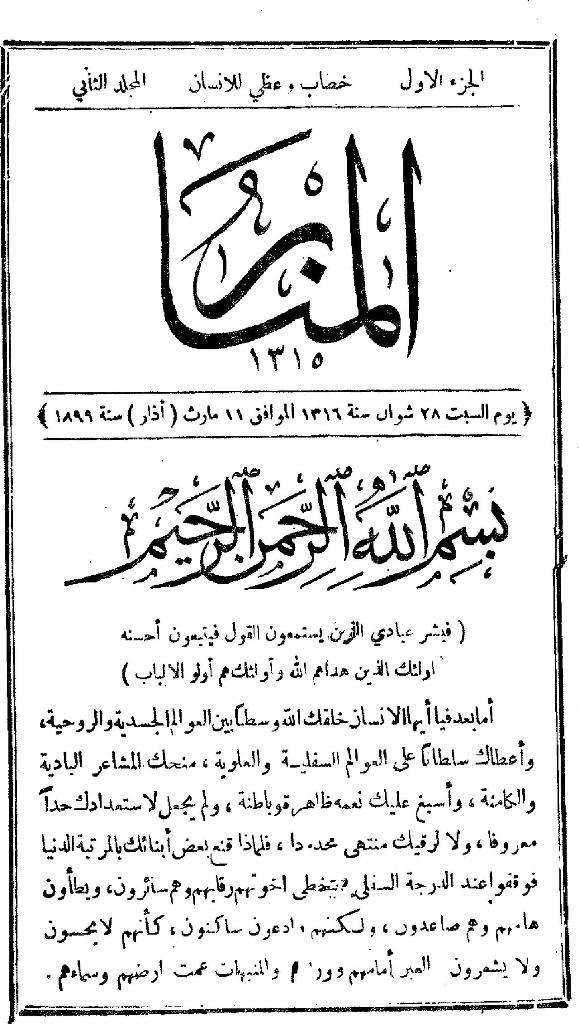
Rashid Rida (d.1935) was a Syrian scholar who was the founder and editor-in-chief of Al-Manar magazine (1898-1940) based in Cairo. This was a monthly periodical and highly influential publication which had a following across the Muslim world.
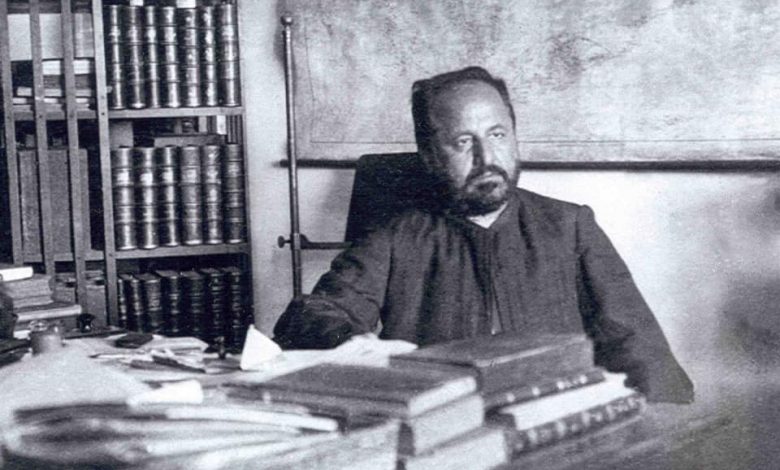
Following in the footsteps of Imam Al-Mawardi (d.1058) and his book Al-Ahkam as-Sultaniyyah (The Laws of Islamic Governance) which was the defacto go-to-guide on Islamic ruling for nearly a millennium, Rashid Rida published his own book called ‘The Caliphate or Supreme Imamate’ (الخلافة أو الإمامة العظمى). This book had initially appeared as a series of articles in Rashid Rida’s Al-Manar Islamic magazine throughout the winter of 1922–23 during the tumultuous events of the abolition of Ottoman Sultanate[1] before being formally published as a separate book in 1923.
In a similar way to Al-Mawardi’s Al-Ahkam as-Sultaniyyah, Rashid Rida’s momentous work first lays out the classical theory of the caliphate and siyasa sharia (Islamic politics), before mapping out practical steps on how to revive a rightly guided caliphate. This is a caliphate based on shura (consultation) where the authority is held with the ummah, who can freely choose and account their rulers. This is in stark contrast to the hereditary system of rule (mulk) that the caliphate had fallen in to since the time of Mu’awiya to the Ottoman caliphs under which Rashid Rida lived. He says, “The Islamic caliphate has essentially been eliminated, and only remnants remain. Yet there are still Muslims among us who are striving to eliminate even those remnants! They imagine that allowing the caliphate to endure in any form weakens the Muslims. But the opposite is the case: eliminating the caliphate is what has weakened the Muslims. Where we do still invoke it we do so to support autocrats. That is a falsehood, one that slanders Islam and the Muslims. Had we held fast to the caliphate’s firm bond, we would have become masters of the world. This is acknowledged by many foreign scholars, but not by any of our own political leaders.”[2]
1920s Middle East
The beginning of the 20th century was a tumultuous time for the Muslim world, with Britain and France literally carving up the Middle East like a cake, and eating from its resources in the same way people eat from a dish. The Messenger of Allah ﷺ foretold this when he said:
«يُوشِكُ الأُمَمُ أَنْ تَدَاعَى عَلَيْكُمْ كَمَا تَدَاعَى الأَكَلَةُ إِلَى قَصْعَتِهَا». فَقَالَ قَائِلٌ وَمِنْ قِلَّةٍ نَحْنُ يَوْمَئِذٍ قَالَ «بَلْ أَنْتُمْ يَوْمَئِذٍ كَثِيرٌ وَلَكِنَّكُمْ غُثَاءٌ كَغُثَاءِ السَّيْلِ وَلَيَنْزِعَنَّ اللَّهُ مِنْ صُدُورِ عَدُوِّكُمُ الْمَهَابَةَ مِنْكُمْ وَلَيَقْذِفَنَّ اللَّهُ فِي قُلُوبِكُمُ الْوَهَنَ». فَقَالَ قَائِلٌ يَا رَسُولَ اللَّهِ وَمَا الْوَهَنُ قَالَ «حُبُّ الدُّنْيَا وَكَرَاهِيَةُ الْمَوْتِ»
‘The nations will soon summon one another to attack you as people when eating invite others to share their dish.’ Someone asked: ‘Will that be because of our small numbers at that time?’ He said: ‘No, you will be numerous at that time, but you will be scum and rubbish like that carried down by a torrent, and Allah will take fear of you from the breasts of your enemy and cast Al-Wahn into your hearts.’ Someone asked: ‘Oh Messenger of Allah, what is Al-Wahn?’ He said: ‘Love of the world and dislike of death.’[3]

What is the Kingdom of Hejaz?
Sharif Hussein, was the Amir and Sharif of Mecca from 1908 under the Ottoman Caliphate. This is a role his family had held since the 10th century. A few generations prior, his family developed a working relationship with Britain. Using the Anglo-Afghan War of 1878 as a pretext, one of his relatives also called Sharif Hussein (r.1877–1880) established a secret dialogue with Britain, and in time, strengthened it until he was assassinated in March 1880.[4]
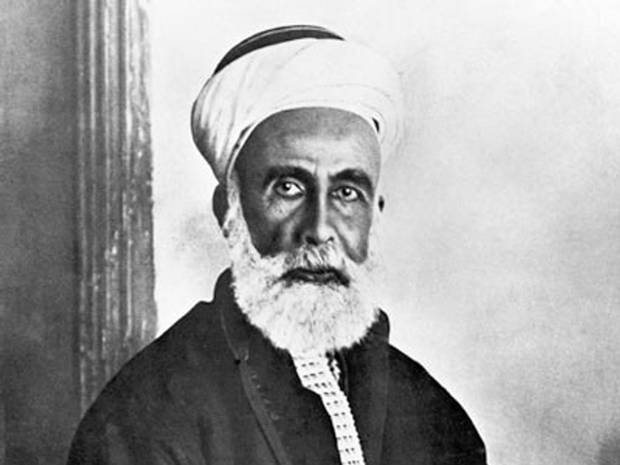
This is why George Birdwood, the first Sheriff of Bombay from 1846 to 1858 suggested that the caliphate be transferred to this Sharif Hussein of Mecca, so the caliphate could remain under British control and used for British interests. In an article in the Times on 12 June 1877, he stated that “it is a great pity that we do not get the Muhammedans of India to look up to the Sharif of Mecca as the Caliph of Islam for he lives by the side of our road to India and would be as completely in our power as the Suez Canal”.[5]
In 1916 with the aid of the British, Sharif Hussein successfully led an Arab revolt against the Ottomans and established an independent kingdom in Hejaz and the holy cities of Mecca and Medina, called the Kingdom of Hejaz.

Background to Rashid Rida’s book
It’s against this backdrop of British interference in the caliphate, and its open support to the Kingdom of Hejaz and its king, Sharif Hussein, that led Rashid Rida to lay out in his book ‘The Caliphate or Supreme Imamate’, ten obstacles in appointing Sharif Hussein as the Caliph, and transferring the Kingdom of Hejaz in to a caliphate as some had suggested.
Sheikh Rida did not want a caliphate to be established that would ultimately become a tool in the hands of the foreign occupiers. He wanted a caliphate that revived the tradition of shura based rule, and not autocratic hereditary rule. This placed him at odds with the Ottoman regime, but also with the French and British empires with Mark Sykes[6] describing him as a fanatical Muslim.[7]
There are many lessons we can take from Rashid Rida’s points, and apply them to today when we are attempting a similar process in reviving the long-lost caliphate.
The central lesson here is related to sovereignty, and removing the influence of western powers and institutions, who subjugate the Muslim lands to their will. Syria is the latest example of this.
Without full sovereignty over the territory, law and policies of the state, there can be no Dar ul-Islam, and hence no Islamic government.
10 Obstacles to Making the Hijaz the Seat of the Caliphate
This is an excerpt from Rashid Rida’s book ‘The Caliphate or Supreme Imamate’.
“…we can appreciate that the Arabs’ lands—and more so the Arabian Peninsula, and even more so the Hijaz—are the Islamic lands most worthy of being home to the Islamic caliphate. This becomes more apparent when one considers the religious reform that it is the caliph’s duty to undertake in this era. But today there are obstacles blocking the possibility of the genuine caliphate that Muslims desire being located in the Hijaz. Given its present condition, people in other Islamic lands would not agree to adhere to it. What, then, if it were desired that it govern all of the Arabs’ lands, or manage the other Islamic lands’ affairs? What if it were desired that its government become an archetype of the most perfect government, without which there can be no hope of reforming the human condition? Here, we discuss the points that are most important when it comes to these obstacles and present conditions in the Hijaz:
(1) In order to maintain his power the king, who has imposed his rule on the Hijaz in this era, depends on a non-Islamic state[8]. This state has subjugated many Muslim peoples, and it wishes to subjugate others, especially the Arabs. He has entangled himself with it through treaties and ties by which he has recognized that the Arab community stands in relation to that non-Islamic power as does a minor in relation to a guardian, and that it is responsible for the community’s development and for securing it internally and externally. This even means that this non-Islamic state is entitled to enter his lands with military force to curb internal disorder. Anyone who wishes may consult what we published on this subject in Al-Manar, Volume 23, pages 612–24.

(2) This king has given himself the title “King of the Arabs.” He wants to be recognized as the Arab community’s greatest leader. He wants to be regarded as the representative of all of the independent Arab governments. That would mean that they are also debased, bound, and burdened by those treaties, and stripped of their independence. However, all the Arab governments neighboring him are in all respects stronger and more righteous than his government, and they have not bound themselves by treaties that deprive them of their independence.
(3) He assented to making his two sons[9] who serve as leaders in certain Arab lands that are under the domination of the aforementioned foreign state, subservient to that state’s Colonial Office. In that respect they resemble many national leaders who serve in that state’s colonies. By doing that, he and his sons became the first to help a non-Muslim, foreign state in colonizing Arab lands.

(4) His government is autocratic and dictatorial. It lacks any restraint. He does and he rules as he wishes. We know this through things that we hear of and read about in its newspaper Al-Qiblah: reports of seizures of property, official penalties, and other things that, so far as we are aware, have no basis under the Islamic revealed law. As for positive law [al-qawanin al-wad‘iyyah], he forbids it and declares those who act in accordance with it to be unbelievers!!
(5) This government opposes all of the sciences that would support religious and this-worldly reform. In addition to its hatred of the modern sciences and arts, even geography, it bans many works on Islamic law from the Hijaz. These include works by Islam’s two great reformist shaykhs, Ibn Taymiyyah and Ibn Qayyim, as well as works by others.
(6) It has been established through various lines of evidence that the members of this dynasty covet the caliphate, the emirate, and power, even if that should be under the patronage of a foreign authority rather than an Islamic one. As stated above, one who seeks the role of governance should not be appointed to it.
(7) The members of this dynasty lack the most important qualifications that are stipulated for the caliphate, especially knowledge of Islamic law. We see evidence of this in what we read in the king’s official publications and his government’s statements: errors of language; qur’anic verses that have been distorted; hadiths whose ascription to the Messenger, God’s prayer and peace be upon him, is fraudulent; and interpretations of texts that are contrary to what the wording actually conveys and what has been the object of the consensus of both exegetes and nonexegetes. Further, we see these errors continuing rather than being corrected. This indicates that not a single one of the Islamic ulama in all of the Hijaz has dared to correct a mistake—relating to a qur’anic verse, a hadith, or a rule of Islamic law—published in their newspaper, which is a symbol of ignorance. We will refrain from mentioning what we have come to know through our own experience, and from trustworthy people’s reports of their experiences.
(8) Most of the Islamic world loathes the current government of the Hijaz. We see it defamed in the papers in Egypt, Tunisia, Algeria, Java, Turkey, India, and elsewhere. Yet many of these papers’ editors and writers do not know everything that we know about its bad condition.
(9) Those who seek to revive the institution of the caliphate in Islam aim to realize three goals by doing that.
1- The establishment of a consultative Islamic government, one that accords with what God prescribed so that it becomes a proof for all of humankind, as mentioned previously.
2- The resuscitation of Islam’s civilization through developing the sciences, arts, and industries that enable strength and prosperity. It is a civilization that combines the material blessings of worldly life with religious and spiritual virtues, and loosens the knots of all social problems.
3- Religious reform through eliminating superstitions and innovations, reviving the prophetic example, uniting the people, and fortifying the ties of Islamic brotherhood and the other human virtues. The government of the Hijaz lacks the will to pursue these high goals. There is no hope that its ruling dynasty would consent to the theoretical and practical means upon which this great reform depends.
(10) The Hijaz lacks the power and prosperity upon which the caliphate’s establishment depends. It lacks the strength to stand independently. How, then, could it carry the burdens of this great office? None of the Muslim Arabs in the lands neighboring it would agree to adhere to its weak and autocratic government. How, then, would other Muslims assent to that?”[10]
What is Dar ul-Islam?
Dar ul-Islam is defined as the land which is governed by the laws of Islam, and whose security (amaan أَمان) and protection (man’ah مَنْعَة) is maintained by Muslims, even if the majority of its inhabitants are non-Muslims, as we saw during the Ottoman rule of Eastern Europe. This means internally the government must be implementing Islam, and have full control of its territories i.e. not occupied by foreign forces. Externally, the state should have unrestricted power – within its capability and the international situation – to pursue foreign policy objectives in line with Islam, such as the protection of Muslims and the promotion of Islamic interests.
Muhammad Said Al-Bouti says, “The opinion of the Imams of the four schools of thought agree that a land (dar) becomes a land of Islam (dar al-Islam) if it enters under the protection (man’ah) and sovereignty (siyadah) of the Muslims, such that they are able to show their Islam and resist their enemies. If this characteristic is achieved in it due to conquest by force or peace or something similar, it becomes dar al-Islam, and its rulings apply to it, such as the obligation to defend it, fight for it, and migrate to it.
This identity cannot be separated from it, even if the enemies take control of it after that, so it is up to the Muslims to exert all the effort they possess to defend it and expel the enemies from it, and establish the rulings of Allah in it.”[11]
How to claw back sovereignty in the Muslim world
The only way to ensure sovereignty is with the sharia where the lands become independent of the foreign powers, and the basic law of the state is based on the Islamic sharia sources, is by combining sovereignty and authority together as Imam Ghazali said, “religion and authority are twins” (الدين والسلطان توأمان ad-deen was-sultan tawaman).[12] This is because you cannot have one without the other. Sovereignty needs the people in authority to enforce it, and those people outside government to ensure its enforced.
Authority must be with the people to ensure the sharia remains supreme and that the government, laws and values of society are Islamic, which is the reason for the existence of an Islamic State in the first place. Rashid Rida says, “Nor should people allow power to become like a ball that tyrants can kick back and forth between themselves, and receive from each other. Those living in nations who have been wronged allowed that to happen, assenting to that because they were ignorant of the power that was latent within themselves. They did not realize that the power wielded by their monarchs and emirs was actually their own.“[13]
If this was achieved then the dominion of the Islamic State will spread far and wide as was narrated from Thawban that the Messenger of Allah ﷺ said:
زُوِيَتْ لِيَ الأَرْضُ حَتَّى رَأَيْتُ مَشَارِقَهَا وَمَغَارِبَهَا وَأُعْطِيتُ الْكَنْزَيْنِ الأَصْفَرَ – أَوِ الأَحْمَرَ – وَالأَبْيَضَ – يَعْنِي الذَّهَبَ وَالْفِضَّةَ – وَقِيلَ لِي إِنَّ مُلْكَكَ إِلَى حَيْثُ زُوِيَ لَكَ
“The earth was brought together for me so that I could see the east and the west, and I was given two treasures, the yellow (or the red) and the white – meaning gold and silver. And it was said to me: ‘Your dominion (mulk) will extend as far as has been shown to you.’”[14]
5 concepts to be propagated on the caliphate
We conclude with the words of Rashid Rida concerning what should be propagated to the Muslim masses and in particular the Ahl Hali wal aqd (lit. those who loose and bind) who the ummah look up to as her representatives, in order to change world opinion on the caliphate and bring the authority back in to the ummah’s hands.
He says, “The first priority for the party of reform (حزب الإصلاح Hizb Al-Islah) that we have conceived is to direct all of its energy and resolve toward delineating the most ideal form of the Islamic caliphate and its government. That form entirely befits the current era, and it is by enabling the creation of such a government that this era is distinguished over others. Then, this party should attempt to convince people of influence who reside in the Islamic lands where there is hope that such a government could be established of the following points:
- how it would safeguard public welfare;
- how it would enable the provision of services and prosperity;
- how it is superior to every other type of government in the world;
- how its establishment is feasible;
- how the doubts of Europeanized Muslims and those who have given up hope are unfounded. All of this is straightforward, as we ourselves have found by experience.”[15]
Notes
[1] In the 10th century, during the later part of the Abbasid caliphate, the caliph lost most of his executive powers to Amirs and Sultans who paid nominal homage to the caliph in Baghdad. This splitting of the sultanate and the caliphate i.e. the splitting away of the executive authority from the caliph continued in this way until 1517CE when the Ottoman Sultan Selim I united the institutions of sultanate and the caliphate once again. In 1922 the Sultanate was officially abolished, handing executive power to the Turkish Parliament. Two years later on 3rd March 1924, the office of the Caliphate was also abolished.
[2] Muhammad Rashid Rida, ‘The Caliphate or Supreme Imamate,’ first published 1922-1923, translation of Al-Khilafa aw al-Imama al-‘Uzma, translated by Simon A Wood, Yale University Press, 2024, p.133; original Arabic https://shamela.ws/book/9682
[3] Abu Dawud 4297, http://www.sunnah.com/abudawud/39/7
[4] Buzpınar, Şit Tufan,. “Background of an Assassination in the Hijaz: Sharif Husayn, the Afghans, and the British.” Turkish Journal of History, vol. 0, no. 75, 2021, pp. 223-249. [Database Container], https://doi.org/10.26650/iutd.976176
[5] Itzchak Weismann & Fruma Zachs, ‘Ottoman Reform and Muslim Regeneration: Studies in Honour of Butrus Abu-Manneh,’ I.B. Tauris, 2005 p.27; George Birdwood, The Times, 12 June 1877
[6] Architect of the Sykes-Picot agreement which carved up the Middle East between the French and the British, and ultimately led to the creation of the Zionist entity of Israel.
[7] Mahmoud Osman Haddad, “Arab Religious Nationalism in the Colonial Era: Rereading Rashid Rida’s Ideas on the Caliphate,” Journal of the American Oriental Society 117.2 (1997): 268.
[8] Britain
[9] Faisal in Iraq and Abdullah in Transjordan
[10] Rashid Rida, Op.cit., p.133
[11] Muhammad Said Al-Bouti, كتاب هكذا فلندع إلى الإسلام ‘This is how we call to Islam book,’ https://shamela.ws/book/1751/21
[12] Al-Ghazali’s Moderation in Belief: Al-Iqtiṣād fi al-I‘tiqād, translated by A M Yaqub, University of Chicago Press, Chicago and London, 2013, p.229
[13] Rashid Rida, Op.cit., p.91
[14] Sunan Ibn Majah 3952, https://sunnah.com/ibnmajah:3952
[15] Rashid Rida, Op.cit., p.127
 Islamic Civilization