Author: islamciv

London Bridge attack: Muslims are not treacherous and they fulfil their covenants

After the horrific attacks in Manchester and now London Bridge its sad to see that our noble ummah with its high values being maligned as people who are treacherous and cannot be trusted to fulfil their trusts and oaths. Throughout Islamic history the Caliphate fulfilled its covenants and treaties during peace and war, and the Islamic army was known for its exemplary conduct. Islam could not have spread so quickly if those carrying Islam were treacherous and committed atrocities.

INFOGRAPHIC: Administrative Divisions of the Caliphate

The vast territories which the Islamic State rules over are divided up in to administrative units to ease in the task of ruling. These units were formalised during the Abbasid period but their origins are from the time of the Prophet ﷺ and the Rightly Guided Caliphs. The top level division is The Province (Wiliyah) which is headed by a Governor (Wali) or Emir. The Province is divided in to Districts (I’mala) which are headed by a Mayor (‘Amil) or Hakim. The District is sub-divided in to Cities (Qasabah) headed by a Chief Executive (Mudeer). The City is further divided in to Neighbourhoods or Quarters (Hayy) each headed by a Director (Mudeer). Traditionally a Neighbourhood consisted of 40 houses. The Ottomans used different titles for each of the administrative levels and these are shown below.

Media in the Caliphate

The media has always played a pivotal role in accounting governments and shaping public opinion. Its form may have evolved over the ages but its impact is still feared by the ruling class which the Qur’an refers to as the mala (ملا). All the messengers came in to conflict with this group starting from the first of the messengers Nuh (as). Allah ta’ala says, لَقَدْ أَرْسَلْنَا نُوحًا إِلَىٰ قَوْمِهِۦ فَقَالَ يَـٰقَوْمِ ٱعْبُدُوا۟ ٱللَّهَ مَا لَكُم مِّنْ إِلَـٰهٍ غَيْرُهُۥٓ إِنِّىٓ أَخَافُ عَلَيْكُمْ عَذَابَ يَوْمٍ عَظِيمٍۢ قَالَ ٱلْمَلَأُ مِن قَوْمِهِۦٓ إِنَّا لَنَرَىٰكَ فِى ضَلَـٰلٍۢ مُّبِينٍۢ “Indeed, We sent Noah to his people. He said, “O my people! Worship Allah—you have no other god except Him. I truly fear for you the torment of a tremendous Day.” But the chiefs of his people (mala) said, “We surely see that you are clearly misguided.”[1] When the Prophet Muhammad ﷺ began his mission in Makkah it was this ruling class that immediately clamped down on him and the early Muslims to prevent the spread of the message. Tyrant governments across …

Muslims are not treacherous and they fulfil their covenants

Allah (Most High) says: يا أَيُّهَا الَّذينَ آمَنوا أَوفوا بِالعُقودِ “O you who believe! Fulfil your covenants.” (Al-Maaida, 5:2) The alif lam on the word Al-Uqud is alif lam of jinsiyah (genus) which means it includes all types of contracts and covenants. According to Imam Al Raghib Al Isfahani, the Uqud (covenants) referred to in this verse, ‘are of three kinds: 1- the covenants between Allah and man, i.e. man’s obligations towards Allah, 2- between man and his own soul, 3- and between the individual and his fellow men So this command includes ruling contracts such as citizenship and treaties. Throughout Islamic history the Caliphate fulfilled its covenants and treaties during peace and war, and the Islamic army was known for its exemplary conduct. Islam could not have spread so quickly if those carrying Islam were treacherous and committed atrocities.

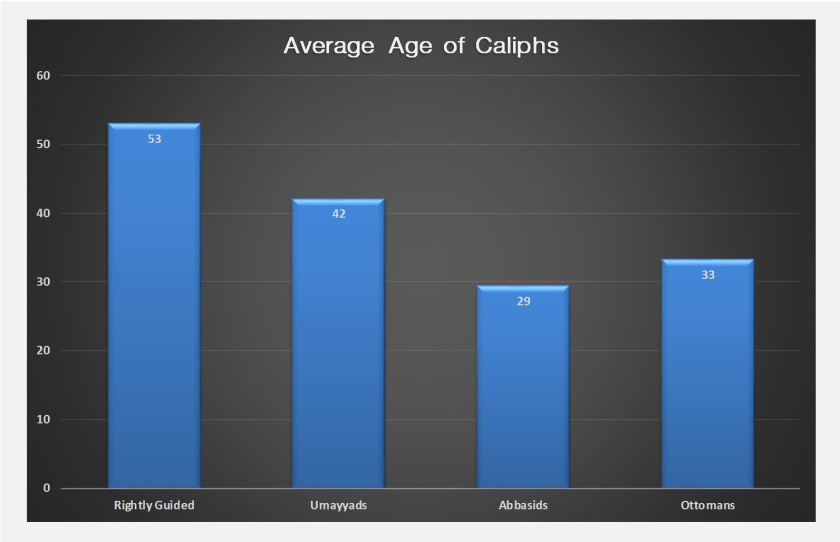
INFOGRAPHIC: Ages of the Caliphs

During the Rightly Guided Caliphate all the Caliphs were selected freely by those who represented the opinion of the Muslims. They were given the Bay’ah (Pledge of Allegiance) on the basis of meritocracy and each of them had huge political experience. Abu Bakr, Umar, Uthman and Ali had all held the position of Wazir (Delegated Assistant) which is the highest government position after the Caliph. When we look to their ages we see they were all elder statesman (excluding Hasan who became Caliph during the civil war).

INFOGRAPHIC: Abbasid Khilafah Timeline

A Muslim woman was captured by the Romans and held in a place called‘Amuriyyah. Not content with only capturing her they tried to dishonour her as well. Frightened and alone she called out the name of the Khaleefah, “Ya Mu’tasim”. A man witnessed this incident and rushed to the Khaleefah informing him of what had happened. When he heard the plight of this woman Mu’tasim responded bravely, “Labbaik (I am here at your call).” He prepared a large army and set off for battle to rescue the woman. Mu’tasim’s army conquered the enemy and entered ‘Amuriyyah. After destroying the enemy stronghold, they came to the woman and freed her. (Ibn Athir, Kamil)