Author: islamciv

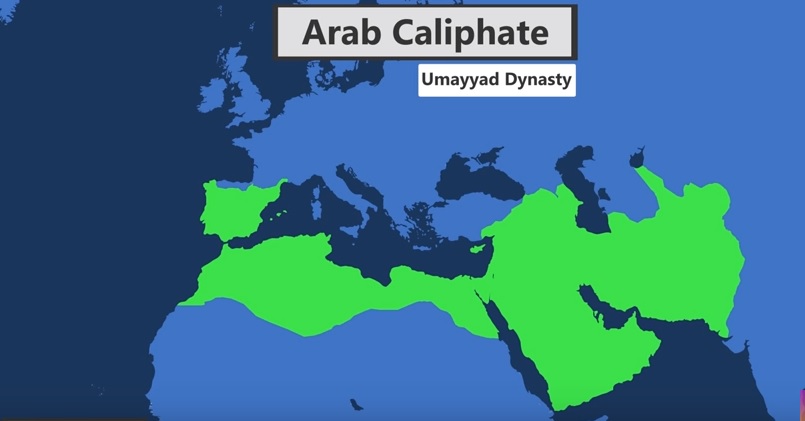
What If the Arabian Empire Reunited Today?

This video was produced by RealLifeLore. The Arabian Empire once extended from the Atlantic Ocean to the border of India. It was the largest empire that the world had ever seen up to that point, so what would things look like if this empire was suddenly re-created today? Watch this video and satisfy your curiosity!

Tafseer of Sura Al-Fatiha by Dr Fadhel al-Samarrai

Download the book Tafseer Surah Fatiha This book contains a draft translation of Dr Fadhel al Samarrai’s tafseer of the opening chapter of the Qur’an and mother of the book, Surah Al-Fatiha. Dr Fadhel is a well-known Arabic linguist whose works give an insight in to the miraculous nature of Qur’anic Arabic, with the only conclusion being that this Qur’an must have come from an unlimited, all-powerful creator, Allah (Most High).

Genocide of Rohingya Muslims: “Our Lord, take us out of this town whose inhabitants are wrongdoers”

وَمَا لَكُمْ لَا تُقَاتِلُونَ فِي سَبِيلِ اللَّهِ وَالْمُسْتَضْعَفِينَ مِنَ الرِّجَالِ وَالنِّسَاءِ وَالْوِلْدَانِ الَّذِينَ يَقُولُونَ رَبَّنَا أَخْرِجْنَا مِنْ هَذِهِ الْقَرْيَةِ الظَّالِمِ أَهْلُهَا وَاجْعَلْ لَنَا مِنْ لَدُنْكَ وَلِيًّا وَاجْعَلْ لَنَا مِنْ لَدُنْكَ نَصِيرًا “What reason could you have for not fighting in the Way of Allah – for those men, women and children who are oppressed and say, ‘Our Lord, take us out of this town whose inhabitants are wrongdoers! Give us a protector from You! Give us a helper from You!’?” (An-Nisaa, 4:75)

Hadith Classifications

This is an extract from the book Al-Waadih Fee Usool ul-Fiqh by Muhammad Hussein Abdullah available to purchase from Amazon. There are three categories of hadith in respect to their As-Sihhah (soundness) and Ad-Da’f (weakness). These are Saheeh, Hasan and Da’eef. In respect to the Sanad (chain) there are also three categories. These are Al-Mutawaatir, Al-Mash’hoor and Khabar Al-Aahaad.

Fabricated Hadith: “He who hurts a dhimmi hurts me”

The source of this mawdu (fabricated) narration is the book, ‘The Lawful and the Prohibited in Islam’ by Sheikh Yusuf Qaradawi, p.336 which states: The Prophet ﷺ said, “He who hurts a dhimmi hurts me, and he who hurts me annoys Allah.” Narrated by At-Tabarani in Al-Awsat on good authority. However, if we refer to Tabarani’s Al-Mu’jam Al-Awsat we find a similar narration numbered 3607, but instead of ‘dhimmi’ it says ‘Muslim’.

London Bridge attack: Muslims are not treacherous and they fulfil their covenants

After the horrific attacks in Manchester and now London Bridge its sad to see that our noble ummah with its high values being maligned as people who are treacherous and cannot be trusted to fulfil their trusts and oaths. Throughout Islamic history the Caliphate fulfilled its covenants and treaties during peace and war, and the Islamic army was known for its exemplary conduct. Islam could not have spread so quickly if those carrying Islam were treacherous and committed atrocities.

INFOGRAPHIC: Administrative Divisions of the Caliphate

The vast territories which the Islamic State rules over are divided up in to administrative units to ease in the task of ruling. These units were formalised during the Abbasid period but their origins are from the time of the Prophet ﷺ and the Rightly Guided Caliphs. The top level division is The Province (Wiliyah) which is headed by a Governor (Wali) or Emir. The Province is divided in to Districts (I’mala) which are headed by a Mayor (‘Amil) or Hakim. The District is sub-divided in to Cities (Qasabah) headed by a Chief Executive (Mudeer). The City is further divided in to Neighbourhoods or Quarters (Hayy) each headed by a Director (Mudeer). Traditionally a Neighbourhood consisted of 40 houses. The Ottomans used different titles for each of the administrative levels and these are shown below.