All posts filed under: History

Islamic History: Battle of the Masts

The early Islamic conquests have always perplexed western historians. How was it possible for the desert Arabs, who were viewed by the Persian and Byzantine empires as insignificant, and posing no threat to them, to rise up and within a few years destroy their longstanding empires? George Hourani, a maritime historian who has researched the early Muslim navy discusses “the problem of the earliest Arab ventures on the Mediterranean: how could they be successfully carried out in such a surprisingly short time? The decisive event is the battle of Dhaat al-Sawaari (Battle of the Masts). To fight a naval battle, many resources were required: naval bases, including docks, shipbuilding yards, building materials and skilled shipbuilders; [and] warships with their complements of trained sailors, marines and officers.”[1] The power of Islam is derived from its aqeeda (belief) which forms the intellectual basis upon which all thoughts, actions and systems are based. This aqeeda motivated the early and later Muslims to accomplish astonishing feats, especially with regards to the Islamic conquests. When studying these events however, many focus solely on the strength …

Islamic History: Church of Holy Sepulchre

The Church of Holy Sepulchre is in the Christian quarter of Jerusalem and is one of the holiest sites in Christianity. Dating from the 4th century it predates the Islamic opening of Jerusalem under Umar ibn Al-Khattab. Justin Welby, the Archbishop of Canterbury claimed in 2018 in the Middle East ‘Christians face daily the threat of violence, murder, intimidation, prejudice and poverty…Across the region Christian communities that were the foundation of the universal Church now face the threat of imminent extinction.’[1] While some try to frame this as Muslims oppressing Christians, or blame the rise of Islamic sentiments in the region, nothing could be further from the truth. Muslims even more than Christians face the ‘daily the threat of violence, murder, intimidation, prejudice and poverty’ in the Middle East due to tyrannical rulers who do not implement Islam. This is also the case outside the Middle East in places such as Burma, Palestine and China. The only reason Christians and Churches still exist in the Middle East is due to Islamic rule – the Khilafah – which protected …

Islamic History: Hejaz railway

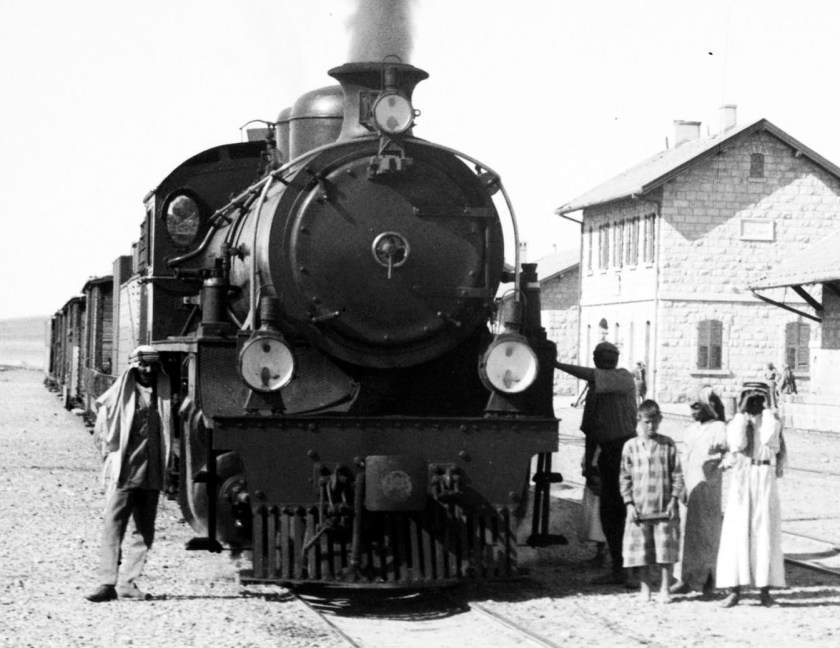
In 1908 a new railway opened from Damascus to Madinah for use by the pilgrims travelling for hajj. Faced with growing disunity across the provinces of the Ottoman Khilafah, Sultan Abdul-Hamid II devised an ambitious plan to awaken the feelings of Islamic unity among the Ummah and strengthen the Khilafah’s authority over the Arab provinces by establishing a new railway for the pilgrims. The project was started in 1900 and finally reached Madinah in 1908 when the railroad officially opened. Before the Hejaz railway, the journey between Damascus and Madinah usually took two months by camel caravan and was full of hardships. Since the Islamic calendar is a lunar calendar, which moves each year, the hajj changes from season to season. Sometimes it meant travelling through the winter, enduring freezing temperatures or torrential rains. At the height of summer, it meant crossing scorching hot deserts. Towns and settlements were sparse and there were hostile tribes along the way. With the introduction of the railway the journey time for pilgrims was cut from two months to …

Islamic History: Letter of Gratitude from the Irish to the Ottomans

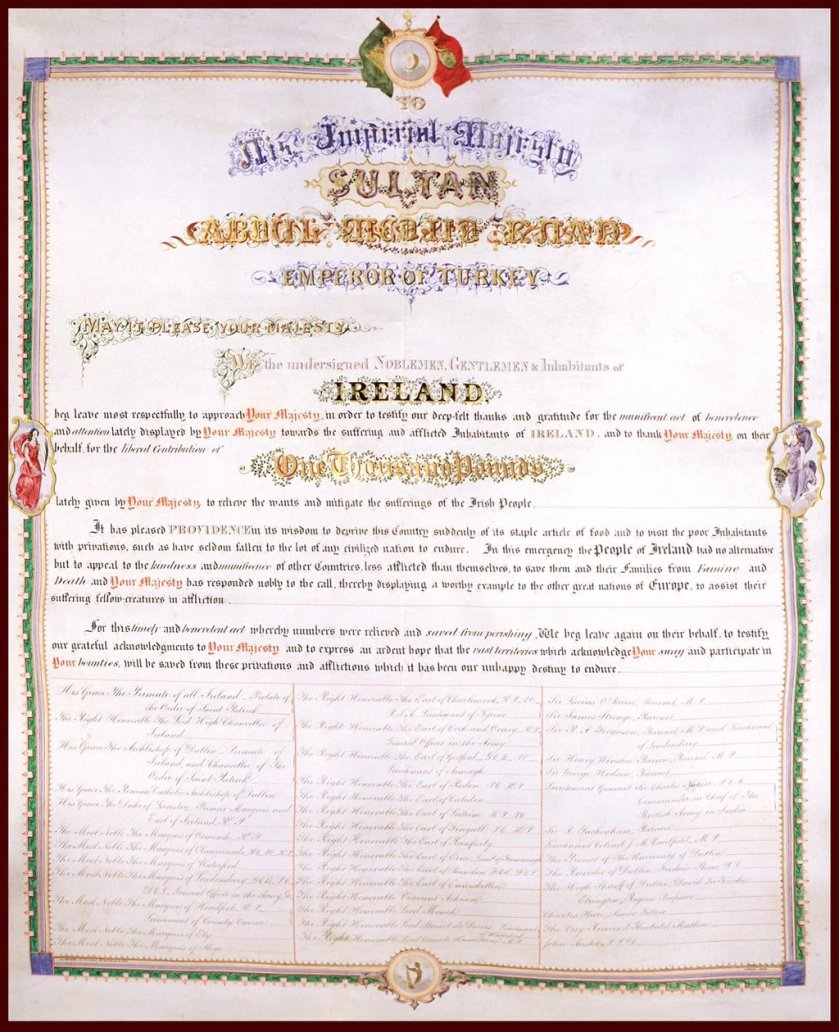
In 1845, the onset of the Great Irish Famine resulted in over a million deaths. The Ottoman Sultan at the time, Khaleefah Abdul-Mejid I declared his intention to send 10,000 sterling to Irish farmers in aid but Queen Victoria requested that the Sultan send only 1,000 sterling, because she had sent only 2,000 sterling herself. The Sultan sent the 1,000 sterling but also secretly sent 3 ships full of food. The English courts tried to block the ships, but the food arrived in Drogheda harbor and was left there by Ottoman Sailors.[1] Due to this, the Irish people wrote a letter of gratitude to the Ottoman Sultan. “As the Irish nobles and people, we, the undersigned, present our dearest gratitude to the generous philanthropy and interest shown to the suffering and grieving people of Ireland by His Majesty [Sultan Abdülmecid], and we would like to thank him for the generous donation of 1,000 pounds sent in order to meet the needs of the people of Ireland and relieve their suffering.”[2] Reverend Henry Christmas wrote in 1853 …

Islamic History: Ahdnama

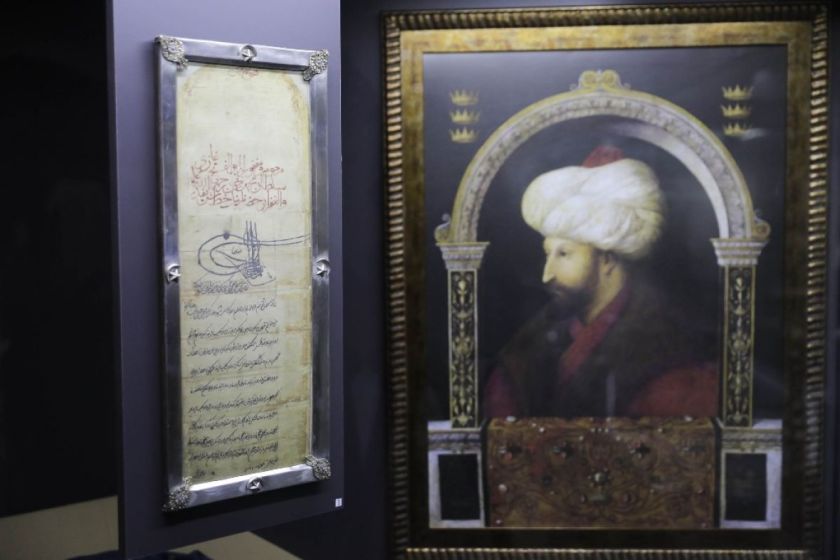
The Ahdnama is a treaty between Sultan Mehmet II (Al-Fatih) and the Bosnian Franciscan Christians of the Catholic Church in 1463. The Ahdnama is a clear and definitive historical record of the rights Islam gave to Christians living under its rule. The original Ahdnama is still kept to this day in the Franciscan Monastery in the vicinity of Fojnica, Bosnia-Hercegovina. Sultan Mehmet al-Fatih’s great-great grandfather was Sultan Murad I who began the conquests to open up the Balkans to Islam. He is famous for defeating the Serbs at Kosovo field in 1389 and establishing the authority of Islam over Kosovo. Allah blessed Sultan Murad I with martyrdom (shahadah) in this battle. Sultan Mehmet’s father Murad II fought the second battle of Kosovo and began the conquests to open Bosnia to Islam. Following in the footsteps of his father and great-great grandfather, Sultan Mehmet completed their good work and opened up the entire region to Islam. Islam, as the final message for mankind established clear and detailed rules relating to the rights of all non-Muslims living under its rule. The Messenger of Allah ﷺ said: “He …

Islamic History: Timbuktu Manuscripts

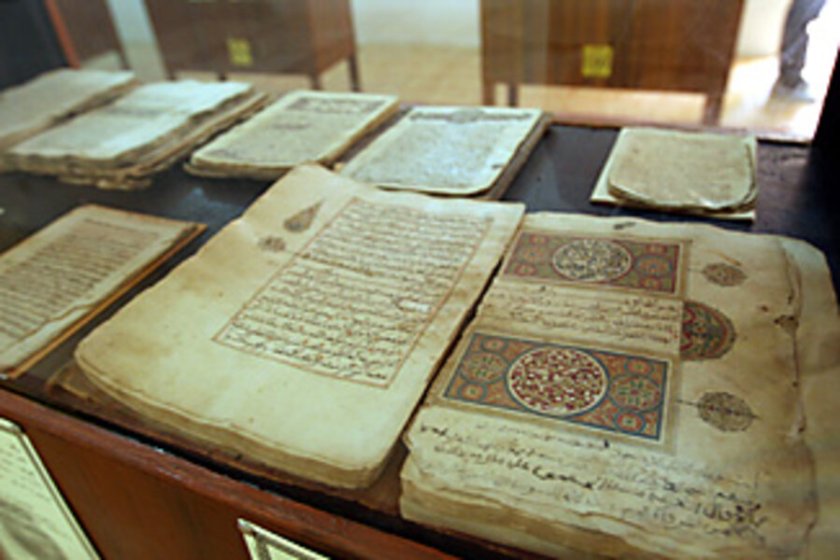
For centuries private households in Timbuktu have been preserving manuscripts detailing art, medicine, philosophy, and science, as well as copies of the Qur’an from the 13th century. These Timbuktu Manuscripts as they are officially known are said to number 700,000 and are the subject of many research projects by western universities and the UN.[1] Africa under Islam Timbuktu is in Mali. Today Mali is one of the poorest countries in the world but under Islam the Mali Sultanate was one of the richest countries on earth. Its wealth came from gold, copper and salt mines and the 14th century ruler of Mali was Mansa Musa who was one of the wealthiest people to ever live. When he performed hajj it is reported he give away 30 tonnes (£1.3billion) of gold causing a ten year gold recession in the cities of Cairo, Madinah, and Makkah.[2] [3] Mali was also a centre of Islamic learning. In the early 1400s, ‘Abd al-Rahman al-Tamimi, travelled to Timbuktu only to realize that the level of scholarship was so high, that he would …

Islamic History: The Canon of Medicine

Ibn Sina, known as Avicenna in the West was a Persian polymath who is regarded as one of the most significant physicians, astronomers, thinkers and writers of the Islamic Golden Age, and the father of early modern medicine. His monumental work Al-Qanun fi’l-tibb (The Canon of Medicine) is an encyclopedia of medicine in five volumes which he completed in 1025CE, and was still in use throughout 18th century in Europe, 700 years later. Islam and science Islam never had the same conflict with science that Christianity did. This is because Islam clearly defines the role of the mind, and the areas where free thinking is permitted – rational sciences – and the areas where it was restricted to the text – the religious sciences and legislation. Ibn Khaldun says, “It should be known that the sciences with which people concern themselves in cities and which they acquire and pass on through instruction, are of two kinds: one that is natural to man and to which he is guided by his own ability to think, and a traditional kind that …

Islamic History: Mosque–Cathedral of Córdoba

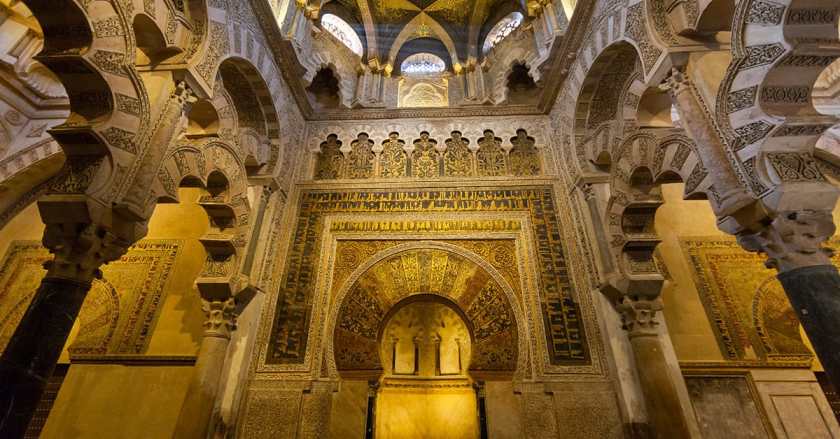
If you paid a visit to the Cathedral of Córdoba in Spain today you would notice a number of features which are out of place in a church. Most notably there is a mihrab covered in Qur’anic verses which points to the Cathedral’s origins as a mosque. Construction of the mosque began in 785 (169 AH) and finished in 786 (170 AH). It was commissioned by Abd al-Rahman I who was the first Emir of the Emirate of Córdoba. In 711CE / 92H the Umayyad general Tariq bin Ziyad crossed the Mediterranean from the province of Maghreb (modern day Morocco) and landed his army on a mountain in the Iberian Peninsula. This mountain became known as Tariq’s Mountain (Jabal Tariq) which is anglicised as Gibraltar. This was the beginning of the Islamic conquests in to modern-day Spain and which established Islamic rule over the region for nearly 800 years.[1] The Problem of Disunity After the Abbasids defeated the Umayyads in 750CE, Abd al-Rahman I (Abd al-Rahman ibn Mu’awiya ibn Hisham ibn Abd al-Malik) managed to escape to Al-Andalus …

Islamic History: The First Gold Dinars

The Islamic State has a bi-metallic currency based on gold and silver. This was first established by the Prophet Muhammad ﷺ in Madinah who made the state’s currency as the gold dinar and the silver dirham. The state had no ability at the time to mint its own currency so used the Roman Dinar and Persian Dirham. This continued throughout the Umayyad period until the Khaleefah Abdul-Malik ibn Marwan minted the first distinct Islamic currency in 74H.[1] A point to note is that Tabari puts the date at 76H[2] and other historians say 75H, but after the ‘standing caliph’ coin emerged with the date 74H stamped on it we now know for definite when the minting started. Abdul-Malik was the first to mint distinct gold dinars and silver dirhams based on the weight that the Prophet ﷺ had established. It was narrated from Ibn ‘Umar who said, ‘The Messenger of Allah ﷺ said: “The weight is the weight of the people of Makkah, and the measure is the measure of the people of Madinah.”’[3] This shows that …

Islamic History: Early Qur’an fragments

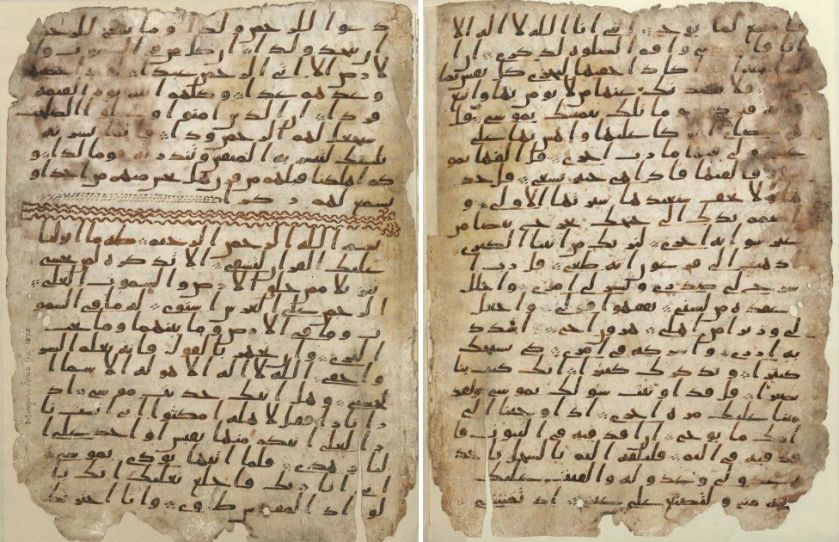
These are some of the oldest written manuscripts we have of the Holy Qur’an. They were discovered in 2015 not in Makkah or Madinah but in Birmingham University. How did they make their way to Birmingham? After defeating the Ottomans in WW1, Britain occupied Iraq and then began ‘collecting’ its treasures as it did in Egypt and India. This Qur’an manuscript is part of the Mingana Collection of more than 3,000 Middle Eastern documents gathered in the 1920s by Alphonse Mingana, a Chaldean priest born near Mosul in modern-day Iraq. He was sponsored to take ‘collecting trips’ to the Middle East by Edward Cadbury, who was part of the chocolate-making dynasty.[1] Radiocarbon dating found the Qur’an manuscript to be at least 1,370 years old, making it among the earliest in existence. Professor David Thomas of Oxford University says that some of the passages of the Qur’an were written down on parchment, stone, palm leaves and the shoulder blades of camels – and a final version, collected in book form, was completed in about 650. He …