All posts filed under: Featured

Islamic History: Timbuktu Manuscripts

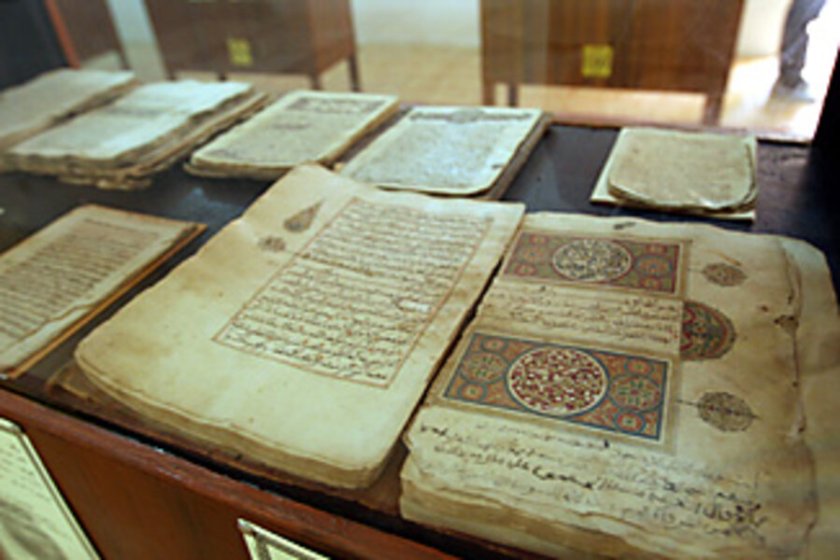
For centuries private households in Timbuktu have been preserving manuscripts detailing art, medicine, philosophy, and science, as well as copies of the Qur’an from the 13th century. These Timbuktu Manuscripts as they are officially known are said to number 700,000 and are the subject of many research projects by western universities and the UN.[1] Africa under Islam Timbuktu is in Mali. Today Mali is one of the poorest countries in the world but under Islam the Mali Sultanate was one of the richest countries on earth. Its wealth came from gold, copper and salt mines and the 14th century ruler of Mali was Mansa Musa who was one of the wealthiest people to ever live. When he performed hajj it is reported he give away 30 tonnes (£1.3billion) of gold causing a ten year gold recession in the cities of Cairo, Madinah, and Makkah.[2] [3] Mali was also a centre of Islamic learning. In the early 1400s, ‘Abd al-Rahman al-Tamimi, travelled to Timbuktu only to realize that the level of scholarship was so high, that he would …

Islamic History: The Canon of Medicine

Ibn Sina, known as Avicenna in the West was a Persian polymath who is regarded as one of the most significant physicians, astronomers, thinkers and writers of the Islamic Golden Age, and the father of early modern medicine. His monumental work Al-Qanun fi’l-tibb (The Canon of Medicine) is an encyclopedia of medicine in five volumes which he completed in 1025CE, and was still in use throughout 18th century in Europe, 700 years later. Islam and science Islam never had the same conflict with science that Christianity did. This is because Islam clearly defines the role of the mind, and the areas where free thinking is permitted – rational sciences – and the areas where it was restricted to the text – the religious sciences and legislation. Ibn Khaldun says, “It should be known that the sciences with which people concern themselves in cities and which they acquire and pass on through instruction, are of two kinds: one that is natural to man and to which he is guided by his own ability to think, and a traditional kind that …

Islamic History: Mosque–Cathedral of Córdoba

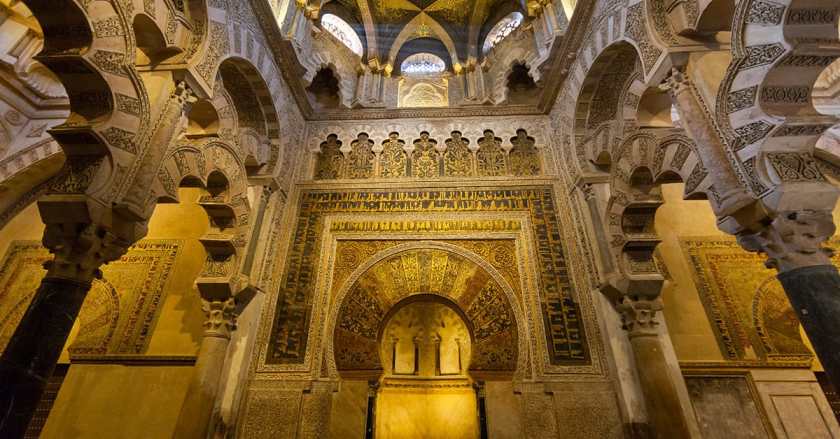
If you paid a visit to the Cathedral of Córdoba in Spain today you would notice a number of features which are out of place in a church. Most notably there is a mihrab covered in Qur’anic verses which points to the Cathedral’s origins as a mosque. Construction of the mosque began in 785 (169 AH) and finished in 786 (170 AH). It was commissioned by Abd al-Rahman I who was the first Emir of the Emirate of Córdoba. In 711CE / 92H the Umayyad general Tariq bin Ziyad crossed the Mediterranean from the province of Maghreb (modern day Morocco) and landed his army on a mountain in the Iberian Peninsula. This mountain became known as Tariq’s Mountain (Jabal Tariq) which is anglicised as Gibraltar. This was the beginning of the Islamic conquests in to modern-day Spain and which established Islamic rule over the region for nearly 800 years.[1] The Problem of Disunity After the Abbasids defeated the Umayyads in 750CE, Abd al-Rahman I (Abd al-Rahman ibn Mu’awiya ibn Hisham ibn Abd al-Malik) managed to escape to Al-Andalus …

Islamic History: The First Gold Dinars

The Islamic State has a bi-metallic currency based on gold and silver. This was first established by the Prophet Muhammad ﷺ in Madinah who made the state’s currency as the gold dinar and the silver dirham. The state had no ability at the time to mint its own currency so used the Roman Dinar and Persian Dirham. This continued throughout the Umayyad period until the Khaleefah Abdul-Malik ibn Marwan minted the first distinct Islamic currency in 74H.[1] A point to note is that Tabari puts the date at 76H[2] and other historians say 75H, but after the ‘standing caliph’ coin emerged with the date 74H stamped on it we now know for definite when the minting started. Abdul-Malik was the first to mint distinct gold dinars and silver dirhams based on the weight that the Prophet ﷺ had established. It was narrated from Ibn ‘Umar who said, ‘The Messenger of Allah ﷺ said: “The weight is the weight of the people of Makkah, and the measure is the measure of the people of Madinah.”’[3] This shows that …

Islamic History: Early Qur’an fragments

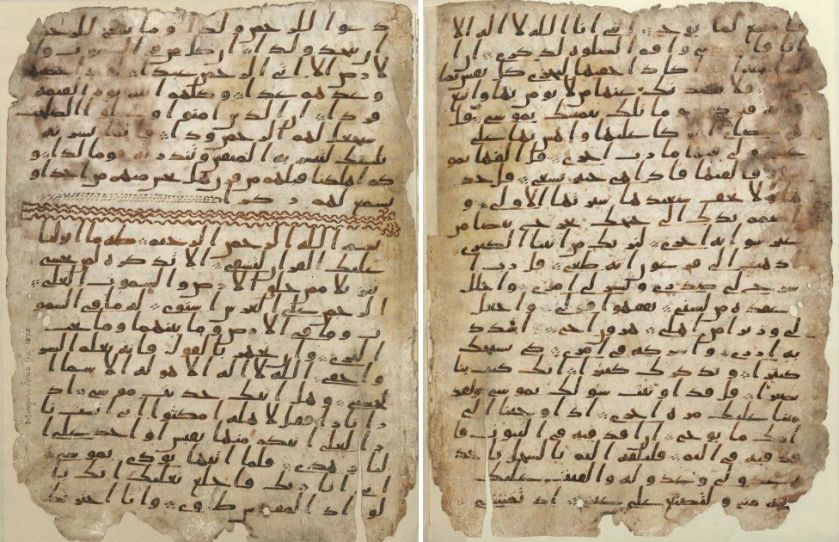
These are some of the oldest written manuscripts we have of the Holy Qur’an. They were discovered in 2015 not in Makkah or Madinah but in Birmingham University. How did they make their way to Birmingham? After defeating the Ottomans in WW1, Britain occupied Iraq and then began ‘collecting’ its treasures as it did in Egypt and India. This Qur’an manuscript is part of the Mingana Collection of more than 3,000 Middle Eastern documents gathered in the 1920s by Alphonse Mingana, a Chaldean priest born near Mosul in modern-day Iraq. He was sponsored to take ‘collecting trips’ to the Middle East by Edward Cadbury, who was part of the chocolate-making dynasty.[1] Radiocarbon dating found the Qur’an manuscript to be at least 1,370 years old, making it among the earliest in existence. Professor David Thomas of Oxford University says that some of the passages of the Qur’an were written down on parchment, stone, palm leaves and the shoulder blades of camels – and a final version, collected in book form, was completed in about 650. He …

Artefacts are a Primary Source of Islamic History

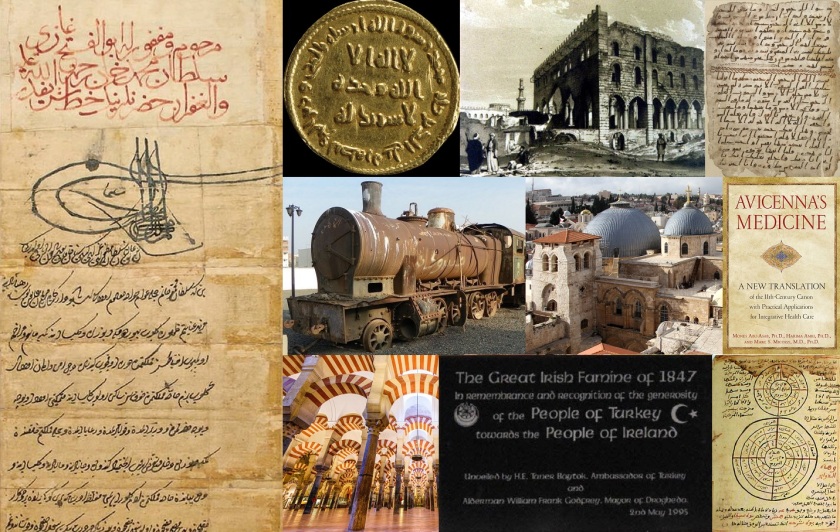
Historical objects such as artefacts, manuscripts and buildings are one of the primary sources in the study of history. Their presence or absence in a society can offer a unique insight in to the past, especially when combined with other sources such as oral narrations. They can offer a more holistic view towards society, and easily dispel the sweeping generalisations we see among those who attempt to distort Islamic history for their own nefarious purposes. If we look to alcohol consumption in Britain, we know it’s a nation of drinkers and has a history of drinking simply from observing the huge number of pubs, bars and off licenses in the country. In 2019, according to the British Beer and Pub Association (BBPA) there were 47,200 public houses in the UK. Bus stops are named after pubs, and they are the centre of social activity in some places. The Old Ferry Boat Inn in Holywell, England is over 1500 years old! Do we see the same in the ancient Muslim cities? In Istanbul as an example, despite decades of secularization …

Hilf al-Fudul is a model for international cooperation

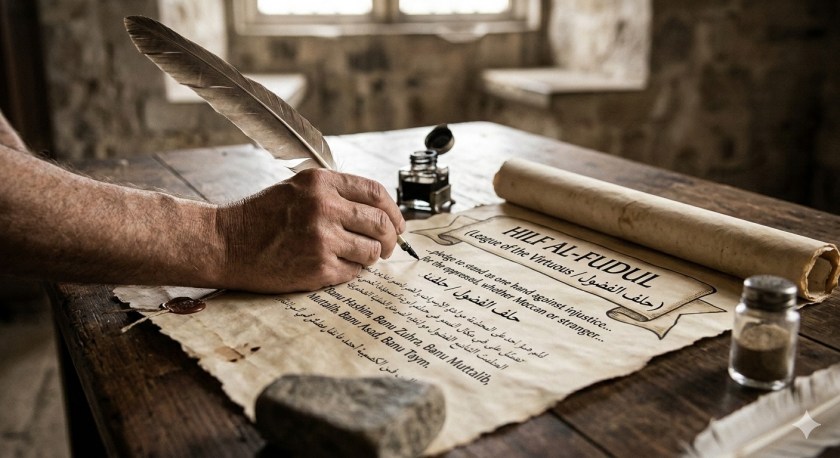
Hilf al-Fudul (حلف الفضول) which means ‘Alliance of Excellence’ was instituted by the Quraish in Makkah before the advent of Islam. Ibn Hisham describes this pact, “They (Quraish) promised and pledged that they would not find any wronged person among their people, or anyone else who entered Mecca, but that they would support him. They would stand against whoever oppressed them until the rights of the oppressed were restored.”[1] The Prophet Muhammad ﷺ consented to this multilateral treaty after he received revelation and became a prophet. This means such a treaty or alliance becomes permitted (halal) based upon a sharia daleel (legal evidence) from the sunnah. The Messenger of Allah ﷺ said, لَقَدْ شَهِدْتُ فِي دَارِ عَبْدِ اللَّهِ بْنِ جُدْعَانَ حِلْفًا مَا أُحِبُّ أَنَّ لِيَ بِهِ حُمْرَ النَّعَمِ وَلَوْ أُدْعَى بِهِ فِي الإِسْلامِ لأَجَبْتُ “I witnessed a pact of justice in the house of Abdullah ibn Jud’an that was more beloved to me than a herd of expensive red camels. If I were called to it now in the time of Islam, I would respond.”[2] In another narration, the …

The Caliphate must maintain an independent foreign policy

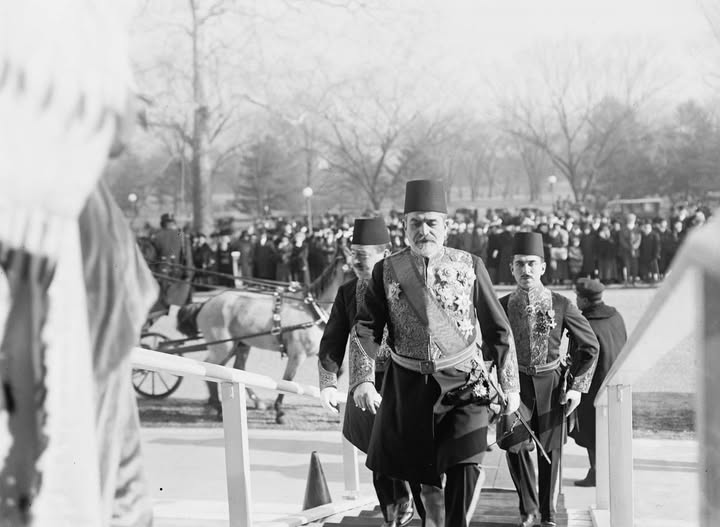
The caliphate is not an isolationist state. It will deal with other countries based upon a strict criteria set by the sharia which allows friendly relations, trade and multilateral treaties with other nations based upon cooperation and justice. This can be seen throughout Islamic history where the high values of the Islamic state gained international respect, and whose armies had a reputation for the rule of law at the height of war. The currency of the caliphate spread globally just a few decades after it was first minted by the Umayyad caliph Abdul-Malik ibn Marwan (r.692-705CE). A copy of a gold dinar minted by the Abbasid Caliph Al-Mansur (r. 745-775CE) even found its way to England during the reign of King Offa of Mercia (r. 757–796CE).[1] The sharia however, prohibits relations with those countries who are actively at war with Muslims like Israel, and limits relations with countries who have a history of occupation and interference in the Muslim world like America, Britain and France. No Occupation and foreign influence If the state is under occupation of a foreign …

Preventing Coup d’états in an Islamic State

There are three ways the caliph as Commander-in-Chief keeps full effective control of the armed forces. 1-     The bay’ah contract The bay’ah or pledge of allegiance, is a ruling contract which governs the relationship between Muslims and the Islamic state. For those Muslims living under the authority of the state, the bay’ah is their citizenship contract with its ruler – the caliph. This oath and pledge contains explicit words of loyalty and obedience to the head of state. Ubada ibn Al-Samit said: بَايَعْنَا رَسُولَ اللَّهِ صلى الله عليه وسلم عَلَى السَّمْعِ وَالطَّاعَةِ فِي الْمَنْشَطِ وَالْمَكْرَهِ‏.‏ ‏‏وَأَنْ لاَ نُنَازِعَ الأَمْرَ أَهْلَهُ، وَأَنْ نَقُومَ ـ أَوْ نَقُولَ ـ بِالْحَقِّ حَيْثُمَا كُنَّا لاَ نَخَافُ فِي اللَّهِ لَوْمَةَ لاَئِمٍ ‏‏‏  “We gave the bayah to Allah’s Messenger that we would listen and obey him both at the time when we were active and at the time when we were tired, and that we would not fight against the ruler or disobey him, and would stand firm for the truth or say the truth wherever we might be, and in the Way of Allah we would …

The Caliph is the Commander-in-Chief

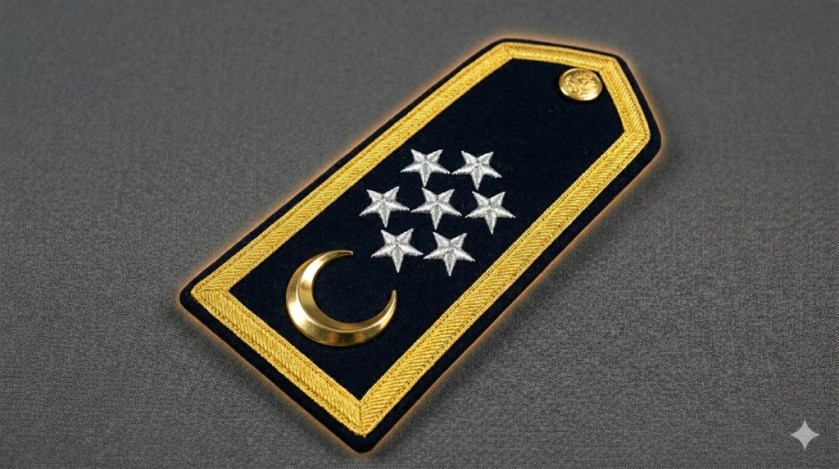
In most Muslim countries today, the head of state is a mere figurehead in terms of their powers as the overall commander of the armed forces. They may hold titles such as Supreme Commander (القائِد الأَعْلَى) or even Commander-in-Chief (القائِد العامّ), but in reality they have no real effective power over the armed forces. The Pakistan constitution states, “Without prejudice to the generality of the foregoing provision, the Supreme Command of the Armed Forces shall vest in the President.”[1] The Egyptian constitution states, “The President of the Republic is the Supreme Commander of the Armed Forces.”[2] The Turkish constitution states, “The Office of Commander-in-Chief is inseparable from the spiritual existence of the Grand National Assembly of Turkey and is represented by the President of the Republic.”[3] This is why within the Muslim world so many western backed Coup d’états have occurred over the past decades, especially in the three countries mentioned above. Taqiuddin Al-Nabhani says, “The army (جَيْش  jaysh) must have a commander-in-chief (القائِد العامّ  Al-Qa’id Al-‘Amm), who is appointed by the Head of State ( رئيس الدولة Ra’is …