All posts filed under: Featured

10 Points on the Gaza Crisis

This has been reproduced from stand4palestine.com 1- Palestine is home to Masjid al-Aqsa, the second house of worship to be built on Earth, following Masjid al-Haram in Makkah. It is also the first qibla of the beloved Prophet ﷺ and the destination of his miraculous night journey. Al-Aqsa and the Palestinian cause is firmly connected to our deen. It is not just a political struggle, or a nationalist struggle; it is an Islamic concern and struggle. Allah (swt) declares the sacredness of al-Aqsa: سُبْحَـٰنَ ٱلَّذِىٓ أَسْرَىٰ بِعَبْدِهِۦ لَيْلًۭا مِّنَ ٱلْمَسْجِدِ ٱلْحَرَامِ إِلَى ٱلْمَسْجِدِ ٱلْأَقْصَا ٱلَّذِى بَـٰرَكْنَا حَوْلَهُۥ لِنُرِيَهُۥ مِنْ ءَايَـٰتِنَآ ۚ إِنَّهُۥ هُوَ ٱلسَّمِيعُ ٱلْبَصِيرُ Glory be to the One Who took His servant ˹Muḥammad˺ by night from the Sacred Mosque to the Farthest Mosque whose surroundings We have blessed, so that We may show him some of Our signs. Indeed, He alone is the All-Hearing, All-Seeing. (Al-Isra’, 1) 2- Three generations across seven decades of the Palestinian people have endured Israeli oppression: mass forced expulsion, dispossession of land (including through targeted terror), killings, random …

Gaza: Resistance and Betrayal with Sami Hamdi

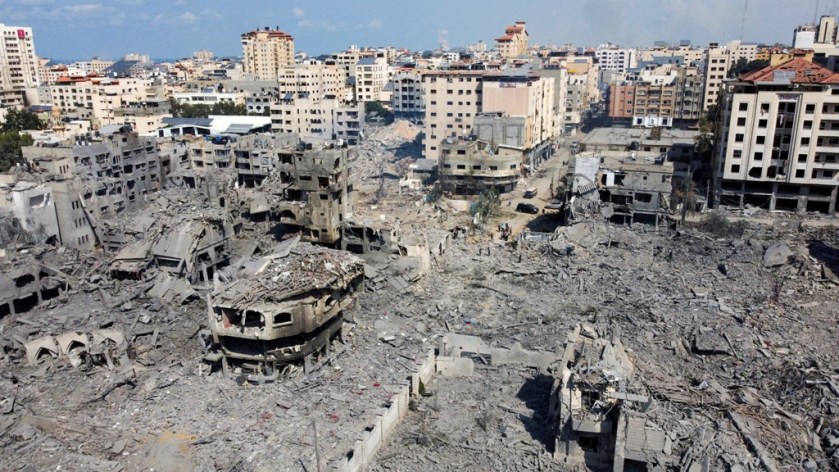
This has been reproduced from The Thinking Muslim. The inhuman aggression by which Israel treats Palestinians is known to everyone who possesses an ounce of justice. This excludes, of course, Western nations for whom, apparently, history began last Saturday. However, they are very aware that the colonial outpost they set up in the Middle East is hell-bent on extracting as much land as possible to accommodate racist Americans and Europeans. They are aware that in the process, Israel slowly squeezes Palestinians and of the daily humiliations – the trigger-happy border guards that maim and murder. They know all of this yet remain deaf to the cries. They give the murderous state weapons of war, instruments of torture and diplomatic cover. Just this past week, the main political parties on both sides of the Atlantic were falling over each other to give Israel the green light. In an age of impunity, Israel has a free pass. But what lay behind the events last week, and what can we expect in the coming weeks from regional and …

Conditions of the Caliph: The Caliph must be capable of ruling

Al-Kifāyah الكِفايَة (competency or capability) is a condition (shart) of the bay’ah[1] because “Imamate is prescribed to succeed prophethood as a means of protecting the deen and of managing the affairs of this world,”[2] and the one contracted with this great responsibility must be capable of fulfilling the task. Although kifāyah is a general term which may apply to many areas of competency, in the context of the bay’ah, and as a condition of the Khaleefah, the scholars such as al-Mawardi, al-Ghazali and al-Juwayni all mentioned it in terms of capability to rule i.e. having a ruling mentality and disposition, and free from any disability which may affect his ability to fulfil the task of discharging people’s affairs. Other conditions related to kifāyah such as sanity, being free, mujtahid and brave were mentioned as separate conditions and pillars[3], even though they are all linked to the reality of the Khaleefah’s ability to run the state. Mona Hassan says, “The caliph’s ability to actually do so, termed kifāyah, is all that remains after al-Juwaynī’s process of …

The 10 principles of justice by Shehu Uthman Dan Fodio

Shehu Uthman Dan Fodio, (1754-1817) is the founder of the Sokoto Sultanate[1] which was established in 1804 in West Africa. This is an extract from his book Usul al-‘Adl ‘The Foundations of Justice for Legal Guardians, Governors, Princes, Meritorious Rulers, and Kings.’ Notes [1] The Sokoto Sultanate is also referred to as the Sokoto Caliphate, but since the Ottoman Caliphate was in existence and it’s prohibited to have more than one Caliph, Sultanate is a more appropriate term for the reality of this state, even if the term Caliphate was used. [2] Sahih Muslim 1826, https://sunnah.com/muslim:1826 [3] Holy Qur’an, Surah Al-i-‘Imran, ayah 159 [4] Sahih Muslim 1828a, https://sunnah.com/muslim:1828a [5] Sunan Abi Dawud 2948, https://sunnah.com/abudawud:2948 [6] Aisha Abdurrahman Bewley, ‘Democratic Tyranny and the Islamic Paradigm,’ Diwan Press, 1st edition, 2018, Kindle Edition, p.85

Uthman bin Affan’s bay’a: Binding the Caliph to a constitution

The bay’a is a contract and so it’s permitted to add additional conditions to the contract, as long as these conditions do not contradict the sharia. If the khaleefah agrees to these conditions then he cannot break them without agreement from those who contracted the bay’a to him from the Ahlul hali wal-aqd (people’s electoral representatives) on behalf of the ummah. Allah (Most High) says,يَـٰٓأَيُّهَا ٱلَّذِينَ ءَامَنُوٓا۟ أَوْفُوا۟ بِٱلْعُقُودِ “O you who believe, fulfil your contracts.”[1]

What is the meaning of the verse: “Those who do not rule by what Allah has sent down, such people are disbelievers”?

There are many verses in the Holy Qur’an which oblige Muslims to judge and rule by the sharia. Three of these verses contain commands which are identical except for their endings, which is why the mufasireen (interpreters of the Qur’an) linked them together. Allah (ta’ala) says in Surah al-Ma’ida verses 44, 45 and 47, وَمَنْ لَمْ يَحْكُمْ بِمَا أَنْزَلَ اللَّهُ فَأُولَٰئِكَ هُمُ الْكَافِرُونَ “Those who do not judge/rule by what Allah has sent down, such people are disbelievers (kafirun).”[1] وَمَنْ لَمْ يَحْكُمْ بِمَا أَنْزَلَ اللَّهُ فَأُولَٰئِكَ هُمُ الظَّالِمُونَ “Those who do not judge/rule by what Allah has sent down, such people are oppressors (dhalimun).”[2] وَمَنْ لَمْ يَحْكُمْ بِمَا أَنْزَلَ اللَّهُ فَأُولَٰئِكَ هُمُ الْفَاسِقُونَ “Those who do not judge/rule by what Allah has sent down, such people are deviators (fasiqun).”[3] These verses are political in nature, because they address the governments and judiciaries in the Muslim world, and so can be controversial to those academics and ulema who want to maintain the existing status quo, or aim to ‘reform’ Islam by secularising it and removing it …

Does حُكْم (hukm) mean judging or ruling or both?

The term حُكْم (hukm) and its derivatives appear more than 250 times[1] in the Qur’an. Allah (Most High) says, إِنَّ ٱللَّهَ يَأْمُرُكُمْ أَن تُؤَدُّوا۟ ٱلْأَمَـٰنَـٰتِ إِلَىٰٓ أَهْلِهَا وَإِذَا حَكَمْتُم بَيْنَ ٱلنَّاسِ أَن تَحْكُمُوا۟ بِٱلْعَدْلِ Allah commands you to return to their owners the things you hold on trust and, when you judge between people, to judge with justice.[2] يَـٰدَاوُۥدُ إِنَّا جَعَلْنَـٰكَ خَلِيفَةًۭ فِى ٱلْأَرْضِ فَٱحْكُم بَيْنَ ٱلنَّاسِ بِٱلْحَقِّ وَلَا تَتَّبِعِ ٱلْهَوَىٰ فَيُضِلَّكَ عَن سَبِيلِ ٱللَّهِ Oh Dawud! We have made you a khaleefah on the earth, so judge between people with truth and do not follow your own desires, letting them misguide you from the Way of Allah.[3] وَمَنْ لَمْ يَحْكُمْ بِمَا أَنْزَلَ اللَّهُ فَأُولَٰئِكَ هُمُ الْكَافِرُونَ “Those who do not judge by what Allah has sent down, such people are disbelievers (kafirun).”[4] In most English translations as you can see, hukm is translated as judgement because the Arabic dictionary definition of hukm includes القَضاء (al-qadaa’) which means to issue a decree or judge. In Lisan al-Arab (1290CE):  والحُكْمُ: العِلْمُ وَالْفِقْهُ وَالْقَضَاءُ بِالْعَدْلِ، وَهُوَ مَصْدَرُ …

Can women be judges in Islam?

There is no dispute among the classical scholars that it’s prohibited for a woman to hold a ruling position such as the Khaleefah or a waali (governor), although she can hold any other non-ruling governmental position, and be an active member of the Majlis al-Nuwaab (House of Representatives). This is based on the hadith narrated by Abi Bakra, that when the Messenger of Allah ﷺ was informed that the Persians had crowned the daughter of Chosroes as their ruler, he ﷺ said,

Migration to Abyssinia: Fleeing persecution or searching for a base for Islam?

This has been reproduced from Dr As-Sallabi’s seerah book The Noble life of the Prophet ﷺ. Scholars have mentioned various reasons that prompted the Prophet’s ﷺ Companions to migrate to Abyssinia. One reason was that they felt it necessary to flee with their religion, fearing that constant torture might tempt them to apostatize. Ibn Ishaaq said, “At that point in time, some Muslims from the Prophet’s ﷺ Companions went to Abyssinia, fearing temptation and fleeing towards Allah M with their religion.”[1]