All posts filed under: Ruling

How is a caliphate divided up?

A caliphate is essentially a group of emirates, states or provinces which are bound together by the bay’ah ruling contract with its ruler – the caliph. The Caliphate from its initial establishment after the death of the Prophet ﷺ under its first caliph Abu Bakr Al-Siddiq, had always been an ‘empire’ encompassing vast areas of land, and in later periods spanning multiple continents. In Islamic history the caliphate was broadly divided up into four levels of governance: Level Name Head 1st Level Province (ولاية  Wiliyah) Emirate (إِمَارَةِ)Sultanate (سَلْطَنَة) WaliAmirSultan 2nd Level District (عمالة  I’mala)   ‘AmilHakimAmir 3rd Level City (بَلَد  Balad)Fortified town (قصبة  Qasabah) AmirHakimRa’is 4th Level Neighbourhood (حَيّ  Hayy)[1] Tribe/Clan (قَبِيلَة Qabilah)[2] MuqaddamSheikhNaqib Administering such a huge state relied heavily on the local governors of the various provinces being loyal, competent and just in their positions. The logistical challenges of ancient communications meant it could take weeks or even months for the governors of Egypt, North Africa, and Khorasan to receive a letter from the caliph. The governor would therefore need to have a great deal of autonomy and authority to …
What is an Islamic Society?

Society is defined as “a large group of people who live together in an organized way, making decisions about how to do things and sharing the work that needs to be done. All the people in a country, or in several similar countries, can be referred to as a society.”[1] The concept of society (مُجْتَمَع) is intrinsically linked to the discussion of authority, because it’s the authority and government which plays the greatest role in shaping and controlling society. The Ottoman historian Tursun Beg (d.1499) said, “With the pen of scribes, the ruler turns the noble into a wretched, and the wretched into a noble…with the sword of executioners he takes lives. As such he manifests the attributes of the Necessary Existent as if he shares the sultanate with Him except that the ruler of the world is a mortal.”[2] The source of authority (masdar al-sultah) is based on societal concepts which are in turn based on the Islamic ‘aqeeda which forms a distinct viewpoint of life, and which influences the type of authority that is established. This is why …

Rethinking the Wali Al-‘Ahd (Designated Successor)

Continuing our series on the bay’ah, one of the core issues which needs to be addressed is how to facilitate a smooth transition of power from one caliph to the next. Every ruling system faces this problem and if handled incorrectly may lead to instability and even civil war. This is something we witnessed throughout Islamic history when the caliphate transformed from a rightly guided caliphate into mulk (monarchy) not in the sense of the caliph being sovereign like an absolute monarch or king, but in the characteristics of a monarchy like hereditary rule and abuse of power. This was prophesised by the Messenger of Allah ﷺ who said, تَكُونُ الْخِلَافَةُ ثَلَاثِينَ سَنَةً ثُمَّ تَصِيرُ مُلْكًا “The caliphate will be for thirty years. Then it will become mulk (monarchy).”[1] Hereditary rule was introduced by Mu’awiya who made his son Yazid the Wali Al-’Ahd (heir apparent or designated successor) before he died. This was meant to facilitate a smooth transition of power and prevent another civil war as Ibn Khaldun says, “Mu‘âwiyah himself preferred his son …

Structure of an Islamic State: The Provinces

Every state is divided up into administrative divisions in order to organise and manage the local affairs of its citizens. The names and sizes of these divisions will vary between different countries, and an Islamic State or caliphate can use any of these administrative divisions from any system which suits its requirements at the time. The underlying principle here is to keep the caliphate united upon the Islamic ‘aqeeda (creed), even if administratively and politically it consists of separate states and entities. The top-level division in a caliphate is the province or state known as a Wiliyah (ولاية) or Emirate (إِمَارَةِ). The head of this province is called a Wali or an Amir. In the latter half of the Abbasid Caliphate, when the provinces became powerful semi-independent ‘empires’ then Sultanate (سَلْطَنَة) was used as in the case of the Seljuks, Mamluks and Ottomans. For the citizens of an Islamic State, their first point of contact with the leadership of the state is the governor of their province or emirate, and their local mayors in the …

Structure of an Islamic State: The Dīwān

“The Arabic word dīwān (دِيوان) refers to a sitting room, where scribes can sit and attend to their work; it can also mean a collection of notebooks, or a ledger, containing the names of those who are registered in the military or who receive grants from the government.”[1] In modern times a dīwān is called a government department (دائِرَة da’ira). Al-Mawardi says, “The dīwān is a place for maintaining what is related to the authorities of the Sultan in terms of public works, finance, and the armies and governors (Al-‘Ummal) who carry them out.”[2] The original term dīwān is from Pahlavi (Middle Persian), because this administration of state bureaucracy was adopted from the Persian empire by Umar ibn Al-Khattab, the second caliph of Islam in the year 20H[3]. Abu Hurayra, who was the governor of al-Bahrain came to Umar with 500,000 dirhams in tax revenue. After Umar’s initial shock at the size of this amount he consulted the sahaba and he was advised to adopt the diwan of the Persians.[4] Administration (إِدارَة idara) can be …

Structure of an Islamic State: The Executive Minister

Al-Mawardi describes the Wazir Al-Tanfidh (The Executive Minister) in his model, “As for the wazirate of execution (tanfidh), its rule is weaker and its conditions are fewer as its authority is restricted to the judgement and direction of the Imam: the wazir is a mediator between him and his subjects, carrying out his commands, executing his instructions, enacting what he decides and announcing any governmental appointments or military preparations of the armies; he also informs him about anything of importance which happens and any new developments which come to his notice, so that he may act in accordance with the Imam’s command. He is thus appointed for the execution of affairs but not to organise them -indeed he is not appointed for this purpose. If he shares in making judgements, the name ‘wazir’ is more fitting while if he does not, then the name ‘mediator’ (Al-Wasitah) or ‘ambassador’ (Al-Sifarah) is more applicable.”[1] The Minister of Execution (Wazir Al-Tanfidh) in modern times may be part of the Executive Office or head up an Executive Department. Historically, …

Structure of an Islamic State: The Armed Forces

Every state must have an army to protect its interests at home and abroad, and the Islamic State is no different in this regard. Although the word jihad has become a controversial term nowadays due to the west and its media equating it with terrorism, no one can dispute that fighting to make Allah’s word the highest i.e. that the systems and laws in the land are based on sharia is a major part of the Islamic religion, and two billion of the world’s population would not be Muslim today if it wasn’t for these conquests that took place over the centuries. The Prophet ﷺ said,  رَأْسُ الأَمْرِ الإِسْلاَمُ وَعَمُودُهُ الصَّلاَةُ وَذِرْوَةُ سَنَامِهِ الْجِهَادُ “The head of the matter is Islam, and its pillar is the prayer, and its hump[1] is Jihad.”[2] Allah (Most High) says, ٱلَّذِينَ أُخْرِجُوا۟ مِن دِيَـٰرِهِم بِغَيْرِ حَقٍّ إِلَّآ أَن يَقُولُوا۟ رَبُّنَا ٱللَّهُ ۗ وَلَوْلَا دَفْعُ ٱللَّهِ ٱلنَّاسَ بَعْضَهُم بِبَعْضٍۢ لَّهُدِّمَتْ صَوَٰمِعُ وَبِيَعٌۭ وَصَلَوَٰتٌۭ وَمَسَـٰجِدُ يُذْكَرُ فِيهَا ٱسْمُ ٱللَّهِ كَثِيرًۭا ۗ وَلَيَنصُرَنَّ ٱللَّهُ مَن يَنصُرُهُۥٓ ۗ إِنَّ ٱللَّهَ لَقَوِىٌّ عَزِيزٌ ˹They …

Structure of an Islamic State: The Wazir

The wazirate (ministry), or wizarah (وِزارَة) is a term that refers to the office of the wazir, a high-ranking government official who serves as the caliph’s deputy, chief minister and advisor who aids him in running the state. Al-Mawardi says, “The ministry of delegation (Wizarah Al-Tafwid) is where the Imam appoints a wazir to whom he delegates authority for the organisation of affairs in accordance with his judgement such that he effects them properly by his own efforts.”[1] The wazirate evolved over the centuries, but it existed in one form or another from the first Islamic State headed by the Prophet ﷺ in Medina, until 1922 when the Ottoman Sultanate was officially abolished[2] and along with it the last Grand Vizier. Willem Gerrit Dedel, Ambassador of the Dutch Republic to the Ottoman Caliphate 1765-1768 during the reign of Mustafa III (r.1757-1774) describes the scene when the Sultan’s no.2 man rode past. “We fetched our horses and waited until all the Sultan’s senior officials had ridden past on their fine horses. This was an extremely lovely …

Al-Mawardi’s Structure of an Islamic State

This is the first of a new series of articles discussing the governing structure of an Islamic State. The strongest view among the scholars is that Islam laid down a number of principles of ruling, but the detailed institutional structures are not fixed and will change with the times. A number of 20th century scholars and thinkers however, went a step further from just general principles, and outlined specific institutions which would be needed to run a state. Rashid Rida (d.1936), Al-Sanhūrī (d.1971), Mohammad Barakatullah (d.1927) and Taqiuddin an-Nabhani (d.1977) stand out as the most prominent in this regard, and we will discuss each of them and their models in turn. Imam Al-Mawardi (d.1058) was a jurist, chief justice (Qadi al-Qudah), diplomat and statesman of the Abbasid Caliphate under the caliphs Al-Qadir (r.991-1031CE) and Al-Qa’im (r.1031-1075CE). He wrote his famous book al-Ahkam al-Sultaniyah near the end of his life, drawing on his experiences in government and politics. His book is therefore not theoretical, but a practical guide to ruling which is why it has stood …

The Islamic State of Prophet Muhammad ﷺ

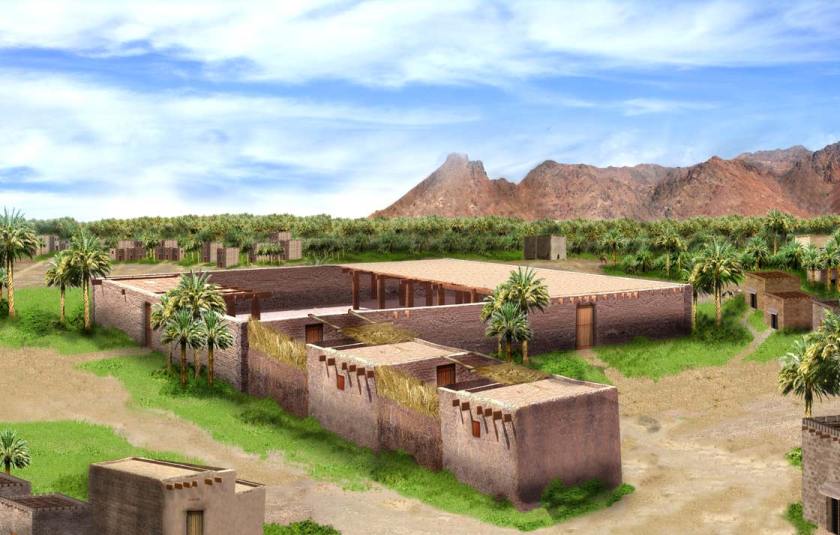
As the 10,000 strong army of the Prophet ﷺ marched into Makkah, Abu Sufyan stood alongside Al-Abbas watching the vast numbers of soldiers as they passed by. Abu Sufyan said to Al-Abbas, “By Allah, O Abu al-Fadl, the kingdom (mulk) of your nephew has become truly great this morning!” I said: “O Abu Sufyan, it is prophethood.” He said: “Yes, indeed.”[44] The Islamic State of the Prophet ﷺ was something out of the ordinary in Nomadic Arabia which had never known a state like this before. Introduction The emergence of the first Islamic State in 622CE went unnoticed at first by the Sassanid and Byzantine empires. The Persians and Romans were fighting each other in a major war[1], and so their focus was not on the nomadic Arabs who had never previously posed any type of threat to their empires. John Saunders says, “Once and once only, did the tide of nomadism flow vigorously out of Arabia. Bedouin raids on the towns and villages of Syria and Iraq had been going on since the dawn of …