All posts filed under: Non-Muslims

Islamic History: Church of Holy Sepulchre

The Church of Holy Sepulchre is in the Christian quarter of Jerusalem and is one of the holiest sites in Christianity. Dating from the 4th century it predates the Islamic opening of Jerusalem under Umar ibn Al-Khattab. Justin Welby, the Archbishop of Canterbury claimed in 2018 in the Middle East ‘Christians face daily the threat of violence, murder, intimidation, prejudice and poverty…Across the region Christian communities that were the foundation of the universal Church now face the threat of imminent extinction.’[1] While some try to frame this as Muslims oppressing Christians, or blame the rise of Islamic sentiments in the region, nothing could be further from the truth. Muslims even more than Christians face the ‘daily the threat of violence, murder, intimidation, prejudice and poverty’ in the Middle East due to tyrannical rulers who do not implement Islam. This is also the case outside the Middle East in places such as Burma, Palestine and China. The only reason Christians and Churches still exist in the Middle East is due to Islamic rule – the Khilafah – which protected …
War and Peace in Islam: Non-Muslims entering Muslim lands

Continuing our series on War and Peace in Islam, some of the extreme Jihadi-Salafi groups in Iraq began killing Christians and destroying their churches, in a country which was the heartland of the Abbasid Caliphate for 511 years. ISIS went even further and started to enslave Yazidis, whose existence pre-dates Islam and who managed to survive 1300 years of caliphal rule. A few years of ISIS ‘rule’ however and they nearly became extinct. This is evidence enough that there is nothing Islamic about ISIS let alone its claim to the caliphate. Categories of non-Muslims entering Muslim lands There are four main categories of non-Muslims entering either a caliphate or Muslim country. These are: The Mu’ahid is a citizen of a foreign state with which the state has a treaty. The citizens of this state (mu’ahideen) can enter without a passport or visa if this is reciprocated to the citizens of the Muslim state.[15] The Must’amin is a citizen of a foreign state with which the Muslim country has no treaty. The citizens of these states can enter, but only …

Christians in 1970s Syria

This is an excerpt from John McHugo’s ‘Syria: A Recent History’ where he describes his experiences with the Christian community of Syria in 1974. The fact that Christians made up 10% of the Syrian population prior to the civil war, is a testament to their protection and fair treatment under 1300 years of Islamic rule. The social norms John McHugo observed among the Christian communities in the 1970s show the remnants of this rule. John McHugo is a Senior Fellow at the Centre for Syrian Studies at St Andrews University. A board member of the Council for Arab British Understanding and the British Egyptian Society, he is also chair of the Liberal Democrat Friends of Palestine. He writes: I first went to Syria in November 1974 when I was twenty-three years old and studying Islamic history at postgraduate level at the American University in Cairo. I had planned a week walking in the mountains which run parallel to the coast. Armed with a sleeping bag and ground sheet, I got off the bus at the …

Fanaticism breeds a hatred of kindness and compassion

By Yasir Qadhi  When people start going down the dark road of extremism, not only does one cease to be compassionate to others, seeing compassion in others actually fuels one’s own extremism. That is why, from the beginning of time, extremism and fanaticism have been linked with harshness and a lack of mercy.  Ibn Muljam was the Khārijite who assassinated Alī b. Abī Ṭalib (r). An interesting story is mentioned in our history books that demonstrates this hatred of compassion.   Ibn Muljam was sitting in the sūq (market) of Kufa a few days before he murdered Ali (r), and he saw a large funeral procession pass by composed of both Christians and Muslims. He was disgusted at this and said, “What is going on?” meaning how dare Muslims and Christians be together in a funeral.   Someone said, “This is the funeral of Abjar b. Jābir [the chieftain of the Ijl tribe, who died as a Christian]. The Christians are here to honor him, and the Muslims are here to sympathize with his son Ḥajjār.” Ḥajjār …

Jews in the Ottoman Caliphate

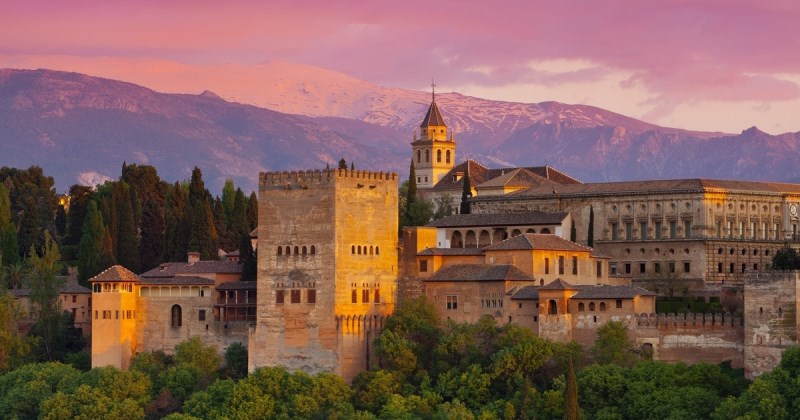
This article has been reproduced from caliphate1.com In 1492, when Spain’s rulers (Ferdinand II of Aragon and Isabella I of Castile) expelled its Jewish population as a result of the Spanish Inquisition and the Alhambra Decree, Sultan Bayazid II sent out the Ottoman Navy under the command of admiral Kemal Reis to evacuate them safely to Ottoman lands. He sent out proclamations throughout the Caliphate that the refugees were to be welcomed. He granted the Jews permission to settle in the Ottoman State and become Ottoman citizens and issued a firman (decree) to the governors of his European provinces to give them a friendly and welcome reception. “You venture to call Ferdinand a wise ruler,” he said to his courtiers, “he who has impoverished his own country and enriched mine!” [The Jewish Encyclopaedia – Vol. 2, Isadore Singer and Cyrus Adler, Funk and Wagnalls, 1912, p. 460] Bernard Lewis, in his scholarly overview entitled The Jews of Islam, documents how Jews lived, worked and flourished under Ottoman rule. For example, many Jews were experts in medicine: “The prominence …

Prophet Muhammad’s ﷺ Impact on the World

This is an excerpt from the book The Divine Reality: God, Islam and the Mirage of Atheism by Hamza Andreas Tzortzis. The Prophet Muhammad ﷺ was truly a mercy to mankind. This assertion is not only justified by his message and his teachings, but it also includes his unprecedented impact on our world. There are two key reasons why his teachings on a social level were so transformative: the justice and compassion of Islam.

Jewish Immigration to the Islamic State

After the liberation of Constantinople by the Ottomans in 1453, Jewish refugees from all over Europe were encouraged to settle in the country and to take advantage of the liberal treatment accorded them by the Sultan. When the Ottoman Sultan Bayezid heard about the expulsion of the Jews from Spain by King Ferdinand, he said: “Can you call such a king wise and intelligent? He is impoverishing his country and enriching my kingdom.”