Latest Posts

The Caliph is the Commander-in-Chief

In most Muslim countries today, the head of state is a mere figurehead in terms of their powers as the overall commander of the armed forces. They may hold titles such as Supreme Commander (القائِد الأَعْلَى) or even Commander-in-Chief (القائِد العامّ), but in reality they have no real effective power over the armed forces.

The Pakistan constitution states, “Without prejudice to the generality of the foregoing provision, the Supreme Command of the Armed Forces shall vest in the President.”[1]

The Egyptian constitution states, “The President of the Republic is the Supreme Commander of the Armed Forces.”[2]

The Turkish constitution states, “The Office of Commander-in-Chief is inseparable from the spiritual existence of the Grand National Assembly of Turkey and is represented by the President of the Republic.”[3]

This is why within the Muslim world so many western backed Coup d’états have occurred over the past decades, especially in the three countries mentioned above.

Taqiuddin Al-Nabhani says, “The army (جَيْش  jaysh) must have a commander-in-chief (القائِد العامّ  Al-Qa’id Al-‘Amm), who is appointed by the Head of State ( رئيس الدولة Ra’is Al-Dowlah) as a deputy to him. This is because the commander in chief is the head of the entire army and armed forces (القُوّات المُسَلَّحَة  Al-Quwwat Al-Musallaha). Likewise, every division (فِرْقَة  firqa) must have a commander (قائِد  Qa’id), and every brigade (لِواء  liwa’) a commander and every battalion (كتيبة  katība) a commander. All of them are appointed by the head of state, whereas the remaining officers are appointed by the commander-in-chief.”[4]

Al-Nabhani doesn’t use the title Commander-in-Chief for the Head of State, but rather uses it for the head of the armed forces. Abdul-Qadeem Zallum referred to the same position with the title Amir ul-Jihad. In most countries today, the Chief of Staff is the title used for the effective head of the armed forces. Prior to 1972, the head of the Pakistan army had the title Commander-in-Chief. After this time it was renamed to the Chief of Army Staff (COAS).

As with the other posts within the Islamic ruling system, we need to focus on the concept and hukm (rule) as opposed to the technical (istilahiyya) term. Al-Nabhani mentions that the head of state appoints all the generals and is the effective head of the armed forces. This is the important point here regardless of what title is used to describe this position.

The closest model we have nowadays, in relation to effective control of the armed forces which was practised by the Prophet ﷺ and the Rightly Guided Caliphs, is that of America and the role of the President as the Commander-in-Chief. This is not a ceremonial position but rather a civilian-military role where the US President appoints all the generals, chiefs of staff and campaign commanders. In terms of the chain of command this can go through the Defence Secretary as a deputy command-in-chief, but the President can also issue orders directly to the commanders in the field.

The US President also has the power to lead the wars directly and formulate military planning and strategy as George Washington, James Madison and Abraham Lincoln did when they were in office. This is similar to what the Prophet ﷺ and some of the caliphs undertook when they directly led the battles, trained the military or devised battle plans and strategy. Although this is an exception to the rule, and even during the time of the Prophet ﷺ, once the sahaba had been trained in military leadership, they led most of the later battles of the Medinan period.

An important point to note nowadays is that the armed forces have undergone a dramatic transformation, and military expertise is a full-time dedicated role by professional officers. The caliph would have been an army commander before assuming office as the Rightly Guided Caliphs were, but once in office his focus is on political affairs and he needs to delegate out the actual command, training and military planning to the chiefs of staff. “‘I am not acquainted with the military profession,’ George Mason proclaimed at the Virginia convention and, except for Hamilton, Pinckney, and a few others, he spoke for all the Framers [of the US Constitution]. They knew neither military profession nor separate military skills. Military officership was the attribute of any man of affairs. Many members of the Federal Convention had held military rank during the Revolution; Washington was only the most obvious of the soldier-statesmen. They combined in their own persons military and political talents much as the samurai founders of modem Japan also combined them a hundred years later.”[5]

Notes


[1] https://www.pakistani.org/pakistan/constitution/part12.ch2.html

[2] https://www.constituteproject.org/constitution/Egypt_2019?lang=ar

[3] https://www.constituteproject.org/constitution/Turkey_2017

[4] Taqiuddin Al-Nabhani, Nizam ul-Hukm Fil-Islam, 1st Edition, 1951, p.54

[5] Samuel Huntington, ‘The soldier and the state: The theory and politics of civil-military relations,’ p.165

Al-Mawardi’s Amir of Jihad

The title Amir ul-Jihad (أَمِير الجِهاد) which literally means the Leader of War, is a grammatical construction (إِضافَة Iḍāfah) mostly used to indicate possession. As a formal title it was not used in the time of the Prophet ﷺ or the Rightly Guided Caliphate. Only the title Amir was used without the appendage for the overall commanders of a battle. It was also used for the commanders of smaller expeditions (sariyya) since the word Amir is a general term for any leader of any function even if it’s over two people. The Messenger of Allah ﷺ said:

إِذَا خَرَجَ ثَلاَثَةٌ فِي سَفَرٍ فَلْيُؤَمِّرُوا أَحَدَهُمْ

“When three are on a journey, they should appoint one of them as their Amir.”[1]

The Prophet ﷺ would give the Amir of any expedition whether a small platoon (faṣīlah) or a large brigade (لِواء liwaʾ) a white flag called a liwaʾ which is the same word as a brigade. This flag is a special flag for the commander of an expedition (sariyya) or campaign, and by extension the commander in-chief of all the armed forces i.e. the caliph. Ryan Lynch says, “the Arabic term amīr is used to refer to a military commander regardless of his position in the chain of command.”[2]

The first liwaʾ to be raised in Islam was for Hamza ibn ‘Abd al-Muttalib in the month of Ramadan, seven months after the hijra of the Messenger of Allah ﷺ where he led an expedition of thirty men. The one who carried the liwaʾ was Abu Marthad Kinaz ibn al-Husayn al-Ghanawi.[3] Thirty men is the size of a modern-day platoon (فصيلة faṣīlah) headed by a Lieutenant (ملازم mulazim).

Abu Huraira narrates that the Messenger of Allah ﷺ sent out an expedition of ten men as spies, and their Amir was Asim bin Thabit al-Ansari.[4] Ten men is the size of a modern-day section (فرقة firqa) headed by a Corporal (عَرِيف‘arif).

The Messenger of Allah ﷺ appointed Zaid ibn Haritha as the Amir of the Expedition to Mut’ah in charge of three thousand men and gave him a white liwaʾ.[5] Three thousand men is the size of a modern-day brigade (liwaʾ) headed by a one-star Brigadier-General (عَمِيد ‘amid).

The title Amir ul-Jihad which some modern structuralists have used within their models originates from Al-Mawardi’s wiliya – The Emirate of Jihad (الْإِمَارَةِ عَلَى الْجِهَادِ). Al-Mawardi describes this government function: “The Emirate of Jihad is particularly concerned with fighting the mushrikun and it is of two kinds:

1- That which is restricted to the affairs (siyasa) of the army and the management (tadbir) of war, in which case the conditions pertaining to special emirate (Amir Al-Khass) are applicable.

2- That in which all laws regarding the division of booty and the negotiation of the peace treaties are delegated to the amir, in which case the conditions pertaining to general amirate (Amir Al-‘Amm) are applicable. Of all the authorities of governance this is the most important with respect to its laws, and the most comprehensive with regard to its sections and departments.

This type of emirate, when special (khass), is subject to the same rulings as the general (‘amm)…”[6]

Al-Mawardi’s two types of Amir map to three modern day positions:

  1. Commander in-chief
  2. Chiefs of Staff
  3. Defence Secretary

The administrative systems (‘idara) can be adopted from any system, and we are not obliged to use the same army ranks, titles and formations as those used in the time of the Prophet ﷺ or later. Each time period will have its particular challenges, and the armed forces need to be structured in such a way to meet these. When the military is slow to reform, it can lead to disaster on the battlefield, as many battles of the first and second world wars show us.

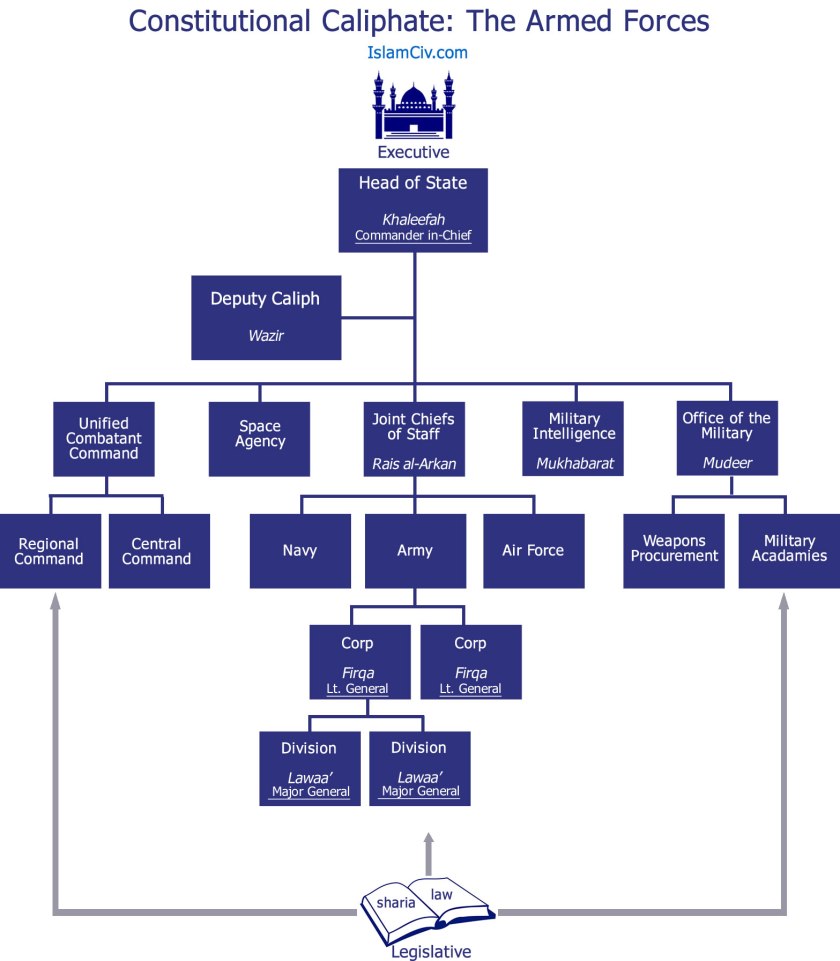
Al-Mawardi’s first type of Amir is akin to an Executive Minister, who is a liaison between the caliph and the rest of the armed forces. We call this Executive Minister a Defence Secretary or Minister of Defence in modern times. This type of Amir can also map to the Joint Chiefs of Staff who are tasked with managing the day-to-day affairs of the army.

The second type of Amir Al-Mawardi describes is equivalent to a governor, who is the commander in-chief of his province, and by extension the caliph who is the commander in-chief over the entire state.

Notes


[1] Sunan Abi Dawud 2608, https://sunnah.com/abudawud:2608

[2] Ryan J. Lynch, ‘Arab Conquests and Early Islamic Historiography: The Futuh al-Buldan of al-Baladhuri,’ I.B. Tauris, 2020 p.147

[3] Ibn Sa’d, Tabaqat, https://shamela.ws/book/1686/392

[4] Sahih Al-Bukhari 3045, https://sunnah.com/bukhari:3045

[5] Ibn Sa’d, Tabaqat, https://shamela.ws/book/1686/487#p1

[6] Abu l-Hasan al-Mawardi, The Laws of Islamic Governance, translation of Al-Ahkam as-Sultaniyah, Ta Ha Publishers, p.57;  https://shamela.ws/book/22881/64

Importance of Correct Military Structuring in an Islamic State

Since the armed forces play such a major role in the Islamic state, their organisation and administration must be managed correctly. The military has its own culture and ethos, and is resistant to change. If not handled properly they can become a separate entity looking after the interests of themselves, rather than those of the state. In 1905, Field Marshal Sir Evelyn Wood told Richard Haldane, the Secretary of State for War, “If you organize the British army, you will ruin it.”[1]

If the military becomes independent this may lead to riots, civil wars and even coup d’états as were witnessed during the Abbasid Caliphate after the formation of a professional standing army of freed Turkish slaves (Ghilmans/Mamluks) by the caliph Al-Mu’tasim (r. 833-842). The rise of the Turkic army and their power struggles with the Abbasid Caliphs, led them to assassinate Al‐Mutawakkil (r. 847-861) and install his son Al-Muntasir (r. 861–862) as the caliph. The subsequent coup d’états, assassinations and civil strife in the new Abbasid capital of Samarra, are known as the Anarchy of Samarra (861-870) in which the removal and murder of five caliphs took place within just nine years.

Unfortunately, many of the militaries in Muslim countries today do not act in the interests of Islam and the state, because the top brass are simply bought off by the west. It’s no secret that the Pakistan military for example runs a huge number of commercial ventures and that its senior officers and generals have become extremely wealthy on the back of this.[2]

The Emirate of Jihad encompasses more than just fighting

Jihad links to the domestic and foreign policies of an Islamic State, and as such encompasses far more than just physical fighting. This is why Al-Mawardi said, “all laws regarding the division of booty and the negotiation of the peace treaties are delegated to the amir”. In other words, this Amir has powers related to the treasury and foreign policy, which is why in the time of the Rightly Guided Caliphs, this Amir was the military governor who had full powers as commander in-chief over the new lands he conquered. Abu Bakr appointed Khalid ibn Al-Walid as the commander of the second army[3] in the campaign to conquer Iraq. He then became the overall commander of all armies in Iraq[4], and the military governor of the newly conquered territories, until new civilian governors were appointed.

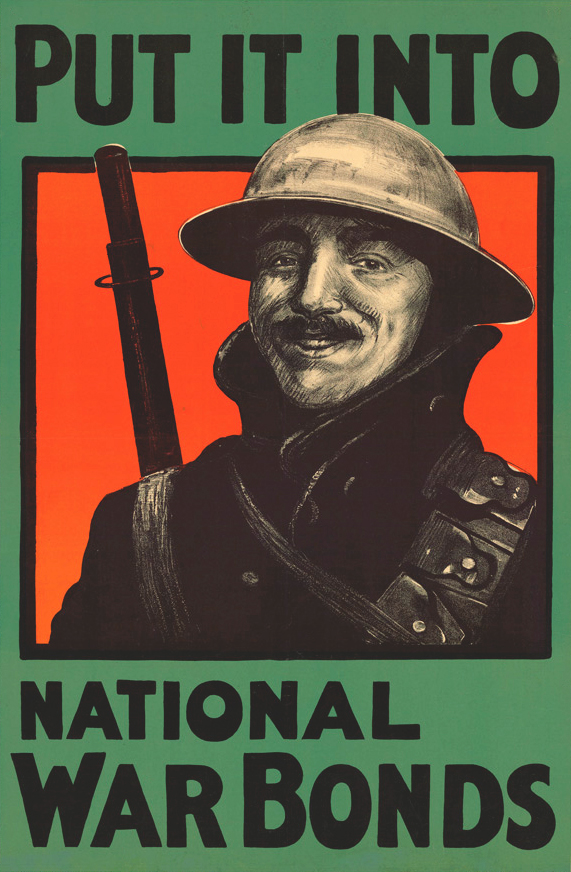
In a full-blown war, all aspects of the state and nation need to be mobilised for the war effort. We can see this in the first and second world wars in Britain, where factories were repurposed to make munitions, tanks and aircraft, and both men and women were conscripted in to the armed forces for service. War bonds were issued in WWI with a 5% interest rate, in order to raise money for the war, and ordinary citizens were encouraged to purchase these bonds out of their patriotic duty.

In order to achieve this mobilisation, there has to be someone in charge who has full powers over all aspects of the state and the armed forces. Winston Churchill, the wartime prime minister in WWII had this power, and additionally created a new title for himself called the “Minister of Defence” to reinforce his wartime powers. He said, “I, therefore, sought His Majesty’s permission to create and assume the style or title of Minister of Defence, because obviously the position of Prime Minister in war is inseparable from the general supervision of its conduct and the final responsibility for its result.”[5] He continues, “I may say, first of all, that there is nothing which I do or have done as Minister of Defence which I could not do as Prime Minister. As Prime Minister, I am able to deal easily and smoothly with the three Service Departments, without prejudice to the constitutional responsibilities of the Secretaries of State for War and Air and the First Lord of the Admiralty.”[6]

The Chancellor of the Exchequer and the Foreign Secretary in addition to the military chiefs of the three services (Army, Navy and Airforce), played major roles in the war cabinets of both world war governments. In 1942 Churchill replaced the Chancellor of the Exchequer’s position in the war cabinet with the Minister of Production and the Minister of Labour,[7] as these were essential functions to keep the war machine moving.

Although Churchill created the post of Minister of Defence, there was no Ministry of Defence (MOD) until after WWII. The three services of the armed forces namely the Admiralty, War Office and Air Ministry who controlled the Navy, Army and Airforce respectively, were separate departments until 1964 when they amalgamated into the MOD.[8]

Notes


[1] Stephen E. Koss, Lord Haldane, Scapegoat for Liberalism (New York: Columbia University Press, 1969), 47.

[2] https://www.dawn.com/news/1272211

[3] Dr Ali Muhammad As-Sallabi, ‘The Biography of Abu Bakr As-Siddiq’, Dar us-Salam Publishers, p.555

[4] Abu Ja`far Muhammad b. Jarir al-Tabari, ‘The History of Al-Tabari’, translation of Ta’rikh al-rusul wa’l-muluk, State University of New York Press, Vol. 11, p.5

[5] Hansard, War Situation, Volume 378: debated on Tuesday 24 February 1942, https://hansard.parliament.uk/Commons/1942-02-24/debates/02dd8f21-e6ac-46fa-a5ee-bcf707b9bfee/WarSituation

[6] Ibid

[7] Ibid

[8] https://assets.publishing.service.gov.uk/media/5a799eb0e5274a684690ae08/history_of_mod.pdf

Administrative Structure of the Caliphate’s Military

Al-Mawardi lists ten responsibilities[1] for the Amir of the army. These responsibilities in modern times fall under the remit of the defence department and the Chiefs of Staff who are tasked with creating a highly proficient and effective Islamic military, that is capable of assisting the caliph in protecting Islamic interests both at home and abroad.

Protecting the army from attack
Choosing the best location for the army encampments
Preparing provisions for the army
Knowledge of the enemy, their movements and tactics
Organising the army for battle
Motivating the army to fight by remembering Allah’s help
Motivating the army to fight by remembering the immense reward of jihad
Consulting the military experts for advice (shura)
Ensuring that the army adheres to the sharia rules of engagement
The army must concentrate on military matters and not involve itself in trade and agriculture

The duties listed above cover a wide-range of areas including logistics, intelligence and educational programmes (tarbiya). These areas require the input and assistance of many other parts of the state such as the education department and treasury. This is why it’s important that the caliph is the effective head of the army, so as head of the executive branch he can order all his department heads to assist the military when and if required.

It’s important to reiterate that administration (إِدارَة idara) can be adopted from any system. Every time period has its own specific realities and problems, and so the military must be structured in such a way as to meet these challenges. If that means copying the military structure of America, Russia or China then so be it. The Islamic state must be a dynamic state ready to do whatever is necessary within the limits of the sharia, to achieve rapid development and progress in all spheres of life. This can only be achieved with a clear understanding of what the sharia allows, and does not allow, when it comes to imitation of the non-Islamic systems of governance.

Sheikh Ibn al-Uthaymin (d.2001) says, “If it is said, ‘Imitating the disbelievers,’ means that we should not use anything of their crafts. No one would say that. During the time of the Prophet ﷺ and after him, people used to wear clothing made by the disbelievers and use utensils made by them.

Imitating the disbelievers means imitating their clothing, their adornments, and their special customs. It does not mean that we should not ride what they ride, or that we should not wear what they wear. However, if they ride in a specific way that is unique to them, then we should not ride in this way. If they tailor their clothes to a specific way that is unique to them, then we should not tailor them in this way, even if we ride in a car like the one they ride in, and we tailor from the same type of fabric that they tailor from.”[2]

He also mentions, “Imitating the disbelievers means that a person adopts their attire in dress, speech, or the like, such that when someone sees him, he says: This is one of the disbelievers.” As for what Muslims and disbelievers share, this is not imitation. For example, now men wear trousers. We do not say this is imitation, because it has become a habit for everyone.”[3]

Brigadier-General Dr. Muhammad Damir Witr lists eight military administrations that were found in the time of the Prophet ﷺ.

planning and organisation
Shura (consultation)
directing the morale
information gathering
operations
training and equipping
provisions, supplies and booties
medical services

He then says: “These administrations used to undertake their tasks according to the obligatory military requirements, and they did not have specific structures like we see today just as they were not (completely) separate from each other or from the field army in respect to its actions and elements. That is because it was possible for a fighter to also be charged with reconnaissance and with another task at the same time. All of these administrations were headed by a single head who assumed their administration and the supervision over them. He was the Commander-in-Chief (Qa’id Al-‘Amm).

Also, these administrations were not concentrated in a particular or specific location, but were rather included within the army and moved with it and were located or concentrated along with it. For that reason, the teeth of the army were stronger than its tail and its fighting elements were greater in number than its administrative elements”[4]

Muhammad Haykal comments on this, “From all of this, it becomes clear that the different organisational elements upon which the matters or affairs of the army and its conditions revolve, fall under the area or scope of the Mubaahaat (permissible matters). That is as long as they do not contravene the Ahkaam Ash-Shar’iyah, and that applies whether those matters are related to the centres where the army is established and its distribution upon the fronts and different regions, or related to its military formations, the clothing that it individuals wear or its organisation of military ranks, in addition to the many other organisational aspects related to the army…”[5]

Notes


[1] Abu l-Hasan al-Mawardi, Al-Ahkam as-Sultaniyah, Ta Ha Publishers, p.66  

[2] Majmoo’ Fatawa al-Shaykh Ibn Uthaymin (12/Question 177), https://islamqa.info/ar/answers/45200/%D8%AD%D9%83%D9%85-%D8%AA%D9%82%D9%84%D9%8A%D8%AF-%D8%A7%D9%84%D9%83%D9%81%D8%A7%D8%B1-%D9%88%D9%85%D8%B9%D9%86%D9%89-%D9%85%D8%A7-%D8%B1%D8%A7%D9%87-%D8%A7%D9%84%D9%85%D8%B3%D9%84%D9%85%D9%88%D9%86-%D8%AD%D8%B3%D9%86%D8%A7-%D9%81%D9%87%D9%88-%D8%B9%D9%86%D8%AF-%D8%A7%D9%84%D9%84%D9%87-%D8%AD%D8%B3%D9%86

[3] https://www.islamweb.net/ar/fatwa/387583/%D8%AA%D9%82%D9%84%D9%8A%D8%AF-%D8%BA%D9%8A%D8%B1-%D8%A7%D9%84%D9%85%D8%B3%D9%84%D9%85%D9%8A%D9%86-%D9%81%D9%8A-%D8%A7%D9%84%D8%B9%D8%A7%D8%AF%D8%A7%D8%AA-%D8%B1%D8%A4%D9%8A%D8%A9-%D8%B4%D8%B1%D8%B9%D9%8A%D8%A9

[4] Brigadier-General Dr. Muhammad Damir Witr, ‘Al-Idaarah Al-‘Askariyah Fee Hurub Ar-Rasool Muhammad ﷺ),’ ‘The military administration in respect to the wars of the Messenger Muhammad,’ 1986, pp.107-108

[5] Muhammad Khayr Haykal, ‘Al-Jihad wa’l Qital fi as-Siyasa ash-Shar’iyya,’ vol.4, The Eighth Study, Qitaal Mughtasib As-Sultah (The First Study: The different types of organisation that the army)

Civilian Control of the Military in an Islamic State

Former French PM Georges Clemenceau said, “War is too serious a matter to entrust to military men.”[1] This is because military thinking focuses on achieving specific, measurable goals using force, while political thinking considers broader goals and uses a variety of tools, including military force, to achieve them. Military thinking emphasizes rationality, analytical skills, and feasibility, while political thinking involves critical examination, analysis of political concepts, and consideration of public interaction and the political dimension within a community.

Samuel Huntington (d.2008) says, “A minister of war need not have a detailed knowledge of military affairs, and soldiers often make poor ministers. The military viewpoint will inevitably, of course, interact with the political objective, and policy must take into account the means at its disposal. Clausewitz voices the military warning to the statesman to note carefully the limits of his military strength in formulating goals and commitments. But in the end, policy must predominate. Policy may indeed ‘take a wrong direction, and prefer to promote ambitious ends, private interests or the vanity of rulers,’ but that does not concern the military man. He must assume that policy is ‘the representative of all the interests of the whole community’ and obey it as such. In formulating the first theoretical rationale for the military profession, Clausewitz also contributed the first theoretical justification for civilian control.”[2]

The wider political goals that serve the long-term interests of Islam and the Muslims must always take precedent over short-term military objectives. This means that executive power and authority must always lie with the caliph who has effective leadership over the military. This cannot be a ceremonial position but must be a civilian-military role which is known in modern times as a Commander in-Chief. This position maps to the position held by the Prophet ﷺ and the Rightly Guided Caliphs.

Hitti says, “The army was the ummah, the whole nation, in action. Its amir or commander in chief was the caliph in al-Madinah, who delegated the authority to his lieutenants or generals. In the early stages the general who conquered a certain territory would also act as leader in prayer and as judge.”[3]

We can see this distinction between military and political thinking in the steps Abu Bakr took immediately after his election, where he defied the advice of the sahaba and sent out the army of Usama to Northern Arabia, at a time when Medina was being threatened by rebel tribes.

Abu Huraira described the events after the election of Abu Bakr as the first caliph in Islam. “The Messenger of Allah ﷺ directed Usamah ibn Zaid, along with seven hundred men, to Syria. When they arrived at Dhu Khushub the Prophet ﷺ died, the Arabs around Medina reneged on their Islam and the companions of the Messenger of Allah ﷺ gathered around him [Abu Bakr] and said, “Bring these back. Do you direct these against the Byzantines while the Arabs around Medina have reneged?” He [Abu Bakr] said, “By the One Whom there is no god but Him, even if dogs were dragging the wives of the Prophet ﷺ by their feet I would not return an army which the Messenger of Allah had sent out, nor undo a standard (لِواءliwaa’) which he had tied!”

He sent Usamah, and every tribe he would pass by which was wishing to renege would say (to themselves), “If these (the people of Madinah) did not have power, the like of these (the army) would not have come out from among them, so let us leave them alone until they meet the Byzantines.” They met them, defeated them, killed them and returned safely, so that they (the tribes) remained firm in Islam.”[4]

The policy of Abu Bakr here falls under the area of siyasa sharia (Islamic politics) which provides general principles and guidelines on how to execute Islamic rules. The fact that the majority of the sahaba disagreed with Abu Bakr shows it was not a definitive matter, as they would never collectively disobey the Prophet ﷺ in this way. They understood that the caliph has the authority to execute the rules of Islam, and now that the Prophet ﷺ had passed away it was Abu Bakr who now had this executive authority as the Commander-in-Chief. In fact, Abu Bakr and Umar were actually part of the Army of Usama, but Abu Bakr had to withdrew so he could run the state, and he needed Umar as his wazir in this great task. This shows that it was the prerogative power of the caliph to manage the army as he saw fit. There is no definitive correct answer when it comes to siyasa sharia and we see both sides of the sahaba were acting on an ijtihad and political opinion here. In hindsight one can say ‘I would have done it like this’ but in the heat of the moment you make the best decision you can. We should critically analyse some of the military and political decisions of the caliphs and generals throughout history, in order to learn from their successes and failures but keep in mind that in the heat of the moment they made the best decision they could. This is especially important when we discuss the rebellion against Uthman bin Affan and the civil war in the time of Ali ibn Abi Talib.

Lt. General Akram (d.1989) says, “The despatch of the Army of Usama was an act of faith displaying complete submission to the will of the departed Prophet, but as a manoeuvre of military and political strategy, it was anything but sound. This is also proven by the fact that all the Muslim leaders were opposed to the move-leaders who produced, in this and the following decades, some of the finest generals of history.”[5]

On his death bed Abu Bakr said, “Indeed, I do not grieve for anything from this world, except for three things which I did that I wish I had left aside, three that I left aside which I wish I had done, and three about which I wish I had asked Allah’s Messenger.”[6] He then describes some policies that he implemented that in hindsight he wished he had done differently. “I wish, on the day of Saqifat Bani Sa’idah, that I had thrown the matter upon the neck of one of the two men (meaning Umar and Abu Ubaydah) so that one of them would have become the Amir [of the Believers] and I would have been his wazir

I also wish, when I sent Khalid b. al-Walid to fight the people of apostasy, that I had stayed at Dhu al- Qassah, so that if the Muslims had triumphed, they would have triumphed, but if they had been defeated, I would have been engaged or (provided) reinforcement.

Furthermore, I wish, when I sent Khalid b. al-Walid to Syria, that I had sent Umar b. al-Khattab to Iraq; thereby, I would have stretched forth both of my hands in Allah’s path. (He stretched forth both his hands.)”[7]

This level of scrutiny over one’s actions is the hallmark of a true sincere leader. Someone who is willing to admit their mistakes and rectify them if necessary. Umar ibn Al-Khattab famously said when he was caliph, “A woman is right and Umar is wrong.”[8] The level of accountability present in the Rightly Guided Caliphs is what sets them apart, and makes them an example to emulate for any leader today or in the future. The Prophet ﷺ said,

فَعَلَيْكُمْ بِسُنَّتِي وَسُنَّةِ الْخُلَفَاءِ الرَّاشِدِينَ الْمَهْدِيِّينَ عَضُّوا عَلَيْهَا بِالنَّوَاجِذِ

“I urge you to adhere to my sunnah and the sunnah of the Rightly-Guided Caliphs and cling stubbornly to it.”[9]

Notes


[1] Georges Clemenceau. Former Prime Minister of France, https://www.oxfordreference.com/display/10.1093/acref/9780191843730.001.0001/q-oro-ed5-00003062

[2] Samuel Huntington, ‘The soldier and the state: The theory and politics of civil-military relations,’ p.58

[3] Philip K. Hitti, ‘History of the Arabs,’ London, 10th edition, 1970, p.173

[4] Jalal ad-Din as-Suyuti, ‘The history of the Khalifahs who took the right way’, translation of Tareekh ul-Khulufaa, Ta Ha Publishers, p.60; https://shamela.ws/book/11997/63

[5] Lt. General Akram, ‘Khalid ibn Al-Walid: The Sword of Allah’, Chapter 11: The Gathering Storm

[6] al-Tabari, ‘The History of Al-Tabari’, translation of Ta’rikh al-rusul wa’l-muluk, State University of New York Press, Volume XI, p.149

[7] Ibid

[8] Muhammad As-Sallaabi, ‘Umar ibn Al-Khattab, his life and times,’ vol.1, p.215

[9] Sunan Ibn Majah 42, https://sunnah.com/ibnmajah:42

Will the Caliph lead the armies directly?

The Prophet Muhammad ﷺ in his role as a ruler-prophet and head of state in Medina led many of the battles himself since he was the Commander-in-Chief. A battle or expedition that he ﷺ led directly is referred to in the Islamic history books as a ghazwa. Those expeditions where he appointed a sahabi to command are referred to as a sariyya.

We can see from the data that the number of expeditions led directly by the Prophet ﷺ decreased over time as the sahaba took a more leading role after their training at the hands of the Messenger ﷺ.

The Prophet ﷺ appointed a total of 43 different sahaba as commanders so they all gained experience in this role. After his ﷺ death these commanders played a vital role in the Islamic conquests such as Khalid ibn Al-Walid, Amr ibn al-Aas and Abu Ubaidah ibn al-Jarrah.

Three of the Rightly Guided Caliphs were appointed as military commanders namely, Abu Bakr, Umar and Ali. This experience was important for their future roles as Commanders-in-chief of their respective armies.

We can see a practical example at the Battle of Badr of how the Messenger of Allah ﷺ managed the military training of the sahaba. He ﷺ asked them:

كَيْفَ تُقَاتِلُونَ الْقَوْمَ إِذَا لَقِيتُمُوهُمْ

“How will you fight the people [enemy] when you meet them?”

So Asim bin Thabit stood up and said:

يَا رَسُولَ اللهِ إِذَا كَانَ الْقَوْمُ مِنَّا حَيْثُ يَنَالُهُمُ النَّبْلُ، كَانَتِ الْمُرَامَاةُ بِالنَّبْلِ، فَإِذَا اقْتَرَبُوا حَتَّى يَنَالَنَا وَإِيَّاهُمُ الْحِجَارَةُ، كَانَتِ الْمُرَاضَخَةُ بِالْحِجَارَةِ، فَأَخَذَ ثَلَاثَةَ أَحْجَارٍ فِي يَدَهِ وحَجَرَيْنِ فِي حِزْمَتِهِ، فَإِذَا اقْتَرَبُوا حَتَّى يَنَالَنَا وَإِيَّاهُمُ الرَّمَّاحُ، كَانَتِ الْمُدَاعَسَةُ بِالرِّمَاحِ، فَإِذَا انْقَضَتِ الرِّمَاحُ، كَانَتِ الْجِلَادُ بِالسُّيُوفِ

“O Messenger of Allah, when the people [enemy] are where the arrows will reach them, then the shooting will be with arrows. But when they come close until the stones reach us and them, then the fighting will be with stones. So he took three stones in his hand and two stones in his bundle. When they come close until the spears reach us and them, then the fighting will be with spears, and when the spears are destroyed, the fighting will be with swords.”

Then the Messenger of Allah ﷺ said,

بِهَذَا أُنْزِلَتِ الْحَرْبُ، مَنْ قَاتَلَ فلْيُقَاتِلْ قِتَالَ عَاصِمٍ

“With this war was revealed. Whoever fights, let him fight as Asim fights.”[1]

Being the Commander-in-Chief, doesn’t mean the caliph has to lead the armies directly, or even get involved in the day-to-day military training and planning activities, although he has the authority to do this. Once the Islamic state expanded to an ‘empire’ encompassing lands spanning multiple continents, it was not feasible or even wise for the caliph to perform this task.

It is related that ‘Aishah said, “My father went out with his sword unsheathed; he was mounted on his riding animal, and he was heading towards the valley of Dhil-Qissah ‘Ali ibn Abi Talib came, took hold of the reins of Abu Bakr’s riding animal, and said, “Where are you going, O Caliph of the Messenger of Allah?” The question was rhetorical, for ‘Ali knew very well that Abu Bakr planned to lead his army into battle. “I will say to you what the Messenger of Allah ﷺ said on the Day of Uhud,” ‘Ali went on. By this statement, ‘Ali was referring to what had happened on the Day of Uhud: When Abu Bakr wanted to engage in a duel-to-the-death with his son ‘Abdur-Rahman (who was still a disbeliever), the Prophet ordered him to draw back his sword and to return to his place. ‘Ali went on to say, “Draw back your sword and do not bring upon us the tragedy of your death. For by Allah, if we become bereaved of you, (the nation of) Islam will not have an organized system of rule (rather, due to the apostate problem, chaos will break out).” Abu Bakr acquiesced to ‘Ali’s demand and returned to Al-Medina.”[2]

Samuel Huntington describes the US situation: “The intention and the expectation of the Framers and of the people was that the President could, if he so desired, assume personal command in the field. Early presidents did not hesitate to do this. Washington personally commanded the militia called out to suppress the Whiskey Rebellion. James Madison took a direct hand in organizing the ineffectual defense of Washington in 1814. During the Mexican War, President Polk, although he did not command the army in the field, nonetheless personally formulated the military strategy of the war and participated in a wide range of exclusively military matters. The last instance of a President directly exercising military functions was Lincoln’s participation in the direction of the Union armies in the spring of 1862. The President personally determined the plan of operations, and, through his War Orders, directed the movement of troop units. It was not until Grant took over in Virginia that presidential participation in military affairs came to an end. No subsequent President essayed the direction of military operations, although Theodore Roosevelt in World War I argued conversely that his previous experience as Commander in Chief proved his competence to command a division in France.”[3]

Nowadays, due to the existence of professional standing armies, and the complexity of executive rule, the caliph will inevitably take a more back-seat role in terms of hands-on military, even though he would have been a military commander before coming to office. He does however need to keep a hands-on role in terms of the chain of command, and the appointment and dismissal of the generals and campaign commanders. This ensures the loyalty of the top brass to the caliph and not to the Chief of Staff, or any other body or individual minister.

Samuel Huntington describes the Commander-in-Chief role of the US President vis-à-vis the military command: “This unified hierarchy began to break up as the military function became professionalized. The President was no longer qualified to exercise military command, and even if he were qualified by previous training, he could not devote time to this function without abandoning his political responsibilities. The political functions of the Presidency became incompatible with the military functions of the Commander in Chief. Nor were the civilian politicians appointed Secretaries of War and the Navy competent to exercise military command. On the other hand, the emergence of the military profession produced officers whose experience had been exclusively military, who were quite different types from the politician secretaries, and who were technically qualified to command. The constitutional presumption that the President exercised command still remained, however, and complicated the relations among President, secretary, and military chief.[4]

Winston Churchill in WWII outlined his policy with regards to the supervision of the military. “It is my practice to leave the Chiefs of Staff alone to do their own work, subject to my general supervision, suggestion and guidance.” He continues, “Each of the three Chiefs of Staff has, it must be remembered, the professional executive control of the Service he represents.”[5]

This policy will be adopted by the head of an Islamic state who keeps just enough control to prevent the independence of the military, and ensure they work to achieve the interests of Islam alone, since the sharia is sovereign, and not any individual including the caliph himself.

Notes


[1] Al-Tabarani, Al-Mu’jam al-Kabir 4513 https://shamela.ws/book/1733/5457

[2] Al-Bidaayah Wan-Nihaayah (2/319) quoted in Al-Sallabi’s Biography of Abu Bakr Siddiq, p.380

[3] Samuel Huntington, ‘The soldier and the state: The theory and politics of civil-military relations,’ p.185

[4] Ibid

[5] Hansard, War Situation, Volume 378: debated on Tuesday 24 February 1942, https://hansard.parliament.uk/Commons/1942-02-24/debates/02dd8f21-e6ac-46fa-a5ee-bcf707b9bfee/WarSituation

Scenarios for the emergence of a Unitary Islamic State today

Assessing the maslaha (benefit) and mafsadah (harm) within the sphere of siyasa sharia is not an exact science. Every time and place needs to be assessed by highly skilled statesmen like the Prophet ﷺ, Rightly Guided Caliphs and those who follow in their footsteps, who can navigate these tumultuous waters. There are many options open to a Muslim ruler who is sincere in their attempts to implement Islam.

Israr Ahmed (d.2010) says, “Since we cannot recreate as such the Islamic Order as it functioned during the age of the Rightly Guided Caliphate, we must adopt the following principle: we should take the principles and ideals from the model of the Prophet Muhammad ﷺ and the Rightly Guided Caliphs (RAA), and then incorporate these principles and ideals in the political institutions that have been developed in the contemporary civilized world as a result of the process of social evolution.”[1]

Muhammad Haykal outlines a possible scenario for unification of the Muslim world once a caliphate has been established. He says, “When this Khilafah state is established via the bay’ah of the Muslims of a particular region from the Islamic regions to a Khalifah, upon the basis that he is the Imaam of all of the Muslims in the world who has been given the bay’ah to establish the ruling of Islaam in all internal relationships, to make Islaam the pivot upon which the foreign relations are regulated and to carry it as a message to the world, then in this situation, the bay’ah would have become binding upon the neck of every Muslim and even if that Muslim had not actually given the bay’ah in person. That is because the Imaam had been brought into existence and the bay’ah of contraction had been completed in a Saheeh (valid and correct) manner to him. It is then not allowed for any Muslim to not consider him as an Imaam and he (the Khalifah) has the right of obedience due to him. This is in accordance to the Hadeeth of the Messenger ﷺ:

وَمَنْ مَاتَ وَلَيْسَ فِي عُنُقِهِ بَيْعَةٌ مَاتَ مِيتَةً جَاهِلِيَّةً

“Whoever dies while having no bay’ah on his neck he dies the death of Jahiliyah.”[2]

Therefore, it is a duty upon all of the rest of the Islamic regions, once the validity of the bay’ah of contraction of the Khalifah has been realised, to present the bay’ah of obedience to him and to join the Khilafah state as Wilaayaat (provinces) of it. As for the people in authority (i.e. the rulers) in those lands and regions, then they will remain in their positions as long as they fulfil what is required for them to be able to maintain them. That is like what the Messenger of Allah ﷺ used to do in respect to the people in authority in those regions which were joined to the Islamic state, in the case where the Maslahah dictated that.”[3]

Another possibility is the emergence of independent emirates who agree to join together in a unified bloc, appointing one of the Emirs as the caliph. This occurred in America when thirteen former British colonies located along the East Coast of North America declared independence from Britain in 1776 and established the United States of America, appointing George Washington the former general as their first President.

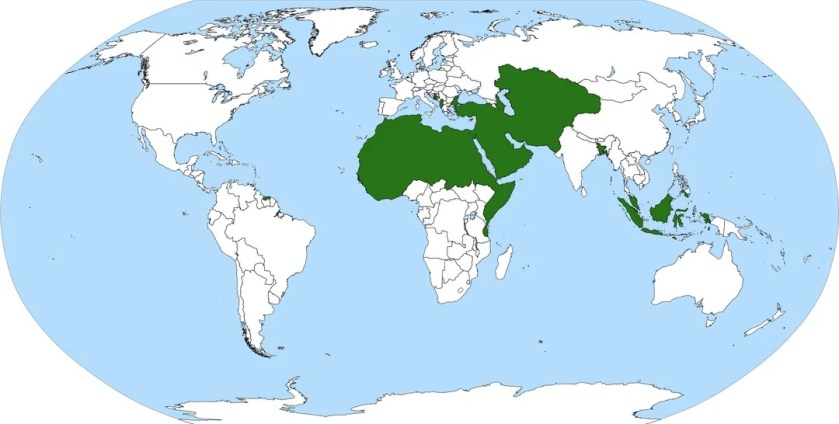
If the ruling elites in the Muslim world make Islam the centre of their lives, then it’s not beyond the scope of the imagination for these elites and influentials to make great sacrifices in pursuit of the greater good, in this case the unification of the Muslim lands into a powerful bloc – A United States of Islam.

In 19th century Japan the ruling families sacrificed their lands in pursuit of a unified empire. If non-Muslims can make such an undertaking, then no doubt Muslims can do the same, especially since Allah has purchased from the believers their lives and wealth in return for Jannah. Allah ta’ala says,

إِنَّ ٱللَّهَ ٱشْتَرَىٰ مِنَ ٱلْمُؤْمِنِينَ أَنفُسَهُمْ وَأَمْوَٰلَهُم بِأَنَّ لَهُمُ ٱلْجَنَّةَ

“Allah has indeed purchased from the believers their lives and wealth in exchange for Paradise.”[4]

“[In 1866] Thirteen years after Commodore Matthew Perry steamed into Tokyo Bay (1853), a nationalist rebellion overthrew the conservative Tokugawa Shogunate, installed the Emperor Meiji in power, and implemented a program of sweeping national reform.[5]

In an act no less stunning than the revolution itself, nearly all of the former ruling families voluntarily surrendered their power to the emperor, declaring, “We therefore reverently offer up all our feudal possessions so that a uniform rule may prevail throughout the Empire. Thus, the country will be able to rank equally with the other nations of the world.”[6] [7]

Notes


[1] Dr. Israr Ahmad, ‘Khilafah in Pakistan: What, Why & How?’ Lahore Markazi Anjuman Khuddam-Ul-Qur’an, 2006, Second Edition, p.24 https://tanzeem.org/wp-content/uploads/files/pdf/english-books/Khilafah_in_Pakistan.pdf

[2] Sahih Muslim 1851a, https://sunnah.com/muslim:1851a

[3] Muhammad Khair Haikal, ‘Al-Jihaad Wal-Qitaal Fee As-Siyaasah Ash-Shar’iyah, Volume One, Dar ul Thaqafah, 2019, p.612

[4] Holy Qur’an, Surah Al-Tawbah, ayah 111

[5] The Meiji Restoration was a political and social revolution in Japan from 1866 to 1869 that ended the power of the Tokugawa shogun and returned the Emperor to a central position in Japanese politics and culture.

[6] Edward Behr, Hirohito: Behind the Myth (New York: Vantage Books, 1989), p.6

[7] Douglas Macgregor, ‘Margin of Victory: Five Battles that Changed the Face of Modern War,’ Naval Institute Press, 2016, p.41

Maintaining a Unitary Islamic State

  1. Loyalty to the Caliph is through the Bay’ah
  2. Rightly Guided Caliphate
  3. Umayyads
  4. Abbasids
  5. Notes

Loyalty to the Caliph is through the Bay’ah

The bay’ah contract which is the citizenship contract between the Muslims and the caliph contains explicit words of loyalty and obedience to the head of state. Ubada ibn Al-Samit said:

بَايَعْنَا رَسُولَ اللَّهِ صلى الله عليه وسلم عَلَى السَّمْعِ وَالطَّاعَةِ فِي الْمَنْشَطِ وَالْمَكْرَهِ‏.‏ ‏‏وَأَنْ لاَ نُنَازِعَ الأَمْرَ أَهْلَهُ، وَأَنْ نَقُومَ ـ أَوْ نَقُولَ ـ بِالْحَقِّ حَيْثُمَا كُنَّا لاَ نَخَافُ فِي اللَّهِ لَوْمَةَ لاَئِمٍ ‏‏‏ 

“We gave the bayah to Allah’s Messenger that we would listen and obey him both at the time when we were active and at the time when we were tired, and that we would not fight against the ruler or disobey him, and would stand firm for the truth or say the truth wherever we might be, and in the Way of Allah we would not be afraid of the blame of the blamers.”[1]

Every citizen, including all the governors are bound first and foremost by the bay’ah. When the Islamic ideology is strong within the ummah and its governing bodies, then this should be the basis of the societal bond (asabiyah) among the people and its rulers which holds the state together. The rulers in the provinces would then be appointed based on meritocracy i.e. strength of the Islamic ideology and competency in the role. In addition, the appointment of the governor must be based on shura (consultation) with the people he is ruling over, because a governor cannot rule over people who do not accept his rule. In modern times this would be through an election ratified by the caliph.

Rightly Guided Caliphate

Umar ibn Al-Khattab was known for being a very ‘hands-on’ caliph who was extremely strict with his governors, and was able to maintain a fairly centralised administration with no major rebellions across the vast lands of his caliphate. This is why Umar is known as the بَابًا مُغْلَقًا‏ “closed door” against fitna (discord).[2]

In his first speech as caliph he said,

إن الله ابتلاكم بي وابتلاني بكم وأبقاني فيكم بعد صاحبي. فو الله لا يحضرني شيء من أمركم فيليه أحد دوني ولا يتغيب عني فآلو فيه عن الجزء والأمانة. ولئن أحسنوا لأحسنن إليهم ولئن أساءوا لأنكلن بهم

“Allah is testing you with me and testing me with you after my two companions. By Allah, I will not delegate to anyone else any of your affairs that I can deal with directly, and if there is anything that I cannot deal with directly, I will try to delegate it to people who are able to deal with it and are trustworthy. By Allah, if they (governors) do well, I will reward them, and if they do badly, I will punish them.”[3]

Umar was able to keep a tight control over the regions of the state because his governors were mostly senior sahaba, supported by the sahaba and the tabi’un (next best generation) living in the province. Near the end of Uthman bin Affan’s rule, the senior sahaba had either passed away or left Medina. This made the capital vulnerable to nefarious anti-government activities which eventually culminated in Uthman’s assassination and martyrdom, something prophesised by the Messenger ﷺ. Abdulwahab El-Affendi describes this situation, “The system began to unravel during the latter part of Uthman’s reign, partly through no fault of his own. The fast expansion of the Medina city-state into an empire created many new difficulties, as the administration of the expanded state became too complicated for the city-state model of management as it evolved up to that time.”[4]

This fitna continued throughout Ali ibn Abi Talib’s rule where he fought a civil war with Mu’awiya, the governor of Ash-Sham. A man asked Ali bin Abi Talib (ra) why people obeyed Abu Bakr and Umar during their rule, yet in his and Uthman’s rule people started to disobey and rebel. Ali replied to him,

لأن رعية أبي بكر وعمر كانوا مثلي ومثل عثمان، ورعيتي أنا اليوم مثلك وشبهك

“Because the subjects of Abu Bakr and Umar were like me and Uthman, and my subjects today are like you and similar to you!”[5]

Al-Hasan ibn Ali (r.661CE) was the fifth and last Rightly Guided Caliph after the death of his father Ali ibn Abi Talib. The state’s authority was fragmented due to the ongoing civil war with Mu’awiya. In addition, the Islamic conquests had been halted since the later period of Uthman’s caliphate due to the fitna and rebellion. Although Al-Hasan had full executive and military authority to continue fighting Mu’awiya, he instead relinquished his right for the greater good and abdicated in favour of Mu’awiya who then received the bay’ah and became the caliph. Al-Hasan said, “I have been thinking of going to Medina to settle there and yielding (the caliphate) to Mu’awiya. The turmoil has gone on for too long, blood has been shed, ties of kinship have been severed, the roads have become unsafe, and the borders have been neglected.”[6]

This action of Al-Hasan was prophesised and praised by the Messenger ﷺ. Once the Prophet ﷺ brought out Al-Hasan and took him up to the minbar (pulpit) along with him and said,

ابْنِي هَذَا سَيِّدٌ، وَلَعَلَّ اللَّهَ أَنْ يُصْلِحَ بِهِ بَيْنَ فِئَتَيْنِ مِنَ الْمُسْلِمِينَ

“This son of mine is a Saiyid (i.e. chief) and I hope that Allah will help him bring about reconciliation between two Muslim groups.”[7]

Umayyads

After the Rightly Guided Caliphate and the transformation of the caliphate into hereditary rule and monarchy (mulk), loyalty of the provinces was primarily maintained through the family bond (asabiyah) of the ruling dynasty. The main provincial governors were from the ruling family and hence had a natural loyalty to the caliph through the family asabiyah bond. Islam was still the basis of this bond, and it was unthinkable that any of the governors would not implement the rules of Islam. However, some of the governors did abuse their positions and took advantage of their position within the ruling family of the Umayyads. This eventually culminated in widespread opposition to their rule and the rise of another ruling dynasty – the Abbasids – who obliterated Umayyad rule and assumed the caliphate for themselves in 750CE. The Abbasids then continued in a similar manner to the Umayyads with governors appointed from Banu Abbas.

Tocqueville (d.1859) describes this type of loyalty bond. “Hereditary monarchies have a great advantage: as the particular interest of a family is continually bound in a strict manner to the interest of the state, not a single moment ever passes in which the latter is left abandoned to itself. I do not know if affairs are better directed in these monarchies than elsewhere; but at least there is always someone who, well or ill according to his capacity, is occupied with them.”[8]

Since the monarchy and aristocracy own the state, then they have a vested interest in its continuance because they are benefiting materially from their hold on power. Traditionally in the UK, all senior officers in the military, security services, civil service and government were from the aristocracy, who were groomed for ruling from birth, going to the best schools and universities – Eton, Oxbridge and Sandhurst. Even though their ties to the aristocracy have lessened, the British ‘establishment’ to this day is still recruited primarily from these institutions.

Abd al-Aziz ibn Marwan (d.705CE), the father of Umar ibn Abdul-Aziz, was the Wali Al-‘Ahd (designated successor) for his brother the caliph Abdul-Malik ibn Marwan (d.705CE) according to the covenant (‘ahd) of their father Marwan ibn Al-Hakam (d.685CE). Abd al-Aziz was the governor of Egypt with full powers over the province for 20 years from 685–705CE. Abdul-Aziz was a very pious man, and being the ‘crown prince’ and next in-line to the caliphate meant there was no incentive for him to rebel as one day he would be the ruler (if he had outlived Abdul-Malik). He was therefore a loyal governor over one of the most important provinces of the Caliphate.

Ibn Khaldun describes this transformation from caliphate to mulk (kingship): “After Mu‘âwiyah, caliphs who were used to choosing the truth and to acting in accordance with it, acted similarly. Such caliphs included the Umayyads ‘Abd-al-Malik and Sulaymân and the ‘Abbâsids as-Saffâḥ, al-Manṣûr, al-Mahdî, and ar-Rashîd, and others like them whose probity, and whose care and concern for the Muslims are well known. They cannot be blamed because they gave preference to their own sons and brothers, in that respect departing from the Sunnah of the first four caliphs. Their situation was different from that of the (four) caliphs who lived in a time when royal authority (mulk) as such did not yet exist, and the restraining influence was religious. Thus, everybody had his restraining influence in himself. Consequently, they appointed the person who was acceptable to Islam, and preferred him over all others. They trusted every aspirant to have his own restraining influence.

After them, from Mu‘âwiyah on, the group feeling (asabiyah) (of the Arabs) approached its final goal, royal authority (mulk). The restraining influence of religion had weakened. The restraining influence of government and group was needed. If, under those circumstances, someone not acceptable to the group had been appointed as successor, such an appointment would have been rejected by it. The (chances of the appointee) would have been quickly demolished, and the community would have been split and torn by dissension.”[9]

Abbasids

After the Abbasids took power, the caliphate was never a fully unified state again. Al-Andalus became semi-independent under the Umayyad Abdul-Rahman I who managed to escape the Abbasid purge of all Umayyad elements in the state. In the beginning, Al-Andalus never declared itself a separate caliphate and hence implicitly acknowledged the Abbasid caliphate in Baghdad. The scholars of Al-Andalus travelled freely to and from the domains of the Abbasids without fear of any persecution or discrimination. In 929CE when the central Abbasid caliphal regime was in utter disarray, with a weak almost non-functional government, Al-Andalus became the Cordoba Caliphate under Abdul-Rahman III.

Other remote provinces of the state were also effectively semi-independent such as in Ifriqiya (eastern Algeria, Tunisia and the Tripoli region) under the Aghlabid dynasty (r.800-899CE) whose Amir was first appointed by Harun Al-Rashid (r. 786-809CE) to bring peace to the region which had been devastated by years of civil war.

From the 10th century, the Abbasid Caliphate completely fragmented and the caliph in Baghdad simply accepted the rise of semi-independent emirates and sultanates whom he conferred titles upon, in return for the Amirs and Sultans bay’ah which kept him in power.

The Buyids (r. 934-1062CE) in modern-day Iraq and Iran, the Ghaznavids (r.977–1186CE) in modern-day Afghanistan, Eastern Iran and Pakistan, and then later the Seljuks (r. 1037–1194CE) who succeeded the Buyids and expanded into Ash-Sham and later Anatolia. All of these governors or Amirs are what Al-Mawardi refers to as an Amir Al-Istila’ (Amir of Seizure or Conquest) and Wazir Al-Tafweedh (Delegated Assistant).

Notes


[1] Sahih al-Bukhari 7199, 7200, https://sunnah.com/bukhari/93/60

[2] Sahih al-Bukhari 525 https://sunnah.com/bukhari:525

[3] Ibn Sa’d, At-Tabaqat, 3/275; https://shamela.ws/book/1686/886#p1

[4] Abdulwahab El-Affendi, ‘Who needs an Islamic State?’ second edition, p.163

[5] al-Turtushi (d.1126CE), Sirāj al-Mulūk, https://shamela.ws/book/1585/114

[6] Ibn Sa’d, at-Tabaqat al-Kubra at Tabaqat al-Khamisah min as-Sahabah, 1:331

[7] Sahih al-Bukhari 3629, https://sunnah.com/bukhari/61/133

[8] Alexis De Tocqueville, ‘Democracy in America,’ The University of Chicago Press, 2002, p.172; first published in 1835.

[9] Ibn Khaldun, ‘The Muqaddimah – An Introduction to History,’ Translated by Franz Rosenthal, Princeton Classics, p.270

Election of Amirs in the absence of an agreed upon caliph

  1. Summary of Elected Amirs
  2. Damascus
  3. Basra
  4. Kufa
  5. Khorasan
  6. The Caliph may overturn the election result
  7. Notes

The caliph’s appointment of governors is through a contract of appointment (عَقْد تَقْلِيد ‘aqd taqleed) which does not end with the death or removal of the caliph. It continues, and the new caliph will decide whether to renew the contract and keep the governors in place or appoint new governors. Abu Bakr for example, kept the same governors as the Prophet ﷺ had appointed, but Umar when he became caliph changed the governors and appointed new ones.

During the volatile period after the death of Mu’awiya ibn Yazid, the people of Iraq and Khorasan actually elected new governors until a caliph had been chosen. This is based on the hadith, where the Messenger of Allah ﷺ said,

وَلَا يَحِلُّ لِثَلَاثَةِ نَفَرٍ يَكُونُونَ بِأَرْضِ فَلَاةٍ إِلَّا أَمَّرُوا عَلَيْهِمْ أَحَدَهُمْ

“It is not permissible for three people to be in an open country (desert) without appointing one of them as their Amir.”[1]

Summary of Elected Amirs

ProvinceElected Amir
Damascusal-Dahhak bin Qays al-Fihri
Basra1. Ubaydallah ibn Ziyad
2. Abd al-Malik bin Abdallah bin Amir
3. Abdallah bin al-Harith bin Abd al-Muttalib
Kufa1. Umar ibn Sa’d ibn Abi Waqqas
2. Amir bin Masud
KhorasanSalm ibn Ziyad

Damascus

Al-Dahhak bin Qays al-Fihri was a former governor of Kufa under Mu’awiya,[2] and his Chief of Police (Sahib Ash-Shurta) in Damascus.[3] Ash-Sham at the time of Mu’awiya ibn Yazid’s death was split in to five provinces[4]:

ProvinceGovernorTribal grouping
Damascusal-Dahhak bin Qays al-Fihri[5]Quraish
QinnasrinZufar bin al-Harith al-Kilabi[6]Qays
Himsal-Nu’man bin Bashir al-Ansari[7]Sahabi/Ansar
PalestineNatil bin Qays[8]Qays
JordanHassan ibn Malik ibn Babdal al-Kalbi[9]Yamani

Tabari mentions, “The people had given bay’ah to al-Dahhak bin Qays al-Fihri on the understanding that he should lead them in prayer and manage their affairs until the question of authority over the community of Muhammad had been settled.”[10]

This echoes what occurred in all the other regions of the state except Hijaz where Abdullah ibn Al-Zubayr received the bay’ah from the Ahlul hali wal-aqd in Makkah and Madinah and was pronounced the caliph of the Muslims. Tabari mentions that after the death of Mu’awiya ibn Yazid, the Kufans, the Basrans, Hijaz, the Syrians and the people of Mesopotamia all accepted ibn Al-Zubayr, except for the people of Jordan.[11] The province of Jordan was under the leadership of Hassan ibn Malik who was a Yamani and he worked to secure Marwan ibn al-Hakam as the caliph. This split between the Qaysi supporting Abdullah ibn Al-Zubayr and the Yamani’s supporting Marwan sowed the seeds for future discord which the Umayyad Caliph’s had to try and manage.

Basra

Ubaydallah ibn Ziyad was the governor of Basra and Kufa under Yazid ibn Mu’awiya,[12] and was the one responsible for the killing of al-Hussain and his followers. Initially the people of Basra elected him as their governor, but then they regretted it after remembering what he did to al-Hussain. So they withdrew their allegiance to him.[13] Ubaydallah then made his way to Syria and was instrumental in getting Marwan ibn al-Hakam to take up the post of caliph instead of giving bay’ah to Abdullah ibn Al-Zubayr.

Tabari mentions, “The Basrans decided together to give authority to one of themselves to lead the prayer until an imam should be agreed upon. They appointed Abd al-Malik bin Abdallah bin Amir for a month and then they appointed Babbah, who was Abdallah bin al-Harith bin Abd al-Muttalib. He led them in prayer for two months until Umar ibn Ubaydullah bin Ma’mar came to them from Ibn Al-Zubayr.”[14] It was known by convention from the time of the Prophet ﷺ that leading the salah implied more than simply praying and was an indication of ruling powers.

Kufa

When Mu’awiya ibn Yazid died, Amr bin Hurayth was the ‘Amil (mayor) for Ubaydallah ibn Ziyad over Kufa. The people of Kufa then deposed him and gathered in the masjid saying, “Let us appoint somebody to authority until a caliph is agreed upon.”[15] Initially they chose Umar ibn Sa’d ibn Abi Waqqas who was the commander sent by Ubaydallah ibn Ziyad to fight al-Hussein, but the women of Hamdan (a tribe who supported al-Hussein) came weeping for al-Hussein, and the men of Hamdan came with their swords and encircled the minbar. After some debate they chose Amir bin Masud as their governor and wrote to ibn Al-Zubayr who confirmed his appointment.[16]

Khorasan

Ubaydallah ibn Ziyad’s brother Salm ibn Ziyad, was appointed as governor over Khorasan and Sijistan by Yazid ibn Mu’awiya. Following Yazid and his son Mu’awiya’s death the army of Khorasan gave allegiance to Salm ibn Ziyad that he would remain in power until a caliph was agreed upon.[17] As happened in Basra, the people of Khorasan deposed Salm ibn Ziyad which then led to instability and fitna in the region as rival leaders such as Abdullah ibn Khazim al-Sulami rose up and fought to take power. Ibn Khazim eventually become the governor, but in 72AH he was forcibly removed by Abdul-Maik ibn Marwan.[18]

The Caliph may overturn the election result

In Kufa, the caliph Abdullah ibn Al-Zubayr confirmed the appointment of Amir bin Masud, but in Basra ibn Al-Zubayr appointed his own man Umar ibn Ubaydullah bin Ma’mar. This is the caliph’s prerogative where generally he can accept the choice of the people but maintains the power to overrule this if the benefit of Islam and Muslims demands it.

An example of where this might be required is if there is a heavily factionalised society with rival tribal groupings as occurred in Khorasan under the Umayyad Caliph Abdul-Malik ibn Marwan.

There was conflict and discord between the tribes (Muqa’is and Butan vs Tamim, Awf and Abna) in Khorasan in 72AH-74AH under its governor Bukayr bin Wishah who was from Banu Tamim. The Arab tribes in Khorasan wrote to Abdul-Malik saying that Khorasan would only recover from its disarray under the direction of a man of Quraysh, one who would be the object of neither their envy nor their partisanship.

Abd al-Malik said, “Khorasan is the frontier of the East. It has had its troubles under the governance of this Tamimi, and the troops have broken into factions. Fearing that they will return to the factionalism of the past, and that the region and its people will then be destroyed, they have asked me to appoint as governor over them a man of Quraysh, whom they would heed and obey.” He then appointed one of the Umayyads Umayyah bin Abdallah as the governor.[19]

Notes


[1] Musnad Ahmed 6647, https://shamela.ws/book/25794/5118

[2] Abu Ja`far Muhammad b. Jarir al-Tabari, ‘The History of Al-Tabari’, translation of Ta’rikh al-rusul wa’l-muluk, State University of New York Press, Vol. 18, p.182

[3] al-Tabari, Op.cit., Vol. 18, p.209

[4] al-Tabari, Op.cit., Vol. 20, p.49

[5] al-Tabari, Op.cit., Vol. 20, p.50

[6] al-Tabari, Op.cit., Vol. 20, p.49

[7] Ibid

[8] al-Tabari, Op.cit., Vol. 20, p.50

[9] Ibid

[10] al-Tabari, Op.cit., Vol. 20, p.48

[11] al-Tabari, Op.cit., Vol. 20, p.47

[12] al-Tabari, Op.cit., Vol.19, p.1

[13] al-Tabari, Op.cit., Vol. 20, p.7

[14] al-Tabari, Op.cit., Vol. 20, p.43

[15] al-Tabari, Op.cit., Vol. 20, p.39

[16] Ibid

[17] al-Tabari, Op.cit., Vol. 20, p.69

[18] al-Tabari, Op.cit., Vol. 21, p.210

[19] al-Tabari, Op.cit., Vol. 22, p.9

Election of Amirs in the Rightly Guided Caliphate

  1. Abu Musa Al-Ashari elected as governor of Kufa under Uthman
  2. Muhammad ibn Abi Bakr elected as governor of Egypt under Uthman
  3. Notes

In the time of Abu Bakr and Umar the people trusted their opinion over their own, so there was no real requirement to consult the ordinary people of a province on who their governor should be. We can see this in the selection process for the next caliph where the Ahlul hali wal-aqd[1] (senior sahaba) said to Abu Bakr: “O Caliph of the Messenger Allah, your opinion is our opinion (i.e., appoint your successor for us).” He said, “Then give me some time, so that I can see what is best in the view of Allah and what is best for His religion and His slaves.”[2]

Similarly, when Umar was stabbed and his death was imminent, the Ahlul hali wal-aqd came and asked him to nominate a successor as Abu Bakr had done for him. Umar couldn’t come to a decision so he appointed a council of six candidates who were all from the 10 promised jannah to meet after his death and appoint a caliph. 

Near the end of Uthman’s caliphate and the loss of many senior sahaba, discontent and organised rebellion began to emerge. A man asked Ali bin Abi Talib (ra) why people obeyed Abu Bakr and Umar during their rule, yet in his and Uthman’s rule people started to disobey and rebel. Ali replied to him,

لأن رعية أبي بكر وعمر كانوا مثلي ومثل عثمان، ورعيتي أنا اليوم مثلك وشبهك

“Because the subjects of Abu Bakr and Umar were like me and Uthman, and my subjects today are like you and similar to you!”[3]

Uthman had to adopt a new method with regards to appointing governors and take shura directly from the influentials in the province as opposed to shura with his close advisors (wazirs). This method of allowing the people’s representatives to appoint (elect) their amirs is established in the sunnah as mentioned above.

A point to note here is that although the senior sahaba remained silent over Uthman’s action of allowing the people’s representatives to elect their amirs, this is not considered ‘ijma as-sahaba (consensus of the companions) because there is textual evidence in the sunnah permitting it. In addition, this policy falls under the general powers of the Imam to administer the state according to his own ijtihad based on the hadith:

فَالْإِمَامُ الَّذِي عَلَى النَّاسِ رَاعٍ وَهُوَ مَسْئُولٌ عَنْ رَعِيَّتِهِ

“The Imam[4] is a guardian, and he is responsible over his subjects.”[5]

Taqiuddin an-Nabhani (d.1977) explains that for an action to be considered ‘ijma as-sahaba “it should not be of the matters which the Imam has the right of disposal in them by his own opinion like the money in the treasury (Bayt al Maal), the disposal of it is made to be according to the opinion of the Imam, so his disposal in a matter like giving money by preferences not equally[6], then the silence of the sahaba on that is not considered a silent consensus (al-Ijma’ al-Sukuti); because although it appears to be injustice between people, but the reality is that it had been made the Imam’s right of disposal according to his opinion and Ijtihad, so their silence is not on an evil matter (Munkar), and the deed of the Khaleefah will be his own ijtihad not a consensus. Thus all that of which the opinion is made to be up to the Imam is not considered to be of the consensus, even if the sahaba kept silent on it.”[7]

Abu Musa Al-Ashari elected as governor of Kufa under Uthman

In the year 34H Sa’id ibn Al-As was the governor of Kufa in Iraq. The influentials of Kufa came to Medina and complained about their governor Sa’id and wanted Uthman to remove him. Initially Uthman refused because the complaint wasn’t valid and was initiated by Malik ibn al-Harith, who was known as al-Ashtar a man of fitna.[8]

The people of Kufa had a reputation for making unsubstantiated claims against their governors. ‘Umar ibn al-Khattab said of them: “I am very tired and no longer know what to do with the people of Kufah; they are not pleased with anyone and no one is pleased with them; they are not good to any governor and no governor could be good for them.”[9]

It was also narrated about Umar that he consulted about who to appoint over Kufa, as its affairs had exhausted him. If he appointed someone gentle over it, they would weaken him, and if he appointed someone harsh over it, they would complain about him. He said: “I wish I could find a strong, trustworthy Muslim whom I could appoint over them.”[10]

Despite this reputation of the people of Kufa Uthman agreed to their choice (election) of Abu Musa Ashari. After the people of Kufa expelled their governor Sa’id ibn Al-As, he made his way to Medina and met with Uthman. Uthman asked Sa’id, “What do they want? Have they withdrawn their hand from obedience?” (Sa’id) responded, “They proclaim that they want a change (of governors).” “Whom do they want?” asked (`Uthman). “Abu Musa (al-Ash’ari),” replied (Sa’id). (Uthman) said, “Then we have set Abu Musa over them. By Allah, we shall create no excuse for anyone, nor will we leave them any proof [against us). We shall endure patiently, as we have been commanded to do, until we attain what they desire.”[11]

Muhammad ibn Abi Bakr elected as governor of Egypt under Uthman

Abdullah Ibn Abi Sarh was the governor of Egypt. The influentials of Egypt came to Medina in the year 35H to complain about him and wanted him removed. “Seven hundred men left Egypt and dwelt in the mosque (of Madinah). They complained to the Companions at the times of the prayers about what Ibn Abi Sarh had done…Uthman said to them, “Choose from amongst yourselves a man whom I shall appoint over you in his (Ibn Abi Sarh’s) place.” The people indicated to him Muhammad ibn Abi Bakr. They said, “Appoint Muhammad ibn Abi Bakr over us.” He wrote his covenant (‘ahd) and appointed him.”[12]

Notes


[1] The source of authority in an Islamic State from which the caliph gains his legitimacy to rule is the ummah, or more specifically her political representatives known in the classical texts as the Ahlul hali wal-aqd (أَهْل الحَلّ والعَقْد), which literally means ‘the people who loosen and bind’, i.e. those who have the authority to contract, remove and account the caliph.

[2] Dr. Ali Muhammad As-Sallabi, ‘The Biography of Abu Bakr As Siddeeq’, Darussalam Publishers, 2007, p.724

[3] al-Turtushi (d.1126CE), Sirāj al-Mulūk, https://shamela.ws/book/1585/114

[4] Imam here means the khaleefah i.e. the great Imam الْإِمَامُ الْأَعْظَمُ. Ibn Hajar, Fath al Bari, https://shamela.ws/book/1673/7543#p1    

[5] Ṣaḥīḥ al-Bukhārī 7138, Ṣaḥīḥ Muslim 1829

[6] Abu Bakr and Umar differed over distributing the funds. Abu Bakr distributed them equally among people whereas when Umar was caliph he adopted a different approach and distributed them according to the person’s rank and contribution to Islam. Both of these policies is permitted and there is no ‘ijma here as its established from the sunnah that the Imam has this power. See Dr Ali Muhammad as-Sallabi, ‘Umar ibn Al-Khattab: His life & times,’ Vol.1, International Islamic Publishing House, p.477

[7] Taqiuddin an-Nabhani, ‘The Islamic Personality,’ translation of Ash-Shaksiyya Al-Islamiyya, Vol.3, p.533

[8] Dr Ali Muhammad As-Sallabi,’The Biography of Uthman bin Affan,’ Darussalam, p.406

[9] al-Ma’rifah wa’l-Tareekh by al-Fasawi, 2/754 quoted in Dr Ali Muhammad As-Sallabi,’The Biography of Uthman bin Affan,’ Darussalam, p.406

[10] Judge Hussein bin Mohammed Al Mahdi – Member of the Supreme Court of the Republic of Yemen, The book of Shura in Islamic Law, 2009, https://shamela.ws/book/26217/98#p1

[11] Abu Ja`far Muhammad b. Jarir al-Tabari, ‘The History of Al-Tabari’, translation of Ta’rikh al-rusul wa’l-muluk, State University of New York Press, Vol. 15, p.135

[12] Jalal ad-Din as-Suyuti, ‘The History of the Khalifahs who took the right way,’ 3rd Revised edition, a translation of the chapters on al-Khulafa’ ar-Rashidun from Tarikh al-Khulafa’, Translated by Abdassamad Clarke, Ta-Ha Publishers Ltd, p.169; https://shamela.ws/book/11997/129#p1