Latest Posts

And when Musa said to his people, ‘O my people, why do you mistreat me when you know that I am the Messenger of Allah to you?

وَإِذ قالَ موسىٰ لِقَومِهِ يا قَومِ لِمَ تُؤذونَني وَقَد تَعلَمونَ أَنّي رَسولُ اللَّهِ إِلَيكُم ۖ فَلَمّا زاغوا أَزاغَ اللَّهُ قُلوبَهُم ۚ وَاللَّهُ لا يَهدِي القَومَ الفاسِقينَ

And when Musa said to his people, ‘O my people, why do you mistreat me when you know that I am the Messenger of Allah to you?’ So when they deviated, Allah made their hearts deviate. Allah does not guide people who are deviators.

(As-Saff, Verse 5)

The following is based on a translation of Dr Fadhel al Samarrai’s Tafseer of Surah Saff. Allah narrates to us the stories of the previous nations so we will learn lessons from them and not commit the same errors. Bani Israel mistreated their messenger Musa (as) so we should not be surprised with their mistreatment of Muslims in Palestine today.

Read More

Conditions of the Caliph: Why can’t a woman be a ruler in the Caliphate?

  1. What is the evidence for restricting ruling to men only?
  2. The hadith chain of narration (isnad)
    1. Who is the narrator of the hadith?
    2. Why do some people say Abu Bakra is not a reliable hadith narrator?
    3. How did Abu Bakra convert to Islam?
    4. Why was the hadith narrated after the Battle of Al-Jamal?
    5. What was the incident for which Abu Bakra was lashed?
    6. How did the sahaba view Abu Bakra after this incident?
    7. Can a witness ever give testimony again?
  3. The text of the hadith (matn)
    1. What are the opinions on the text of the hadith?
    2. What does the Arabic text say?
    3. Is this hadith specific to the Persians and Chosroes daughter?
    4. Is this hadith applied to all positions of responsibility?
    5. Is the story of Bilqis in Qur’an evidence for women rulers?
    6. What does falah (success) mean?
    7. Is the prohibition in the text decisive?
    8. Does history have any influence on deriving Islamic rules?
    9. Is there any concept of a civil state in Islam?
    10. Why is the word Khaleefah grammatically feminine if the Khaleefah must be male?
    11. Conclusion

Allah (Most High) has created men and women as equals in terms of their humanity but He has assigned them different psroles in this life. These roles are complementary which leads to harmony between the sexes and in society as a whole.

Read More

THE ECONOMIST 1924: The abolition of the Caliphate

The Economist Archive
Mar 8th 1924 | Europe

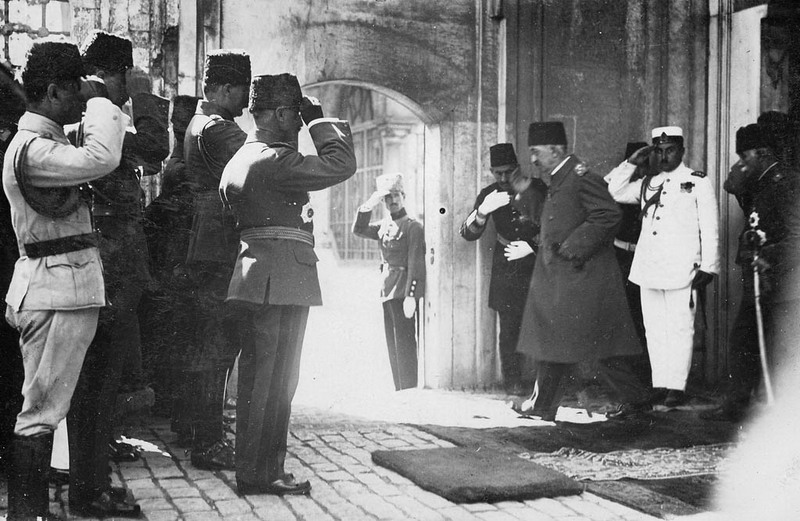
THE REPUDIATION of the Caliphate by the Turks marks an epoch in the expansion of Western ideas over the non-Western world, for our Western principles of national sovereignty and self-government are the real forces to which the unfortunate ‘Abdu’l Mejid Efendi has fallen a victim. Both by tradition and by theory, the Caliph is an absolute monarch over a united Islamic world, and it is therefore almost impossible to find a place for him in a national state (whether it be called a republic or a constitutional monarchy) in which the sovereignty is vested in the parliamentary representatives of the people.

Read More

3rd March 1924 – 94 years without the Caliphate

BY DILLY HUSSAIN
This article has been reproduced from islam21c.com

“The knots of Islām will be undone one by one, each time a knot is undone the next one will be grasped, the first to be undone will be the ruling and the last will be the prayer.”[2]

Today marks 94 years since the destruction of the Ottoman Caliphate, heralding arguably the darkest chapter in Islamic history after the death of Rasūl’Allāh ﷺ. The Ummah continues to suffer from the after-effects of this calamitous event, for the very reason, which Lord Curzon mentioned – the Muslims currently have no collective “moral strength”, which is embodied in the form of an inclusive Islamic polity. The Middle East and North Africa were subsequently carved up between Britain and France, as Mark Sykes and Francois Georges Picot planned the future of the former Ottoman territories with a pen and ruler. What followed since was an uninterrupted chain of secular dictatorships and petrol rich sheikhdoms. Many of these regimes came to power via military coups, dressed up as pseudo-liberators, whilst the Gulf monarchies unashamedly enjoyed the fruits of their forefathers’ betrayal during WW1.

Read More

Oh Muslim Armies! “Allah loves those who fight in His Way in ranks as a unified solid structure”

إِنَّ اللَّهَ يُحِبُّ الَّذينَ يُقاتِلونَ في سَبيلِهِ صَفًّا كَأَنَّهُم بُنيانٌ مَرصوصٌ

Allah loves those who fight in His Way in ranks as a unified solid structure.

(As-Saff, 61:4)

The following is a translation of Dr Fadhel al Samarrai’s Tafseer of Surah Saff. It shows the importance of Muslim armies fighting to achieve Islamic interests (في سَبيلِهِ) and the importance of uniting in fighting as one strong, unified structure (بُنيانٌ مَرصوصٌ) rather than fighting as disunited nation states.

Read More

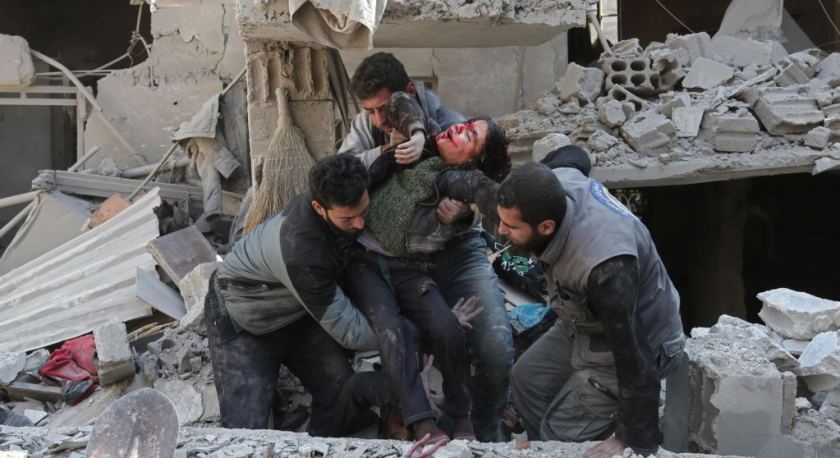
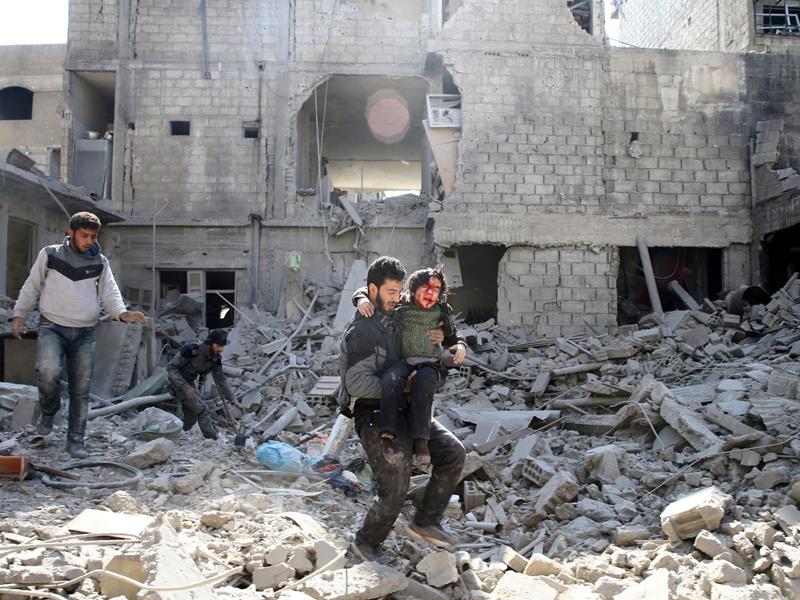
East Ghouta Massacre: “Our Lord, take us out of this town whose inhabitants are wrongdoers”

وَمَا لَكُمْ لَا تُقَاتِلُونَ فِي سَبِيلِ اللَّهِ وَالْمُسْتَضْعَفِينَ مِنَ الرِّجَالِ وَالنِّسَاءِ وَالْوِلْدَانِ الَّذِينَ يَقُولُونَ رَبَّنَا أَخْرِجْنَا مِنْ هَذِهِ الْقَرْيَةِ الظَّالِمِ أَهْلُهَا وَاجْعَلْ لَنَا مِنْ لَدُنْكَ وَلِيًّا وَاجْعَلْ لَنَا مِنْ لَدُنْكَ نَصِيرًا

“What reason could you have for not fighting in the Way of Allah – for those men, women and children who are oppressed and say, ‘Our Lord, take us out of this town whose inhabitants are wrongdoers! Give us a protector from You! Give us a helper from You!’?”

(An-Nisaa, 4:75)

Read More

Tafseer Surah Ad-Duha

وَالضُّحَىٰ  ﴿١﴾ وَاللَّيْلِ إِذَا سَجَىٰ  ﴿٢﴾ مَا وَدَّعَكَ رَبُّكَ وَمَا قَلَىٰ  ﴿٣﴾ وَلَلْآخِرَةُ خَيْرٌ لَّكَ مِنَ الْأُولَىٰ  ﴿٤﴾ وَلَسَوْفَ يُعْطِيكَ رَبُّكَ فَتَرْضَىٰ  ﴿٥﴾ أَلَمْ يَجِدْكَ يَتِيمًا فَآوَىٰ  ﴿٦﴾ وَوَجَدَكَ ضَالًّا فَهَدَىٰ ﴾ ﴿٧ )  ووجَدَدَكَ عَائِلًا فَأَغْنَىٰ  ﴿٨﴾ فَأَمَّا الْيَتِيمَ فَلَا تَقْهَرْ  ﴿٩﴾ وَأَمَّا السَّائِلَ فَلَا تَنْهَرْ   وَأَمَّا بِنِعْمَةِ رَبِّكَ فَحَدِّثْ  ﴿١١

(1) By the morning brightness (2) and the night when it is still, (3) your Lord has not abandoned you nor does He hate you. (4) The Latter will be better for you than the Former. (5) Your Lord will soon give to you and you will be satisfied. (6) Did He not find you orphaned and shelter you? (7) Did He not find you wandering and guide you? (8) Did He not find you impoverished and enrich you? (9) So as for orphans, do not oppress them, (10) and as for beggars, do not berate them. (11) And as for the blessing of your Lord, speak out!

(Surah Duhaa)

Read More