

إن الله يزع بالسلطان ما لا يزع بالقرآن
Allah prevents by the authority (sultan) what He does not prevent by the Qur’an
Sheikh Bin Baz answers this question: “This is a well-known narration on the authority of Uthman (ra) and it is proven on the authority of Uthman bin Affan, the third rightly-guided caliph (ra). It is also narrated on the authority of Umar (ra)…It means, Allah ta’ala prevents the committing of forbidden acts through the authority (sultan), more than what He prohibits by the Qur’an.
Since some people are weak in faith (iman), the Qur’an’s prohibitions do not affect them. Rather, they resort to forbidden things and do not care. However, when they learn that there is a punishment from the authority, they become deterred and fear the authority’s punishment. The meaning of Allah punishes through the authority is that the authority’s punishments, punish some criminals more than what Allah punishes them through the Qur’an.
Due to the weakness of their faith and their lack of fear of Allah ta’ala they fear the Sultan lest he imprison them, beat them, fine them, or exile them from the country. They fear those punishments and are thus prevented from some of the evils due to the fear of the Sultan’s punishments.”[1]
Imam Ghazali echoes this point when discussing the importance and obligation of the Imamate (caliphate). He says, “a sultan is necessary for achieving well-ordered worldly affairs, and well-ordered worldly affairs are necessary for achieving well-ordered religious affairs, and well-ordered religious affairs are necessary for achieving happiness in the hereafter, which is decidedly the purpose of all the prophets.”[2] He also says, “religion and authority are twins” (الدين والسلطان توأمان Ad-deen was-sultan tawaman),[3] and concludes his argument with, “Therefore, the obligation of appointing an imam is among the essential requirements of the law (ضروريات الشرع) – a requirement that by no means can be ignored, so take heed of that!”[4]
This is why the Prophet ﷺ said:
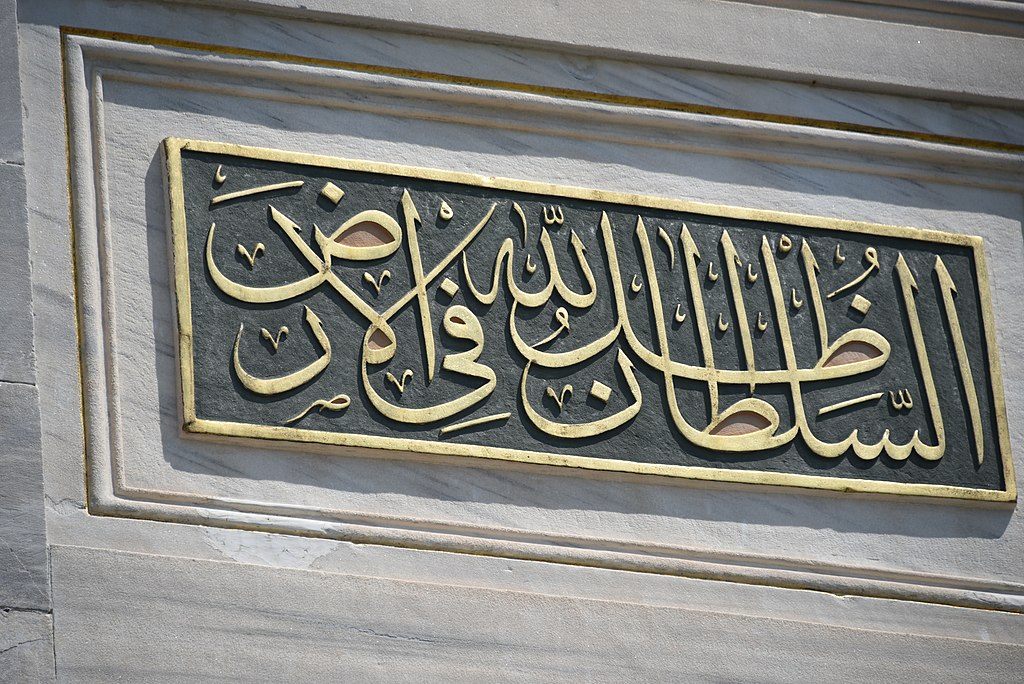
السلطان ظل الله في الأرض فمن أكرمه أكرمه الله ومن أهانه أهانه الله الطبراني والبيهقي عن أبي بكرة
“The Sultan is the shadow of Allah on earth, so whoever honors him (the Sultan), Allah will honor him, and whoever despises him, Allah will despise him.”[5]
Notes
[2] Al-Ghazali’s Moderation in Belief: Al-Iqtiṣād fi al-I‘tiqād, translated by A M Yaqub, University of Chicago Press, Chicago and London, 2013, p.229
[3] Ibid
[4] Ibid, p.234
[5] At-Tabaraani & Al-Bayhaqi. Narrated by Abu Bakrah. Al-Albani classified the hadith through this chain as hasan.
 Islamic Civilization