All posts filed under: Caliphate

Islamic Judicial Principles relevant to the Asia Bibi Case

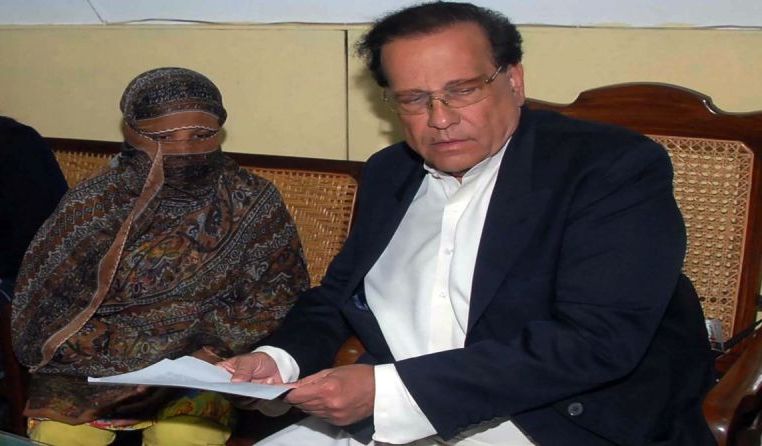
The case of Asia Bibi, a Christian who was sentenced to death in Pakistan for alleged blasphemy against the Prophet Muhammad ﷺ, has thrown the spotlight on Islamic law (sharia) and its judiciary. Predictably the west has used the case to attack sharia as barbaric and label Islamic courts as kangaroo courts where no justice is served. The status of non-Muslims living under Islamic rule is also under fire where they are viewed as an oppressed minority subject to the tyranny of the Muslim majority.

Prophet Muhammad’s ﷺ Impact on the World

This is an excerpt from the book The Divine Reality: God, Islam and the Mirage of Atheism by Hamza Andreas Tzortzis. The Prophet Muhammad ﷺ was truly a mercy to mankind. This assertion is not only justified by his message and his teachings, but it also includes his unprecedented impact on our world. There are two key reasons why his teachings on a social level were so transformative: the justice and compassion of Islam.

Jewish Immigration to the Islamic State

After the liberation of Constantinople by the Ottomans in 1453, Jewish refugees from all over Europe were encouraged to settle in the country and to take advantage of the liberal treatment accorded them by the Sultan. When the Ottoman Sultan Bayezid heard about the expulsion of the Jews from Spain by King Ferdinand, he said: “Can you call such a king wise and intelligent? He is impoverishing his country and enriching my kingdom.”

The Best of Martyrs

Among the teeming and terrified crowd of protesters in Cairo’s Tahrir Square in January 2011, a young man and an older man crouched huddled next to each other as bullets from the security services whizzed overhead. In the din, the two spoke of how the Prophet Muhammad had once declared that whoever dies speaking truth to a tyrant will die a martyr.[1] They spoke of the great martyrs of the Prophet’s day, who awaited those latter-day believers who would one day join them in Paradise. Seized by inspiration, the young man cried, “I will greet them for you,” stood up and was shot in the head. “I touched his blood with my hands,” the elder man, a famous Muslim preacher, it turns out, recounted later in a TV interview, “It smelled like perfumed musk.”[2]     Notes [1] Prophet Muhammad ﷺ said: “The master of the martyrs is Hamza ibn Abdul Mattalib, and a man who stands (in front of) an oppressive ruler and enjoins the good and forbids the evil and so is killed …

The Caliphate’s transition to the Gold Standard

BY FARUQ IBN QAYSR Introductory Remarks In his tract on monetary reform, John Maynard Keynes referred to gold as a barbarous relic, whose rigidity had fettered the world from economic freedom and prosperity. He spoke at a time when the Occident were suffering from macroeconomic anaemia and were yearning for a solution. In sheer desperation, fiat money became the drug that gave growth-addicts what they craved for in the short-run. However, years after its introduction, the fiat system has induced far more volatility than it sought to resolve. In truth, Keynes failed to realise that barbarity was a trait not of gold but of fiat, insofar as it has plagued the world with monetary anarchy. In fact, the very system he consigned to history has never been more relevant than it is today.

What is the official flag of the Caliphate?

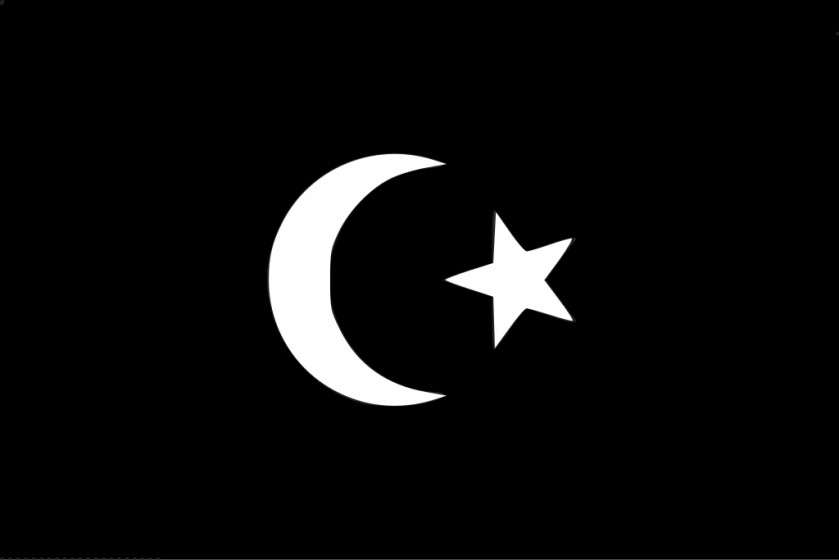
Introduction There is no official flag for an Islamic State specified directly in the Qur’an and Sunnah. What we find are flags and banners used by the army of the Prophet ﷺ in Medina. Using qiyas (analogy) some contemporary scholars have extended the use of these flags and banners to a modern state and its citizens, and not just confined them to the armed forces. The use of flags to denote states is a modern phenomenon. Historically, flags were mainly used in warfare to identify the different armies on the battlefield. Ibn Khaldun says, “Flags have been the insignia of war since the creation of the world. The nations have always displayed them on battlefields and during raids. This was also the case in the time of the Prophet and that of the caliphs who succeeded him.”[1] In modern times flags are used to identify different countries and are used as a symbol to unite the nation. In America, there is a specific pledge for the flag and most public schools are required to schedule regular …

Misapplication of the Bay’a (pledge of allegiance) in Islamic History

The second principle of the Islamic ruling system is that ‘Authority belongs to the Muslim Ummah.’ The Khaleefah is not a king or dictator who imposes his authority on the people through coercion and force. The Khaleefah’s authority to rule MUST be given willingly by the Muslims through the Islamic ruling contract known as bay’a. Without this bay’a the Khaleefah cannot rule.