All posts filed under: Economy

Islamic History: The First Gold Dinars

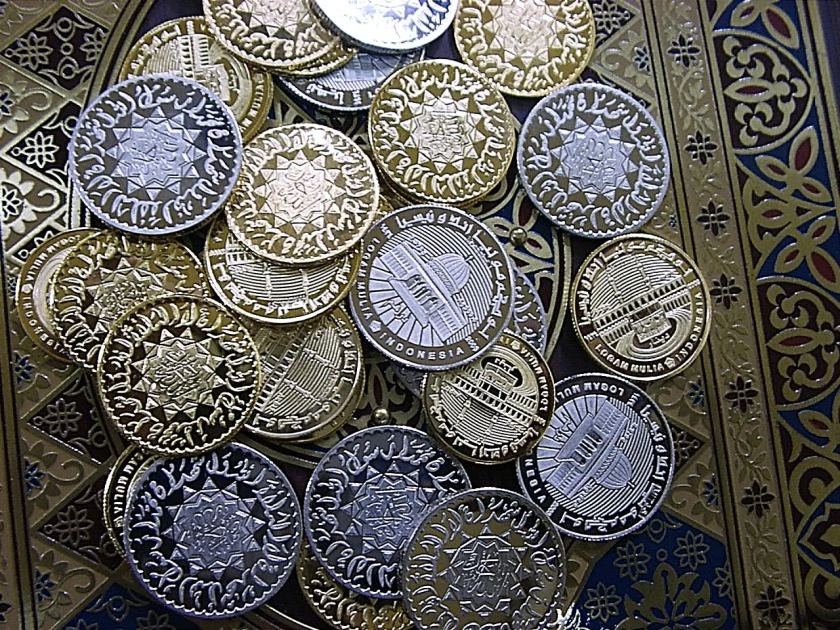
The Islamic State has a bi-metallic currency based on gold and silver. This was first established by the Prophet Muhammad ﷺ in Madinah who made the state’s currency as the gold dinar and the silver dirham. The state had no ability at the time to mint its own currency so used the Roman Dinar and Persian Dirham. This continued throughout the Umayyad period until the Khaleefah Abdul-Malik ibn Marwan minted the first distinct Islamic currency in 74H.[1] A point to note is that Tabari puts the date at 76H[2] and other historians say 75H, but after the ‘standing caliph’ coin emerged with the date 74H stamped on it we now know for definite when the minting started. Abdul-Malik was the first to mint distinct gold dinars and silver dirhams based on the weight that the Prophet ﷺ had established. It was narrated from Ibn ‘Umar who said, ‘The Messenger of Allah ﷺ said: “The weight is the weight of the people of Makkah, and the measure is the measure of the people of Madinah.”’[3] This shows that …
Devolution in an Islamic State: Finance

State revenues and expenditure were always centralised even if the governor had full devolved powers over the collection and distribution of funds, because he was expected to send the tax revenues to the central caliphal government. From the time of Mu’awiya, a central Diwan Al-Kharaj (ministry of taxation) was established headed by a secretary (sahib). Ibn Khaldun describes this institution: “The ministry of taxation is an office that is necessary to the royal authority (mulk). It is concerned with tax operations. It guards the rights of the dynasty in the matters of income and expenditure. It takes a census of the names of all soldiers, fixes their salaries, and pays out their allowances at the proper times. In this connection recourse is had to rules set up by the chiefs of (tax) operations and the stewards of the dynasty. They are all written down in a book which gives all the details concerning income and expenditure. It is based upon a good deal of accounting, which is mastered only by those who have considerable skill in (tax) …

Contracts in Islam

Wael b. Hallaq says, “In fiqh, contracts do not stand as a separate category, in the manner, say, American or French law articulates them in textbooks and treatises. Rather, Islamic conceptions of contract are implicit in juristic discussions pertaining to pecuniary and commercial transactions, among others. They are constituted by three essential elements (arkān; sing. rukn), namely: (a) the parties; (b) the form (ṣīgha) of offer and acceptance; and (c) the object, or subject-matter. (a) The contracting parties: A person qualified to enter into a contract on behalf of oneself or another must be of major age (bāligh) and have attained rushd, namely, the capacity to behave in a responsible and constructive manner (muṣliḥan), and without this capacity being subject to interdiction (ḥajr). Minors and the insane cannot enter into a contract without a guardian acting in their interest, except for discerning minors (mumayyiz) who can, inter alia, receive gifts and be the beneficiaries of a waqf. (b) Offer and acceptance (ījāb and qabūl): The majority of jurists associate offer with the owner (mālik) of the object, and acceptance with the party to whom ownership or …

Pakistan: A Solution to an Ailing Economy

This article has been reproduced from Prophetic Economics Regarding the Current Economic Situation in Pakistan, it is vital to appreciate that the Global Economy is going through a challenging time; this is not specific to Pakistan. However, Pakistan indeed has systemic issues with its Economy, and that is linked to the inherited Colonial Capitalist Economic System that it follows. The GDP in Pakistan is 347.75 Billion USD; however, Countries with similar populations like Brazil and Indonesia have done significantly better in terms of Economic Development compared to Pakistan. In Pakistan’s case, the problem of interest-based debt traps that Pakistan is stuck in and combined with inefficient Economic policies have led to an Economic Failure. The root for all these problems lies in reliance on Capitalist Economic Policies instead of the Islamic Economic Policies based on Divine Guidance – Quran and Sunnah. A Radical shift in the Economic Policies with a key reset of the system can help free Pakistan from the clutches of the global loan sharks and their interest-based debts and help it develop its …

The Fiqh of Transitioning to the Gold & Silver Standard

This article has been reproduced from Prophetic Economics The following are answers to several questions related to the future Dar Ul Islam state and the transition of the current currency to the Gold and Silver Standard. Question: Is it permissible in Islam for the Dar Ul Islam to partially back its currency during a transitional period on the justification (if it is so) that it does not have the capacity (in reserves) to maintain 100% convertibility. In terms of the US, this would mean that it could partially back (at around 20%) all of its currency at the current rate, without having to change that parity or endure the negative effects associated with this. This would grant it the stability it would need to expand its reserves (through various means) so that it can gradually move towards a 100% backed rate. Answer:  For the state to issue a gold and silver based currency it will have to depend on the availability of these metals in its treasuries. In addition to this the state will also have …

Islamic Monetary Policy in light of Pakistan’s ban on riba (interest)

The Federal Shariat Court (FSC) of Pakistan announced on April 28th 2022 that the current interest-based banking system is against sharia, and directed the government to implement an interest (riba)-free banking system by December 2027.[1] In fact, the first petition for the abolition of the interest-based banking system was filed in the FSC on June 30, 1990 and it has taken 32 years for a final verdict to be issued![2] It is well-established in Islam that riba is against sharia because of the numerous clear-cut verses of the Holy Quran such as, “O believers! Fear Allah, and give up outstanding interest if you are ˹true˺ believers. If you do not, then beware of a war with Allah and His Messenger!”[3] and “But Allah has permitted trading and forbidden interest.”[4] While most Muslims support a ban on riba, very few understand the alternatives to the existing economic system of banking and monetary transactions. The alternatives that emerge focus on offering interest-free loans through complex financial products, where the recipient still pays more than the capital. Those …

Islamic Inheritance vs Freedom of Ownership

A fundamental principle of western civilisation is the freedom to own and dispose of wealth. This means in relation to inheritance that if a man has ten daughters and one son, he can disinherit all his daughters and leave his wealth to his son. He can favour siblings or relatives or friends as he deems fit, and even leave the entirety of his estate to the family dog! Countess Karlotta Libenstein of Germany left approximately $106 million to her dog in 1992 and she is not alone. The richest dogs in the world can be seen here.

Islamic Inheritance: Clarifying the Misconceptions

BY ABU NAJAR ASH-SHAMI. فَلِلذَّكَرِ مِثۡلُ حَظِّ ٱلۡأُنثَيَيۡنِ “for the male, what is equal to the share of two females” [Surah an-Nisa’a 4:11] There are verses in the Book of Allah which the secularists and enemies of Islam are itching to abolish if they could. Malicious people always direct their arrows of slander and falsehood toward Islam through these verses, and the most prominent of these is the saying of Allah (swt), يُوصِيكُمُ ٱللَّهُ فِيٓ أَوۡلَٰدِكُمۡۖ لِلذَّكَرِ مِثۡلُ حَظِّ ٱلۡأُنثَيَيۡنِ “Allah instructs you concerning your children: for the male, what is equal to the share of two females.” [Surah an-Nisa’a 4:11]

The Caliphate’s transition to the Gold Standard

BY FARUQ IBN QAYSR Introductory Remarks In his tract on monetary reform, John Maynard Keynes referred to gold as a barbarous relic, whose rigidity had fettered the world from economic freedom and prosperity. He spoke at a time when the Occident were suffering from macroeconomic anaemia and were yearning for a solution. In sheer desperation, fiat money became the drug that gave growth-addicts what they craved for in the short-run. However, years after its introduction, the fiat system has induced far more volatility than it sought to resolve. In truth, Keynes failed to realise that barbarity was a trait not of gold but of fiat, insofar as it has plagued the world with monetary anarchy. In fact, the very system he consigned to history has never been more relevant than it is today.