Author: islamciv

What If the Arabian Empire Reunited Today?

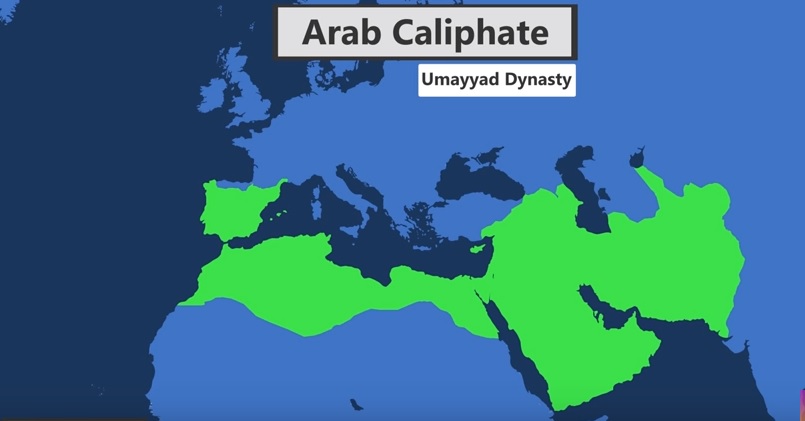
This video was produced by RealLifeLore. The Arabian Empire once extended from the Atlantic Ocean to the border of India. It was the largest empire that the world had ever seen up to that point, so what would things look like if this empire was suddenly re-created today? Watch this video and satisfy your curiosity!

Tafseer of Sura Al-Fatiha by Dr Fadhel al-Samarrai

Download the book Tafseer Surah Fatiha This book contains a draft translation of Dr Fadhel al Samarrai’s tafseer of the opening chapter of the Qur’an and mother of the book, Surah Al-Fatiha. Dr Fadhel is a well-known Arabic linguist whose works give an insight in to the miraculous nature of Qur’anic Arabic, with the only conclusion being that this Qur’an must have come from an unlimited, all-powerful creator, Allah (Most High).

3. CALIPHATE CONTENTIONS: There is nothing in the Sunna to suggest that establishing a Khilafah is an obligation upon the Muslims.

BY DR. REZA PANKHURST This article has been reproduced from Dr. Reza Pankhurst’s facebook page. Contention 3: There is nothing in the Sunna to suggest that establishing a Khilafah is an obligation upon the Muslims. There are several narrations in the Sunna which indicate the obligation of both establishing an Imam, and of obeying an Imam Any narration which talks about the necessity to obey the Imam of the Muslims is also a proof of the necessity to establish such an Imam if it is absent These narrations link the obligation to the phrase “death of jahiliyya” – which is also an indication that not having an Imam would be a sin upon that person Any claim otherwise highlights an ignorance of the meaning of the texts found in the Sunna, and the understanding of normative Islam and the ulama throughout the ages

2. CALIPHATE CONTENTIONS: The obligation to establish a Khilafa is not mentioned in the Quran, and therefore not an obligation.

BY DR. REZA PANKHURST This article has been reproduced from Dr. Reza Pankhurst’s facebook page. Contention 2: The obligation to establish a Khilafa is not mentioned in the Quran, and therefore not an obligation. The obligation can be derived from the Quran directly Every verse that mentions a law that must be implemented is an evidence for the obligation to establish an authority to implement that law Ali Abdul Raziq was the first contemporary scholar to make the claim there was no evidence in the quran for the obligation of the khilafa – and his views were deconstructed as completely inaccurate and incorrect]

1. CALIPHATE CONTENTIONS: There was no consensus among the companions that appointing a Khalifa is obligatory upon the Muslims.

BY DR. REZA PANKHURST This article has been reproduced from Dr. Reza Pankhurst’s facebook page. Contention 1: There was no consensus among the companions that appointing a Khalifa is obligatory upon the Muslims. There is a clear consensus of companions upon the necessity to appoint an Imam 2. Their consensus also shows that they considered appointing the Khalifa to be an utmost priority, which was prioritised over both the burial of the Prophet ﷺ and the sanctity of life. 3. The companions differed over who should be the Khalifa – a point which does not detract from its obligation and rather shows that the appointment of Khalifa is by choice and that it is necessity 4. The ijma of sahaba upon the obligation of appointing an Imam is considered a Qat`i – or definitive – proof

Imam Ghazali’s Movement for the Unification of the Ummah & Caliphate – A reply to ‘Mufti Abu Layth’ and secularists

BY ABDULLAH AL ANDALUSI This article has been reproduced from abdullahalandalusi.com I recently addressed a particular detractor of the Islamic obligation for Muslims to be politically united under a Caliphate. ‘Mufti Abu Layth’ [or ‘MAL’ for brevity] preaches that belief in the Caliphate is a ‘cancerous ideology’, an ‘erroneous view’, and is even a form of ‘hate speech’. As part of a supposed “#CallEmOut” and “#ReclaimIslam” campaign, he urged his readers to, in effect, witch-hunt anyone who professes this belief.

Genocide of Rohingya Muslims: “Our Lord, take us out of this town whose inhabitants are wrongdoers”

وَمَا لَكُمْ لَا تُقَاتِلُونَ فِي سَبِيلِ اللَّهِ وَالْمُسْتَضْعَفِينَ مِنَ الرِّجَالِ وَالنِّسَاءِ وَالْوِلْدَانِ الَّذِينَ يَقُولُونَ رَبَّنَا أَخْرِجْنَا مِنْ هَذِهِ الْقَرْيَةِ الظَّالِمِ أَهْلُهَا وَاجْعَلْ لَنَا مِنْ لَدُنْكَ وَلِيًّا وَاجْعَلْ لَنَا مِنْ لَدُنْكَ نَصِيرًا “What reason could you have for not fighting in the Way of Allah – for those men, women and children who are oppressed and say, ‘Our Lord, take us out of this town whose inhabitants are wrongdoers! Give us a protector from You! Give us a helper from You!’?” (An-Nisaa, 4:75)

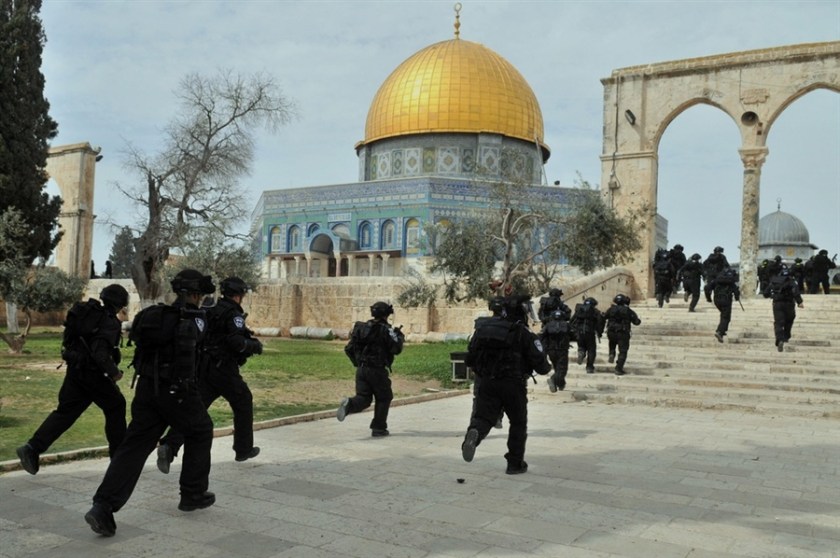
Al-Aqsa Crisis: “Who could do greater wrong than someone who bars access to the mosques of Allah?”

Allah (Most High) says: وَمَنْ أَظْلَمُ مِمَّنْ مَنَعَ مَسَاجِدَ اللَّهِ أَنْ يُذْكَرَ فِيهَا اسْمُهُ وَسَعَىٰ فِي خَرَابِهَا ۚ أُولَٰئِكَ مَا كَانَ لَهُمْ أَنْ يَدْخُلُوهَا إِلَّا خَائِفِينَ ۚ لَهُمْ فِي الدُّنْيَا خِزْيٌ وَلَهُمْ فِي الْآخِرَةِ عَذَابٌ عَظِيمٌ “Who could do greater wrong than someone who bars access to the mosques of Allah, preventing His name from being remembered in them, and goes about destroying them? Such people will never be able to enter them – except in fear. They will have disgrace in the dunya and in the akhira they will have a terrible punishment.” (Al-Baqara, 2:114)

Hadith Classifications

This is an extract from the book Al-Waadih Fee Usool ul-Fiqh by Muhammad Hussein Abdullah available to purchase from Amazon. There are three categories of hadith in respect to their As-Sihhah (soundness) and Ad-Da’f (weakness). These are Saheeh, Hasan and Da’eef. In respect to the Sanad (chain) there are also three categories. These are Al-Mutawaatir, Al-Mash’hoor and Khabar Al-Aahaad.

Fabricated Hadith: “He who hurts a dhimmi hurts me”

The source of this mawdu (fabricated) narration is the book, ‘The Lawful and the Prohibited in Islam’ by Sheikh Yusuf Qaradawi, p.336 which states: The Prophet ﷺ said, “He who hurts a dhimmi hurts me, and he who hurts me annoys Allah.” Narrated by At-Tabarani in Al-Awsat on good authority. However, if we refer to Tabarani’s Al-Mu’jam Al-Awsat we find a similar narration numbered 3607, but instead of ‘dhimmi’ it says ‘Muslim’.