Latest Posts

Why is the head of an Islamic State called a caliph?

  1. Can we use any title for the caliph?
  2. Caliph of the Messenger ﷺ (khalīfat Rasūl Allāh)
  3. Caliph of Allah (khalīfat Allāh)
    1. The Abbasid Caliphs used khalīfat Allāh as a title
    2. Is it permitted to use the title khalīfat Allāh?
  4. Imam
  5. Custodian of the two holy mosques (Khadim al-Haramayn ash-sharifayn)
  6. Leader of the Believers (Amīr al-Muʿminīn)
  7. King (Malik)
  8. Sultan
  9. Shadow of Allah (Zill Allāh)
  10. First among equals
  11. Conclusion
  12. Notes

The term khaleefah (خليفة) or caliph, literally means successor or deputy. Imam Al-Mawardi says, “Imamate[1] is prescribed to succeed prophethood as a means of protecting the deen and of managing the affairs of this world. There is a consensus of opinion that the person who discharges the responsibilities of this position must take on the contract of Imamate of the Ummah.”[2]

Throughout Islamic history the caliphs were known by multiple titles. It’s important to note however, that you don’t need to be explicitly called a caliph to be a caliph. In fact, a leader today or in history may take a title used by the caliphs of the past, or even have the title ‘caliph’ but they are not caliphs.

Can we use any title for the caliph?

Abdul-Qadeem Zallum answers this question. According to his opinion he says, “With regards to his title, it could be the Khaleefah, or the Imam or the Amir of the believers…It is not obligatory to adhere to these three titles, rather it is allowed to give whoever takes charge of the Muslims’ affairs other titles.

Any other title has, however, to indicate the same meaning such as ‘the ruler of the believers’ or ‘the head of the Muslims’ or ‘the Sultan of the Muslims’ or any other title that does not contradict with their meaning. As for titles which carry a specific meaning and which contradict the Islamic laws connected with ruling, such as the title of king or president of the republic or emperor, these are forbidden to be used by whoever takes charge of the affairs of the Muslims because they contradict the meaning of the laws of Islam.”[3]

As a principle we should use the language of Islam when describing our laws, institutions and systems. There has been a tendency in modern times to use western terms which causes confusion as to what political Islam actually is, and also distances us from our history. In 1953 TheInternational Herald Tribune reported that, “The Constituent Assembly of Pakistan today [Nov. 2 1953] unanimously decided that under the new constitution Pakistan shall be a republic and that its name shall be the Islamic Republic of Pakistan. There was no opposition from any member.”[4]

Commenting on this choice of title, Bernard Lewis said, “How far, one may ask, can a republic, as that word is normally understood, be really and truly Islamic – that is to say, not simply in the sense of being a State with a Muslim population, but of being one that is really based on the principles of Islamic faith and law? How far is traditional or orthodox Islam compatible, even familiar with republican ideas and institutions?”[5]

Therefore a future Islamic State needs to choose titles for its leaders, systems and institutions which are in-line with Islamic traditions.

What follows now is a list of the main titles used by the caliphs of the past which are from the Islamic traditions and in-line with Islamic thought.

Caliph of the Messenger ﷺ (khalīfat Rasūl Allāh)

After the death of the Prophet Muhammad ﷺ, the Muslims elected Abu Bakr as-Siddiq (ra) as the leader of the Islamic State. A debate then ensued on what title he should be given, because the Messenger of Allah ﷺ in his dual role of prophet and ruler, never had a separate title as a ruler, although “before becoming Muslim, people used to call the Prophet ‘Amir of Mecca’ and ‘Amir of the Ḥijâz’.”[6]

The title khaleefah was already known to the sahaba because the Prophet ﷺ referred to his successors in ruling as khulufaa’ (caliphs). The Prophet Muhammad ﷺ was a ruler-prophet like Dawud and Sulayman (peace be upon them) before him. Prophethood has now ended, but ruling by the law (sharia) that the Prophet ﷺ brought continues. He ﷺ said,

كَانَتْ بَنُو إِسْرَائِيلَ تَسُوسُهُمُ الأَنْبِيَاءُ كُلَّمَا هَلَكَ نَبِيٌّ خَلَفَهُ نَبِيٌّ وَإِنَّهُ لاَ نَبِيَّ بَعْدِي وَسَتَكُونُ خُلَفَاءُ فَتَكْثُرُ ‏‏قَالُوا فَمَا تَأْمُرُنَا قَالَ فُوا بِبَيْعَةِ الأَوَّلِ فَالأَوَّلِ وَأَعْطُوهُمْ حَقَّهُمْ فَإِنَّ اللَّهَ سَائِلُهُمْ عَمَّا اسْتَرْعَاهُمْ

“The prophets ruled over the children of Israel, whenever a prophet died another prophet succeeded him, but there will be no prophet after me. There will soon be Khulafaa’ and they will number many.” They asked, “What then do you order us?” He said, “Fulfil the bay’ah to them, one after the other, and give them their dues for Allah will verily account them about what he entrusted them with.”[7]

Therefore, the caliphs are successors to the Prophet ﷺ in ruling only and not prophethood, i.e. the caliph is not sovereign.

This is why Abu Bakr took the title Khaleefah of the Messenger of Allah ﷺ (خليفة رسول الله) or simply Khaleefah (خليفة). Al-Mawardi says, “He is called the khaleefah (successor) as he stands in for the Messenger of Allah at the head of his Ummah and so it is permitted for someone to say, ‘Oh, Khaleefah of the Messenger of Allah!’ or for someone to say, ‘Khaleefah,’ on its own.”[8]

Ibn Khaldun says, “Political laws consider only worldly interests. On the other hand, the intention the Lawgiver has concerning mankind is their welfare in the other world. Therefore, it is necessary, as required by the religious law, to cause the masses to act in accordance with the religious laws in all their affairs touching both this world and the other world. The authority to do so was possessed by the representatives of the religious law, the prophets; then by those who took their place, the caliphs.”[9]

Caliph of Allah (khalīfat Allāh)

During the Umayyad period some of the caliphs took the title caliph of Allah (خليفة الله) instead of caliph of the Messenger of Allah ﷺ. This continued during the Abbasid and Ottoman periods. Two modern orientalists Patricia Crone and Martin Hinds focused much attention on this title and wrote an entire book called ‘God’s Caliph’, implying that the ‘divine right of kings’ which existed in Europe under Christianity also applied to the early caliphate, with the caliphate being a theocracy, and the caliph a legislator i.e. sovereign. They say, “In short, the ultimate source of caliphal law was divine inspiration: being the deputy of God on earth. the caliph was deemed to dispense the guidance of God Himself.”[10]

While the title “Caliph of Allah” was controversial in some circles[11], the use of the title never implied divinity or that the caliph was sovereign. It simply meant that the caliph as head of the Islamic State would implement the law of sharia and look after the affairs of people according to this law. Ibn Khaldun says, Allah made the caliph his substitute to handle the affairs of His servants. He is to make them do the things that are good for them and forbid them to do those that are harmful.”[12]

This is based on the famous verse of the Holy Qur’an where Allah ta’ala says,

وَإِذْ قَالَ رَبُّكَ لِلْمَلَـٰٓئِكَةِ إِنِّى جَاعِلٌۭ فِى ٱلْأَرْضِ خَلِيفَةًۭ ۖ قَالُوٓا۟ أَتَجْعَلُ فِيهَا مَن يُفْسِدُ فِيهَا وَيَسْفِكُ ٱلدِّمَآءَ وَنَحْنُ نُسَبِّحُ بِحَمْدِكَ وَنُقَدِّسُ لَكَ ۖ قَالَ إِنِّىٓ أَعْلَمُ مَا لَا تَعْلَمُونَ

When your Lord said to the angels, ‘I am putting a caliph on the earth,’ they said, ‘Why put on it one who will cause corruption on it and shed blood when we glorify You with praise and proclaim Your purity?’ He said, ‘I know what you do not know.’[13]

Sayyid Qutb comments on this verse, “Allah, in His infinite wisdom, decided to hand over the earth’s affairs and destiny to man and give him a free hand to use, develop and transform all its energies and resources for the fulfilment of Allah’s will and purpose in creation, and to carry out the pre-eminent mission with which he was charged. It may be assumed, then, that man has been given the capability to take on that responsibility, and the necessary latent skills and energies to fulfil Allah’s purpose on earth. It may, therefore, be concluded that a perfect harmony exists between those laws that govern the earth and the universe, and those governing man’s powers and abilities. The aim of this harmony is to eliminate and avoid conflict and collision, and to save man’s energies from being overwhelmed by the formidable forces of nature.”[14]

Al-Qurtubi says, “This āyah is sound evidence for having a leader and a caliph who is obeyed so that he will be a focus for the cohesion of society and the rulings of the caliphate will carried out.”[15] He also says, “Khalīfah (caliph) has the form of an active participle (fa’il), meaning ‘the one who replaced the angels before him on the earth’, or other than the angels, according to what has been reported. It is also possible that it is in the passive mode (maf’ul), in which case it means someone who is sent as a representative.”[16]

The Abbasid Caliphs used khalīfat Allāh as a title

Hüseyin Yilmaz says, “Since the late Abbasid period, the use of khalīfat Rasūl Allāh gradually disappeared from political literature in favor of imam and khalīfat Allāh. To point to the increasing reception of this controversial title, Rosenthal stated that ‘in the later Abbasid period the designation khalīfat Allāh for the caliph has gained wide currency . . . , in marked distinction from the insistence of earlier periods that the caliph was only the khalīfat Rasūl Allāh.’[17]

Is it permitted to use the title khalīfat Allāh?

Al-Mawardi answers this question. “There is a difference of opinion as to whether it is permitted to say, ‘Oh Khaleefah of Allah!’ Some have permitted this based on the fact that he fulfils Allah’s rights over His creation and because of His saying: “It is He who appointed you Khulafaa’ on the earth and raised some of you above others in rank”.[18] The majority of the ‘ulama, however, do not permit this and treat those who do say this as corrupt, arguing that the Khaleefah succeeds someone who is absent or dead and Allah is not absent and does not die. When Abu Bakr as-Siddiq was addressed[19], ‘Oh Khaleefah of Allah,’ he replied, ‘I am not the Khaleefah of Allah but rather the Khaleefah of the Messenger of Allah (ﷺ).’[20]

Imam

This title is found in the hadith and is used as a synonym for the caliph. The Messenger of Allah ﷺ said,

وَمَنْ بَايَعَ إِمَامًا فَأَعْطَاهُ صَفْقَةَ يَدِهِ وَثَمَرَةَ قَلْبِهِ فَلْيُطِعْهُ إِنِ اسْتَطَاعَ

“Whosoever gave a bay’a to an Imam, giving him the clasp of his hand, and the fruit of his heart shall obey him as long as he can.”[21]

The contract of bay’a is only for a caliph.

He ﷺ also said, 

ومن مات وليس عليه إمام جماعة فإن موتته موتة جاهلية

“Whoever dies and does not have an Imam of the jama’at over him then his death is a death of jahiliyah.”[22]

The word jama’at here refers to the Muslim Ummah, and not an individual group or group prayer in a masjid.

In the fiqh books of the ‘ulema such as Al-Mawardi, the terms Imam and Imamate were used more frequently than the terms Khaleefah and Khilafah.

Ibn Khaldun in reference to the Islamic State says, “The person in charge of it is called ‘the khaleefah’ or ‘the imam’. In later times, he has been called ‘the sultan’, when there were numerous (claimants to the position) or when, in view of the distances (separating the different regions) and in disregard of the conditions governing the institution, people were forced to render the bay’a to anybody who seized power.”[23]

Hugh Kennedy when discussing the titles used by the caliphs mentions, “We also find the use of the title imam. Imam means essentially anyone who stands in front or leads. It often describes the prayer leader in a mosque. It is also used, especially among the Shia, to describe the ruler of the whole Muslim community and, as such, is often a synonym for caliph.”[24]

Custodian of the two holy mosques (Khadim al-Haramayn ash-sharifayn)

The Mamluk Sultans based in Cairo used the title ‘Custodian of the two holy mosques’ (Khadim al-Haramayn ash-sharifayn)[25] which was then transferred to the Ottoman Sultan Salim I in 1517, after he conquered Egypt and brought the Mamluk Sultanate under his authority.

Today the Saudi King holds this title, but he rules over a country whose systems and laws in the mu’aamilat (societal transactions), are for the most part not in accordance with the sharia and in some cases are manifest kufr (kufr buwaa) such as implementing a riba (interest) based economy[26], and facilitating material support to those who are committing a genocide of Muslims in Palestine.[27]

Leader of the Believers (Amīr al-Muʿminīn)

Ibn Sa’d narrates, “When Abu Bakr died and ‘Umar ibn al-Khattab became khaleefah, ‘Umar was called ‘the Khaleefah of the Khaleefah of the Messenger of Allah’. The Muslims said, ‘Whoever comes after Umar will be called the ‘khaleefah of the khaleefah of the khaleefah of the Messenger of Allah’. That is lengthy. Agree on a name by which successive khulufaa’ can be called.’ Some of the Companions of the Messenger of Allah ﷺ said, ‘We are the believers and Umar is our Amir. Umar should therefore be called the Amir al-Mu’minin.’ He was the first to be called that.”[28]

This title was predominant throughout the Umayyad period of the Caliphate and continued in to the Abbasid period.

In relation to the post-1258 Abbasid Caliphs based in Cairo under the Mamluk Sultanate, Mona Hasan says, “The new caliphs are also referred to as Amīr al-Muʿminīn (Commander of the Faithful), Khalīfat al-Muslimīn (Caliph of the Muslims), al-Imām (the Leader), Mawlānā al-Khalīfah (Our Master the Caliph), and al-Sayyid (The Master).”[29] Although Hüseyin Yilmaz comments that “No Ottoman sultan seems to have used commander of the faithful [Amīr al-Muʿminīn] as a sovereign title.”[30]

Hibatullah Akhundzada, is the Emir of the Islamic Emirate of Afghanistan and holds the title Amīr al-Muʿminīn but is not a caliph.

King (Malik)

Abdul-Qadeem Zallum mentions that the word mulk commonly translated as monarchy, while it can have this meaning, is also a synonym for ruling and authority. He says, “Ruling (al-hukm الحكم), reign (al-mulk الملك) and authority (al-sultan السلطان) have the same meaning which is the authority that executes the rules.”[31]

The Prophet ﷺ referred to the period after the Rightly Guided Caliphate as a monarchy. This doesn’t mean the caliph was a king in the sense of being sovereign, but the Caliphate took on the characteristic of a monarchy with the introduction of hereditary rule.

The Messenger of Allah ﷺ said,

تَكُونُ الْخِلَافَةُ ثَلَاثِينَ سَنَةً ثُمَّ تَصِيرُ مُلْكًا

“The Khilafah will be for thirty years. Then it will become mulk (monarchy).”[32]

The hidden pronoun (dameer mustatir) in the verb تصير is a هي and it refers back to the word Khilafah. This doesn’t mean the Khilafah will end after thirty years, rather it means the Khilafah will continue but with the characteristics of mulk. Sayf ad-Deen al-Amidi (d.1233CE) says, 

أنه قال: «ثم تصير ملكا» والضمير فى قوله: تصير ملكا، إنما هو عائد إلى الخلافة؛ إذ لا مذكور يمكن عود الضمير إليه غير الخلافة، وتقدير الكلام، ثم تصير الخلافة ملكا، حكم عليها بأنها تصير ملكا، والحكم على الشيء، يستدعى وجود ذلك الشيء
He ﷺ said, «ثم تصير ملكا» “Then it becomes a kingdom.” The [hidden] pronoun in his phrase, تصير ملكا “It becomes a kingdom,” refers to the caliphate, as there is no mentioned entity to which the pronoun can refer other than the caliphate. The interpretation of the statement, ثم تصير الخلافة ملكا “Then the caliphate becomes a kingdom,” is a hukm that it will become a kingdom, and a ruling on something requires the existence of that thing.[33]

Ibn Kathir says, “The first monarchy began with the rule of Mu‘awiyah, making him the first king (malik) in Islam and the best of them all.”[34]

The reason some of the ‘ulema used the title Malik for the Umayyad and Abbasid Caliphs was because these caliphs were not following completely in the footsteps of the Prophet Muhammad ﷺ when it came to ruling. Abu Bakr, the first caliph was given this title because khaleefah means successor, and Abu Bakr was a successor to the Prophet ﷺ in ruling as mentioned previously. If the caliph deviated from the sunnah, then calling him a khaleefah wasn’t deemed appropriate. This is the understanding the sahaba had of the difference between a king and a khaleefah, not in terms of sovereignty but in terms of justice.

Umar ibn al-Khattab said, “By Allah, I do not know whether I am a Khaleefah or a king, for if I am a king then this is a tremendous matter.” Someone said, “Amir al-Mu’minin, there is a distinction between the two of them.” He said, “What is it?” He said, “A Khaleefah does not take except what is due and he does not use it except in the right way, and you, praise be to Allah, are like that. The king treats people unjustly, and takes from this one and gives to that one.” ‘Umar was silent.[35]

Hugh Kennedy makes an interesting point that “During the Umayyad period, many features of the caliphate became established and in time traditional in ways which continued long after the dynasty itself had been swept away. Among the most obvious of these were the rituals of inauguration. Caliphs were not crowned. A crown of the Byzantine or Persian sort would have represented an acceptance of all the traditions of ancient monarchy, with its pomp and hierarchy, which the early Muslims rejected and sought to replace.”[36]

Sultan

This term is found in the hadith and is used in a general sense of authority but also can refer to a ruler. The Prophet ﷺ said,

مَنْ سَكَنَ الْبَادِيَةَ جَفَا وَمَنِ اتَّبَعَ الصَّيْدَ غَفَلَ وَمَنْ أَتَى السُّلْطَانَ افْتُتِنَ

“He who lives in the desert will become rough, he who follows the chase will become negligent, and he who goes to a ruler (Sultan) will be led astray.”[37]

The Umayyad and Abbasid Caliphs didn’t use the title Sultan as this title was used by the semi-autonomous governors who ruled the lands of the Caliphate from the 10th century CE. Starting with the Buyids[38] and then later the Seljuks and finally the Ottomans, the rulers of these lands held the executive authority of the Caliphate, rendering the caliph to a mere ceremonial position.

Al-Radhi (r.934-940CE) was the last independent Abbasid Caliph since the rise of the Buwahids (Buyids) in 934CE, and the establishment of their emirate over Iraq, and central and southern Iran, which reduced the caliph’s executive power to the Dar ul-Khilafah which was a section of Baghdad that housed the Caliphal palace. Al-Khatib (d. 463H,1071CE) mentions that Al-Radhi was “the last of the caliphs who undertook the sole direction of the army and the finances.”[39] After Al-Radhi, his brother Al-Muttaqi (r.940-944) assumed the rule after him and Al-Suyuti says about him that “He had nothing of authority but the name.”[40]

Ibn Khaldun comments, “From the time of an-Nâṣir (r. 1180-1225) on, the caliphs were in control of an area smaller than the ring around the moon.”[41]

The Ottoman sultan Bayezid I was the first to be granted the title of Sultan by the Abbasid Caliph al-Mutawakkil (r.1361-1383/1389-1406) based within the Mamluk Sultanate in Egypt. Mona Hasan describes how Bayezid “sent precious gifts to the Abbasid Caliph al-Mutawakkil along with the request to be honored as his deputized ruler of Anatolia or Sulṭān al-Rūm in 797/1394, a request which was granted.”[42]

This splitting of the sultanate and the caliphate i.e. the splitting away of the executive authority from the caliph continued in this way until 1517CE when the Ottoman Sultan Selim I united the institutions of sultanate and the caliphate once again.[43] This is why the Ottoman Caliphs all used the title Sultan after this time until 1922 when the Sultanate was officially abolished, handing executive power to the Turkish Parliament. Two years later on 3rd March 1924, the office of the Caliphate was also abolished.

Shadow of Allah (Zill Allāh)

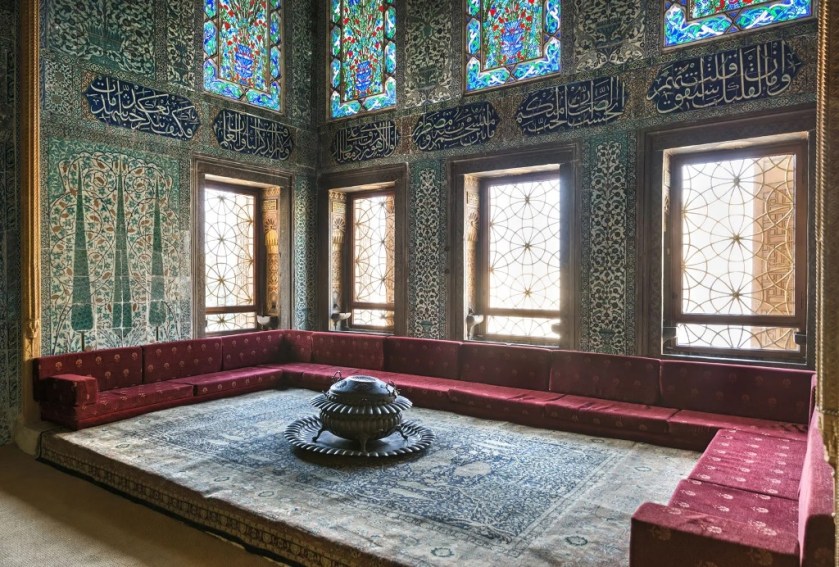
This title was used by the Ottomans and a plaque bearing this phrase from the hadith below still exists on the Imperial Gate of the Topkapi Palace in Istanbul.

This title comes from the hadith of the Prophet Muhammad ﷺ where he said,

السلطان ظل الله في الأرض فمن أكرمه أكرمه الله ومن أهانه أهانه الله الطبراني والبيهقي عن أبي بكرة

“The Sultan is the shadow of Allah on earth, so whoever honors him (the Sultan), Allah will honor him, and whoever despises him, Allah will despise him.”[44]

First among equals

This is not a title as such but a description of Mu‘awiya by the famous Greek chronicler Theophanes. It’s an interesting perspective on the caliph from someone outside the religion who viewed the rule of the caliph, in this case Mu’awiya, as one of justice.

Aisha Bewley says, “The ruler is a guardian, a custodian and a shepherd, not a despot. Theophanes, the Greek chronicler of early Umayyad times, was surprised by the status of Mu‘awiya, the first Umayyad khalifa, and refers to him as protosymboulos (first among equals).”[45]

Conclusion

The head of a future Islamic State needs to use the title caliph, in order to dispel any confusion among the ummah and so he can be recognised as the leader, not just of the new state, but the entire Muslim world. This will facilitate global support from the Muslims, albeit in the beginning this will be slow since any new state needs to prove itself and its Islamic credentials on the world stage. Commenting on the use of the title Caliph by the Ottomans, Rashid Rida (d.1935) says, “The title remains useful as people would accept actions taken in the name of the caliph that they would not accept if they were taken in somebody else’s name.”[45.5]

The emergence of a state which declares itself a caliphate and its ruler a caliph must be judged on its actions, which is why ibn Jamāʾah said that “the seizure of power itself gave authority.”[46] In other words, if there is a ruler and he is implementing Islam and has full authority over his territories then he is the ruler. He may even be the caliph if he receives a valid bay’a regardless of what he calls himself, and regardless of whether some of the minor or recommended contractual conditions of the bay‘a such as being from Quraysh are present or not. It should be obvious from a future Caliphate’s domestic and foreign policies that it is the real-deal, and not just another state giving lip service to Islam and Muslim interests.

Lütfi Paşa says, “If asked, who is Sultan Süleyman?[47] Is he the leader of our time or not? Then we answer as follows: No doubt, he is the leader of our time. He is the defender of the religious law. So are his deputies and governors. The wise men of our time serve him. So do the sultans of the Arab, the Turk, the Kurd and the Persian. He has many cities under his control as mentioned. The definition of leader suits him. He is the deputy of the Prophet in upholding the religion. Thus it is incumbent upon the whole community to obey him.”[48]

Notes


[1] Imamate is synonymous with Caliphate, and Imam is synonymous with Caliph.

[2] Abu l-Hasan al-Mawardi, The Laws of Islamic Governance, translation of Al-Ahkam as-Sultaniyah, Ta Ha Publishers, p.10

[3] Abdul-Qadeem Zallum, ‘The Ruling System in Islam,’ translation of Nizam ul-Hukm fil Islam, Khilafah Publications, Fifth Edition, p.55

[4] International Herald Tribune, https://www.nytimes.com/2003/11/03/opinion/IHT-1953-pakistan-to-change-name-in-our-pages-100-75-and-50-years-ago.html

[5] Bernard Lewis, “The Concept of an Islamic Republic.” Die Welt Des Islams 4, no. 1 (1955): 1–9. https://doi.org/10.2307/1569481

[6] Ibn Khaldun, ‘The Muqaddimah – An Introduction to History,’ Translated by Franz Rosenthal, Princeton Classics, p.287

[7] Sahih Muslim 1842a, https://sunnah.com/muslim:1842a ; sahih Bukhari 3455, https://sunnah.com/bukhari:3455

[8] Abu l-Hasan al-Mawardi, Op.cit., p.27

[9] Ibn Khaldun, Op.cit., p.252

[10] Patricia Crone, Martin Hinds, ‘God’s Caliph: Religious authority in the first centuries of Islam,’ Cambridge University Press, 1986, p.56

[11] Abu l-Hasan al-Mawardi, Op.cit., p.27

[12] Ibn Khaldun, Op.cit., p.258

[13] Holy Qur’an, Surah Al-Baqara, ayah 30

[14] Sayyid Qutb, ‘In the Shade of the Qur’an,’ translation of Fi zilal al-Quran, Vol.1, p.50

[15] Tafsīr al-Qurṭubī, translated by Aisha Bewley, Vol.1, p.148

[16] Ibid, https://tafsir.app/qurtubi/2/30

[17] Hüseyin Yilmaz, ‘Caliphate Redefined: The Mystical Turn in Ottoman Political Thought,’ Princeton University Press, 2018, p.197

[18] Holy Qur’an, Surah Al-An’am, ayah 165

[19] Ibn Sa’d, ‘Kitab at-Tabaqat al-Kabir,’ Volume III: The Companions of Badr, translated by Aisha Bewley, Ta Ha Publishers, 2013, p.140

[20] Abu l-Hasan al-Mawardi, Op.cit., p.27

[21] Sahih Muslim 1844a, https://sunnah.com/muslim:1844a

[22] Al-Hakim, Al-Mustadrak, 267

[23] Ibn Khaldun, Op.cit., p.253

[24] Hugh Kennedy, ‘The Caliphate: A History of an Idea, Basic Books, 2016

[25] Thomas Arnold, ‘The Caliphate,’ Oxford University Press, 1924, p.151

[26] https://www.reuters.com/markets/rates-bonds/pakistan-receives-3-billion-loan-saudi-arabia-2021-12-04/

[27] https://en.wikipedia.org/wiki/UAE%E2%80%93Israel_land_corridor#:~:text=The%20UAE%E2%80%93Israel%20land%20corridor,established%20on%2013%20December%202023.

[28] Ibn Sa’d, ‘Kitab at-Tabaqat al-Kabir,’ Volume III: The Companions of Badr, translated by Aisha Bewley, Ta Ha Publishers, 2013, p.216

[29] Mona Hassan, ‘Longing for the Lost Caliphate,’ Princeton University Press, 2016, p.87

[30] Hüseyin Yilmaz, Op.cit., p.182

[31] Abdul-Qadeem Zallum, Op.cit., p.12

[32] Hadith reference: Ibn Taymiyyah, Majmu’ Al-Fatawa, https://shamela.ws/book/7289/16461 

[33] Sayf ad-Deen al-Amidi, ‘al-Imaamah min abkar al-afkar fi usul ad-din,’ Shamela edition, p.1151

[34] Ibn Kathir, ‘The Khilafah of Banu Umayyah,’ translation of Bidiyah wan-Nihiya, Darussalam, p.21

[35] Jalal ad-Din as-Suyuti, ‘History of the Khalifahs who took the right way,’ translated by Abdassamad Clarke, Ta Ha Publishers, p.146

[36] Hugh Kennedy, ‘Caliphate – The History of an idea,’ Basic Books, 2016, p.60

[37] Mishkat al-Masabih 3701, https://sunnah.com/mishkat:3701

[38] They used the title Emir not Sultan

[39] Jalal ad-Din as-Suyuti, ‘History of the Caliphs,’ a translation of Tarikh al-Khulufa’ by Major H. S. Jarrett, 1881, p.411

[40] Ibid, p.413

[41] Ibn Khaldun, Op.cit., p.385

[42] Mona Hassan, Op.cit., p.97

[43] Prior to this Al-Musta’in (r.1406-1414CE) held the dual position of Sultan and Caliph. Shaykh Mahmudi became his Wazir but later declared himself Sultan and deposed the Caliph. [Jalaluddin As-Suyuti, ‘History of the Caliphs,’ translation of Tareekh ul-Khulufa, translated by Major H.S.Jarrett, Calcutta, 1881, p.534]

[44] At-Tabaraani & Al-Bayhaqi. Narrated by Abu Bakrah. Al-Albani classified the hadith through this chain as hasan.

[45] Aisha Abdurrahman Bewley, ‘Democratic Tyranny and the Islamic Paradigm,’ Diwan Press, 1st edition, 2018, Kindle Edition, p.83

[45.5] Muhammad Rashid Rida, ‘The Caliphate or Supreme Imamate,’ first published 1922-1923, translation of Al-Khilafa aw al-Imama al-‘Uzma, translated by Simon A Wood, Yale University Press, 2024, p.211; original Arabic https://shamela.ws/book/9682

[46] Mona Hassan, Op.cit., p.109

[47] Suleiman The Magnificent (r.1520-1566). The longest reigning Caliph of 46 years.

[48] Lütfi Paşa, Khalās al-Umma, p.42; Hüseyin Yilmaz, ‘Caliphate Redefined: The Mystical Turn in Ottoman Political Thought,’ Princeton University Press, 2018, p.218  

Ibn Badis’s 13 Foundations of Islamic Rule

Abdel-Hamid ibn Badis (d.1940) is the founder of the Association of Algerian Muslim Ulema, which was a national grouping of many Islamic scholars in Algeria from many different and sometimes opposing perspectives and viewpoints. The Association would have later a great influence on Algerian Muslim politics up to the Algerian War of Independence.

In the same period, it set up many institutions where thousands of Algerian children of Muslim parents were educated. The Association also published a monthly journal, the Al-Chihab and Souheil Ben Badis contributed regularly to it between 1925 and his death in 1940. The journal informed its readers about the Association’s ideas and thoughts on religious reform and spoke on other religious and political issues.

Here are his thirteen foundations (usul) of Islamic rule:

1- ‘No one has the right of wiliyah (trusteeship) of any matter among the matters of the ummah except by the conferral of trusteeship by the ummah. The ummah has the right and the authority to confer trusteeship and remove it…’

    2- And that ‘the one who is entrusted with a matter (amr) from among the matters of the ummah is the most competent in regard to it and not the best of it in terms of his behavior’.

    3- And that ‘None is by virtue of his being entrusted with any matter among the matters of the ummah better than ummah…’

    4- And that ‘the ummah has the right to censure those charged with the matter (uliy al-amr) because it is the source of their authority and has supervision in their trusteeship and their removal’

    5- And that there is a duty for the wali (trustee) over the ummah ‘in what it provides to him of help if it sees its rectitude…and it is a partner with him in responsibility…’

    6- Along with ‘the right of the wali over the ummah in his advice and guidance’

    7- And ‘the right of the ummah to discuss with those charged with the matter and to take them to account for their actions and to oblige them to act as it [i.e., the ummah] sees fit and not as they see fit…’

    8- And that ‘whoever is charged with a matter among the matters of the ummah it is incumbent for him to clarify the line upon which he is proceeding in order that they be eminently aware and that he proceeds along that line with the approval of the ummah …’

    9- And that ‘he not rule the ummah except by laws that it has approved for itself…and the wiliyah is nothing other than an executor of its will, as it obeys the law because it is its law not because another authority – whether individual or group – imposed it upon it…so that it feels that is free in its conduct, and that it is directing itself by itself, and that it not the property of other than itself among people…’

    10- And that ‘All people are equal before the law…’

    11- And that it is mandatory ‘to safeguard rights…and not to squander the right of the weak…’

    12- And that it is mandatory ‘to preserve balance between the classes of the ummah in the safeguarding of rights…’

    13- And finally that it is mandatory ‘for the guardian (al-ra’i) and those with whom he is charged (al-ra’iyah) to share in mutual responsibility between them in the welfare of the society’

      Source: Abdelilah Belkeziz, ‘The State in Contemporary Islamic Thought,’ I.B.Tauris Publishers, 2009, p.110

      Hassan al-Banna’s Pillars of Islamic rule

      This is an excerpt from the letters of Imam Hassan al-Banna.

      1. Responsibility of the Ruler (Al-Hakim)
      2. Unity of the Ummah
      3. Respecting the will of the nation

      Islamic government is based on a well-established principle, which forms the basic structure of the Islamic system of government. It is based on the responsibility of the ruler, the unity of the nation, and respect for its will. After this, different terminology and models are of no importance.

      Responsibility of the Ruler (Al-Hakim)

      The ruler is responsible before Allah and the people, he is their employee and worker. The Messenger of Allah ﷺ said,

      أَلاَ كُلُّكُمْ رَاعٍ، وَكُلُّكُمْ مَسْئُولٌ عَنْ رَعِيَّتِهِ

      “Each of you is a guardian and each of you is responsible for his charges.”[1]

      Abu Bakr (ra) said when he assumed power and ascended the pulpit:

      أيها الناس ، كنت أحترف لعيالي فأكتسب قوتهم ، فأنا الآن أحترف لكم ، فافرضوا لي من بيت مالكم

      “O people, I used to work as a professional for my family to earn their living, but now I work as a professional for you, so give me from your treasury.”

      With this, he explained the theory of the social contract in the best and most just way, and he even laid its foundation. It is nothing but a contract between the ummah and the ruler to look after the public interests. If he does well, he will be rewarded, and if he does badly, he will be punished.

      Unity of the Ummah

      The Islamic ummah is one, because the brotherhood that Islam has united hearts upon is a fundamental principle of iman that cannot be completed without it, and cannot be realized without its existence.

      This does not prevent freedom of opinion and giving advice from young to old, and from old to young, which is what is expressed in the Islamic tradition as giving advice, enjoining what is right and forbidding what is wrong. The Messenger of Allah ﷺ said (three times):

      إِنَّ الدِّينَ النَّصِيحَةُ إِنَّ الدِّينَ النَّصِيحَةُ إِنَّ الدِّينَ النَّصِيحَةُ

      “Indeed, the deen is advice (naseeha).”

      ‏‏‏.‏قَالُوا لِمَنْ يَا رَسُولَ اللَّهِ قَالَ ‏‏ لِلَّهِ وَكِتَابِهِ وَرَسُولِهِ وَأَئِمَّةِ الْمُؤْمِنِينَ وَعَامَّتِهِمْ وَأَئِمَّةِ الْمُسْلِمِينَ وَعَامَّتِهِمْ

      They said: “To whom, O Messenger of Allah?” He said: “To Allah, His Messenger, His Book, the leaders of the Muslims, and their common people.”[2]

      He ﷺ also said:

      إذا رأيت أمتي تهاب أن تقول للظالم يا ظالم فقد تودع منها

      “If you see my ummah afraid to say to an oppressor, ‘O oppressor,’ then you have bid farewell to it.”[3]

      In another narration:

      وبطن الأرض خير لهم من ظهرها

      “And the belly of the earth is better for them than its surface.”[4]

      He ﷺ also said:

      سيد الشهداء حمزة بن عبد المطلب ، ورجل قام إلى إمام جائر فأمره ونهاه فقتله

      “The master of martyrs is Hamza ibn Abdul Muttalib, and a man who stood up to an unjust leader, enjoined him and forbade him, and he was killed.”[5]

      There is no division in essential matters in the Islamic ummah, because the system of social life that it includes is one system, which is Islam, recognized by all its sons. Disagreement in branches (furu’) does not harm, and there is no hatred, enmity, or partisanship with which the ruling revolves around. However, it requires research, scrutiny, consultation, and the offering of advice. Whatever is stipulated in the text (nass), there is no ijtihad in it, and whatever is not stipulated in the text, the decision of the ruler (wali ul-Amr) unites the ummah upon it.

      Respecting the will of the nation

      It is the right of the Islamic ummah to closely monitor the ruler, and to advise him on what it sees as good. He must consult them, respect their will, and take the best of their opinions. Allah ta’ala has commanded the rulers to do this, saying:

      وَشَاوِرْهُمْ فِى ٱلْأَمْرِ

      “And consult them in the matter”[6]

      He ta’ala praised the believers for this, saying:

      وَأَمْرُهُمْ شُورَىٰ بَيْنَهُمْ

      “And their rule is by mutual consultation”[7]

      This is stated in the Sunnah of the Messenger of Allah ﷺ and the Rightly-Guided Caliphs who came after them. Whenever a matter came to them, they would gather the people of opinion among the Muslims, consult them, and accept the correct opinion. In fact, they would urge them to do so.

      Abu Bakr (ra) said:

      فإن رأيتموني على حق فأعينوني وإن رأيتموني على باطل فسددوني أو قوموني

      “If you see me in the right, then support me, and if you see me in the wrong, then correct me or straighten me out.”

      Umar ibn al-Khattab said:

      من رأى فيّ اعوجاجًا فليقومه

      “Whoever sees something crooked in me, let him straighten it out.”

      The Islamic system in this regard is not concerned with forms or names when these basic principles are achieved, without which the rule cannot be valid, and when they are applied in a way that preserves balance and does not make some of them overpower others.

      This balance cannot be preserved without a living conscience and a true feeling of the sanctity of these teachings, and that in preserving and maintaining them there is success in this world and salvation in the hereafter, which is what they express in the modern terminology as “national awareness” or “political maturity” or “national education” or similar terms, and they all go back to one truth, which is the belief in the validity of the system, and the feeling of the benefit of preserving it… since texts alone do not raise up an entire ummah, just as the law is of no use if it is not applied by a just and honest judge.

      Notes


      [1] Sahih al-Bukhari 7138, https://sunnah.com/bukhari:7138

      [2] Sunan Abi Dawud 4944, https://sunnah.com/abudawud:4944

      [3] Al-Hakim, Ahmad and Al-Bazzar, https://www.islamweb.net/ar/fatwa/56122/%D8%B4%D8%B1%D8%AD-%D8%AD%D8%AF%D9%8A%D8%AB%D9%81%D9%82%D8%AF-%D8%AA%D9%88%D8%AF%D8%B9-%D9%85%D9%86%D9%87%D9%85

      [4] https://www.islamweb.net/ar/library/content/56/4323/%D8%A8%D8%A7%D8%A8-%D9%85%D8%A7-%D8%AC%D8%A7%D8%A1-%D9%81%D9%8A-%D8%A7%D9%84%D9%86%D9%87%D9%8A-%D8%B9%D9%86-%D8%B3%D8%A8-%D8%A7%D9%84%D8%B1%D9%8A%D8%A7%D8%AD

      [5] Al-Hakim

      [6] Holy Qur’an, Surah Al Imran, ayah 159

      [7] Holy Qur’an, Surah Ash-Shura, ayah 38

      Ibn ʿĀbidı̄n’s Seven Levels of Jurist

      This is an excerpt from the book ‘Fatwa and the Making and Renewal of Islamic Law: From the Classical Period to the Present’ by Omer Awass.[1]

      1. al-mujtahidı̄n fı̄ al-sharʿ (Independent Jurists)
      2. mujtahidūn fı ̄ al-madhhab (Jurists within a school)
      3. mujtahidūn fı ̄ al-masāʾil (Jurists on specific issues)
      4. mukharrijūn (extrapolation of opinions)
      5. murajjiḥun (preponderance to one opinion over another)
      6. mutamayyizūn (capacity to distinguish opinions)
      7. Unqualified Jurists

      The famous Ḥanafı̄ jurist Ibn ʿĀbidı̄n (d. 1252H/1836CE) in his treatise ʿUqūd rasm al-mufti outlines a hierarchy for mujtahideen (jurists) who occupy different authoritative levels within the Ḥanafı̄ madhhab. This structure that Ibn ʿĀbidı̄n lays out consists of seven levels (ṭabaqāt).

      al-mujtahidı̄n fı̄ al-sharʿ (Independent Jurists)

      The first, which stands at the very top of this classification, is the level of the absolute independent jurists of Islamic law (what he calls al-mujtahidı̄n fı̄ al-sharʿ, [also known as a mujtahid mutlaq], which consists of the madhhab predecessors of the four Sunnı̄ legal schools (Abū Ḥanı̄fa, Mālik, al-Shāfiʿı̄, and Ibn Ḥanbal). These were the second-/eighth- and third-/ninth-century jurists some of whose legal opinions were examined in previous chapters. His claim is that this class of jurists established original legal principles and extracted doctrine from the sources of the law without imitating other jurists in their legal principles or their doctrines.

      mujtahidūn fı ̄ al-madhhab (Jurists within a school)

      The second level of jurists/muftı̄s within the Ḥanafı̄ school consists of those who, he claims, are independent jurists but within the limits of the Ḥanafı̄ madhhab (mujtahidūn fı ̄ al-madhhab). Examples of such figures in the Ḥanafı̄ school are Abū Ḥanı̄fa’s two protégés Abū Yūsuf and Muḥammad al-Shaybānı̄. Ibn ʿĀbidı̄n claims that what makes them independent jurists within the madhhab was their ability to deduce rulings in accordance with the legal principles (qawāʿid) established by their mentor, Abū Ḥanı̄fa. Thus, even when they extract different legal rulings than he, they nevertheless confine these deductions in accordance with the legal principles that Abū Ḥanı̄fa established.

      mujtahidūn fı ̄ al-masāʾil (Jurists on specific issues)

      At the next (third) level are the subsequent generations of Ḥanafı̄ jurists from the third/ninth to the fifth/eleventh century (e.g., al-Ṭaḥāwı̄, al-Jarrāḥ, al-Bazdawı̄, al-Sarakhsı ̄, etc.), who are what he calls the independent jurists in particular legal cases (mujtahidūn fı ̄ al-masāʾil). These are cases where there is no established legal doctrine (la riwāyah, lit. No narration) from the madhhab predecessors or the master jurists (Abū Ḥanı̄fa and his protégés). Ibn ʿĀbidı̄n tells us that this level of muftı̄ may not go against the fatwas of the founders of the madhhab, but he may select from those opinions that seem most in keeping with the principles of the madhhab and promote those as the official position of the school. He may also establish new legal rulings (fatwas) on new cases based on the legal principles established by the founders. Ibn ʿĀbidı̄n sees these first three levels of jurists to one extent or another as mujtahids (independent legal reasoners). On the other hand, jurists at levels four through seven are no longer viewed as independent jurists (mujtahidūn), or those who can make ijtihād (deducing new rulings through independent legal reasoning). Instead, these levels of muftı̄s are in the realm of what is known as taqlı̄d, which may be defined as the opposite of ijtihād in the sense that those who make taqlı̄d do not arrive at legal rulings independently, but depend on and follow those rulings that have been established in the legal doctrine of the madhhab.

      So from this level onward is what we may call the level of dependent or limited muftı̄s, as their legal activities are restricted to legal principles and rulings established by the previous three levels.

      mukharrijūn (extrapolation of opinions)

      Level four muftı̄s consist of those jurists whose task is to engage in the activity of what is designated as takhrı̄j (extrapolation) and are known as mukharrijūn. Their capacity to make takhrı̄j of rulings is a result of their competence in legal principles (of the madhhab), and hence they are tasked to “resolve juridical ambiguities and tilt the scale in favor of one of two opinions that govern a case … by virtue of their skills in legal reasoning and analogical inference.” An example of a Ḥanafı̄ jurist in this category is al-Rāzı̄ (al-Jaṣṣāṣ).

      murajjiḥun (preponderance to one opinion over another)

      The fifth level consists of those jurists who are considered murajjiḥun (those who give preponderance to one opinion over another). Examples of jurists that fit this category are those Ḥanafı̄ jurists from the fifth/eleventh and sixth/twelfth centuries like al-Qudūrı̄ and al-Marghı̄nānı̄, whose task is to take conflicting legal opinions that have been established by their predecessors and give preponderance to some over others using the established standards of the madhhab.

      mutamayyizūn (capacity to distinguish opinions)

      The sixth level consists of those dependent muftı̄s who have the capacity to distinguish (mutamayyizūn) strong from weak opinions, as well as those opinions that make up established doctrine (ẓāhir al-riwāya) from those that are considered fringe (nawādir). Examples of this type are those post-sixth-/twelfth-century author-jurists who compiled legal compendia of the doctrines of the Ḥanafı̄ school like al-Fası ̄ḥ (d. 680/1281) and al-Mūṣilı ̄ (d. 683/1284) – the authors of al-Kanz and al-Mukhtār, respectively – whose task in these legal compendia is to present the established legal doctrines of the school and keep out of their works those legal opinions that are considered weak.

      Unqualified Jurists

      Those belonging to the seventh and final level are not real jurists or muftı̄s at all; rather, they are poorly trained jurists who are incapable of issuing sound fatwas.

      Notes


      [1] Omer Awass, ‘Fatwa and the Making and Renewal of Islamic Law From the Classical Period to the Present,’ American Islamic College, Cambridge University Press, 2023, p.130

      The Dangers of Religious Fanaticism

      In this khutbah (sermon), Sheikh Yasir Qadhi tackles the subject of fanaticism, extremism and sectarianism which unfortunately we find among some sections of the Muslim Ummah today, especially those involved in Islamic activism and daw’ah. His talk outlines five dangers of fanaticism, five points on how to recognise fanaticism and three ways to protect ourselves from such ideas and groups.

      This is a paraphrased transcript of Yasir Qadhi’s khutbah on ‘The Dangers of Religious Fanaticism’. For the full lecture please watch the video below.

      1. Introduction
      2. The dangers of fanaticism
        1. Destroys the beauty of Islam
        2. Turns people away from the religion
        3. Fanaticism is impossible to maintain
        4. Thinking they are acting on behalf of God
        5. Disunity and sectarian violence
      3. How to recognise fanaticism
        1. Only you and your group are correct
        2. Attacking fellow Muslims
        3. Prioritize petty issues and ignore the major ones
        4. Do not allow any diversity of thought or opinion
        5. Complete loss of Islamic spirituality
      4. Ways to protect yourself from fanaticism
        1. Follow the well-known experienced senior scholars
        2. Never trivialize du’a to Allah
        3. You will know them by their fruits
      5. Conclusion
      6. Notes

      Introduction

      During Hajj on the morning of Al-’Aqabah, our Prophet ﷺ told his cousin Ibn ‘Abbas to collect pebbles for throwing at the jamarat. So Ibn Abbas brought a whole bunch of pebbles and he showed them to the Prophet ﷺ. The Prophet ﷺ looked at this group of pebbles, and he picked from them all of the large ones, and he threw them away, and said, ‏ أَمْثَالَ هَؤُلاَءِ فَارْمُوا ‏ “Throw something like these (i.e. the small pebbles).” Then he ﷺ said to the people,

      يَا أَيُّهَا النَّاسُ إِيَّاكُمْ وَالْغُلُوَّ فِي الدِّينِ فَإِنَّمَا أَهْلَكَ مَنْ كَانَ قَبْلَكُمُ الْغُلُوُّ فِي الدِّينِ ‏

      “O people, beware of fanaticism in religious matters for those who came before you were doomed because of fanaticism in religious matters.”[1]

      This anecdote demonstrates that our Prophet ﷺ is warning us about one of the many problems that the ummah will face, and is currently facing, and that is a type of fanaticism that is motivated by piety. It’s not motivated by evil, and it’s not motivated by trying to displease Allah. The motivation is good, but it is not done based upon knowledge.

      Imagine how people felt when they were doing the Hajj with the Prophet ﷺ, when everyone was in a spiritually elevated state! Thus, when our Prophet ﷺ gives the order to gather some stones, Ibn Abbas chooses the largest one. The Prophet ﷺ then warns us to exercise caution since even in these minor matters, such as the question of the jamarat.

      He ﷺ said that based on this little analogy, the people before you were destroyed because of religious fanaticism because they went too far in matters of this Deen. Allah ta’ala reminds us in the Qur’an when he talks about other previous nations who went to extremes, Allah ta’ala says,

      يَـٰٓأَهْلَ ٱلْكِتَـٰبِ لَا تَغْلُوا۟ فِى دِينِكُمْ

      “O People of the Book! Do not go to extremes regarding your faith”[2]

      If you’re going to pick large pebbles you think this is more pious to Allah. What will happen if the crowd is throwing these big Stones rather than small Pebbles!?

      Our Prophet forewarned us over and over, saying that if you make things strict on yourself, you will make things harder on yourself. He also stated in another hadith three times, that هَلَكَ الْمُتَنَطِّعُونَ  “Those who go to extremes are destroyed.”[3]

      One of the great Islamic figures, Ibn Rajab, offered commentary on this hadith. He stated that there are several categories, one of which is to become bogged down in the details of the religion, ask unnecessary questions, and become involved in matters that are not necessary. In other words, when Allah commands you to do something, follow His instructions and don’t ask further questions that will complicate matters for you.

      The Qur’anic example that is used is the well-known one where Allah ta’ala commands the Bani Israel to go and sacrifice a cow. The Bani Israel started talking about what kind of cow, what colour, what size, what conditions, what features, and so on. They continued to make things worse for themselves until they ultimately destroyed themselves. When Allah ta’ala says something, follow the proper protocol and make the necessary enquiries; however, do not take this too far.

      Realise, O Muslims, that our religion is a lovely, blessed, and simple one. This is not only what I say; the Qur’an and the Sunnah both indicate that Allah ta’ala has chosen you and has not made your religion difficult; religion is not supposed to be difficult.

      Allah ta’ala says in the Qur’an,

      يُرِيدُ ٱللَّهُ بِكُمُ ٱلْيُسْرَ وَلَا يُرِيدُ بِكُمُ ٱلْعُسْرَ

      “Allah intends ease for you, not hardship”[4]

      Allah ta’ala says in the Qur’an describing the Prophet ﷺ as the one who,

      وَيَضَعُ عَنْهُمْ إِصْرَهُمْ وَٱلْأَغْلَـٰلَ ٱلَّتِى كَانَتْ عَلَيْهِمْ

      “relieves them from their burdens and the shackles that bound them”[5]

      freeing them and making them more noble.

      Oh Muslims, realize that one of the many issues we face and have faced throughout history is that of religious fanaticism, or the issue of being too zealous within the deen itself. Our Prophet ﷺ recognised this, and one of Islam’s central teachings is to caution against becoming too zealous, too fanatical, or overtly fundamentalist. This theme runs throughout the Qur’an and the Sunnah.

      In fact, in Sahih Bukhari we learn about the first batch of students that came to study with the Prophet ﷺ when the people began embracing Islam in the year of the delegations in the ninth year of the Hijra. In this year when thousands of people embraced Islam the Prophet ﷺ held what we would call a summer camp to come and study with him, because you have to teach the people the religion. What did the Prophet ﷺ say to the first batch of graduates that studied with him when he sent them back to their tribes? He ﷺ said,

      يَسِّرُوا وَلاَ تُعَسِّرُوا، وَسَكِّنُوا وَلاَ تُنَفِّرُوا

      “Make things easy for the people, and do not make it difficult for them, and make them calm (with glad tidings) and do not repulse them.”[6]

      Our message as preachers should always be uplifting. Our message should be optimistic. Our message should be cheerful. People should not be turned off by the deen or its beauty, but regrettably, what we see today is that some of those claiming to preach in the name of religion, or at least their interpretation of it, actually drive people away from the religion rather than drawing them in, and this kind of fundamentalism has always existed.

      In fact, in the lifetime of the Prophet, he ﷺ warned against overzealousness and fanaticism and he told us of a group that would come who we now call the Kharijites (Khawarij). These are the fanatics of this ummah, they are the literalists of this ummah, and he ﷺ warned us that these people are more dangerous than the Dajjal! These people are more dangerous than Dajjal because you will recognize Dajjal and see him, and you know he’s the Dajjal, but this group – the Kharijites – you won’t know they’re the Dajjal. You won’t know they’re a part of you and yet they’re going to harm you. He ﷺ warned us about this ultra-fanaticism in a manner that every one of us should pay heed to.

      So dear brothers and sisters, I want to summarize five dangers of fanaticism, extremism, literalism and simplistic fundamentalism.

      In order to help us avoid this reality, I want give five points to understand how we know something is fanatical and beyond the pale. After all, we are all witnessing the resurgence of certain groups in society, particularly those belonging to the next generation. Another wave of fanaticism, sectarianism and blind-minded bigotry in the name of the religion is something that those of us in the older generation have witnessed repeatedly. In the last ten years we have had to deal with ISIS. Prior to that, there were other crazy groups out there.

      Every few decades a new generation comes and they haven’t seen the past and they think that the religion is meant to be the harshest and the strictest fatwa, and anybody who doesn’t live up to their understanding of the religion, they are immediately labeled and immediately become the enemy.

      Oh Muslims, you are all aware of the sectarian violence taking place around the globe with Muslims killing other Muslims, Muslims bombing the masajid of other Muslims, Muslims saying every other group is misguided other than our group.

      The dangers of fanaticism

      1- Destroys the beauty of Islam

      There are many dangers of fanaticism, fundamentalism, extremism and overzealousness and number one of them, and the biggest dangers of fundamentalism is that these movements ignore the beauty of Islam and they pick and choose things that demolish the beauty of Islam, where nobody looks at such people and recognizes prophetic beauty. Nobody sees the religion of Allah ta’ala amongst these fanatics. 10 years ago when ISIS was around, what bad image did they give to the whole religion of Islam? Don’t we understand that even though there are movements that are not killing other people, they have the same characteristics and the same fanaticism, and nobody is attracted to that level of fanaticism.

      2- Turns people away from the religion

      This leads me to my second point that fanaticism actually turns people away from the religion rather than calling people to the religion.

      Oh Muslims one of the main reasons why fellow Muslims who want to come closer to Allah and who deep down inside love Allah, is they see the bad akhlaq and the arrogance and fanaticism of a group of people who presume they are the spokespeople of the ummah.

      They presume they are the arbiters of who is good and who is bad, and the average Muslim who genuinely wants to be a good person, who deep down inside knows that the Qur’an is true, and who wants to pray and fast comes across this group. This group with their judgmental attitude, their arrogance, their constant demeaning, their disconnectedness from reality, it rubs these people in such a bad way that shaitan comes and says to them, if this is what religiosity is I don’t want to be like these people not because they don’t want to be religious, but because those who claimed to be religious misrepresented the religion.

      You can’t blame innocent people. It’s not their fault. They don’t know any better when they see the religious folks preaching a version of Islam full of hatred, full of anger, full of absolutely bizarre fatwas against other people, against non-Muslims, against other groups, against other genders, and they’re mistreating people in such a manner in the name of Islam. What do you then expect? What is going to happen to the average person? Will he or she say you know what, if this is what religiosity is something doesn’t make sense, leave me to myself and my Lord. So the problem is this group has made themselves the spokespeople. Nobody appointed them. Nobody put them to be the guardians, but they are the ones who say you must follow us and our interpretation.

      So the second danger of fanaticism and extremism is that it actually turns people away from the beauty of Islam.

      3. Fanaticism is impossible to maintain

      The third problem and danger of fanaticism is that fanaticism is impossible to maintain for more than a few years. By Allah, brothers and sisters! Take it from me, and take it from others older than you who have seen this reality. You cannot remain overzealous for more than a few years. It’s a phase you go through in your early 20s and that’s it. It’s just a phase. Then you burn out. You fizzle out. When you burn out, you lose religion. I cannot even begin to tell you how many people I have seen in my own life, in my own iterations that I’ve gone through. They’ve gone through the hardcore phase. You would think that these people think they’re walking angels on earth and within five years because they were so hardcore, so fanatical, so overzealous, within five years they’ve lost all religiosity! They don’t come to the masjid. They might have left doing salah. Some of them might have even left the religion.

      I have seen with my own eyes people who used to be hardcore fanatics and who now no longer even identify as Muslims! You cannot maintain this level of overzealousness. In a beautiful Hadith narrated by Anas ibn Malik:

      عَنْ أَنَسِ بْنِ مَالِكٍ رَضِيَ اللَّهُ عَنْهُ قَالَ دَخَلَ النَّبِيُّ صَلَّى اللَّهُ عَلَيْهِ وَسَلَّمَ فَإِذَا حَبْلٌ مَمْدُودٌ بَيْنَ السَّارِيَتَيْنِ فَقَالَ مَا هَذَا الْحَبْلُ قَالُوا هَذَا حَبْلٌ لِزَيْنَبَ فَإِذَا فَتَرَتْ تَعَلَّقَتْ فَقَالَ النَّبِيُّ صَلَّى اللَّهُ عَلَيْهِ وَسَلَّمَ لَا حُلُّوهُ لِيُصَلِّ أَحَدُكُمْ نَشَاطَهُ فَإِذَا فَتَرَ فَلْيَقْعُدْ

      The Prophet ﷺ entered the mosque and saw a rope between two pillars. The Prophet asked, “What is this rope?” They said, “This rope is for Zaynab, who uses it when she becomes tired in prayer.” The Prophet said, “Do not use it. Let one of you pray when you have energy. If you feel tired, sit down.[7]

      The Prophet ﷺ also said,

      إِنَّ الدِّينَ يُسْرٌ، وَلَنْ يُشَادَّ الدِّينَ أَحَدٌ إِلاَّ غَلَبَهُ، فَسَدِّدُوا وَقَارِبُوا وَأَبْشِرُوا، وَاسْتَعِينُوا بِالْغَدْوَةِ وَالرَّوْحَةِ وَشَىْءٍ مِنَ الدُّلْجَةِ

      “Religion is very easy and whoever overburdens himself in his religion will not be able to continue in that way. So you should not be extremists, but try to be near to perfection and receive the good tidings that you will be rewarded; and gain strength by worshipping in the mornings, the afternoons, and during the last hours of the nights.”[8]

      In another beautiful hadith a group of three men came to the houses of the wives of the Prophet ﷺ asking how the Prophet ﷺ worshipped (Allah), and when they were informed about that, they considered their worship insufficient and said, “Where are we from the Prophet ﷺ as his past and future sins have been forgiven.” Then one of them said, “I will offer the prayer throughout the night forever.” The other said, “I will fast throughout the year and will not break my fast.” The third said, “I will keep away from the women and will not marry forever.” Allah’s Messenger ﷺ came to them and said, “Are you the same people who said so-and-so? By Allah, I am more submissive to Allah and more afraid of Him than you; yet I fast and break my fast, I do sleep and I also marry women. So he who does not follow my tradition in religion, is not from me (not one of my followers).”[9]

      Aisha (ra) narrates that,

      أَنَّهَا قَالَتْ مَا خُيِّرَ رَسُولُ اللَّهِ صلى الله عليه وسلم بَيْنَ أَمْرَيْنِ إِلاَّ أَخَذَ أَيْسَرَهُمَا، مَا لَمْ يَكُنْ إِثْمًا، فَإِنْ كَانَ إِثْمًا كَانَ أَبْعَدَ النَّاسِ مِنْهُ

      “Whenever Allah’s Messenger ﷺ was given the choice of one of two matters, he would choose the easier of the two, as long as it was not sinful to do so, but if it was sinful to do so, he would not approach it.”[10]

      4. Thinking they are acting on behalf of God

      The fourth problem of fanaticism and religious overzealousness is that the religious fanatic thinks he is acting on behalf of God. Therefore, no matter what you say to him it will fall on deaf ears because he thinks he is upon the truth and he’s acting in the name of God.

      If you go the sinner who’s drinking, who’s womanizing and taking drugs, the sinner will say “you know you’re right may Allah forgive me!” The sinner knows he’s committing a sin. The sinner has more chance and opportunity to come back to the truth than the arrogant fanatic, because the arrogant fanatic presumes that he knows the religion, and nobody else knows it, and this is the sign of fanaticism.

      We learn from the seerah that the first fanatic was the leader of the Kharijites. The first fanatic that came to the Prophet ﷺ. When the Prophet did not give him the amount of money he wanted he accused the Prophet ﷺ of not being fair. He said “Oh Muhammad!” He didn’t even call him the Messenger of Allah! Fanaticism is always arrogant against knowledge and the people of knowledge. The man said, “O Muhammad! You have not been just in your division!” So Allah’s Messenger ﷺ became very angry and said: “By Allah! You will not find a man after me who is more just than me.” Then he said: “A people will come at the end of time; as if he is one of them, reciting the Qur’an without it passing beyond their throats. They will go through Islam just as the arrow goes through the target. Their distinction will be shaving. They will not cease to appear until the last of them comes with Al-Masih Ad-Dajjal. So when you meet them, then kill them, they are the worst of created beings.”[11]

      5. Disunity and sectarian violence

      The final danger I will mention, and we see this in our own lives, that fanaticism opens the door to disunity, to harshness, to sectarianism and to division of the ummah. Fanaticism ends up with bloodshed. People kill one another in the name of fanaticism. This is the reality that we’re witnessing in Gaza. It is because of a fanatical interpretation of Judaism called Zionism. Fanaticism is dangerous in any faith tradition.

      What we saw in our own faith community of this group ISIS, and even right now as we speak in so many lands, different versions of Islam, different sects of Islam, are killing each other. Sects bombing other sects and physical violence. Nobody’s saying you shouldn’t correct people politely and gently, but where did you get the fatwa to go and kill another person because their interpretation is different than yours!? Who told you, you can bomb a masjid on Friday, which is happening across the Muslim Globe!? Where did you get this understanding from? The problem is you think

      you are acting on behalf of God. You think Allah is on your side. Then how can you possibly reason with such fanatics?

      So brothers and sisters, without a doubt fanaticism is extremely dangerous but the question arises, how do you know you’re a fanatic, because no fanatic is going to say “I’m a fanatic!” No overzealous person, no ultra

      religious fundamentalist is going to say “I am wrong!” because they have been brainwashed to think they are right. So let me share with you five symptoms five litmus tests you can quickly use to see whether you and your group, you and your position, you and your scholarship, you and your group of people, are perhaps beyond the fringe of mainstream Islam.

      How to recognise fanaticism

      1.      Only you and your group are correct

      First and foremost of the biggest signs of fanaticism is the presumption that only you and your little group is correct, and everybody else is going to jahannam (hell). Every other Muslim, every other strand of Islam is automatically going to jahannam.

      Our Prophet ﷺ said in multiple muttawatir ahadith praised the bulk of the ummah. He ﷺ said:

      أُمَّتِي هَذِهِ أُمَّةٌ مَرْحُومَةٌ لَيْسَ عَلَيْهَا عَذَابٌ فِي الآخِرَةِ عَذَابُهَا فِي الدُّنْيَا الْفِتَنُ وَالزَّلاَزِلُ وَالْقَتْلُ

      “This ummah of mine is one to which mercy is shown. It will have no punishment in the next world, but its punishment in this world will be trials, earthquakes and being killed.”[12]

      He ﷺ said:

      فَإِنَّ يَدَ اللَّهِ عَلَى الْجَمَاعَةِ فَإِنَّ الشَّيْطَانَ مَعَ مَنْ فَارَقَ الْجَمَاعَةَ يَرْكُضُ

      Verily, the Hand of Allah is over the united community, for Satan is with one who secedes from the community, running after him.[13]

      He ﷺ said,

      تَلْزَمُ جَمَاعَةَ الْمُسْلِمِينَ وَإِمَامَهُمْ

      “Stick to the jamaat of Muslims and their Imam (ruler).”[14]

      There is no prophet after our prophet ﷺ, so this automatically necessitates that this ummah as a whole will be rightly guided. The bulk of the ummah, their beliefs and their knowledge will be upon good.

      Nobody’s saying that as individuals they are definitely correct, but when you meet an individual Muslim and ask him how many times we pray and how we perform it, the average Muslim will know the correct understanding of Islam, even if they fall short in applying it. This is what our Prophet ﷺ is saying.

      Therefore, any group, any firqa (sect), any teacher, any person that comes along and constantly says everybody’s misguided, and all other groups are going to Jahannam, all of the other scholars are sellouts, that very person has demonstrated that they are the fringe by their own testimony.

      Memorize this Hadith from our Prophet ﷺ who said:

      إِذَا قَالَ الرَّجُلُ هَلَكَ النَّاسُ ‏.‏ فَهُوَ أَهْلَكُهُمْ

      If a man says the people are destroyed, he is the most destroyed among them.”[14.5]

      The ummah is upon good. Its scholars are upon good. The mainstream is upon good. Anybody who comes accusing the bulk of the ummah, the entirety of the ummah, and the mainstream scholarship that they have gone astray, is truly astray by the testimony of the Prophet ﷺ.

      2.       Attacking fellow Muslims

      The second symptom, the second litmus test that we have, and this is explicitly mentioned by the Prophet ﷺ when he talked about the first fundamentalist group – the Kharijites. He ﷺ said,

      يَقْتُلُونَ أَهْلَ الإِسْلاَمِ، وَيَدَعُونَ أَهْلَ الأَوْثَانِ

      “They will kill the Muslims but will not disturb the idolators.”[15]

      Any group, any firqa, and any preacher that constantly lambasts and terrorizes fellow Muslims, the fact of the matter is that this is not prophetic. What unites us as Muslims is more than what divides us. Even if a correction has to happen, even if an internal debate has to happen, there must be an adab (etiquette), and there must be brotherly love. It must be done with naseeha. When a firqa or a strand or a preacher is known more for attacking Muslims, especially now that the genocide is ongoing, and they’re only obsessed with trying to label other people, this demonstrates their own fanaticism.

      3.       Prioritize petty issues and ignore the major ones

      The third litmus test of fanaticism is to concentrate on the petty issues and ignore the larger ones. This lack of priority by concentrating on the very small aspects even if they might be correct in the broad scale of things, but ignoring the much bigger issues. This is again a characteristic of fanaticism. You all know of the terrible tragedy of Kabala, where the grandson of the Prophet ﷺ was assassinated and killed by a group of evil people. One of their associates, one of their friends, came to do Hajj and he visited Abdullah ibn Umar and asked him whether a Muslim could kill flies. I heard him saying (in reply):

      فَقَالَ أَهْلُ الْعِرَاقِ يَسْأَلُونَ عَنِ الذُّبَابِ وَقَدْ قَتَلُوا ابْنَ ابْنَةِ رَسُولِ اللَّهِ صلى الله عليه وسلم، وَقَالَ النَّبِيُّ صلى الله عليه وسلم ‏ “‏ هُمَا رَيْحَانَتَاىَ مِنَ الدُّنْيَا ‏”‏‏.‏

      “The people of Iraq are asking about the killing of flies while they themselves murdered the son of the daughter of Allah’s Messenger ﷺ. The Prophet ﷺ said, “They (i.e. Hasan and Husain) are my two sweet basils in this world.”[16]

      What a strange person you are! Your people killed the grandson of the Prophet ﷺ and you didn’t blink twice, but you come and ask fatwa about a fly! How can you possibly be worried about this, when looking to the reality of what you have done! This is a sign of fanaticism.

      I keep on saying 250,000 people have lost their lives in Gaza. How can you possibly be bickering about anything else right now! How can you possibly be dividing the ummah and getting involved in abstract issues such as the sectarian issues of the attributes of God for example. It’s a classical issue. It’s something that academics need to discuss behind closed doors. Let students of knowledge discuss with other students of knowledge in a polite manner. But to bring this abstract sectarian theology into the public eye, to have YouTube debates, to have Twitter and Facebook completely abuzz with this sectarian warfare in which 99% of the ummah is completely unaware, and the 1% that is super religious and fanatical are making takfir of each other because of how they interpreted a particular attribute of God!

      I say this bluntly how foolish are the people that are involved in such sectarian online politics even as the genocide is ongoing. Have you no shame! Imagine if you were in Gaza right now. Imagine if the people of Gaza saw you and your bickering online about this particular abstract theological point that nobody even knows beyond your students. Have some shame. Have some hikma. This is the essence of fanaticism. I say this bluntly and loudly have some shame in light of what is happening, and leave these academic discussions to the private classrooms. I’m not saying don’t have them but have them at the right time and the right place with the right audience. Dragging the ummah into these abstract issues while this is going on truly indicates a complete lack of wisdom and of knowledge of the prophetic methodology.

      4.      Do not allow any diversity of thought or opinion

      This brings me to the next symptom of fanaticism. How do you know you are a fanatic? One of the ways is you do not allow for any diversity of thought, no spectrum of opinion. It’s my way or the highway. If you don’t agree with me, you’re a kafir. If you don’t agree with me, you’re going to jahannam. Ibn Taymiyyah says it is not allowed for any person to make his opinions the criterion of Islam. It is not allowed for any human being to make his positions the criterion of correctness, such that whoever follows them is a good Muslim, and whoever disobeys is a bad Muslim. That is only for the Prophet ﷺ. Only the Prophet of Allah has unconditional loyalty.

      Other than that Oh Muslims, from the time of the sahabah we have had differences of opinion. The sahabah disagreed about aspects of theology. They disagreed but they were still united in their love for Islam. We have to have a level of tolerance.

      I will give you a personal anecdote that is well known, meaning I know the two people involved. These are great scholars and mentors who I admire and respect. Sheikh bin Baz, the grand Muti of Saudi Arabia in the 90s and Sheikh Yusuf Qaradawi, the great scholar of Islam.

      As we are aware or many of you are aware I’m very fortunate to have met both of these scholars multiple times, interacted with them, and I admire both of them and consider both of them to be mentors that I look up to. Sheikh Qaradawi had a different understanding of fiqh (jurisprudence) than Sheikh Bin Baz. We all know this or the students of knowledge know this. Sheikh Qaradawi had written a book ‘The Halal and the Haram in Islam’. Back in the 80s, in Saudi Arabia the country was very strict about publishing books, so every book had to be approved by the ministry. This book was brought to Sheikh Bin Baz, and the whole book was read to him. Afterwards he called Sheikh Qaradawi to Makkah. They met and Sheikh Bin Baz gave a long list of points he didn’t agree with. Many points, maybe 25 points he didn’t agree with. Since Bin Baz is senior and elder and he was a blind man, Sheikh Qaradawi said he didn’t want to get involved in any debate. He just listened, and this is well known as he says this in a public lecture. He said I thought because he disagrees with my book in 25 points, he’s not going to allow the book to be published. But lo and behold after Sheikh Bin Baz advised me privately, the next thing I know he allowed the book to be published and sold in the Kingdom.

      This demonstrates for you diversity of thought. Sheikh Bin Baz did not agree with all the views in ‘The Halal and the Haram in Islam’, but he understood that who am I to ban other points of view? Who am I to enforce my view, when this is a legitimate understanding as well? Even if I disagree, who am I to stop other people from hearing another mainstream interpretation? There was no labeling of Sheikh Qaradawi. He wasn’t a sellout or a reformist or a liberal or a demonizer or somebody wanting to destroy Islam, this is his understanding of Islam and his own understanding. Anybody who has this narrow-minded bigotry is once again demonstrating fanaticism.

      5. Complete loss of Islamic spirituality

      The final point I will mention of these five symptoms of fanaticism, and by Allah this is the worst of them. Again I mention straight from the hadith the worst manifestations of religious fundamentalism, the worst manifestations of overzealousness. This is people who lose Islamic spirituality completely. Their hearts become hard and arrogant and they become obsessed with the outer form of Islam, and forget the inner spirit of Islam. Once again these are not from me. I quote you the Prophet ﷺ when he warned against the Kharijites. The Prophet ﷺ said,

      يَخْرُجُ فِيكُمْ قَوْمٌ تَحْقِرُونَ صَلاَتَكُمْ مَعَ صَلاَتِهِمْ، وَصِيَامَكُمْ مَعَ صِيَامِهِمْ، وَعَمَلَكُمْ مَعَ عَمَلِهِمْ، وَيَقْرَءُونَ الْقُرْآنَ لاَ يُجَاوِزُ حَنَاجِرَهُمْ، يَمْرُقُونَ مِنَ الدِّينَ كَمَا يَمْرُقُ السَّهْمُ مِنَ الرَّمِيَّةِ، يَنْظُرُ فِي النَّصْلِ فَلاَ يَرَى شَيْئًا، وَيَنْظُرُ فِي الْقِدْحِ فَلاَ يَرَى شَيْئًا، وَيَنْظُرُ فِي الرِّيشِ فَلاَ يَرَى شَيْئًا، وَيَتَمَارَى فِي الْفُوقِ

      “There will appear some people among you whose prayer will make you look down upon yours, and whose fasting will make you look down upon yours, but they will recite the Qur’an which will not exceed their throats (they will not act on it) and they will go out of Islam as an arrow goes out through the game whereupon the archer would examine the arrowhead but see nothing, and look at the unfeathered arrow but see nothing, and look at the arrow feathers but see nothing, and finally he suspects to find something in the lower part of the arrow.”[17]

      He ﷺ said when you look at their salah it will put your salah to shame. Their recitation will put your recitation to shame. The Qur’an will not leave their throats, meaning the Qur’an will not be acted on by them. It’s just a show. It’s a shallow shell. It’s an outer form. You think they’re religious but there’s no religiosity in them. This is straight from the words of the Prophet ﷺ. You look at them. You will be impressed but there’s no reality to that spirituality. Fanaticism does not bring spirituality. Overzealousness does not bring love of Allah ta’ala.

      Any group, any firqa, any trend, any preacher that does not bring you closer to Allah. Does not cause your

      heart to be full of rahma and compassion. Maybe even mocks compassion. Anybody who makes fun of rahma and makes fun of the beauty of this religion, will have testified to themselves that they are on the fringe of fanaticism, and not within the mainstream.

      This religion of Islam is all about spirituality. It is all about the connection with Allah. It is all about tazkiya an-nafs (purification of the inclinations). When you don’t have that, even if you have the outer form, you have lost the entire plot of Islam.

      Oh Muslims! Realize that fanaticism has always been a problem from the beginning of Islam, that’s why our Prophet ﷺ warned against it, and so we have to be careful in this day and age that we do not fall prey to it. Realize this religion is a beautiful religion. It’s a mainstream religion. We are an أُمَّةًۭ وَسَطًۭا ummatun wasata (balanced nation)[18]. Therefore, be careful of falling prey to these ideas because they are from Shaitan, and not from the methodology of our Prophet ﷺ.

      Ways to protect yourself from fanaticism

      1.      Follow the well-known experienced senior scholars

      Here are three simple pieces of advice to protect us from extremism and fanaticism. First and foremost, without a doubt one of the most obvious mechanisms is not to follow anonymous people, or youngsters but to follow the senior elders with proven track records.

      Oh youngsters! I’m telling you bluntly, you cannot compare a 70-year-old scholar who has 55 years of service to the community with some anonymous online 25-year-old. Fear Allah. Age, wisdom, experience, all of it comes in handy. Do not think that a 25-year-old has more zealousness for the religion than an elderly man. Do not think that a youngster knows Islam better than somebody who has a track record of five, six or seven decades. We have elders in our community that have been preaching Islam since even before I was born. We have seniors that have decades of wisdom. Listen to them, because you cannot learn wisdom from books. You cannot replicate experience. Wisdom comes with age. It comes with seniority. Alhamdulillah, we have great ‘ulema in this country and around the world, so listen to those senior ‘ulema and do not follow youngsters.

      In fact, in one hadith our Prophet ﷺ literally described the Kharijites as being those who have high fangled ideas but they’re youngsters in their age. They have beautiful slogans but they’re all a bunch of youngsters. You think they’re saying good but they have no experience to back up that good. He ﷺ said,

      يَخْرُجُ فِي آخِرِ الزَّمَانِ قَوْمٌ أَحْدَاثُ الأَسْنَانِ سُفَهَاءُ الأَحْلاَمِ يَقْرَءُونَ الْقُرْآنَ لاَ يُجَاوِزُ تَرَاقِيَهُمْ يَقُولُونَ مِنْ قَوْلِ خَيْرِ الْبَرِيَّةِ يَمْرُقُونَ مِنَ الدِّينِ كَمَا يَمْرُقُ السَّهْمُ مِنَ الرَّمِيَّةِ

      “In the end of time there will come a people young in years, foolish in minds, reciting the Qur’an which will not go beyond their throats, uttering sayings from the best of creatures, going through the religion as an arrow goes through the target.”[19]

      So follow the elders of your community, because they have experience and wisdom that the youngsters don’t have.

      2.      Never trivialize du’a to Allah

      Point number two, never trivialize du’a to Allah. Be sincere. Raise your hands to Allah. Do you know oh Muslims, that our Prophet ﷺ in the middle of the night in tahajjud (night prayer), one of his duas was,

      «اللهمَّ ربَّ جِبرائيل، ومِيكائيل، وإسرافيل، فاطرَ السماوات والأرض، عالمَ الغيب والشهادة، أنت تحكم بين عبادك فيما كانوا فيه يختلفون، اهدني لما اختُلِف فيه من الحق بإذنك، إنَّك تهدي مَن تشاء إلى صراطٍ مستقيمٍ»

      “O Allah, Lord of Jibrīl, Mikha’īl, and Israfil, Originator of the heavens and the earth, Knower of the unseen and the seen, You judge between Your slaves concerning that in which they used to differ. Guide me, by Your permission, to the truth about which people differ. Verily, You guide whom You will to the straight path!”[20]

      If he ﷺ is making du’a, that in confusing matters guide me to the truth, where do you and I stand. Have you sincerely made du’a to Allah in this confusing mess of all these different fatawa. All of these different interpretations. All of these different competing clergies. Have you ever thought, let me ask Allah for hidiyah (guidance). Genuinely raise your hands to Allah and say oh Allah it’s really confusing, I don’t know which of these groups seems to make more sense. Which of these Scholars. Which of these clerics. Make du’a to Allah ta’ala.

      3.      You will know them by their fruits

      Any group or preacher that you associate with, and they make your heart softer towards Allah and you find yourself wanting to worship Allah, and your love for Allah and his Messenger increases, this is a very positive sign. Any group or preacher that your heart becomes hard and you don’t find peace in salah. You don’t really want to worship. You’re more involved in reputation. You’re more involved in lambasting. You’re more involved in academic arguments rather than spirituality. Without a doubt this is a sign that something is wrong.

      You will know them by their signs. Look at the fruits of their dawah. Look at what is produced when you follow a particular interpretation or strand. When you find that your closeness to Allah increases then in sha’ Allah it’s a positive sign. When you find that no there’s no connection to Allah, but enjoying debate and getting involved in abstract issues, then this is not the religion of the Prophet ﷺ.

      Conclusion

      Oh Muslims! Beware of fanaticism.

      The Prophet ﷺ said,

      إِنَّ الدِّينَ يُسْرٌ، وَلَنْ يُشَادَّ الدِّينَ أَحَدٌ إِلاَّ غَلَبَهُ، فَسَدِّدُوا وَقَارِبُوا وَأَبْشِرُوا، وَاسْتَعِينُوا بِالْغَدْوَةِ وَالرَّوْحَةِ وَشَىْءٍ مِنَ الدُّلْجَةِ

      “Religion is very easy and whoever overburdens himself in his religion will not be able to continue in that way. So you should not be extremists, but try to be near to perfection and receive the good tidings that you will be rewarded; and gain strength by worshipping in the mornings, the afternoons, and during the last hours of the nights.”[21]

      This deen is the essence of simplicity and ease. No one will make this religion more strict, except that it will end up destroying him. Do not make the religion stricter than it is. Do not become fanatical and overzealous. There is no guidance better than the guidance of the Prophet ﷺ. The best interpreters of that guidance are our senior mainstream people that have demonstrated their connection with our tradition. May Allah ta’ala make us amongst those rightly guided people. Ameen.

      Notes


      [1] https://sunnah.com/ibnmajah:3029

      [2] Holy Qur’an, Surah An-Nisaa’, ayah 171

      [3] https://sunnah.com/muslim:2670

      [4] Holy Qur’an, Surah Al-Baqara, ayah 185

      [5] Holy Qur’an, Surah Al-’Araf, ayah 157

      [6] https://sunnah.com/bukhari:6125

      [7] Saḥīḥ al-Bukhārī 1099, Ṣaḥīḥ Muslim 784

      [8] https://sunnah.com/bukhari:39

      [9] https://sunnah.com/bukhari:5063

      [10] https://sunnah.com/bukhari:3560

      [11] https://sunnah.com/nasai:4103

      [12] https://sunnah.com/abudawud:4278

      [13] https://sunnah.com/nasai:4020

      [14] https://sunnah.com/bukhari:7084

      [14.5] https://sunnah.com/muslim:2623a

      [15] https://sunnah.com/bukhari:3344

      [16] https://sunnah.com/bukhari:3753

      [17] https://sunnah.com/bukhari:5058

      [18] Holy Qur’an, Surah al-Baqara, ayah 143

      [19] https://sunnah.com/tirmidhi:2188

      [20] https://sunnah.com/muslim:770

      [21] https://sunnah.com/bukhari:39

      Fanaticism breeds a hatred of kindness and compassion

      By Yasir Qadhi 

      When people start going down the dark road of extremism, not only does one cease to be compassionate to others, seeing compassion in others actually fuels one’s own extremism. That is why, from the beginning of time, extremism and fanaticism have been linked with harshness and a lack of mercy. 

      Ibn Muljam was the Khārijite who assassinated Alī b. Abī Ṭalib (r). An interesting story is mentioned in our history books that demonstrates this hatred of compassion.  

      Ibn Muljam was sitting in the sūq (market) of Kufa a few days before he murdered Ali (r), and he saw a large funeral procession pass by composed of both Christians and Muslims. He was disgusted at this and said, “What is going on?” meaning how dare Muslims and Christians be together in a funeral.  

      Someone said, “This is the funeral of Abjar b. Jābir [the chieftain of the Ijl tribe, who died as a Christian]. The Christians are here to honor him, and the Muslims are here to sympathize with his son Ḥajjār.” Ḥajjār had now taken over the position of chief, and not only was he a Muslim, he had seen the Prophet ﷺ as a child, thus making him a young Companion. So when Ḥajjār’s father died, obviously the Christians came out to pray for the father, and since he was their chieftain, the Muslims came to sympathize with Ḥajjār. 

      Ibn Muljam was enraged by this simple act of compassion, and said, cryptically at the time, “Were it not for the fact that I am preparing myself for a greater cause, I would have used my sword against him (meaning Ḥajjār).”  

      It was only a few days after, that people understood what he meant, when he used his sword to assassinate Ali (r) as he was going to Fajr.  

      In Ibn Muljam’s version of Islam, showing some simple compassion at the time of death, and Muslims standing in solidarity with non-Muslims and a political leader (a Muslim, and a Companion at that!) who had just lost a father, was an evil, heinous act. His blind hatred – which would eventually lead him to murder Ali (r) thinking that he was defending Islam – made him see this merciful act as a betrayal to his radical interpretation of Islam, and this justified the excommunication of Ḥajjār, and a harsh threat to kill him.  

      Keep this in mind next time you see anyone making fun of another person’s merciful and compassionate nature. Islam is a religion of mercy, our Prophet ﷺ is a prophet of mercy, and one of the most powerful names of our Lord is the Lord of Mercy – الرحمن al-Raḥmān. 

      This story is found in Ibn Abi al-Dunya’s Tarikh Maqtal Ali, al-Tabarānī’s al-Kabīr, and other sources. 

      Notice that this public procession, a mixture of Christians and Muslims, took place in Kufa (capital of the caliphate) that was ruled by Ali (r) and in which many Companions lived, and no one apart from Ibn Muljam seems to have caused any fuss about it. Some modern scholars give fatawa that paint a very different view of how Muslims who lose non-Muslim family members should react and whether they may participate in funeral processions. But that is a topic for another post….  

      Source: https://www.facebook.com/yasir.qadhi/posts/fanaticism-breeds-a-hatred-of-kindness-and-compassion-when-people-start-going-do/10157760741193300/ 

      Sovereignty in an Islamic State

      1. What is sovereignty?
      2. What is sharia?
      3. Hakimiyyah or siyadah: which term is best?
      4. Sovereignty is to the sharia
      5. Sovereignty and Authority are twins
      6. Is sovereignty to Allah?
      7. Is the caliph sovereign?
        1. Does the title “caliph” imply sovereignty?
      8. Is the ummah sovereign?
        1. Is the bay’a a social contract?
        2. Purpose of Government in democracy
        3. Purpose of Government in Islam
        4. Is the caliph a wakil (representative) of the ummah?
      9. How to get sovereignty back to the Muslim world
        1. What is Dar ul-Islam?
        2. Internal sovereignty
        3. The caliph must remain in overall control of the state
        4. Devolution not Federalism
        5. No Occupation and foreign influence
        6. External sovereignty
        7. The Hilf al-Fudul is a model for international cooperation
        8. The Caliphate must maintain an independent foreign policy
      10. How do we ensure sovereignty remains with the sharia?
        1. Pakistan Constitution
        2. Saudi Constitution
        3. Egyptian Constitution
        4. Authority must be with the Ummah
      11. Notes

      Sovereignty (siyadah سِيادَة or hakimiyyah حاكِمِيَّة) and Authority (sultah سُلْطَة) are the foundations (usul أُصُول) of the Islamic ruling system. In fact, these are the foundations of all ruling systems in existence whether Islamic, democratic, monarchical or dictatorial. Sovereignty and authority will ultimately define the principles (qawa’id قَواعِد) which branch off from these usul and which underpin all of the state’s institutions (ajhizah أَجْهِزَة).

      Therefore, we need to discuss these usul in order to understand the shape of the Islamic ruling system, and to give us a yardstick for assessing any ruling system or state – whether today or in history – to see if it conforms to Islam or not. Actions speak louder than words, and simply putting the shahada or other Islamic emblem on a flag, or calling oneself an “Islamic Republic” doesn’t make a government “Islamic”.

      What is sovereignty?

      Before we begin, it’s important to note that the sovereignty (siyadah) we are discussing here, is not Allah’s sovereignty (مُلْك) over man, life and the universe, which is a concept related to ‘aqeeda (belief). Allah ta’ala says,

      لِلَّهِ مُلْكُ ٱلسَّمَـٰوَٰتِ وَٱلْأَرْضِ وَمَا فِيهِنَّ ۚ وَهُوَ عَلَىٰ كُلِّ شَىْءٍۢ قَدِيرٌۢ

      “To Allah ˹alone˺ belongs the dominion (mulk) of the heavens and the earth and everything within. And He is Most Capable of everything.”[1]

      In this article, we are discussing sovereignty as a political concept, which is related to temporal life and looking after people’s affairs i.e. politics.

      Sovereignty is defined as the supreme authority in a state, and is “derived from the Latin superanus through the French souveraineté, the term was originally understood to mean the equivalent of supreme power.”[2]

      “In any state sovereignty is vested in the institution, person, or body having the ultimate authority to impose law on everyone else in the state and the power to alter any pre-existing law. How and by whom the authority is exercised varies according to the political nature of the state…In many countries the executive, legislative, and judicial powers of sovereignty are exercised by different bodies. One of these bodies may in fact retain sovereignty by having ultimate control over the others. But in some countries, such as the USA, the powers are carefully balanced by a constitution. In the UK sovereignty is vested in Parliament.”[3]

      Hashim Kamali says, “Sovereignty in Islam is the prerogative of Almighty God alone. He is the absolute arbiter of values and it is His will that determines good and evil, right and wrong. It is neither the will of the ruler nor of any assembly of men, not even the community as a whole, which determines the values and the laws which uphold those values. In its capacity as the vicegerent of God, the Muslim community is entrusted with the authority to implement the Shari’ah, to administer justice and to take all necessary measures in the interest of good government. The sovereignty of the people, if the use of the word ‘sovereignty’ is at all appropriate, is a delegated, or executive sovereignty (sultan tanfidhi) only.”[4]

      What is sharia?

      Islam is not a religion like Christianity which, “Renders unto Caesar the things that are Caesar’s, and unto God the things that are God’s”[5]. There is no separation between religion and politics in Islam. All spheres of life, state and society are governed by Allah’s guidance in the form of the sharia (شَرِيعَة).

      Sharia comprises of all the rules (ahkam) derived from the legislative sources of Islam. These rules are not just limited to areas covering beliefs and morals, but rather the Islamic rules cover every action performed by an individual or state. Allah ta’ala says:

      فَرَّطْنَا فِي الْكِتَابِ مِن شَيْءٍ

      “Nothing have We omitted from the book”[6]

      Iyad Hilal says, “The linguistic meaning of the word Sharia is a non-exhaustive source of water with which people satisfy their thirst. Thus, the linguistic significance of Sharia is that the Islamic laws are effectively a source of guidance. As water is the fundamental basis of life, the Islamic laws are an essential source for guiding human life.

      Sharia is composed of all the laws derived from the legislative sources of Islam. These laws are not just limited to areas covering marriage or divorce; rather, the Islamic laws cover every action performed by an individual or a society. The term Sharia is also a synonym for Fiqh.”[7]

      Hakimiyyah or siyadah: which term is best?

      Two words are used for executive sovereignty, hakimiyyah (حاكِمِيَّة) and siyadah (سِيادَة). Both terms are new technical definitions (istilaahaat) introduced by scholars in to the Arabic language in order to make it easier for understanding particular topics.[8]

      Mohammad Al-Mass’ari says, “This reality is sometimes expressed by the wording “Tawhid Al-Hakimiyah”, meaning that the right of the Hukm (ruling) and Tashree’ (legislating) belongs to Allah ta’ala singularly and alone without partner. It is possible to also express it by the principle of “Siyadat ush-Sharia” (Sovereignty of the Islamic legislation) meaning that the Sharia revealed from Allah ta’ala holds absolute sovereignty and the supreme control over all behaviours (and acts) of the ‘Ibaad (slaves i.e. humans). 

      This second expression “Siyadat ush-Sharia” (Sovereignty of the Islamic legislation) is better from the practical aspect because it explains the “practical manner of how” to accomplish this category of Tawhid, which is: To refer to the Wahi (divine revelation) i.e. the revealed Sharia, represented in the Kitab and the Sunnah and what they guide to in terms of affiliated detailed branched evidences, such as Ijma’ (consensus) and Qiyas (analogy) based upon a Sharia ‘illah (legal reason عِلَّة) i.e. an ‘illah mentioned within the text or deducted from the texts.”[9]

      In addition, for some ‘ulema (scholars العُلَماء), hakimiyyah has become a controversial term nowadays due to its link to takfiri groups, who perform takfir (declaring Muslims as disbelievers) on any state or person where the sharia is not sovereign.[10]

      This is why this article uses the term siyadah to refer to sovereignty, and not hakimiyyah.

      Sovereignty is to the sharia

      The foundations (usul) of an Islamic State are ‘sovereignty is to the sharia’ (سيادة للشرع) and ‘authority is with the ummah’ (سلطان للأمة).

      Mohammad Al-Mass’ari says, “Authority is with the ummah” «سلطان للأمة» is the second pillar (rukn)[11] of the ruling system in Islam, after “sovereignty is to the Sharia,” «سيادة للشرع» which is the first pillar. Therefore, the ruler’s responsibility to respect the authority of the ummah comes second after his responsibility to rule according to what Allah has revealed…”[12]

      Fred Donner says, “In any case there can be no doubt that, from the very beginning, the Islamic state not only had a clearly identified sovereign (whatever he was called), but also seems to have had a clear concept of sovereignty which articulated the idea that the state should establish a properly righteous public order under the direction of the Believers, guided especially by the Qur’an, and that expansion of the state into new areas was a legitimate—indeed, an obligatory—endeavour. (However, it should be noted that this is not the same as demanding that everyone embrace the new faith.)”[13]

      It is upon these usul that the distinct shape, structure and systems of the Islamic State are built, making it a unique form of government unlike any other ruling system in existence.

      Having said this, the Islamic ruling system will inevitably share characteristics with other forms of government, since the top-level institutions such as having a ruler, judiciary, military, police, executive departments and so forth are the same for all ruling systems. What distinguishes them is the underlying ideology and foundations upon which the state is built, which in the case of an Islamic State is the sharia. Ann Lambton says, “The basis of the Islamic state was ideological, not political, territorial or ethnical and the primary purpose of government was to defend and protect the faith, not the state.”[14]

      Sayyid Qutb says, “It may happen, in the development of human systems, that they coincide with Islam at times and diverge from it at others. Islam, however, is a complete and independent system and has no connection with these systems, neither when they coincide with it nor when they diverge from it. For such divergence and coincidence are purely accidental and in scattered parts. Similarity or dissimilarity in partial and accidental matters is also of no consequence. What matters is the basic view, the specific concept from which the parts branch out. Such parts may coincide with or diverge from the parts of other systems but after each coincidence or divergence Islam continues on its own unique direction.”[15]

      Wael Hallaq summarises this foundational principle, “In sum, the supremacy of the Sharīʿa meant a rule of law that stood superior to its modern counterpart, the present form of the Western state that has come to be fused, in the majority of instances, with a claim to democratic legitimacy (or popular sovereignty) that “sits very awkwardly with its practical realities.”

      For Muslims today to seek the adoption of the modern state system of separation of powers is to bargain for a deal inferior to the one they secured for themselves over the centuries of their history. The modern deal represents the power and sovereignty of the state, which we have seen—and will continue to see in the following chapters—to be working for its own perpetuation and interests. By contrast, the Sharīʿa did not—because it was not designed to—serve the ruler or any form of political power. It served the people, the masses, the poor, the downtrodden, and the wayfarer without disadvantaging the merchant and others of his ilk. In this sense it was not only deeply democratic but humane in ways unrecognizable to the modern state and its law. If the test is “what ought to constitute inalienable rights beyond the reach of any government,” to borrow Robert Dahl’s words, then the Sharīʿa passed that test, privileging the rule of law over that of the state.”[16]

      Sovereignty and Authority are twins

      Imam Ghazali says “religion and authority are twins” (الدين والسلطان توأمان ad-deen was-sultan tawaman).[17] This is because you cannot have one without the other. Sovereignty needs the people in authority to enforce it, and those people outside government to ensure its enforced. Authority must be with the people to ensure the sharia remains supreme and that the government, laws and values of society are Islamic, which is the reason for the existence of an Islamic State in the first place. Imam Ghazali says “a sultan is necessary for achieving well-ordered worldly affairs, and well-ordered worldly affairs are necessary for achieving well-ordered religious affairs, and well-ordered religious affairs are necessary for achieving happiness in the hereafter, which is decidedly the purpose of all the prophets.”[18]

      Ka’b al-Ahbar said, “Islam, the ruler, and the people are like a tent, a pole, and pegs. The tent is Islam, the pole is the ruler, and the pegs are the people. Each is useful only with the others.”[19]

      While sovereignty and authority are twins, ultimately it’s the sharia (sovereignty) which underpins the nature and limits of authority within an Islamic state. Al-Mawardi says, It is the Law however, which has delegated affairs to those who wield authority over them in matters of the deen- Allah, may He be exalted, has said: يَا أَيُّهَا الَّذِينَ آمَنُوا أَطِيعُوا اللَّـهَ وَأَطِيعُوا الرَّسُولَ وَأُولِي الْأَمْرِ مِنكُمْ ‘O you who believe, obey Allah and obey the Messenger and those in authority among you’[20]. Thus, He has imposed on us obedience to those in authority, that is those who have the command over us.”[21]

      In other words, the sharia is sovereign in an Islamic State, and not the people. This contrasts sharply with democracy, where in the social-contract theory the people are sovereign. Although in practice, only a tiny subset of the people is actually sovereign. This ‘elected oligarchy’ and unelected ‘deep state’ are the ones who actually wield any real power.

      Although the ummah is not sovereign in the sense they are not law-givers, the sharia has given them the authority (sultah) to elect the caliph and hold him and his government accountable i.e. to ensure sovereignty remains with the sharia. This is important because without some mechanism to enforce sovereignty, and to ensure the constitution is adhered to, the state will become an Islamic state in name only. We can see this today, where the constitutions of some Muslim countries are not worth the paper they are written on.

      Is sovereignty to Allah?

      As mentioned above, we are discussing sovereignty as a political concept, or as Hashim Kamali calls it “executive sovereignty”, and not Allah’s sovereignty (مُلْك) over man, life and the universe. Although we said that executive sovereignty is to the sharia, this is not the same as saying executive sovereignty is to Allah, because the Islamic State is not a theocracy.

      Some groups of Muslims, however did say this, most notably the Khawarij who interpreted the Qur’anic verse, إِنِ ٱلْحُكْمُ إِلَّا لِلَّهِ “the hukm [rule/judgment] is for none but Allah”[22] to mean that executive sovereignty is to Allah.

      Dr Ovamir Anjum comments on this, “early Islamic thought seems aware of the rational aspect of the job of ruling; it was not, in other words, assumed to be “God’s rule.” The issue of human agency was posed quite starkly by the Khariji militants who asserted that “the hukm [rule/judgment] is for none but Allah” – an assertion based on a qur’anic verse that some of them took to mean that no human agency was therefore needed.

      ʿAli responded: ‘The rule is for Allah, indeed, but on earth there are rulers. People cannot do without an Amir – be he [in his person] pious or impious – who gathers the scattered affairs and unites them, distributes the revenues, fights the enemy…so that the pious may be at peace and saved from the impious.’[23]

      Hashim Kamali says, “In the Islamic State absolute sovereignty belongs to God Almighty who alone has the prerogative to determine the moral, legal and religious values that the Muslim community must uphold. These values and principles are expounded by the shari’ah the divine law of Islam, which is the expression of the sovereign will and command of God. Time and again the Qur’an reiterates that absolute sovereignty belongs to God, that He alone has the prerogative of command, that He is all-knowing and all powerful. Knowledge of good and evil, of fair and unfair, and of rights and obligations to which the Muslim community must subscribe and aspire are all determined, not by reference to the nature of things, nor by the dictate of human reason, but by the will and command of God. God is the supreme legislator and the ultimate source of all legal and political authority in the Muslim society. But since divine revelation has come to an end with the demise of the Prophet (peace be on him), the sovereign will of God can only be ascertained and understood by reference to the Qur’an and the authentic Sunnah. This has led the ‘ulama’ to the conclusion that right and wrong in an Islamic society are determined by reference to the shari’ah, and that sovereignty for all intents and purposes, therefore, belongs to the shari’ah.

      Essentially this principle mitigates against the possibility of human dictatorship, despotism and autocracy. It also implies that legislative and political power in the Islamic state is largely administrative in character designed to implement the shari’ah and to administer justice in accordance with its ordinances. Notwithstanding a measure of legislative authority vested in the state for the realization of public interest (maslaha), no individual or institution, including the state and the community as a whole has the prerogative to make law as a matter of right. The sole criterion for the validity or otherwise of legislation in the Islamic state is whether or not it upholds the values and principles that are enunciated in the shari’ah. Since no one has the authority to change what God has decreed, it is not within the powers of the Islamic state nor even of the ummah as a whole to overrule and replace the shariah, or to depart from its explicit commands.”[24]

      While the difference between saying “sovereignty is to the sharia” and “sovereignty is to Allah” may be subtle, this distinction is important because the Islamic State is not a theocracy. It is a state run by fallible human beings, who are not above the law and who are prone to make mistakes. The sharia being sovereign provides a roadmap for not just forming and running an Islamic government, but also outlines the duties and responsibilities of the Muslim ummah and their elected representatives (ahlul hali wal-‘aqd) who sit in the Majlis, holding the government including the caliph to account.

      Yusuf Qaradawi says, “The Islamic state which Islam brought, and as is known in the history of the Muslims, is a civil state (dawlah madanyah); political power is set up in it on the basis of the pledge of allegiance (al-bayah) and choice (al-ikhtiyar) and al-shura (consultation), and the ruler in it is the agent (wakil) of the ummah or its employee (ajr). It is the right of the ummah– represented in the people of authority (ahl al-hal wa al-‘aqd) among them– to take him to account; to supervise or censure him; to command him and prohibit him; and to rectify his course if he deviates, and if not– to remove him. It is among the rights of every Muslim, rather of every national citizen (muawin), to disavow him if he sees him sinning and engaging in reprehensible actions, or failing to enjoin what is just. Rather, it is incumbent on the people to declare revolution (al-thawrah) against him if they see that he is a kafir according to the criteria of Allah. As for the religious ‘theocratic’ state which the West knew in the Middle Ages, and which was ruled by the men of religion who retained their rule by the necks– and conscience– of people in the name of the ‘divine right’…it is rejected by Islam.”[25]

      Is the caliph sovereign?

      The caliph in origin, has all executive power invested in him, similar to the US President. Article II of the US constitution states, “The executive Power shall be vested in a President of the United States of America.” This doesn’t make the caliph an absolute monarch or dictator, in the same way it doesn’t make the US president an absolute monarch or dictator, because both posts are restricted by other branches of government namely the legislative branch which is ultimately sovereign.

      In an Islamic state the legislative branch is the sharia, which binds the caliph, limits his powers and prevents him from overstepping the law. This is primarily achieved through binding the caliph to a constitution when he is given the bay’a on taking office. This is continuously enforced through institutional mechanisms such as the Supreme Court, Majlis al-Nuwaab (House of Representatives) and the Dar al-‘Adl (House of Justice) fulfilling the function of an upper house.

      The Messenger of Allah ﷺ said:

      لا تُحْرِجُوا أُمَّتِي ثَلاثَ مَرَّاتٍ ، اللَّهُمَّ مَنْ أَمَرَ أُمَّتِي بِمَا لَمْ تَأْمُرْهُمْ بِهِ ، أَوْ آمُرْهُمْ فَإِنَّهُمْ مِنْهُ فِي حِلٍّ

      “Do not oppress or bring difficulty upon my Ummah (he repeated that three times). O Allah, whoever commands my Ummah with that which they have not been commanded with, then they are absolved from him.”[26][27]

      Mohammad Al-Mass’ari comments on this hadith,“It is therefore not permissible for the ruler to impose upon the Ummah a law which has not been deduced by a correct Shar’i deduction, let alone a law that is from man’s production. Similarly, it is prohibited upon the Ummah to obey him in that. This is in addition to other restrictions and conditions related to the obedience to the ruler which have been detailed in our book “The obedience to the Uli l-Amr (rulers): Its limits and restrictions”.

      All of this clearly indicates that the siyadah (sovereignty) belongs to the shar’a. Otherwise, it would have been permissible for the ruler to impose laws from other than the Shar’a and compel the Ummah to obey him, due to the generality of the evidences mentioning the obligation of obedience. However, Islam prohibited Muslims to obey the ruler if he commanded them with a ma’siyah (sin), or what is worse than that, in the case where he was to make the Halal Haram, and the Haram Halal. It has been established and indeed by Tawatur (concurrent reports) establishing decisive definite knowledge, in respect to the Muslim and disbeliever, equally, that he ﷺ said:

      ‏ لاَ طَاعَةَ فِي مَعْصِيَةٍ، إِنَّمَا الطَّاعَةُ فِي الْمَعْرُوفِ

      “There is no obedience to anyone if it is disobedience to Allah. Verily, obedience is only in good conduct.”[28]

      This separation of powers in Islam was also recognized by orientalists and modern academics who have studied Islamic history.

      C.A. Nallino (d.1938) an Italian orientalist and Professor of The History and Institutions of Islam, at The Royal University of Rome in 1919, wrote “While these universal Monarchs [caliphs] of Islam possessed, like any other Mussulman [Muslim] sovereign, limitless executive and judicial powers, they were destitute of legislative powers; legislation in the proper sense of the word could be nothing less than the divine law itself, the sceria [sharia], of which the only interpreters are the ulama or doctors.”[29]

      Another orientalist Thomas Arnold (d.1930) a Professor of Arabic and Islamic Studies at SOAS in London wrote: “The law being thus of divine origin demanded the obedience even of the Caliph himself, and theoretically at least the administration of the state was supposed to be brought into harmony with the dictates of the sacred law. It is true that by theory the Caliph could be a mujtahid, that is an authority on law, but the legal decisions of a mujtahid are limited to interpretation of the law in its application to such particular problems as may from time to time arise, and he is thus in no sense a creator of new legislation.”[30]

      Wael Hallaq says, “The ruler himself was also expected to observe not only his own code but, more importantly, the law of the Sharīʿa. As a private person, he remained, like any common Sharīʿa subject, liable to any civil claim, including debts, contracts, and pecuniary damages. Likewise, he was punishable for infractions of the Sharʿī penal laws and Qurʾānic ḥudūd —the reasoning in all these domains being grounded in the assumption that all Muslims, weak or strong, are equal in their rights to life and property and in their obligations toward one another. In the Sharīʿa, the sultan and his men enjoyed no special immunity.”[31]

      Does the title “caliph” imply sovereignty?

      The title caliph (khaleefah خليفة) literally means successor or deputy, but who is the caliph a successor or deputy to? Is he a deputy to Allah or the Prophet Muhammad ﷺ? In what capacity is he a deputy, because on the surface this seems to imply some type of divine right as was espoused by the Christian kings of medieval Europe?

      Caliph of the Messenger

      This first caliph in Islam is Abu Bakr as-Siddiq who took the title caliph of the Messenger of Allah ﷺ (خليفة رسول الله) or simply caliph (خليفة). Al-Mawardi says, “He is called the khaleefah (successor) as he stands in for the Messenger of Allah at the head of his Ummah and so it is permitted for someone to say, ‘Oh, Khaleefah of the Messenger of Allah!’ or for someone to say, ‘Khaleefah,’ on its own.”[32]

      Ibn Khaldun says, “We have explained the real meaning of the (khilafah). It is a substitute for Muḥammad inasmuch as it serves, like him, to preserve the religion and to exercise (political) leadership of the world. (The institution) is called ‘the khilafah’ or ‘the imamate’. The person in charge of it is called ‘the khaleefah’ or ‘the imam’.”[33]

      The Prophet Muhammad ﷺ was a ruler-prophet like Dawud and Sulayman (peace be upon them) before him. Prophethood has now ended, but ruling by the law (sharia) that the Prophet ﷺ brought continues. He ﷺ said,

      كَانَتْ بَنُو إِسْرَائِيلَ تَسُوسُهُمُ الأَنْبِيَاءُ كُلَّمَا هَلَكَ نَبِيٌّ خَلَفَهُ نَبِيٌّ وَإِنَّهُ لاَ نَبِيَّ بَعْدِي وَسَتَكُونُ خُلَفَاءُ فَتَكْثُرُ ‏‏قَالُوا فَمَا تَأْمُرُنَا قَالَ فُوا بِبَيْعَةِ الأَوَّلِ فَالأَوَّلِ وَأَعْطُوهُمْ حَقَّهُمْ فَإِنَّ اللَّهَ سَائِلُهُمْ عَمَّا اسْتَرْعَاهُمْ

      “The prophets ruled over the children of Israel, whenever a prophet died another prophet succeeded him, but there will be no prophet after me. There will soon be Khulafaa’ and they will number many.” They asked, “What then do you order us?” He said, “Fulfil the bay’a to them, one after the other, and give them their dues for Allah will verily account them about what he entrusted them with.”[34]

      Therefore, the caliphs are successors to the Prophet ﷺ in ruling only and not prophethood, i.e. the caliph is not sovereign.

      Ibn Khaldun says, “Political laws consider only worldly interests. On the other hand, the intention the Lawgiver has concerning mankind is their welfare in the other world. Therefore, it is necessary, as required by the religious law, to cause the masses to act in accordance with the religious laws in all their affairs touching both this world and the other world. The authority to do so was possessed by the representatives of the religious law, the prophets; then by those who took their place, the caliphs.”[35]

      Caliph of Allah

      During the Umayyad period some of the caliphs took the title caliph of Allah (خليفة الله) instead of caliph of the Messenger of Allah ﷺ. This continued during the Abbasid and Ottoman periods. Two modern orientalists Patricia Crone and Martin Hinds focused much attention on this title and wrote an entire book called ‘God’s Caliph’, implying that the ‘divine right of kings’ which existed in Europe under Christianity also applied to the early caliphate, with the caliphate being a theocracy, and the caliph a legislator i.e. sovereign. They say, “In short, the ultimate source of caliphal law was divine inspiration: being the deputy of God on earth. the caliph was deemed to dispense the guidance of God Himself.”[36]

      While the title “Caliph of Allah” was controversial in some circles[37], the use of the title never implied divinity or that the caliph was sovereign. It simply meant that the caliph as head of the Islamic State would implement the law of sharia and look after the affairs of people according to this law. Ibn Khaldun says, Allah made the caliph his substitute to handle the affairs of His servants. He is to make them do the things that are good for them and forbid them to do those that are harmful.”[38]

      This is based on the famous verse of the Holy Qur’an where Allah ta’ala says,

      وَإِذْ قَالَ رَبُّكَ لِلْمَلَـٰٓئِكَةِ إِنِّى جَاعِلٌۭ فِى ٱلْأَرْضِ خَلِيفَةًۭ ۖ قَالُوٓا۟ أَتَجْعَلُ فِيهَا مَن يُفْسِدُ فِيهَا وَيَسْفِكُ ٱلدِّمَآءَ وَنَحْنُ نُسَبِّحُ بِحَمْدِكَ وَنُقَدِّسُ لَكَ ۖ قَالَ إِنِّىٓ أَعْلَمُ مَا لَا تَعْلَمُونَ

      When your Lord said to the angels, ‘I am putting a caliph on the earth,’ they said, ‘Why put on it one who will cause corruption on it and shed blood when we glorify You with praise and proclaim Your purity?’ He said, ‘I know what you do not know.’[39]

      Sayyid Qutb comments on this verse, “Allah, in His infinite wisdom, decided to hand over the earth’s affairs and destiny to man and give him a free hand to use, develop and transform all its energies and resources for the fulfilment of Allah’s will and purpose in creation, and to carry out the pre-eminent mission with which he was charged. It may be assumed, then, that man has been given the capability to take on that responsibility, and the necessary latent skills and energies to fulfil Allah’s purpose on earth. It may, therefore, be concluded that a perfect harmony exists between those laws that govern the earth and the universe, and those governing man’s powers and abilities. The aim of this harmony is to eliminate and avoid conflict and collision, and to save man’s energies from being overwhelmed by the formidable forces of nature.”[40]

      Al-Qurtubi says, “This āyah is sound evidence for having a leader and a caliph who is obeyed so that he will be a focus for the cohesion of society and the rulings of the caliphate will carried out.”[41] He also says, “Khalīfah (caliph) has the form of an active participle (fa’il), meaning ‘the one who replaced the angels before him on the earth’, or other than the angels, according to what has been reported. It is also possible that it is in the passive mode (maf’ul), in which case it means someone who is sent as a representative.”[42]

      Is the ummah sovereign?

      It is well-known that the cornerstone of democracy is that sovereignty belongs to the people (popular sovereignty). Benjamin Franklin famously said, “In free governments, the rulers are the servants and the people their superiors and sovereigns.”[43]

      This is why the US Constitution begins, We the People of the United States, in Order to form a more perfect Union, establish Justice, insure domestic Tranquility, provide for the common defence, promote the general Welfare, and secure the Blessings of Liberty to ourselves and our Posterity, do ordain and establish this Constitution for the United States of America.”[44]

      The idea of popular sovereignty has its roots in medieval Europe during the age of ‘enlightenment’. As mentioned earlier, this post-renaissance period saw a number of philosophers, develop political theories in response to the tyranny of the catholic church, and the absolute monarchs who ruled on their behalf by ‘divine right’. These thinkers therefore, developed models which would curtail the influence of religion, and limit the powers of the monarchy.

      One such theory, developed by Hobbes, Locke and Rosseau, is the idea of a social contract, which governed the relationship between the sovereign (ruler) and the people. A “social contract, in political philosophy, is an actual or hypothetical compact, or agreement, between the ruled or between the ruled and their rulers, defining the rights and duties of each.”[45]

      Is the bay’a a social contract?

      Rousseau in his book ‘The Social Contract’ articulated the idea that sovereignty should be vested in the general will of the people, which is their collective will or common interest, i.e. the people are the lawgivers, and not the monarch or God. He says, Sovereignty, being nothing less than the exercise of the general will, can never be alienated, and that the Sovereign, who is no less than a collective being, cannot be represented except by himself: the power indeed may be transmitted, but not the will.”[46]

      Islam also defines a ruling contract called the bay’a or pledge of allegiance. This is a contract which governs the relationship between Muslims and the Islamic state. For those Muslims living under the authority of the state, the bay’a is their citizenship contract with its ruler – the caliph.

      The bay’a is the method of appointing the caliph and legitimising his rule. It must be given with the consent of the ummah, who are free to choose whomever they wish to rule them, within the boundaries of the sharia rules. If the bay’a and its conditions are absent, then the caliph has no authority to rule and will be considered a usurper. From the time of Abu Bakr to the last Ottoman caliph Abdul-Majed II, the bay’a was always present and legally convened, albeit misapplied for much of Islamic history.

      While on the surface, the bay’a contract seems similar to the social contract, they are in fact worlds apart, as Ulrika Martensson has mentioned[47]. The “social contract” is not in line with Islamic thought because the premise in the “social contract” is that man is sovereign, whereas in Islam the sharia is sovereign as discussed previously.

      To elaborate further on this point, we need to understand what the purpose of government is in Islam compared to that of the west.

      Purpose of Government in democracy

      Thomas Paine famously said, “Whatever the form or Constitution of Government may be, it ought to have no other object than the general happiness.”[48]

      The pursuit of “happiness” in the western secular tradition is primarily concerned with the maximising of materialistic pleasures through the accumulation of wealth, Get Rich or Die Tryin’. A secular-liberal government will therefore focus primarily on implementing policies aimed at increasing economic growth (GDP), which in turn leads to an increase in its citizens’ material standard of living.

      Tocqueville writing in the mid-19th century on democracy in America comments that, “The inhabitant of the United States attaches himself to the goods of this world as if he were assured of not dying, and he rushes so precipitately to grasp those that pass within his reach that one would say he fears at each instant he will cease to live before he has enjoyed them. He grasps them all but without clutching them, and he soon allows them to escape from his hands so as to run after new enjoyments… Death finally comes, and it stops him before he has grown weary of this useless pursuit of a complete felicity that always flees from him.”[49] He continues, “that their principal affair is to secure by themselves a government that permits them to acquire the goods they desire and that does not prevent them from enjoying in peace those they have acquired.”[50]

      This is what the “social contract” and people being sovereign means in theory. In reality though this is far from the case.

      In America the legislative branch is Congress which theoretically represents the will of the people, because America is a democracy, and in a democracy the people are sovereign. It’s clear however that those sitting in Congress do not represent the people. They represent their rich and wealthy backers who fund their million-dollar election campaigns. These backers are not only corporations, banks and hedge funds but also include foreign states, most notably Israel which through AIPAC (American Israel Public Affairs Committee) funds the campaigns of many sitting in Congress. This support is not hidden and recently AIPAC spent a record $14.5 million to defeat Representative Jamaal Bowman who was a critic of Israel.[51] US President Dwight Eisenhower in his farewell address to the nation in 1961 warned of this type of influence when he said, “In the councils of government, we must guard against the acquisition of unwarranted influence, whether sought or unsought, by the military-industrial complex. The potential for the disastrous rise of misplaced power exists and will persist.”[52]

      US Senator Bernie Sanders writing in the Guardian said, “Today, half of our people are living paycheck to paycheck, 500,000 of the very poorest among us are homeless, millions are worried about evictions, 92 million are uninsured or underinsured, and families all across the country are worried about how they are going to feed their kids. Today, an entire generation of young people carry an outrageous level of student debt and face the reality that their standard of living will be lower than their parents’. And, most obscenely, low-income Americans now have a life expectancy that is about 15 years lower than the wealthy. Poverty in America has become a death sentence.

      Meanwhile, the people on top have never had it so good. The top 1% now own more wealth than the bottom 92%, and the 50 wealthiest Americans own more wealth than the bottom half of American society – 165 million people. While millions of Americans have lost their jobs and incomes during the pandemic, over the past year 650 billionaires have seen their wealth increase by $1.3tn.”[53]

      This is the shocking state of western societies and what happens when a tiny subset of people take on sovereignty for themselves, and disregard their Creator’s guidance. Allah ta’ala says,

      وَلَوِ ٱتَّبَعَ ٱلْحَقُّ أَهْوَآءَهُمْ لَفَسَدَتِ ٱلسَّمَـٰوَٰتُ وَٱلْأَرْضُ وَمَن فِيهِنَّ ۚ بَلْ أَتَيْنَـٰهُم بِذِكْرِهِمْ فَهُمْ عَن ذِكْرِهِم مُّعْرِضُونَ

      “If the truth were to follow their whims and desires, the heavens and the earth and everyone in them would have been brought to ruin. No indeed! We have given them their Reminder, but they have turned away from it.”[54]

      Purpose of Government in Islam

      Islam on the other hand has a very different view towards “happiness” and rejects the notion that the pursuit of the material value is the ultimate goal in life. Hamza Tzortzis writes, “The primary purpose of the human being is not to enjoy a transitory sense of happiness; rather, it is to achieve a deep internal peace through knowing and worshipping God. This fulfilment of the Divine purpose will result in everlasting bliss and true happiness. So, if this is our primary purpose, other aspects of human experience are secondary.”[55]

      This concept of happiness gives a completely different view towards the purpose of government in Islam, as Imam Ghazali said, “Well-ordered religious affairs are achieved through knowledge and worship. These cannot be achieved without the health of the body, the maintenance of life, the fulfillment of needs – such as those for clothing, shelter and food – and security from the onset of calamities. How true this is:

      مَنْ أَصْبَحَ مِنْكُمْ مُعَافًى فِي جَسَدِهِ آمِنًا فِي سِرْبِهِ عِنْدَهُ قُوتُ يَوْمِهِ فَكَأَنَّمَا حِيزَتْ لَهُ الدُّنْيَا

      “When a man wakes up safe among his family, with a healthy body, and in possession of his daily sustenance, it is as if the whole world is made available to him.”[56]

      A man does not achieve security in his life, body, wealth, home, and sustenance under all circumstances but [only] under some. Religious affairs cannot flourish unless security is achieved in these important and necessary matters. Otherwise, if one spends all his time being occupied with protecting himself against the swords of oppressors, and with winning his sustenance from exploiters, when would he find time for working and seeking knowledge, which are his means for achieving happiness in the hereafter?

      Therefore well-ordered worldly affairs – I mean the fulfillment of needs – are a condition for well-ordered religious affairs.[57]…a sultan is necessary for achieving well-ordered worldly affairs, and well-ordered worldly affairs are necessary for achieving well-ordered religious affairs, and well-ordered religious affairs are necessary for achieving happiness in the hereafter, which is decidedly the purpose of all the prophets.”[58]

      Aisha Bewley says, “A major problem lies in the fact that there has been a change of view in the purpose of the state – brought about by forced immersion in Western political principles.

      In fiqh, the principal function of government is to enable the individual Muslim to practise the deen and fulfill his obligations to Allah – which, of course, also entails certain societal obligations [mu’amilat]. This is, at the bottom line, the sole purpose of the state for which purpose alone it is established by Allah, for which purpose alone those in authority possess.”[59]

      The primary function of an Islamic government is therefore completely different to that of a secular-liberal government. An Islamic government is there to facilitate the worship (‘ibadah) of Allah ta’ala alone, leading to its Muslim citizens achieving true happiness which is pursuing Allah’s pleasure. He ta’ala says,

      وَعَدَ ٱللَّهُ ٱلْمُؤْمِنِينَ وَٱلْمُؤْمِنَـٰتِ جَنَّـٰتٍۢ تَجْرِى مِن تَحْتِهَا ٱلْأَنْهَـٰرُ خَـٰلِدِينَ فِيهَا وَمَسَـٰكِنَ طَيِّبَةًۭ فِى جَنَّـٰتِ عَدْنٍۢ ۚ وَرِضْوَٰنٌۭ مِّنَ ٱللَّهِ أَكْبَرُ ۚ ذَٰلِكَ هُوَ ٱلْفَوْزُ ٱلْعَظِيمُ

      “Allah has promised the believers, both men and women, Gardens under which rivers flow, to stay there forever, and splendid homes in the Gardens of Eternity, and—above all—the pleasure of Allah. That is ˹truly˺ the ultimate triumph.”[60]

      An Islamic government is a trust given to it by the ummah through the bay’a. Politicians, ministers and rulers are not there to line their own pockets at the expense of the people, as we see in most countries of the world today whether Muslim or non-Muslim. Abu Dharr al-Ghaffari narrates,

      قُلْتُ يَا رَسُولَ اللَّهِ أَلاَ تَسْتَعْمِلُنِي قَالَ فَضَرَبَ بِيَدِهِ عَلَى مَنْكِبِي ثُمَّ قَالَ ‏ “‏ يَا أَبَا ذَرٍّ إِنَّكَ ضَعِيفٌ وَإِنَّهَا أَمَانَةٌ وَإِنَّهَا يَوْمَ الْقِيَامَةِ خِزْىٌ وَنَدَامَةٌ إِلاَّ مَنْ أَخَذَهَا بِحَقِّهَا وَأَدَّى الَّذِي عَلَيْهِ فِيهَا ‏

      “I said: O Messenger of Allah, Why do you not appoint me as an ‘amil (government post)?” He ﷺ patted me on the shoulder with his hand and said, “O Abu Dharr, you are a weak man and it is a trust (amanah) and it will be a cause of disgrace and remorse on the Day of Resurrection except for the one who takes it up with a full sense of responsibility and fulfills what is entrusted to him.”[61]

      Is the caliph a wakil (representative) of the ummah?

      The caliph cannot take office without the bay’a given to him through free choice and consent by the ummah. In a general sense the caliph represents Islam and the people at home and abroad but in a strictly legal sense this representation is not a contract of wakalah (representation). If the bay’a was a contract of wakalah as it is in democracy, then the people would have the right to remove the caliph even without a valid sharia reason as Hashim Kamali mentions. He says, “government in Islam is a trust (amanah) and the head of state is a representative (wakil) of the electorate, entrusted with the exercise of power that belongs to the community. In a contract of wakalah, each of the contracting parties is entitled to terminate the contract unilaterally even without the consent of the other party.”[62]

      Abdul-Qadeem Zallum comments on such a scenario, “the Ummah does not give the bay’a to the Khaleefah as if hired (ajeer) by her to execute what she wishes, as is the case in the democratic system. He is rather given the bay’a on the Book of Allah and the Sunnah of His Messenger ﷺ, so as to execute the Book of Allah and the Sunnah of His Messenger ﷺ i.e. to implement the shar’a and not what the people wish.”[63]

      This does not mean the caliph cannot be removed once he is appointed to office. What it means is that he remains in office as along as he abides by the law i.e. the sharia. If he violates the sharia then he is removed from office because it is the sharia which is sovereign and not the people. Al-Mawardi says, “So if the Imam fulfils the rights of the Ummah, as we have described above, he will have executed the claim of Allah, may He be exalted, regarding their rights and their duties: in which case they have a duty to obey and support him as long as his state does not change. Two changes in a person’s state will exclude him from the Imamate: the first of these is a lack of decency and the second is a physical deficiency.”[64]

      This is clear from the sunnah and the practice of the rightly guided caliphs. The Messenger of Allah ﷺ said,

      ثَلاَثَةٌ لاَ يُكَلِّمُهُمُ اللَّهُ يَوْمَ الْقِيَامَةِ، وَلاَ يُزَكِّيهِمْ، وَلَهُمْ عَذَابٌ أَلِيمٌ

      “There will be three types of people whom Allah will neither speak to them on the Day of Resurrection nor will purify them from sins, and they will have a painful punishment.”[65]

      One of these three people is:

      وَرَجُلٌ بَايَعَ إِمَامًا لاَ يُبَايِعُهُ إِلاَّ لِدُنْيَاهُ، إِنْ أَعْطَاهُ مَا يُرِيدُ وَفَى لَهُ، وَإِلاَّ لَمْ يَفِ لَهُ

      “a man who gives bay’a to an Imam only for worldly benefits, if the Imam gives him what he wants, he abides by his pledge, otherwise he does not fulfill his pledge.”[66]

      If people had the right to remove the government without a valid sharia excuse, then this could lead to western backed “colour revolutions” toppling the caliph in favour of pro-western “un-Islamic” regimes. The Middle East saw numerous coups and counter-coups throughout the 20th century by the western countries lead by America. These regime-change policies continue to this day, and no doubt this will be the primary focus of the west once a future caliphate emerges on the world stage.

      Near the end of Uthman bin Affan’s rule, anti-government demonstrations occurred which culminated in the assassination and martyrdom of Uthman (ra), and ignited years of fitna and civil war. Imam al-Zuhri said, “Uthman ruled for twelve years as caliph, during the first six years of which the people did not criticize him for anything, and he was more beloved to Quraysh than ‘Umar ibn al-Khattab because ‘Umar had been very strict with them, but ‘Uthman was lenient and generous towards them. Then the turmoil began after that. The Muslim historians call the events that happened in the second half of ‘Uthman’s reign (30-35 AH) the fitnah (turmoil), which ended in the martyrdom of ‘Uthman.”[67]

      These anti-government demonstrations were an organized campaign instigated primarily by Abdullah ibn Sab’a[68] and his supporters. Similar tactics were used that we see today with a misinformation campaign spread against Uthman falsely accusing him of violating the sharia, nepotism and oppression. When the rebel groups finally occupied Madinah demanding the removal of the caliph, Uthman refused. This is because the rebels were hypocrites who had no legitimate sharia reason for this removal. In addition, Uthman was ordered by the Prophet ﷺ to remain in office if he ever was given the responsibility of khilafah.

      It was narrated from ‘Aisha that the Messenger of Allah ﷺ said: “O ‘Uthman, if Allah places you in authority over this matter (as the Khaleefah) someday and the hypocrites want to rid you of the garment with which Allah has clothed you (i.e., the position of Khaleefah), do not take it off.” He said that three times. (One of the narrators) Nu’man said: “I said to ‘Aishah: ‘What kept you from telling the people that?’ She said: ‘I was made to forget it.’[69]

      A similar incident occurred during the Umayyad period, when opposition to the caliph Al-Walid II (r. 125H/743CE – 126H/744CE) culminated in his removal from office. Unlike in Uthman’s time, the grievances against Al-Walid were legitimate because Al-Walid had violated the sharia. This was made clear by Yazid bin ‘Anbasah who was sent to speak with Al-Walid while he in his fortress in al-Bakhra (modern day Homs governate Syria). Al-Walid said to Yazid, “O brother of the Sakasik! Did I not increase your stipends? Did I not remove onerous taxes from you? Did I not make gifts to your poor and give servants to your cripples?” Yazid replied, “We don’t have any personal grudge against you. We are against you because you have violated the sacred ordinances of Allah, because you have drunk wine, because you have debauched the mothers of your father’s sons, and because you have held Allah’s command in contempt.”[70]

      Even though Al-Walid II had provided lavishly for many of the influential tribes, his violation of the sharia was a red-line that can never be crossed.

      The caliph will from time to time have to make unpopular decisions for the sake of Islam, such as declaring war to protect oppressed peoples outside the state. Such a policy will entail the citizens of the Islamic state making huge sacrifices in pursuit of this endeavour, as happened during the Islamic conquests of the past. This was only possible because the ummah understood that it was Allah ta’ala and Islam that was the centre of their lives. Allah ta’ala says,

      يَـٰٓأَيُّهَا ٱلَّذِينَ ءَامَنُوا۟ ٱسْتَجِيبُوا۟ لِلَّهِ وَلِلرَّسُولِ إِذَا دَعَاكُمْ لِمَا يُحْيِيكُمْ

      “O believers! Respond to Allah and His Messenger when he calls you to that which gives you life.”[71]

      Therefore, in origin the ummah cannot remove the Imam (caliph) and must obey him. It is only with a violation of sharia that will lead to the caliph’s potential impeachment. Al-Mawardi divides these violations of sharia in to two, lack of decency and physical deficiency[72], which encompasses all seven contractual conditions of the bay’a. This again reiterates the point that the sharia and not the ummah is sovereign.

      How to get sovereignty back to the Muslim world

      So far, we have dealt with sovereignty as the foundation of the laws, systems and values in an Islamic State, which some refer to as ‘legal and political sovereignty’.[73] There are however, two additional aspects of sovereignty which need to be discussed. These are internal and external sovereignty which relate to power, capability and territorial control. This sovereignty is more in line with the Arabic word dominion (mulk مُلْك) than siyadah. These two concepts are fundamental in characterizing a state as a land of Islam (Dar ul-Islam دار الإِسْلام) or not.

      What is Dar ul-Islam?

      Dar ul-Islam is defined as the land which is governed by the laws of Islam, and whose security (amaan أَمان) and protection (man’ah مَنْعَة) is maintained by Muslims, even if the majority of its inhabitants are non-Muslims, as we saw during the Ottoman rule of Eastern Europe. This means internally the government must be implementing Islam, and have full control of its territories i.e. not occupied by foreign forces. Externally, the state should have unrestricted power – within its capability and the international situation – to pursue foreign policy objectives in line with Islam, such as the protection of Muslims and the promotion of Islamic interests.

      Muhammad Said Al-Bouti says,

      تلتقي كلمة أئمة المذاهب الأربعة على ان البلدة تصبح دار إسلام إذا دخلت في منعة المسلمين وسيادتهم، بحيث يقدرون على إظهار إسلامهم، والامتناع من أعدائهم. فإذا تحققت فيها هذه الصفة بسبب الفتح عنوة أو صلحا أو نحو ذلك. اصبحت دار إسلام، وسرت عليها أحكامها من وجوب الدفاع عنها والقتال دونها، والهجرة إليها، ثم إن هذه الهوية لا تنفك عنها، وإن استولى الأعداء بعد ذلك عليها، فيجيء على المسلمين بذل كل ما يملكونه من جهد للذود عنها وطرد الاعداء منها. وإقامة أحكام الله فيها

      “The opinion of the Imams of the four schools of thought agree that a land (dar) becomes a land of Islam (dar al-Islam) if it enters under the protection (man’ah) and sovereignty (siyadah) of the Muslims, such that they are able to show their Islam and resist their enemies. If this characteristic is achieved in it due to conquest by force or peace or something similar, it becomes dar al-Islam, and its rulings apply to it, such as the obligation to defend it, fight for it, and migrate to it.

      This identity cannot be separated from it, even if the enemies take control of it after that, so it is up to the Muslims to exert all the effort they possess to defend it and expel the enemies from it, and establish the rulings of Allah in it.”[74]

      Internal sovereignty

      For the bay’a contract to be considered legally convened (sahih صَحِيح)[75], the caliph needs to have full executive control over all the territories of the state. This is because the caliph’s executive power and authority is a condition (shart شَرْط) of the bay’a. If this power is limited without his choice i.e. not due to legitimate delegation of his powers[76] to ministers and governors, then the bay’a becomes defective (fasid فاسِد)[77].

      If there is a fragmented state with warlords in control of different parts of the country, then there is no internal sovereignty, and until this situation is rectified there can be no Dar ul-Islam. Sudan, Syria and Libya are contemporary examples of this.

      In the 10th century, during the later part of the Abbasid caliphate, the caliph lost most of his executive powers to Amirs and Sultans who paid nominal homage to the caliph in Baghdad. Eric Hanne says, “The death of al-Muqtadi in 487/1094 marked the final pivotal event in this tumultuous period. The central Islamic lands would never be the same as various alliances and rebellions helped divide the region into smaller and smaller areas of influence.”[78] Ibn Khaldun says, “From the time of an-Nâṣir (r. 1180-1225) on, the caliphs were in control of an area smaller than the ring around the moon.”[79] Ibn Khaldun also says, “They (the non-Arab rulers in the East) showed obedience to the caliph in order to enjoy the blessings (involved in that), but royal authority (asabiyah) belonged to them with all its titles and attributes. The caliph had no share in it.”[80]

      Al-Radhi (r.934-940CE) was the last independent Abbasid caliph since the rise of the Buwahids (Buyids) in 934CE, and the establishment of their emirate over Iraq, and central and southern Iran, which reduced the caliph’s executive power to the Dar ul-Khilafah which was a section of Baghdad that housed the Caliphal palace. Al-Khatib (d. 463H,1071CE) mentions that Al-Radhi was “the last of the Caliphs who undertook the sole direction of the army and the finances.”[81] After Al-Radhi, his brother Al-Muttaqi (r.940-944) assumed the rule after him and Al-Suyuti says about him that He had nothing of authority but the name.”[82]

      While attempts were made by subsequent caliphs to claw back power from the Buyids and later the Seljuks, this split between the caliph and the sultan, who Al-Mawardi refers to as the wazir ul-tafweedh وَزِير التَفْوِيض (delegated assistant)[83] continued until 1517CE when the Ottoman Sultan Selim I merged the offices of Sultanate and Caliphate, bringing the caliph back with full executive power. Ibn Khaldun says, “At that time, the wazirate was divided into an ‘executive wazirate’ this happened when the ruler was in control of his affairs and the wazir executed his decisions — and a ‘delegated wazirate’ — which happened when the wazir controlled the ruler and the caliph delegated all the affairs of the caliphate, leaving them to his supervision and independent judgment.”[84]

      The caliph must remain in overall control of the state

      The caliph in origin has all executive power invested in him, but at the same time he also devolves many of his powers to ministers, army commanders and governors of the provinces. This is required because the caliph cannot possibly run the state on his own, especially not a state which once re-united, will control a vast number of countries ruling over hundreds of millions of people.

      This delegation of powers however must be balanced. Over-delegation will lead to a nominal caliph and semi-independent governors (sultans) as described above. Over-centralisation by limiting a governor’s powers so much so that he cannot effectively rule, will also lead to major problems and potential fitna and dissent from the local population.

      At the beginning of the Abbasid Caliphate, governors were appointed with a specific mandate without control of the armed forces, judiciary and treasury. The caliph would appoint a separate qadi for the judiciary, a saihib al-shurtah for the army and a sahib al-kharaj for the treasury. While the governor was almost always an outsider with no ties to the province, the other posts of qadi, saihib al-shurtah and sahib al-kharaj were appointed from the local elites (wujuh) with grass roots support from the people.

      Hugh Kennedy highlights this point, “Sometimes the governor himself was directly responsible for the financial administration of the province but from late Umayyad times, a separate sahib al-kharaj was appointed by the caliph, answerable directly to him. On occasion the sahib al-kharaj could be a more powerful figure in the province than the governor.”[85]

       “In many ways the saihib al-shurtah must often have been a more important figure in the life of the province than the governor to whom he was theoretically subordinate. In contrast to the governors, the police chiefs were usually men who had roots in the province and had strong family connections there.”[86]

      Al-Mawardi lists ten duties of the caliph, the last of which is “He must personally take over the surveillance of affairs and the scrutiny of circumstances such that he may execute the policy of the Ummah and defend the nation without over-reliance on delegation of authority.”[87]

      This is because the bay’a contract is between the ummah and the caliph, not between the ummah and the caliph’s delegates. Freedom (al-hurriyah الحُرِّيَّة) in origin is a pillar (rukn) of the bay’a, so the caliph cannot be a slave or a prisoner. If the caliph is captured by an enemy, with no immediate hope of release, then the bay’a becomes void (batil باطِل) and a new caliph needs to be appointed. Having said this, Al-Mawardi did justify the authority that the Buyids and later Seljuks had over the caliph. He did this in order to maintain a semblance of unity, and the continued implementation of the sharia and the post of caliph, which the Buyids had the full power to abolish. Al-Mawardi says in relation to the validity of the Imam’s (Caliph) bay’a, “Control” (حَجْرٌ) here describes the situation when someone from his retinue gains authority over him and rules autocratically over affairs without appearing to commit any act of disobedience and without any manifest sign of opposition. It does not exclude him from Imamate and it does not impair the validity of his governance, but the actions of the person who has taken over his affairs should be investigated: if they are in accordance with the judgements of the deen and according to the requirements of justice, he may be allowed to remain in order that the Imamate may continue to function and its rulings be executed, lest the affairs of the deen be interrupted and the Ummah is corrupted. If however, his actions are outside the rule of the deen and the requirements of justice, he may not tolerate his actions and he must seek the help of another in order to overcome him and put an end to his dominance.”[88]

      Devolution not Federalism

      The caliphate is not a federal state where power is shared between states and the central (federal) government. In such a model, provinces have a constitutional right to disobey the central government, and execute their own policies and laws in certain (non-federal) areas.

      The caliphate is a unitary system comprised of Wiliyat or Emirates (provinces), but with overall executive authority remaining with the central government. Powers are devolved to the wiliyat by appointing a Wali ‘Amm (governor with general powers). Since these powers are devolved, they can be revoked at any time without the need for a constitutional amendment. They can also be overridden if the maslaha (interests) of the people require it. A Wali ‘Khass (governor with restricted powers) can also be appointed where the central government retains control of some aspects of the province such as the armed forces. Britain is a unitary form of government. While it has devolved power to Scotland, Northern Ireland and Wales, it retains full control of the armed forces and some fiscal and legal powers as well.

      No Occupation and foreign influence

      If the state is under occupation of a foreign power, then there can be no internal sovereignty until the occupiers are removed. This was the case with Iraq and Afghanistan prior to the departure of US-led forces. It was also the case for much of the Muslim world during the 18th and 19th centuries where the main colonial powers – Britain and France – carved up Africa and the Middle East between them. Even after ‘independence’ they left in place institutions and ruling families that would remain loyal to them, long after their troops had left.

      If the state is not overtly occupied by foreign powers, but is subjected to the policies and loans of international organisations such as the UN, IMF and World Bank, then internal sovereignty is compromised. Any emerging Islamic state must work to rid itself of the stranglehold of such organisations, which act on behalf of the western powers, primarily America.

      Israel openly and brazenly violates international law, UN resolutions and all basic standards of humanity, committing an open genocide, yet is not subject to any sanctions or even condemnation by the main western powers. As US Secretary of State Blinken said, “Look, when it comes to Israel, we don’t talk about red lines.”[89] Compare this to when Iraq crossed the British imposed border[90] and in to Kuwait in 1990. The whole world descended upon Iraq and bombed it back to the stone age, with the full approval and sanction of the UN under Resolution 687.

      External sovereignty

      The caliphate is not an isolationist state. It will deal with other countries based upon a strict criteria set by the sharia which allows friendly relations, trade and multilateral treaties with other nations based upon cooperation and justice.

      This can be seen throughout Islamic history where the high values of the Islamic state gained international respect, and whose armies had a reputation for the rule of law at the height of war. The currency of the caliphate spread globally just a few decades after it was first minted by the Umayyad caliph Abdul-Malik ibn Marwan (r.692-705CE). A copy of a gold dinar minted by the Abbasid Caliph Al-Mansur (r. 745-775CE) even found its way to England during the reign of King Offa of Mercia (r. 757–796CE).[91]

      The sharia however, prohibits relations with those countries who are actively at war with Muslims like Israel, and limits relations with countries who have a history of occupation and interference in the Muslim world like America, Britain and France.

      The Hilf al-Fudul is a model for international cooperation

      The Hilf al-Fudul (حلف الفضول) which means ‘Alliance of Excellence’ was instituted by the Quraish in Makkah before the advent of Islam. Ibn Hisham describes this pact, “They (Quraish) promised and pledged that they would not find any wronged person among their people, or anyone else who entered Mecca, but that they would support him. They would stand against whoever oppressed them until the rights of the oppressed were restored.”[92]

      The Prophet Muhammad ﷺ consented to this multilateral treaty after he received revelation and became a prophet. This means such a treaty or alliance becomes permitted (halal) based upon a sharia daleel (legal evidence) from the sunnah. The Messenger of Allah ﷺ said,

      لَقَدْ شَهِدْتُ فِي دَارِ عَبْدِ اللَّهِ بْنِ جُدْعَانَ حِلْفًا مَا أُحِبُّ أَنَّ لِيَ بِهِ حُمْرَ النَّعَمِ وَلَوْ أُدْعَى بِهِ فِي الإِسْلامِ لأَجَبْتُ

      I witnessed a pact of justice in the house of Abdullah ibn Jud’an that was more beloved to me than a herd of expensive red camels. If I were called to it now in the time of Islam, I would respond.[93]

      In another narration, the Prophet ﷺ said,

      تَحَالَفُوا أَنْ تُرَدَّ الْفُضُولُ عَلَى أَهْلِهَا وَأَلَّا يَعُزَّ ظَالِمٌ مَظْلُومًا

      Make such pacts to restore rights to their owners such that no oppressor has strength over the oppressed.”[94]

      Such an alliance (hilf), if established would stand in stark contrast to the colonial international organisations like the UN, IMF and World Bank which subjugate the poorer global south in favour of the rich north.

      The Caliphate must maintain an independent foreign policy

      Most Muslim countries today are ‘agents’ in one form or another of America and other major powers. Agent here means they align their foreign policy with another more powerful state, in order to receive some crumbs in return. Türkiye is a good example of this. Erdogan makes very eloquent and powerful speeches calling for Muslim unity and Muslim action against Israel over its genocide in Gaza, yet refuses to stop supplying oil to Israel via the Baku–Tbilisi–Ceyhan pipeline.

      Allah ta’ala forbids these non-Muslim powers from having any sovereignty over the state and its policies. He ta’ala says,

      وَلَن يَجْعَلَ ٱللَّهُ لِلْكَـٰفِرِينَ عَلَى ٱلْمُؤْمِنِينَ سَبِيلًا

      “Allah will never grant the disbelievers a way (sabeel) over the believers.”[95]

      Way (sabeel سَبِيلً) is mutlaq (unrestricted), which means any way over the believers is prohibited. This includes authority and sovereignty which is the strongest way disbelieving nations can exert their influence over the ummah.[96]

      This independence policy can also be understood from the Prophet’s ﷺ meeting with Banu Shayban bin Tha’laba in the 10th year of prophethood, when he was ordered to seek support (nusra نُصْرَة) from the Arab tribes external to Makkah in order to establish a state for Islam. During the meeting Banu Shayban mentioned the treaty they had with the Persian Sassanid Empire, which prevented them from supporting anyone who posed a threat to them.

      Al-Muthanna who was the sheikh and military leader of Banu Shayban said to the Prophet ﷺ, “We would be reneging on a pact that Kisra (Persian Emperor) has placed upon us to the effect that we would not cause an incident and not give sanctuary to a troublemaker. This policy you suggest for us is such a one that kings would dislike.

      As for those areas bordering Arab lands, the blame of those so acting would be forgiven and excuses for them be accepted, but for those areas next to Persia, those so acting would not be forgiven, and no such excuses would be accepted. If you want us to help and protect you from whatever relates to Arab territories alone, we should do so.”

      The Messenger of Allah ﷺ replied, “Your reply is in no way bad, for you have spoken eloquently and truthfully. (But) Allah’s religion can only he engaged in by those who encompass it from all sides.[97]

      Banu Shayban later accepted Islam, and al-Muthanna bin Haritha was appointed by Abu Bakr as the Amir ul-Jihad for the Iraq campaign against the Persians, their former allies.[98]

      Military alliances are prohibited

      A military alliance is a formal agreement between nations that specifies mutual obligations regarding national security. In the event a nation is attacked, members of the alliance are often obligated to come to their defense regardless if attacked directly. Military alliances can be classified into defense pacts, non-aggression pacts, and ententes. Alliances may be covert (as was common from 1870 to 1916) or public.[99]

      These types of alliances are prohibited for the state, because the caliphate must remain militarily independent, and not reliant on technology and weapons from other countries. The pagers which exploded in Lebanon are a good example of the dangers of sourcing western made technology, even for civilian purposes, because they can be weaponised by the enemies of Islam to wreak havoc on the state. The evidence for the prohibition of such alliances is from the sunnah where the Prophet ﷺ said,

      لا تستضيئوا بنار المشركين

      “Do not seek light from the fire of the polytheists.”[100]

      The word fire (naar نار) mentioned in the hadith could be a metaphor for “Al-Harb” (war) just as it could be a metaphor for a military alliance. Allah ta’ala says,

      كُلَّمَآ أَوْقَدُوا۟ نَارًۭا لِّلْحَرْبِ أَطْفَأَهَا ٱللَّهُ

      “Whenever they kindle the fire of war, Allah puts it out.”[101]

      This is in relation to the use of the word ‘fire’ as a metaphor for war.

      As for ‘fire’ being a metaphor for ‘hilf’ (alliance), then the following was stated by Al-Tha’alibi (d. 1038CE): “Naar ul-Hilf (The fire of the alliance): This is what the Arabs used to alight or kindle in respect to the alliances and so they would not convene their alliance except by it (i.e. the fire) and they would mention by it, its terms and supplicate to Allah against the one who breaks the covenant in that they be deprived of its benefits. They also approach it to the point that it is nearly burning them and exaggerate the affair in respect to it.”[102]

      Muhammad Haykal says, “If we were to understand the Shar’i text “Do not seek light from the fire of the polytheists,”[103] according to the meaning of ‘Fire of war’, the meaning would then be: ‘Do not request from the army of the disbelievers to protect you from your enemies and adversaries, in defence of you.’

      If we were to understand this text according to the meaning of the military alliance, its meaning would be: ‘Do not enter a military alliance with the disbelievers i.e. seek to be protected by it from the enemies and the adversaries.’[104]

      Muhammad Haykal summarises the prohibition of military alliances based on this hadith.

      “Do not seek light from the fire of the polytheists,”[105] indicates the forbiddance of the Muslims from seeking nusrah (support) against their opponents, adversaries and their enemies from the armies of the disbelievers, or to enter into a military alliance with the disbelievers, for the sake or purpose of seeking support and assistance against their adversaries or enemies through that alliance. This is when the Muslims are the weak side and the disbelievers are the strong or powerful side who they turn to for protection.

      As for when the Muslims are the strong ones or in the powerful situation and others request their support, or from them to enter under their wing within a military alliance to be protected by the Muslims, then the hadeeth, which we are dealing with, does not address this mas’alah (issue), although the Shar’i Daleel has come for the lawfulness of this issue.”[106]

      How do we ensure sovereignty remains with the sharia?

      We have discussed that in an Islamic state sovereignty must be to the sharia alone, because sovereignty is one of the foundations (usul) of the state, and without it there is no Islamic ruling system. While this may sound good in theory, unless sovereignty is practically implemented, it will remain an abstract concept with no relevance to a state’s day to day affairs. This is what we witness in many Muslim countries today, who have constitutions which mention that Islam is the religion of the state, and that the sharia is the main source of legislation, yet these constitutions are not worth the paper they are written on. These regimes disregard the principles of Islam and even basic notions of humanity in oppressing their people.

      Ibn Khaldun comments on such a situation. “Good rulership is equivalent to mildness. If the ruler uses force and is ready to mete out punishment and eager to expose the faults of people and to count their sins, (his subjects) become fearful and depressed and seek to protect themselves against him through lies, ruses, and deceit. This becomes a character trait of theirs. Their mind and character become corrupted. They often abandon (the ruler) on the battlefield and (fail to support his) defensive enterprises. The decay of (sincere) intentions causes the decay of (military) protection. The subjects often conspire to kill the ruler.”[107]

      Pakistan Constitution

      In the preamble to the constitution it begins with, “Whereas sovereignty over the entire Universe belongs to Almighty Allah alone, and the authority to be exercised by the people of Pakistan within the limits prescribed by Him is a sacred trust.”[108] It then continues, “Wherein the Muslims shall be enabled to order their lives in the individual and collective spheres in accordance with the teachings and requirements of Islam as set out in the Holy Quran and Sunnah.”[109]

      If this is the case then why in a 2023 Gallup Poll did they find that “the percentages of Pakistanis who perceived corruption to be widespread in the country’s government (86%) and businesses (80%) had reached record highs.”[110]

      Saudi Constitution

      The Saudi constitution is the most explicit with regards sovereignty being with the sharia.

      “Article 6: Citizens shall pledge allegiance (bay’a) to the King on the basis of the Book of Allah and the Prophet’s Sunnah, as well as on the principle of ‘hearing is obeying’ both in prosperity and adversity, in situations pleasant and unpleasant.

      Article 7: The regime derives its power from the Holy Qur’an and the Prophet’s Sunnah which rule over this and all other State Laws.

      Article 8: The system of government in the Kingdom of Saudi Arabia is established on the foundation of justice, ‘Shura’ and equality in compliance with the Islamic Shari’ah (the revealed law of Islam).”[111]

      Mohammed bin Salman’s Vision 2030, where even the most basic Islamic tenants are disregarded in favour of pop concerts, the reintroduction of idols and normalisation with Israel, is enough evidence that this constitution has no meaning or impact on the state and society.

      Egyptian Constitution

      Article 2 of the Egyptian constitution states that “Islam is the religion of the state and Arabic is its official language. The principles of Islamic Sharia are the principle source of legislation.”[112]

      If we scroll down to Article 55 on ‘Due Process’ we find this article:

      “Every person who is either arrested, detained, or his freedom is restricted shall be treated in a manner that maintains his dignity. He/she may not be tortured, intimidated, coerced, or physically or morally harmed; and may not be seized or detained except in places designated for that purpose, which shall be adequate on human and health levels. The State shall cater for the needs of people with disability.

      Violating any of the aforementioned is a crime punished by Law.

      An accused has the right to remain silent. Every statement proved to be made by a detainee under any of the foregoing actions, or threat thereof, shall be disregarded and not be relied upon.”[113]

      Such an article would be laughable if it wasn’t so serious to the thousands of victims of Egyptian state torture. In 2022 Human Rights Watch (HRW) said, “Egypt’s government has reached a new low around torture.

      After the Guardian reported on two leaked videos last January showing detainees in a Cairo police station with wounds that appeared to be the result of torture, Egyptian authorities failed to carry out a credible investigation into the abuse. Instead, Egypt’s Supreme State Security top prosecutor, Khaled Diaa, referred most of the detainees who appeared in the videos to a mass trial.

      This is just the latest example of impunity in a country known for endemic torture with a judicial system that looks the other way.”[114]

      Authority must be with the Ummah

      The only way to ensure sovereignty is with the sharia is by combining sovereignty and authority together as Imam Ghazali said, “religion and authority are twins” (الدين والسلطان توأمان ad-deen was-sultan tawaman).[115] This is because you cannot have one without the other. Sovereignty needs the people in authority to enforce it, and those people outside government to ensure its enforced. Authority must be with the people to ensure the sharia remains supreme and that the government, laws and values of society are Islamic, which is the reason for the existence of an Islamic State in the first place. Imam Ghazali says, “a sultan is necessary for achieving well-ordered worldly affairs, and well-ordered worldly affairs are necessary for achieving well-ordered religious affairs, and well-ordered religious affairs are necessary for achieving happiness in the hereafter, which is decidedly the purpose of all the prophets.”[116]

      Ka’b al-Ahbar said, “Islam, the ruler, and the people are like a tent, a pole, and pegs. The tent is Islam, the pole is the ruler, and the pegs are the people. Each is useful only with the others.”[117]

      The practical manifestation of authority will be through an elected Majlis al-Nuwwab (House of Representatives), which institutionalises the classical ahl hali wal-‘aqd (electoral representatives of the Muslims), and embodies the principle of shura (consultation) and muhasabah (accounting). An independent supreme court embodying the principle of addressing government injustices (mazalim), and an upper house (Dar ul-‘Adl) pro-actively investigating government policies to ensure they adhere to the basic tenants of the state, and are in the interests of the people. A multitude of political parties and a free press, will create a healthy atmosphere of debate and accountability within the limits of speech laid down by the sharia. All of this will go some way to ensuring sharia remains sovereign and the state is an Islamic state in practice not name only.

      Notes


      [1] Holy Qu’ran, Surah Al-Ma’ida ayah 120

      [2] https://www.britannica.com/topic/sovereignty

      [3] Jonathan law, ‘Dictionary of Law,’ Oxford University Press, 2018, https://www.oxfordreference.com/display/10.1093/acref/9780198802525.001.0001/acref-9780198802525-e-3701?rskey=1KDnJ5&result=7

      [4] Hashim Kamali, ‘Principles of Islamic Jurisprudence,’ Islamic Texts Society, 1991, p.7; Cf. Zaydan, al-Fard wa al-Dawlah, p.29

      [5] Bible, Matthew 22:21

      [6] Holy Qur’an, Surah al-An’am, ayah 38

      [7] Abu Tariq Hilal/Abu Ismael al-Beirawi, ‘Understanding Usul Al-Fiqh,’ Revival Publications, 2007, p.10

      [8] Muhammad Hussein Abdullah, ‘Al-Waadih Fee Usul ul-Fiqh,’ 1995, First Translated English Edition 2016, p.555

      [9] Dr. Muhammad Abdullah Al-Massari, Al-Hakimiyah Wa Siyadah Ash-Shar’i, Committee for the Defence of Legitimate Rights, First Edition: 1423 H /2002 CE, p.34

      [10] Al-Azhar University, https://www.azhar.eg/en/Islam/Misconceptions/details5/ArtMID/12218/ArticleID/53689/Al-Hakimiyyah-means-that-there-is-no-legislator-except-Allah

      [11] Scholars have used different istilahi (technical) terms for the foundations of ruling. Usul, arkan and qawa’id are all synonymous in this context

      [12] Prof. Dr: Muhammad bin Abdullah Al-Masari, ‘Holding rulers accountable’, a translation of Muhasabah Al-Hukkam Third edition, 1423 AH / 2002 CE

      [13] Fred Donner, ‘The Articulation of Early Islamic State Structures,’ Routledge, 2012, p.xviii

      [14] Ann K. S. Lambton, ‘State and Government in Medieval Islam,’ Routledge Curzon, 1981, p.13

      [15] Sayed Khatab, ‘The Power of Sovereignty-The Political and Ideological Philosophy of Sayyid Qutb,’ Routledge, 2006, p.35

      [16] Wael B. Hallaq, ‘The Impossible State: Islam, Politics, and Modernity’s Moral Predicament,’ Columbia University Press, p.72

      [17] Al-Ghazali’s Moderation in Belief: Al-Iqtiṣād fi al-I‘tiqād, translated by A M Yaqub, University of Chicago Press, Chicago and London, 2013, p.229

      [18] Ibid

      [19] Ibn ‘Abd Rabbih, ‘The Unique Necklace,’ translation of Al-‘Iqd al-Farid, Volume I, ‘The Center for Muslim Contribution to Civilization,’ Garnet Publishing, 2006, p.6; Arabic original: https://shamela.ws/book/23789/12

      [20] Holy Qur’an, Surah An-Nisa, ayah 59

      [21] Abu l-Hasan al-Mawardi, The Laws of Islamic Governance, translation of Al-Ahkam as-Sultaniyah, Ta Ha Publishers, p.10

      [22] Holy Qur’an, Surah Yusuf, ayah 40

      [23] Ovamir Anjum, ‘Politics, Law, and Community in Islamic Thought – The Taymiyyan Moment,’ Cambridge University Press, 2012, p.58; Abd al-Razzaq al-Sanʿani, al-Musannaf, 10:149

      [24] KAMALI, MUHAMMAD HASHIM. “THE LIMITS OF POWER IN AN ISLAMIC STATE.” Islamic Studies 28, no. 4 (1989): 323–52. http://www.jstor.org/stable/20839967

      [25] Abdelilah Belkeziz, ‘The State in Contemporary Islamic Thought: A Historical Survey of the Major Muslim Political Thinkers of the Modern Era,’ Translated for the Centre for Arab Unity Studies by Abdullah Richard Lux, I.B.Tauris Publishers, 2009, p.127

      [26] Al-Tabarani, 826, https://hadith.islam-db.com/single-book/480/%D9%85%D8%B3%D9%86%D8%AF-%D8%A7%D9%84%D8%B4%D8%A7%D9%85%D9%8A%D9%8A%D9%86-%D9%84%D9%84%D8%B7%D8%A8%D8%B1%D8%A7%D9%86%D9%8A/0/826

      [27] Mohammad Al-Mass’ari, Al-Haakimiyah Wa Siyaadat ush-Shar’i

      [28] Muttafaqun Alayhi (agreed upon). Ṣaḥīḥ al-Bukhārī 7257 https://sunnah.com/bukhari:7257; Saḥīḥ Muslim 1840 https://sunnah.com/muslim:1840a

      [29] C.A. Nallino, ‘Notes on the nature of the caliphate in general and on the alleged Ottoman Caliphate,’ a translation of ‘Appunti sulla natura del Califfato in genere e sul presunto Califfato Otttomano,’ Printed at the press of the foreign office, Rome 1919, p.7

      [30] Thomas W. Arnold, ‘The Caliphate,’ p.53

      [31] Wael B. Hallaq, Op.cit., p.68

      [32] Abu l-Hasan al-Mawardi, Op.cit., p.27

      [33] Ibn Khaldun, Op.cit., p.253

      [34] Sahih Muslim 1842a, https://sunnah.com/muslim:1842a ; sahih Bukhari 3455, https://sunnah.com/bukhari:3455

      [35] Ibn Khaldun, ‘The Muqaddimah – An Introduction to History,’ Translated by Franz Rosenthal, Princeton Classics, p.252

      [36] Patricia Crone, Martin Hinds, ‘God’s Caliph: Religious authority in the first centuries of Islam,’ Cambridge University Press, 1986, p.56

      [37] Abu l-Hasan al-Mawardi, Op.cit., p.27

      [38] Ibn Khaldun, Op.cit., p.258

      [39] Holy Qur’an, Surah Al-Baqara, ayah 30

      [40] Sayyid Qutb, ‘In the Shade of the Qur’an,’ translation of Fi zilal al-Quran, Vol.1, p.50

      [41] Tafsīr al-Qurṭubī, translated by Aisha Bewley, Vol.1, p.148
      [42] Ibid, https://tafsir.app/qurtubi/2/30

      [43] Benjamin Franklin, The Political Thought of Benjamin Franklin. 2003. Edited by Ralph Ketchum; Hackett Publishing, p.398.

      [44] https://constitutioncenter.org/the-constitution/preamble 

      [45] https://www.britannica.com/topic/social-contract

      [46] Jean Jacques Rousseau, ‘The Social Contract,’ Translated by G. D. H. Cole, public domain, p.18

      [47] Martensson, U. (2017). Social Contract Theory in Islamic Sources?. Comparative Islamic Studies, 10(2), 129–136. https://doi.org/10.1558/cis.32431

      [48] Thomas Paine, The Rights of Man [1790] (1996, p. 164).

      [49] Alexis De Tocqueville, ‘Democracy in America,’ The University of Chicago Press, 2002, p.506; first published in 1835.

      [50] Ibid, p.511

      [51] https://www.nytimes.com/2024/06/20/nyregion/aipac-bowman-latimer.html

      [52] https://www.archives.gov/milestone-documents/president-dwight-d-eisenhowers-farewell-address#:~:text=In%20the%20councils%20of%20government,power%20exists%20and%20will%20persist

      [53] https://www.theguardian.com/commentisfree/2021/mar/29/rich-poor-gap-wealth-inequality-bernie-sanders

      [54] Holy Qur’an, Surah Al-Muminun, ayah 71

      [55] Hamza Andreas Tzortzis, ‘The Divine Reality: God, Islam & The Mirage of Atheism,’ FB Publishing, San Clemente, p.177

      [56] Sunan Ibn Majah 4141, https://sunnah.com/ibnmajah:4141

      [57] Al-Ghazali’s Moderation in Belief: Al-Iqtiṣād fi al-I‘tiqād, translated by A M Yaqub, University of Chicago Press, Chicago and London, 2013, p.230

      [58] Ibid, p.229

      [59] Aisha Abdurrahman Bewley, ‘Democratic Tyranny and the Islamic Paradigm,’ Diwan Press, 1st edition, 2018, Kindle Edition, p.89

      [60] Holy Qur’an, Surah at-Tawbah, ayah 72

      [61] Sahih Muslim 1825, https://sunnah.com/muslim:1825

      [62] Hashim Kamali, ‘Citizenship and Accountability of Government: An Islamic Perspective,’ The Islamic Texts Society, 2011, p.280

      [63] Abdul-Qadeem Zallum, ‘The Ruling System in Islam,’ translation of Nizam ul-Hukm fil Islam, Khilafah Publications, Fifth Edition, p.44

      [64] Abu l-Hasan al-Mawardi, Op.cit., p.29

      [65] Sahih Bukhari 7212, https://sunnah.com/bukhari:7212

      [66] Ibid

      [67] Ibn Sa’d, Tabaqat 1/39-47 quoted in Dr Ali Muhammad As-Sallaabee, ‘The Biography of Uthman bin Affan,’ Darussalam, p.447

      [68] Dr Ali Muhammad As-Sallaabee, ‘The Biography of Uthman bin Affan,’ Darussalam, p.484

      [69] Ibn Majah 112, https://sunnah.com/ibnmajah:112

      [70] Abu Ja`far Muhammad b. Jarir al-Tabari, ‘The History of Al-Tabari’, translation of Ta’rikh al-rusul wa’l-muluk, State University of New York Press, Volume XXVI, p.153

      [71] Holy Qur’an, Surah Al-Anfal, ayah 24

      [72] Abu l-Hasan al-Mawardi, Op.cit., p.29

      [73] https://study.com/academy/lesson/what-is-sovereignty-definition-meaning-quiz.html#:~:text=’%20The%20term%20has%20been%20further,jure%20sovereignty%2C%20and%20popular%20sovereignty.

      [74] Muhammad Said Al-Bouti, كتاب هكذا فلندع إلى الإسلام ‘This is how we call to Islam book,’ https://shamela.ws/book/1751/21

      [75] A sahih contract is one in which the arkaan (pillars) and shuroot (conditions) are correct

      [76] Delegation is through the contract of wakala

      [77] A fasid contract is one in which a condition does not violate the arkaan of the contract, and this condition can be rectified. For example, a fasid marriage contract (nikah) is one in which the dowry (mahr) was not specified. The amount of the mahr can be specified after the marriage, turning the contract from fasid to sahih.

      [78] Eric J. Hanne, ‘Putting the Caliph in His Place: Power, Authority, and the Late Abbasid Caliphate,’ 2007, Fairleigh Dickinson University Press, p.130

      [79] Ibn Khaldun, Op.cit., p.385

      [80] Ibid, p.267

      [81] Jalal ad-Din as-Suyuti, ‘History of the Caliphs,’ a translation of Tarikh al-Khulufa’ by Major H. S. Jarrett, 1881, p.411

      [82] Ibid, p.413

      [83] The wazirate, or wizarah وِزارَة is a term that refers to the office of the wazir, a high-ranking government official who served as the chief minister or advisor to the caliph throughout the history of the Islamic State.

      [84] Ibn Khaldun, Op.cit., p.304

      [85] Hugh Kennedy, ‘Central Government and Provincial Élites in the Early ‘Abbāsid caliphate,’ http://www.jstor.org/stable/616294  p.33

      [86] Ibid, p.35

      [87] Abu l-Hasan al-Mawardi, Op.cit., p.28

      [88] Ibid, p.34

      [89] https://www.aa.com.tr/en/americas/blinken-says-no-red-lines-for-israel-but-warns-against-rafah-attack/3217678

      [90] Uqair Protocol of 1922, https://en.wikipedia.org/wiki/Uqair_Protocol_of_1922#:~:text=The%20Uqair%20Protocol%20or%20Uqair,under%20Ibn%20Saud%20attacking%20Kuwait.

      [91] British Library, https://www.bl.uk/collection-items/gold-dinar-of-king-offa

      [92] al-Sīrah al-Nabawīyah 1/133

      [93] Source: al-Sunan al-Kubrá 13080. Grade: Sahih (authentic) according to Ibn al-Mulaqqin. Reproduced courtesy of https://www.abuaminaelias.com/dailyhadithonline/2012/08/06/prophet-universal-justice/

      [94] Ibid

      [95] Holy Qur’an, Surah An-Nisaa’, ayah 141

      [96] There are different interpretations of this ayah but the strongest is what Al-Razi mentions,

      هو أنَّهُ عامٌّ في الكُلِّ إلّا ما خَصَّهُ الدَّلِيلُ “It is general in all except what is specified by evidence.” https://tafsir.app/alrazi/4/141

      [97] Ibn Kathir, ‘Al-Sira al-Nabawiyya,’ Vol.2, Garnet Publishing, p.111

      [98] Dr Ali Muhammad As-Sallaabee, ‘The Biography of Abu Bakr As-Siddeeq’, Dar us-Salam Publishers, p.557

      [99] https://en.wikipedia.org/wiki/Military_alliance

      [100] Sunan an-Nasa’i 5209, https://sunnah.com/nasai:5209 Note. There is a difference of opinion on the authenticity of this hadith.

      [101] Holy Qur’an Al-Ma’ida, ayah 64

      [102] Al-Tha’alibi, “Thimaar ul-Quloob Fil Mudaaf Wa l-Mansoob”, p.577

      [103] Sunan an-Nasa’i 5209, https://sunnah.com/nasai:5209 Note. There is a difference of opinion on the authenticity of this hadith.

      [104] Muhammad Khayr Haykal, ‘Al-Jihad wa’l Qital fi as-Siyasa ash-Shar’iyya,’ chapter ‘Military Alliances’

      [105] Sunan an-Nasa’i 5209, https://sunnah.com/nasai:5209 Note. There is a difference of opinion on the authenticity of this hadith.

      [106] Muhammad Khayr Haykal, Op.cit.

      [107] Ibn Khaldun, Op.cit., pp.249

      [108] The Constitution of Pakistan, Preamble, 12th April, 1973, https://www.pakistani.org/pakistan/constitution/preamble.html

      [109] Ibid

      [110] https://news.gallup.com/poll/505973/corruption-spotlight-pakistan-economy-spirals.aspx

      [111] https://www.constituteproject.org/constitution/Saudi_Arabia_2013

      [112] https://www.constituteproject.org/constitution/Egypt_2014

      [113] Ibid

      [114] https://www.hrw.org/news/2022/06/10/egypts-response-torture-punish-victims

      [115] Al-Ghazali’s Moderation in Belief: Al-Iqtiṣād fi al-I‘tiqād, translated by A M Yaqub, University of Chicago Press, Chicago and London, 2013, p.229

      [116] Ibid

      [117] Ibn ‘Abd Rabbih, ‘The Unique Necklace,’ translation of Al-‘Iqd al-Farid, Volume I, ‘The Center for Muslim Contribution to Civilization,’ Garnet Publishing, 2006, p.6; Arabic original: https://shamela.ws/book/23789/12

      The principles related to a state imposing restrictions upon the mubah (permissible acts)

      1. The mubah leads to harm or to haram
      2. Principle: The means to haram is haram
      3. Principle: If one specific element of a mubah matter leads to harm, that particular element becomes Haram and the matter remains mubah
      4. The mubah relates to specific areas of the state
      5. The regulation of state funds and public amenities
      6. Implementation of the collective obligations which are the responsibility of the state
      7. Conclusion

      This article is based on an excerpt from the book Al-Hakimiyah Wa Siyadah Ash-Shar’i, by Professor Muḥammad al-Mass’ari produced by the Renascence Foundation.

      It has become widespread among the masses[1] that the state is permitted to “Prevent and compel in the mubah” (المَنْع وَ الإِلْزام بِالمُباح), due to what some have called the public benefit (al-maslaha al-‘aamah). This understanding is based upon the premise that the shar’a has provided the legally responsible person (mukallaf) with a choice in performing or not performing the mubah.

      An erroneous view has arisen from this belief, which is the prohibition (tahreem) of what Allah and His Messenger have made halal, and obliging that which Allah ta’ala did not make obligatory, by compelling the subjects, and punishing them for their violations, without any clear shar’i restriction, or permission of Al-Shaari’ (the legislator) to do that.

      Allah ta’ala has rebuked the one who makes haram what He has made halal with the greatest rebuke, and has named the one who has done that from a legislative perspective as a mushrik. Allah ta’ala says:

      سَيَقُولُ ٱلَّذِينَ أَشْرَكُوا۟ لَوْ شَآءَ ٱللَّهُ مَآ أَشْرَكْنَا وَلَآ ءَابَآؤُنَا وَلَا حَرَّمْنَا مِن شَىْءٍۢ ۚ

      The polytheists will argue, “Had it been Allah’s Will, neither we nor our forefathers would have associated others with Him ˹in worship˺ or made anything unlawful.”[2]

      قُلْ أَرَءَيْتُم مَّآ أَنزَلَ ٱللَّهُ لَكُم مِّن رِّزْقٍۢ فَجَعَلْتُم مِّنْهُ حَرَامًۭا وَحَلَـٰلًۭا قُلْ ءَآللَّهُ أَذِنَ لَكُمْ ۖ أَمْ عَلَى ٱللَّهِ تَفْتَرُونَ

      Ask ˹the pagans, O Prophet˺, “Have you seen that which Allah has sent down for you as a provision, of which you have made some lawful and some unlawful?” Say, “Has Allah given you authorization, or are you fabricating lies against Allah?”[3]

      قَدْ خَسِرَ ٱلَّذِينَ قَتَلُوٓا۟ أَوْلَـٰدَهُمْ سَفَهًۢا بِغَيْرِ عِلْمٍۢ وَحَرَّمُوا۟ مَا رَزَقَهُمُ ٱللَّهُ ٱفْتِرَآءً عَلَى ٱللَّهِ ۚ قَدْ ضَلُّوا۟ وَمَا كَانُوا۟ مُهْتَدِينَ

      Lost indeed are those who have murdered their own children foolishly out of ignorance and have forbidden what Allah has provided for them—falsely attributing lies to Allah. They have certainly strayed and are not ˹rightly˺ guided.[4]

      The sharia has forbidden the person from compelling himself to refrain from a mubah action, even if it was with the intention of worship. This is like the Messenger’s ﷺ rebuke of the one who obliged himself not to eat meat or marry women, or who made a vow (nadhr) that he would not sit or seek shade. If this is the case in respect to the mukallaf, who intended worship by leaving the mubah, then how is it halal for the state to prohibit some of the mubah generally, or to make the action rest upon its permission or license?

      The detailed sharia evidences have only indicated that it is permissible for the state to intervene, by compelling or preventing a matter from the mubah matters, in a temporary manner in specific circumstances which are restricted by clear sharia principles. We will now present these circumstances in order to remove any ambiguity in this matter.

      1-     The mubah leads to harm or to haram

      The legitimate ruler can always intervene in this circumstance to prevent the occurrence of the harm or prohibited matter. This is like preventing the one who is sick with a dangerous disease, or contagious leprosy, may Allah protect us from that, from marrying in order to prevent the contagious spread, or preventing the one who is losing his sight, or eho has weak eyesight from driving vehicles on the roads, in order to prevent the occurrence of any harm. This principle is established by the ahadeeth related to preventing the harm and its reciprocation. The Messenger of Allah ﷺ said,

      لاَ ضَرَرَ وَلاَ ضِرَارَ

      “Do not cause harm or return harm.”[5]

      Principle: The means to haram is haram

      As for the principle of preventing that which leads to haram i.e. ‘the means to haram is haram’ (الوسيلة إلى الحرام محرمة), then it is like the prohibition of insulting the deities of the mushrikeen if it is known that they will insult Allah aggressively and ignorantly. Allah ta’ala says,

      وَلَا تَسُبُّوا۟ ٱلَّذِينَ يَدْعُونَ مِن دُونِ ٱللَّهِ فَيَسُبُّوا۟ ٱللَّهَ عَدْوًۢا بِغَيْرِ عِلْمٍۢ ۗ كَذَٰلِكَ زَيَّنَّا لِكُلِّ أُمَّةٍ عَمَلَهُمْ ثُمَّ إِلَىٰ رَبِّهِم مَّرْجِعُهُمْ فَيُنَبِّئُهُم بِمَا كَانُوا۟ يَعْمَلُونَ

      ˹O believers!˺ Do not insult what they invoke besides Allah or they will insult Allah spitefully out of ignorance. This is how We have made each people’s deeds appealing to them. Then to their Lord is their return, and He will inform them of what they used to do.[6]

      Similar to this, is the Messenger of Allah ﷺ forbidding the storage of the meat of ritually slaughtered animals beyond three days due to the harm of famine.

      Another example is what Uthman (ra) did by compelling the recital of the mushaf in the tongue of Quraish. He did this out of fear that fitna and division between the Muslims would spread across the regions, since the precursors of such division had already occurred, and the early signs of fitnah had manifested themselves.

      It is stipulated in respect to all of this that the mubah matter definitely leads to harm (Ad-Darar) or the haram.

      It is not permissible to prohibit the mubah matter which leads to harm or haram by way of probability or possibility, speculative thought or imagination, as all of these are not sufficient to deliver the hukm (verdict) of prevention or prohibition upon the matter.

      Therefore, if the means were not considered in the most likely probability to lead to haram but it was merely feared that it may lead to haram, such as a woman going out without a face cover, where it is feared that it might cause fitna, the means in this case would not be haram, because the mere fear that it might lead to haram is not sufficient to warrant a prohibition. On top of that, the fitnah with respect to itself is not prohibited upon the women herself.[7]

      Principle: If one specific element of a mubah matter leads to harm, that particular element becomes Haram and the matter remains mubah[8]

      There is a sister principle to ‘the means to haram is haram’ which is

      أذا كل فرد من افراد المباح كان ضارا او مؤديا الى ضرر حرم ذلك الفرد و ظل الامر مباح

      “If one specific element of a Mubah matter leads to harm, that particular element becomes Haram and the matter remains Mubah”.

      This is reflected in what the Messenger of Allah ﷺ did when he passed through the land of Al-Hijr and people took water from its well. When they left the Messenger of Allah said “Do not drink anything from its water and do not use it to make ablution for prayer. Whatever dough that you prepared, give to the animals and do not eat anything from it. None of you should go out at night unless he has a companion with him.”[9]

      Drinking water is permitted, but that particular water, which is the water of Thamud, had been made prohibited by the Messenger of Allah because it led to harm. However, water in general remained permitted.

      Also, it is permitted for a person to go out at night without a companion, but the Messenger of Allah prohibited anyone from among that army, in that particular night and at that particular place, from going out because it led to harm. Apart from this, going out at night without a companion remained permitted. This serves as evidence that a particular element of the permitted matter becomes prohibited if it leads to harm, while the matter in general remains permitted.”[10]

      2-     The mubah relates to specific areas of the state

      If the mubah matter relates to specific affairs of the state like the affairs of the army, employees and what is similar to these, then in such circumstances the state has the right to compel, and to prevent or forbid those related to these affairs such as employees and army personnel. This has to be in order to accomplish a shar’i aim and purpose, and not for the mere purpose of imposing dominance, or to curtail them based on mere whims.

      This is like imposing particular tasks and hours of work upon employees of the state, or specifiying a uniform for the army personnel and so forth. This has been established in the Sunnah and the actions of the rightly guided caliphs, such as when the Messenger ﷺ forbade his governors from accepting gifts. ‘Umar (ra) used to stipulate the wealth of his governors, and forbade them from having locked doors and barriers between them and their subjects.

      “When Umar heard that Sa’d ibn Abi Waqqas (ra) had put a gate on his house, he sent Muhammad ibn Maslamah to him and told him to burn that gate. The reason for that gate was that the market was close to his house, and the loud voices in the market were disturbing Sa’d, so he put a gate to block the noise of the people in the market.

      News of Sa’d’s house and its gate reached Umar, and he heard that people were calling it Sa’d’s palace. So he called Muhammad ibn Maslamah and sent him to Kufah. He said: “Go to the palace and burn its gate, then come back straight away.” So he went to Kufah, where he bought some firewood, took it to the palace and burned the gate.”[11]

      3-     The regulation of state funds and public amenities

      This is where the Sunnah has established that there are amenities which the Muslims have a share in like the water, pasture lands, fire, public roads and paths, and what relates to the public funds in terms of the fay’ (booty) and ghana’im (spoils). This is because the regulation of these matters is left to the state in order to accomplish a shar’i aim or purpose without favouring anyone over anyone else in respect to them, and to accomplish the well-being of the Muslims through their distribution.

      The state also has the right, in such a circumstance, to compel or forbid some of the mubah matters upon this shar’i basis.

      The Prophet ﷺ made Naqee’[12] a protected sanctuary, and he ﷺ asked Abyad bin Hammaal to return a salt flat due to the people’s need for it.

      He ﷺ also distributed the properties of Hunain to the Muhaajireen due to their poverty and to attract the hearts, whilst he did not distribute it upon the Ansar, may Allah be pleased with them all.

      He ﷺ commanded that the road be made seven cubits wide to regulate its passage.

      ‘Umar ibn Al-Khattab (ra) made Ash-Sharaf and Az-Zabdah protected sanctuaries, and there are many other examples, all of which indicate that the Imam and the state have the right to intervene and regulate the amenities and public funds, in order to achieve a Shar’i Maqsad (aim).

      4-     Implementation of the collective obligations which are the responsibility of the state

      The shar’a has made the state responsible over the execution of some of the Furud Al-Kifayah (collective obligations of sufficiency) like the collection of the Zakah and waging Al-Jihad. In such a circumstance, it is for the state to compel and forbid those whom this relates to. The Messenger ﷺ legislated registration for the army of Jihad, and compelled those who were registered to attend, and not be absent unless he gave permission to that person.

      Uthman used to specify a specific month for the collection of the Zakah as was mentioned in Al-Muwatta’.

      Therefore, whatever has been made the responsibility of the state in terms of the collective obligations of sufficiency, it has the right to regulate that by way of compulsion and prohibition, in order to accomplish their establishment in accordance with the Shar’a.

      If, however, the obligation of sufficiency is not related to the state like the obligation of Ijtihad, to deduce the Ahkam (rulings), and to be creative and innovative in the various fields of sciences, arts, manufacturing and crafts, then the state has no right to interfere with the scholars, scientists or inventers, to prevent or compel them. Rather, the state must facilitate the Ummah, in its collective capacity to undertake and fulfil those obligations of sufficiency.

      Examples of this include the opening of schools, universities, higher learning institutes, centres for research and thought of the highest standards and levels, whilst designating grants and bursaries to researchers, students and teachers, and other such matters. This is in order to meet the objective to generate from the Ummah a great mass of mujtahideen, thinkers and inventers in all fields – sharia, natural, medical and engineering sciences. The Ummah must be enabled as a whole, with every capable and desiring individual from its sons, to fulfil the obligation of sufficiency in those areas.

      Conclusion

      It is clearly evident that in other than those circumstances listed above, the original position is that the state cannot prohibit or prevent the mubah, oblige it, restrict it or limit it to the one who has been provided with a licence to undertake it.

      This is because ibahah (permissibility) is a hukm (ruling) from Allah, the Creator of the slaves and their Rabb. When the permissibility of an action has been established by the shar’i daleel (legal evidence), it is not for the creation to have any say in preventing or compelling it.

      This is affirmed by the hadith of ‘Adi bin Hatim where he said, I came to the Prophet ﷺ while I had a crucifix of gold around my neck. The Prophet said, “O ‘Adi! Remove this idol from yourself!” I heard him reciting the verse in Surat al-Tawbah,ٱتَّخَذُوٓا۟ أَحْبَارَهُمْ وَرُهْبَـٰنَهُمْ أَرْبَابًۭا مِّن دُونِ ٱللَّهِ “They have taken their priests and rabbis as lords besides Allah.”[13] The Prophet said, “As for them, they did not worship them, but rather when they made something lawful for them, they considered it lawful. When they made something unlawful for them, they considered it unlawful.”[14]

      Notes


      [1] https://www.dar-alifta.org/ar/fatawa/14158/%D8%AD%D8%AF%D9%88%D8%AF-%D8%B3%D9%84%D8%B7%D8%A9-%D8%A7%D9%84%D8%AD%D8%A7%D9%83%D9%85-%D9%81%D9%8A-%D8%AA%D9%82%D9%8A%D9%8A%D8%AF-%D8%A7%D9%84%D9%85%D8%A8%D8%A7%D8%AD

      [2] Holy Qur’an, Surah Al-An’am ayah 148

      [3] Holy Qur’an, Surah Yunus ayah 59

      [4] Holy Qur’an, Surah Al-An’am ayah 140

      [5] Muwatta of Imam Malik, Book 36, Hadith 1435, https://sunnah.com/urn/514340

      [6] Holy Qur’an, Surah Al-An’am ayah 108

      [7] Taqiuddin an-Nabhani, ‘An Introduction to the Constitution and its obligation’ translation of Muqadimatud-Dustur Aw al-Asbabul Mujibatulah, Article 15, p.64. This is a supplementary comment from Taqiudeen an-Nabhani and not Al-Mass’ari

      [8] This is a supplementary comment from Taqiudeen an-Nabhani and not Al-Mass’ari

      [9] Reported by ibn Hisham in his seerah and ibn Hibban in his al-thiqat.

      [10] Taqiuddin an-Nabhani, Op.Cit., p.65

      [11] Dr Ali Muhammad Sallabi, ‘Umar bin al-Khattab, His life and Times,’ Vol. 2, International Islamic Publishing House, p.98

      [12] a place near Al-Madinah where camels were kept

      [13] Holy Qur’an, Surah Tawbah, ayah 31

      [14] Jami at-Tirmidhi 3095, https://sunnah.com/tirmidhi:3095 Grade: Hasan li ghayrihi (fair due to external evidence) according to Al-Albani

      Selections from Ibn ‘Abd Rabbih’s ‘Book of the Pearl’ on the etiquette of rulers

      1. Islamic Society
      2. Obeying the ruler
      3. Loyalty to the ruler
      4. Advising the ruler
      5. The ruler’s selection of his officials
      6. Rule with justice
      7. Good administration
      8. The ruler needs good assistants
      9. Description of a competent ruler
      10. Good behavior and kindness to the subjects
      11. Disobeying the ruler when he orders sin
      12. Consultation (shura)
      13. Keeping secrets
      14. An audience with the ruler
      15. Qualities of a judge
      16. Notes

      Ibn ‘Abd Rabbih (860–940CE) wrote an anthology of 25 books on adab called Al-‘Iqd al-Farid (The Unique Necklace), with each book named after a precious jewel which all together makes up the figurative necklace. Adab (أدب) means Islamic etiquette, but in earlier times its meaning included all that a well-informed person had to know in order to pass in society as a cultured and refined individual.[1]

      In this article, a selection from ‘The Book of the Pearl on the Sultan’ (كِتاب اللُؤْلُؤَة في السُلْطان) is presented covering some of the adab related to Islamic government, and how the ruler and officials should behave. The sub-headings are not part of the original text.

      Islamic Society

      Ka’b al-Ahbar said,

      مثل الإسلام والسلطان والناس: مثل الفسطاط والعمود والأوتاد. فالفسطاط الإسلام، والعمود السلطان، والأوتاد الناس. ولا يصلح بعضهم إلا ببعض

      “Islam, the ruler, and the people are like a tent, a pole, and pegs. The tent is Islam, the pole is the ruler, and the pegs are the people. Each is useful only with the others.”

      Obeying the ruler

      Allah ta’ala says,

      يا أَيُّهَا الَّذِينَ آمَنُوا أَطِيعُوا اللَّهَ وَأَطِيعُوا الرَّسُولَ وَأُولِي الْأَمْرِ مِنْكُمْ

      “O you who believe, obey Allah, obey the Messenger, and those in authority among you.”[2]

      Abu Hurayra said, “When this verse was revealed, we were commanded to obey the rulers (imams); for obeying them is part of obeying Allah, and disobeying them is part of disobeying Allah.”[3]

      Loyalty to the ruler

      Khalid ibn Safwan said, “He who associates with the ruler (sultan), correcting and advising him, has more enemies than the one who associates with the ruler, deceiving and betraying him; for on advising the ruler, he invites upon himself the enmity and the envy of both the ruler’s enemy and the ruler’s friend, because the ruler’s friend competes with the adviser over the latter’s favorite position, and the ruler’s enemy hates him for giving advice.”[4]

      Abu Sufyan’s and his wife’s advice to their son Mu’awiya when Umar appointed him governor

      When Mu’awiya came back from Syria, of which Umar had appointed him governor (‘amil), he went to see his mother Hind. She said to him, “My son, rarely has a free woman given birth to one like you, and this man has appointed you governor; so, do what pleases him, whether you like it or not.” Then he went to see his father Abu Sufyan. He said to him, “My son, this group of Emigrants (muhajireen) have preceded us in adopting Islam and we came to it later; so, their precedence has raised them and our lateness has reduced our rank. We have become followers and they have become leaders. And now they have appointed you for a great task; so, do not disagree with them, for you are running toward an end that you have not reached; and even if you have reached it, you will breathe easily in it.”

      Mu’awiya said, “I was amazed at their agreement on the idea, although their words were different.”[5]

      Advising the ruler

      Some people said, “He who is associated with the ruler should not withhold advice from him even if the ruler finds it annoying. However, his speech to him should be kind, not stupidly unthoughtful, so that he may inform him of his fault without saying it to his face. He should rather speak proverbially and tell him of the fault of others so that he may know his own fault.”[6]

      When al-Ahnaf ibn Qays was consulted by Mu’awiya regarding his seeking the caliphate for Yazid. He was silent, so he was asked by Mu’awiya, “Why do you not speak?” He said, “If we tell you the truth, we incur your wrath; and if we lie to you, we incur Allah’s wrath. The wrath of the Amir ul-Mu’mineen is easier for us than Allah’s wrath.” Mu’awiya said to him, “You have spoken the truth.”[7]

      The ruler’s selection of his officials

      When Umar ibn Hubayra sent Muslim ibn Sa’id to Khurasan [as governor], he said to him, “I advise you to be watchful about three types of people.

      First, your chamberlain (Haajib), for he is your face, the personage you use to meet people; if he does good deeds, then you are the good-doer, and if he does evil ones, then you are the evil-doer.

      Second, he is the chief of police (Sahib Al-Shurta), for he is your whip and sword; wherever he uses them, it is you who does.

      Third, the officials of honor (Ummal Al-Qadr)” He was asked, “And who are they?” He said, “They are the men you choose from every locality of your province to govern, for if they are right, then that is what you want, and if they make mistakes, then they are the mistaken ones and you are the one who is right.”[8]

      Umar met with Abu Hurayra and asked him, “Don’t you want to be a ruler (‘amil)?” “No,” he replied. Umar retorted, “Someone who is better than you sought to be a ruler, I mean Yusuf (as) for he said,

      قَالَ ٱجْعَلْنِى عَلَىٰ خَزَآئِنِ ٱلْأَرْضِ ۖ إِنِّى حَفِيظٌ عَلِيمٌۭ

      ‘Appoint me over the treasures of the land, for I am a good keeper and possessed of knowledge.’[9]

      Umar ibn al-Khattab was about to appoint a man to a post when the man anticipated him by asking for the appointment. Thereupon, Umar said to him, “By Allah, I intended to appoint you, but anyone who asks to be appointed should not be aided in that quest.”[10]

      It was said to Abd Allah ibn al-Hasan, “So-and-So has been changed by his appointed post.” He remarked, “He who assumes an appointed post that he deems to be bigger than he is will change and adapt himself to it. But he who deems himself to be bigger than it will not change and will not adapt himself to it.”[11]

      Note. If someone is qualified for a government post, and their intention is to look after the affairs of the people rather than their own affairs, then it is not prohibited to ask for a government position.

      Rule with justice

      The wise said, “Among the duties of a ruler is to be just in his seen deeds in order to preserve the well-being of his rule, and to be just in his own conscience in order to preserve the well-being of his religion. If his administration is corrupt, his ruling power is gone. All politics revolves around justice and fairness, and no rule can last without them, be it one of believers or of unbelievers; this is in addition to the organization of state affairs and placing them in their right places.

      He who rules should let himself be judged by his subjects, and the subjects should let themselves be judged by the ruler. A ruler’s judgment of others should be akin to his judgment of himself, for rights are known only by him who knows their limits and their correct places. No person can be a ruler unless he was a subject earlier.”[12]

      Abd al-Malik ibn Marwan said to his sons, “Each one of you is eligible to this kingship but it is only good for him among you who has an unsheathed sword, readily spent wealth, and justice that can reassure hearts.”[13]

      Umar ibn Abd al-Aziz wrote to one of his governors suggesting to him to fortify his city. He wrote, “Fortify it with justice, and clear away injustice from its ways.”[14]

      Sa’id ibn Suwayd gave a speech in Homs. He first praised Allah and lauded Him then he said, “O people, Islam has a well-fortified wall and a secure gate. Islam’s wall is truth and its gate is justice. Islam will remain invincible as long as its ruler is powerful. His power does not result from killing with the sword and lashing with the whip, but from judging in truth and implementing justice.”[15]

      Good administration

      Abdullah ibn Abbas wrote to al-Hasan ibn Ali when the people chose him to rule them [as caliph] after Ali (ra), “Prepare for war, fight your enemy, pay off the religiously suspect without impairing your own religiosity, and appoint men from the nobility to rule and you will win over their tribes.”[16]

      Ja’far ibn Yahya[17] said, “Taxes (al-kharaj) are the pillar of the state. Nothing can make them more abundant than justice and nothing can render them less scant than injustice.”[18]

      The wise said, “People follow their ruler in good and in evil.”

      Abu Hazim al-A’raj said, “The ruler is a market. What sells is brought to him.”[19]

      The ruler needs good assistants

      The wise have said, “The king (malik) is useless without his ministers (wazirs) and helpers (mu’awineen); and the ministers and helpers are useless without affection and advice; and affection and advice are useless without good opinion and integrity. Furthermore, kings should not leave a beneficent man or an evil-doer without requital, for if they do, the beneficent man will become lax and the evil-doer will become daring; then matters will deteriorate and discretion will be rendered useless.”

      They said, “If a ruler is good but his ministers (wazirs) are bad, his good will not reach the people and no one will be able to gain any benefit from him. This situation has been likened to a body of pure water in which a crocodile abides: no one can enter it, even if he were in need of it.”[20]

      They said, “If a ruler is good but his ministers are bad, his good will not reach the people and no one will be able to gain any benefit from him. This situation has been likened to a body of pure water in which a crocodile abides: no one can enter it, even if he were in need of it.”[21]

      Description of a competent ruler

      Abd al-Malik ibn Marwan said, “The most virtuous man is one who is humble when he is in a high rank, who restrains himself when he is powerful, and who is fair when he is strong.”[22]

      Al-Mansur said to his son Abd Allah al-Mahdi, “Do not conclude a matter until you have pondered about it long and hard; for an intelligent man’s thinking is his mirror that shows him his good and bad qualities. Know too that only piety mends the ways of the caliph, only obedience reforms the ruler, and only justice reforms subjects. The people who most deserve pardon are those most capable of punishing; and the people with the least intelligence are those who wrong the people beneath them.”[23]

      Umar ibn al-Khattab (ra) was the most resolute caliph. Aisha (ra) used to say when Umar was mentioned, “By Allah, he was in full control of affairs, and unique in himself; he always had at the ready people who could handle circumstances.”

      Al-Mughira ibn Shu’ba said, “I have never seen anyone more resolute than Umar. By Allah, he had the virtue that would prevent him from deceiving and the brain that would prevent him from being deceived.”

      And Umar said, “I am no impostor, and no impostor can deceive me.”[24]

      Good behavior and kindness to the subjects

      When Umar ibn Abd al-Aziz became caliph, he sent for Salim ibn Abd Allah and Muhammad ibn Ka’b and said to them, “Advise me.”

      Salim said to him, “Consider people to be father, brother, and son to you; be reverent to your father, preserve your brother, and have mercy on your son.”

      Muhammad ibn Ka’b said, “Love for people whatever you would love for yourself; likewise hate for them whatever you would hate for yourself; and know that you are not the first caliph who will die.”[25]

      Marwan ibn al-Hakam’s advice to his son ‘Abd al-Aziz, when he appointed him as governor (waali) of Egypt

      When Marwan ibn al-Hakam left Egypt for Syria, he appointed his son Abd al-Aziz as governor of Egypt and said to him as he bade him farewell, “Whenever you send a wise man as messenger, do not advise him.

      My dear son, take account of your provincial governors: if you owe them any rightful thing in the morning, do not postpone giving it to them till the evening; if you owe them anything in the evening, do not postpone it till the morning. Give them their due on time, and you will earn their obedience.

      Beware of lying to your subjects; if you do, they will not believe you when you tell the truth.

      Consult your companions and the learned; if you are not clear about anything, write to me and I will give you my opinion, if Allah most high wills.

      If you are angered by any one of your subjects, do not blame him in the heat of your anger and do not punish him until your anger subsides, for then you will act with a calm temper when the embers of your anger are extinguished; the person who first instituted imprisonment was a forbearing and patient man.

      Furthermore, take account of those of noble descent, religious piety, and magnanimous manliness and let them be your friends and companions; elevate their positions with you above others without undue freedom or restraint. I say all this and leave you in the protection of Allah.”[26]

      Ziyad asked his friends, “Who is the happiest of all people in his way of life?” “The Emir and his friends,” they answered. “No,” he objected, “for the pulpit fills the Emir with awe, and the sound of the bridle of the courier’s horses inspires him with fear. The happiest of people in his way of life is rather a man who owns a house that earns him regular rent and has a wife who agrees with him on frugal living; he does not deal with us and we do not deal with him, for if he deals with us and we with him, we will spoil his life in this world and the next.”[27]

      Disobeying the ruler when he orders sin

      Al-A’mash related on the authority of al-Sha’bi: Ziyad wrote to al-Hakam ibn Amr al-Ghifari, who was leading the summer raid, “The Amir ul-Mu’mineen Mu’awiya has written to me with orders to keep the yellow and white for him. So do not divide the gold and silver [of the booty] among the people, but you may divide everything else.” So he wrote back to the Caliph, “Before the message of the Amir ul-Mu’mineen, I find directions in the Message of Allah. I swear by Allah that if the heavens and the earth were patched together to confine a Allah-fearing servant, Allah would surely give him a way out.” Then he called the people and divided among them all the booty in his possession.[28]

      Consultation (shura)

      A wise man gave advice to another wise man, who accepted it and said to him, “You have said what a compassionate adviser should say, mixing sweet and bitter words, easy and difficult ones; your kindness manages to motivate what is otherwise quiet. I have understood your advice and accepted it, for its source has been one whose love, sincerity, and truthfulness are not in doubt. May you remain, Allah be praised, a clear way to good and a shining beacon.”[29]

      Keeping secrets

      Wise men have said, “Your own breast is safer for your secret than the breast of others.”

      They also said, “Your secret is part of your blood.” They meant that, in divulging it, your blood might perhaps be spilled.”[30]

      Al-Walid ibn Utba said to his father, “The Amir ul-Mu’mineen entrusted me with a secret. Shall I tell it to you?” He said, “No, my son. He who keeps a secret retains the choice but he who divulges it gives up the choice to others. So do not be an owned slave after having been an owner.”[31]

      An audience with the ruler

      It was said to Mu’awiya, “Your chamberlain (haajib) gives precedence to his acquaintances and permits them in before the notables.” He replied, “What is wrong with that? Acquaintance is useful even with a mordacious dog and a rapacious camel; how much more it is with an honorable man of generosity and religion.”[32]

      Wise men have said, “No one who persistently waits at a ruler’s door, shedding his pride, tolerating rudeness, and suppressing anger can fail to reach his goal.”[33]

      Ziyad[34] said to his chamberlain, “O ‘Ajlan, I have appointed you my chamberlain and discharged you of four duties:

      first, the one who calls to Allah in prayer and prosperity, do not prevent him from entering for you have no power over him;

      second, the night visitor, do not prevent him from entering, for what he brings is bad news because if it were good, he would not have brought it at that late hour;

      third, the messenger from the borders with the enemy, for if he were one hour late, he would spoil one year’s work, so let him in even if I am in bed;

      and fourth, the food servant, for food goes bad if it is reheated.”[35]

      Qualities of a judge

      Al-Sha’bi said, “I was sitting with Shurayh[36] when a woman entered and complained about her absent husband while weeping severely. I said to him, ‘May Allah reform your ways. I think she has been unfairly treated.’ ‘How do you know that?’ asked Shurayh. ‘Because of her weeping,’ I said. ‘Don’t do that,’ he responded, ‘Joseph’s brothers came to their father weeping in the evening and they had wronged him.’”

      Al-Ash’ath ibn Qays[37] entered the court of Judge Shurayh. The latter said to him, “Welcome to our learned teacher and master,” and seated him beside him. As he was sitting with him, a man entered and complained about al-Ash’ath.

      Whereupon, Shurayh said to al-Ash’ath, “Get up and sit as an adversary and speak to your friend.” “I would rather speak to him from where I am now sitting,” said al-Ash’ath. “You will get up or I will order someone to make you get up,” stressed Shurayh. Al-Ash’ath remonstrated, “How high you have risen, indeed!” Shurayh countered, “Has that ever caused you any harm?” “No,” al-Ash’ath said. “I see that you acknowledge Allah’s blessing when given to others,” Shurayh chided, “but you do not acknowledge it when given to yourself.”

      Notes


      [1] Ibn ‘Abd Rabbih, ‘The Unique Necklace,’ translation of Al-‘Iqd al-Farid, Volume I, ‘The Center for Muslim Contribution to Civilization,’ Garnet Publishing, 2006, p.xiii; Arabic original: https://shamela.ws/book/23789/12

      [2] Holy Qur’an, Surah an-Nisa’ ayah 59

      [3] Ibn ‘Abd Rabbih, Op.Cit., p.6

      [4] Ibid, p.8

      [5] Ibid

      [6] Ibid, p.12

      [7] Ibid, p.43

      [8] Ibid, p.13

      [9] Holy Qur’an, Surah Yusuf ayah 55

      [10] Ibn ‘Abd Rabbih, Op.Cit., p.61

      [11] Ibid, p.60

      [12] Ibid, p.16

      [13] Ibid

      [14] Ibid, p.22

      [15] Ibid, p.19

      [16] Ibid, p.18

      [17] Wazir of Harun al-Rashid

      [18] Ibn ‘Abd Rabbih, Op.Cit., p.22

      [19] Ibid, p.23

      [20] Ibid

      [21] Ibid, p.24

      [22] Ibid, p.26

      [23] Ibid, p.30

      [24] Ibid, p.32

      [25] Ibid, p.29

      [26] Ibid, p.31

      [27] Ibid, p.61

      [28] Ibid, p.43

      [29] Ibid, p.46

      [30] Ibid, p.48

      [31] Ibid, p.49

      [32] Ibid, p.51

      [33] Ibid

      [34] Ziyad ibn Abi Sufyan, governor of Iraq to Mu’awiya

      [35] Ibn ‘Abd Rabbih, Op.Cit., p.52

      [36] Chief Justice in Kufa

      [37] al-Ash’ath ibn Qays (599–661CE) was a tribal chief of Kinda based in Kufa

      Allah is merciful to the believers at all points in their life and death

      1. Introduction
      2. Mercy of Allah in this life
        1. What is a test?
        2. Tests wipe out sins
        3. Tests develop Islamic Personalities
        4. Attitude towards tests
        5. Case study of trauma victims
      3. Mercy of Allah in Death
        1. Angels help a believer through the death experience
        2. Good news from the angels makes the pain of death insignificant
      4. Mercy of Allah on the Day of Judgment
        1. Angels calm the believers when they emerge from their graves
        2. The day is shortened for a believer
        3. Mercy of Allah in restoring rights between believers
      5. Being created as a member of the last ummah, the Muslim Ummah is a mercy
      6. Conclusion

      Introduction

      The Islamic Personality is a balanced personality. It is not extreme and it must contain both fear and hope for a believer to realise their full potential in worshipping the Creator Allah (Most High).

      Ibn al-Qayyim said: “The heart, in its journey to Allah is like that of a bird: love is its head, and fear and hope are its two wings. When the head and two wings are sound, the bird flies gracefully; if the head is severed, the bird dies; if the bird loses one of its wings, it then becomes a target for every hunter or predator.” (Madārij as-Sālikīn)

      When Shaitan whispers to the believers he plays on fear and hope trying to corrupt this balance and lead the person astray. He will whisper to the believer about the punishment of Allah and make you lose hope in forgiveness for your sins saying, “You are going to hell anyway why bother doing good deeds?” If this doesn’t work then he will give the believer too much hope where he becomes lazy in performing the obligatory duties and abstaining from sins because, “Allah is All Merciful and will forgive you.” This is something we find among the Christians nowadays. Both extremes are wrong and both will ultimately lead to inaction and giving up worshipping Allah. As Ibn al-Qayyim says a bird cannot fly with only one wing whether of hope or fear.

      Anas (ra) narrated that the Prophet ﷺ visited a youth while he was dying: He ﷺ said: “How are you finding yourself?” He said: “I have hope in Allah, O Messenger of Allah but I also fear for my sins.” The Messenger of Allah ﷺ said: “These two things (i.e. hope and fear from one’s sins) cannot meet together in the heart of a servant except that Allah gives him what he hoped for and saves him from what he feared.” (Reported by at-Tirmidhi and Ibn Maajah. Hafiz al-Munziri said the isnad is hasan.)

      What follows are a series of examples showing how Allah is merciful to the believers at all points in their life and death.

      Mercy of Allah in this life

      One aspect of Allah’s mercy which is misunderstood by many are the tests and trials (fitnah) of this life

      Allah (Most High) says:

      أَحَسِبَ النَّاسُ أَنْ يُتْرَكُوا أَنْ يَقُولُوا آمَنَّا وَهُمْ لَا يُفْتَنُونَ

      “Do people think that they will be left alone because they say: ‘We believe, and will not be tested [la yuftanoon]”

      (al-‘Ankaboot 29:2)

      What is a test?

      The word fitnah from a linguistic point of view means purification. So to extract gold out of worthless rock requires exposing it to harsh fire in order to separate out the impurities through a smelting process.

      Al-Azhari said:

      فتن: جماع معنى الفتنة في كلام العرب الابتلاء والامتحان وأصلها مأخوذ من قولك: فتنت الفضة والذهب إذا أذبتهما بالنار ليتميز الرديء من الجيد، 

      “The Arabic word fitnah includes meanings of testing and trial. The root is taken from the phrase fatantu al-fiddah wa’l-dhahab (I tested [the quality] of gold and silver), meaning I melted the metals to separate the bad from the good…” (Tahdheeb al-Lughah, 14/196).

      Allah (Most High) tests the believers out of mercy not hatred. The test is preparation for fulfilling Islamic duties, wiping out sins and raising our rank in jannah. These experiences strengthen us.

      Tests wipe out sins

      Abu Musa Al-Ash’ari related that the Messenger of Allah ﷺ said: “This ummah of mine is one to which mercy is shown. It will have no punishment in the next world, but its punishment in this world will be trials, earthquakes and being killed.” (Abu Dawud 4278)

      Ahmad reported via Mus’ab b. Sa’d from his father who said: I said: “O Messenger of Allah ﷺ which people are tested most?” He ﷺ said: “The Prophets come first, then the righteous, then the next best, then the next best of people. A man will be tested on account of his adherence to the Deen. If he is strong in his commitment, he will be more sorely tested, and if there is some weakness in his commitment the test will be lightened for him. A man will continue to be tested until he walks upon the face of the earth with no sin on him.”

      Tests develop Islamic Personalities

      You will find that many multi-millionaires started off growing up in poverty which became a catalyst for them go and seek their provision (rizq). These life experiences shape personalities and for the believers help them in achieving their ultimate goal which is the pleasure of Allah (Most High).

      In Kyrgyzstan the Muslim activists carrying dawah face severe fitnah from the regime with many of them being sent to prison. Yet this fitna strengthens them.

      Kara-Suu Imam Rashad Kamalov, whose father was gunned down by state security services in Kyrgyzstan said: Because of the oppression, “more Kyrgyz are devoted to the religion and practice Islam,” But tyranny will not work forever, he added. “After someone has experienced fear once, the fear disappears.”

      Attitude towards tests

      The believer’s attitude to tests is to bear them patiently and not to compromise Islam by keeping in mind the goodness in them. This is something very easy to say but in practise very difficult to perform which is why the reward of the one who does this is so high.

      Allah (Most High) says:

      إِنَّمَا يُوَفَّى الصَّابِرُونَ أَجْرَهُم بِغَيْرِ حِسَابٍ

      “The steadfast will be paid their reward in full without any reckoning.”

      (az-Zumar 39:10)

      Case study of trauma victims

      Mark Manson mentions a fascinating study of trauma victims. He says, “In the 1950s, a Polish psychologist named Kazimierz Dabrowski studied World War II survivors and how they’d coped with traumatic experiences in the war. This was Poland, so things had been pretty gruesome. These people had experienced or witnessed mass starvation, bombings that turned cities to rubble, the Holocaust, the torture of prisoners of war, and the rape and/or murder of family members, if not by the Nazis, then a few years later by the Soviets.

      As Dabrowski studied the survivors, he noticed something both surprising and amazing. A sizeable percentage of them believed that the wartime experiences they’d suffered, although painful and indeed traumatic, had actually caused them to become better, more responsible, and yes, even happier people. Many described their lives before the war as if they’d been different people then: ungrateful for and unappreciative of their loved ones, lazy and consumed by petty problems, entitled to all they’d been given. After the war, they felt more confident, more sure of themselves, more grateful, and unfazed by life’s trivialities and petty annoyances.

      Obviously, their experiences had been horrific, and these survivors weren’t happy about having had to experience them. Many of them still suffered from the emotional scars the lashings of war had left on them. But some of them had managed to leverage those scars to transform themselves in positive and powerful ways.” (Mark Manson, ‘The Subtle Art of Not Giving a ****: A Counterintuitive Approach to Living a Good Life,’ Harper One, 2016, First Edition, p.153)

      Mercy of Allah in Death

      Believers shouldn’t fear death but be happy to die.

      The Prophet ﷺ said: “Whoever loves to meet Allah, Allah will love to meet him, and whoever hates to meet Allah, Allah will hate to meet him.” ‘Aisha or one of his wives said: “But we all dislike the idea of death.” He ﷺ said, “It is not what you are thinking. When death approaches the believer and he is given the news of Allah’s pleasure and honour, nothing will be more dear to him than what lies ahead of him, so he will love to meet Allah and Allah will love to meet him. But when death approaches the disbeliever and he is given the news of Allah’s wrath and punishment, nothing will be more disliked by him than that what lies ahead of him, so he will hate to meet Allah and Allah will hate to meet him.” [Al-Bukhari 6507]

      Angels help a believer through the death experience

      Death is a stressful event, but for the believer, the angels will descend to him at the time of death to help him through it.

      إِنَّ ٱلَّذِينَ قَالُوا۟ رَبُّنَا ٱللَّهُ ثُمَّ ٱسْتَقَـٰمُوا۟ تَتَنَزَّلُ عَلَيْهِمُ ٱلْمَلَـٰٓئِكَةُ أَلَّا تَخَافُوا۟ وَلَا تَحْزَنُوا۟ وَأَبْشِرُوا۟ بِٱلْجَنَّةِ ٱلَّتِى كُنتُمْ تُوعَدُونَ

      Surely those who say, “Our Lord is Allah,” and then remain steadfast, the angels descend upon them, ˹saying,˺ “Do not fear, nor grieve. Rather, rejoice in the good news of Paradise, which you have been promised. (Surah Fussilat, 30)

      The Messenger of Allah ﷺ said: “When the believer is about to depart from this world and go forward into the Next World, angels with faces as bright as the sun descend from the heavens and sit around him in throngs stretching as far as the eye can see. Then the Angel of Death comes and sits at his head and says, “Good soul, come out to forgiveness and pleasure from Allah!” Then his soul emerges like a drop of water flows from a water-skin and the angel takes hold of it. When he has grasped it, the other angels do not leave it in his hand even for the twinkling of an eye. They take it and place it in a perfumed shroud and fragrance issues from it like the sweetest scent of musk found on the face of the earth.

      Then they bear it upwards and whenever they take it past a company of angels, they ask, ‘Who is this good soul?’ and the angels with the soul reply, ‘So-and-so the son of so-and-so,’ using the best names by which people used to call him in this world. They bring him to the lowest heaven and ask for the gate to be opened for him. It is opened for him and angels who are near Allah from each of the heavens accompany him to the subsequent heaven until he reaches to the heaven where Allah the Great is. Allah, the Mighty and Majestic, says, ‘Register the book of My slave in ‘Illiyun and take him back to earth. I created them from it and I return them to it and I will bring them forth from it again.’

      His soul is then returned to his body and two angels come to him. They make him sit up and say to him, ‘Who is your Lord?’ He replies, ‘My Lord is Allah.’ They ask him, ‘What is your religion?’ He replies, ‘My religion is Islam.’ They ask him, ‘Who is this man who was sent among you?’ He replies, ‘The Messenger of Allah.’ They ask him, ‘How did you come to know these things?’ He replies, ‘I read the Book of Allah, believed it, and declared it to be true.’ Then a Voice from on high declares, ‘My slave has spoken the truth, so spread out carpets from the Garden for him and open a gate of the Garden for him!’ [Mishkat al-Masabih 1630]

      Good news from the angels makes the pain of death insignificant

      As mentioned in the hadith above, “Then the Angel of Death comes and sits at his head and says, “Good soul, come out to forgiveness and pleasure from Allah!” Then his soul emerges like a drop of water flows from a water-skin and the angel takes hold of it.”

      Al-Hafiz Ibn Hajar said in relation to this: “Yet at the same time, what the believer receives of glad tidings and the angels being happy to meet him, and their accompanying him, and his joy at meeting his Lord, make it easier for him to bear whatever he may face of the pain of death, until it becomes as if he does not feel anything of that.” (Fath al-Bari, 11/365) 

      Mercy of Allah on the Day of Judgment

      Narrated Salman Al-Farisi: The Messenger of Allah ﷺ said: “Indeed, Allah has one hundred (portions of) mercy; because of one there is compassion between creation, and ninety-nine are reserved for the Day of Resurrection.”

      Angels calm the believers when they emerge from their graves

      The Day of Judgment is undoubtedly a difficult day. The earth is in turmoil. Mountains are crumbling. Seas overflowing and the sky splitting. This would be a terrifying event for anyone to witness. However, for the believer they will be met by angels as they leave their graves to help them through this stressful time.

      لَا يَحْزُنُهُمُ الْفَزَعُ الْأَكْبَرُ وَتَتَلَقَّاهُمُ الْمَلَائِكَةُ هَٰذَا يَوْمُكُمُ الَّذِي كُنْتُمْ تُوعَدُونَ

      “The great fearful event shall not grieve them, and the angels shall meet them: This is your day which you were promised.”

      (Al-Anbiyya, 21:103)

      The day is shortened for a believer

      The length of this day is 50,000 years with no food or water but for the believers it will be shortened.

      The Messenger of Allah ﷺ said upon being questioned about the length of the Day, “By Him in whose hand lies my soul, it shall be shortened for the believer until it becomes briefer for him than the prescribed prayer which he used to perform in the world.” [Ahmed]

      Mercy of Allah in restoring rights between believers

      The Messenger of Allah ﷺ said: “Do you know who is the bankrupt (Al-Muflis)?” They said: “The bankrupt amongst us is one who has neither dirham with him nor wealth.” He ﷺ said: “The bankrupt of my Ummah would be he who would come on the Day of Resurrection with prayers and fasts and Zakat but since he hurled abuses upon others, brought calumny against others and unlawfully consumed the wealth of others and shed the blood of others and beat others, and his virtues would be credited to the account of one (who suffered at his hand). If his good deeds fall short to clear the account, then his sins would be entered in (his account) and he would be thrown in the Hell-Fire.” [Muslim 2581]

      This is a strong warning to safeguard oneself from harming others and taking away their rights. Forgiveness for such sins has to be given by the person whose rights were violated. If they don’t forgive in this life, then it must be resolved on the Day of Judgment as the hadith mentions. 

      The hadith on the bankrupt person can lead someone to despair so it needs to be balanced with another hadith where Allah (Most High) intervenes in the case of two believers, where the one who harmed the other had no good deeds left to compensate his victim.

      Anas narrated that ‘While the Messenger of Allah ﷺ was seated once, we saw him laugh so heartily that his eye-teeth were visible. What has made you laugh O Messenger of Allah,” asked Umar, “may my father and my mother be your ransom?” He ﷺ replied “I laugh because of two men from my ummah, who shall kneel in the presence of the Lord of Power. One of them says, ‘O my Lord, grant me retaliation for the wrong [for which I am owed recompense] from my brother,’ and Allah (Most High) says, ‘Give your brother that in which he was wronged.’ ‘O Lord,’ he replies, ‘None of my righteous works remain,’ Then Allah (Most High) says to the man that made the demand, ‘What shall you do with your brother, seeing that none of his righteous works remain?’ He replies, ‘O my Lord! Let him bear some of my burden in my stead.'” The Messenger of Allah ﷺ wept, as he said, “Truly, that shall be a mighty Day, a Day when men have need of others to bear their burdens!” Then he ﷺ said, “And Allah says to the one who made the request, ‘Lift up your head, and look to the Gardens!’ This he does, and he says, ‘O my Lord! I behold lofty cities of silver, and golden palaces wreathed about with pearls. For which Prophet shall they be, or for which Saint or Martyr?’ He (Most High) says, ‘They belong to whomsoever pays me their price.’ ‘O my Lord!’ he says, ‘And who possesses their price?’ ‘You possess it,’ He (Most High) replies. ‘And what might it be?’ he asks, and He (Most High) says, ‘Your forgiveness of your brother.’ ‘O my Lord!’ he says, ‘I have forgiven him!’ Then Allah (Most High) says, ‘Take your brother’s hand and bring him into Heaven.'” Then the Messenger of Allah ﷺ said, “Fear Allah, and make reconciliation amongst yourselves, for Allah reconciles the believers with one another.”‘ [Hakim, iv, 576]

      Being created as a member of the last ummah, the Muslim Ummah is a mercy

      The Messenger of Allah ﷺ said, “You are the final of seventy nations, you are the best and most honoured among them to Allah.” [Ahmad, At-Tirmidhi, Ibn Majah, and Al-Hakim]

      Abdullah bin Mas’ud said, “The Messenger of Allah said to us, “Does it please you that you will be one-fourth of the people of Paradise?” We said, Allahu Akbar!’ He added, “Does it please you that you will be one-third of the people of Paradise. We said, Allahu Akbar!’ He said, “I hope that you will be half of the people of Paradise.” [Ahmed]

      If Allah is merciful how can He punish people?

      Conclusion

      We finish with a quote from Ibn Al-Qayyum which beautifully summarises this topic.

      Ibn Al-Qayyum said: “Had Allah lifted the veil for His slave and shown him how He handles his affairs for him, and how Allah is more keen for the benefit of the slave than His Own Self, the slave’s heart would have melted out of love for Allah, and would have been torn to pieces out of thankfulness to Allah.

      Therefore if the pains of this world tire you, do not grieve.

      For it may be that Allah wishes to hear your voice by way of du’a. So pour out your desires in prostration and forget about it and know, that verily Allah does not forget.”

      And finally a du’a:

      اللَّهُمَّ اجْعَلْ خَيْرَ عُمْرِي آخِرَهُ ، وَ خَيْرَ عَمَلِي خَوَاتِمَهُ ، وَ خَيْرَ أَيَّامِى يَوْمَ أَلْقَاكَ فِيهِ

      Allahumma aj’al khaira ‘umuri akhira, wa khaira ‘amali khawaatimah, wa khaira ayyami yawmal-qaaka fih

      O Allah! Make the best of my life the end of it, and the last of my deeds the best one; and the best of my days the Day when I meet You!