
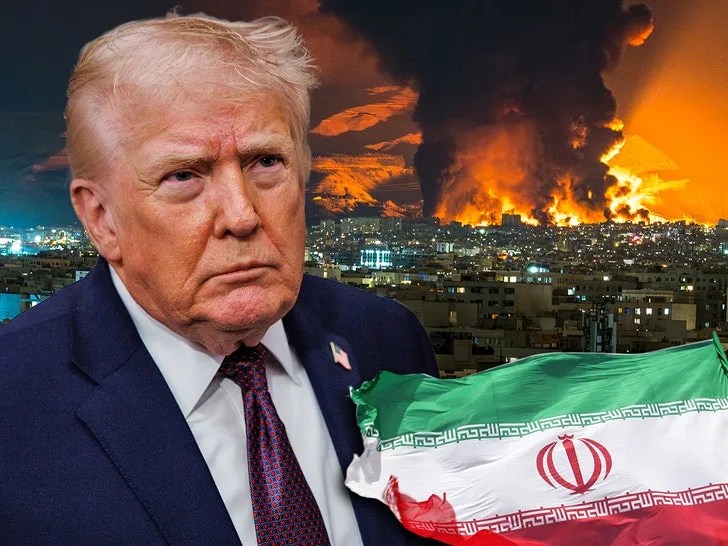
The US war on terror (2001–2021) cost an estimated $8 trillion with yearly defence spending currently standing at almost $1 trillion. Trump has asked for an additional $200 billion to continue the attack on Iran. Despite these astronomical sums of money being spent attacking Muslim country after Muslim country, it’s clear that this spending has become a source of regret for America and its allies, as the global economic impact of this war could tip the world into a major recession. This is not the first time such an event occurred. The Quraysh followed a similar path and it ended with their defeat and embracing of Islam. The world today is on the same trajectory because Allah has promised this in the Qur’an.
It should be noted that “those who disbelieve” is not speaking about every single non-Muslim. The Qur’an uses the address in a general form which can be applied to multiple individuals and realities. The circumstances of revelation (asbab an-nuzul) shows this verse was applied to the elites of Quraysh. Today we can apply it to the elites of America and its allies during the ‘war on terror’. This is the power of the Qur’an and its timeless message.
Allah (Most High) says,
إِنَّ ٱلَّذِينَ كَفَرُوا۟ يُنفِقُونَ أَمْوَٰلَهُمْ لِيَصُدُّوا۟ عَن سَبِيلِ ٱللَّهِ ۚ فَسَيُنفِقُونَهَا ثُمَّ تَكُونُ عَلَيْهِمْ حَسْرَةًۭ ثُمَّ يُغْلَبُونَ ۗ وَٱلَّذِينَ كَفَرُوٓا۟ إِلَىٰ جَهَنَّمَ يُحْشَرُونَ
Those who disbelieve spend their wealth barring access to the Way of Allah. They will spend it; then they will regret it; then they will be overthrown. Those who disbelieve will be gathered into Hell. [Al-Anfal: 36]
This verse and the preceding verses are referring to the disbelievers of Quraysh who fought Islam from day one of the message. “But why should Allah not punish them now when they bar access to the Masjid al-Haram? They are not its guardians. Only people who have taqwa can be its guardians. But most of them do not know that. Their prayer at the House is nothing but whistling and clapping. So taste the punishment for your disbelief.” [Al-Anfal: 34-35]
Ibn Ashur (d.1973) in At-Tahrir wa at-Tanwir explains the meaning of this verse. What follows is a translation with some minor additions.
After mentioning their barring of Muslims from Masjid Al-Haram, which warranted their punishment, Allah followed [in this verse] by mentioning their attempt to exterminate the Muslims and prevent them from embracing Islam, which is the meaning of “the path of Allah” (سَبِيلِ اللَّهِ).
The sentence is presented as a new beginning, not connected to a previous one, in order to emphasize its importance. That is, they spend their wealth, which is the dearest thing to them, to prevent people from embracing Islam.
The present/future tense (Al-Muḍāri’) is used in “they spend” (يُنْفِقُونَ) to indicate that their custom, and their spending is continuous in preparing for war against the Muslims. Their spending has occurred in the past, continues in the present, and will continue in the future. The preposition “li” (لِ) indicates that the spending is continuous because it is linked to a cause inherent in their souls: their hatred of Islam and their efforts to turn people away from it.
The meaning of this expenditure (الإنْفاقُ) is that the Quraysh used to feed their army meat every day on the day of Badr. The feeders were twelve men, namely Abu Jahl, Umayya ibn Khalaf, Al-Abbas ibn Abd al-Muttalib, Utbah ibn Rabi’ah, Al-Harith ibn Amir ibn Nawfal, Tu’aymah ibn Adi ibn Nawfal, Abu al-Bakhtari, Al-As ibn Hisham, Hakim ibn Hizam, and Al-Nadr ibn Al-Harith. Nubayh ibn Hajjaj al-Sahmi, his brother Munabbih, and Suhayl ibn Amr al-Amiri. They used to feed ten camels every day. This expenditure took place on the day of Badr, which has already passed. The use of the present/future tense in this account is to vividly recall the act of giving and the remarkable abundance of resources involved. This is a plural form formed by an idafa construct, which makes it a general expression, as if it were said: “They spend all their money,” (يُنْفِقُونَ أمْوالَهم كُلَّها) as an exaggeration (mubalagha), otherwise they would only spend some of their money.
The “fa” in (فَسَيُنفِقُونَهَا) “they will spend it” is used to indicate that this phrase is a consequence of the underlying reason i.e. barring access to the path of Allah. Since spending was their habit for the aforementioned reason, it follows that this spending will be repeated in the future. That is, they will face hardships from the Muslims that will compel them to repeatedly spend on armies to defend against the Muslims’ power.
The pronoun (هَا) in “they spend it” (يُنْفِقُونَها) refers to wealth (الأَمْوال), not specifically the wealth or money that is spent, but rather the money that remains or what they earn. After that, those funds they spend will be a source of regret for them.
Regret (حَسْرَة) is intense remorse and longing for what has passed. Regret is attributed to their wealth because it is the cause of regret through their expenditure. Moreover, describing wealth as the source of regret is an exaggeration (mubalagha), like describing the source itself, because wealth is the cause of their regret, not the cause of the regret in of itself. This is a warning that they [disbelievers] will not gain anything from their spending, for the one who spends only regrets and laments if he does not achieve his intended goal. This means that they spend to achieve victory but do not succeed.
The Quraysh spent on the army on the day [battle] of Uhud where Abu Sufyan hired two thousand of the Ahābish* to fight the Muslims.. The Ahābish were groups of Kinanah gathered from various prominent figures and allied themselves with Quraysh, settling around Mecca. They were called Ahābish, the plural of Ahbūsh, meaning a group or gathering.
The victory the Muslims achieved at Uhud was equivalent to the victory at the Battle of Badr, but the victory at Badr was even greater. Therefore, on the day of Uhud, Abu Sufyan was convinced to say, يَوْمٌ بِيَوْمِ بَدْرٍ والحَرْبُ سِجالٌ “Day after day, like the Battle of Badr, the war is a series of battles.” He had thought that the Prophet ﷺ had been killed and that Abu Bakr and Umar were killed, so his calculations failed. Then they spent money on the confederates (Ahzab) when they attacked Medina, but they withdrew without achieving anything, so their spending became a source of regret for them.
His statement, “Then they will be defeated,” (ثُمَّ يُغْلَبُونَ) is an escalation in the warning of their impending failure and defeat, because after they gained nothing from their spending, they were threatened with the Muslims overcoming them, just as they had already been defeated at the Battle of Badr. This is a warning to them of the impending conquest of Mecca and the end of their power. This is similar to the warning in His statement,
قُلْ لِلَّذِينَ كَفَرُوا سَتُغْلَبُونَ وتُحْشَرُونَ إلى جَهَنَّمَ وبِيسَ المِهادُ
˹O Prophet!˺ Tell the disbelievers, “Soon you will be overpowered and driven to Hell—what an evil place to rest!” [Ali-’Imran: 12]
The verb is in the passive voice (المَجْهُولِ) because the agent of the action (فاعِلِ) is known from the context, because the people of Mecca did not fight non-Muslims, and Mecca was a place of fertile land.
* Ahabish (الأحابيش): These were a confederation of tribes (mainly Kinanah) who pledged to support the Quraysh and played a key role in their military actions against the Muslims.
 Islamic Civilization