
The transformation of Türkiye under Erdogan and the AKP away from extreme secular values has been dramatic and something I have personally witnessed. During the 90s Muslims were leaving Türkiye as it was too un-Islamic. People with beards and hijabs were singled out for harassment. Contrast this to nowadays where many from the west are moving to Istanbul which has a sizeable ex-pat community from western nations.
In May 1999, Merve Kavakci, a newly elected woman MP for the pro-Islamic Virtue Party appeared in parliament wearing a headscarf. She faced a strong reaction from secular MPs and the Prime Minister at the time. She was booed, shouted at and prevented from taking her oath of office. Fast forward 20 years and she became the Turkish ambassador to Malaysia![157.5]
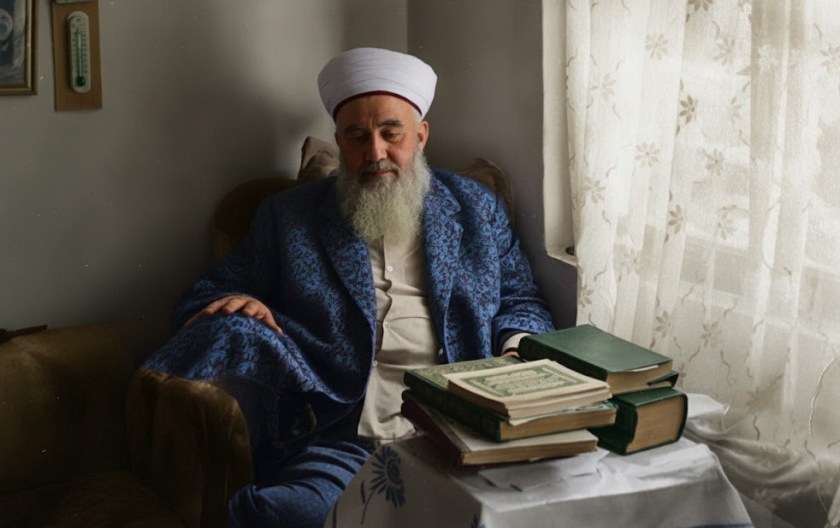
This change in Türkiye didn’t happen overnight but was the result of decades of tarbiya. Soner Cagaptay describes one of the influencers of this change – the Sufi sheikh Mehmet Zahid Kotku.
“The Islamists who followed Erbakan into politics—including Erdogan, who would later name his first-born son, Necmettin Bilal, after his political idol—gained their distinct world view in part from membership of an immersive spiritual community. More than a few of the MSP’s (National Salvation Party) top politicians were members of the Iskenderpasa mosque in Istanbul’s conservative Fatih district, led by the Sufi sheikh Mehmet Zahid Kotku. It was here that these men developed and refined their alternative vision for state and society in Turkey. Their community’s roots ran deep. Shunned by the Kemalist state, the Sufi community evolved to meet the new circumstances of the republic. After the Sufi lodges were shuttered, the sheikhs met with their communities informally, in mosque gardens or in private homes. Many took positions as state-appointed imams at mosques, quietly carrying on their Sufi role as well. Kotku, the imam of the Iskenderpasa mosque, came from just such a tradition. During Kotku’s tenure, which began in 1952, the Iskenderpasa lodge was coming into its own as a place of fellowship for Imam Hatip-educated and other conservative professionals and businessmen, many of whom felt alienated in Istanbul’s secular, European-influenced public life. In spite of his secular upbringing, Erbakan, for instance, was a deeply devout man with reservations about the West and secularism, and his attitude reflected that of a typical Islamic community member.
Sufi communities are traditionally founded upon the deep ties (rabita) that bind followers to a sheikh, whose authority is passed down through a line of teachers that ostensibly reaches all the way back to the Prophet Muhammad. The sheikh leads his community in interactive conversations to instruct them on matters of ethics and morality. Kotku’s followers marveled at the incisiveness of the leader’s conversation. Even outsiders praised Kotku for the cogent, unadorned style of his teachings, which were interwoven with practical messages. Kotku himself never expressed a desire to become overtly involved in politics. It is said that in the years leading up to his death in 1980, he admitted his regret at the extent to which his community had become embroiled in the political contests of the day. But Kotku’s message was undeniably political: his teachings offered a depiction of a just society that implied clear prescriptions for political action. In these teachings, Islam provided a model for the organization of the country’s economy. From Islamic principles, Kotku suggested, it is possible to derive answers on how to govern, even on fairly technical, economic matters. Community members would come to Kotku for practical political advice as well: Turkish politician Korkut Ozal claims that his brother Turgut Ozal, who would later become the country’s prime minister and president, first tried to enter the legislature on the Islamist MSP ticket in 1977 because Kotku advised him to do so. As a young man Erdogan also attended the Iskenderpasa mosque, as did later AKP leaders such as Abdulkadir Aksu and Besir Atalay.”
Source: Soner Cagaptay, ‘The New Sultan: Erdogan and the Crisis of Modern Turkey,’ Published in 2017 by I.B.Tauris & Co. Ltd, p.46
 Islamic Civilization