
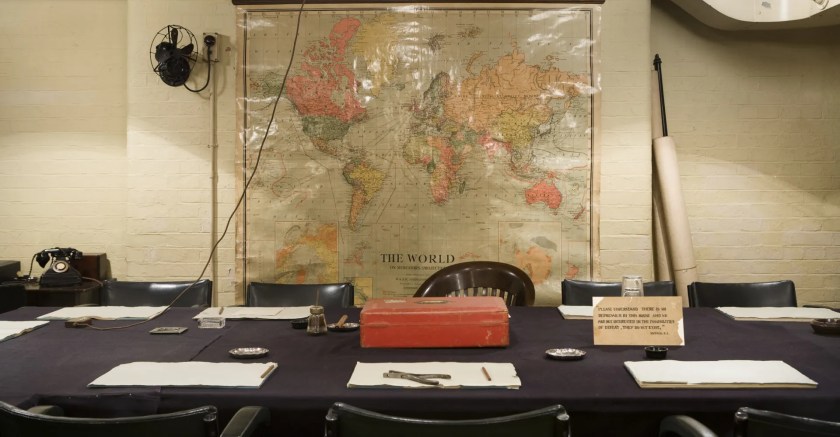
In most Muslim countries today, the head of state is a mere figurehead in terms of their powers as the overall commander of the armed forces. They may hold titles such as Supreme Commander (القائِد الأَعْلَى) or even Commander-in-Chief (القائِد العامّ), but in reality they have no real effective power over the armed forces.
The Pakistan constitution states, “Without prejudice to the generality of the foregoing provision, the Supreme Command of the Armed Forces shall vest in the President.”[1]
The Egyptian constitution states, “The President of the Republic is the Supreme Commander of the Armed Forces.”[2]
The Turkish constitution states, “The Office of Commander-in-Chief is inseparable from the spiritual existence of the Grand National Assembly of Turkey and is represented by the President of the Republic.”[3]
This is why within the Muslim world so many western backed Coup d’états have occurred over the past decades, especially in the three countries mentioned above.
Taqiuddin Al-Nabhani says, “The army (جَيْش jaysh) must have a commander-in-chief (القائِد العامّ Al-Qa’id Al-‘Amm), who is appointed by the Head of State ( رئيس الدولة Ra’is Al-Dowlah) as a deputy to him. This is because the commander in chief is the head of the entire army and armed forces (القُوّات المُسَلَّحَة Al-Quwwat Al-Musallaha). Likewise, every division (فِرْقَة firqa) must have a commander (قائِد Qa’id), and every brigade (لِواء liwa’) a commander and every battalion (كتيبة katība) a commander. All of them are appointed by the head of state, whereas the remaining officers are appointed by the commander-in-chief.”[4]
Al-Nabhani doesn’t use the title Commander-in-Chief for the Head of State, but rather uses it for the head of the armed forces. Abdul-Qadeem Zallum referred to the same position with the title Amir ul-Jihad. In most countries today, the Chief of Staff is the title used for the effective head of the armed forces. Prior to 1972, the head of the Pakistan army had the title Commander-in-Chief. After this time it was renamed to the Chief of Army Staff (COAS).
As with the other posts within the Islamic ruling system, we need to focus on the concept and hukm (rule) as opposed to the technical (istilahiyya) term. Al-Nabhani mentions that the head of state appoints all the generals and is the effective head of the armed forces. This is the important point here regardless of what title is used to describe this position.
The closest model we have nowadays, in relation to effective control of the armed forces which was practised by the Prophet ﷺ and the Rightly Guided Caliphs, is that of America and the role of the President as the Commander-in-Chief. This is not a ceremonial position but rather a civilian-military role where the US President appoints all the generals, chiefs of staff and campaign commanders. In terms of the chain of command this can go through the Defence Secretary as a deputy command-in-chief, but the President can also issue orders directly to the commanders in the field.
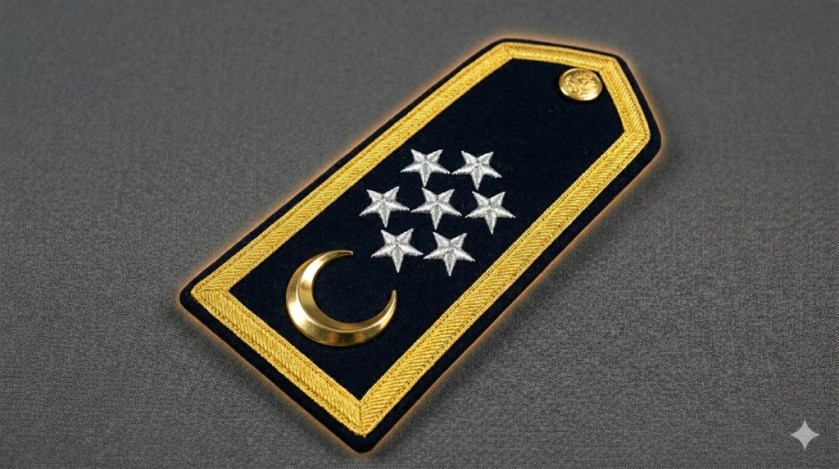
The US President also has the power to lead the wars directly and formulate military planning and strategy as George Washington, James Madison and Abraham Lincoln did when they were in office. This is similar to what the Prophet ﷺ and some of the caliphs undertook when they directly led the battles, trained the military or devised battle plans and strategy. Although this is an exception to the rule, and even during the time of the Prophet ﷺ, once the sahaba had been trained in military leadership, they led most of the later battles of the Medinan period.
An important point to note nowadays is that the armed forces have undergone a dramatic transformation, and military expertise is a full-time dedicated role by professional officers. The caliph would have been an army commander before assuming office as the Rightly Guided Caliphs were, but once in office his focus is on political affairs and he needs to delegate out the actual command, training and military planning to the chiefs of staff. “‘I am not acquainted with the military profession,’ George Mason proclaimed at the Virginia convention and, except for Hamilton, Pinckney, and a few others, he spoke for all the Framers [of the US Constitution]. They knew neither military profession nor separate military skills. Military officership was the attribute of any man of affairs. Many members of the Federal Convention had held military rank during the Revolution; Washington was only the most obvious of the soldier-statesmen. They combined in their own persons military and political talents much as the samurai founders of modem Japan also combined them a hundred years later.”[5]
Notes
[1] https://www.pakistani.org/pakistan/constitution/part12.ch2.html
[2] https://www.constituteproject.org/constitution/Egypt_2019?lang=ar
[3] https://www.constituteproject.org/constitution/Turkey_2017
[4] Taqiuddin Al-Nabhani, Nizam ul-Hukm Fil-Islam, 1st Edition, 1951, p.54
[5] Samuel Huntington, ‘The soldier and the state: The theory and politics of civil-military relations,’ p.165
 Islamic Civilization