
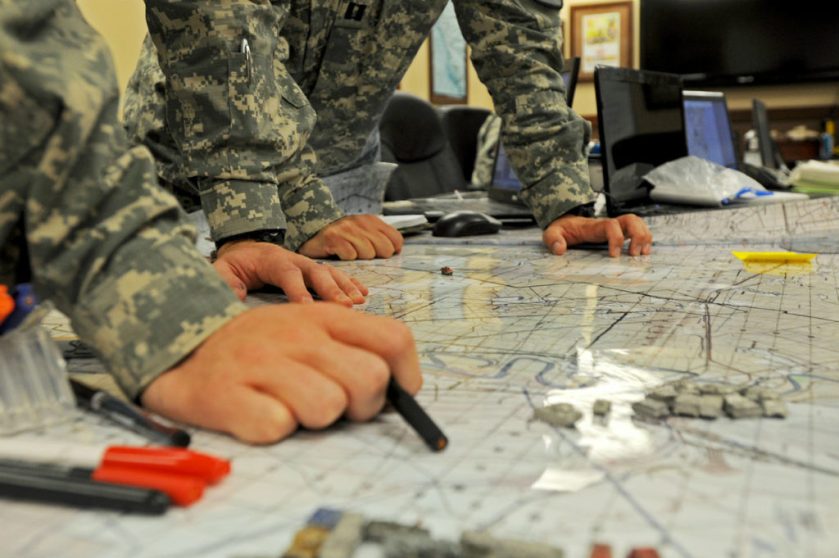
Since the armed forces play such a major role in the Islamic state, their organisation and administration must be managed correctly. The military has its own culture and ethos, and is resistant to change. If not handled properly they can become a separate entity looking after the interests of themselves, rather than those of the state. In 1905, Field Marshal Sir Evelyn Wood told Richard Haldane, the Secretary of State for War, “If you organize the British army, you will ruin it.”[1]
If the military becomes independent this may lead to riots, civil wars and even coup d’états as were witnessed during the Abbasid Caliphate after the formation of a professional standing army of freed Turkish slaves (Ghilmans/Mamluks) by the caliph Al-Mu’tasim (r. 833-842). The rise of the Turkic army and their power struggles with the Abbasid Caliphs, led them to assassinate Al‐Mutawakkil (r. 847-861) and install his son Al-Muntasir (r. 861–862) as the caliph. The subsequent coup d’états, assassinations and civil strife in the new Abbasid capital of Samarra, are known as the Anarchy of Samarra (861-870) in which the removal and murder of five caliphs took place within just nine years.
Unfortunately, many of the militaries in Muslim countries today do not act in the interests of Islam and the state, because the top brass are simply bought off by the west. It’s no secret that the Pakistan military for example runs a huge number of commercial ventures and that its senior officers and generals have become extremely wealthy on the back of this.[2]
The Emirate of Jihad encompasses more than just fighting
Jihad links to the domestic and foreign policies of an Islamic State, and as such encompasses far more than just physical fighting. This is why Al-Mawardi said, “all laws regarding the division of booty and the negotiation of the peace treaties are delegated to the amir”. In other words, this Amir has powers related to the treasury and foreign policy, which is why in the time of the Rightly Guided Caliphs, this Amir was the military governor who had full powers as commander in-chief over the new lands he conquered. Abu Bakr appointed Khalid ibn Al-Walid as the commander of the second army[3] in the campaign to conquer Iraq. He then became the overall commander of all armies in Iraq[4], and the military governor of the newly conquered territories, until new civilian governors were appointed.
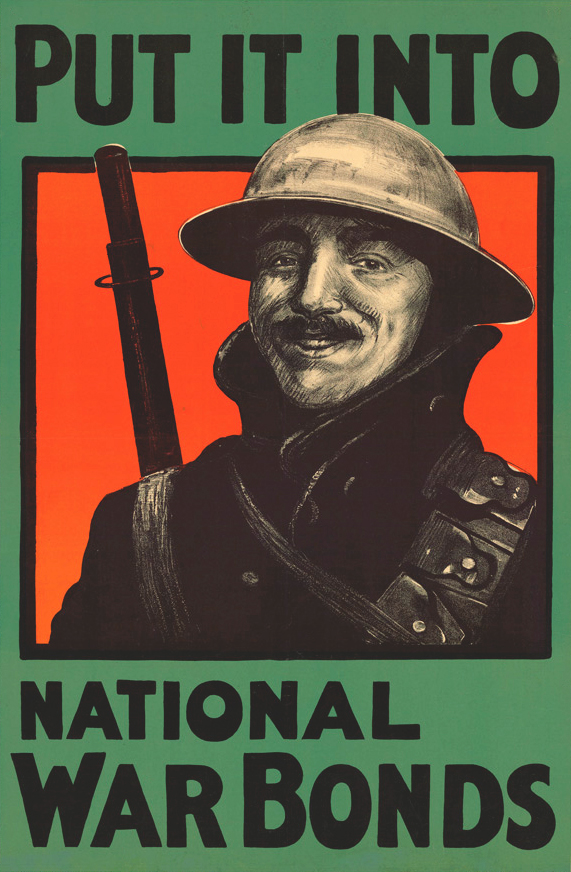
In a full-blown war, all aspects of the state and nation need to be mobilised for the war effort. We can see this in the first and second world wars in Britain, where factories were repurposed to make munitions, tanks and aircraft, and both men and women were conscripted in to the armed forces for service. War bonds were issued in WWI with a 5% interest rate, in order to raise money for the war, and ordinary citizens were encouraged to purchase these bonds out of their patriotic duty.
In order to achieve this mobilisation, there has to be someone in charge who has full powers over all aspects of the state and the armed forces. Winston Churchill, the wartime prime minister in WWII had this power, and additionally created a new title for himself called the “Minister of Defence” to reinforce his wartime powers. He said, “I, therefore, sought His Majesty’s permission to create and assume the style or title of Minister of Defence, because obviously the position of Prime Minister in war is inseparable from the general supervision of its conduct and the final responsibility for its result.”[5] He continues, “I may say, first of all, that there is nothing which I do or have done as Minister of Defence which I could not do as Prime Minister. As Prime Minister, I am able to deal easily and smoothly with the three Service Departments, without prejudice to the constitutional responsibilities of the Secretaries of State for War and Air and the First Lord of the Admiralty.”[6]
The Chancellor of the Exchequer and the Foreign Secretary in addition to the military chiefs of the three services (Army, Navy and Airforce), played major roles in the war cabinets of both world war governments. In 1942 Churchill replaced the Chancellor of the Exchequer’s position in the war cabinet with the Minister of Production and the Minister of Labour,[7] as these were essential functions to keep the war machine moving.
Although Churchill created the post of Minister of Defence, there was no Ministry of Defence (MOD) until after WWII. The three services of the armed forces namely the Admiralty, War Office and Air Ministry who controlled the Navy, Army and Airforce respectively, were separate departments until 1964 when they amalgamated into the MOD.[8]
Notes
[1] Stephen E. Koss, Lord Haldane, Scapegoat for Liberalism (New York: Columbia University Press, 1969), 47.
[2] https://www.dawn.com/news/1272211
[3] Dr Ali Muhammad As-Sallabi, ‘The Biography of Abu Bakr As-Siddiq’, Dar us-Salam Publishers, p.555
[4] Abu Ja`far Muhammad b. Jarir al-Tabari, ‘The History of Al-Tabari’, translation of Ta’rikh al-rusul wa’l-muluk, State University of New York Press, Vol. 11, p.5
[5] Hansard, War Situation, Volume 378: debated on Tuesday 24 February 1942, https://hansard.parliament.uk/Commons/1942-02-24/debates/02dd8f21-e6ac-46fa-a5ee-bcf707b9bfee/WarSituation
[6] Ibid
[7] Ibid
[8] https://assets.publishing.service.gov.uk/media/5a799eb0e5274a684690ae08/history_of_mod.pdf
 Islamic Civilization