
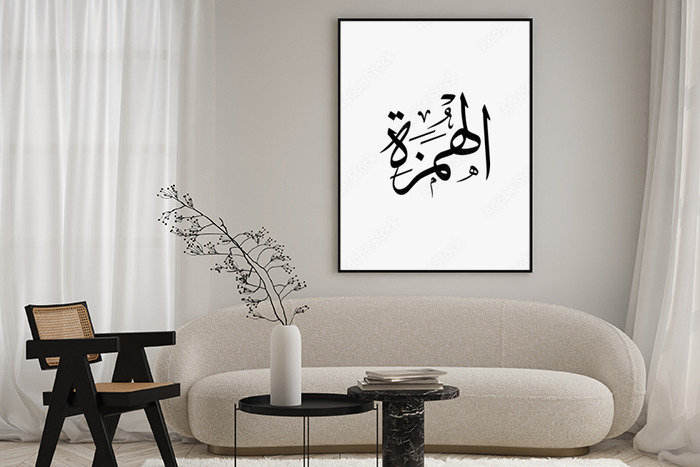
- Surah Al-Humazah
- The Purpose of the Surah
- The Rhetorical Perceptions in the surah
- What is the difference between (ويلاً) and (ويلٌ) meaning “woe”?
- Which is stronger in the language, (ويلاً) or (ويلٌ)?
- What is the significance of the feminine gender of the nouns in the verse, “Woe to every backbiter (هُمَزَة), slanderer (لمَزَة)”?
- What is the difference between (هُمَزة) and (همّاز)?
- Why did Allah choose to put (هُمَزة) in Surah Al-Humazah and (همّاز) in Surah Al-Qalam?
- Why did Allah describe the punishment in detail in Surat Al-Humazah but not Surat Al-Balad?
- Notes
This is a translation from Dr Fadhel Saleh Al-Samarra’i’s لَمَسات بَيانِيَّة لِسُوَر القُرْآن الكَرِيم ‘Rhetorical Perceptions in the Surahs of the Holy Qur’an.’ Dr Fadhel (b.1933) is a former Professor of Literature at the College of Arabic Language at the University of Sharjah. His full biography can be read here.
Surah Al-Humazah
وَيْلٌۭ لِّكُلِّ هُمَزَةٍۢ لُّمَزَةٍ
Woe to every backbiter, slanderer,
ٱلَّذِى جَمَعَ مَالًۭا وَعَدَّدَهُۥ
who amasses wealth ˹greedily˺ and counts it ˹repeatedly˺,
يَحْسَبُ أَنَّ مَالَهُۥٓ أَخْلَدَهُۥ
thinking that their wealth will make them immortal!
كَلَّا ۖ لَيُنۢبَذَنَّ فِى ٱلْحُطَمَةِ
Not at all! Such a person will certainly be tossed into the Crusher.
وَمَآ أَدْرَىٰكَ مَا ٱلْحُطَمَةُ
And what will make you realize what the Crusher is?
نَارُ ٱللَّهِ ٱلْمُوقَدَةُ
˹It is˺ Allah’s kindled Fire,
ٱلَّتِى تَطَّلِعُ عَلَى ٱلْأَفْـِٔدَةِ
which rages over the hearts.
إِنَّهَا عَلَيْهِم مُّؤْصَدَةٌۭ
It will be sealed over them,
فِى عَمَدٍۢ مُّمَدَّدَةٍۭ
˹tightly secured˺ with long braces.
The Purpose of the Surah
This is a Meccan surah that revolves around those who criticize people and slander (يَلْمُزُونَ) them, belittle them, and mock them. All of this is done by fools among people: وَيْلٌۭ لِّكُلِّ هُمَزَةٍۢ لُّمَزَةٍ “Woe to every backbiter, slanderer”. The surah also condemns those who hoard wealth: ٱلَّذِى جَمَعَ مَالًۭا وَعَدَّدَهُۥ “who amasses wealth ˹greedily˺ and counts it ˹repeatedly˺” as if they will live forever (خالِدُونَ) in this worldly life and that this wealth (المال) that they hoard is what will make them immortal: يَحْسَبُ أَنَّ مَالَهُۥٓ أَخْلَدَهُۥ “thinking that their wealth will make them immortal!”. These wretched people do not know that their end will be in the fire of Hell that never goes out: كَلَّا ۖ لَيُنۢبَذَنَّ فِى ٱلْحُطَمَةِ وَمَآ أَدْرَىٰكَ مَا ٱلْحُطَمَةُ نَارُ ٱللَّهِ ٱلْمُوقَدَةُ ٱلَّتِى تَطَّلِعُ عَلَى ٱلْأَفْـِٔدَةِ إِنَّهَا عَلَيْهِم مُّؤْصَدَةٌۭ فِى عَمَدٍۢ مُّمَدَّدَةٍۭ “Not at all! Such a person will certainly be tossed into the Crusher. And what will make you realize what the Crusher is? ˹It is˺ Allah’s kindled Fire, which rages over the hearts. It will be sealed over them, ˹tightly secured˺ with long braces.” The fire (النار) here is called the Crusher (ٱلْحُطَمَة) because it crushes bones until it reaches the hearts.
The Rhetorical Perceptions in the surah
What is the difference between (ويلاً) and (ويلٌ) meaning “woe”?
The principle is that the nominative (المرفوع) indicates a nominative case (الرفع), and the accusative (المنصوب) indicates a verbal sentence.[1] If we say (ويلٌ) then it is a nominal sentence (الجملة الاسمية) i.e. without a verb such as (ويلٌ لَهُ) “Woe to him”, and if we say (ويلاً) it is part of a verbal sentence (جملة فعلية). Allah Almighty says, (فَضَرْبَ ٱلرِّقَابِ) “So He struck the necks”[2] which is a verbal sentence.
In His statement, (وَيْلٌ لِكُلِّ هُمَزَةٍ لُمَزَةٍ) “Woe to every backbiter, slanderer”, He did not say (ويلاً) because this punishment mentioned in the surah is a permanent, unending destruction. Therefore, He said at the end of the surah, (إِنَّهَا عَلَيْهِم مُّؤْصَدَةٌۭ فِى عَمَدٍۢ مُّمَدَّدَةٍۭ) “It will be sealed over them, ˹tightly secured˺ with long braces.” If He had said (ويلاً) and then said the same verse at the end, the matter would not be linguistically consistent [because there would be no permanence as verbal sentences apply to specific time periods only.]
Another matter is that in the saying of Allah the Almighty (ويلٌ) at the beginning of the surah in the nominative case (الرفع), it indicates complete and permanent destruction and is appropriate to His saying at the end: (فِى عَمَدٍۢ مُّمَدَّدَةٍۭ) “˹tightly secured˺ with long braces” because (ويلٌ) is part of a nominal sentence.
(ويلٌ) is an indefinite subject (مبتدأ نكرة) and (لِّكُلِّ هُمَزَةٍۢ لُّمَزَةٍ) is its predicate (خبر). Here (ويلٌ) has the meaning of du’a (الدعاء). If the subject has the meaning of du’a it is permitted to start a nominal sentence with it, like in His saying: (سَلَـٰمٌ عَلَيْكُمُ) “Peace be upon you”.[3]
It is well known that a nominal sentence indicates permanence, so this permanence necessitates the permanence of destruction: (إِنَّهَا عَلَيْهِم مُّؤْصَدَةٌۭ فِى عَمَدٍۢ مُّمَدَّدَةٍۭ) “It will be sealed over them,˹tightly secured˺ with long braces” in which no doors of hell are opened for them.
If He had said (ويلاً), the meaning of torment and its expansion would not have been appropriate to the context of the verses. (ويلاً) is an absolute object (مفعول مطلق) of an omitted verb with the meaning ( ألزمه الله ويلاً) “Allah imposed woe upon him”.
Also, (ويلٌ) is a verbal noun (مصدر) from the verbal nouns whose verbs have the meaning of destroy and killing such as: (ويح) ,(ويب) and (ويس).
As for (ويلاً) it is an absolute object (مفعول مطلق) meaning (أَهْلَكَهُ اللّٰه) “May Allah destroy him,” like (قَعَدَ جُلُوساً) “He sat down” or it is a direct object (مفعول به) in (أَلْزَمَهُ اللّٰه ويلاً) “May Allah impose woe on him”. The well-known meaning of (ويلاً) among grammarians is: (أَهْلَكَهُ اللّٰه إهلاكاً) “May Allah destroy him completely,” and here it is an absolute object.
Which is stronger in the language, (ويلاً) or (ويلٌ)?
It is impossible to say which is stronger, because eloquence (البَلاغَة) in the Holy Quran is about matching speech (الكلام) to the context (الحال). Sometimes the context requires the use of a nominal sentence, so it is used to indicate certainty. Other times the context requires the use of a verbal sentence, so it is used instead.
What is the significance of the feminine gender of the nouns in the verse, “Woe to every backbiter (هُمَزَة), slanderer (لمَزَة)”?
The (ة) here is not used as a sign of semantic femininity, but rather is used for emphasis (mubalagha). The feminine ta (ة) is not just for emphasis and (وَيْلٌ لِّكُلِّ هُمَزَةٍ لُّمَزَةٍ) also indicates abundance. The patterns (فاعلة) and (فعّالة) are from the forms of emphasis. A learned (علّامة) man and understanding (فهّامة) man are from the forms of emphasis. A scholar (علاّم) and a scholar (علاّمة) are from the forms of emphasis. The word (داهية) (smart) is also from the forms of emphasis.
What is the difference between (هُمَزة) and (همّاز)?
Allah Almighty says in Surah Al-Humazah: (وَيْلٌ لِّكُلِّ هُمَزَةٍ لُّمَزَةٍ) “Woe to every backbiter, slanderer” and in Surah Al-Qalam: (هَمَّازٍ مَّشَّاء بِنَمِيمٍ) “a slanderer, a gossip-monger”.[4] The differences between the two verses lie in the forms. The form (همّاز) is an exaggerated form (صيغة مبالغة) on the pattern (فعّال) denoting a profession, trade, and craft, such as (نجّار) “carpenter,” (حدّاد) “blacksmith,” and (خيّاط) “tailor.” When we describe someone as (كذّاب) “a liar,” it is as if we are saying that their profession is lying.
The form (هُمَزة) is an exaggeration (mubalagha) with the letter (ة). There are several types of exaggeration with the letter (ة):
1- What is not originally an exaggeration and is exaggerated with the letter (ة) such as (راوِي) “narrator” and (راوية) “storyteller”.
2- What is originally an exaggerated form, then we add the (ة) to emphasize and increase the exaggeration, such as (هُمزة), which is originally (هُمَز), and is one of the exaggerated forms, such as (حُطَم) “wrecker”, (لُكَع) “wicked”, (غُدَر) “traitor” and (فُسق) “imoral” so we add the (ة) to increase the exaggeration.
Linguists say: What is exaggerated with the (ة) indicates the end state (النهاية) or the ultimate goal (الغاية) of its description (الوصف). Not every (نازل) “sends down” is called a (نازلة), nor every (قارع) “reciter” is called a (قارعة), so that it is widespread and overwhelming like a pandemic, or similar to the resurrection (القيامة), the deafening noise (الصاخة), and the catastrophe (الطامة). This feminization is for exaggeration, or even the end state of the exaggeration, and this is what the word (هُمَزة) indicates.
So we are faced with two exaggerated forms, one of which indicates the practice or profession (المزأولة), and the other the ultimate goal or end state of its description.
Now that we know the difference between the two forms, the question now is:
Why did Allah choose to put (هُمَزة) in Surah Al-Humazah and (همّاز) in Surah Al-Qalam?
The use of (هُمزة) in Surah Al-Humazah is because it mentions the result, the consequence, the goal and the end of the disbelievers – woe to the disbelievers! The verse says: (كَلَّا ۖ لَيُنۢبَذَنَّ فِى ٱلْحُطَمَةِ) “Not at all! Such a person will certainly be tossed into the Crusher.” (الحُطمة) “the crusher” has the same form as (هُمزة), which is an exaggerated form, so it is appropriate to mention the disbelievers reaching the end state of being described by this characteristic with the (ة), indicating their end state of being crushed in (الحُطمة). It indicates that the punishment is of the same kind as the deed i.e. slandering. Just as (الهُمَز) is exaggerated, their fate will be similar in severity. The one who transgresses against people according to the laws of this world: إِنَّهَا عَلَيْهِم مُّؤْصَدَةٌۭ فِى عَمَدٍۢ مُّمَدَّدَةٍۭ “will be locked up (sealed) ˹tightly secured˺ with long braces.” We also notice from the surah that the transgressor and the aggressor will also be imprisoned in the Fire.
As for Surat Al-Qalam, the word (همّاز) “slanderer” is used because the speech is about dealing with people, and the entirety of Surat Al-Qalam talks about dealing with people. (وَإِنَّكَ لَعَلَىٰ خُلُقٍ عَظِيمٍۢ) “And you are truly ˹a man˺ of outstanding character.”[5] It discusses behaviours (السُلُوكِيّات) and rarely mentions the consequences (العاقِبَة) of these behaviours, such as what was mentioned in His statement: (سَنَسِمُهُۥ عَلَى ٱلْخُرْطُومِ) “We will brand him on the snout”. However, Allah did not mention anything else about the consequences of the one who committed this act. He only mentioned their characteristics (الصفات) such as (حَلَّافٍۢ مَّهِينٍ هَمَّازٍۢ مَّشَّآءٍۭ بِنَمِيمٍۢ) “the despicable, vain oath-taker, slanderer, gossip-monger.” He said these characteristics do not require obedience from anyone. Therefore the consequences of the action i.e. the punishments were not mentioned in this surah, as it is all about dealings among people.
It was stated in the Surah that someone should not be obeyed (أَن كَانَ ذَا مَالٍۢ وَبَنِينَ) “˹simply˺ because he has been blessed with ˹abundant˺ wealth and children”. Even if someone is deceitful and corrupt but has wealth and children that protect him, his wealth and children become the reason for submission and compliance among some people, so the verse came with the command:
وَلَا تُطِعْ كُلَّ حَلَّافٍ مَّهِينٍ هَمَّازٍ مَّشَّاء بِنَمِيمٍ مَنَّاعٍ لِّلْخَيْرِ مُعْتَدٍ أَثِيمٍ عُتُلٍّ بَعْدَ ذَلِكَ زَنِيمٍ أَن كَانَ ذَا مَالٍ وَبَنِينَ
“And do not obey the despicable, vain oath-taker, slanderer, gossip-monger, withholder of good, transgressor, evildoer, brute, and—on top of all that—an illegitimate child. Now, ˹simply˺ because he has been blessed with ˹abundant˺ wealth and children.”[6]
The Arab has pride in his clan and his children, but money and power are the reason for submission and obedience among individuals and peoples. No matter how bad the owner of the money is in terms of morals, sins and aggression, they have power because of their money and power. This is evident in our reality today and is the reason for the arrogance of the strong countries that have this money and power over the oppressed peoples. What is noteworthy here is that Surat Al-Qalam did not touch upon their end state, but was satisfied with the command not to obey them, while Surah Al-Humazah mentioned their end state in detail.
Why did Allah describe the punishment in detail in Surat Al-Humazah but not Surat Al-Balad?
In Surat Al-Humazah, Allah Almighty described the punishment in detail by saying: (إِنَّهَا عَلَيْهِم مُّؤْصَدَةٌۭ فِى عَمَدٍۢ مُّمَدَّدَةٍۭ) “It will be sealed over them,˹tightly secured˺ with long braces” while in Surat Al-Balad, He did not comment on the details of the Fire (نار) at all, simply saying: عَلَيْهِمْ نَارٌۭ مُّؤْصَدَةٌۢ “The Fire will be sealed over them.”[7] So what is the rhetorical perception here?
If we look to those people mentioned in Surat Al-Humazah, we notice that the Almighty has expanded on mentioning the attributes of the one being punished: (وَيْلٌۭ لِّكُلِّ هُمَزَةٍۢ لُّمَزَةٍ ٱلَّذِى جَمَعَ مَالًۭا وَعَدَّدَهُۥ) “Woe to every backbiter, slanderer, who amasses wealth ˹greedily˺ and counts it ˹repeatedly˺…” Just as He expanded on the attributes, He also expanded on the punishment (فِى عَمَدٍۢ مُّمَدَّدَةٍۭ) “˹tightly secured˺ with long braces.”
As for Surat Al-Balad, He did not expand on mentioning the attributes of the one being punished, but rather simply said: (وَٱلَّذِينَ كَفَرُوا۟) “As for those who disbelieve.”[8] And Allah knows best.
Another point in Surah Al-Humazah is that Allah the Almighty mentioned the disbeliever who accumulates wealth, counts it, and hoards it. Just as the disbeliever who hoards and accumulates wealth, thinking that it will make him immortal and does not benefit others with it, Allah the Almighty will shut the gates of Hell for him (فِى عَمَدٍۢ مُّمَدَّدَةٍۭ) “˹tightly secured˺ with long braces”. This assurance in hoarding wealth is appropriate for the assurance of eternal damnation in Hell.
In Surah Al-Balad, the context was not like this. Rather, Allah the Almighty described the disbeliever as having squandered wealth (أَهْلَكْتُ مَالًۭا لُّبَدًا) “I have wasted enormous wealth!”[9]
Then, in Surah Al-Humazah, Allah the Almighty mentioned that the disbeliever thinks that his wealth will make him immortal, but this assumption is countered by the reality of eternal damnation in Hell by closing the gates of Hell for him and securing him with long braces in the fire. Likewise, in Surah Al-Humazah, Allah the Almighty described the disbeliever as transgressing against others, slandering them, backbiting them, and withholding His goodness from them. The one who transgresses against others should be imprisoned, and imprisonment means closing the gates on him and placing him in long braces.
This was not mentioned in Surah Al-Balad, and He sufficed with the description (وَٱلَّذِينَ كَفَرُوا۟ بِـَٔايَـٰتِنَا) “As for those who deny Our signs”[10] and He did not mention that they transgressed against others. Disbelief has degrees and punishment has levels according to what the disbeliever does. Not all disbelievers will be in the same punishment or level, as evidenced by the Almighty’s saying: (فِى ٱلدَّرْكِ ٱلْأَسْفَلِ مِنَ ٱلنَّارِ) “in the lowest depth of the Fire.”[11]
The tormented ones in Surat Al-Humazah are disbelievers (كُفّار), they transgress against others, they collect wealth, they think that their wealth will make them immortal, and all of this was not mentioned in Surat Al-Balad. For this reason it was appropriate to ensure the disbelievers’ imprisonment and to secure them in long braces in hell as mentioned in Surat Al-Humazah.
Notes
[1] A verb is action + tense (time). Therefore, it applies to a specific time period only depending on its tense, past, present or future. The verbal sentence also indicates occurrence and renewal.
[2] Surah Muhammad, ayah 4
[3] Surah An-Nahl, ayah 32
[4] Surah Al-Qalam, ayah 11
[5] Surah Al-Qalam, ayah 4
[6] Surah Al-Qalam, ayaat 10-14
[7] Surah Al-Balad, ayah 20
[8] Surah Al-Balad, ayah 19
[9] Surah Al-Balad, ayah 6
[10] Surah Al-Balad, ayah 19
[11] Surah An-Nisa, ayah 145
 Islamic Civilization