
- Introduction
- The Flags and Banners of the Prophet ﷺ
- What is the difference between the liwaa’ and the rayah?
- What is the colour of the flag?
- What is the shape of the flag?
- What is the material of the flag?
- What is the size of the flag?
- What is the aspect ratio?
- What symbol or writing is on the flag?
- Are there any other flags?
- Conclusion
- Notes
Introduction
There is no official flag for an Islamic State specified directly in the Qur’an and Sunnah. What we find are flags and banners used by the army of the Prophet ﷺ in Medina. Using qiyas (analogy) some contemporary scholars have extended the use of these flags and banners to a modern state and its citizens, and not just confined them to the armed forces.
The use of flags to denote states is a modern phenomenon. Historically, flags were mainly used in warfare to identify the different armies on the battlefield. Ibn Khaldun says, “Flags have been the insignia of war since the creation of the world. The nations have always displayed them on battlefields and during raids. This was also the case in the time of the Prophet and that of the caliphs who succeeded him.”[1]
In modern times flags are used to identify different countries and are used as a symbol to unite the nation. In America, there is a specific pledge for the flag and most public schools are required to schedule regular sessions for its recitation:
“I pledge allegiance to the Flag of the United States of America, and to the Republic for which it stands, one Nation under God, indivisible, with liberty and justice for all.”
Using any flag or banner to represent the Islamic State is of the mubah (permissible) matters since the liwaa‘ (white flag) and rayah (black banner) were never used in the time of the Prophet ﷺ or Rightly Guided Caliphs except by the army in war . The liwaa‘ and rayah were never attached to the caliph’s house, or attached to Masjid Al-Nabawi. They were kept folded away until the time of an expedition when the liwaa‘ would be given (tied) to the Amir.
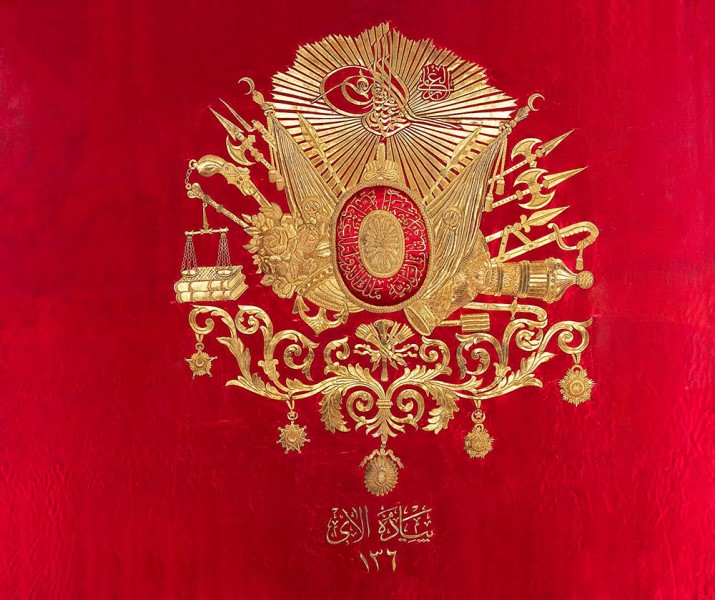
It should also be noted that there is legitimate ikhtilaf (difference of opinion) on the flags and the overall structure (tanzeem) of an Islamic State. The Ottomans did not use the rayah and the liwaa’ but they were still a caliphate who ruled by Islam according to their understanding and ability.
Today we have groups and states with Islamic emblems on their flags, and some even have the rayah as their icon, yet these groups, states and entities do not reflect the tolerance, justice and high values exhibited by the Rightly Guided Caliphs and those caliphs who came after them who followed in their footsteps.
The Flags and Banners of the Prophet ﷺ
As with all the Islamic rules related to state and government, the actual detail is contained in the sunnah (actions, sayings and silence) of the Prophet Muhammad ﷺ.
If we look to the hadith then we find two types of flags used by the leader and commanders of the Islamic army. They are the liwaa’ (اللواء) and the rayah (الراية) which are translated as flags or banners.

عَنْ جَابِرٍ، رضى الله عنه أَنَّ النَّبِيَّ صلى الله عليه وسلم دَخَلَ مَكَّةَ وَلِوَاؤُهُ أَبْيَضُ
It is narrated from Jabir that the Prophet ﷺ entered Makkah with his white liwaa’.[3]
لأُعْطِيَنَّ الرَّايَةَ الْيَوْمَ رَجُلاً يُحِبُّ اللَّهَ وَرَسُولَهُ
The Prophet ﷺ said: “I will give the rayah today to a man (Imam Ali) who loves Allah and His Messenger.”[4]
Al-Qamus al-Muhit dictionary mentions the linguistic meaning of both liwaa’[5] and rayah[6] as ‘alam (العلم) which means a sign or banner.
What is the difference between the liwaa’ and the rayah?
The liwaa‘
The liwaa’ is a special flag used as a sign for the commander of a particular mission or expedition (sariya), and the leader of the armed forces as a whole (commander in-chief).
Al-Hafiz Ibn Hajar says in Fath al-Bari:
الراية بمعنى اللواء، وهو العلم الذي في الحرب يعرف به موضع صاحب الجيش، وقد يحمله أمير الجيش، وقد يدفعه لمقدم العسكر
“Rayah means liwaa‘, and it is the sign (‘alam) by which the position of the commander of the army is known in war. It may be carried by the Amir of the army, or he may give it to the leader of the army .”
Al-Sarakhsi (d.1090CE) says,
ثم اللواء اسم لما يكون للسلطان، والراية اسم لما يكون لكل قائد تجتمع جماعة تحت رايته
“Then the liwaa‘ is the name given to what belongs to the sultan, and the rayah is the name given to what belongs to each commander (qa’id) under whose rayah a group gathers.”[29]
The first liwaa’ to be raised in Islam was for Hamza ibn ‘Abd al-Muttalib ibn Hashim in the month of Ramadan, seven months after the hijra of the Messenger of Allah ﷺ where he led a sariya of 30 men. The one who carried the liwaa’ was Abu Marthad Kinaz ibn al-Husayn al-Ghanawi.[7] Thirty men is the size of a modern-day platoon (فصيلة faṣīlah) headed by a Lieutenant (ملازم mulazim).
The expedition of Ubaidah ibn al-Harith to the valley of Rabigh in Shawwal with 60 men, took place eight months after the hijra. The Messenger of Allah ﷺ gave him a white liwaa’ and this was carried by Mastah ibn Athatah ibn al-Muttalib ibn Abd Manaf.[8]
The expedition of Saad bin Abi Waqqas to Al-Kharrar to intercept a Quraysh caravan in Dhul-Qi’dah, with 20 men, took place nine months after the hijra. The Messenger of Allah ﷺ gave him a white liwaa’ and this was carried by Al-Miqdad bin Amr Al-Bahrani.[9]
The Messenger of Allah ﷺ raided Al-Abwa in Safar, twelve months after the hijra. Hamza bin Abdul Muttalib carried his white liwaa’.[10]
The Messenger of Allah ﷺ raided Buwat in the month of Rabi’ al-Awwal, thirteen months after the hijra. Sa’d ibn Abi Waqqas carried his white liwaa’.[11]
The Messenger of Allah ﷺ appointed Zaid ibn Haritha as the Amir of the Expedition to Mut’ah in charge of three thousand men and gave him a white liwaa’.[12] Three thousand men is the size of a modern-day brigade (liwaʾ) headed by a one-star Brigadier-General (عَمِيد ‘amid).
In the Mut’ah campaign he ﷺ didn’t just appoint Zaid but appointed the deputy commanders who would take over if Zaid was killed. He ﷺ said, “The Amir of the people is Zayd bin Haritha. If he is killed, then Ja’far ibn Abi Talib. If he is killed, then Abdullah ibn Rawahah. If he is killed, then let the Muslims choose a man from among themselves and make him their Amir.” The Muslims and polytheists met and the leaders fought on foot. Zayd ibn Haritha took the liwaa’ and the Muslims fought with him in their ranks until he was stabbed to death with spears, may Allah have mercy on him. Then Jaafar ibn Abi Talib took the liwaa’, so he dismounted from his blond horse and hamstrung it. It was the first horse to be hamstrung in Islam, and he fought until he was killed. May Allah be pleased with him. A Roman man struck him and cut him in half. On one half were found thirty-two wounds, and it was said that on Ja’far’s body there were seventy-two sword wounds and spear thrusts. Then Abdullah ibn Rawahah took the liwaa’ and fought until he was killed, may Allah have mercy on him. Then the people agreed on Khalid ibn al-Walid, so he took the liwaa’ and the people fled, and the defeat occurred.[13]
This clearly shows that the liwaa’ is with the Amir of the expedition no matter the size of the unit. Ryan Lynch says, “the Arabic term amīr is used to refer to a military commander regardless of his position in the chain of command.”[34]
The rayah
The rayah is a more general flag used by the entire armed forces including the various divisions, brigades and battalions. This rule can be extended through qiyas (analogy), to the entire population of the state.
The rayah of the Messenger Allah ﷺ was black and was called al-Uqab (العقاب).[14]
Al-Harith bin Hassan said: “We went out seeking the Messenger of Allah ﷺ and we entered the mosque, and it was crowded with people. He said: And there was a black rayah waving.”[15]
The first time the rayah was used, was at the Ghazwa (campaign) of Khaybar in the seventh year of the hijra. The Muslim army marched against Banu Nadir who were located outside Medina at a town called Khaybar. The army camped outside their fortresses and the Messenger of Allah ﷺ preached to the people and distributed rayahs among them. There were no rayahs before the day of Khaybar, only liwaa’s. The rayah of the Prophet ﷺ was black from the cloak of Aisha, called Al-Uqab, and his liwaa’ was white, which he gave to Ali ibn Abi Talib. One rayah went to Al-Hubab ibn Al-Mundhir, and one rayah went to Sa’d ibn ‘Ubadah.[16]
Al-Hubab and Sa’d were therefore sub-commanders in the battle with Ali being the Prophet’s ﷺ deputy.
Both flags are used in the military
The rayah and liwaa’ are both used in a battle, but since the liwaa’ is the sign for the Amir or Commander, then due to security reasons it’s generally tied up until the battle is over, unless there is a designated flag bearer. This is up to the Amir though, and we can see in the Battle of Uhud how the liwaa’ was not tied but held aloft by Mus’ab ibn Umayr (flag bearer) who kept it flying until his martyrdom.
The Messenger of Allah ﷺ sent Ali bin Abi Talib with 150 men from the Ansar, on one hundred camels and fifty horses to Al-Fals to demolish it. He had with him a black rayah and a white liwaa’.[17]
The expedition of Amr ibn al-Aas to Dhat al-Salasil took place in Jumada al-Akhira in the eighth year of the hijra. The Messenger of Allah ﷺ called for Amr ibn al-As, and tied for him a white liwaa’ and placed with him a black rayah, and sent him with three hundred of the elite of the Muhajireen and Ansar, and with them thirty horses.[18]
At the Battle of Siffin, the Caliph Ali ibn Abi Talib directly led the battle and both the liwaa’ and rayah were flown. Ali assigned Muhammad ibn al-Hanafiyyah to carry the liwaa’ and Hisham ibn ‘Utbah to carry the rayah.[19]


Keeping the rayah or liwaa’ aloft during the battle is a sign of motivation for the soldiers. The companions used to take the duty of flag bearer incredibly seriously as shown by Musab ibn Umair when he continued to carry the liwaa’ at the Battle of Uhud until his martyrdom.
يقول ابن سعد: أخبرنا ابراهيم بن محمد بن شرحبيل العبدري، عن أبيه قال:
حمل مصعب بن عمير اللواء يوم أحد، فلما جال المسلمون ثبت به مصعب، فأقبل ابن قميئة وهو فارس، فضربه على يده اليمنى فقطعها، ومصعب يقول: وما محمد الا رسول قد خلت من قبله الرسل..
وأخذ اللواء بيده اليسرى وحنا عليه، فضرب يده اليسرى فقطعها، فحنا على اللواء وضمّه بعضديه الى صدره وهو يقول: وما محمد الا رسول قد خلت من قبله الرسل..
ثم حمل عليه الثالثة بالرمح فأنفذه وأندق الرمح، ووقع مصعب، وسقط اللواء
Ibn Sa`d said: Ibraahiim lbn Muhammad lbn Sharhabiil Al-‘Abdriy related from his father, who said: Musab ibn Umair carried the liwaa’ on the Day of Uhud. When the Muslims were scattered, he stood fast until he met lbn Qumaah who was a knight. He struck him on his right hand and cut it off, but Musab said, وما محمد الا رسول قد خلت من قبله الرسل “and Muhammad is but a Messenger. Messengers have passed away before him.”[20]
He carried the liwaa’ with his left hand and leaned on it. He struck his left hand and cut it off, and so he leaned on the liwaa’ and held it with his upper arms to his chest, all the while saying, وما محمد الا رسول قد خلت من قبله الرسل “And Muhammad is but a Messenger. Messengers have passed away before him”. Then a third one struck him with his spear, and the spear went through him. Musab fell and then the liwaa’.[21]
The flags and banners aren’t an end in themselves, but their objective is to assist in the administration of the army during battle. In modern warfare soldiers simply have patches on their uniforms and use radio communications, so the ancient use of flags is now diminished.
Muhammad [al-Shaybani] said: “Every group should adopt a slogan (شِعار) when they go out on military expeditions, so that if a man gets lost from his companions, he can call out their slogan. Likewise, the people of each rayah should have a known slogan, so that if a man gets lost from his rayah, he can call out his slogan and thus be able to return to them. This is not a religious obligation, so even if they do not do it, they are not sinning. However, it is better, more effective in warfare, and closer to conforming with what has been narrated in the traditions.”[32]
What is the colour of the flag?
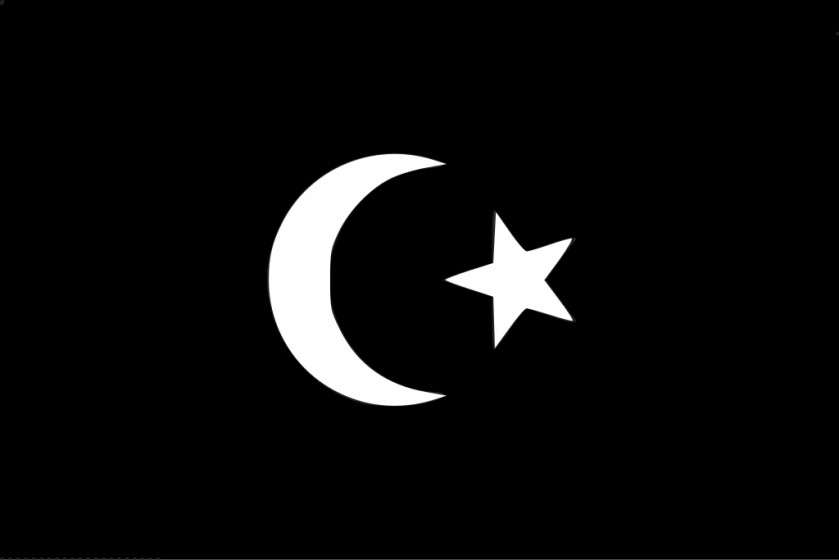
The rayah is black and the liwaa’ is white.
أخرج الترمذي وابن ماجه عَنْ ابْنِ عَبَّاسٍ قَالَ: كَانَتْ رَايَةُ رَسُولِ اللَّهِ صَلَّى اللَّهُ عَلَيْهِ وَسَلَّمَ سَوْدَاءَ، وَلِوَاؤُهُ أَبْيَضَ
At-Tirmidhi and Ibn Majah have narrated on authority of Ibn Abbas who said: “The rayah of Prophet Mohammad ﷺ was black, and his liwaa’ was white.”[22]


Al-Sarakhsi says, “Black was preferred for rayahs because it is a sign for those fighting, and every group fights under their rayah, and if they scatter during the fighting they can return to their rayah, and black is clearer and more noticeable in daylight than other colors, especially in dust. That is why it was preferred.”[30]
Al-Sarakhsi continues, “From a sharia perspective, there is no objection to making the rayahs white, yellow, or red. However, white is chosen for the liwaa‘ because the Prophet (saw) said: “The most beloved garment to Allah Almighty is white, so let your living wear it and shroud your dead in it.” Each army should have only one liwaa‘, and they refer to it when they need to present their affairs to the sultan. Therefore, white is chosen to distinguish it from the black rayahs used by the commanders.”[31]
There is a report from Ibn Hisham about the rayah being white, but in light of the other evidences mentioned above this seems to be a mixup with the liwaa‘ which was also flown at Khaybar and given to Ali ibn Abi Talib with Abu Bakr being a sub-commander. “The Messenger of Allah ﷺ sent Abu Bakr al-Siddiq (ra) with his rayah, which was white, according to Ibn Hisham, to some of the fortresses of Khaybar.”[33]
What is the shape of the flag?
The rayah is a square. The liwaa‘ is not specified but we can assume it was also a square shape. Therefore these flags and banners are not triangular as some of the flags were.
أخرج أحمد، وأبو داود، والنسائي في سننه الكبرى عن يُونُسُ بْنُ عُبَيْدٍ مَوْلَى مُحَمَّدِ بْنِ الْقَاسِمِ، قَالَ: بَعَثَنِي مُحَمَّدُ بْنُ الْقَاسِمِ إِلَى الْبَرَاءِ بْنِ عَازِبٍ يَسْأَلُهُ عَنْ رَايَةِ رَسُولِ اللَّهِ صَلَّى اللهُ عَلَيْهِ وَسَلَّمَ مَاهى؟ فَقَالَ: كَانَتْ سَوْدَاءَ مُرَبَّعَةً مِنْ نَمِرَةٍ
Ahmad, Abu Dawud, and an-Nasa’i in his book al-Sunan al-Kubra have narrated on authority of Younus bin Obeid, the slave of Mohammad Bin al-Qassem that he said: Mohammad Bin al-Qassem sent me to al-Baraa bin Azeb to ask him about the rayah of Prophet Muhammad ﷺ what is it? He said: “it was a black square (مُرَبَّعَةً) made from namira (نَمِرَة)”.[23]
What is the material of the flag?
The hadith above specifies the material used for the rayah was namira (نَمِرَة wool). The material for the liwaa‘ is not mentioned but due to its colour we can assume it was Yemeni or Egyptian cloth.
What is the size of the flag?
The size of the flag is not specified in the text.
Taqiudeen al-Nabhani mentions, “It is said it is called liwaa’ because it is bent due to its largeness so it is not spread except when necessary.”[24] He continues, “Close scrutiny of the texts clarifies that the rayah is smaller than the liwaa’” but he goes on to say “It is allowed to use the rayah and liwaa’ of greater or lesser measurement.”[25]
The book also specifies a size for a future State’s flag but this is up to the Caliph to make an adoption on in the future.
liwaa’ = 120cm x 80cm
rayah = 90cm x 60cm
What is the aspect ratio?
The aspect ratio of the Prophet’s ﷺ flags and banners seems to be a 1:1 ratio i.e a square (مُرَبَّعَةً). Shakhsiyya Islamiyya mentions a 2/3 ratio in line with the majority of flags today i.e. rectangular. The Ottoman flag for example used a 2/3 ratio.
What symbol or writing is on the flag?
There is ikhtilaaf (difference of opinion) on what symbolism if any was represented on the rayah and the liwaa’. This difference occurs due to differences on the strength of the hadith which specifies particular words on the rayah and the liwaa’. The hadith in question is below.
فقد أخرج الطبراني في الأوسط قال: حَدَّثَنَا أَحْمَدُ بْنُ رِشْدِينَ قَالَ: نا عَبْدُ الْغَفَّارِ بْنُ دَاوُدَ أَبُو صَالِحٍ الْحَرَّانِيُّ قَالَ: نا حَيَّانُ بْنُ عُبَيْدِ اللَّهِ قَالَ: نا أَبُو مِجْلَزٍ لَاحِقُ بْنُ حُمَيْدٍ، عَنِ ابْنِ عَبَّاسٍ قَالَ: «كَانَتْ رَايَةُ رَسُولِ اللَّهِ صَلَّى اللهُ عَلَيْهِ وَسَلَّمَ سَوْدَاءَ وَلِوَاؤُهُ أَبْيَضُ، مَكْتُوبٌ عَلَيْهِ: لَا إِلَهَ إِلَّا اللَّهُ مُحَمَّدٌ رَسُولُ اللَّهِ». لَا يُرْوَى هَذَا الْحَدِيثُ عَنِ ابْنِ عَبَّاسٍ إِلَّا بِهَذَا الْإِسْنَادِ، تَفَرَّدَ بِهِ: حَيَّانُ بْنُ عُبَيْدِ اللَّهِ
It was extracted by at-Tabarani in al-Awsat: (Ahmad bin Rashdin narrated that Abdul Ghaffar bin Dawud Abu Saleh al-Harrani said: Hayyan bin Obeidillah told us that Abu Mijlaz Laheq bin Humeid narrated on authority of Ibn Abbas who said: “The rayah of the Messenger of Allah ﷺ was black and his liwaa’ white written on it: لَا إِلَهَ إِلَّا اللَّهُ مُحَمَّدٌ رَسُولُ اللَّهِ”.
This Hadith is not narrated by Ibn Abbas except by this isnad (chain), and it is exclusive to Hayyan bin Obeidillah.
Ibn Hajar said, وَسَنَدُهُ وَاهٍ “Its chain of transmission is weak.”
The dispute concerns the hadith narrator Hayyan bin Obeidillah. Ata Abu Al-Rashta discusses this hadith on his Facebook page and why his particular group adopts this as a hasan hadith and hence uses the shahada on its flags and banners.
“1- Ibn Hibban mentioned it in al-Thiqat, and this is in his book al-Thiqat Volume 6/230:
(7491 – Hayyan bin Obeidillah Abu Zuhair the slave of Bani Odai narrating from Abu Mijlaz and his father, and Muslim bin Ibrahim and Musa bin Ismail have narrated from him)
2- al-Thahabi mentioned it in his book Mizan al-I’tidal (623/1):
(2388 – Hayyan bin Obeidillah, Abu Zuhair, sheikh from Busra on authority of Abi Mijlaz. Al-Bukhari reported: al-Salt had mentioned his mix up).
3- Al-Salt is bin Mohammad Abu Hammam, and Abu al-Hajjaj mentioned him in his book, Tahtheeb al-Kamal fi Asmaa al-Rijal 79/2. He said: Abu Hammam al-Salt bin Mohammad al-Kharki is from Kharek, an island in the gulf area close to Oman, and al-Bukhri had narrated for him in al-Saheeh.
4- Due to his mix-up in ahadith due to his old age, al-Uqeili had considered him from the weak narrators in his book, al-Dho’afa’ al-Kabir 319/1 where he said: Hayyan bin Oeidillah Abu Zuhair is from Busra… And Adam bin Musa narrated that he heard al-Bukhari said: Hayyan bin Obeidillah Abu Zuhair was mentioned by al-Salt to be mixing up (jumbling) ahadith…
5- Al-Thahabi said about him in his book al-Mughni fi ad-Do’afaa 198/1 “Hayyan bin Obeidillah Abu Zuhair al-Basri on authority of Abu Mijlaz is not reliable.”
Therefore he is disputed as there are people who make him reliable, and others who consider him from those who are weak because he mixed up when he became old. It seems that when he became old, he started to jumble.
However, the issue is the writing of “La Illaha illa Allah Mohammad Rasool Allah” on the rayah and the liwaa’, and jumbling ahadith does not affect this writing, especially since there are two reliable narrators in the sanad between him and the Prophet ﷺ i.e. Abu Mijlaz Laheq bin Hameed and Ibn Abbas. So we adopted the writing of the two shahadahs on the rayah and the liwaa’.”
The fact that there is no evidence in any hadith of anyone tasked with painting or embroidering letters on to the rayah and the liwaa‘, would seem to indicate that both these flags were plain without any writing or symbols on them. This would conform to the simplicity of the first Islamic State where unnecessary time, money and effort spent was kept to a minimum.
There is also the manat (reality) of the availability of white ‘paint’ at that time which would adhere to the material. All we find repeated by the narrators over and over again in the hadith is the colour. We do not find any mention of symbols and writing except in the disputed isolated ‘hadith’ above.
The rayah has a very detailed description in the hadith, “it was a black square (مُرَبَّعَةً) made from namira (نَمِرَة)” and “The rayah of the Prophet ﷺ was black from the cloak of Aisha.” No mention is made of any writing or attempts at marking the rayah.
For this reason it is my opinion that we are not obliged to use the shahada on the flags, and any Islamic symbolism is fine. In fact using any flag or banner to represent the state is of the mubah (permissible) matters since the liwaa‘ and rayah were never used in the time of the Prophet ﷺ or Rightly Guided Caliphs except by the army in war. The liwaa‘ and rayah were never attached to the caliph’s house, or attached to Masjid Al-Nabawi. They were kept folded away until the time of an expedition when the liwaa‘ would be given (tied) to the Amir.
Due to the likely desecration of the Caliphate’s flags by the enemies of Islam, then having the shahada on them is not advised in order to preserve the sanctity of the names of Allah and His Messenger ﷺ.
Are there any other flags?
The different army corps, divisions and regiments can use their own flags alongside the rayah as we find in any army today. The is derived from the hadith where different units or tribes used their own banners in the battle alongside the official rayah.
وقد ورد عند الطبراني في الكبير عن مَزِيدَةَ الْعَبْدِيَّ، يَقُولُ: إِنَّ النَّبِيَّ صَلَّى اللهُ عَلَيْهِ وَسَلَّمَ عَقَدَ رَايَاتِ الْأَنْصَارِ فَجَعَلَهُنَّ صُفَرًا
It was narrated in at-Tabarani in al-Kabeer on authority of Mazeeda al-Abdi’ saying: “The Prophet ﷺ has knotted the flags (rayaat) of al-Ansar and made them yellow.”
وكذلك ورد عند ابن أبي عاصم في الآحاد والمثاني عَنْ كُرْزِ بْنِ سَامَةَ قَالَ: …وَإِنَّ النَّبِيَّ صَلَّى اللهُ عَلَيْهِ وَسَلَّمَ عَقَدَ رَايَةَ بَنِي سُلَيْمٍ حَمْرَاءَ
And it was narrated from Ibn Abi Asem in al-Aahad and al-Mathani on the authority of Kurz bin Sama who said: “… And the Prophet ﷺ knotted the flag (rayah) of Bani Suleim red”.
Qutba bin Aamer carried the rayah of Banu Salamah in the Conquest of Mecca.[26]
Salim, the mawla of Abu Hudhayfah, carried the rayah of the Muhajireen at the Battle of Yamama under the caliphate of Abu Bakr, and fought until he was martyred.[27]
Conclusion
While the use of any flag or banner to represent the state is of the mubah (permissible) matters, there should be an official flag of the Caliphate to unite the people around. The rayah would be the best option since it’s from the sunnah, and a sign of the religion alone with no nationalistic or tribal connotations whatsoever.
The rayah will be flown on top of all government buildings within the state including the Caliph’s residence. The population will unite around this flag and will display it in their homes, mosques and businesses. The armed forces will also display it alongside their regimental banners to identify them as the official armed forces of the Caliphate.
The liwaa’ is a special flag which will be flown alongside the rayah above the Caliph’s residence only. It will also be with the corp commanders and battlefield commanders of the armed forces.
It is also important to note that having an Islamic flag does not make a state ‘Islamic’. ISIS have the rayah but that does not mean their state was Islamic or a caliphate. Justice (‘adl) is what is important. If there is no justice then there is no Islamic State, since justice is an ultimate aim for the existence of the state in the first place. Ibn Taymiyyah says,
إنَّ اللَّهَ يُقِيمُ الدَّوْلَةَ الْعَادِلَةَ وَإِنْ كَانَتْ كَافِرَةً وَلَا يُقِيمُ الظَّالِمَةَ وَإِنْ كَانَتْ مُسْلِمَةً ويقال الدُّنْيَا تَدُومُ مَعَ الْعَدْلِ وَالْكُفْرِ وَلَا تَدُومُ مَعَ الظُّلْمِ وَالْإِسْلَامِ
“It is said that Allah allows the just state to remain even if it is led by unbelievers, but Allah will not allow the oppressive state to remain even if it is led by Muslims. And it is said that the world will endure with justice and unbelief, but it will not endure with oppression and Islam.”[28]
Notes
[1] Ibn Khaldun, ‘The Muqaddimah – An Introduction to History,’ Translated by Franz Rosenthal, Princeton Classics, p.334
[2] Holy Qur’an Surah Yusuf, ayah 67
[3] Sunan an-Nasa’i 2866, https://www.sunnah.com/urn/1128760
[4] Sunan Ibn Majah 121, https://sunnah.com/urn/1251210
[5] Al-Qamus al-Muhit dictionary, https://shamela.ws/book/7283/1308
[6] Al-Qamus al-Muhit dictionary, https://shamela.ws/book/7283/1267
[7] Ibn Sa’d, Tabaqat, https://shamela.ws/book/1686/392
[8] Ibn Sa’d, Tabaqat, https://shamela.ws/book/1686/393
[9] Ibn Sa’d, Tabaqat, https://shamela.ws/book/1686/393#p1
[10] Ibn Sa’d, Tabaqat, https://shamela.ws/book/1686/394#p1
[11] Ibn Sa’d, Tabaqat, https://shamela.ws/book/1686/394#p1
[12] Ibn Sa’d, Tabaqat, https://shamela.ws/book/1686/487#p1
[13] Ibn Sa’d, Tabaqat, https://shamela.ws/book/1686/486#p1
[14] Ibn Sa’d, Tabaqat, https://shamela.ws/book/1686/350
[15] Ibn Sa’d, Tabaqat, https://shamela.ws/book/1686/2041#p1
[16] Ibn Sa’d, Tabaqat, https://shamela.ws/book/1686/470
[17] Ibn Sa’d, Tabaqat, https://shamela.ws/book/1686/513
[18] Ibn Sa’d, Tabaqat, https://shamela.ws/book/1686/488#p1
[19] Muhammad As-Sallabi, ‘Ali ibn Abi Talib’, Volume 2, p.155
[20] Holy Qur’an, Surah Al-Imran, ayah 144
[21] Khalid Muhammad Khalid, ‘Men Around the Messenger’
[22] Sunan Ibn Majah 2818, https://sunnah.com/urn/1329260
[23] Sunan Abi Dawud 2591, https://sunnah.com/abudawud/15/115
[24] Taqiudeen al-Nabhani, Shakhsiyya Islamiyya, 5th Edition, Vol.2, 2003, p.156
[25] Ibid, p.157
[26] Ibn Sa’d, Tabaqat, https://shamela.ws/book/1686/1112
[27] Ibn Sa’d, Tabaqat, https://shamela.ws/book/1686/743
[28] Ibn Taymiyyah, al-Amr bil Ma’rūf wan-nahi ‘an al-munkar 1/29
[29] Al-Sarakhsi, Sharh Al-Siyar Al-Kabeer, https://shamela.ws/book/5434/71
[30] Al-Sarakhsi, Sharh Al-Siyar Al-Kabeer, https://shamela.ws/book/5434/72#p1
[31] Ibid
[32] Al-Sarakhsi, Sharh Al-Siyar Al-Kabeer, https://shamela.ws/book/5434/73#p1
[33] Ibn Hisham, Sirah Al-Nabi, https://shamela.ws/book/23833/1071#p1
[34] Ryan J. Lynch, ‘Arab Conquests and Early Islamic Historiography: The Futuh al-Buldan of al-Baladhuri,’ I.B. Tauris, 2020 p.147
 Islamic Civilization