
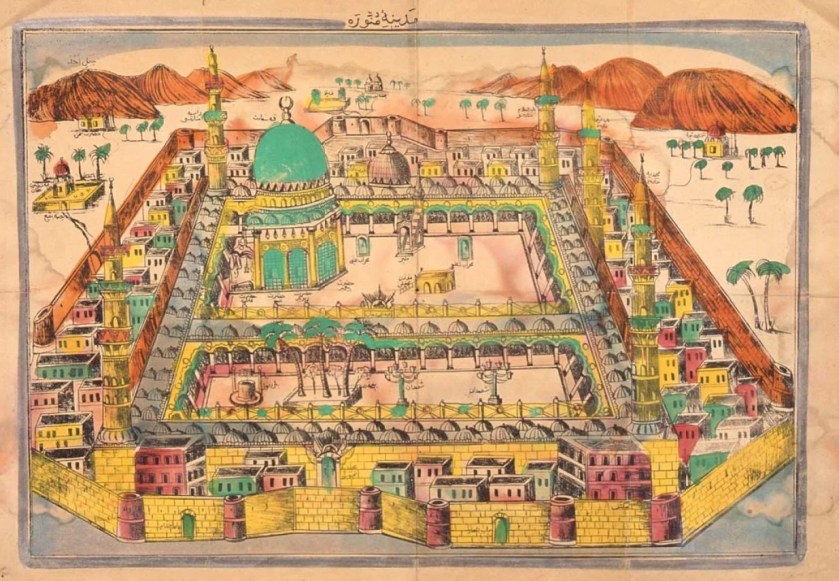
Administrative Divisions of the Prophet’s ﷺ State in Medina
The sunnah consists of the speech, actions and consent of the Prophet ﷺ. It is a fundamental source of Islamic Law (sharia) from which we guide our actions.[1] The sunnah is not just restricted to ‘ibadat (worships) but covers all aspects of life, state and society. Allah ta’ala says, وَمَآ ءَاتَىٰكُمُ ٱلرَّسُولُ فَخُذُوهُ وَمَا نَهَىٰكُمْ عَنْهُ فَٱنتَهُوا۟ “Whatever the Messenger gives you, take it. And whatever he forbids you from, leave it.”[2] The relative pronoun (مَا) is ‘aam (general) and means “whatever” so we do not restrict the sunnah to one sphere of life only. Today siyasa sharia (Islamic politics) is a neglected sunnah and an area which requires greater scrutiny and study to guide us through the maze of modern political life. In regards to the Islamic ruling system, the speech and actions of the Prophet ﷺ in Medina related to government are a divine evidence (شَرْع دَلِيل shara’ daleel) for us to follow. The 12 Naqibs When the Prophet Muhammad ﷺ first established the state in Medina, the existing tribal structure was used to administer the state. The Aws …







 Islamic Civilization